Does Dodge Hellcat Have X-Pipes Stock
Many car fans wonder about the exhaust systems on powerful cars. For Dodge Hellcat owners or admirers, a common question is Does Dodge Hellcat Have X-Pipes Stock? This might seem like a small detail, but it really affects how the car sounds and performs.

HECASA
HECASA Cold Air Intake Inlet Tube Shield…
- FITMENT - HECASA Air Intake Tube will be compatible with 2019-2023 Dodge Charger SRT Hellcat. Replacement for 68424623AA.Material:…
- NOTE - Will compatible with 2015-2019 Chargers with appearance package that have been upgraded to the new style dual snorkel grill…
- ENHANCE ENGINE PERFORMANCE - The design of the cold air intake pipe reduces the intake restriction and enables more cold air to en…
As an Amazon Associate I earn from qualifying purchases.
It can be a bit tricky for newcomers to figure out. We’ll break it down simply. This guide will give you clear answers without any confusing jargon.
Let’s get straight to the point and discover the facts about your Hellcat’s exhaust.
Understanding Dodge Hellcat Exhaust Systems
This section explains the exhaust setup found on Dodge Hellcat models. We will look at the basic components and how they work together to create that signature Hellcat sound and power. Understanding the stock configuration is key to knowing if an X-pipe is part of it.
This knowledge helps enthusiasts appreciate the engineering behind the car and what makes its performance unique.
What Are X-Pipes?
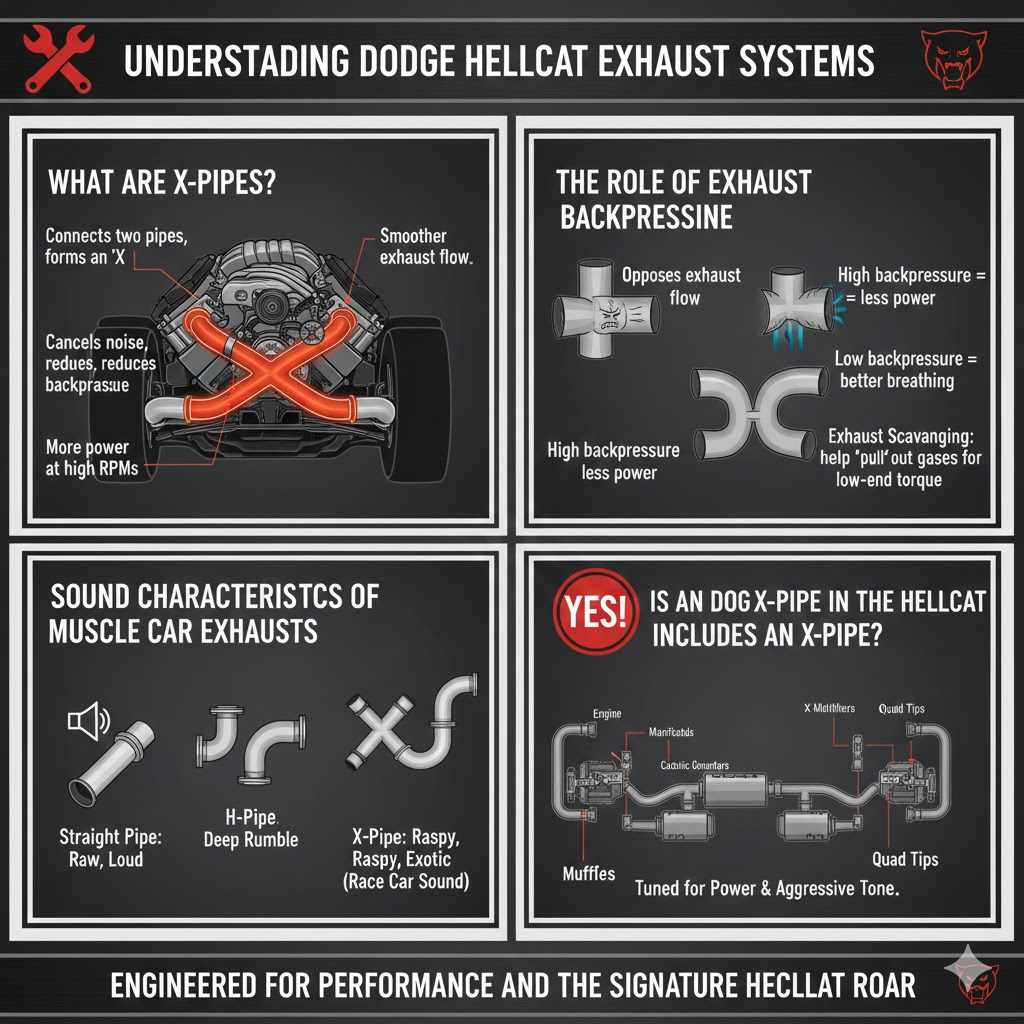
An X-pipe is a part of a car’s exhaust system. It’s a piece that connects two separate exhaust pipes into one. The shape looks like the letter ‘X’.
This connection point is designed to help the exhaust gases flow more smoothly.
When exhaust gases leave the engine’s cylinders, they travel through the exhaust pipes. Normally, these gases would exit through two separate pipes. An X-pipe merges these two streams of gases.
This merging is not just about combining pipes; it’s about controlling how the gases interact.
The design of the X-pipe causes the exhaust pulses from each bank of cylinders to meet and cross over. This crossing helps to cancel out some of the unwanted noise and backpressure. It can also create a more balanced flow.
Think of it like traffic merging from two lanes onto one. A well-designed merge point makes traffic flow better.
The main effects of an X-pipe are on sound and performance. For sound, it often creates a raspier, more aggressive tone compared to an H-pipe or straight pipes. For performance, by improving exhaust gas scavenging, it can help the engine breathe better.
Better breathing means more power, especially at higher engine speeds.
The Role of Exhaust Backpressure
Exhaust backpressure is a force that opposes the flow of exhaust gases. It’s like trying to push air through a narrow straw versus a wide tube. Too much backpressure can make it harder for the engine to expel exhaust.
This means the engine has to work harder.
When an engine works harder to push exhaust out, it uses more energy. This lost energy results in less power being sent to the wheels. So, high backpressure can reduce a car’s performance.
It can also make the engine run hotter.
However, a little bit of backpressure isn’t always bad. In some engine designs, a certain level of backpressure can help increase torque at lower engine speeds. This is because the exhaust pulses can help “pull” the next batch of exhaust gases out of the cylinder.
This effect is known as exhaust scavenging.
Components like mufflers and catalytic converters create significant backpressure. The design of the pipes themselves also plays a role. X-pipes are designed to manage backpressure in a way that often benefits performance.
They aim to reduce harmful backpressure while still allowing for some beneficial scavenging effects. This balance is important for achieving both power and a desirable sound.
Sound Characteristics of Muscle Car Exhausts
Muscle cars are famous for their loud and aggressive exhaust notes. This sound is a big part of their appeal. The way the exhaust system is designed directly creates this sound.
Different exhaust components make different sounds.
For example, a straight-pipe exhaust system, which has no mufflers or resonators, will be extremely loud and raw. However, it might also be a bit unrefined and drone heavily at certain speeds. H-pipes tend to produce a deeper, more rumbling sound.
They offer a classic V8 rumble.
X-pipes, as mentioned, tend to create a higher-pitched, more exotic, or even a bit of a “screaming” sound, especially at higher RPMs. This is often described as a “race car” sound. The crossover design helps to smooth out the exhaust pulses.
This smoothing can lead to a more refined, yet still aggressive, tone.
Manufacturers tune these sounds carefully. They want the car to sound powerful and exciting, but also acceptable for road use. This means balancing loudness with avoiding excessive noise that would annoy drivers and passengers on long trips.
They use resonators and mufflers to shape the sound. They also consider the design of pipes like H-pipes and X-pipes.
Does Dodge Hellcat Have X-Pipes Stock
Now, let’s get to the core question: Does Dodge Hellcat Have X-Pipes Stock? Many enthusiasts are curious about the factory setup. We will explore what Dodge equips these powerful machines with from the assembly line.
This will help clarify the factory exhaust configuration and what it means for the car’s sound and performance out of the box.
Factory Exhaust Configuration for Hellcats
When Dodge designs its high-performance vehicles like the Hellcat, they put a lot of thought into the exhaust system. The goal is to deliver a thrilling driving experience. This includes both the roar the car makes and the power it produces.
For the Dodge Hellcat models, the stock exhaust system is engineered for a balance of aggressive sound and performance. Dodge aims to provide a sound that is unmistakably powerful and iconic for the Hellcat brand. They also need to meet noise regulations and ensure the car is drivable daily without being overly obnoxious.
The factory exhaust typically features a dual-mode or active exhaust system. This means the sound can change depending on the driving mode selected. In quieter modes, valves can close to reduce the exhaust volume.
In sportier modes, these valves open up, allowing for a more aggressive tone and better flow.
This sophisticated system uses specific pipe configurations and mufflers to achieve its sound. Understanding these stock components is essential before considering any aftermarket changes. It forms the baseline for what the Hellcat offers from the factory.
The Sound of the Stock Hellcat Exhaust
The sound of a stock Dodge Hellcat is one of its most defining features. It’s designed to be imposing and exciting. Even from the factory, the Hellcat has a deep, aggressive growl that lets everyone know it means business.
When you start a Hellcat, there’s an immediate rumble that hints at the supercharged V8 engine under the hood. At idle, it has a noticeable presence. As you accelerate, the sound builds.
It becomes a powerful, throaty roar. This sound is a carefully calibrated mix of mechanical noise and exhaust tones.
The dual-mode exhaust system plays a big part in this. In its quiet mode, the Hellcat can be surprisingly subdued. This is useful for driving in neighborhoods or for longer road trips where constant loudness might be tiring.
However, when you switch to a performance mode, the exhaust valves open.
Opening these valves allows more exhaust gas to flow through a less restrictive path. This results in a significantly louder and more aggressive sound. You get more of the supercharger whine, combined with a deeper, more powerful exhaust note.
It’s a sound that many enthusiasts find incredibly satisfying.
Comparison with Aftermarket Exhaust Systems
Aftermarket exhaust systems offer a wide range of options for Hellcat owners. These systems are often designed to enhance the car’s sound and performance beyond the factory setup. They can be more aggressive, louder, or have a different tone altogether.
One common upgrade is an X-pipe or an H-pipe, which
Another popular aftermarket modification is removing the mufflers or installing performance mufflers. This significantly increases the loudness of the exhaust. Some systems also
The choice between aftermarket systems depends on what the owner wants. Some want a deeper rumble, others a higher-pitched scream. Some prioritize maximum power gains, while others are focused on a specific sound profile.
It’s a way for owners to personalize their Hellcat’s auditory signature.
Analyzing the Dodge Hellcat’s Factory Mid-Pipe
This section delves into the specific component that sits in the middle of the Hellcat’s exhaust system, often called the mid-pipe. We will look closely at its design and function to determine if it incorporates an X-pipe configuration from the factory. This detailed examination is crucial for answering the main question.
What Is a Mid-Pipe?
A mid-pipe is a section of the exhaust system that sits between the exhaust manifolds (or headers) and the mufflers. It’s a critical link in the chain that carries exhaust gases from the engine to the rear of the vehicle. Its design significantly influences the overall exhaust flow and sound.
The mid-pipe usually contains components like catalytic converters and, in some performance cars, resonators or a crossover pipe. Catalytic converters are essential for reducing harmful emissions. They use precious metals to convert toxic gases into less harmful substances.
Resonators are chambers designed to cancel out specific sound frequencies, often the droning noises.
The shape and diameter of the mid-pipe are also important. Larger diameter pipes allow for more exhaust gas to flow freely, which can improve engine performance. Smoother bends, rather than sharp kinks, also help in reducing backpressure and improving flow efficiency.
In performance vehicles, the design of the mid-pipe is often a point of interest for enthusiasts. Manufacturers may use specific designs to achieve a particular sound or performance target. This is where components like X-pipes or H-pipes are typically found, integrated into the mid-pipe section.
The Function of the Hellcat’s Stock Mid-Pipe
The stock mid-pipe on a Dodge Hellcat is carefully designed to meet the car’s performance and sound requirements. It has to handle the immense power of the supercharged V8 engine while also conforming to emissions standards. Its primary job is to channel exhaust gases efficiently.
This mid-pipe usually incorporates high-flow catalytic converters. These are vital for meeting emissions regulations. They are designed to be less restrictive than standard catalytic converters, allowing for better exhaust flow.
This helps maintain power levels.
The mid-pipe also contains the components responsible for the Hellcat’s distinct sound profile. Dodge uses a dual-mode exhaust system. This means there are valves within the exhaust path.
These valves can open or close to change the sound. In the quieter mode, exhaust gases might take a slightly longer, more muffled path.
When the valves open, the exhaust gases flow through a more direct and less restrictive path. This increases the volume and aggression of the sound. The mid-pipe is where much of this sound shaping happens, working in conjunction with the mufflers at the rear.
It is a crucial part of the Hellcat’s overall performance package.
Does Dodge Hellcat Have X-Pipes Stock
Let’s address the question directly. Regarding the specific question, Does Dodge Hellcat Have X-Pipes Stock, the answer is generally no for most standard Hellcat models. Dodge typically equips these vehicles with a system that prioritizes a combination of performance, sound, and emissions compliance.
Instead of an X-pipe in the typical aftermarket sense, stock Hellcats often feature a mid-pipe design that leads to separate resonators and mufflers. The factory setup is designed to produce a deep, powerful exhaust note that is characteristic of the Hellcat but also meets noise regulations.
While they don’t come with an X-pipe from the factory, many Hellcat owners choose to upgrade their exhaust systems to include one. This is because aftermarket X-pipes can offer a different sound profile and potentially further performance gains. The stock system is engineered for a balance, and aftermarket parts allow for more customization.
The dual-mode exhaust system on the Hellcat is what allows for its varied sound. However, the specific configuration of the pipes before the mufflers does not usually involve an integrated X-pipe crossover. Owners seeking that specific sound or performance characteristic often turn to the aftermarket.
Performance and Sound Implications
Understanding whether a Hellcat has an X-pipe stock or not has direct consequences for its performance and sound. This section explores these implications in detail. We’ll discuss how the stock setup performs and what changes when an X-pipe is added, either from the factory or as an upgrade.
How Stock Exhaust Affects Hellcat Performance
The stock exhaust system on a Dodge Hellcat is engineered to work seamlessly with the supercharged engine. It’s designed to handle the high volume of exhaust gases produced by the powerful V8. The system aims for a balance between performance, sound, and emissions.
While it may not have an X-pipe, the stock mid-pipe and muffler setup is tuned to provide a significant amount of power. It allows the engine to breathe well enough to achieve its advertised horsepower and torque figures. The dual-mode exhaust system is a key feature here.
In its open mode, the stock system provides a relatively free-flowing path for exhaust gases. This minimizes backpressure that could otherwise hinder performance. The system is carefully calibrated to prevent excessive drone, which can be a problem with less refined exhaust setups.
So, while the absence of a stock X-pipe might be a point of discussion for some enthusiasts, the factory system is still highly capable. It’s designed by engineers who have specific goals for power delivery and driving experience in mind for the Hellcat.
Benefits of Adding an Aftermarket X-Pipe
Adding an aftermarket X-pipe to a Dodge Hellcat can bring several noticeable benefits. One of the most significant is the change in exhaust sound. X-pipes are known for producing a raspier, more aggressive, and often higher-pitched tone compared to H-pipes or stock configurations.
This sound is often described as more exotic or race-car-like. It can make the Hellcat’s already impressive roar even more thrilling. For many owners, the sound is as important as the performance gains.
In terms of performance, an X-pipe can improve exhaust scavenging. By helping the exhaust pulses cross and cancel each other out, it can reduce backpressure. This reduced backpressure allows the engine to expel exhaust gases more efficiently.
Better efficiency can lead to a slight increase in horsepower and torque, particularly at higher RPMs.
Another benefit is the potential for weight reduction. Aftermarket X-pipes are often made from lighter materials like stainless steel or titanium, and they may omit some of the heavier factory components like resonators. This can contribute to a small improvement in the car’s overall weight.
Sound Comparison X-Pipe vs. Stock
Comparing the sound of an aftermarket X-pipe to the stock Hellcat exhaust reveals distinct differences. The stock system, especially with its dual-mode functionality, offers a range of sounds. It can be relatively quiet in its closed valve state, providing a deep but controlled rumble.
When the stock valves open, the sound becomes more aggressive and louder. It’s a powerful V8 growl that is very characteristic of American muscle cars. It’s designed to be exciting but also generally compliant with noise regulations.
An aftermarket X-pipe, however, typically takes the sound to a different level. It often introduces a sharper, more metallic tone. The sound at higher RPMs becomes more of a “scream” or “wail.” This is due to the way the exhaust pulses interact at the crossover.
The X-pipe setup can also reduce some of the low-frequency drone that some drivers find bothersome in stock or other aftermarket systems. However, the trade-off can be a more consistent loudness throughout the RPM range, even with the valves open. It’s a more intense and raw sound experience.
Common Exhaust Upgrades for Hellcats
Many Hellcat owners look to upgrade their exhaust systems to achieve a more personalized sound and performance. This section covers some of the most popular modifications beyond just the X-pipe. We will explore the various components that enthusiasts often change and why they do it.
Cat-Back Exhaust Systems
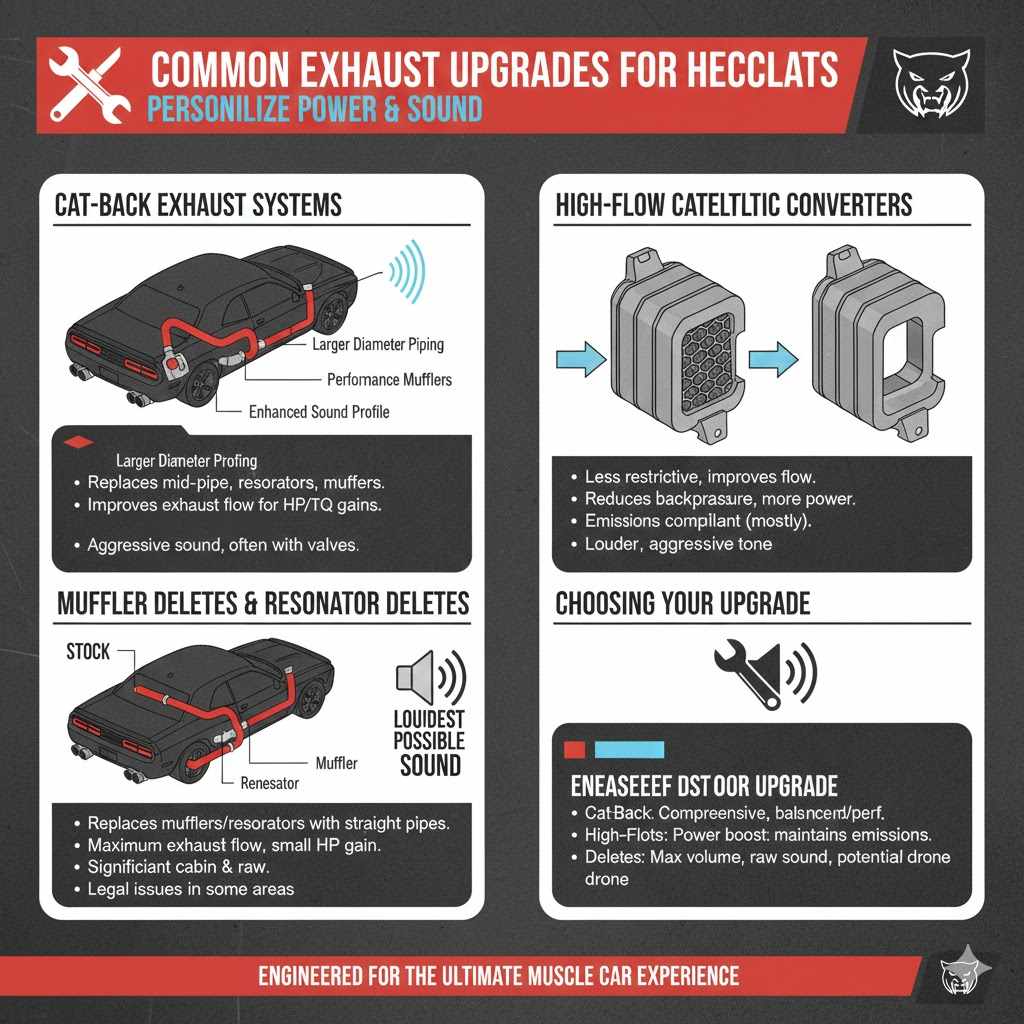
A cat-back exhaust system is one of the most common upgrades for performance cars like the Hellcat. “Cat-back” means that the system replaces everything from the catalytic converters back to the tailpipes. This typically includes the mid-pipe, resonators, and mufflers.
These systems are designed to improve exhaust flow and alter the sound profile. Manufacturers of cat-back systems often use larger diameter piping and less restrictive mufflers than the stock components. This can lead to noticeable gains in horsepower and torque.
The sound produced by a cat-back system is a major selling point. Different brands offer different sound characteristics. Some aim for a deep, aggressive rumble, while others go for a higher-pitched, more exotic tone.
Many cat-back systems include options for different muffler types or even valves for adjustable sound levels.
When choosing a cat-back system, it’s important to consider the materials used (like stainless steel for durability) and the specific sound you are looking for. It’s a comprehensive upgrade that can significantly change the driving experience of a Hellcat.
High-Flow Catalytic Converters
Catalytic converters are mandatory emissions control devices. They convert harmful exhaust gases into less harmful ones. Standard catalytic converters can be quite restrictive, limiting exhaust flow and thus engine performance.
High-flow catalytic converters are designed to mitigate this restriction.
These converters use a less dense substrate or a different catalyst material. This allows exhaust gases to pass through more easily. They still perform their emissions-reducing function but with less impact on performance.
High-flow cats are a popular choice for enthusiasts who want to improve power without completely removing the emissions control system.
When paired with other exhaust modifications like an X-pipe or cat-back system, high-flow cats can offer a more significant performance boost. They help the engine breathe more freely, especially at higher RPMs. The sound can also be slightly altered, often becoming a bit louder and more aggressive.
It’s important to note that replacing or removing catalytic converters entirely can have legal implications in many regions. High-flow catalytic converters offer a compromise, providing performance benefits while attempting to stay within regulatory guidelines.
Muffler Deletes and Resonator Deletes
Muffler deletes and resonator deletes are more extreme modifications. They involve removing these sound-dampening components from the exhaust system altogether. This results in the loudest possible exhaust note from the Hellcat.
A muffler delete simply means replacing the mufflers with straight pipes. This allows the exhaust gases to exit directly with minimal obstruction. The sound becomes very raw and loud.
Similarly, a resonator delete removes the resonators, which are designed to cancel out specific frequencies, often reducing drone.
These modifications significantly increase the volume of the exhaust. They also change the tone, making it more raw and potentially harsher. While they offer maximum flow and can lead to small power gains by reducing backpressure, they can also create significant cabin drone at certain speeds.
Muffler and resonator deletes are often chosen by those who prioritize an extremely loud and aggressive sound above all else. However, they are not suitable for everyone and may not be legal for street use in many areas due to noise ordinances.
Frequently Asked Questions
Question: Do Hellcat Redeye models have X-pipes stock?
Answer: Most Hellcat Redeye models, like the standard Hellcat, do not come with X-pipes from the factory. Their stock exhaust systems are designed for a balance of sound and performance with specific factory components.
Question: What is the main sound difference between an X-pipe and an H-pipe?
Answer: An X-pipe typically produces a higher-pitched, raspier, and more exotic sound, while an H-pipe tends to create a deeper, more traditional V8 rumble.
Question: Can adding an X-pipe void my Hellcat’s warranty?
Answer: Modifying the exhaust system can potentially impact your warranty, especially if the modification is deemed to have caused the issue. It’s best to consult your dealer.
Question: Are there any benefits to a stock Hellcat exhaust if it doesn’t have an X-pipe?
Answer: Yes, the stock exhaust is engineered to work with the engine’s performance, meet emissions standards, and provide a signature Hellcat sound with its dual-mode system.
Question: What’s the easiest way to get an X-pipe sound on my Hellcat?
Answer: The most straightforward way is to purchase and install an aftermarket X-pipe mid-pipe for your Hellcat model.
Conclusion
The question Does Dodge Hellcat Have X-Pipes Stock is answered clearly. Most Dodge Hellcats do not come with X-pipes from the factory. Their stock exhaust systems are engineered for a unique blend of aggressive sound and performance, often utilizing dual-mode technology and specific mid-pipe designs.
Enthusiasts seeking the distinctive tone and potential performance benefits of an X-pipe typically opt for aftermarket upgrades. This allows for personalized sound and enhanced driving experience.
Related pick: Check today's price on Amazon