Does OEM G37 Y-Pipe Have Flex Pipes
Many car owners wonder if their Infiniti G37’s original equipment manufacturer (OEM) Y-pipe includes flex pipes. This question often pops up when people are planning exhaust upgrades or repairs. It can be a little tricky to find a simple answer, especially if you’re new to car parts. But don’t worry! This guide will make it super clear and easy to figure out. We’ll break it down step-by-step so you know exactly what to look for.
Understanding Your G37 Y-Pipe
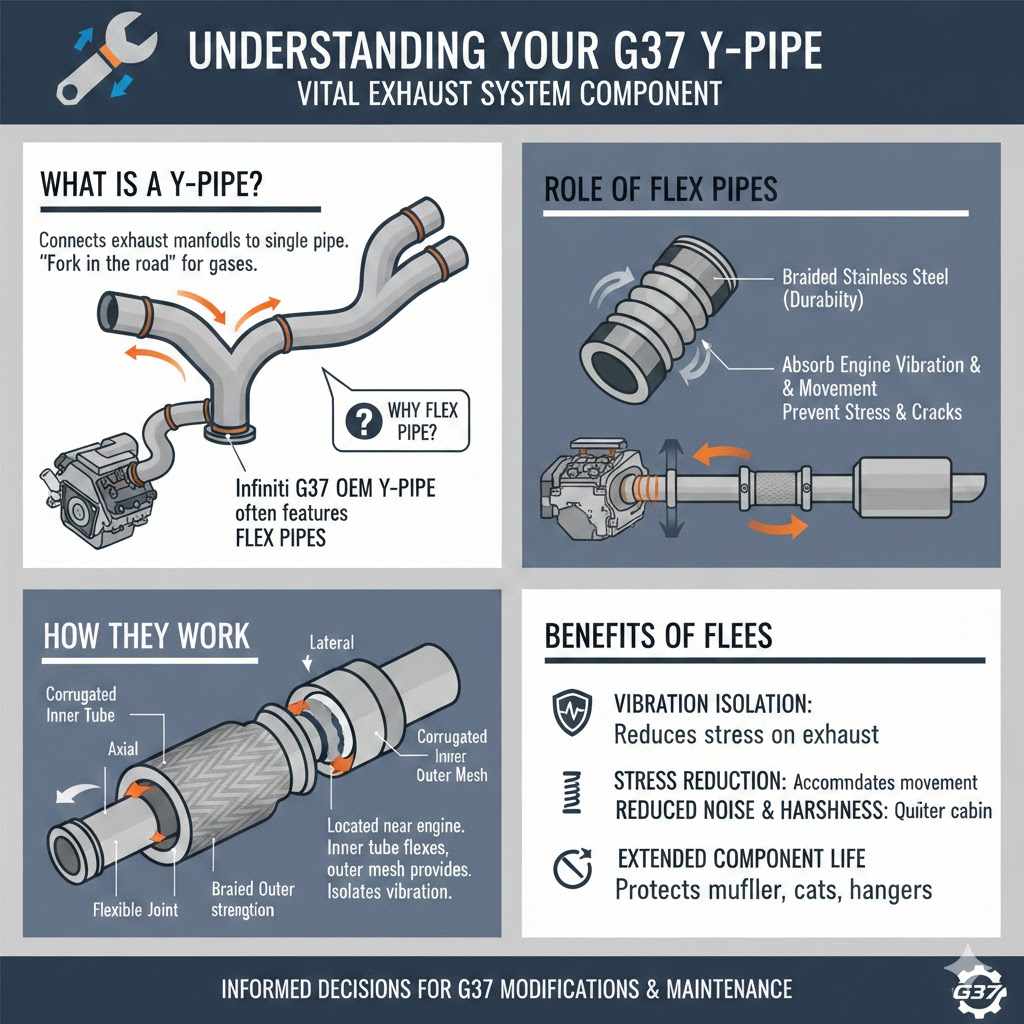
The Y-pipe is a vital part of your car’s exhaust system. It connects the exhaust manifolds from each side of the engine to a single pipe that leads to the rest of the exhaust. Think of it like a fork in the road for exhaust gases. For many car enthusiasts, especially those looking to modify or maintain their Infiniti G37, understanding the specifics of the OEM Y-pipe is key. A common point of confusion for beginners is the presence of flex pipes.
These flexible sections are designed to absorb engine vibration and minor movements, preventing stress and potential cracks in the exhaust system. Knowing whether your G37’s factory Y-pipe has these built-in flex sections is important for making informed decisions about replacements or modifications. This section will explore the typical construction of the G37’s OEM Y-pipe and the role flex pipes play.
The Role of Flex Pipes in Exhaust Systems
Flex pipes, also known as flexible exhaust connectors or bellows, are specialized components in an exhaust system. Their primary function is to absorb the vibrations and movements generated by the engine and the chassis. Engines naturally vibrate as they run, and this vibration can transfer to the exhaust system.
Without flex pipes, these vibrations could cause stress fractures in the rigid exhaust pipes, leading to leaks and premature failure. Flex pipes allow for a small degree of axial, lateral, and angular movement between the engine and the rest of the exhaust system. This isolation of vibration protects other exhaust components and the vehicle’s body from damage. They are typically made of braided stainless steel, offering both flexibility and durability.
How Flex Pipes Work
Flex pipes work by creating a flexible joint within the otherwise rigid exhaust piping. They are usually installed between the exhaust manifold (or catalytic converter) and the rest of the exhaust system, often near the engine where vibrations are most pronounced. The construction involves a corrugated or bellows-like inner tube, often made of stainless steel. This inner tube is surrounded by one or more layers of braided stainless steel mesh.
The braiding provides strength and containment, allowing the inner tube to expand and contract to absorb movement without rupturing. The braided outer layers also help to protect the inner bellows from external damage.
Benefits of Flex Pipes
The benefits of flex pipes are significant for the longevity and performance of an exhaust system.
- Vibration Isolation: The most critical benefit is the reduction of engine vibration transfer. This protects the exhaust system from stress and cracking, leading to fewer repairs.
- Stress Reduction: Engine movement during acceleration, deceleration, and normal operation can put stress on exhaust components. Flex pipes accommodate these movements, preventing damage.
- Reduced Noise and Harshness: By absorbing vibrations, flex pipes can also help reduce the amount of noise and harshness transmitted into the vehicle’s cabin, contributing to a more comfortable ride.
- Extended Component Life: By minimizing stress and vibration, flex pipes can help extend the lifespan of other exhaust system parts, such as mufflers, catalytic converters, and hangers.
Inspecting the OEM G37 Y-Pipe
When you’re trying to figure out if your specific G37 has flex pipes, the best approach is often to inspect it directly or consult reliable resources. This section will guide you on how to look for these components and what signs to watch out for. We’ll cover visual identification and where to find information specific to your vehicle.
Visual Identification of Flex Pipes
To visually identify flex pipes on an exhaust system, you’re looking for a section that appears different from the rest of the smooth, typically round piping. Flex pipes usually have a distinctive corrugated or accordion-like appearance.
What to Look For
When examining your G37’s Y-pipe, keep an eye out for these visual cues:
- Corrugated Section: The most obvious sign is a segment of pipe that is not smooth but has a series of folds or ridges, resembling an accordion or a flexible hose. This is the bellows section of the flex pipe.
- Braided Outer Layer: Many flex pipes have an outer layer made of woven wire mesh, often appearing as a silver or metallic braided cover. This braiding adds strength and durability.
- Connection Points: Flex pipes are typically found as a distinct unit connecting two parts of the exhaust system. You might see welds where the flex pipe assembly is joined to the standard pipe.
Distinguishing from Other Components
It’s important not to confuse flex pipes with other exhaust components. For example, some aftermarket Y-pipes might use a different material or design. However, the characteristic corrugated pattern is a strong indicator of a flex pipe. Standard exhaust pipes are usually smooth and cylindrical.
Consulting Vehicle Specifications and Forums
If a direct visual inspection is difficult, or you want to confirm your findings, vehicle specifications and enthusiast forums are excellent resources. Many G37 owners share detailed information about their cars, including common modifications and OEM part details.
Official Service Manuals
Official service manuals for the Infiniti G37 are the most accurate source of information. These manuals contain detailed diagrams and specifications for every component of the vehicle, including the exhaust system. They will clearly indicate whether flex pipes are part of the OEM Y-pipe assembly.
Enthusiast Forums and Communities
Online forums dedicated to the Infiniti G37 are invaluable. Owners often post pictures, ask questions, and share their experiences with modifications and repairs. Searching these forums for “G37 Y-pipe flex pipe” can yield discussions, photos, and confirmation from other owners.
A quick search on Infiniti G37 forums reveals that the consensus among owners and mechanics is that the stock, OEM Y-pipe for the G37 model year range generally does not include integrated flex pipes. Instead, the factory Y-pipe is typically constructed from rigid tubing. This design choice is common for many vehicles in the performance sedan category, where emphasis might be placed on flow characteristics over vibration dampening in the Y-pipe itself.
Does OEM G37 Y-Pipe Have Flex Pipes? The Verdict
After examining the design and common configurations of the Infiniti G37’s exhaust system, we can provide a clear answer to the question Does OEM G37 Y-Pipe Have Flex Pipes?. The original equipment manufacturer (OEM) Y-pipe for the Infiniti G37 is generally designed without integrated flex pipes. This means the standard factory Y-pipe is typically made of rigid, solid tubing from end to end.
Why This Design Choice Matters
This rigid construction is a common design for many vehicles, especially those focused on performance. However, it does mean that the engine’s vibrations are transmitted more directly to the rest of the exhaust system. When owners choose to replace or modify their exhaust, they often opt for aftermarket Y-pipes that do include flex pipes. This is a crucial consideration for anyone planning an exhaust upgrade, as adding flex pipes can help protect the new components from stress.
Implications for Maintenance and Upgrades
For G37 owners, understanding that the OEM Y-pipe lacks flex pipes has several implications:
- Stress on Connectors: Without built-in flex, the connection points where the Y-pipe joins other exhaust components are more susceptible to stress from engine movement and vibration.
- Aftermarket Options: When looking for aftermarket Y-pipes, it’s common to see models that do incorporate flex pipes. This is often seen as an upgrade over the stock rigid design.
- Potential for Cracks: Over time, the constant vibration without flex can potentially lead to stress cracks forming at the welds or connection points of the rigid OEM Y-pipe, although this is not a universal issue for all G37s.
Alternatives and Considerations
If you are experiencing issues related to vibration or are planning an exhaust upgrade, consider these points:
- Aftermarket Y-pipes with Flex: Many aftermarket G37 Y-pipes are designed with integrated flex sections. These can offer improved durability and vibration dampening compared to a fully rigid system.
- Adding Flex Couplers: In some cases, it may be possible to have a custom exhaust shop add flex couplers to a modified or even the OEM Y-pipe, though this requires specialized welding and fitting.
- Engine Mounts: Ensure your engine mounts are in good condition, as worn mounts can exacerbate vibration transfer to the exhaust system.
Common G37 Exhaust Upgrade Paths
Many Infiniti G37 owners look to enhance their vehicle’s performance and sound through exhaust system modifications. The Y-pipe is often a focal point for these upgrades. Knowing the characteristics of the OEM Y-pipe, particularly the absence of flex pipes, guides owners toward the most effective aftermarket solutions. This section will explore popular upgrade paths and how they address the OEM design.
Aftermarket Y-Pipes and Their Features
When owners decide to upgrade their G37’s Y-pipe, they typically look for options that offer improved flow and sound. A significant feature of many aftermarket Y-pipes is the inclusion of flex pipes, which are absent in the stock unit.
Benefits of Aftermarket Y-Pipes
Aftermarket Y-pipes for the G37 are designed with several goals in mind:
- Increased Exhaust Flow: Larger diameter pipes and smoother bends in aftermarket Y-pipes can reduce backpressure and allow exhaust gases to exit the engine more efficiently. This can lead to small but noticeable gains in horsepower and torque.
- Enhanced Sound Profile: The design of a Y-pipe significantly impacts the exhaust note. Aftermarket options often aim for a deeper, more aggressive tone.
- Reduced Weight: Some aftermarket Y-pipes are constructed from lighter materials, such as stainless steel or titanium, which can contribute to overall vehicle weight reduction.
- Inclusion of Flex Pipes: As mentioned, many aftermarket Y-pipes feature integrated flex pipes. This is a key advantage over the OEM rigid design, offering better vibration isolation and protecting the exhaust system from stress.
Material and Construction
Aftermarket Y-pipes are commonly made from high-quality stainless steel alloys like T304. This material offers excellent corrosion resistance and durability, which are essential for exhaust components exposed to heat and the elements. The manufacturing process often involves mandrel bending, which ensures smooth, consistent pipe diameters without kinks, further optimizing exhaust flow.
Cat-Back Exhaust Systems
A cat-back exhaust system replaces the exhaust components from the catalytic converter back to the tailpipes. This is a popular upgrade for G37 owners seeking a more aggressive sound and potentially some performance benefits.
Components of a Cat-Back System
A typical cat-back system includes:
- Resonator Delete (Optional): Some systems remove the factory resonator to enhance sound.
- Mid-Pipe/X-Pipe/Y-Pipe: This section connects the catalytic converter to the muffler. Many aftermarket cat-back systems include a new Y-pipe designed for better flow.
- Muffler(s): The muffler is redesigned for a sportier sound.
- Tailpipes: The tips that exit the rear of the vehicle.
Integration with Y-Pipe Upgrades
When upgrading to a cat-back system, the Y-pipe is often
Headers and Exhaust Manifolds
For more significant performance gains, G37 owners might consider upgrading their exhaust manifolds, often referred to as headers. Headers replace the restrictive OEM exhaust manifolds, which are designed for emissions compliance rather than maximum flow.
Performance Gains from Headers
Headers are engineered to provide a smoother, less restrictive path for exhaust gases to exit each cylinder.
- Improved Scavenging: Properly designed headers can improve the “scavenging effect,” where the exhaust pulse from one cylinder helps to pull exhaust gases from another. This leads to more efficient cylinder clearing and increased power.
- Increased Airflow: The primary benefit is a substantial increase in exhaust airflow, which can translate to noticeable horsepower and torque gains across the RPM range.
- Engine Sound Modification: Headers also alter the exhaust note, often making it more aggressive and louder.
Connecting Headers to the Rest of the System
Headers typically connect to the rest of the exhaust system via a short section of pipe, often referred to as the collector or downpipe. From there, the exhaust gases typically merge into a Y-pipe or an X-pipe before continuing to the catalytic converters or the rest of the exhaust. If an aftermarket Y-pipe with flex pipes is installed downstream of the headers, it will still provide its benefits of vibration dampening.
The Importance of Flex Pipes for G37 Owners
Given that the OEM G37 Y-pipe does not typically feature flex pipes, understanding their importance becomes paramount for owners planning modifications or repairs. This section will elaborate on why adding or ensuring the presence of flex pipes is beneficial for the G37’s exhaust system longevity and overall driving experience.
Protecting Your Investment
Your Infiniti G37 is a significant investment, and maintaining its exhaust system properly can prevent costly repairs down the line. The absence of flex pipes in the stock configuration means that the exhaust system is more vulnerable to stress.
Preventing Exhaust Leaks
Engine vibration is a constant force. Without a flexible joint, this vibration can put significant strain on the welds and connection points of the rigid OEM Y-pipe. Over time, this stress can lead to the formation of small cracks, which develop into exhaust leaks.
- Sound Changes: Exhaust leaks often result in a noticeable change in the exhaust note, typically a hissing or sputtering sound, especially at idle or low RPMs.
- Performance Loss: Leaks before or near the oxygen sensors can disrupt their readings, leading to incorrect air-fuel mixture calculations by the engine computer. This can cause a decrease in fuel economy and engine performance.
- Emissions Issues: Leaks can also cause the vehicle to fail emissions tests.
Reducing Strain on Other Components
The vibrations transmitted through a rigid Y-pipe don’t just affect the Y-pipe itself. They can also put undue stress on other connected components, such as the catalytic converter, muffler, and exhaust hangers.
- Catalytic Converter Damage: Excessive vibration can potentially damage the internal structure of the catalytic converter, leading to reduced efficiency and eventual failure.
- Muffler Fatigue: Similarly, mufflers can experience increased wear and tear, potentially leading to internal baffler issues or outer shell fatigue.
- Hanger Breakage: The constant movement can stress the rubber exhaust hangers, leading to premature failure and allowing the exhaust system to sag or hang improperly.
Improving Driving Comfort
Beyond just preventing damage, flex pipes contribute to a more refined and comfortable driving experience.
Minimizing Cabin Noise
Engines produce a range of vibrations and noise. While mufflers are designed to reduce sound, vibrations transmitted directly into the chassis through the exhaust system can still create a low-frequency drone or hum inside the cabin.
- Smoother Ride Quality: By absorbing engine vibrations, flex pipes act as a damper, reducing the amount of noise and vibration that travels through the vehicle’s body. This makes for a quieter and more pleasant driving experience, especially on longer trips.
- Reduced Harshness: The feeling of the engine’s vibrations being felt throughout the car can be unpleasant. Flex pipes help isolate the chassis from these harsh movements.
Accommodating Engine Movement
The engine is not a static object; it moves. During acceleration, deceleration, and even when idling, the engine shifts slightly on its mounts. A rigid exhaust system has no allowance for this movement.
- Preventing Metal Fatigue: A rigid connection forces the exhaust system to move with the engine, causing metal fatigue over time.
- Flexibility is Key: Flex pipes allow the exhaust system to remain relatively stationary while the engine moves, preventing the exhaust components from being pulled, twisted, or stressed. This is especially important if you have other aftermarket exhaust modifications that might be less forgiving than the stock setup.
Real-Life Scenario Example
Consider a G37 owner who recently installed a performance exhaust system that was a direct bolt-on

Frequently Asked Questions
Question: Does the stock G37 Y-pipe have flex joints?
Answer: No, the original equipment manufacturer (OEM) G37 Y-pipe is typically made of rigid tubing and does not include integrated flex joints.
Question: What is the main purpose of flex pipes in an exhaust system?
Answer: Flex pipes are designed to absorb engine vibrations and movements, preventing stress and damage to the exhaust system and the vehicle’s chassis, while also reducing noise and harshness.
Question: What are the signs of a potential exhaust leak on a G37?
Answer: Signs include a louder or different exhaust note, hissing or rattling sounds, reduced engine performance, and potentially a check engine light.
Question: Are aftermarket G37 Y-pipes better than the OEM one?
Answer: Many aftermarket G37 Y-pipes offer improved flow, sound, and often include flex pipes, which can be an advantage over the stock rigid design for longevity and comfort.
Question: Should I add flex pipes when upgrading my G37 exhaust?
Answer: Yes, it is highly recommended to ensure your upgraded Y-pipe or exhaust system includes flex pipes to absorb vibrations and prevent stress on the exhaust components.
Summary
The question of whether the OEM G37 Y-pipe has flex pipes is answered definitively: it does not. This rigid construction means the G37’s exhaust system is more susceptible to vibration-induced stress and leaks. For owners planning upgrades or concerned about longevity, ensuring new components include flex pipes is a smart move. This improves durability and driving comfort.