Does the Infiniti G37 Exhaust Have Resonators
Many car owners ask, “Does the Infiniti G37 Exhaust Have Resonators?” This question can be a bit confusing, especially if you’re new to car parts or just trying to understand your G37 better. It’s a common point of curiosity for those looking to change their car’s sound or performance. Don’t worry, it’s simpler than it sounds.

DNA MOTORING
J2 Engineering J2-CBE-DS-034 Stainless Steel Cat Back…
- 【FITMENT】Compatible with 2009-2013 Infiniti G37 Sedan 4-Door
- 【Quality Construction】Made of High Quality T-304 Stainless Steel with Computerized Mandrel-Bends for Strength and Durability. TIG…
- 【Enhance Performence】Dyno proven to instantly increases 15 - 25 horsepower / low end torque. Aggressive deep and smooth tone while…
As an Amazon Associate I earn from qualifying purchases.
We’ll walk through this step by step to clear things up. Let’s find out what’s going on with your G37’s exhaust system.
Understanding the Infiniti G37 Exhaust System
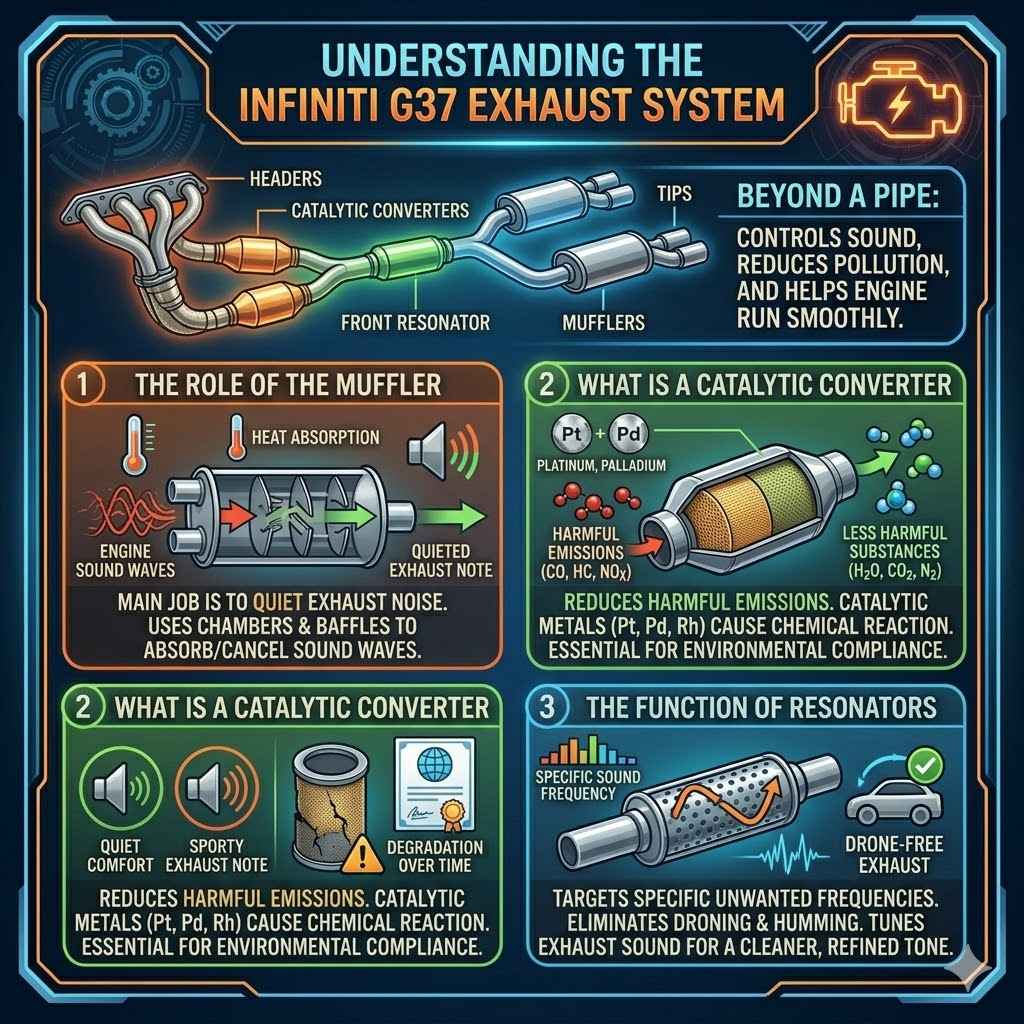
The exhaust system on your Infiniti G37 is more than just a pipe that carries gases away from the engine. It plays a vital role in controlling the sound your car makes, reducing pollution, and even helping your engine run smoothly. When people talk about exhaust systems, they often mention parts like mufflers, catalytic converters, and yes, resonators.
Each of these parts has a specific job. This section will explain what each of these key components does so you can see how they fit together.
The Role of the Muffler
The muffler is a major part of your exhaust system. Its main job is to quiet down the loud noise that comes from the engine. When the engine burns fuel, it creates a lot of sound waves.
The muffler uses a series of chambers and baffles to absorb and cancel out these sound waves. Think of it like a soundproof room for your exhaust.
Without a muffler, your car would sound extremely loud, often unpleasantly so. The design of a muffler can affect the sound it produces. Some mufflers are designed to be very quiet, while others allow a bit more engine sound to escape, giving the car a sportier tone.
The way sound waves are managed inside the muffler directly impacts the overall exhaust note you hear.
What is a Catalytic Converter
The catalytic converter is another important component. Its primary function is to reduce harmful emissions. When exhaust gases pass through the catalytic converter, a special coating made of precious metals like platinum, palladium, and rhodium causes a chemical reaction.
This reaction changes harmful pollutants like carbon monoxide, hydrocarbons, and nitrogen oxides into less harmful substances such as water vapor, carbon dioxide, and nitrogen gas.
This is a critical part of modern car emissions control. Regulations require cars to have catalytic converters to help protect the environment. The performance of a catalytic converter can degrade over time due to age, damage, or contamination, which can lead to increased emissions and potential engine issues.
Keeping your catalytic converter in good working order is essential for both environmental compliance and vehicle health.
The Function of Resonators
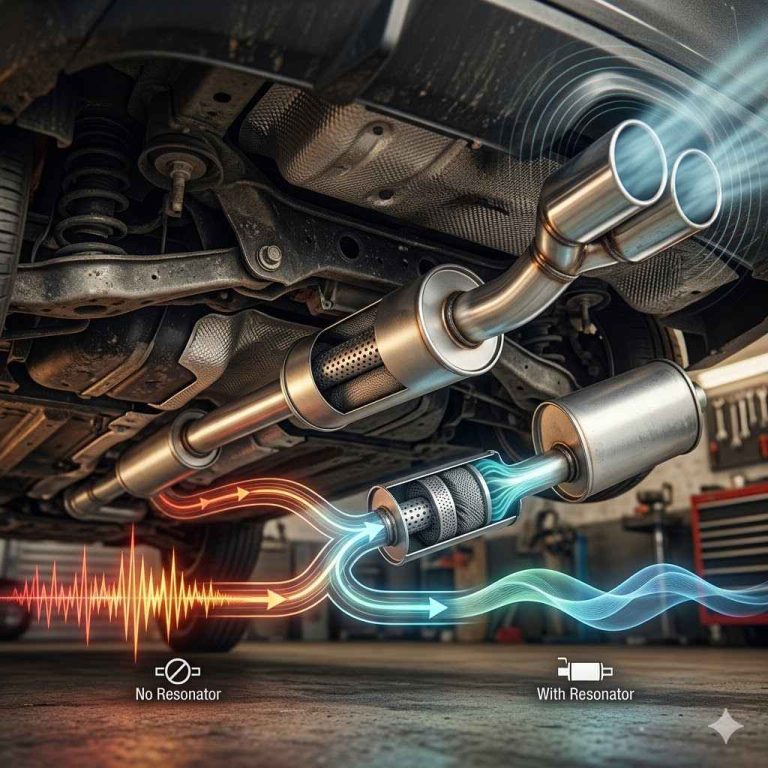
Resonators are also key in shaping the sound of your exhaust. Unlike mufflers that focus on reducing overall noise, resonators are designed to target specific sound frequencies. They help to eliminate or reduce any droning or unwanted humming sounds that might otherwise occur, especially at certain engine speeds.
This is particularly important for making the exhaust note sound more pleasant and refined.
A resonator works by using an internal chamber or a perforated tube. When exhaust gases pass through, they create sound waves. These sound waves interact with the air inside the resonator’s chamber, canceling out specific unwanted frequencies.
This tuning process results in a cleaner, more targeted exhaust sound. The presence and design of resonators significantly contribute to the overall tone and character of the exhaust note.
Does the Infiniti G37 Exhaust Have Resonators
Now, let’s get to the main question: Does the Infiniti G37 Exhaust Have Resonators? For the Infiniti G37, the answer is typically yes. Most stock G37 models come equipped with resonators as part of their exhaust system.
These resonators are strategically placed to tune the exhaust note, aiming for a balance between performance sound and refinement. They help to remove certain undesirable frequencies that can create a drone inside the cabin, especially at cruising speeds.
The exact number and placement of resonators can vary slightly depending on the specific G37 model year and trim level. However, the intention behind their inclusion remains the same – to create a more pleasing auditory experience for the driver and passengers. Knowing this helps when you’re thinking about upgrading or modifying your exhaust system.
If you want a different sound, understanding if you have resonators and what they do is the first step.
Identifying Resonators on Your G37
Finding the resonators on your Infiniti G37 is usually straightforward once you know what to look for. They are typically cylindrical or oval-shaped metal canisters located along the exhaust pipes, generally between the catalytic converters and the mufflers, or sometimes as part of the muffler assembly itself. You might see one or two of these components on each side of the exhaust.
Visually, they look like smaller versions of the muffler but are often lighter. They don’t have the same internal baffling complexity as a muffler but serve the specific purpose of sound cancellation for certain frequencies. You can also identify them by their sound.
If your G37 has a relatively smooth exhaust note without excessive droning at highway speeds, it’s a good indicator that resonators are present and doing their job effectively.
The Impact of Resonators on Sound
Resonators play a crucial role in shaping the exhaust sound of the Infiniti G37. Their primary function is to cancel out specific sound frequencies, particularly those that cause unpleasant droning or humming at certain RPMs. This results in a cleaner, more refined exhaust note.
Without resonators, you might experience a more aggressive, but potentially raspy or droney, sound that can become tiresome during long drives.
The presence of resonators helps achieve a sound profile that is sporty enough to be enjoyable but also comfortable for daily driving. They contribute to the overall tonal quality, ensuring that the exhaust sound is not just loud, but also has a pleasant character. This balance is often what enthusiasts look for, and it’s a key reason why many G37 owners choose to keep their resonators intact when performing exhaust modifications.
Resonator Delete and Its Effects
A common modification for the Infiniti G37 is a “resonator delete.” This involves removing the stock resonators and replacing them with straight pipes. The primary goal of this modification is to alter the exhaust note, making it louder and more aggressive. By removing these sound-tuning components, more of the raw exhaust sound from the engine and mufflers is allowed to pass through.
The effects of a resonator delete can be quite noticeable. You’ll typically hear a deeper, louder tone, and the exhaust will often pop and crackle more, especially during deceleration. However, this modification also increases the likelihood of experiencing exhaust drone, which is an annoying, constant humming sound that can be very intrusive inside the cabin.
For some, this aggressive sound is desirable, while for others, the drone makes it impractical for everyday use.
G37 Exhaust Modifications and Resonators
When considering modifications to your Infiniti G37’s exhaust system, understanding the role of resonators is key. Whether you’re looking for a deeper growl, a higher-pitched sport sound, or simply want to reduce cabin noise, resonators are a significant factor. Many aftermarket exhaust systems for the G37 are designed with or without resonators, offering different sound profiles.
If you’re planning to upgrade your exhaust, you’ll likely encounter options that either retain, remove, or replace the stock resonators. Each choice will have a distinct impact on the sound and performance. This section will help you understand these options and make informed decisions for your G37.
Aftermarket Cat-Back Exhaust Systems
A cat-back system might offer a more aggressive tone than stock, even if it includes resonators. The design of the pipes, mufflers, and any resonators in the aftermarket system will all contribute to the final sound. It’s important to listen to sound clips or read reviews of specific systems to get an idea of the sound they produce before making a purchase.
Performance vs. Sound in Exhaust Upgrades
Often, people modify their exhaust for either performance gains or a better sound. While these two goals can overlap, they can sometimes be at odds. For instance, a system with minimal restrictions, like a resonator delete and straight pipes, might offer the most potential for horsepower gains by improving exhaust flow.
However, this typically comes at the cost of increased noise and potential drone.
On the other hand, systems designed for a refined, sporty sound might still incorporate resonators or specially tuned mufflers to manage the noise. These systems might offer modest performance improvements, but their primary focus is on enhancing the auditory experience without making the car unbearable for daily driving. The choice between performance and sound often depends on your personal preferences and how you use your G37.
Case Study: G37 Exhaust Upgrade for Daily Driving
Sarah, an Infiniti G37 owner, wanted a sportier exhaust note for her daily commute without the annoying drone often associated with loud exhausts. She researched various aftermarket options and found a cat-back system that specifically advertised a balance between enhanced sound and reduced cabin noise. This system retained a form of resonance, though perhaps not identical to the stock resonators, and featured a finely tuned muffler.
After installation, Sarah was pleased with the results. The exhaust had a deeper, more satisfying tone when accelerating, and it was noticeably quieter at highway speeds. She reported a significant reduction in the droning sound she had feared.
This case shows that it is possible to achieve a sportier exhaust sound while maintaining a comfortable driving experience by choosing modifications that consider the role of resonance and muffling.
Sample Scenario: Modifying for Track Use
John owns an Infiniti G37 that he primarily uses for track days and occasional spirited drives on winding roads. For him, maximizing engine performance and producing an aggressive, audible exhaust note are the top priorities. He decided to go with a full cat-back exhaust system that featured a resonator delete and high-flow mufflers.
The result was a significantly louder and more aggressive exhaust sound, with noticeable pops and bangs on deceleration. While driving on the track, the loud exhaust was less of an issue. However, he admitted that on longer highway stretches between tracks, the drone could become quite noticeable and fatiguing.
This scenario highlights that for performance-focused applications, sound management might take a backseat to flow and volume.
Understanding Exhaust Components and Their Interactions
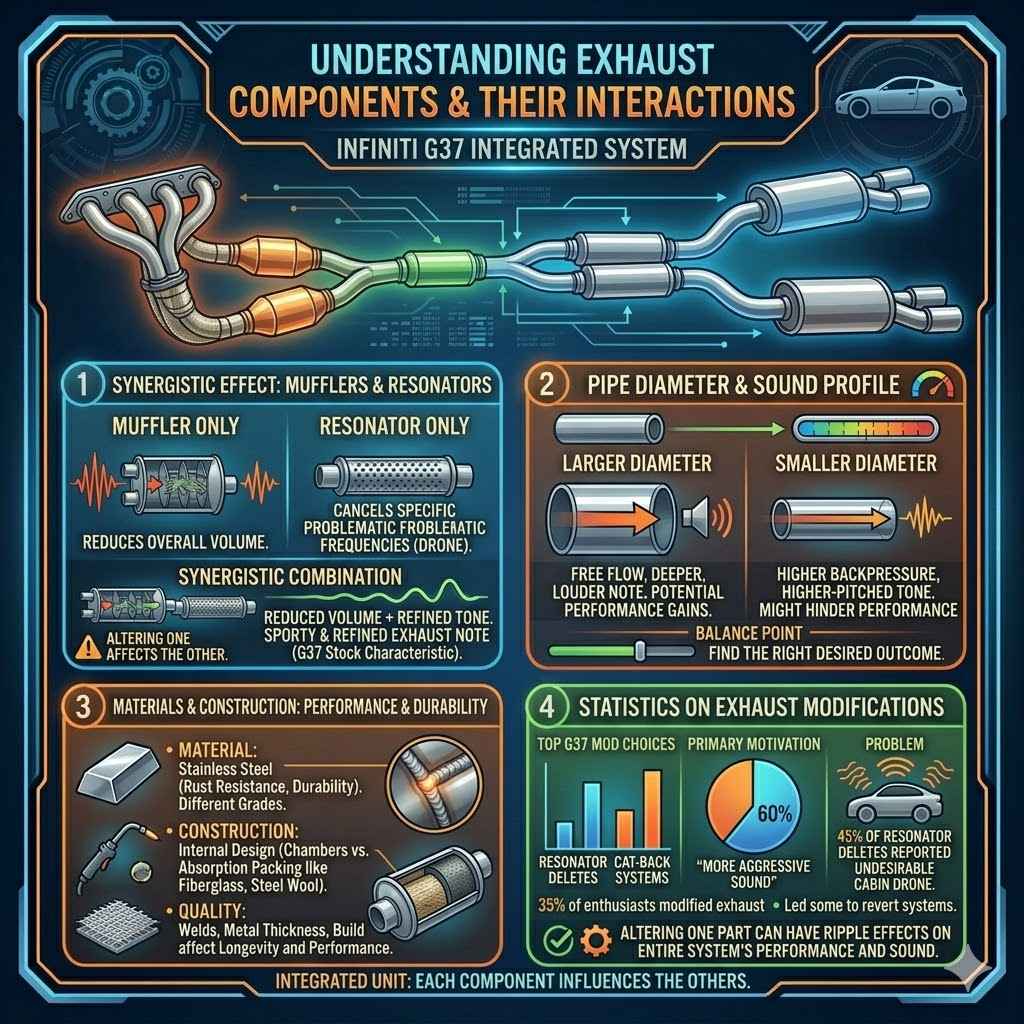
The exhaust system of your Infiniti G37 is an integrated unit where each component influences the others. Resonators, mufflers, and catalytic converters all work in concert to manage exhaust gases, control noise, and reduce emissions. Understanding how these parts interact is crucial when you’re thinking about making changes, as altering one part can have ripple effects on the entire system’s performance and sound.
For example, simply removing resonators without considering the muffler might lead to an overly loud or unpleasantly resonant exhaust. Conversely, a very restrictive muffler could negate the benefits of a less restrictive resonator or pipe design. This section will explore these relationships in more detail.
The Synergistic Effect of Mufflers and Resonators
Mufflers and resonators are often discussed together because they both deal with sound, but they do so in different ways. A muffler’s main goal is to reduce the overall volume of exhaust noise by using internal chambers and absorption materials. It acts as the primary noise reducer.
Resonators, on the other hand, are tuned to cancel out specific problematic sound frequencies, like the drone that can occur at highway speeds.
When both are present and properly designed, they create a synergistic effect. The muffler reduces the overall loudness, while the resonators refine the tone and eliminate unwanted hums. This combination results in an exhaust note that is both sporty and refined, a common characteristic of the Infiniti G37’s stock exhaust.
The absence or modification of one component will inevitably alter the sound produced by the other.
How Pipe Diameter Affects Sound
The diameter of the exhaust piping also plays a significant role in the overall sound and performance of your G37’s exhaust system. Larger diameter pipes generally allow exhaust gases to flow more freely, which can lead to slight performance gains. However, larger pipes can also contribute to a deeper, louder exhaust note.
Conversely, smaller diameter pipes can create more backpressure, which might slightly hinder performance but can also lead to a higher-pitched exhaust tone. When choosing aftermarket exhaust components, the diameter of the pipes is a factor that affects both the sound and how the exhaust system integrates with other components like the catalytic converter and mufflers. It’s about finding the right balance for your desired outcome.
Material and Construction of Exhaust Parts
The materials used in exhaust components, as well as their construction, can influence both sound and durability. Stainless steel is a popular material for aftermarket exhausts because it is resistant to rust and corrosion, which is important for components exposed to harsh road conditions and exhaust heat. Different grades of stainless steel offer varying levels of durability and cost.
The internal construction of mufflers and resonators also varies. Some use packing materials like fiberglass or steel wool to absorb sound, while others rely purely on chamber design. The quality of welds, the thickness of the metal, and the overall build quality of an exhaust system will affect its longevity and how it performs over time.
Statistics on Exhaust Modifications
According to a survey by a leading automotive parts retailer, approximately 35% of car enthusiasts have made some form of exhaust modification to their vehicles. Among these, resonator deletes and cat-back exhaust systems were among the most popular choices for vehicles like the Infiniti G37. Another report indicates that a significant portion of these modifications are driven by the desire for a more aggressive sound, with about 60% of owners citing sound as their primary motivation.
However, a notable challenge reported by 45% of owners who performed resonator deletes was the onset of undesirable cabin drone, leading some to later revert to systems with some form of resonance management. This data underscores the importance of understanding the full impact of exhaust modifications.
Frequently Asked Questions
Question: Does the Infiniti G37 have two mufflers and two resonators?
Answer: Most Infiniti G37 models are equipped with dual exhaust systems, meaning they typically have two mufflers, one on each side. Similarly, they usually have two resonators, also positioned one on each side of the exhaust pipes, working in tandem to tune the sound.
Question: Can I remove just the mufflers without affecting the resonators?
Answer: Yes, you can often remove just the mufflers and keep the resonators in place. This will make your exhaust louder and more aggressive, but the resonators will still help to control some of the unwanted frequencies and drone.
Question: What happens if I remove both mufflers and resonators?
Answer: Removing both mufflers and resonators will result in a significantly louder and more raw exhaust sound. You will likely experience a much more aggressive tone, but there is a very high chance of significant cabin drone at cruising speeds.
Question: Are aftermarket resonators different from stock ones?
Answer: Yes, aftermarket resonators can be designed differently from stock ones. They might be smaller, have different internal designs, or be made of different materials to achieve a specific sound profile or enhance flow.
Question: Is it legal to remove resonators from my Infiniti G37 exhaust?
Answer: The legality of removing resonators can vary by region. In some areas, modifying exhaust systems to be louder or change emissions characteristics is illegal. It is always best to check local regulations before making any exhaust modifications.
Final Thoughts
Yes, your Infiniti G37 exhaust system typically includes resonators. These components are essential for tuning the exhaust sound and reducing unwanted drone. Whether you decide to keep them, modify them, or remove them, knowing their function helps you achieve the sound you want for your G37.
Make informed choices for a better driving experience.
Related pick: Check today's price on Amazon