Are Flex Pipes Covered Under Basic Car Warranty: Essential Guide
Flex pipes are generally NOT covered under a basic car warranty. Basic warranties typically cover manufacturing defects in new parts, while flex pipe failures are most often due to wear and tear. However, some extended warranties or specific circumstances might offer coverage.

TORDXICS
TORDXICS Universal Exhaust Flex Pipe Flex Tube-36"…
- Universal : great for catback system, exhausts, mufflers, downpipes, headers, tips.
- 5 " ID x 36" [3'] Length, pre-cut and galvanized.
- DURABLE -- Single roll band construction for durability.
As an Amazon Associate I earn from qualifying purchases.
Driving with a broken flex pipe can be a real headache. That annoying rumbling sound, the smell of exhaust fumes in your car, and the potential for a serious breakdown are all reasons why people worry about these issues. It’s natural to wonder if your car’s basic warranty will help you out when something like this happens. This guide is here to clear things up for you, explaining what a flex pipe is, why it might fail, and what your warranty options likely are. We’ll break down everything you need to know in simple terms, so you can understand your car better and drive with peace of mind.
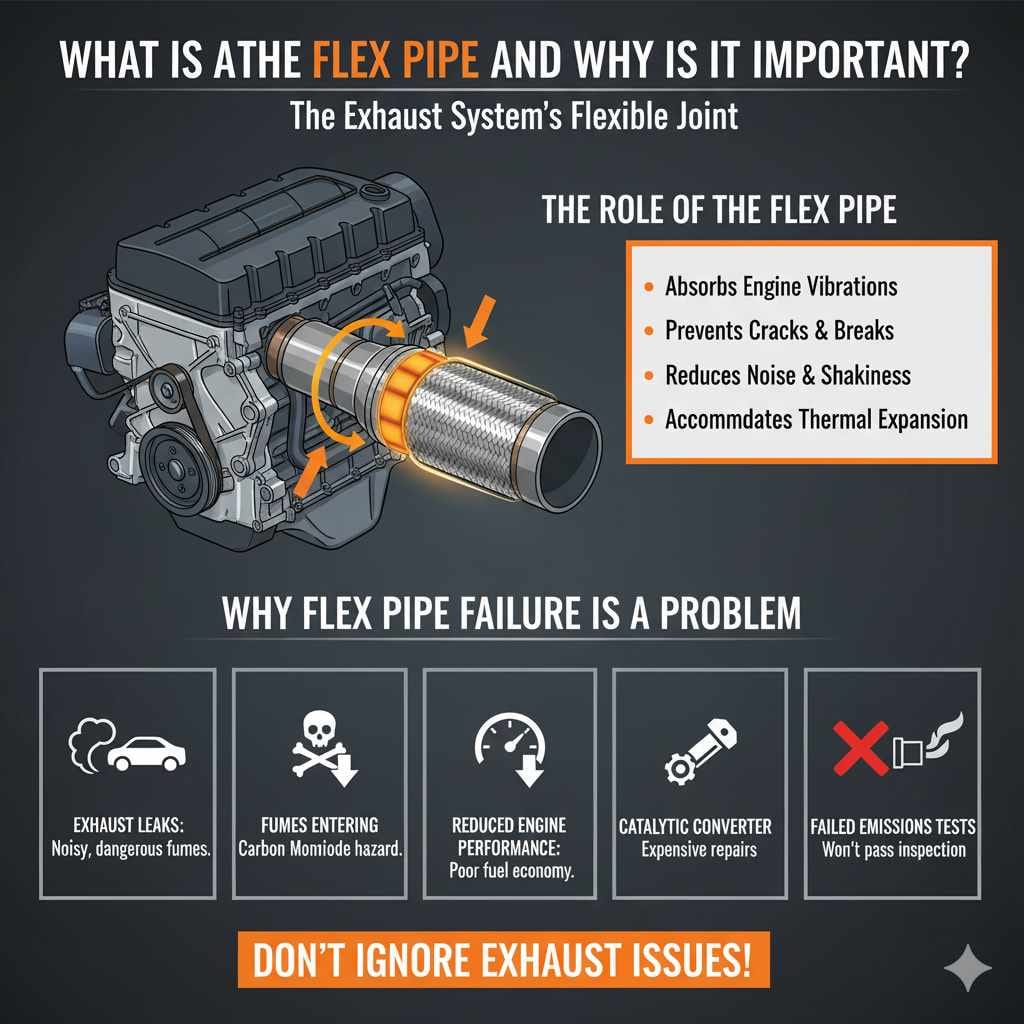
What is a Flex Pipe and Why is it Important?
Your car’s exhaust system is a complex network of pipes and components designed to safely divert harmful gases away from your vehicle’s cabin and into the atmosphere. At a crucial point in this system, usually between the exhaust manifold and the catalytic converter, you’ll find the flex pipe.
The Role of the Flex Pipe
The flex pipe, also known as a flexible exhaust pipe or exhaust flex connector, is essentially a braided metal hose. Its primary job is to absorb the engine’s vibrations and movement. When your engine runs, it naturally vibrates quite a bit. Your car’s chassis is rigid, and without a flex pipe, these vibrations would be directly transferred to the rest of the exhaust system, including the manifold, catalytic converter, and muffler. This constant shaking and rattling would eventually lead to stress fractures and premature failure of these expensive components.
Think of it like a flexible joint in plumbing. It allows for movement without breaking the connections. The same principle applies here, allowing the engine to move independently of the rest of the exhaust system. In addition to absorbing vibrations, the flex pipe also accommodates the natural expansion and contraction of the exhaust components as they heat up and cool down during operation.
Why Flex Pipe Failure is a Problem
When a flex pipe fails, it essentially creates a leak in your exhaust system. This can lead to several issues:
Exhaust Leaks: The most immediate problem is that exhaust gases will escape under your car instead of being directed out the tailpipe. This can be noisy and dangerous.
Fumes Entering the Cabin: If the leak is significant or located in a certain area, exhaust fumes can find their way into your car’s interior. Carbon monoxide, a colorless and odorless gas, is a serious health hazard and can cause dizziness, headaches, and in severe cases, be fatal.
Reduced Engine Performance: An exhaust leak before the oxygen sensors or catalytic converter can disrupt the airflow and the precise fuel-air mixture your engine needs to run efficiently. This can result in poorer fuel economy and decreased power.
Catalytic Converter Damage: In some cases, a severely damaged flex pipe can lead to exhaust backpressure issues that can eventually harm your catalytic converter, which is a very expensive part to replace.
Failed Emissions Tests: With exhaust gases escaping, your car may not be able to meet emissions standards, leading to a failed inspection.
For these reasons, a damaged flex pipe needs prompt attention.
Understanding Your Car’s Basic Warranty
When you buy a new car, it typically comes with a “basic” or “bumper-to-bumper” warranty. This is the comprehensive coverage that most people refer to when they talk about their car’s warranty.
What Basic Warranties Generally Cover
A basic car warranty is designed to protect you against manufacturing defects and faulty workmanship. This means that if a part fails due to a flaw in how it was made or installed at the factory, the manufacturer will usually cover the cost of repair or replacement. This coverage is usually for a specific period, such as 3 years or 36,000 miles, whichever comes first.
Examples of what might be covered under a basic warranty include:
Engine components (e.g., internal parts, gaskets)
Transmission issues
Electrical systems (e.g., radio, power windows, control modules)
Suspension and steering components
Air conditioning system
Various seals and gaskets
The key principle is that the defect must be inherent to the part or the manufacturing process, not caused by external factors or normal wear and tear.
What Basic Warranties Typically Exclude
While basic warranties are quite extensive, they have limitations. Certain parts and conditions are almost always excluded. These exclusions help manufacturers keep warranty costs manageable. Common exclusions include:
Wear and Tear Items: Parts that are designed to wear out over time and require regular replacement are not covered. This includes items like brake pads, tires, wiper blades, and spark plugs.
Consumables: Fluids (oil, coolant, washer fluid), filters (oil, air, cabin), and fuses are considered consumables and are not covered.
Damage from Accidents or Neglect: Any damage caused by a collision, improper maintenance, or misuse of the vehicle is excluded.
Cosmetic Issues: Scratches, dents, and other cosmetic imperfections that don’t affect the vehicle’s function are typically not covered after a certain initial period.
Aftermarket Modifications: If you install non-factory parts, any issues arising from those modifications may void warranty coverage for related systems.
This is where the nature of a flex pipe failure often falls.
Are Flex Pipes Covered Under Basic Car Warranty? The Verdict
Now, let’s get to the main question: are flex pipes covered under a basic car warranty?
In most cases, a flex pipe is considered a wear-and-tear item and is NOT covered under a basic new car warranty.
Here’s why:
Designed to Flex and Fatigue: The very purpose of a flex pipe is to bend and absorb vibrations. Over time, this constant flexing and the exposure to heat and exhaust gases cause the metal to fatigue and eventually break or fray. This is a natural aging process for the component, similar to how tires wear down.
External Influences: Flex pipes can also be damaged by external factors that are not manufacturing defects. For instance, hitting a large pothole or a speed bump too aggressively can cause the exhaust system to hang or strike the ground, leading to immediate damage to the flex pipe. Rust and corrosion, especially in areas with harsh winters and road salt, can also accelerate the degradation of the flex pipe material.
Age and Mileage: Failures due to age and accumulated mileage are generally not considered manufacturing defects. Manufacturers expect components to last for a reasonable lifespan, and once a component has reached the end of its intended service life, its replacement is typically the owner’s responsibility.
When Might a Flex Pipe Be Covered by Warranty?
While the general rule is no, there are a few scenarios where a flex pipe might fall under warranty coverage:
Manufacturing Defect: If it can be proven that the flex pipe failed prematurely due to a defect in its manufacturing (e.g., faulty braiding, weak weld, substandard material), it could be covered under warranty. This is rare and often difficult to prove. The burden of proof usually lies with the owner and a skilled mechanic to demonstrate that the failure wasn’t due to normal wear or external damage.
Part of a Larger Covered Component Failure: In very rare instances, a flex pipe might be considered an integral part of a larger exhaust component that is still under warranty, and its failure is a direct consequence of that larger component’s defect. This is highly unlikely.
Extended Warranties and Service Contracts: Some aftermarket extended warranties or comprehensive service contracts might offer broader coverage that can include exhaust components, or specifically mention flex pipes. It is crucial to read the terms and conditions of any extended warranty very carefully, as these often have their own lists of exclusions.
Dealer Goodwill: In instances where a car is just outside its basic warranty period, and the failure appears to be a premature wear issue rather than outright neglect or damage, a dealership might offer some goodwill assistance or a partial discount on the repair. This is entirely at the dealership’s discretion and is not a guarantee.
Recalls: While extremely rare for flex pipes, if a specific model or batch of flex pipes is found to have a systemic design or manufacturing defect that poses a safety risk, the manufacturer might issue a recall. In such a case, the repair would be covered by the manufacturer. You can check for recalls on your vehicle through the NHTSA website.
Cost of Flex Pipe Replacement
If your flex pipe needs replacement and isn’t covered by warranty, it’s good to have an idea of the costs involved. The price can vary significantly based on your car’s make and model, the type of flex pipe required, and your location (labor rates differ).
Here’s a general breakdown of what you can expect:
| Component | Average Cost Range (USD) | Notes |
|---|---|---|
| Flex Pipe Part | $50 – $200 | Varies by vehicle and quality. Some are integrated into larger pipes. |
| Labor | $100 – $300 | Most repairs take 1-3 hours. More if integrated with other parts. |
| Total Estimated Cost | $150 – $500+ | Can be higher for luxury vehicles or complex exhaust systems. |
Important Considerations:
Integrated Pipes: On some vehicles, the flex pipe is not a standalone part but is welded as part of a longer pipe section (e.g., front pipe, catalytic converter pipe). Replacing these integrated sections will be more expensive, both for the part and the labor.
Specialty Tools: While not always the case, some flex pipe replacements might require specialized tools for cutting and welding, which can increase labor costs.
Catalytic Converter Proximity: If the flex pipe is attached directly to the catalytic converter, there’s a higher risk of damaging the converter during the replacement, which would add significant cost.
When getting quotes, it’s always a good idea to:
1. Ask for a detailed breakdown: Ensure you know the cost of the part and labor separately.
2. Inquire about the part quality: Ask if they are using OEM (Original Equipment Manufacturer) parts or aftermarket parts, and what the warranty is on the part itself.
3. Get multiple quotes: Shop around at different reputable repair shops.
DIY vs. Professional Replacement
Deciding whether to tackle a flex pipe replacement yourself or take it to a professional depends on your skills, tools, and the complexity of the job.
DIY Replacement: Pros and Cons
Pros:
- Significant cost savings on labor.
- Satisfaction of performing your own car repair.
Cons:
- Requires specialized tools (e.g., exhaust pipe expander, welder, safety equipment).
- Can be time-consuming and physically demanding.
- Risk of improper installation, leading to leaks or further damage.
- Safety concerns with working under a vehicle.
Professional Replacement: Pros and Cons
Pros:
- Expertise ensures proper installation and diagnosis.
- Access to specialized tools and equipment.
- Warranty on the repair work for peace of mind.
- Safer than DIY for most individuals.
Cons:
- Higher overall cost due to labor charges.
- Can take time to schedule an appointment.
If you are not experienced with exhaust repairs or do not have the necessary welding equipment, it is highly recommended to have the flex pipe replaced by a qualified mechanic. Exhaust systems operate under high heat and pressure, and improper repairs can be dangerous. You can often find guides for specific vehicle models on forums or YouTube, and reputable automotive resources like those from AutoZone’s DIY guides can offer insights into typical repair processes.
Tips to Extend Flex Pipe Life
While flex pipes are wear items, there are a few things you can do to help them last longer:
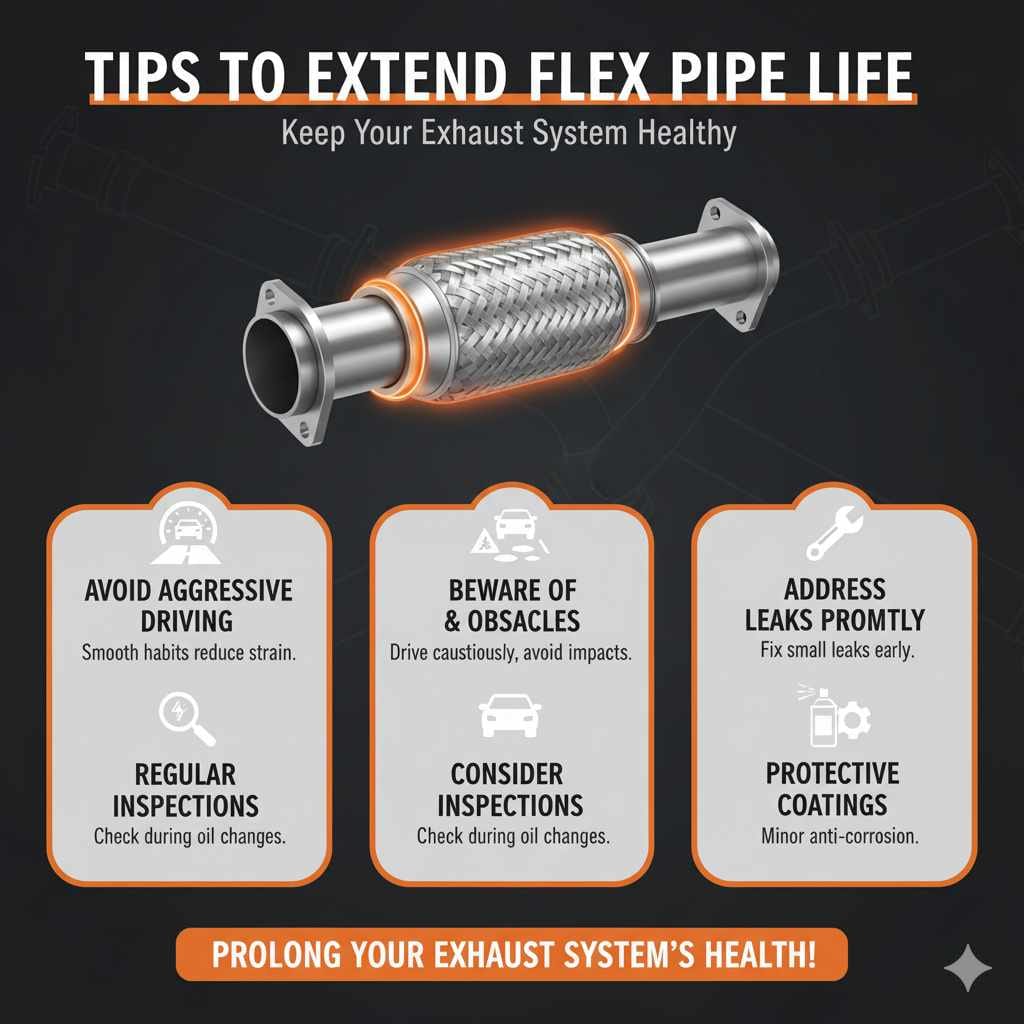
Avoid Aggressive Driving: Frequent hard acceleration and braking can put extra stress on the exhaust system. Smooth driving habits reduce strain.
Beware of Potholes and Obstacles: Hitting large bumps or road debris can jolt the entire exhaust system, potentially damaging the flex pipe and its connections. Drive cautiously and avoid impacts.
Address Exhaust Leaks Promptly: If you notice any unusual noises or smells from your exhaust, get it checked immediately. A small leak can sometimes put extra strain on other parts of the system.
Regular Inspections: During routine oil changes or other maintenance, ask your mechanic to visually inspect the flex pipe for signs of fraying, rust, or damage. Catching problems early can prevent more significant issues.
Consider Protective Coatings (Advanced): In some cases, specialized heat-resistant coatings can offer a very minor degree of protection against corrosion, but their long-term effectiveness on flex pipes is debated and not a substitute for proper maintenance.
Frequently Asked Questions (FAQs)
Q1: How do I know if my flex pipe is broken?
A1: Common signs include a loud, rumbling, or hissing noise from under the car, especially when you accelerate. You might also notice a strong exhaust smell inside the vehicle, or a decrease in engine performance and fuel efficiency.
Q2: Can I drive with a broken flex pipe?
A2: It’s not recommended. In addition to the noise and reduced performance, exhaust fumes, including dangerous carbon monoxide, can leak into your cabin. It can also lead to further damage to other exhaust components or the engine. It’s best to get it repaired as soon as possible.
Q3: Does a catalytic converter replacement include the flex pipe?
A3: Not usually. The flex pipe and the catalytic converter are separate components, although they are often connected. If your flex pipe is damaged, it will typically be replaced as its own part. If the catalytic converter itself is faulty and covered by warranty, the flex pipe might need separate replacement if it’s also damaged or worn.
Q4: What’s the difference between a flex pipe and a muffler?
A4: The flex pipe is a flexible connector designed to absorb engine vibrations located near the front of the exhaust system. The muffler is located further back and is designed to reduce the noise produced by the engine’s exhaust gases.
Q5: Are there universal flex pipes I can buy?
A5: Yes, universal flex pipes are available and can be a more affordable option. However, they require precise measurement and often professional installation (cutting and welding) to ensure a proper fit and seal for your specific vehicle. It’s crucial to get the right diameter and length.
Q6: How long do flex pipes typically last?
A6: Flex pipes don’t have a set lifespan like some other parts. They can last anywhere from 3 to 10 years or more, depending on driving conditions, climate, vehicle maintenance, and the quality of the original part.
Conclusion
Understanding whether a flex pipe is covered under your basic car warranty boils down to its typical failure causes. Since most flex pipe issues stem from normal wear and tear, vibrations, and external factors, they are rarely included in the comprehensive coverage of a new car’s basic warranty. While exceptions exist for proven manufacturing defects or through extensive aftermarket warranties, you should generally budget for flex pipe repairs as an owner-responsible maintenance item.
Don’t let this worry you too much, though. Flex pipes are a crucial part of your exhaust system, ensuring a smoother, safer ride by handling engine vibrations. By being aware of the signs of a failing flex pipe—like unusual noises or exhaust odors—and by performing regular visual checks, you can catch problems early. If replacement is needed, knowing the approximate cost and the option between DIY versus professional service will help you make an informed decision. Prioritizing timely repairs will keep your car running efficiently and protect you and your passengers from harmful exhaust fumes.
Related pick: Check today's price on Amazon