Are Heat Shields Necessary Motorcycles: Proven Essential
Yes, heat shields are absolutely essential for your motorcycle. They protect you, your bike’s components, and passengers from extreme exhaust heat, ensuring a safer and more comfortable ride. Ignoring them can lead to burns, damaged parts, and potential fire hazards.

NTHREEAUTO
NTHREEAUTO Motorcycle Side Saddle Leather Heat Shield…
- 【Compatibility】Universal leather heat shields are compatible with Harley Street Glide, Heritage Softail, Fat Boy, Tour Glide, Road…
- 【Function】The heat deflectors wrap across the tank and down the sides, separate the hot air from the motorcycle engine away from t…
- 【Better Heat Insulation】Made of high quality microfiber PU leather, the back of the heatshield is designed with 5mm thick aluminum…
As an Amazon Associate I earn from qualifying purchases.
Ever felt a blast of searing heat radiating from your motorcycle’s exhaust pipe? It’s a common experience, especially on hot days or when you’re stopped in traffic. You might wonder, “Do I really need those metal panels around the exhaust?” The answer is a resounding yes! Heat shields are not just an accessory; they are a critical part of your motorcycle’s safety system. They play a vital role in protecting both you and your bike.
Many riders overlook the importance of these components, sometimes even removing them during customizations or simply due to wear and tear. This can leave you vulnerable to uncomfortable heat, potential burns, and even damage to nearby motorcycle parts. Don’t worry if you’re unsure about their purpose or condition. This guide will break down exactly why heat shields are necessary, what they do, and how to ensure yours are working hard to keep you safe and your ride cool.
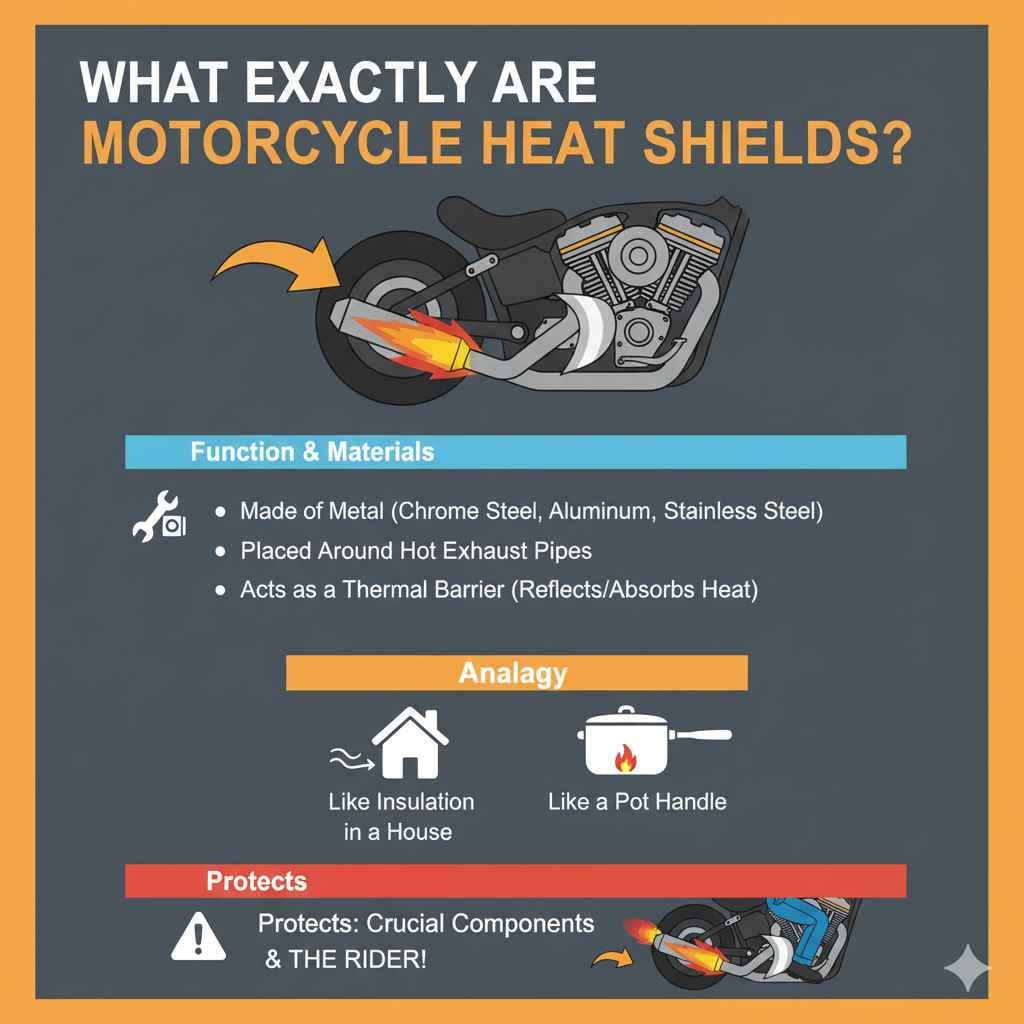
What Exactly Are Motorcycle Heat Shields?
Motorcycle heat shields are typically made of metal – often chrome-plated steel, aluminum, or stainless steel – and are strategically placed around the exhaust system, particularly near the hottest parts like the header pipes and mufflers. Their primary function is to act as a barrier, reflecting or absorbing the intense heat generated by the engine’s exhaust gases.
Think of them like the insulation in your house or the handles on a hot pot. Without them, the heat would directly transfer to anything nearby. On a motorcycle, “nearby” includes crucial components and, most importantly, the rider!
Why Are Motorcycle Heat Shields Essential? The Proven Benefits
The necessity of heat shields stems from a variety of critical functions they perform. These aren’t minor conveniences; they are fundamental to a safe and enjoyable riding experience. Let’s dive into the proven benefits:
1. Rider Protection: Preventing Burns is Key
This is arguably the most crucial function. Motorcycle exhaust pipes can reach temperatures of several hundred degrees Celsius (think upwards of 400-600°F or 200-315°C). Without a heat shield, your legs, especially your calves and thighs, are in direct proximity to these dangerously hot surfaces. A simple brush against a hot pipe can cause a severe burn, leading to pain, blistering, and the need for medical attention. Heat shields create a buffer zone, preventing accidental contact and significantly reducing the risk of burns.
Riders often wear protective gear, but even thick riding pants aren’t always enough to prevent heat transfer during prolonged contact or if a shield is missing. The shield provides an active physical barrier that disperses and reflects heat away from your body.
2. Protecting Motorcycle Components
Your motorcycle is a complex machine with many sensitive parts. The intense heat from the exhaust can degrade and damage various components if exposed directly for extended periods. These can include:
- Wiring and Electrical Components: Proximity to a hot exhaust can melt insulation on wires, leading to short circuits, electrical failures, and potential fire hazards.
- Plastic Parts: Fairings, fender components, and other plastic elements can warp, discolor, or melt if they are too close to an unshielded hot exhaust.
- Fuel Lines: While typically routed away, any errant fuel lines near a severely hot exhaust could pose a fire risk.
- Tires: Extreme heat radiating onto the rear tire, especially during slow traffic or when stationary, can potentially affect the tire’s integrity and performance over time.
- Paint and Finish: The paint on your motorcycle’s bodywork, frame, or even other parts of the exhaust system can fade, discolor, or blister when subjected to constant, unchecked heat.
3. Passenger Safety
If you ride with a passenger, heat shields are even more critical. Your passenger’s legs are even closer to the exhaust system, particularly on the right side of many motorcycles. Failing to have adequate heat shielding puts them at a significant risk of burns, potentially ruining their ride and putting you in a difficult situation.
4. Comfort During Rides
Beyond outright burns, the radiant heat from an unshielded exhaust can make riding incredibly uncomfortable. On a hot day, this heat can amplify the ambient temperature, making the experience unbearable. Heat shields help to deflect a significant portion of this radiant heat away from the rider’s legs and lower body, making shorter and longer rides much more pleasant.
This is especially noticeable in stop-and-go traffic, where airflow is minimal and the exhaust has more time to radiate heat directly onto the rider.
5. Maintaining Resale Value
A motorcycle with damaged plastic parts, melted wiring, or discolored paint due to exhaust heat will fetch a lower resale price. Keeping your heat shields in good condition helps preserve the overall condition and appearance of your bike, thus protecting its value over time.
Types of Motorcycle Heat Shields
Heat shields come in various forms and materials, each offering slightly different aesthetics and performance. Understanding these variations can help you choose the best option for your bike and preferences.
Material Matters:
- Chrome-Plated Steel: The most common type. Offers a classic, shiny look and good durability. Chrome can eventually pit or corrode if not maintained.
- Stainless Steel: Highly durable, corrosion-resistant, and can offer a brushed or polished finish. Often found on higher-end or performance exhausts.
- Aluminum: Lighter than steel and offers good heat reflection. Can be anodized in various colors or polished.
- Carbon Fiber: A premium option, very lightweight and offers a performance-oriented look. Excellent heat resistance but can be more expensive and susceptible to UV damage if not treated.
Design and Placement:
- Stock Shields: These are the shields that come fitted as original equipment by the manufacturer. They are designed to integrate seamlessly with the bike’s aesthetics and provide adequate protection for normal riding conditions.
- Aftermarket Shields: Available in a huge variety of styles, materials, and finishes. They can be direct replacements for stock shields, or entirely different designs that offer enhanced protection or a custom look.
- Exhaust Wrap (Alternative): While not a “shield” in the traditional sense, exhaust wrap made from fiberglass or basalt fiber can be wrapped around exhaust pipes. It insulates the pipe, reducing heat radiated outwards. However, it can trap moisture which may lead to corrosion, and it can also trap heat within the pipe itself, potentially affecting exhaust gas velocity and performance. It also changes the look of the exhaust significantly. For beginners, traditional shields are often a simpler and safer solution. For more on exhaust systems, consider resources from reputable automotive engineering bodies, like those found via SAE International, which provides extensive research on thermal management in automotive applications.
How Heat Shields Work: The Science Behind the Shield
Heat shields employ a few fundamental principles of thermal dynamics to do their job:
- Reflection: Polished surfaces, like chrome or polished stainless steel, are excellent at reflecting radiant heat. A significant portion of the heat energy is bounced back towards the source or away from sensitive areas.
- Convection: Air gaps are often designed between the heat shield and the exhaust pipe. This air acts as an insulator. As the shield heats up, it heats the air, which then rises and dissipates (convection), carrying heat away. It also creates a barrier that prevents direct contact between the hot pipe and the surrounding air or components.
- Absorption: While less efficient than reflection, the material of the shield itself will absorb some heat, slowing its transfer further. Thicker materials or those with specific coatings can enhance this.
The effectiveness of a heat shield depends on its material, its proximity to the heat source, the presence of an air gap, and its surface finish. A well-designed heat shield system significantly reduces the surface temperature of the components it covers.
DIY: Inspecting and Maintaining Your Motorcycle Heat Shields
As a motorcycle owner, you can easily perform regular checks on your heat shields. They are usually straightforward to inspect and often simple to maintain or replace.
Step-by-Step Inspection Guide:
- Safety First: Ensure your motorcycle is completely cool. Never work on a hot exhaust system. Park it on a level surface with the engine off for at least an hour, preferably longer.
- Visual Check: Walk around your bike and carefully look at all parts of your exhaust system. Identify where the heat shields are located. These are typically on the header pipes (closest to the engine) and the muffler (the silencer part).
- Look for Damage: Examine each heat shield for signs of damage. This includes:
- Cracks or deep dents
- Rust or corrosion (especially on chrome-plated steel)
- Loose or missing fasteners (bolts, clamps, springs)
- Warping or signs of melting
- Discoloration that indicates excessive heat exposure
- Check Fasteners: Gently try to wiggle the heat shields. They should be securely attached. If a shield feels loose, check its mounting bolts or clamps. Loose shields can rattle, make noise, and might not be providing adequate protection.
- Inspect Surrounding Components: While you’re there, look at the parts near the exhaust. Are there any melted wires, discolored paint, or warped plastic components that suggest a heat shield might be compromised or missing?
Basic Maintenance:
- Cleaning: Most heat shields can be cleaned with a mild soap and water solution. For stubborn grime or exhaust soot, a specific motorcycle cleaner or metal polish can be used. Always follow product instructions and test in an inconspicuous area first.
- Tightening Fasteners: If you find loose bolts or clamps holding the heat shields, gently tighten them. Be careful not to overtighten, which could strip threads or damage the shield.
- Buffing and Polishing: For chrome or polished aluminum shields, regular polishing can help maintain their appearance and reflectivity, which aids in heat reflection.
When to Replace Your Heat Shields
Heat shields are designed to last, but like all parts, they can wear out or become damaged. You should consider replacing them if:
- Significant Damage: Cracks that go deep into the material, large dents that compromise the shield’s shape, or extensive corrosion can significantly reduce its effectiveness and its ability to protect.
- Loose or Insecure: If fasteners are broken or excessively rusted and cannot be secured, the shield may need replacement. A rattling or flapping shield is a safety hazard.
- Melting or Warping: If you notice any signs of melting or warping, it means the shield is no longer effectively managing heat and needs immediate replacement.
- Performance Upgrades: Sometimes, when upgrading an exhaust system, the new system might come with its own heat shields or require specific types of shields.
Replacement is generally a straightforward process. You’ll typically need to remove the old shield by unfastening its bolts or clamps, then secure the new one in its place. Always refer to your motorcycle’s service manual or the manufacturer’s instructions for precise details.
Heat Shields vs. Other Exhaust Modifications
When riders start modifying their motorcycles, the exhaust system is often one of the first things to get attention. It’s important to understand how heat shields fit into this picture:
Aftermarket Exhaust Systems
Many aftermarket exhaust systems are designed to be more performance-oriented, which can sometimes mean they run hotter or have less comprehensive heat shielding incorporated inherently. When choosing an aftermarket exhaust, pay close attention to whether it includes adequate heat shields or if you’ll need to purchase them separately. Some high-performance exhausts intentionally omit shields to save weight or for a minimalist aesthetic, assuming the rider will add aftermarket solutions or is aware of the risk.
Ceramic Coating
Ceramic coating is applied to exhaust components to provide a durable, high-temperature barrier. It can help reduce radiant heat and protect the underlying metal. While effective, it can be expensive, and its primary function is often corrosion resistance and aesthetic improvement rather than the direct physical barrier a metal heat shield provides. Often, good ceramic coating can reduce the need for some heat shielding, but it’s not always a complete replacement, especially for rider protection.
Heat Shields as Protective Add-ons
Even if an aftermarket exhaust comes with some shielding, you might consider adding universal heat shields or replacing existing ones with better-performing options if you find the heat is still an issue. These can be attached with clamps and are a relatively easy way to enhance protection.
Table: Common Heat Shield Issues and Solutions
Here’s a quick reference for common problems and how to address them:
| Issue | Description | Solution |
|---|---|---|
| Loose Shield | Heat shield rattles or moves, fasteners seem worn. | Tighten mounting bolts/clamps. If fasteners are rusted/stripped, replace them. Check for broken mounting tabs on the shield. |
| Rust/Corrosion | Especially on chrome shields, surface rust or pitting is visible. | Light rust can sometimes be removed with metal polish or fine steel wool (use with caution on chrome). Heavy corrosion may indicate the shield is compromised and needs replacement. |
| Cracks/Dents | Visible breaks or significant deformities in the shield material. | Minor dents might be cosmetic. Deep cracks compromise structural integrity and heat deflection. Replace any shield with significant cracks. |
| Discoloration/Bluing | The metal has turned blue or brown from excessive heat. | This indicates the shield is working hard, but excessive bluing can mean the shield is too close or the exhaust is running excessively hot. Monitor for other issues. Deep bluing that doesn’t polish out might mean the shield’s reflective properties are diminished. |
| Missing Hardware | Bolts, nuts, or clamps are absent. | Source correct replacement hardware from a dealership, motorcycle parts store, or online vendor. Ensure you use the right size and type (e.g., heat-resistant bolts). |
Cost of Heat Shields and Replacement
The cost of heat shields can vary widely depending on the material, brand, and whether you’re purchasing OEM (Original Equipment Manufacturer) parts or aftermarket options.
- OEM Replacements: These are typically the most expensive but guarantee a perfect fit and match for your specific motorcycle model. Prices can range from $30 to $150 or more per shield, depending on the bike.
- Aftermarket Shields: You can often find aftermarket heat shields for less than OEM parts. Basic chrome shields might be $20-$60, while more specialized materials like carbon fiber or custom designs can cost $100-$300 or more.
- Universal Heat Shields: For basic protection or custom applications, universal heat shields that clamp onto the exhaust pipe are available for $15-$50.
For most riders, replacing a damaged or missing stock heat shield with another stock component or a reputable aftermarket equivalent is the most practical and cost-effective solution. If your motorcycle came without them or you’re building a custom, research options carefully to ensure they provide adequate coverage and protection.

Frequently Asked Questions (FAQ)
Q1: Can I ride my motorcycle without heat shields?
While you can ride without them, it’s highly not recommended. It significantly increases the risk of severe burns for you and your passenger, can damage your motorcycle’s components, and may even pose a fire risk. They are an essential safety feature.
Q2: How often should I check my motorcycle’s heat shields?
It’s a good practice to give your heat shields a quick visual inspection every few weeks, or at least monthly, as part of your general motorcycle maintenance. A more thorough check, including wiggling them to ensure they’re tight, should be done every few months or before a long ride.
Q3: My heat shield is discolored. Does that mean it’s broken?
Discoloration, often turning blue or brown (known as “bluing”), happens when the metal is subjected to high temperatures. It means the shield is actively working to dissipate heat. While it indicates the shield is hot, it doesn’t necessarily mean it’s broken. However, if the bluing is very deep, or if the shield is also cracked or warped, it might be compromised and require replacement.
Q4: Are aftermarket heat shields as good as stock?
Many aftermarket heat shields are excellent and can be just as good as, or even better than, stock ones. Look for reputable brands known for quality materials and construction. Always check reviews and ensure the shield is designed for your specific bike model or is a reliable universal fit.
Related pick: Check today's price on Amazon