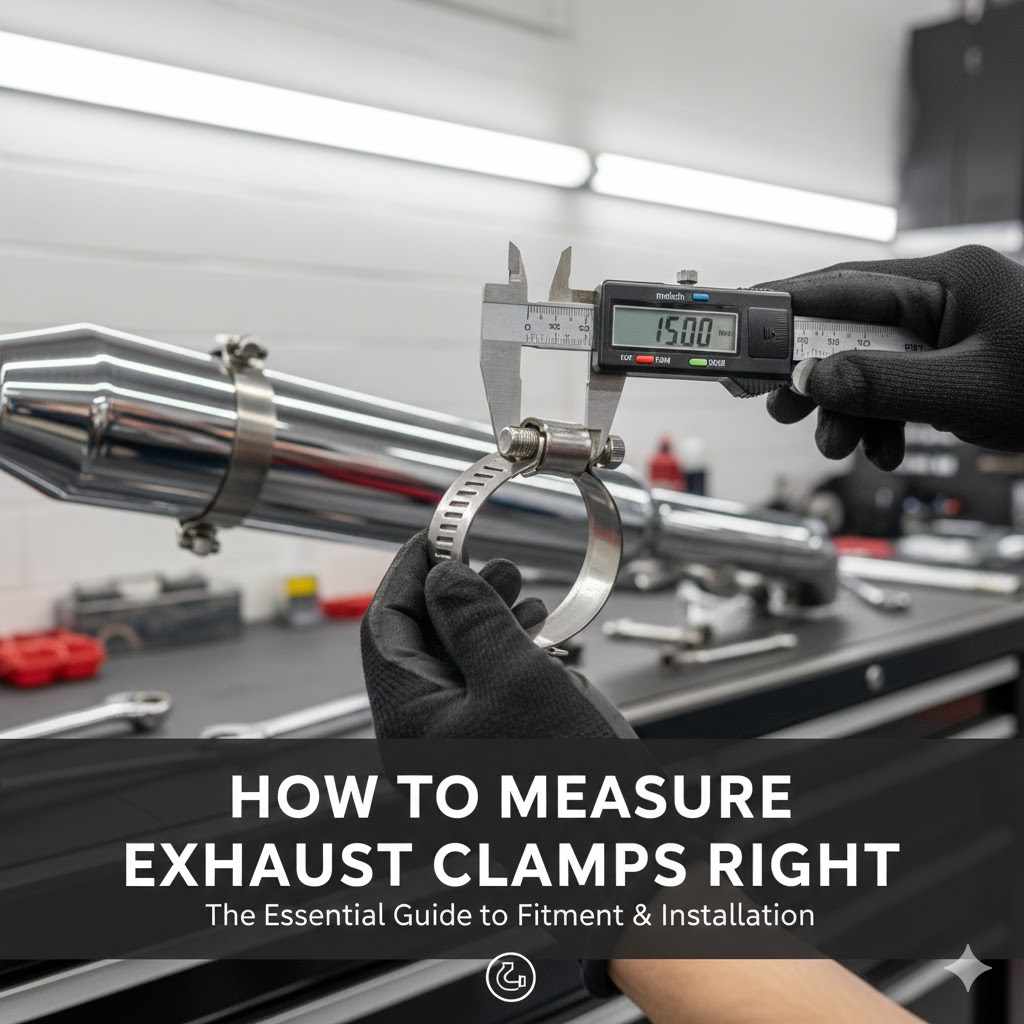
How To Measure Exhaust Clamps Right
Figuring out how to measure exhaust clamps correctly can seem tricky, especially if you’re new to car repairs. People often wonder if they are measuring the pipe size or the clamp size. Don’t worry; it’s simpler than you might think.
We will walk you through it step-by-step so you get it right every time. Ready to learn the best way to measure exhaust clamps?
Understanding Exhaust Clamp Measurement Basics
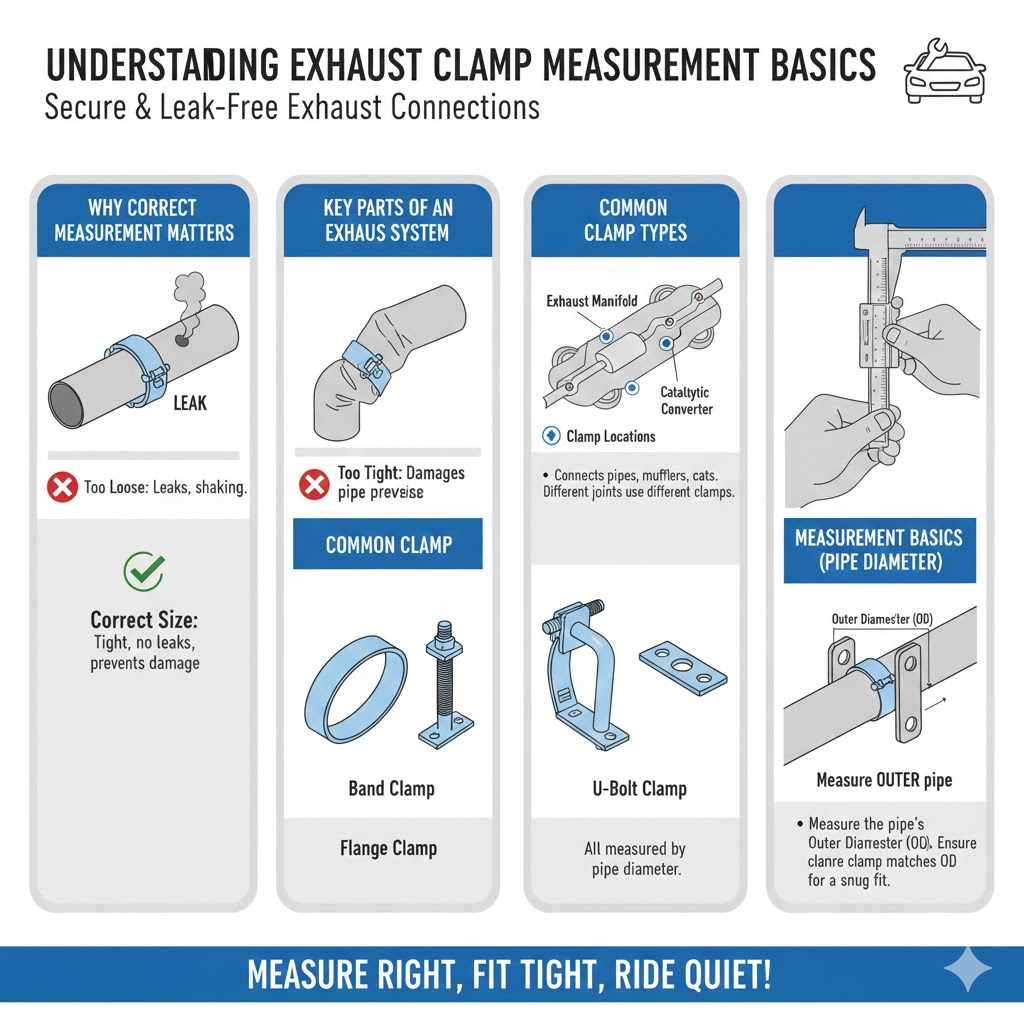
Measuring exhaust clamps correctly is fundamental for a secure and leak-free exhaust system. When you need to replace a clamp, getting the right size ensures it fits snugly around the exhaust pipe and mating flange or component. An incorrect measurement can lead to a clamp that’s too loose, allowing exhaust gases to escape, or one that’s too tight, potentially crushing or damaging the exhaust components.
This guide will simplify the process.
Why Correct Measurement Matters
Getting the size spot on is super important for a few reasons. If your clamp is too big, it won’t grip the pipe tight enough. This means exhaust fumes can leak out, which is not safe and can make your car sound bad.
It can also cause the exhaust pipe to shake or even fall off.
On the other hand, if the clamp is too small, trying to force it on can damage the exhaust pipe or the part it’s supposed to connect to. You might bend or crush the pipe, making future repairs harder. A properly sized clamp will hold everything together tightly and prevent leaks.
Key Parts Of An Exhaust System
Your car’s exhaust system is made of several parts that work together. It starts at the engine and runs to the back of your car. The main parts include the exhaust manifold, which collects gases from the engine cylinders; the catalytic converter, which cleans up the gases; the muffler, which quiets the noise; and the tailpipe, which lets the gases out.
Exhaust clamps are used at various connection points. They hold pipes together, attach mufflers, or secure catalytic converters. Different types of connections, like slip joints and flange joints, use different clamp styles, but the measurement principle remains similar.
Common Clamp Types
There are a few common kinds of exhaust clamps you’ll see. The most usual is a band clamp, which wraps all the way around the pipe and has a bolt that tightens it. Another type is a U-bolt clamp, which has a U-shaped bolt that goes around the pipe and attaches to a plate.
Some exhaust systems use flange clamps that bolt two flat surfaces together.
Each type of clamp is designed to create a strong seal. Even though they look a bit different, the way you measure to find the correct size is pretty much the same. It always comes down to measuring the diameter of the pipe it needs to fit around.
How Are Exhaust Clamps Measured Correctly
Figuring out how to measure exhaust clamps correctly is key to a successful repair or installation. Most people think they need to measure the clamp itself, but that’s not always the case. The most important measurement you need is the outer diameter of the exhaust pipe you are working with.
This is because the clamp’s job is to encircle and secure this pipe.
When you buy a clamp, it’s usually sized to fit a specific range of pipe diameters. So, if your exhaust pipe measures three inches across, you’ll look for a clamp designed for three-inch pipes. Some clamps are adjustable and can fit a small range of sizes, while others are made for one specific diameter.
Always check the clamp’s specifications to ensure it matches your pipe.
Gathering Your Tools
Before you start measuring, make sure you have the right tools. The most important tool is a tape measure or a caliper. A flexible tape measure works well for round pipes.
If you have access to a caliper, it can give you a more precise measurement, especially for smaller pipes or if the pipe is not perfectly round.
You’ll also want a way to clean the area you’re measuring. Sometimes, rust or grime can make it hard to get an accurate reading. A wire brush or some sandpaper can help clear away any debris.
Having safety gear like gloves and eye protection is also a good idea, as exhaust systems can be dirty and have sharp edges.
Measuring The Exhaust Pipe Diameter
To measure exhaust pipe diameter accurately, you need to find the widest point across the pipe. If you are using a tape measure, wrap it around the outside of the pipe. Make sure the tape measure is snug but not so tight that it deforms the pipe.
Read the measurement where the tape measure overlaps.
If the pipe is round, this measurement should be consistent all the way around. If you are using a caliper, place the jaws on opposite sides of the pipe and close them until they touch. The reading on the caliper is the diameter.
This method is often easier and more precise, especially if the pipe is slightly out of round.
Let’s say you measure a pipe and get 9.42 inches around. To find the diameter, you divide this number by pi (approximately 3.14159). So, 9.42 / 3.14159 equals about 3 inches.
This tells you you need a clamp for a 3-inch pipe. It’s important to remember that clamps are sized based on the pipe’s outer diameter, not its inner diameter or the clamp’s internal dimensions.
Understanding Clamp Sizing Charts
Exhaust clamp manufacturers provide sizing charts to help you pick the right clamp. These charts typically list the pipe diameter the clamp is designed for. For example, a clamp might be listed as fitting 2.5-inch pipes.
This usually means it’s made to fit a pipe with an outer diameter of 2.5 inches.
Some clamps are made to fit a range of sizes. For instance, a clamp might say it fits pipes from 2.25 inches to 2.75 inches. This is useful if your measurement is somewhere in the middle or if you’re not sure of the exact pipe size.
Always refer to the manufacturer’s specifications when in doubt, as sizing can vary slightly between brands.
Example Scenario 1
Imagine you need to replace the clamp on your muffler. You grab your tape measure and wrap it around the muffler pipe where the clamp sits. You read the tape measure and it shows 7.85 inches.
To find the pipe’s diameter, you divide 7.85 by 3.14159, which gives you about 2.5 inches.
Now you know you need a clamp for a 2.5-inch exhaust pipe. You go to the auto parts store and look for clamps. You find one labeled “2.5 Inch Exhaust Clamp.” This is the one you’ll buy.
It will fit snugly around your 2.5-inch pipe, creating a tight seal.
Example Scenario 2
Let’s say you are installing a new exhaust hanger and it requires a clamp. You take your digital caliper and measure the exhaust pipe’s outer diameter. The caliper reads 3.15 inches.
Since this is a precise measurement, you would look for a clamp specifically for a 3.15-inch pipe, or a clamp that has a range that includes 3.15 inches, like 3.00 inches to 3.50 inches.
If you only have a tape measure, you would wrap it around the pipe, getting a circumference measurement. Let’s say you measure 9.90 inches. Dividing this by pi (3.14159) gives you approximately 3.15 inches.
This confirms you need a clamp for a pipe of that size, ensuring a secure fit.
Types Of Exhaust Clamps Explained
Exhaust clamps come in various designs, each suited for different parts of the exhaust system and types of connections. Understanding these differences helps in choosing the correct clamp not just by size, but also by its function and how it seals. The most common ones are band clamps and U-bolt clamps, but other specialized types exist for specific applications.
The key to selecting the right clamp involves knowing whether you have a slip-fit connection or a flanged connection, and the diameter of the pipe or component you need to secure. Each clamp type aims to provide a strong, leak-proof joint under varying temperatures and vibrations typical of exhaust systems.
Band Clamps
Band clamps are very common for exhaust systems. They consist of a metal band that wraps around the pipe, often with a mechanism to join the ends together. This mechanism is usually a bolt and nut that you tighten to cinch the band down onto the pipe.
Some band clamps have a contoured inner surface that helps them conform better to the pipe’s shape.
These clamps are excellent for slip-fit connections, where one pipe slides into another. They provide a consistent and strong seal all around the joint. Because they apply pressure evenly, they are less likely to crush thinner pipes.
They are available in many sizes to fit different exhaust pipe diameters precisely.
U-Bolt Clamps
U-bolt clamps are another popular choice, often used for attaching exhaust pipes to hangers or for connecting pipes with flanges. They feature a U-shaped bolt that goes around the exhaust pipe. The two ends of the U-bolt pass through holes in a metal plate, and nuts are tightened onto the bolt threads to secure the pipe against the plate.
These clamps are very strong and provide excellent holding power. They are often used where pipes need to be firmly held in place, like at hanger points. While they offer good security, care must be taken not to overtighten them, as they can potentially deform the exhaust pipe if too much force is applied, especially on softer metal pipes.
Flange Clamps
Flange clamps are used when exhaust components connect via flanges. Flanges are flat metal rings that are bolted to the ends of pipes or components. Flange clamps are designed to fit around these flanges, pulling them together to create a seal.
They often consist of two halves that clamp around the outside of the flange assembly.
These clamps are essential for connections that require a very secure and often sealed joint, such as where a catalytic converter or manifold connects to another section of the exhaust. They help to ensure a tight fit between the mating surfaces of the flanges, preventing leaks under high pressure and temperature conditions.
Exhaust Pipe Sizing Table
Here’s a look at common exhaust pipe sizes and the typical clamp sizes that match them. Remember, these are based on the outer diameter of the pipe.
| Exhaust Pipe Outer Diameter (Inches) | Clamp Size (Inches) |
|---|---|
| 1.5 | 1.5 |
| 1.75 | 1.75 |
| 2.0 | 2.0 |
| 2.25 | 2.25 |
| 2.5 | 2.5 |
| 3.0 | 3.0 |
| 3.5 | 3.5 |
This table shows a direct correspondence. However, many clamps are designed to cover a range. For example, a “2.25 to 2.5 inch clamp” would be suitable for pipes measuring anywhere within that range.
Tips For A Secure Exhaust Clamp Installation
Installing an exhaust clamp correctly is just as important as measuring it. A well-fitted clamp ensures your exhaust system stays together and remains leak-free for a long time. Simple steps can make a big difference in the longevity and performance of your exhaust system.
This section will cover essential tips, from preparing the pipes to tightening the clamp properly. Following these guidelines will help you achieve a professional-quality installation, even if you’re doing it yourself for the first time. Good preparation and careful execution are key.
Cleanliness Of Connection Points
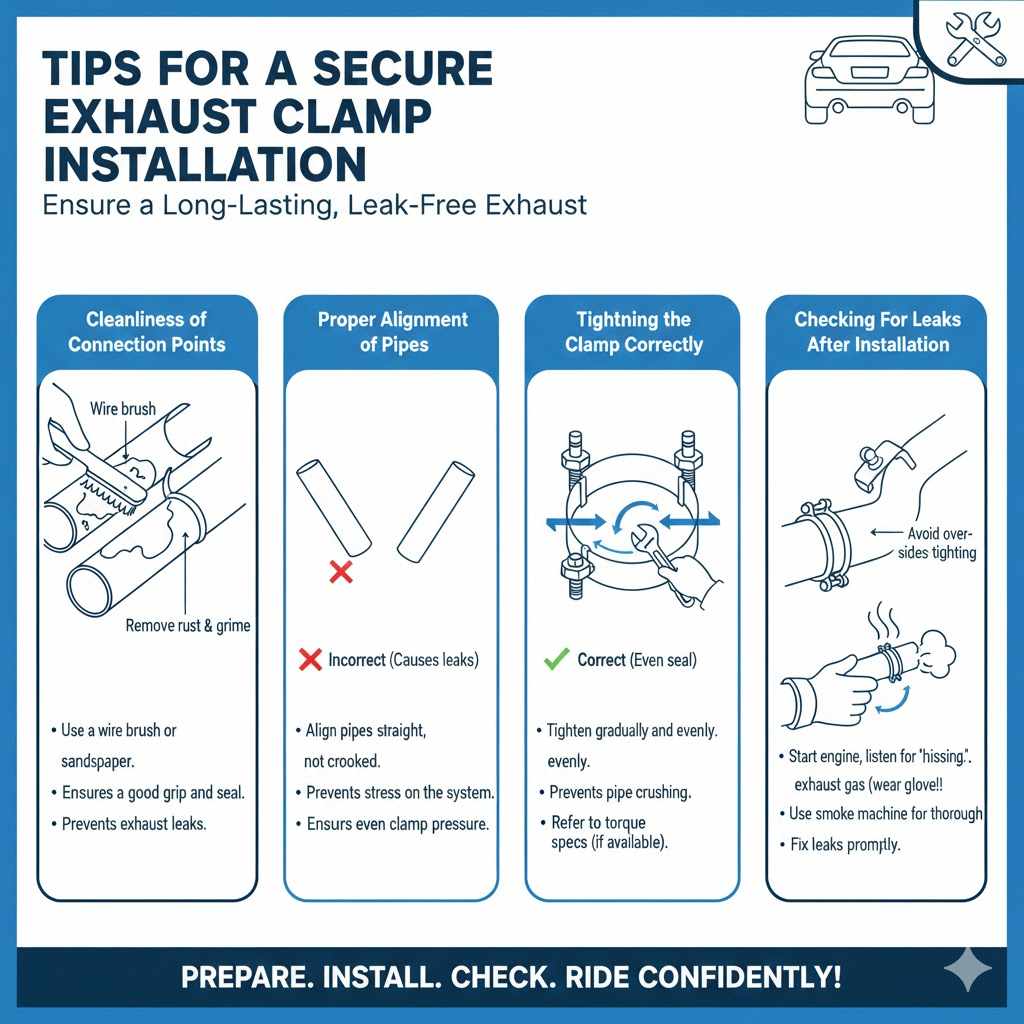
Before you put on any new clamp, make sure the parts it will connect are clean. If you’re connecting two pipes, both the inside of the outer pipe and the outside of the inner pipe need to be free of rust, dirt, and old exhaust residue. Use a wire brush or sandpaper to get them smooth.
A clean surface helps the clamp get a good grip and creates a better seal. If there’s gunk or rust in the way, the clamp might not be able to tighten properly. This could lead to exhaust leaks, which you’re trying to avoid.
Cleanliness ensures the best possible connection.
Proper Alignment Of Pipes
When connecting two exhaust pipes, ensure they are aligned correctly. They should fit together straight and not at an angle. If the pipes are crooked, the clamp won’t be able to seal evenly all the way around.
This can cause leaks and put stress on the exhaust system.
Sometimes, exhaust pipes can sag or be misaligned due to worn hangers or other issues. Before clamping, check that the entire section of the exhaust system is properly supported and lined up. A well-aligned system will make clamping much easier and more effective.
Tightening The Clamp Correctly
When you’re ready to tighten the clamp, do it gradually. If you have a band clamp with a bolt, tighten both sides of the bolt evenly, rather than tightening one side all the way first. This helps the clamp close in a uniform manner around the pipe.
The goal is to make the clamp snug and secure, but not so tight that you damage the exhaust pipe. Over-tightening can crush the pipe or strip the threads on the bolt. Refer to the clamp manufacturer’s recommendations for torque settings if available, or tighten until the clamp is firm and the gap is closed without deforming the pipe.
Using Sealant (When Appropriate)
In some cases, using an exhaust sealant can enhance the seal created by the clamp. These sealants are typically made of a heat-resistant putty or paste. They are applied to the joint before the clamp is tightened.
The sealant fills any small gaps or imperfections between the pipes or flanges.
However, sealants are not always necessary and should be used with caution. They are most beneficial on slip-fit joints where a perfect seal might be hard to achieve with the clamp alone. For flanged connections that rely on gasket seals, using additional sealant might interfere with the gasket’s function.
Always check if the sealant is compatible with your exhaust system materials.
Checking For Leaks After Installation
Once the clamp is installed and tightened, it’s a good idea to check for exhaust leaks. Start the car’s engine and listen carefully around the area where you installed the clamp. You might be able to hear a hissing or puffing sound if there’s a leak.
Another method is to carefully run your hand (wearing a thick glove!) around the joint. You might feel escaping exhaust gases. For a more thorough check, you can use a smoke machine designed for exhaust leak detection.
This will show you exactly where any leaks are occurring.
Frequently Asked Questions
Question: What is the most important measurement for an exhaust clamp?
Answer: The most important measurement is the outer diameter of the exhaust pipe you need to fit the clamp around.
Question: Do I measure the pipe’s inside or outside diameter for a clamp?
Answer: You always measure the outside diameter of the exhaust pipe. Clamps are sized to fit this external dimension.
Question: Can I use a clamp that is slightly larger than my pipe?
Answer: It’s best to use a clamp that is sized for your pipe or has an adjustable range that includes your pipe’s diameter. A clamp that’s too large won’t provide a secure fit and could lead to leaks.
Question: How tight should I make an exhaust clamp?
Answer: Tighten the clamp until it is snug and secure, but avoid over-tightening. Over-tightening can damage the exhaust pipe or the clamp itself. Check manufacturer recommendations if possible.
Question: What if my exhaust pipe isn’t a perfect circle?
Answer: Measure the widest point across the pipe’s diameter. If using a tape measure, take multiple readings around the circumference and use the largest one. If using calipers, ensure the jaws are set at the widest points.
Summary
Measuring exhaust clamps correctly means focusing on your exhaust pipe’s outer diameter. Using the right tools, like a tape measure or caliper, helps you get an accurate reading. Once measured, select a clamp designed for that specific pipe size.
Proper installation, including cleaning and careful tightening, ensures a secure, leak-free exhaust system.