Upstream vs Downstream Oxygen Sensor Explained
Upstream oxygen sensors sit before the catalytic converter and send exhaust mixture data to the ECU/PCM for closed-loop fuel control. Downstream sensors sit after the converter and let the ECU/PCM check catalyst efficiency. Mix them up, and you can order the wrong part, waste labor, and keep the check-engine light on. This guide maps bank and sensor numbers, shows how to identify each sensor on common engine layouts, and gives a quick decision tree before you buy.
| Decision factor | Upstream | downstream oxygen sensor | Winner |
|---|---|---|---|
| Main job | Feeds the ECU/PCM for closed-loop fuel control | Checks catalytic converter efficiency | tie |
| Signal activity | Usually more active; often switches or tracks air-fuel changes quickly | Usually steadier if the catalyst is working | Upstream |
| Common sensor type | Often wideband on modern engines | Usually narrowband | Upstream |
| Best clue from live data | Should respond to throttle and mixture changes first | Should follow more slowly or stay flatter than upstream | Upstream |
| Typical replacement decision | Chosen when fuel trim, drivability, or response problems point to mixture control | Chosen when catalyst-efficiency codes and downstream activity point there | tie |
Upstream and downstream sensor roles
Upstream sensors sit before the catalytic converter and typically feed the ECU/PCM for fuel control. Downstream sensors sit after the converter and typically help the ECU/PCM judge catalyst efficiency. The converter is the split point, so the same code family can mean very different parts depending on which side the sensor sits.
That difference matters because the ECU/PCM uses the two signals for different jobs. Upstream data affects air-fuel correction, fuel trim, and drivability. Downstream data helps the controller decide whether the catalyst is storing and cleaning exhaust as expected.
Why the comparison table favors upstream on signal behavior
Upstream sensors are built to react first, so their data is the better choice for mixture control. Downstream sensors should stay calmer if the catalyst is healthy, which makes them better for catalyst monitoring than for immediate fueling decisions.
How the catalytic converter changes the reading
The converter smooths the exhaust chemistry. If the converter is working, the downstream sensor sees a more even signal than the upstream sensor. If the downstream trace starts copying the upstream trace too closely, the catalyst may be weak, or exhaust may be leaking in a way that confuses the reading.
What do sensor 1 and sensor 2 mean?
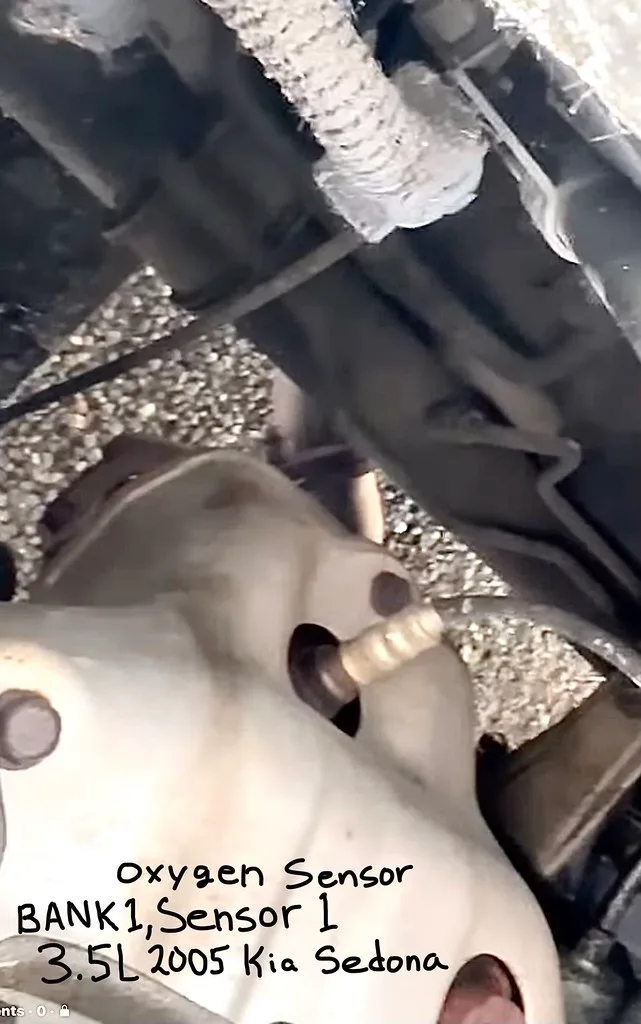
Sensor 1 usually means upstream, and Sensor 2 usually means downstream. Those numbers describe position in the exhaust stream, not engine bank. A code for Bank 1 Sensor 1 points to the upstream sensor on bank 1, not to “the first bank.”
This naming trips up a lot of parts orders because the number after “sensor” is not the same thing as the bank number. Bank 1 can have both a Sensor 1 and a Sensor 2, and so can Bank 2 on multi-bank engines.
Why sensor number is not bank number
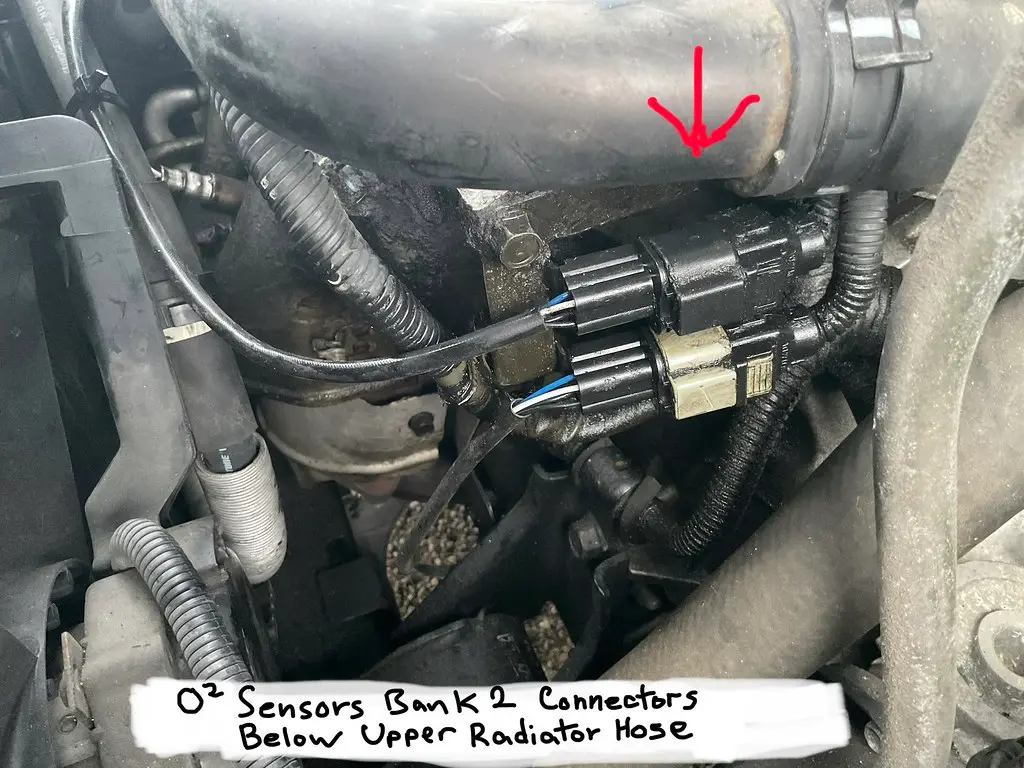
Bank numbers identify cylinder groups. Sensor numbers identify whether the sensor is before or after the converter. A V6 with two banks can have Bank 1 Sensor 1, Bank 1 Sensor 2, Bank 2 Sensor 1, and Bank 2 Sensor 2 if the exhaust layout uses one sensor before and one after the catalyst on each side.
How do bank 1 and bank 2 work?
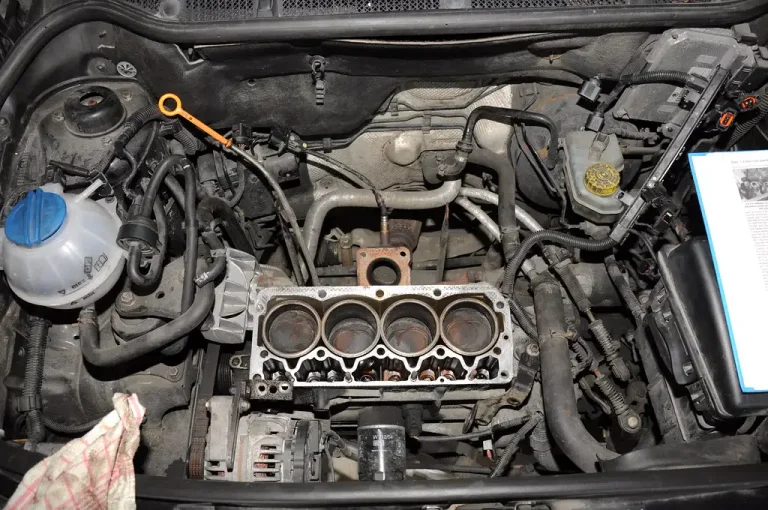
Bank 1 is the side of the engine with cylinder 1. Bank 2 is the other side on engines with more than one cylinder bank. Inline engines usually have only one bank, while V engines often have two, and boxer engines can make side-to-side layout checks feel backward.
Because bank naming follows cylinder numbering, not driver-side or passenger-side assumptions, you should confirm the cylinder 1 side from the service information for that engine family. That matters before you order a sensor tied to a bank-specific code.
Why V engines can have two banks
V6 and V8 engines commonly place one upstream and one downstream sensor on each bank. That means four oxygen sensors is normal on many layouts, and sometimes more on later emissions packages. A code on Bank 2 does not tell you which side of the vehicle that is without the engine layout.
Why boxer layouts confuse location checks
On boxer engines, the cylinders sit opposite each other, so the bank layout is left-right instead of a V shape. That can make the physical sensor harder to spot because the exhaust path may run tight to the body or under shielding. The code still follows bank and sensor position, not what looks easiest to reach.
Which oxygen sensor is this?
| Engine layout | Sensor position | Bank name | Likely sensor type | Common symptoms | What to verify before replacement |
|---|---|---|---|---|---|
| Inline-4 | Before catalytic converter | Usually one bank only | Upstream, often wideband | Rough idle, poor fuel economy, fuel trim codes | Confirm whether the engine uses one or two sensors; check connector shape, wire count, and thread size |
| Inline-4 | After catalytic converter | Usually one bank only | downstream oxygen sensor, often narrowband | Catalyst codes, MIL with otherwise normal drivability | Check converter location and downstream connector routing before ordering |
| V6 or V8 | Before catalytic converter | Bank 1 or Bank 2 | Upstream, often wideband | Trim swings, hesitation, hard starts, fuel economy loss | Match bank number to cylinder 1 side and verify whether the code points to Sensor 1 or Sensor 2 |
| V6 or V8 | After catalytic converter | Bank 1 or Bank 2 | downstream oxygen sensor, often narrowband | P0420/P0430-style catalyst codes, not always driveability complaints | Inspect for exhaust leaks ahead of the sensor and compare live data on both banks |
| Boxer engine | Before catalytic converter | Bank 1 or Bank 2 | Upstream, often wideband | Mixture corrections, hesitation, unstable idle | Confirm left-right bank assignment from the service layout; do not assume the easiest side is Bank 1 |
| Boxer engine | After catalytic converter | Bank 1 or Bank 2 | downstream oxygen sensor, often narrowband | Catalyst-monitor codes and repeat readiness failures | Check converter condition, exhaust leaks, and whether the downstream trace is too active |
Suppose a V6 throws a Bank 2 Sensor 1 code after a battery disconnect. That code still points to the upstream sensor on bank 2, not the downstream unit on that side. If you ignore the sensor number and buy the downstream part, the light can stay on because the wrong location was repaired.
A common first-timer mistake is to assume the downstream oxygen sensor is the one adjusting fuel mixture, when it is mainly monitoring catalyst performance. A P0135, P0141, P0420, or similar OBD-II code can point to the circuit or catalyst monitor that failed, but not always to the exact part by itself. Use the code with bank, sensor position, connector shape, and live data together.
How to identify the correct oxygen sensor on your car
- Read the code and note both bank and sensor number.
- Find cylinder 1 to identify Bank 1.
- Locate the catalytic converter and sort sensors into pre-cat and post-cat positions.
- Compare connector shape, wire count, and thread size with the replacement listing.
- Check scan tool live data before ordering if the diagnosis is not obvious.
Which oxygen sensor is bad?
The bad sensor is the one whose location, wiring, and live data match the fault pattern. Upstream faults usually show up as fuel trim problems, hesitation, or mixture codes. Downstream faults usually show up as catalyst-efficiency codes or an unusually active post-cat signal, but leaks and a weak catalyst can create the same pattern.
How scan tool live data separates sensor failure from other faults
On a healthy system, the upstream signal should move first and the downstream signal should be steadier. If both traces act wrong, the issue may be exhaust leakage, wiring damage, or a catalyst that is no longer storing oxygen properly. That is why live data beats part-swapping from a code list.
Upstream sensor role in fuel control
The upstream oxygen sensor gives the ECU/PCM the feedback needed for closed-loop fuel control. On many modern engines, that sensor is wideband and gives a more precise air-fuel measurement than a simple switching sensor. The part must match the engine because the signal type and connector layout may differ.
When this sensor fails, the ECU/PCM can still guess, but it loses the feedback it uses to keep mixture on target. That can set fuel trim codes, create hesitation under load, cause a rough idle, or lower fuel economy.
Symptoms of a failing upstream sensor
- Rough idle or stumble on tip-in
- Fuel trim codes or mixture-related codes
- Black smoke or fuel smell on some failures
- Poor fuel economy
- Delayed response in live data compared with throttle changes
What to check before replacing an upstream sensor
Check for intake leaks, exhaust leaks ahead of the sensor, and wiring damage near the connector. Then watch live data for a response that is flat, slow, or stuck rich or lean. If the sensor type is wideband, do not substitute a narrowband part just because the connector fits.
Downstream sensor role in catalyst monitoring
The downstream oxygen sensor helps the ECU/PCM monitor catalyst efficiency by comparing its signal with the upstream sensor. On many cars it is narrowband and changes less than the upstream sensor when the catalyst is doing its job. That calmer pattern is part of how the controller judges converter health.
When the catalyst starts losing efficiency, the downstream sensor may begin to mirror the upstream signal too closely. That can set catalyst-related codes, even when the sensor itself is still working. A leak near the converter can create a similar pattern.
Symptoms of a failing downstream sensor
- Catalyst-efficiency codes such as P0420 or P0430
- Downstream live data that looks too active
- No major drivability change in some cases
- Readiness failures that keep returning after clearing codes
What to check before replacing a downstream sensor
Inspect the exhaust for leaks between the converter and sensor, then compare upstream and downstream traces on the scan tool. If the converter output is weak, a downstream sensor code may be the symptom rather than the cause. Also confirm the sensor’s wire count and thread size before ordering.
Can I swap an upstream oxygen sensor with a downstream one?
Usually no. The sensors may look similar from the outside, but the signal type, heater circuit, calibration, and connector keying can differ. An upstream wideband sensor and a downstream narrowband sensor are not interchangeable just because the threads fit.
Even if the connector plugs in, the ECU/PCM may read the wrong signal or set new codes. That can leave you with the original fault plus a second one from the mismatched part.
Can an exhaust leak cause oxygen sensor codes?
Yes. An exhaust leak can pull fresh air into the stream and make the ECU/PCM think the mixture is lean or the catalyst is weak. That can mimic a bad upstream sensor, a bad downstream sensor, or a catalyst fault depending on where the leak sits.
Leaks ahead of the upstream sensor can upset fuel control. Leaks near or after the converter can distort catalyst monitoring and make the downstream trace look wrong. Check the exhaust path before replacing parts.
Choose upstream if…
Choose Upstream if the problem is fuel trim, hesitation, rough idle, or mixture-related codes tied to the sensor before the catalytic converter. It is the better pick when live data shows the pre-cat sensor is slow, stuck, or the wrong type for the engine.

Choose downstream oxygen sensor if…
Choose downstream oxygen sensor if the fault is catalyst monitoring, a post-cat code, or a downstream trace that is too active while drivability stays mostly normal. It is the better pick when bank and sensor position point after the converter and the catalyst, wiring, and exhaust path check out.
Frequently asked questions
What is the difference between upstream and downstream oxygen sensors?
Upstream sensors sit before the catalytic converter and feed fuel-control data to the ECU/PCM. Downstream sensors sit after the converter and help the controller judge catalyst efficiency. The two sensors can also differ in signal type, with wideband more common upstream and narrowband more common downstream.
Which oxygen sensor is before the catalytic converter?
The upstream sensor is before the catalytic converter. It is often called Sensor 1, but Sensor 1 is a position label, not a bank label. On multi-bank engines, each bank can have its own upstream sensor before its converter.
Which oxygen sensor is after the catalytic converter?
The downstream oxygen sensor is after the catalytic converter. It is often called Sensor 2 and is used to monitor how well the catalyst is cleaning exhaust. If the code names a bank, you still need to identify which side of the engine that bank belongs to.
What do bank 1 sensor 1 and sensor 2 mean?
Bank 1 Sensor 1 means the upstream sensor on the bank that contains cylinder 1. Bank 1 Sensor 2 means the downstream sensor on that same bank. The bank number and sensor number are separate labels, so do not treat them as the same thing.
How do I identify the correct oxygen sensor on my car?
Start with the code, then confirm bank 1 by cylinder 1, then locate the converter and sort pre-cat from post-cat sensors. Check connector shape, wire count, and thread size, and use scan tool live data if the code could also fit a leak or catalyst fault.