Exhaust System Y Pipe Back Average Cost
The exhaust system Y-pipe-back average cost is usually about $300 to $1,200, with rusted trucks and SUVs often landing near the high end. A bad repair can leave you with leaks, rattles, failed inspections, and a bill that grows after extra broken fasteners or hangers. This guide breaks down parts, labor, corrosion, and vehicle layout so you can compare quotes for the rear exhaust run accurately.
What a y pipe back repair includes

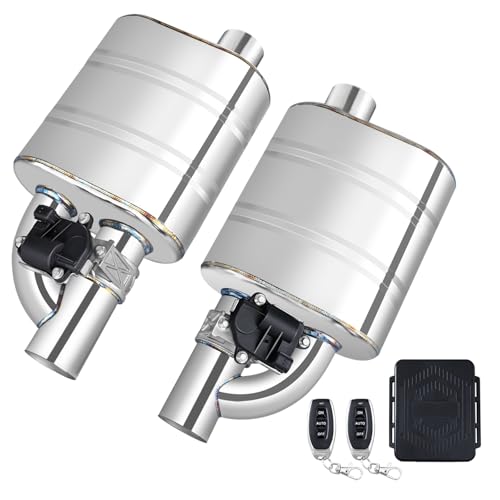


A Y-pipe-back repair starts where the Y pipe meets the rear exhaust run components and ends at the tailpipe. It may include the Y pipe itself, rear pipe sections, a muffler, hangers, clamps, gaskets, and welded joints. On some vehicles, the quote also covers the cat-back section if the catalytic converter sits forward of the repair area.
The scope depends on layout. Single-exhaust cars often need one continuous rear section. Dual-exhaust trucks and performance setups can need a split section, a pair of pipes, or a connector that combines exhaust flow before the rear muffler section.
What the quote should separate
- Parts: pipe sections, Y pipe, muffler, tips, gaskets, and hangers.
- Labor: removal, fitment, cutting, bolting, and welding time.
- Hardware: clamps, bolts, springs, flange nuts, and rubber mounts.
- Rust work: seized fasteners, broken studs, and extra cleanup.
Exhaust system y pipe table
The figures below show a realistic quote structure for a rear exhaust run, not a full-system replacement. Parts-only cost changes with pipe size, material choice, and how closely the part matches the vehicle. Labor-rate ranges here align with published repair-shop labor benchmarks from RepairPal and CCC One, while the parts-only figures are consistent with comparable Walker Exhaust and Dorman catalog pricing for Y-pipe and rear exhaust sections. Labor rises fast when rust blocks the flange or forces welding.
| Cost item | Compact car | Truck | Performance exhaust |
|---|---|---|---|
| Parts-only | $120 to $350 | $180 to $600 | $300 to $900 |
| Labor-only | $120 to $300 | $180 to $450 | $220 to $500 |
| Hardware | $20 to $60 | $30 to $90 | $30 to $120 |
| Welding | $0 to $150 | $50 to $250 | $100 to $300 |
| Rust-belt surcharge | $0 to $150 | $100 to $350 | $100 to $400 |
These ranges stack. A clean compact car can stay near the low end if the flange comes apart easily. A rusted truck with broken hangers and welded joints can climb past the middle of the range fast.
What is a y pipe in an exhaust system?
A Y pipe splits or combines exhaust flow in single and dual exhaust layouts. On some trucks, it joins the output from both banks before the rear section. On some dual systems, it branches flow toward separate rear pipes. Its shape affects fitment, pipe count, and how much labor the job needs.
Pipe material and diameter change the price. Mild steel parts are often cheaper up front, while stainless parts usually cost more and resist corrosion better. Vehicle-specific routing also changes the bill because the pipe has to match chassis clearance, hanger locations, and flange position.
Why fitment changes cost
Two vehicles can need the same type of repair and still produce very different quotes. Engine layout, drivetrain, wheelbase, and rear suspension all affect how the pipe routes under the body. A dual exhaust truck may need more sections, more hangers, and more time than a compact sedan with a simple rear run.
In shop work, seized flange hardware often turns a straightforward estimate into a longer repair because the pipe cannot come out cleanly. Say your half-ton truck has a rusted Y pipe and both rear hangers are broken. The parts bill is only part of the story; the labor can jump once the shop has to free seized fasteners and align a heavy pipe without crushing the flange.
How much does exhaust pipe replacement cost?
Exhaust pipe replacement usually lands below a full system quote when damage is limited to one section. Front, mid, and rear pipe pricing differ because access changes with location and because a front pipe is more likely to include welded joints, heat shielding, or flange work. A simple rear pipe swap can be modest; a corroded mid-pipe can be much pricier.
When a flange or hanger is damaged, the bill rises. Bolt-on repairs are usually cheaper than welded repairs, but rust can force cutting, re-welding, or replacement of adjoining parts. If the pipe is only sold as a kit, the quote may also include gaskets and hardware that a bare pipe would not need.
When welded repairs cost more
Welding adds time, and time is the expensive part. Shops may need to cut out seized sections, fabricate a short repair, or chase leaks at a bad joint. That extra work is common on older vehicles and in rust-belt regions where bolts and hangers no longer separate cleanly.
Cat-back versus turbo-back pricing
A cat-back exhaust system replaces the exhaust from the catalytic converter rearward. It typically includes piping, a muffler, and tips, and it is often used as a pricing benchmark for rear exhaust work. A turbo-back system runs from the turbocharger outlet to the rear exhaust, so it is usually a bigger and more expensive job.
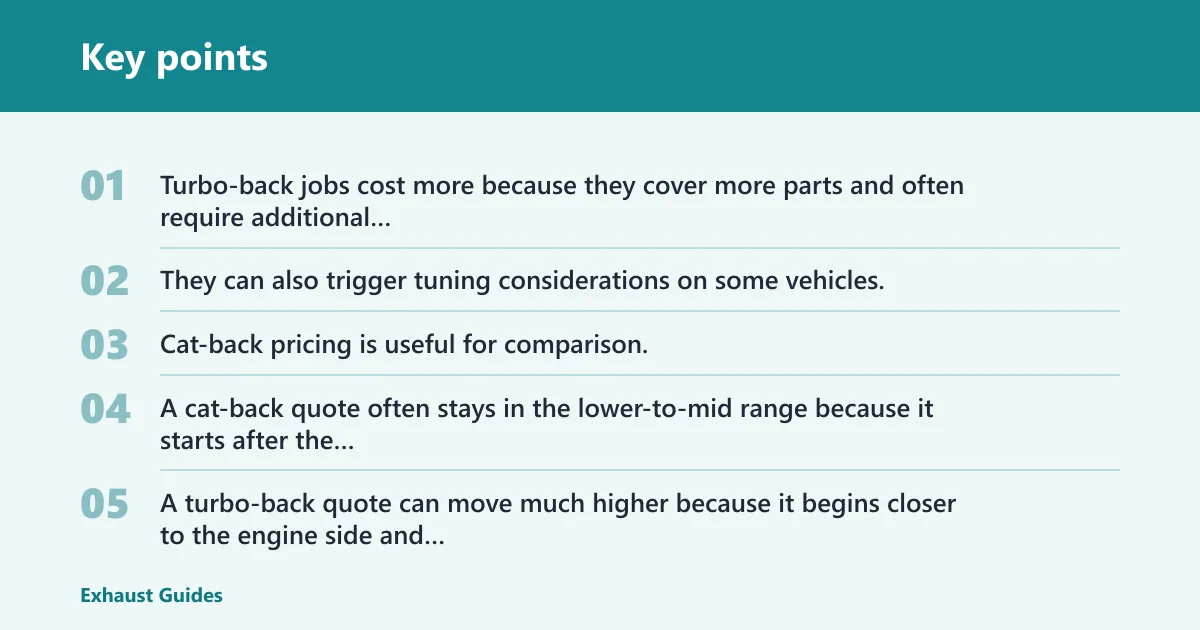
Turbo-back jobs cost more because they cover more parts and often require additional fitment work. They can also trigger tuning considerations on some vehicles. Cat-back pricing is useful for comparison, but it should not be treated as the same scope as a Y-pipe-back repair or a turbo-back replacement.
How the scope changes the bill
A cat-back quote often stays in the lower-to-mid range because it starts after the converter. A turbo-back quote can move much higher because it begins closer to the engine side and may involve more heat, more disassembly, and more sensitive fitment. On performance vehicles, larger diameter piping can also raise part cost.
A common first-timer mistake is comparing a cat-back kit price to a rusted truck repair quote and assuming they should match. They should not. One is often a cleaner bolt-on package. The other may include rust cleanup, welded work, and extra hardware.
Is it cheaper to replace the y pipe or the whole exhaust?
It is usually cheaper to replace the Y pipe or one damaged rear section when the rest of the exhaust is sound. The full exhaust only makes sense when corrosion has spread across several joints, hangers, or pipe sections. If the rest of the system is intact, a partial repair is often the better value.
That changes when rust shows up everywhere. If the pipe, muffler, flange, and rear hangers are all near failure, a piecemeal repair can turn into a false economy. Paying for repeated labor often costs more than replacing the rear assembly once.
When a partial repair makes sense
- Only one section is leaking, cracked, or crushed.
- The adjoining pipe still has solid metal and usable flanges.
- Hangers and rubber mounts are still holding the rear exhaust correctly.
- The shop can reuse most of the hardware without fighting severe rust.
When a full rear replacement is smarter
- The muffler shell is rusted through.
- Two or more joints are seized or warped.
- Hangers are torn and the pipe sags.
- The quote already includes several hours of rust cleanup.
What drives the final repair bill?
Labor rate is a major line item. Shops in high-cost regions usually charge more per hour, and exhaust work that looks simple on paper can take longer once a technician meets rust, stuck clamps, or broken studs. Vehicle fitment also matters because some chassis make the rear section far harder to reach.
Converter work is separate from a rear exhaust quote, and that distinction matters when you compare estimates. A catalytic converter sits between the engine and the muffler, so replacement can land in a much higher price tier than pipe and muffler work. When the quote stays focused on the rear exhaust, the bill is driven more by labor and hardware than by emissions parts.
Why rust changes the total
Rust-belt vehicles often need more hardware replacement because the bolts, flanges, and hangers do not survive removal. That is why a shop may quote a clean bolt-on repair very differently from a corrosion-heavy job. Rust does not just add parts; it adds time, risk, and the chance that adjacent pieces will fail during disassembly.
Frequently asked questions
How much for exhaust system
A complete exhaust system can range widely because the quote may include the manifold, catalytic converter, pipes, muffler, and tailpipe. For rear-only work, the price is much lower. The key is to compare the repair scope line by line rather than using one number for every exhaust job.
How much does a exhaust system cost?
The cost depends on whether you mean the full system or the rear section only. A Y-pipe-back repair is usually far cheaper than a full exhaust replacement because it starts behind the converter. Vehicle type, rust, and labor rate often change the total more than the part itself.
How much is an exhaust system replacement?
An exhaust system replacement can mean a single pipe, a cat-back, or the full exhaust from the engine rearward. The broader the scope, the higher the bill. If the catalytic converter is involved, the price can jump sharply because that part is a major cost driver.
How much to replace exhaust pipe
Replacing one exhaust pipe section is often the lowest-cost repair in this group. A clean bolt-on job can stay near the lower end of the range, while welded work and rust cleanup add cost. Front, mid, and rear pipe pricing are not the same, so ask which section is being replaced.
What does a y pipe do in an exhaust system?
A Y pipe either splits exhaust flow into two paths or combines flow from two banks into one rear run. That design is common on trucks and some performance systems. Its fitment controls how many parts you need, how the pipes route, and how much labor the job takes.
What is included in a y pipe back exhaust repair?
A Y-pipe-back exhaust repair usually includes the Y pipe, one or more rear pipe sections, the muffler, hangers, clamps, and any gaskets needed to seal the joints. On rusted vehicles, it may also include broken hardware or welding. The exact parts list depends on the chassis and exhaust layout.
Is it cheaper to replace the y pipe or the whole exhaust: it is usually cheaper?
It is usually cheaper to replace the Y pipe when the rest of the system is solid. The whole exhaust makes more sense when rust has spread, multiple hangers are failing, or the muffler and adjoining pipes are also worn out. Paying once for a larger repair can be cheaper than paying twice for partial fixes.
What affects exhaust system replacement cost
Vehicle fitment, parts material, pipe diameter, labor rate, welding time, and rust all affect the price. Dual-exhaust and truck layouts usually cost more than compact-car layouts because they need more pipe and more labor. If the catalytic converter is involved, the quote moves into a much higher price bracket.
When should I replace just the exhaust pipe versus the full system?
Replace just the pipe when the damage is isolated and the rest of the exhaust still seals, hangs, and routes correctly. Replace the full rear system when several sections are corroded or when labor to save old parts nearly matches the cost of new ones. A quote should show that difference clearly.