
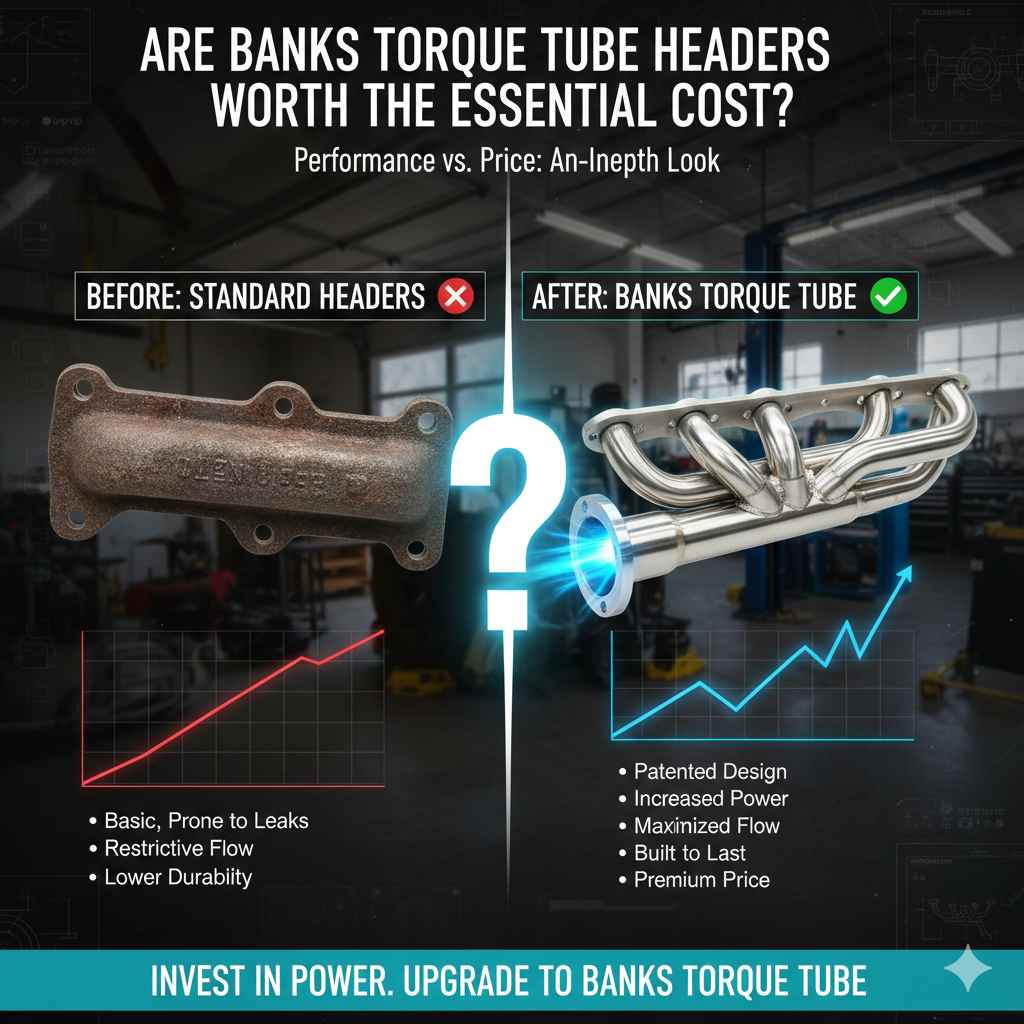
Are Banks Torque Tube Headers Worth The Essential Cost?
For most truck and off-road owners seeking noticeable power gains and better sound without extreme complexity, Banks Torque Tube Headers are generally worth the investment due to their superior flow characteristics and quality construction, though budget builds might find cheaper options adequate.
Welcome! If you are looking to wake up your truck’s engine, headers are a popular upgrade. But sometimes, the name “Banks Power” comes with a noticeable price tag. You might be wondering: are these special headers really worth the extra money compared to simpler, cheaper versions? It’s frustrating when upgrading parts feels like a guessing game. We want real results, better engine breathing, and an exhaust sound that makes you smile, not buyer’s remorse. Don’t worry; we will break down exactly what Banks Torque Tube Headers do, how they compare to the rest, and help you decide if they fit your budget and performance goals. Let’s demystify this upgrade together!
Understanding Exhaust Headers: Why They Matter for Your Engine
Before we talk about Banks headers specifically, let’s quickly cover what a header is and why it’s a big deal for your engine’s performance. Think of your engine like an air pump. It needs to suck in air and fuel efficiently, and then it needs to push the burned exhaust gases out as fast as possible. Stock exhaust manifolds (the part bolted directly to the engine) are usually chunky and restrictive. They are designed for low cost and quiet operation, not maximum flow.
Headers replace those old manifolds. They use individual, smooth tubes (runners) for each cylinder, guiding the exhaust gases more smoothly toward the rest of the exhaust system. Better exit means less “back pressure,” which allows the engine to breathe easier, often resulting in more horsepower and torque.
The Difference Between Stock Manifolds and Aftermarket Headers
The jump from stock to aftermarket headers involves major design differences. Stock manifolds often feature uneven pipe lengths and internal restrictions. Aftermarket headers aim for uniformity and smoother flow.
- Stock Manifolds: Heavy, often cast iron, poor flow characteristics, prone to cracking over time due to heat cycling.
- Aftermarket Headers: Usually made of stainless or coated steel, optimized tube lengths, smooth mandrel bends for consistent flow.
This is where the “Torque Tube” design comes into play, which is Banks Power’s signature approach. It’s not just a simple set of tubes; it’s an engineering solution aimed at improving performance across the RPM range.
What Makes Banks Torque Tube Headers Special?
Banks Power has a long history in performance parts, especially for trucks and diesel engines. Their Torque Tube Headers are designed using specific principles that aim to balance high-end power with usable low-end torque—crucial for trucks that tow or carry loads.
The Science Behind the “Torque Tube” Design
The term “Torque Tube” refers to the specific way Banks engineers the primary runners (the pipes coming directly off the cylinder head) and how they merge into a collector.
Unlike some basic “long tube” headers that focus purely on the highest RPM gains, Banks focuses on scavenging. Scavenging is a clever exhaust principle where the rush of gas leaving one cylinder helps pull the remaining exhaust out of the next cylinder in the firing order. This process cleans the cylinder faster, allowing a denser, fresher air/fuel charge in for the next cycle.
Banks achieves this through:
- Tuned Lengths: The tubes are carefully sized and equalized, not just for looks, but to match the engine’s firing order and speed.
- Merge Collectors: The way the individual tubes meet (the collector) is carefully designed to maximize the scavenging effect at common driving speeds, not just peak racing RPMs.
- Thick Wall Construction: They use high-quality materials to handle extreme heat without warping or cracking—a common failure point for budget headers.
This tuning makes the power delivery smoother and more useable in daily driving situations, which is why many users feel the investment pays off.
Material Quality and Construction
When you pay a premium for Banks, you are often paying for durability. Engine heat is brutal, and cheap metals can warp, leading to exhaust leaks that ruin performance and create loud, annoying sounds. Banks generally uses high-grade stainless steel or thick-walled mild steel with specialized coatings.
For instance, Banks often utilizes something like 10-gauge (thicker) steel for their primary tubes. You can often find detailed specifications on material science from engineering resources like those found through university research on fluid dynamics, confirming that material stability under heat is key to maintaining optimal header geometry over time (Source on Thermal Expansion).
Key Features of Banks Torque Tube Headers
- Fitment Accuracy: They are typically designed using 3D scanning of the engine bay, resulting in a much cleaner bolt-on installation than generic headers.
- Emissions Compliance (Where Applicable): Depending on the specific kit, Banks often puts significant effort into keeping factory O2 sensor locations functional, which can be vital for modern engines.
- Exhaust Sound Profile: They usually provide a deeper, more aggressive sound than stock, often without the harsh “tinny” drone sometimes associated with cheaper performance exhausts.
Are Banks Torque Tube Headers Worth The Money? A Comparison
The core question is about value. Are they worth the higher sticker price? To answer this, we need to compare them against the alternatives: stock manifolds and budget aftermarket headers.
The Cost Spectrum of Exhaust Headers
Headers fall into several general price categories. The “essential cost” depends heavily on what you expect to gain.
| Header Type | Typical Price Range (Parts Only) | Primary Benefit | Beginner Consideration |
|---|---|---|---|
| Stock Replacement Manifold | $50 – $200 per side | Restores factory performance; quiet. | Easiest to install, lowest performance gain. |
| Budget Long Tube Headers (Generic Brands) | $300 – $600 set | Significant flow improvement for low cost. | Often requires custom welding or bracket modification; higher risk of leaks/cracking. |
| Banks Torque Tube Headers (Premium) | $800 – $1,500+ set | Optimized flow, superior fitment, long-term durability, and balanced power. | Best performance return, but highest initial investment. |
Performance Payback: Horsepower vs. Dollar
When looking at performance gains, cheaper headers might give you 15–25 horsepower. Banks headers, especially when paired with a Banks system or a proper tune, often push those gains higher, sometimes hitting 30–40+ HP, depending on the vehicle.
However, the real return on investment (ROI) for Banks isn’t just peak HP; it’s the quality of the HP curve. If a cheaper header only delivers peak power at 5,500 RPM, but your truck lives at 2,500 RPM towing a trailer, that header is essentially useless for your daily needs.
Banks designs theirs to boost torque right where you need it. If you calculate the cost per reliable horsepower unit gained across the usable RPM band, the Banks cost often evens out better than budget options that might only deliver peak gains briefly.
The Hidden Costs of Cheap Headers
This is where many beginners get burned. A $400 header set seems like a steal until:
- The collector flange cracks after six months, requiring replacement or extensive welding.
- The tubes warp due to poor material quality, causing an exhaust leak near the head.
- The fitment is poor, requiring you to spend extra hours bending pipes or fabricating custom support brackets.
- You have to buy a separate high-flow catalytic converter assembly because the budget set didn’t include one that fits your state’s regulations.
Banks headers, because they are designed as a complete system, often minimize these secondary labor costs. If you pay a shop to install them, the labor time saved due to perfect fitment can quickly offset a portion of the higher initial parts price.
Installing Headers: A Beginner’s Guide to Header Replacement
Header installation can look intimidating, but it’s a manageable job for a determined beginner with the right tools and safety precautions. If you choose Banks, remember that good fitment makes this process much smoother.
Safety First! Essential Precautions
Working under a car or dealing with hot engine components requires respect. Never skip these steps:
- Disconnect the Battery: Always disconnect the negative battery terminal to prevent accidental shorts when working around sensors or starters.
- Cool Down: Ensure the engine has been off for several hours. Exhaust components retain heat for a very long time.
- Jack Stands are Mandatory: Never work under a vehicle supported only by a jack. Use high-quality jack stands on level, solid ground.
- Safety Gear: Wear safety glasses and gloves. Exhaust ports can be sharp, and you will be dealing with rusty, old bolts.
Tools You Will Likely Need
While specific tools vary by vehicle, here is a general list needed for a typical header swap:
- Ratchet set (3/8″ and 1/2″ drive)
- Various extensions and swivel joints (U-joints)
- Oxygen sensor socket (This is a specialized, deep socket that fits around the sensor wire).
- Torque wrench (Crucial for tightening bolts to spec).
- Penetrating oil (e.g., PB Blaster or Kroil) for rusted manifold bolts.
- New header gaskets (Always use new gaskets!).
- RTV sealant (high-temp silicone, sometimes needed for collector seals).
Step-by-Step: Swapping Your Old Manifolds for New Headers
This process applies generally, whether you install Banks or another brand, but remember to consult the specific installation manual that comes with your Banks kit.
Phase 1: Preparation and Removal
- Lift and Secure the Vehicle: Safely lift the front of the vehicle and secure it firmly on jack stands.
- Unplug Sensors: Locate and carefully disconnect the oxygen sensors from the old manifolds. Label them if necessary.
- Remove Attached Components: Depending on your vehicle, you might need to remove parts blocking access, such as heat shields, dipsticks, or even spark plug wires.
- Remove Old Manifold Bolts: This is often the hardest part. Soak the bolts in penetrating oil, let them sit, and slowly work them loose. If a bolt breaks, you will need to address extracting it before moving on.
- Drop the Old Manifold: Once all bolts are out, carefully remove the old exhaust manifold and set it aside.
Phase 2: Installing the New Headers
- Clean the Mating Surface: Use a plastic scraper or fine Scotch-Brite pad to ensure the cylinder head surface where the gasket sits is perfectly clean and free of old gasket material.
- Install New Gaskets: Place the new header gasket onto the head studs or align it precisely with the ports. Make sure it seats correctly—gaskets are often directional!
- Position the New Headers: Carefully lift the new Banks header into place. Align the bolt holes with the studs or threaded holes on the head.
- Hand-Tighten Bolts: Start all the header bolts by hand first. This prevents cross-threading.
- Torque in Sequence: This is critical for preventing leaks. Headers must be tightened in a specific sequence (usually working from the center ports outward) and to the manufacturer’s exact torque specification. Do this in two or three passes (e.g., tighten to 50% torque, then 100% torque).
- Reconnect Everything: Reattach the oxygen sensors (using anti-seize compound on the threads is recommended), reinstall heat shields, and reconnect any wires you removed.
- Lower the Vehicle: Carefully remove the jack stands and lower the vehicle to the ground.
Phase 3: Break-In and Check
The first few heat cycles are important for premium headers. Banks headers are often coated to reduce surface temperature, but still:
- Start the engine and let it idle for a few minutes, listening for leaks.
- Shut it down and allow it to cool completely.
- Re-check all header bolts for tightness after the first cooling cycle. Minor settling might require a final torque adjustment.
Banks Headers vs. Emissions Testing (Smog Check)
For many drivers, especially those in states with strict environmental regulations (like California or New York), an upgrade isn’t worth it if it causes you to fail inspection. This is a huge factor when deciding if Banks headers are “worth the money.”
CARB Compliance and Legal Considerations
If you drive a vehicle built after a certain year, you need a CARB (California Air Resources Board) Executive Order (EO) number for aftermarket parts to be street legal. Generic, budget headers almost never have this certification.
Banks Power often invests heavily in testing and compliance for their performance lines designed for street use. If they offer a header version with an EO number for your specific year/make/model, that legal compliance itself adds significant value to the price.
Why Legal Compliance Matters:
- You avoid fines and having to remove the performance part just to pass inspection.
- The design ensures that the air/fuel ratio monitoring systems (like the O2 sensors) continue to function correctly, preventing potential check engine lights (CELs).
Always verify the specific EO number for the Banks part number you are considering against your state’s requirements before purchasing. A simple search on the California Air Resources Board website can help confirm compliance status for applicable parts.
Performance Considerations: Tuning and Exhaust Matching
Installing headers is only half the battle. To truly get your money’s worth out of premium headers like Banks, you must optimize the rest of your system.
The Importance of a Proper Tune
When you increase the engine’s ability to expel exhaust gases (freeing up flow), the Engine Control Unit (ECU) or Powertrain Control Module (PCM) needs to know that it can add more fuel to match the incoming air. If you don’t tune the computer:
- The engine might run “lean” (too much air, not enough fuel), which can cause overheating and potential engine damage over time.
- You won’t realize the full potential of the headers, wasting the initial investment.
Banks headers are designed to work exceptionally well with their own tuning solutions (like the Banks AutoMind or Banks PedalMonster systems), providing a matched, safe performance increase.
Matching the Rest of the Exhaust System
Imagine putting a massive, free-flowing fire hose (the headers) onto a tiny garden hose (the rest of your stock exhaust piping). The restriction moves down the line!
If you install premium Banks Torque Tube Headers, you get the best results by pairing them with:
- Piping of an appropriate diameter (usually 3 inches for many V8 trucks).
- Low-restriction mufflers.
- A high-flow catalytic converter (if required).
This ensures the gains made at the cylinder head are carried all the way to the tailpipe. If you are on a tight budget, putting premium headers onto an otherwise stock exhaust might yield disappointing results.
Maintenance and Longevity of Banks Headers
One significant factor contributing to their worth is their expected lifespan.
Durability Compared to Budget Options
Because Banks uses superior materials (thicker gauge tubing, better welding techniques, and sometimes specialized ceramic coatings), they generally last the lifetime of the vehicle. Budget headers often fail due to corrosion or heat stress after 3–5 years of hard use.
If you plan to keep your vehicle for a long time, paying more upfront for something that won’t need replacement or re-welding means you save money—and headache—down the road.
Simple Maintenance Checks
Header maintenance is simple but important:
- Check Torque Annually: Due to the constant heating and cooling cycles, re-torquing the header bolts once a year is a good preventative measure against leaks.
- Inspect Gaskets: Look for black soot trails around the flanges; this indicates a leak that needs gasket replacement or bolt tightening.
- Coating Care: If your headers have a ceramic coating (common on higher-end Banks models), avoid harsh chemicals when cleaning the engine bay, as this can degrade the coating over time.
Who Should Definitely Buy Banks Headers?
While they are an investment, certain drivers will see the benefit immediately and find the cost essential for their goals.
Ideal Candidates for Banks Torque Tube Headers
- The Tow Rig Owner: If you frequently tow heavy loads, the low-to-mid range torque boost Banks specializes in is crucial for pulling power and efficiency.
- The Driver Needing Longevity: If you hate working on cars and want a “set it and forget it” upgrade that will last a decade, the superior build quality justifies the price.
- The Emissions-Conscious Power Seeker: If you live in a state that requires legal, CARB-compliant parts, the Banks option with an EO number is often the only true performance path available.
- The Tuner/Enthusiast: If you plan on heavily modifying the engine (cams, superchargers), you need the best flowing, most stable foundation, which premium headers provide.
Who Might Be Better Off with Budget Headers?
It’s just as important to know when to save your cash. If your primary goal is just the sound or a small, temporary power bump before selling the vehicle, a cheaper set might suffice.
- The Weekend Cruiser: If you only drive your truck occasionally and rarely push the engine hard, the subtle improvements of premium tuning might not be noticeable enough to warrant the extra $500+.
- The Tight Budget Build: If your entire exhaust budget is under $800, you might need to accept the risks of a budget header to stay on track, provided you are willing to weld or fix potential leaks later.
- The Race-Only Vehicle: For pure drag racing where peak high-RPM flow is the only concern (and emissions/drivability are irrelevant), some specialized, race-only headers might offer a better specific performance curve, though they often cost similar to or more than Banks.
Frequently Asked Questions (FAQ) for Beginners
Q1: Will Banks Headers void my engine warranty?
A: In the United States, the Magnuson-Moss Warranty Act generally protects you from an automatic voiding of your entire warranty just because you installed an aftermarket part. However, if the dealer can prove that the headers directly caused the failure (e.g., they caused a lean condition that blew a piston), they can deny the claim for that specific part. Banks headers are high-quality, but any performance mod carries some risk.
Q2: Do I need to adjust my truck’s computer (tune) after installing headers?
A: For most modern fuel-injected vehicles, yes, you absolutely should. Adding headers drastically changes the exhaust flow. Without a tune, your truck will likely run inefficiently or lean, which can lead to a Check Engine Light or performance issues. If the headers come with specific tuning instructions, follow them!
Q3: How much louder will my truck be with Banks Headers?
A: Headers alone typically increase the volume slightly and change the tone to be deeper and more aggressive. The biggest factor in final volume is the muffler you pair them with. Banks systems are often designed to provide a rich sound without excessive cabin drone at cruising speeds.
Q4: Are Banks headers stainless steel or mild steel?
A: Banks offers different materials depending on the specific vehicle application. Higher-end, premium street headers are often stainless steel (like 304 stainless) for maximum corrosion resistance, while some mild steel options are used and then protected with thick ceramic coatings.
Q5: How do I clean the outside of my new headers?
A: If they have a specialized coating, follow the manufacturer’s instructions. Generally, avoid harsh degreasers or abrasive pads, especially on coated headers. Mild soap and water or specialized exhaust cleaner wipes are usually best for maintenance cleaning. Do not attempt to clean headers when they are hot!
Q6: Can I install these headers myself, even if I’m a beginner?
A: Yes, with patience and the right tools, it is achievable. The main challenge is breaking loose old, rusted manifold bolts. If you have a vehicle where the headers are extremely difficult to access (requiring the removal of the engine mount or transmission jacks), it might be safer and faster to pay a trusted local shop.
Q7: What is the real benefit of “Torque Tube” vs. a standard Long Tube Header?
A: A standard long tube prioritizes flow at very high RPMs. The Banks “Torque Tube” design is specifically engineered using precise lengths and collector merging to create optimal exhaust scavenging—that pulling action—at lower and mid-range RPMs, which is where trucks spend most of their driving time.
Conclusion: Calculating the True Value of Banks Performance
Deciding if Banks Torque Tube Headers are “worth the essential cost” boils down to defining what “essential” means to you. If “essential” means the absolute cheapest part that bolts on, then no, Banks headers are likely too expensive.
However, if “essential” means achieving reliable, usable power gains that last the life of your vehicle while ensuring compliance and fitment accuracy, then the premium cost of Banks headers becomes highly justifiable. You are not just buying metal tubes; you are investing in engineered exhaust scavenging, high-durability materials, and reduced installation frustration.
For the everyday truck owner or enthusiast who prioritizes longevity, predictable power delivery across the entire RPM range, and avoiding repeat repair jobs, the Banks Torque Tube Header system provides exceptional value. They reduce the “hidden costs” associated with cheap parts—time spent fixing leaks, failed inspections, and unreliable performance—making them a rewarding upgrade that pays dividends in driving enjoyment and engine health over the long haul.


