Are Ball & Socket Headers Better? A Genius, Essential Upgrade
Yes, ball and socket headers are significantly better for most car owners, especially for daily drivers and modified vehicles. Their flexible, self-aligning design creates a superior, long-lasting seal that resists leaks caused by engine vibration and heat expansion. This makes them a more reliable and lower-maintenance upgrade compared to traditional flat flange headers.
Have you ever heard that annoying “tick-tick-tick” sound coming from your engine bay, especially when it’s cold? That’s often the sound of an exhaust leak. It’s frustrating, noisy, and can even hurt your car’s performance. For years, the standard way to connect headers to the rest of the exhaust was with a flat flange and a gasket. This works, but often, not for long.
Those gaskets can fail, and the bolts can loosen, leading you right back to that ticking noise. It’s a common headache for many car enthusiasts. But what if there was a smarter, more modern solution? There is, and it’s called a ball and socket header connection. In this guide, I’ll walk you through exactly what they are and why they are a genius upgrade for your car.
First, What Are Exhaust Headers?
Let’s start with the basics. Think of your engine as having lungs. It needs to breathe in air and breathe out exhaust fumes. The exhaust headers are the very first part of the “breathing out” system. They are a set of pipes that connect directly to your engine’s cylinders.
Their job is to collect all the hot exhaust gas from each cylinder and channel it into one single pipe, which then leads to the rest of your exhaust system (like your catalytic converter and muffler).
Efficiently removing these gases is crucial for your engine’s performance. Better headers can help your engine make more power and run more smoothly. The connection point where these pipes meet the rest of the exhaust is called the collector, and that’s where our main topic comes into play.
The Old Way: Understanding Flat Flange Headers
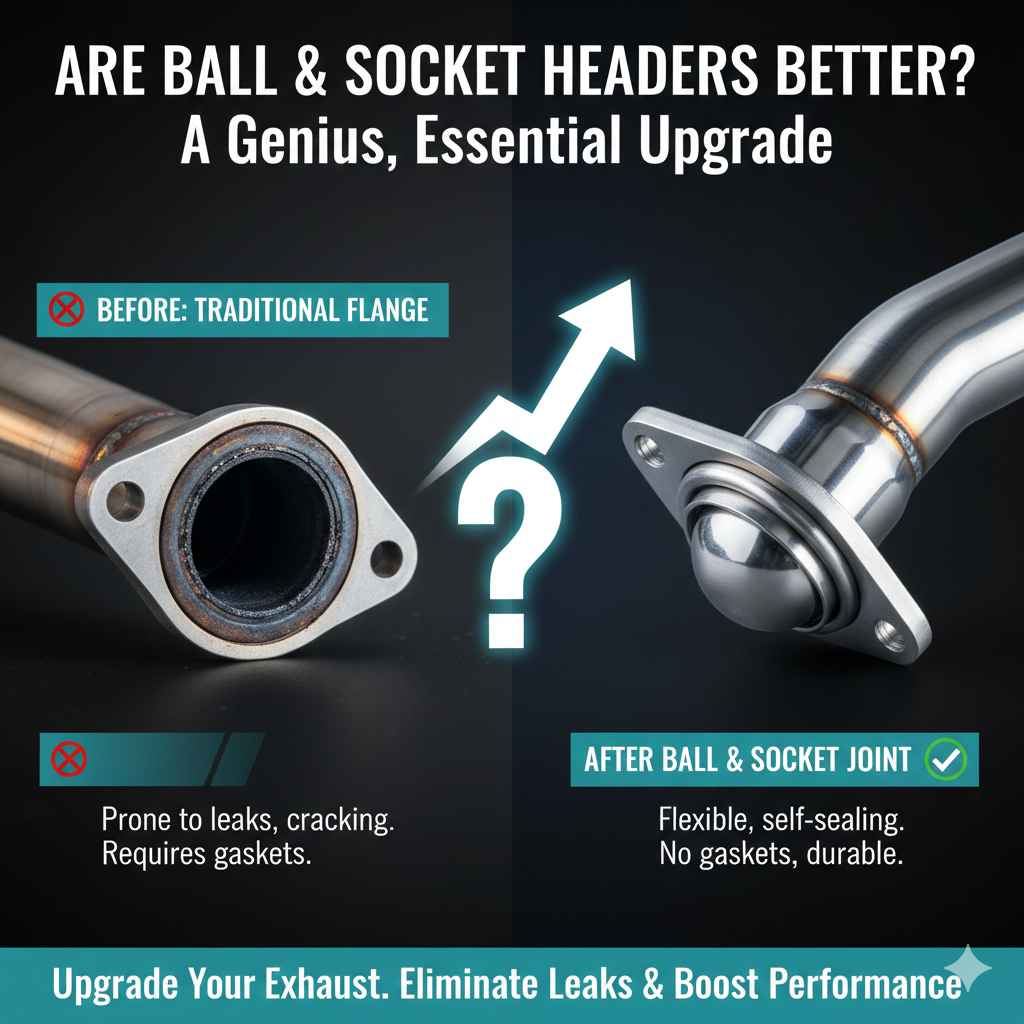
For a long time, the most common way to connect headers to the exhaust pipe was with a flat flange. It’s a very simple design.
- Imagine two perfectly flat, metal discs.
- One is welded to the end of your header collector.
- The other is welded to the start of your exhaust pipe.
- You place a thin gasket (often made of paper, composite material, or soft metal) between them.
- Then, you use two or three bolts to clamp the two flat pieces together, squishing the gasket to create a seal.
When everything is new and perfectly aligned, this works fine. But cars are not static. Engines vibrate, and exhaust systems get very hot and then cool down, causing the metal to expand and contract. This constant movement and stress is the enemy of a flat flange connection.
Common Problems with Flat Flange Headers:
- Blown Gaskets: The gasket is the weakest link. The intense heat and pressure can cause it to burn out, crack, or “blow out,” creating a significant exhaust leak.
- Loose Bolts: The vibration from the engine and the heat cycles can cause the bolts to slowly back out over time, leading to a leak. This means you have to constantly check and re-tighten them.
- Warping: Extreme heat can cause the flat metal flanges to warp slightly. Once they are no longer perfectly flat, they can never create a perfect seal, no matter how tight you make the bolts.
- Alignment Issues: Getting the two flat surfaces to line up perfectly during installation can be tricky. If they are even slightly off-angle, you’ll have a leak from day one.
The Modern Solution: Introducing Ball & Socket Headers
Now, let’s look at the smarter design: the ball and socket connection. This design takes a completely different approach to sealing the exhaust.
Instead of two flat surfaces, it uses a rounded, dome-shaped “ball” on one side that fits perfectly into a flared, cup-shaped “socket” on the other. Think of it like the ball joint in your shoulder—it allows for movement while staying connected.
This connection is then held together by a flange and bolts, but the seal isn’t created by crushing a gasket. The seal is created by the precise fit of the metal ball inside the metal socket. This simple change in design solves nearly all the problems of the old flat flange system.
Head-to-Head Comparison: Ball & Socket vs. Flat Flange
Seeing the differences side-by-side makes it clear why the ball and socket design is a superior choice. It addresses the fundamental flaws of the flat flange by allowing for the natural movement and stress that every exhaust system experiences.
| Feature | Ball & Socket Headers | Flat Flange Headers |
|---|---|---|
| Leak Prevention | Excellent. The metal-on-metal seal is robust and self-aligns. Extremely resistant to leaks from vibration and heat. | Poor to Fair. Relies on a fragile gasket that is a common failure point. Prone to leaking. |
| Flexibility | High. Allows for several degrees of movement, absorbing engine vibration and thermal expansion without stressing the seal. | None. The connection is rigid. All movement and stress is transferred directly to the gasket and bolts. |
| Long-Term Durability | Excellent. With no gasket to fail, the connection can last the life of the exhaust system. | Poor. Gaskets are a consumable item that will eventually need to be replaced, sometimes frequently. |
| Installation Ease | Easier. The self-aligning nature makes it much more forgiving if the rest of the exhaust isn’t perfectly lined up. | More Difficult. Requires perfect alignment to avoid pinching or damaging the gasket and creating an immediate leak. |
| Maintenance | Virtually none. Once installed correctly, you can “set it and forget it.” | High. Requires regular checking of bolt tightness and eventual gasket replacement. |
The Top 5 Benefits of Upgrading to Ball & Socket Headers
If you’re considering an exhaust upgrade, choosing headers with a ball and socket collector is one of the smartest decisions you can make. Here’s why it’s such a genius move.
1. Say Goodbye to Leaky Gaskets Forever
This is the number one reason to upgrade. The ball and socket design eliminates the collector gasket entirely. That means you will never again have to spend a Saturday afternoon replacing a burnt-out, leaky gasket. You save time, money, and a whole lot of frustration. This permanent fix provides true peace of mind.
2. Flexibility is Your Best Friend
Your engine is not bolted down rigidly; it sits on rubber mounts that allow it to move and vibrate. When you accelerate, the engine can twist slightly. A rigid flat flange connection fights this movement, putting stress on the entire exhaust system. A ball and socket joint acts like a flexible pivot point, easily absorbing these movements. This prevents cracks in your exhaust pipes and protects the connection from failing.
3. Easier and More Forgiving Installation
Anyone who has installed an exhaust system knows the frustration of trying to get everything to line up perfectly. With a flat flange, if your pipes are off by even a tiny bit, it’s a struggle. The ball and socket design is self-aligning. As long as you can get the pipes reasonably close, the ball will seat itself perfectly in the socket as you tighten the bolts, ensuring a perfect seal every time. This is a huge benefit for DIY installers.
4. Built for Long-Term Durability
Because the seal is made from two heavy-duty pieces of steel, it’s incredibly robust. It’s not susceptible to being destroyed by the intense heat and corrosive gases coming from your engine. While a cheap gasket might last a year or two (or less on a high-performance engine), a quality ball and socket connection is designed to last the lifetime of the vehicle. It’s a true “one and done” upgrade.
5. Better for Overall Exhaust System Health
By allowing for flex and movement, the ball and socket connection reduces stress on the entire system. This means less strain on welds, hangers, and mounting points further down the line. It helps keep your whole exhaust system healthier and less prone to cracks or failures. This is especially important for vehicles with modified suspensions or engines that produce more vibration.
Are There Any Downsides to Ball & Socket Headers?
While the benefits are massive, it’s fair to consider the potential drawbacks. Luckily, there are very few.
- Higher Initial Cost: Headers with a ball and socket collector often cost slightly more than their flat flange counterparts. This is due to the more complex manufacturing required to create the precisely machined ball and socket ends. However, this cost is easily offset by the money you save on replacement gaskets and your own time.
- Potential for Seizing: In areas with heavy road salt or high humidity, there is a small chance that the two metal surfaces could rust or corrode together over time. This can make them difficult to take apart if you need to service the exhaust years later. Using a small amount of high-temperature anti-seize compound during installation can help prevent this.
- Quality Matters: A poorly made, cheap ball and socket joint can still leak. It’s important to buy from a reputable brand that uses quality materials and precise machining to ensure a perfect fit.
How to Choose the Right Ball & Socket Headers
Ready to make the upgrade? Here’s what to look for to ensure you get a quality product that fits your car and your needs.
- Vehicle Specific Fitment: This is the most important step. Headers are not a one-size-fits-all part. Make sure the set you are looking at is designed specifically for your car’s year, make, model, and engine size. This ensures proper clearance and alignment.
- Material Quality: Look for headers made from high-quality stainless steel (like T304 or T409 grades). Stainless steel offers excellent resistance to rust and corrosion, which is vital for a part that lives underneath your car. Avoid plain, uncoated steel headers, as they will rust very quickly.
- Consider a Ceramic Coating: Many high-quality headers come with a ceramic coating option. This special coating is applied inside and out. It acts as a thermal barrier, keeping more heat inside the exhaust pipes. This lowers under-hood temperatures, protects surrounding components, and can even improve exhaust gas velocity for a small performance gain.
- Read Reviews from Other Owners: See what other people with your type of car are saying. Check forums and retail sites for reviews on fitment, quality, and how easy the installation was. Real-world experience is incredibly valuable.
Ensuring your vehicle’s emissions system is working correctly is also a key part of any exhaust work. Leaks can affect sensor readings and performance. The U.S. Environmental Protection Agency (EPA) provides great information on the importance of a properly functioning exhaust system for vehicle emissions.
Is a Ball & Socket Header Upgrade Worth the Cost?
Let’s break down the long-term value. While the initial price tag might be higher, the investment pays for itself over time.
| Cost Factor | Ball & Socket Header (Example) | Flat Flange Header (Example) |
|---|---|---|
| Initial Purchase Price | $450 | $350 |
| Gasket Replacements (over 5 years) | $0 (No gasket needed) | $100 (e.g., 4 replacements at $25 each) |
| Your Time & Frustration | Minimal. “Set it and forget it.” | High. Requires repeat repairs, tightening, and troubleshooting. |
| Total 5-Year Cost | $450 | $450 + Your time |
As you can see, over a few years, the cost evens out. But the real value is in the reliability and the elimination of hassle. You get a better, more robust system that you don’t have to worry about. For any car owner who values their time and wants a dependable vehicle, the answer is clear: the upgrade is absolutely worth it.
Frequently Asked Questions (FAQ)
Do ball and socket headers need gaskets?
No, a true ball and socket exhaust connection does not require a gasket. The seal is formed by the precise, tight fit of the metal ball inside the metal socket. This is its primary advantage over a flat flange connection.
Can ball and socket headers still leak?
While extremely rare, a leak is possible if the parts are very low quality and not machined correctly, or if the bolts are not tightened properly. However, with a quality product and correct installation, they are virtually leak-proof.
Are ball and socket headers louder?
No, the type of connection does not affect the sound level of the exhaust. The sound is determined by the design of the headers, the catalytic converter, and the muffler. A ball and socket joint simply prevents leaks, which would make the exhaust improperly loud.
How tight should I make the bolts on a ball and socket joint?
You should tighten them until the springs (if included) are compressed and the joint is snug. You don’t need to overtighten them. The goal is to have enough pressure to hold the ball in the socket firmly, but still allow for a tiny bit of flex. Always follow the manufacturer’s specific torque recommendations if they are provided.
Is this a good DIY project for a beginner?
Installing headers can be a challenging job for a first-timer because it often requires working in tight spaces and removing old, rusty bolts. However, the ball and socket connection itself makes the final alignment step much easier than with a flat flange, which is a big help for beginners.
Will ball and socket headers improve my car’s performance?
The ball and socket connection itself is about reliability and preventing leaks, not adding horsepower. The performance gains come from the improved design of the header pipes themselves compared to a stock exhaust manifold. Choosing headers with a ball and socket joint ensures that you get to keep all the performance you’ve gained, without losing power through leaks.
Conclusion: A Smarter, Stronger Connection
When it comes to your car’s exhaust, reliability matters. A small leak can be more than just an annoying noise; it can rob your engine of power, hurt fuel economy, and cause check engine lights. The traditional flat flange collector is a known weak point, a source of constant maintenance and frustration.
The ball and socket header design is a simple, elegant, and incredibly effective solution to this old problem. By eliminating the gasket and building in flexibility, it creates a robust, self-aligning, and leak-proof seal that you can count on for years to come. It’s easier to install, requires virtually no maintenance, and protects the health of your entire exhaust system.
So, are ball and socket headers better? The answer is a resounding yes. They are a genius upgrade that turns a common failure point into a symbol of durability. For any car owner looking for peace of mind and a truly “set it and forget it” solution, choosing headers with a ball and socket connection is one of the smartest investments you can make for your vehicle.