Are B16 And B18 Headers The Same? Essential Guide
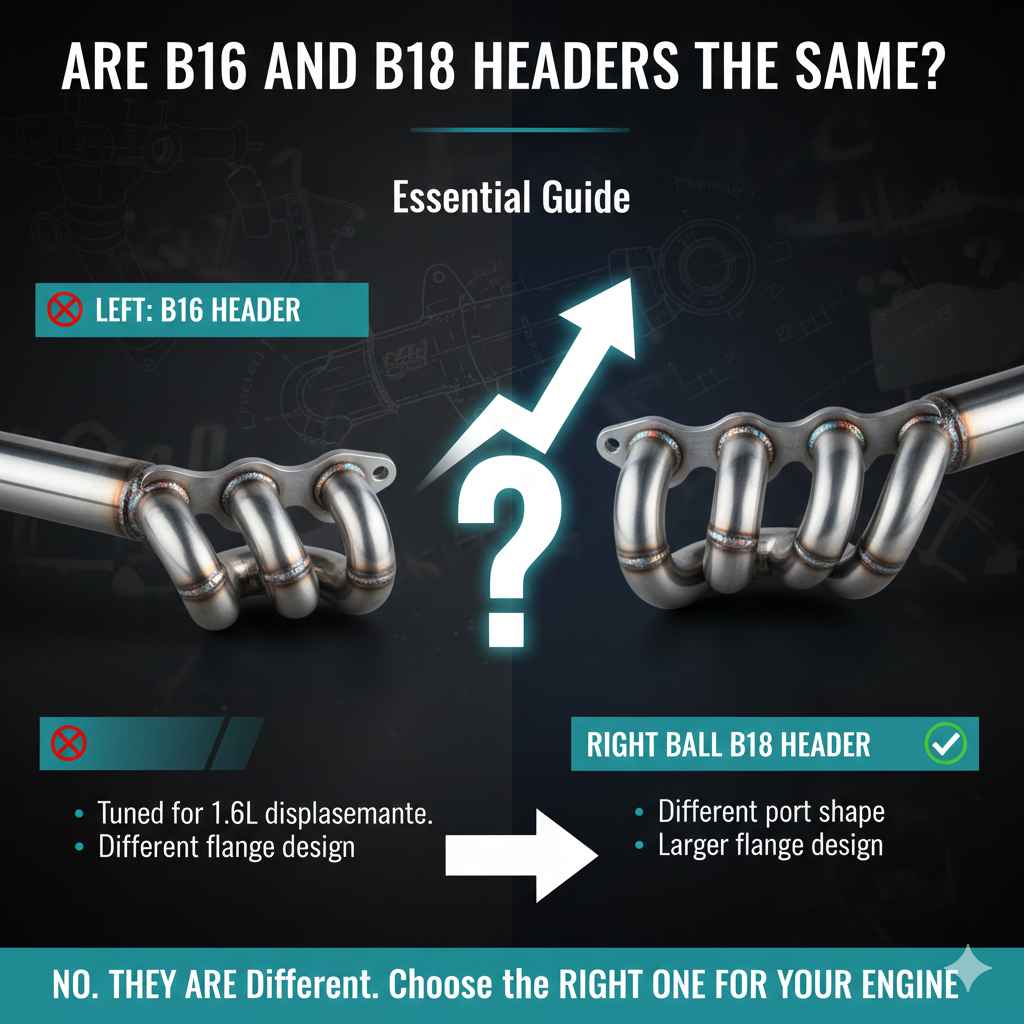
No, B16 and B18 headers are generally not the same. While they share the same engine family (Honda B-series), differences in displacement, port size, and exhaust manifold design mean that direct swapping is risky and often results in poor performance or incorrect fitment. Always verify part numbers specific to your engine code.
Welcome! If you’re working on your Honda B-series engine, you might be staring at your old exhaust header, wondering if a header from a slightly different engine model will fit. It’s a very common question, especially when shopping for used performance parts. Trying to match up engine components can feel confusing, but don’t worry. I’m Monowar Shohag, and I’m here to make this simple.
The differences between parts for a B16 and a B18 engine are subtle but very important for your car’s health and performance. We will clear up exactly why these headers are different and how to make sure you buy the right one every time. By the end of this guide, you will understand exhaust fitment like a pro. Let’s dive into the heart of the Honda B-series exhaust system!
The Big Question: Are B16 and B18 Headers The Same?
The short answer, as mentioned, is usually no. While both the B16 and B18 engines belong to the widely popular Honda B-series family—found in iconic cars like the Civic Si and Integra—they have key differences that affect how the exhaust header bolts up and flows.
To understand why they aren’t interchangeable, we need to look at what makes an exhaust header important. The header is the first crucial piece of your exhaust system. It collects the hot gases from the cylinder head ports and funnels them into one or two pipes. Its design dramatically impacts how easily your engine can “breathe,” which directly affects horsepower and torque.
Because the B16 and B18 engines, even within the same generation, have slight variations in cylinder head design and displacement, manufacturers design the headers differently to maximize efficiency for that specific motor size. Using the wrong one can lead to leaks, poor power delivery, or simply not bolting up at all.
Understanding the B-Series Family
Before comparing the parts, let’s quickly establish what we are talking about. The Honda B-series engines are known for their reliability and high-revving nature. They came in various sizes, most commonly:
- B16 Engines: Typically 1.6 liters (e.g., B16A, B16B). Known for high VTEC engagement and higher redlines.
- B18 Engines: Typically 1.8 liters (e.g., B18A, B18B, B18C). These include the non-VTEC models (LS/GSR) and the high-performance B18C/C1 found in the Integra Type R.
Even though they share the same basic mounting pattern in many applications, the internal and external dimensions are tweaked based on the engine’s overall volume and intended use.
Key Differences Between B16 and B18 Headers
The incompatibility often boils down to a few critical manufacturing details. If you are looking at aftermarket performance headers, these differences become even more pronounced as manufacturers tune the tube lengths and collector designs specifically for the displacement they are serving.
1. Exhaust Port Size and Spacing
The single most important difference relates to the holes where the header bolts to the cylinder head—the exhaust ports. While the bolt pattern might look similar (4 bolts per cylinder), the actual shape and size of the port opening can differ slightly between the B16 and various B18 heads. A header designed for a smaller port might choke a larger engine, while a header designed for a larger port might create turbulence and poor scavenging on a smaller engine.
2. Header Tube Diameter (Primary Tubes)
This is where performance tuning comes in. Header tubes are sized to match the engine’s displacement and operating RPM range:
- B16 (1.6L): These engines often thrive with slightly smaller primary tube diameters. This smaller diameter helps maintain exhaust gas velocity at lower RPMs, improving torque in the mid-range, crucial for street driving.
- B18 (1.8L): These larger displacement engines need slightly larger primary tubes to handle the increased volume of exhaust gas they produce, especially at higher RPMs where maximum horsepower is made.
If you swap a header meant for a B18 onto a B16, you risk losing low-end torque due to overly large tubes. If you put a B16 header on a B18, the smaller tubes will restrict exhaust flow, robbing you of peak horsepower.
3. Collector Design and Length
The collector is where the individual primary tubes merge into the downpipe. The length and design of this collector are often tuned for the specific engine’s volumetric efficiency.
For instance, a header designed for a high-revving B16B (like the one found in the Civic Type R) will prioritize length and scavenging tuned specifically for that 8,000+ RPM redline. A header for a stock B18A/B might be tuned for broader, more streetable power delivery.
4. Flange Thickness and Bolt Pattern Variations
While most B-series engines use a common 4-bolt flange pattern, subtle differences exist, especially when crossing between older OBD0/OBD1 systems and newer generations, or when comparing genuine OEM parts versus aftermarket units. A thicker flange might change the overall angle or clearance needed for the rest of the exhaust system (the downpipe).
OEM vs. Aftermarket: The Biggest Pitfalls
When dealing with factory parts, things are often standardized. However, when you start looking at aftermarket performance headers, the variations multiply. This is where most beginners get confused.
If you are simply replacing a rusted-out stock header with another stock header, finding the correct part number for your specific VIN is usually straightforward. If you are upgrading, pay close attention to the manufacturer’s description.
Table 1: Common B16 vs. B18 Header Considerations
| Component | Typical B16 (1.6L) Focus | Typical B18 (1.8L) Focus |
|---|---|---|
| Primary Tube Size | Smaller diameter for velocity | Slightly larger diameter for flow volume |
| Collector Tuning | Optimized for higher RPM scavenging (B16B) | Balanced for broader torque curve (B18A/B) |
| Overall Fitment Check | May require minor clearance adjustments on some B18 chassis | May hang lower or require modification to the downpipe angle |
How to Verify If a Header Will Fit Your Engine
As an automotive guide, my goal is to keep your project safe and successful. Guessing on major components like the header leads to frustration. Here is the step-by-step process to ensure you get the correct fitment, whether you are swapping an engine or buying performance parts.
Step 1: Identify Your Exact Engine Code
Never rely only on “it’s a B18.” You must know the precise code stamped on your engine block (usually near the distributor or timing belt area).
- Locate the Stamp: Open your hood and look carefully at the engine block casting. You are looking for a sequence like B16A, B18C1, or B18B.
- Confirm Engine Generation: Note if it is OBD0, OBD1, or OBD2. This impacts the oxygen sensor port location, which can sometimes cause fitment issues even if the primary bolt pattern matches.
Step 2: Consult Manufacturer Specifications
This is the most reliable method for aftermarket parts.