Are Basset Headers Stainless Steel? Proven Benefits
Basset Headers are typically constructed from high-quality, durable steel, often mild steel or a form of stainless steel depending on the specific product line and intended application. For maximum longevity and corrosion resistance, many enthusiasts choose their stainless steel offerings. We will explore the materials and the significant performance benefits of choosing quality Basset Headers.

GIBSON
Gibson GP301S Stainless Steel Performance Header
- 1.5 in. Tubing; Incl. Flanges/Gaskets
- Direct Fit bolt-on Replacement, No Welding Required, Uses OEM Style Connections
- Direct Fit bolt-on Replacement, No Welding Required, Uses OEM Style Connections
As an Amazon Associate I earn from qualifying purchases.
As an everyday car owner, upgrading your exhaust system can feel like diving into a confusing world of confusing metals and technical terms. You want better sound, more power, and parts that won’t rust away next winter. A big question many people ask is about the quality of the materials used, especially when looking at reputable brands like Basset Headers. Are they built to last? Are they really stainless steel?
If you are wondering about the metal your headers are made from, you are asking the right question! The material choice directly impacts performance, longevity, and how much maintenance you will need to do later. Do not worry; this guide will clear up the mystery around Basset Headers’ materials and show you exactly why upgrading to quality headers provides real, proven benefits for your ride. We will break down the steel types and explain why they matter, all in simple terms.
Understanding Exhaust Header Materials: Why Material Matters
When you look under your car, the exhaust system deals with some serious heat and moisture. The metal used has to be tough. If you use the wrong material, your brand-new headers could rust through quickly, forcing you to do the job all over again sooner than you planned.
What is Mild Steel vs. Stainless Steel?
Most headers use one of two main types of steel. Understanding the difference is key to making a smart purchase.
Mild Steel
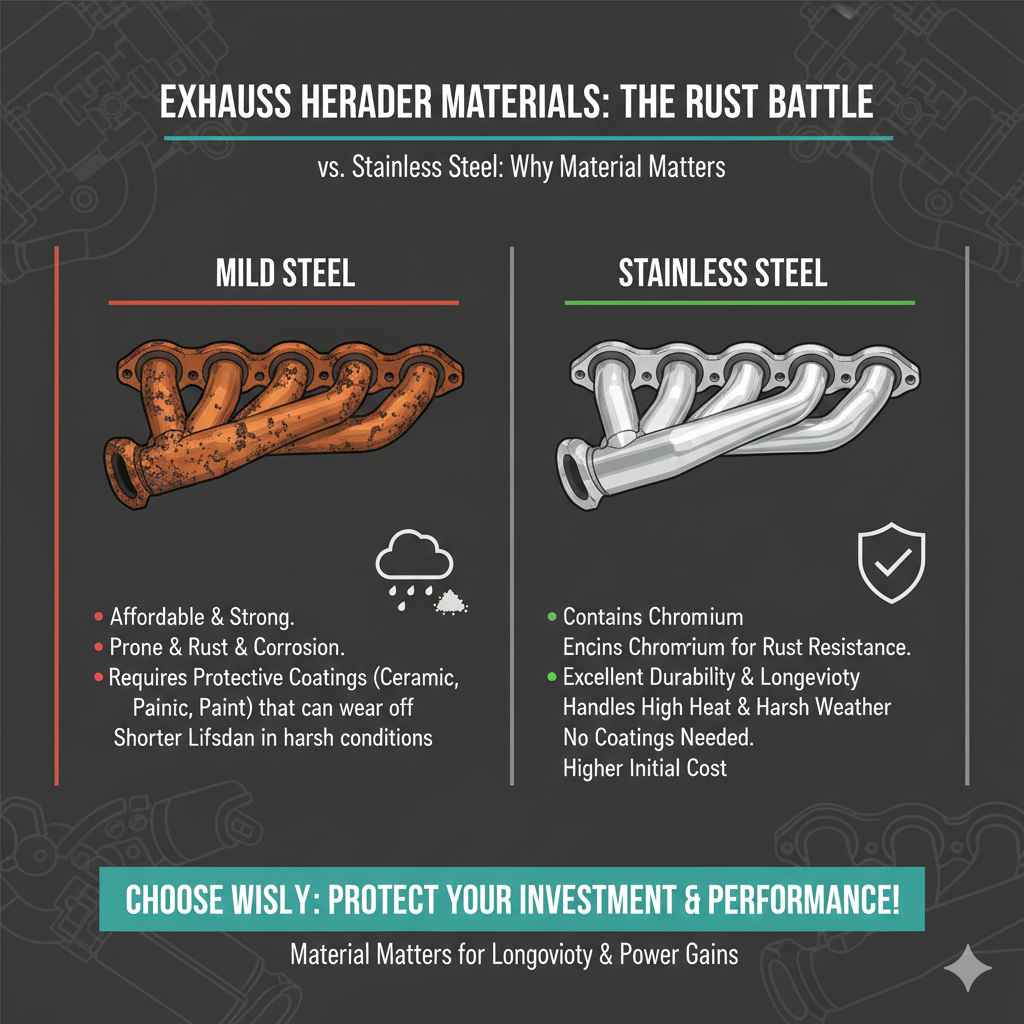
Mild steel is strong and affordable. It’s the standard for many performance parts. However, mild steel is susceptible to rust and corrosion, especially in areas with rain, snow, or road salt. To protect it, mild steel headers usually need to be coated (like ceramic coating) or painted. Over time, these coatings can wear off, exposing the steel to rust.
Stainless Steel
Stainless steel contains chromium, which creates a protective layer that resists oxidation (rust). This makes stainless steel headers last much longer without needing special coatings. They handle high heat and harsh weather better than uncoated mild steel.
Are Basset Headers Stainless Steel? The Direct Answer
This is where we get specific. Basset Racing Headers has a long history of building tough exhaust components.
The answer to “Are Basset Headers stainless steel?” depends on the specific model you are looking at. Basset offers headers made from different materials to suit different needs and budgets.
To get the most durable, rust-resistant option, you should specifically look for their offerings designated as Stainless Steel Headers. These are designed for maximum longevity, making them a favorite for street-driven cars that see all types of weather.
However, they also offer headers in quality mild steel, which are often chosen by racers who plan to apply a high-temperature ceramic coating themselves or who are building a dedicated race car where budget might be a concern over street longevity.
Key Basset Header Material Options
Here is a simple breakdown of what you are usually buying when you choose Basset:
- Mild Steel: Good performance boost, generally lower initial cost, but requires coating for rust protection.
- Stainless Steel: Premium option, excellent resistance to heat and corrosion, often carries a higher price tag but superior long-term value for daily drivers.
If your goal is a “set it and forget it” upgrade that resists rust for years, ensuring you look for the stainless steel variants is the safest bet. For more detailed material specifications, always check the product description on the retailer’s site or the manufacturer’s official literature.
Proven Benefits of Upgrading to Basset Headers
Regardless of whether you choose mild steel or stainless steel, installing performance headers like those from Basset offers significant advantages over your restrictive factory exhaust manifolds. These benefits focus on three main areas: performance, efficiency, and sound.
Benefit 1: Improved Engine Performance (More Horsepower and Torque)
Your engine creates exhaust gases that need to exit as fast and smoothly as possible. Factory manifolds are often designed to save space and cost, not for maximum flow. Headers are designed to handle the exhaust pulse from each cylinder individually and merge them efficiently.
How Headers Increase Flow
- Tuned Lengths: Basset Headers typically feature tubes designed to specific lengths that help scavenge exhaust gases out of the cylinder more effectively. Think of it like a vacuum cleaner hose—a smooth, wide hose works better than a kinked, narrow one.
- Smooth Merging: The collector (where the pipes meet) on a performance header is designed to reduce turbulence. Less turbulence means the engine spends less energy pushing out old gas and more energy making new power.
- Reduced Backpressure: Less restriction means the engine can “breathe” easier, leading directly to measurable gains in horsepower (HP) and torque (the pulling power).
This increased efficiency means your engine doesn’t have to work as hard to produce the same amount of power, especially at higher RPMs.
Benefit 2: Better Fuel Efficiency
While the main goal is usually power, better breathing often leads to better efficiency. If your engine can exhale easily, it requires less fuel to maintain a steady speed.
For example, studies on engine breathing improvements often show that reducing exhaust restriction can lead to small but measurable improvements in fuel economy under steady cruising conditions. While the change might be minor compared to engine tuning, easier breathing contributes to overall lower strain on the motor. You can learn more about how exhaust tuning affects engine efficiency from resources detailing internal combustion engine mechanics, such as those found through university engineering departments.
Benefit 3: Superior Sound Quality
Let’s be honest: a big reason many of us upgrade headers is the sound! Factory exhaust manifolds muffle the sound significantly. Basset Headers, by allowing the exhaust pulses to travel more directly, enhance the natural tone of your engine.
This results in a deeper, throatier, and more aggressive sound without sounding overly obnoxious (depending on the rest of your exhaust system). It’s a classic performance sound that lets everyone know you have upgraded power under the hood.
Benefit 4: Durability (Especially Stainless Steel)
As we discussed, choosing the right material matters for durability. Basset’s stainless steel options are engineered to withstand intense heat cycles (heating up and cooling down repeatedly) without cracking or rusting out. This upfront investment saves you money and hassle down the road.
Comparing Header Materials: A Durability Snapshot
To help you decide which material is right for your driving style, here is a comparison focusing on longevity and maintenance:
| Feature | Mild Steel (Uncoated) | Stainless Steel (Basset Option) |
|---|---|---|
| Corrosion Resistance | Low (Rusts Easily) | High (Resists Rust) |
| Heat Resistance | Good, but needs coating for extreme heat retention | Excellent |
| Required Maintenance | Regular coating checks and touch-ups necessary | Minimal, mostly just cleaning |
| Initial Cost | Lower | Higher |
Choosing the Right Basset Headers for Your Vehicle
Selecting the correct headers involves more than just picking the metal; you need the right fit and design for your engine. Basset Headers are famous for their specific designs tailored for different types of racing and street performance applications, especially for older V8 engines popular in drag racing and street rods.
Step 1: Know Your Engine and Application
Headers are specific. A header designed for a small-block Chevy won’t fit a Ford small-block.
- Identify Your Engine: Know the year, make, and model of your engine (e.g., 1969 Chevy 350ci).
- Determine Use: Are you street driving daily, hitting the drag strip occasionally, or building a show car? Street cars benefit most from stainless steel durability.
- Check Clearance: Sometimes, performance headers are large and might interfere with steering components or the oil pan. Basset often designs for performance, so always check the manufacturer’s notes regarding vehicle fitment.
Step 2: Understanding Header Tube Design (Long Tube vs. Shorty)
While Basset is heavily associated with full-length headers, it’s important to know the types available in the aftermarket:
- Long Tube Headers: These tubes run further down the exhaust system. They generally offer the best performance gains, especially at mid to high RPMs, by maximizing scavenging. Basset headers are often of this style.
- Shorty Headers: These stop much sooner, often just past the engine block. They are easier to install in tight engine bays but offer fewer performance benefits than long tubes.
For maximizing the performance boost Basset offers, long tube designs are usually the preferred route, provided you have the space under your car.
Step 3: Considering Coatings (If Choosing Mild Steel)
If you opt for a mild steel Basset Header because of budget constraints, you must protect them. The most common professional protection is a ceramic coating.
A quality ceramic coating does two main things:
- Corrosion Protection: It acts as a barrier against moisture and salt.
- Heat Retention: It keeps exhaust gases hotter as they travel down the tube. Hotter gases move faster, aiding the scavenging effect we discussed earlier.
If you buy uncoated mild steel, factor in the cost and time of having them professionally ceramic coated right away.
Installation Considerations for Beginners
Installing headers is a big job, often requiring you to remove existing manifolds and sometimes even disconnect steering components. As a beginner, safety and preparation are paramount.
Essential Tools for Header Installation
You will need more than just a basic socket set for this job. Proper tools make the difference between a frustrating afternoon and a successful upgrade.
| Tool Category | Required Item |
|---|---|
| Lifting & Safety | High-quality jack stands (never rely only on a jack!), safety glasses, heavy gloves. |
| Wrenching | Metric and SAE socket sets, flexible extensions, swivel joints, and wrenches for tight spots. |
| Gaskets & Sealing | New, high-quality header gaskets (often performance multi-layer steel), high-temp thread sealant or anti-seize compound. |
| Inspection | Small mirror and flashlight to check bolt access in tight areas. |
Safety First: Working Under the Car
Before you even think about turning a wrench, prioritize safety. If you are not comfortable working underneath the car, take it to a trusted professional shop.
- Cool Down: Ensure the engine has been completely cold for several hours. Exhaust parts get dangerously hot.
- Secure the Vehicle: Always lift the car using a hydraulic jack and secure it firmly on four, heavy-duty jack stands on a level, solid surface (like concrete). Never work under a car supported only by a scissor jack or floor jack alone.
- Disconnect Battery: Disconnect the negative battery terminal to prevent accidental shorts if you are working near wiring.
Torque Matters: Tightening Your New Headers
One of the most common reasons new headers leak (and sound terrible) is improper tightening. Exhaust manifolds and headers heat up and cool down repeatedly, which causes fasteners to loosen slightly.
You must tighten the header bolts in a specific sequence (usually starting from the center and working your way out) and to the manufacturer’s specified torque settings. If you skip this, you will get exhaust leaks, which undo all the performance gains. Always consult a repair manual for the exact torque specs for your vehicle when installing Basset Headers.
The Environmental Factor and Legality
When upgrading exhaust components, you must always consider legality. Performance headers, especially those designed for maximum flow, often remove or relocate components necessary for emissions control.
Catalytic Converters and Emissions
In many regions, removing or tampering with the catalytic converter is illegal for street-driven vehicles. Catalytic converters clean harmful pollutants from your exhaust stream.
Crucial Note: High-flow headers, even if they are stainless steel Basset Headers, are often sold for “off-road use only” or competition use precisely because they may not accommodate the factory catalytic converters, or they may relocate them outside the required monitoring zones. Before purchasing and installing, check your local, state, and federal regulations regarding vehicle emissions and exhaust modification. Organizations like the U.S. Environmental Protection Agency (EPA) provide guidelines on vehicle modification standards.
If you plan to drive the car on public roads, ensure the headers you select either retain the catalytic converters or comply with local inspection standards.
Long-Term Ownership: Caring for Your Headers
Once your Basset Headers are installed, maintaining their material—especially stainless steel—is straightforward.
Caring for Stainless Steel Basset Headers
Stainless steel is tough, but it can still look dull or get surface discoloration from intense heat (which is normal).
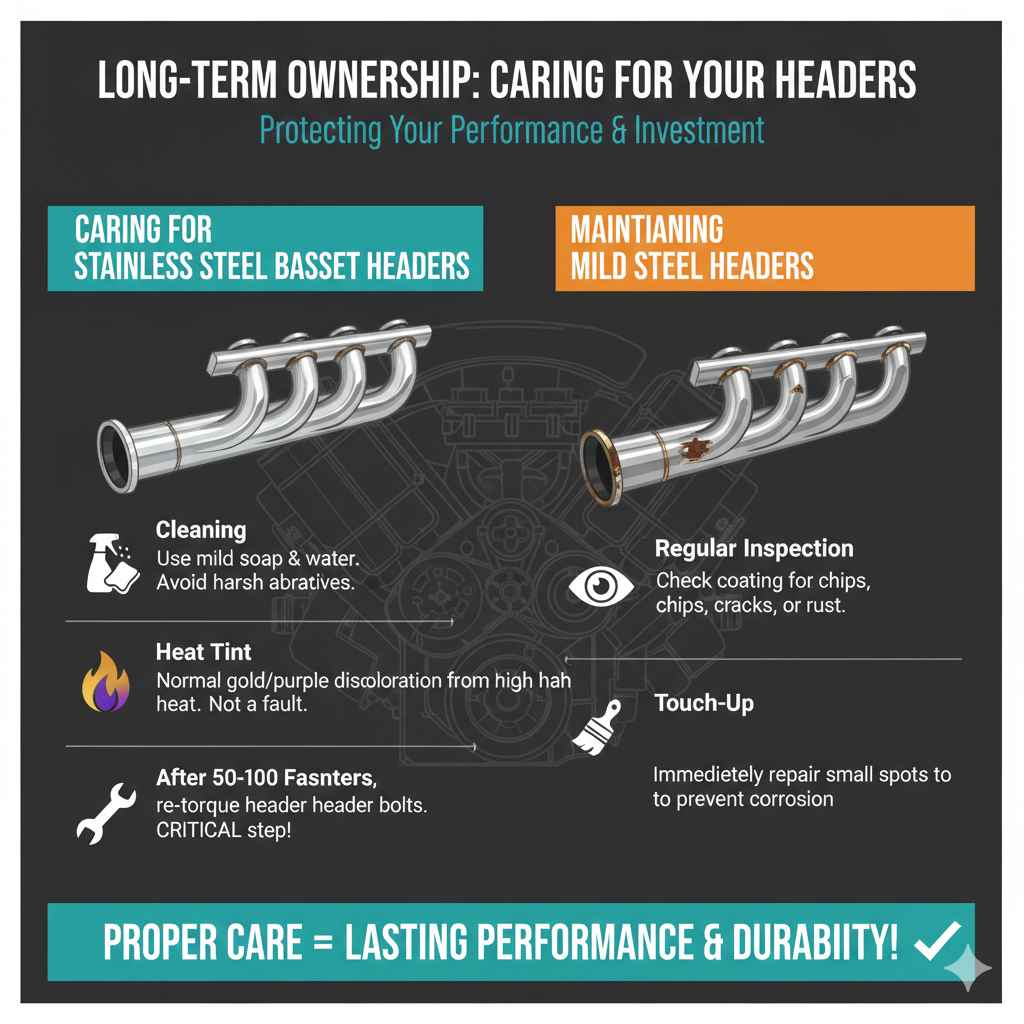
- Cleaning: Use mild soap and water or a dedicated stainless steel cleaner. Avoid harsh abrasives or steel wool, which can scratch the surface and make it more susceptible to staining.
- Heat Tint: Expect some gold or purple discoloration near the cylinder head. This is known as heat tint and is a sign the headers are working hard. It does not indicate a failure.
- Checking Fasteners: After the first 50–100 miles of driving (after the initial heat cycle), re-check and gently re-torque all header bolts. This is a critical step many beginners skip!
If you have mild steel headers that were coated, inspect the coating regularly for chips or signs of rust starting underneath. Touch up any small spots immediately to prevent major corrosion.
Frequently Asked Questions (FAQs) for New Header Owners
Here are some common questions beginners have about exhaust upgrades and materials like those used by Basset Headers.
Q1: If I buy stainless steel headers, will they ever turn blue or gold?
A: Yes. Even high-quality stainless steel will show discoloration, often turning gold, bronze, or blue near the engine ports where the heat is highest. This is called heat tint and is normal; it shows the metal is handling the high temperatures effectively.
Q2: Do Basset Headers always require an engine tune-up?
A: While not always strictly required, especially if you are only replacing factory manifolds with Basset Headers and keeping the stock catalytic converters and oxygen sensors, a mild engine tune-up (recalibration) is highly recommended for maximizing performance gains. Headers change how the engine breathes, and a tune ensures the fuel mixture is perfect.
Q3: Are headers hard to install on a V8 engine compared to a four-cylinder?
A: Generally, V8 engines often have more space around the engine bay than cramped four-cylinder engines, sometimes making header installation easier on a V8. However, the actual difficulty depends heavily on where the collector must meet the rest of the exhaust system.
Q4: What is the biggest difference between Basset Headers and cheap eBay headers?
A: The biggest difference is quality control, material specification, and fitment. Basset focuses on consistent tube lengths and mandrel bending (smooth, non-collapsing bends) for actual performance. Cheap headers often use crush bending, which restricts flow, and the metal composition might not match what is advertised.
Q5: Will stainless steel headers weigh less than cast iron factory manifolds?
A: Yes, usually significantly. Factory exhaust manifolds are often heavy cast iron. Stainless steel tubing is much lighter, contributing to a minor overall weight reduction in the vehicle, which is always a bonus.
Q6: How long should my new headers last?
A: Properly installed, quality stainless steel headers, like those offered by Basset, can easily last the lifetime of the vehicle, often exceeding 10 to 15 years even with regular driving in varied conditions, provided they are not physically damaged.
Q7: Can I install headers myself if I’m a beginner?
A: Header installation is challenging but achievable for a determined beginner with mechanical aptitude. The hardest parts are usually removing rusted factory bolts and ensuring perfect gasket alignment. If you are unsure about lifting the car safely or dealing with tight clearances, hire a professional.
Conclusion: Investing in Lasting Performance
Deciding whether Basset Headers are stainless steel leads to an important conclusion: they offer quality options designed for real performance gains. Whether you choose their stainless line for maximum longevity against rust or opt for their robust mild steel for a specific racing build, you are choosing a component engineered to help your engine breathe better.
Remember that the material choice—stainless steel offering superior, low-maintenance durability—is an investment. When paired with careful installation, proper re-torquing, and adherence to local vehicle laws, your new Basset Headers will reward you with improved power, a fantastic sound, and many years of reliable service. By understanding the basics of steel types and installation safety, you have taken a big step toward confidently upgrading your vehicle’s exhaust system. Drive safely and enjoy the power!
Related pick: Check today's price on Amazon