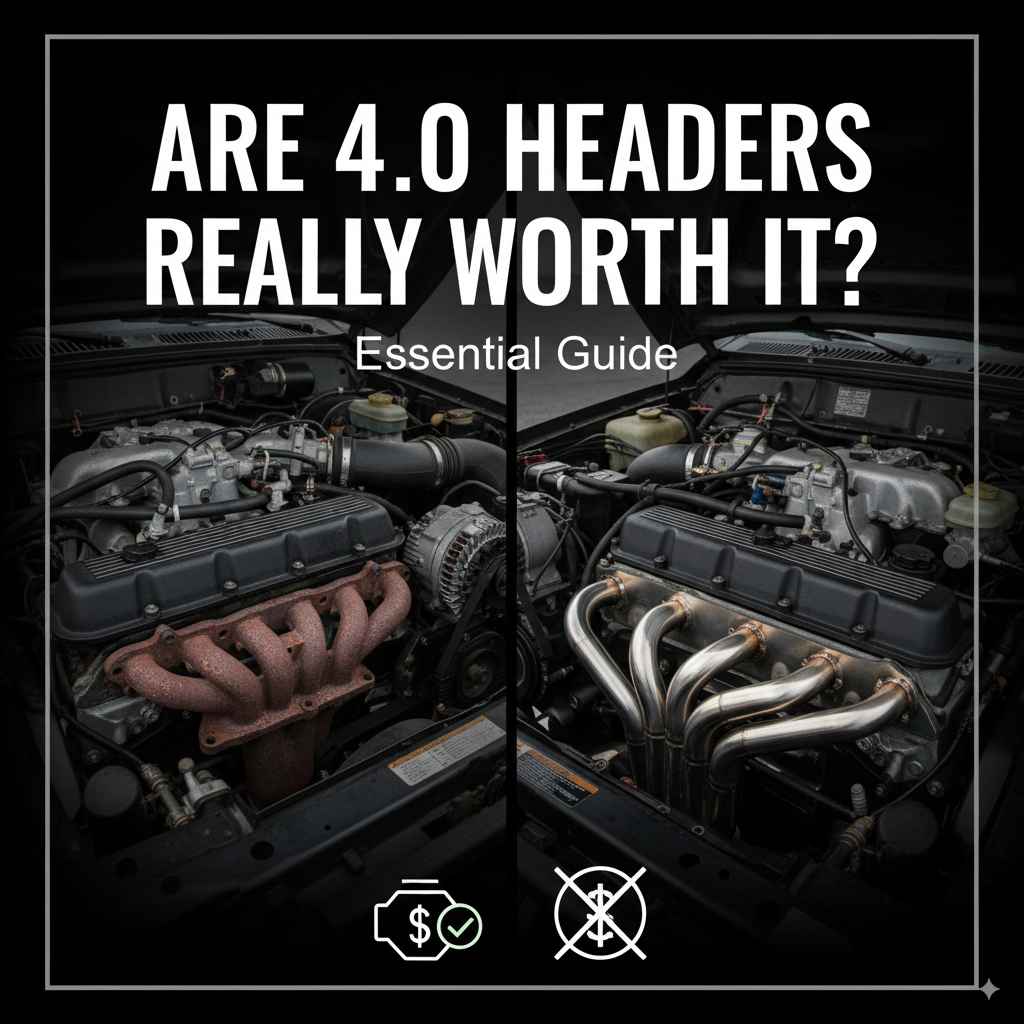
Are 4.0 Headers Really Worth It: Essential Guide
For many Jeep 4.0L owners, installing aftermarket headers offers noticeable performance gains, improved sound, and better fuel efficiency, making them a worthy upgrade if chosen carefully. They can outlast restrictive stock manifolds and potentially solve common manifold cracking issues, but weigh the cost against your specific driving needs and goals.

As an Amazon Associate I earn from qualifying purchases.
Upgrading your Jeep’s exhaust system can feel a bit like stepping into a maze. Especially when you hear terms like “headers” thrown around. You might be wondering: “Are 4.0 headers really worth it for my Jeep Wrangler or Cherokee?” It’s a common question! Many owners notice their stock exhaust manifold can crack or just isn’t performing its best. This can lead to exhaust leaks, rough idling, or a lack of power. Don’t worry, figuring out if headers are the right move for you is simpler than you think. We’ll break down exactly what headers do and whether they’re a good investment for your ride.
Understanding Your Jeep’s Exhaust System
Before we dive into headers, let’s quickly look at how your Jeep’s exhaust works. Its main job is to safely guide harmful gases from the engine cylinders out to the back of your vehicle. It also plays a role in reducing noise and, increasingly, in controlling emissions. The key parts are:
- Exhaust Manifold: This bolts directly to the engine’s cylinder head. It collects exhaust gases from each cylinder and funnels them into a single pipe.
- Catalytic Converter: This part cleans up the exhaust gases, converting harmful pollutants into less harmful ones.
- Muffler: This silences the exhaust noise.
- Tailpipe: This carries the exhaust gases out from the back of the vehicle.
The design of these parts, especially the exhaust manifold, significantly impacts how well your engine breathes. A restrictive manifold can make your engine work harder, using more fuel and producing less power. This is where aftermarket headers come into play.
What Exactly Are Headers?
Headers, also called exhaust headers or headers, are a replacement for your Jeep’s stock exhaust manifold. Instead of a single, often cast-iron, piece that brings all the exhaust pulses together somewhat randomly, headers are typically made from bent steel tubing. Each exhaust port on your engine head gets its own individual pipe, and these pipes then merge together in a specific sequence. This design is the core of why they can offer benefits.
Types of Headers
When you start looking into headers, you’ll notice there are a few main types, distinguished by how the pipes merge:
- Shorty Headers: These are designed to bolt directly onto the stock mid-pipe (the pipe that connects to your catalytic converter). They are smaller and easier to install, often fitting within the stock configuration. They offer a mild performance improvement and are a good entry-level upgrade.
- Long Tube Headers: These have much longer pipes that extend further down the exhaust system before merging. They are designed to optimize exhaust scavenging (explained below) for maximum power gains, especially at higher RPMs. They usually require modifications to or replacement of the mid-pipe and may have clearance issues depending on your Jeep model and lift.
- Tri-Y Headers: These are a hybrid design. They have pipes that merge in two stages, first into pairs and then into a single collector. They aim to provide a balance of low-end torque and high-end horsepower.

How Headers Improve Performance
The primary goal of aftermarket headers is to improve the “breathing” of your engine. This is achieved through a few key principles:
- Reduced Backpressure: The stock exhaust manifold is often bulky and has design limitations that create backpressure. Think of it like trying to breathe through a narrow straw versus a wide one. Headers, with their smoother bends and individual tubing, allow exhaust gases to exit the engine more freely, reducing this resistance.
- Improved Scavenging: This is a crucial concept. When an exhaust valve opens, it pushes out a pulse of hot gas. A well-designed header uses the energy of these pulses to create a vacuum effect that “pulls” the remaining exhaust gases out of the cylinder. This makes room for a fresh charge of air and fuel on the next intake stroke, improving efficiency and power. Long tube headers are particularly good at optimizing this scavenging effect across a wider RPM range.
- Better Exhaust Gas Flow Metrics: The smoother, more direct path offered by headers allows the engine’s computer to get more accurate readings from the oxygen sensors downstream. This can lead to better fuel mixture adjustments and potentially improved fuel economy.
Are 4.0 Headers Really Worth It: The Pros and Cons
Deciding if headers are right for your Jeep 4.0L involves weighing the benefits against the costs and potential drawbacks. Here’s a breakdown:
Pros of Installing 4.0 Headers:
- Increased Horsepower and Torque: This is the most commonly cited benefit. You can expect a noticeable boost in power, making your Jeep feel more responsive, especially during acceleration and when climbing hills. Gains can range from a few horsepower to over 15-20 hp with well-designed long tube headers and other supporting mods.
- Improved Fuel Economy: While not always a dramatic increase, a more efficient engine can lead to better gas mileage. When your engine doesn’t have to work as hard to expel exhaust, it can use fuel more effectively.
- Better Exhaust Sound: Headers often contribute to a deeper, more aggressive exhaust tone. This is subjective, but many Jeep owners enjoy the enhanced sound, especially when paired with a less restrictive muffler.
- Durability and Longevity: Many aftermarket headers are made from stainless steel or thick, coated mild steel, which are more resistant to cracking and corrosion than the stock cast-iron manifold. If your stock manifold is already cracked (a common issue on 4.0Ls), headers are a permanent fix.
- Reduced Engine Bay Heat (Potentially): Some headers are coated with ceramic or have heat wraps. This can help insulate them and reduce the amount of heat radiated into the engine bay, potentially keeping components cooler.
Cons of Installing 4.0 Headers:
- Cost: Headers are not cheap. Expect to spend anywhere from $200 for basic shorty headers to $600+ for high-quality long tube headers. Add to this the cost of installation if you’re not doing it yourself.
- Installation Complexity: While shorty headers can be a DIY job for many, long tube headers often require removing other components, potentially modifying or replacing the mid-pipe, and can be challenging to fit, especially on lifted Jeeps.
- Emissions and Legality: In some regions, modifying emissions control equipment is illegal. You’ll need to ensure the headers you choose are compliant with your local emissions regulations. You also need to ensure the placement of O2 sensor bungs (where your sensors plug in) is correct. Many headers are designed to work with the stock catalytic converter setup.
- Potential Clearance Issues: Long tube headers, especially, can sometimes hang lower or require careful routing, potentially impacting ground clearance or requiring modifications for suspension articulation, particularly in off-road applications.
- Noise Levels: While some like the sound, others might find the increased exhaust note too loud for their liking, especially for daily driving or long road trips.
- Tuning Requirements (Sometimes): While many header installations on a 4.0L don’t strictly require re-tuning, for optimal results and to prevent potential running issues (like lean conditions), some enthusiasts opt for a performance tune after installation.
When Are 4.0 Headers Most Worth It?
The “worth it” factor really depends on your goals and your Jeep’s current condition.
Headers are likely worth it if:
- Your stock exhaust manifold is cracked or leaking (a very common issue). Replacing it with a header is often a better long-term solution than another stock manifold.
- You want to genuinely improve your Jeep’s performance for towing, off-roading, or simply a more enjoyable driving experience.
- You are looking for a moderate but worthwhile overall improvement in how your engine performs.
- You have a lifted Jeep and are encountering issues with your current exhaust.
Headers might NOT be worth the extra fuss if:
- You only drive your Jeep occasionally around town and don’t demand much more from it.
- You are on a very strict budget and the cost of headers, plus potential installation or supporting modifications, is prohibitive.
- You are concerned about emissions compliance and can’t find a header specifically designed to meet your local standards.
- You prefer a quiet, stock exhaust note.
Comparing Header Options for Your Jeep 4.0L (Table Example)
Let’s look at a typical comparison. Keep in mind specific brand offerings will vary.
| Feature | Stock Exhaust Manifold | Shorty Headers | Long Tube Headers |
|---|---|---|---|
| Material | Cast Iron | Steel Tubing | Steel Tubing |
| Performance Gain | Baseline | Mild (2-5 HP) | Moderate to Significant (5-20+ HP) |
| Installation | Factory Standard | Relatively Easy (DIY possible) | More Complex (May need mid-pipe mods, clearance checks) |
| Cost | Replacement Cost Varies | $200 – $400 (approx.) | $400 – $700+ (approx.) |
| Common Issues Addressed | Can crack easily | Less prone to cracking than stock | Durable, direct flow; designed for performance |
| Sound | Stock/Mellow | Slightly Aggressive | More Aggressive/Deeper (depending on rest of system) |
| Emissions Compliance | Standard | Generally designed to work with stock cat. | May require specific mid-pipe configurations for compliance. Check local laws. |
Installation Guide: What to Expect
Installing headers can range from a few hours to a full weekend project, depending on the type of header and your mechanical experience. Here’s a general overview:
Tools You’ll Likely Need:
- Socket set and wrenches (metric and standard, depending on your Jeep)
- Ratchet and extensions
- Torque wrench
- Pry bar
- Penetrating oil (like PB Blaster or Kroil) for stubborn bolts
- Gasket scraper
- New exhaust manifold gaskets (high-quality ones are essential)
- Anti-seize compound for new bolts
- Safety glasses and gloves
- Jack and jack stands
- Optional: Exhaust pipe expander/reducer, replacement mid-pipe, O2 sensor wrench
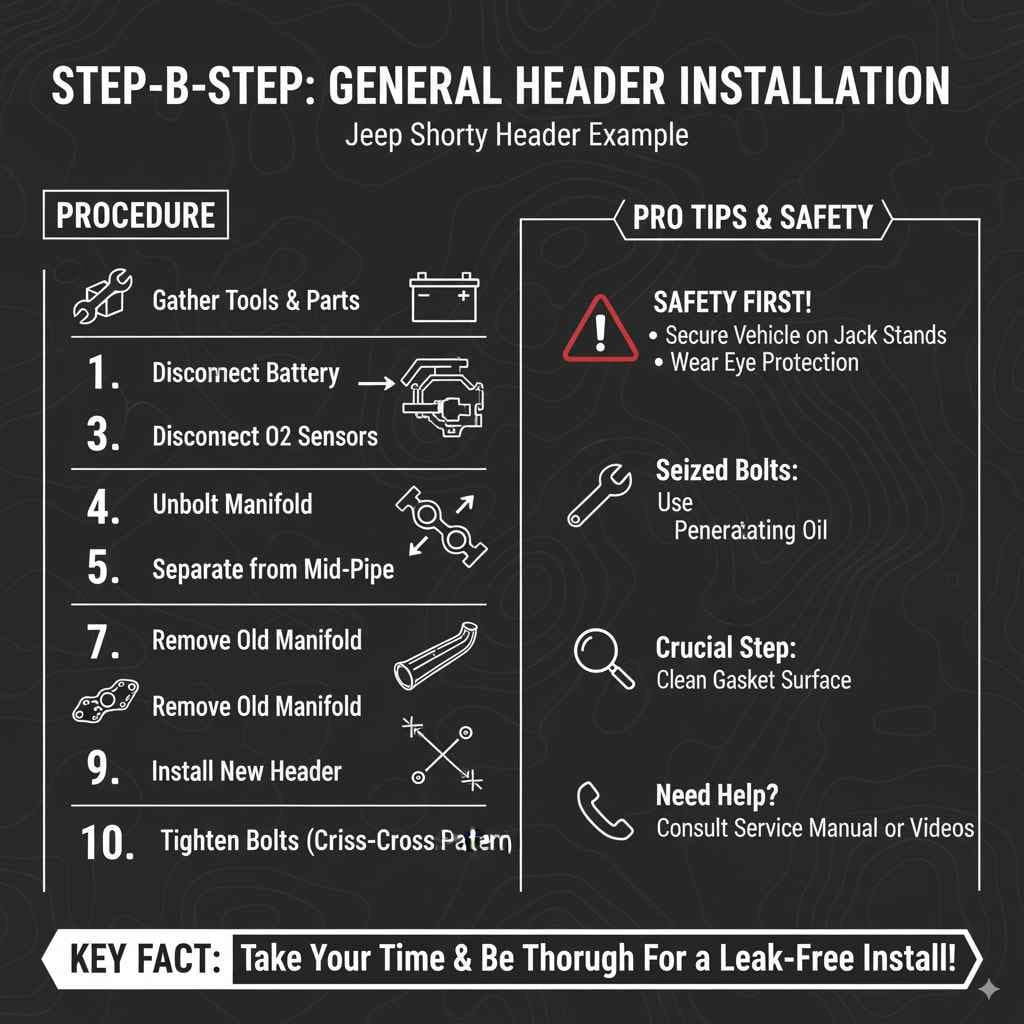
Step-by-Step: General Header Installation (Shorty Header Example for Simplicity)
Always consult your specific header manufacturer’s instructions and a reputable service manual for your Jeep model, as procedures can vary. Safety first! Ensure your vehicle is securely supported on jack stands.
- Gather Your Tools and Parts: Make sure you have everything ready before you start.
- Disconnect Battery: For safety, disconnect the negative battery terminal.
- Access the Exhaust Manifold: You may need to remove any heat shields or other components that obstruct access to the manifold bolts and the connection to the mid-pipe.
- Disconnect Oxygen Sensors: Carefully unplug the electrical connectors for any oxygen sensors that are threaded into the manifold or exhaust pipe.
- Unbolt the Manifold: This is often the trickiest part. Exhaust manifold studs and bolts can seize due to heat and moisture. Spray them generously with penetrating oil and let it soak. Use a good quality socket and, if necessary, gentle tapping or a breaker bar to loosen them. Work slowly and deliberately.
- Separate from Mid-Pipe: Once the manifold bolts are out, you’ll need to disconnect the manifold from the rest of the exhaust system (the mid-pipe). This connection usually involves bolts and a clamp.
- Remove the Old Manifold: With everything unbolted, carefully remove the old exhaust manifold. You may need to gently pry it away from the cylinder head.
- Clean the Cylinder Head Surface: Use a gasket scraper and a clean rag to meticulously remove all traces of the old gasket material from the cylinder head mating surface. This is critical for a good seal.
- Prepare the New Headers: If your headers didn’t come with them, install any necessary O2 sensor bungs or plugs. Apply a light coat of anti-seize to the threads of any new bolts you’re using.
- Install New Gaskets: Place the new, high-quality exhaust manifold gaskets onto the cylinder head or the header flanges according to the manufacturer’s instructions.
- Mount the New Headers: Carefully position the new headers against the cylinder head. Start by threading a few bolts or studs loosely by hand to ensure proper alignment.
- Tighten Header Bolts: Tighten the header bolts gradually and evenly, following a criss-cross pattern. Refer to your header manufacturer’s torque specifications. Do not overtighten, as this can warp the flanges or damage the gasket.
- Connect to Mid-Pipe: Reconnect the headers to your mid-pipe using new clamps and gaskets if required.
- Reconnect Oxygen Sensors: Thread the O2 sensors back into their bungs and reconnect their electrical connectors.
- Reinstall Any Removed Parts: Put back any heat shields or other components you removed.
- Reconnect Battery: Reconnect the negative battery terminal.
- Start and Check for Leaks: Start the engine and let it idle. Listen carefully for any exhaust leaks (hissing or puffing sounds). Check around all the mating surfaces. You may need to re-torque the header bolts after the first drive, as metal expands when hot.
For long tube headers, steps like modifying or replacing the mid-pipe, rerouting other components, and checking ground clearance will be additional considerations. Many enthusiasts recommend replacing the stock manifold studs with bolts for easier future removal. You can find more detailed guides and videos specific to your Jeep model online from reputable automotive sources like Quadratec or 4WheelParts.
FAQs About Jeep 4.0 Headers
Here are some common questions beginner Jeep owners ask about headers:
Q1: Will installing headers on my Jeep 4.0L make it pass emissions testing?
A1: Many aftermarket headers are designed to retain the stock catalytic converter location and connect to the factory emissions systems. However, legality varies greatly by state and local regulations. Always check with your local Department of Motor Vehicles (DMV) or emissions testing station and choose headers that are specifically advertised as emissions-legal in your area, if applicable.
Q2: How much horsepower can I expect from headers on a stock 4.0L?
A2: On a stock 4.0L engine, you can typically expect modest gains, anywhere from 5-15 horsepower and a slight increase in torque with shorty headers. Long tube headers, especially when combined with a less restrictive exhaust system, can yield higher gains, sometimes in the 15-25 HP range. These are estimates, and actual results depend on the header design, your Jeep’s specific condition, and whether other modifications are made.
Q3: Do I need to re-tune my Jeep’s PCM after installing headers?
A3: For most basic header installations on a Jeep 4.0L, a PCM tune is not strictly required to avoid immediate engine damage. The engine’s computer is quite adaptable. However, to maximize performance gains and ensure the engine is running at its optimal air-fuel ratio, a custom tune is often recommended, especially when pairing headers with other modifications like cold air intakes or different exhaust systems.
Q4: Is it normal for my new headers to turn blue or discolored?
A4: Yes, it’s very common for steel headers to change color, often turning shades of blue, purple, or brown near the exhaust ports. This is a result of the high temperatures they reach during operation. It’s a cosmetic change and doesn’t typically indicate a problem.
Q5: Can I install headers myself, or should I take it to a mechanic?
A5: Shorty headers can often be installed by a DIYer with basic tools and mechanical knowledge; it’s a good learning experience. Long tube headers are significantly more involved and may require specialized tools or modifications. If you’re not comfortable working with exhaust systems, dealing with potentially seized bolts, or if you’re installing long tube headers, it’s often best to have a professional mechanic or a shop specializing in exhausts do the job.
Related pick: Check today's price on Amazon