How to Get Aggressive Driving Car Exhaust Sounds
Lots of people want their car to sound really cool and powerful. They hear loud, exciting exhaust notes and wonder how they can get that sound for their own ride. It can seem a little tricky, especially if you’re new to car mods.
Don’t worry, though. We’ll break down how to get aggressive driving car exhaust sounds in a way that’s easy to follow. We’ll show you the simple steps to make your car rumble with attitude.
Understanding Aggressive Car Exhaust Sounds
Making a car sound aggressive and sporty often involves changes to its exhaust system. This system is what carries gases from the engine out of the car. The design and size of the pipes, mufflers, and resonators all play a big part in the sound.
A less restrictive system usually lets more sound escape, creating that loud, deep rumble many drivers love. It’s about letting the engine’s natural power be heard more clearly. We’ll explore how different parts of the exhaust affect the sound and what options are available to achieve your desired aggressive tone.
This section sets the stage by explaining what causes those exciting sounds in the first place.
Engine Displacement and Exhaust Notes
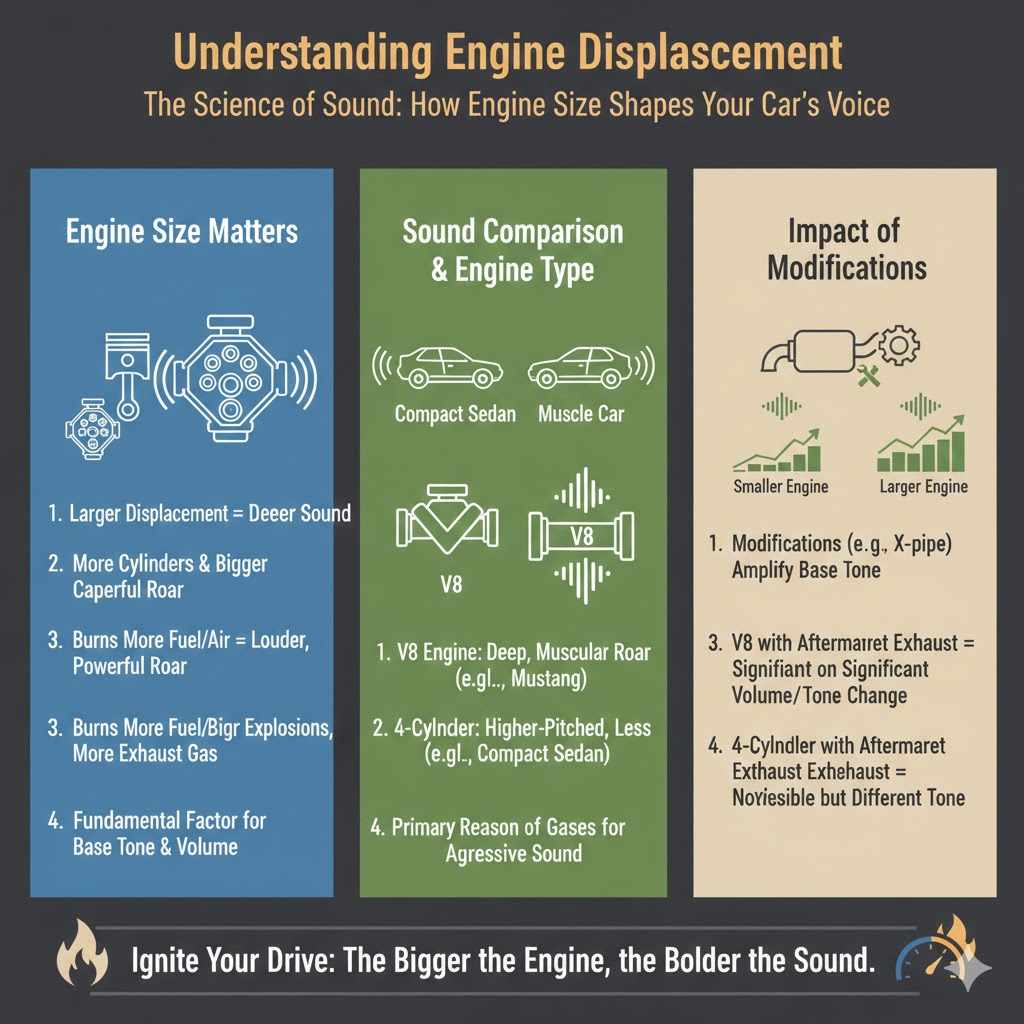
The size of a car’s engine, often measured in liters, plays a significant role in its exhaust sound. Larger engines, with more cylinders and bigger displacements, naturally produce deeper and louder sounds. This is because they burn more fuel and air with each cycle, creating bigger explosions that push more gas through the exhaust.
A 2.0-liter four-cylinder engine will generally sound different, and often less aggressive, than a 5.7-liter V8. The V8, with its eight cylinders and larger capacity, creates a more potent sound wave. This difference in engine size is a fundamental factor that dictates the base tone and potential volume of any exhaust system.
When you hear a truly aggressive sound, a larger engine is often the primary reason for that deep, powerful roar.
For instance, a muscle car like a Ford Mustang with a V8 engine will have a naturally aggressive exhaust note compared to a compact sedan with a smaller engine. The sheer volume of gases expelled by the V8 is much greater. This also means that when modifications are made, the impact on a larger engine is often more pronounced.
Cylinder Count and Firing Order
The number of cylinders in an engine and how they fire in sequence also greatly influence the exhaust sound. Engines with more cylinders, like V6 or V8 engines, tend to have a smoother, more complex exhaust note because more combustion events are happening. The firing order, which is the specific sequence in which the cylinders ignite, can create unique sound patterns.
For example, a V8 engine might have a firing order that results in a rhythmic “burble” or “rumble,” while a straight-six engine might produce a smoother, more unified tone. This rhythmic pulsing is a key characteristic of many aggressive exhaust sounds. It’s not just about being loud, but also about the distinct cadence of the sound.
Different cylinder configurations create different exhaust pulses. A V8 engine with a specific firing order might sound like a deep growl, while a boxer engine (common in Subaru cars) with cylinders arranged horizontally can produce a more distinct “rumble” due to its unique exhaust pulse. This complexity adds to the character of the sound.
Exhaust System Components and Their Impact
The exhaust system is made up of several key parts, and changing any of them can alter your car’s sound. The engine connects to an exhaust manifold, which leads to a catalytic converter, then usually a muffler, and finally an exhaust pipe that exits the rear of the car. Each piece has a job, and modifying them can lead to different sound outcomes.
It’s like tuning an instrument; each part affects the final note. Understanding these components is vital for getting the sound you want without causing problems.
The Role of the Muffler
The muffler is probably the most important part of the exhaust system when it comes to sound. Its main job is to quiet down the loud noise the engine makes. It does this by using chambers and baffles that reflect sound waves, cancelling them out.
A stock muffler is designed to keep the car quiet for everyday driving. If you want a more aggressive sound, you often need to change the muffler. A performance muffler is designed to let more sound through, creating that louder, sportier rumble many drivers seek.
Some mufflers are straight-through designs, offering minimal sound restriction.
A stock muffler is like a soundproof box. It has many internal baffles and passages that force the exhaust gases to take a long, winding path. This path reflects the sound waves back on themselves, reducing the overall noise level.
A performance muffler, however, might have fewer baffles or a perforated core. This allows exhaust gases to flow more freely, and importantly, lets more of the raw engine sound escape. This results in a louder and often deeper tone.
For example, replacing a large, chambered stock muffler with a smaller, straight-through performance muffler can dramatically increase the exhaust volume. This change is one of the most common ways people achieve a more aggressive sound profile for their vehicles. The reduction in sound dampening allows the engine’s natural harmonics to be heard.
Statistics show that the exhaust system contributes significantly to a vehicle’s perceived performance and sound. Surveys often reveal that drivers associate a louder, sportier exhaust note with a more powerful engine, even if the actual performance gains are minor.
Resonators and Their Sonic Influence
Resonators work alongside mufflers but have a slightly different purpose. While mufflers aim to reduce overall sound volume, resonators are designed to target specific sound frequencies. They help to eliminate unwanted drone or raspiness from the exhaust note, making it sound smoother and more refined.
For aggressive sounds, some people choose to remove or replace their resonators. This can make the exhaust sound louder and can sometimes bring out deeper tones. However, removing resonators can also lead to unwanted cabin noise or a harsh sound if not done carefully.
They are tuned to cancel out specific, often annoying, pitches.
Imagine a tuning fork. A resonator is like a specially designed chamber that reacts to certain sound waves from the engine and cancels them out. This is why some cars have a quiet drone at a certain speed.
Resonators prevent that. When you remove or modify them, you are essentially removing that filter for specific sound frequencies. This can make the exhaust note more raw and sometimes deeper, as the underlying engine sound is less filtered.
Many performance exhaust systems include high-flow resonators or delete the factory resonator altogether. A delete pipe
Catalytic Converters and Exhaust Flow
The catalytic converter is a critical emissions control device. It uses precious metals to convert harmful exhaust gases into less harmful ones. While its primary function is environmental, it also restricts exhaust flow to some extent.
Removing or “gutting” a catalytic converter will significantly increase exhaust volume and can make the sound much more aggressive. However, this is illegal in many places due to emissions regulations. High-flow catalytic converters offer a compromise, allowing more exhaust flow than stock units while still meeting emissions standards and maintaining a more aggressive sound.
A standard catalytic converter contains a honeycomb-like ceramic structure coated with platinum, palladium, and rhodium. As exhaust gases pass through this structure, chemical reactions occur, reducing pollutants like carbon monoxide, hydrocarbons, and nitrogen oxides. This process creates resistance to the flow of exhaust gases.
Replacing a restrictive factory catalytic converter with a performance or high-flow unit can reduce this restriction, leading to a slight increase in power and a more noticeable exhaust note. It’s about letting the exhaust gases escape more freely.
For example, a car with a 200-cell high-flow catalytic converter will typically have a louder exhaust note than the same car with a stock 400-cell converter. The difference in flow allows more sound energy to pass through. However, the legality of removing or modifying catalytic converters varies greatly by region.
Drivers must be aware of local laws before making such changes.
Modifying Your Exhaust System
Changing your car’s exhaust is a popular way to get that aggressive sound. There are several approaches you can take, from simple bolt-on parts to more involved custom work. The best option for you depends on your budget, your desired sound level, and your comfort with car modifications.
We’ll look at the most common ways people achieve the sounds they are looking for, covering everything from pre-made kits to custom fabrication.
Aftermarket Exhaust Systems
Aftermarket exhaust systems are designed to
When buying an aftermarket exhaust, you’ll often see terms like “cat-back” or “axle-back.” A cat-back system replaces the entire exhaust from the catalytic converter backward. This offers the most significant change in sound and potential performance because it replaces the muffler, resonators, and piping. An axle-back system is a simpler, often less expensive option.
It only replaces the muffler and tailpipe, providing a noticeable increase in volume and a sportier tone but usually less of a change than a full cat-back system. Brands like Borla, Magnaflow, and Corsa offer a wide range of options.
A 2022 study on aftermarket exhaust systems found that cat-back systems can lead to an average increase of 5-10 horsepower and a significant change in sound profile. Drivers commonly report a deeper, more resonant tone and increased volume. The choice of muffler design within an aftermarket system is critical; straight-through designs are generally louder than chambered designs.
Consider these points when looking at aftermarket exhausts:
- Sound Level
This is how loud the exhaust is. Manufacturers often provide decibel ratings or sound descriptions (e.g., “aggressive,” “moderate,” “race”). For an aggressive sound, you’ll want a system that is rated as loud or aggressive. Some systems offer adjustable mufflers or multiple muffler options. - Material Quality
Most aftermarket exhausts are made from stainless steel. High-quality stainless steel (like T304) resists rust and corrosion better, lasting longer. Lower-grade stainless steel (like T400) might be cheaper but can rust over time. - Drone Reduction
Some loud exhausts can create an annoying humming sound inside the cabin at certain RPMs, known as drone. Premium aftermarket systems often incorporate technologies to minimize or eliminate this drone.
Custom Exhaust Fabrication
For a truly unique sound or if an aftermarket system isn’t available for your specific car, custom exhaust fabrication is an option. A specialist shop can build a custom exhaust system from scratch, tailored to your exact preferences. This involves selecting specific pipe diameters, muffler types, resonator choices, and tailpipe designs.
While often more expensive than off-the-shelf parts, custom fabrication allows for the ultimate control over your car’s sound. It’s ideal for enthusiasts who know exactly what they want and need a personalized solution.
A custom exhaust fabricator can bend pipes to create specific exhaust routing, which can affect sound and clearance. They can also weld in specialized mufflers or resonator tips that aren’t commonly found in mass-produced systems. This level of customization allows for a sound that is truly unique to your vehicle and your driving style.
It’s like having a tailor-made suit for your car’s exhaust.
A common scenario for custom exhaust work is when a driver wants a specific sound profile that isn’t offered by major brands, or they have a classic or rare car for which aftermarket options are limited. The process usually involves consultations with the fabricator to discuss desired loudness, tone, and any specific sound characteristics like pops or crackles.
Here are some aspects of custom exhaust fabrication:
- Pipe Diameter Selection
The diameter of the exhaust pipes influences backpressure and sound. Larger pipes can reduce backpressure, potentially increasing power and volume. Smaller pipes can increase backpressure and alter the tone. A professional can help select the optimal diameter for your engine. - Muffler and Resonator Choice
You can choose from various universal muffler and resonator types, or the fabricator might build custom ones. Options include straight-through mufflers for maximum volume, chambered mufflers for a deeper tone, and specific resonator types to control rasp. - Material and Welding Quality
High-quality materials like TIG-welded stainless steel ensure durability and a clean appearance. The skill of the fabricator is crucial for both the sound outcome and the longevity of the system.
Exhaust Tip Variations
While exhaust tips don’t drastically change the core sound of your exhaust, they can affect the overall acoustics and definitely the aesthetic. Larger, wider, or specially shaped tips can sometimes alter the way sound waves exit the pipe, making the exhaust note sound slightly different or seem louder. Polished stainless steel, carbon fiber, or burnt titanium tips are popular choices for adding a visual flair that complements an aggressive exhaust sound.
They are often the final visual statement for a modified exhaust system.
The shape and size of the exhaust tip can influence the diffusion and reflection of sound waves as they exit the system. A tip with a larger diameter might allow sound to disperse more widely, potentially giving a perception of greater volume. Some tips have internal baffles or designs that can subtly alter the tone.
However, the impact of just changing the tip is usually minor compared to modifying the muffler or resonator.
For instance, switching from a small, single-wall exhaust tip to a large, dual-wall tip can make the exhaust appear more substantial and, to some ears, sound more aggressive. Many people choose tips that are polished stainless steel, black chrome, or have a burnt blue finish, which adds a sporty look.
Achieving Specific Aggressive Sound Characteristics
Getting the perfect aggressive sound isn’t just about being loud; it’s about the specific tone, rumble, and character. Some drivers want a deep, throaty growl, while others prefer a sharper, higher-pitched snarl. Understanding how to achieve these different nuances will help you make the right choices for your exhaust modification.
It’s about the quality of the sound as much as the quantity.
The “Burble” and “Pop” Effect
The “burble” or “pop” sound, often heard on deceleration or during aggressive downshifts, is a desirable trait for many enthusiasts. This effect happens when unburnt fuel enters the hot exhaust system and ignites, creating small pops and crackles. To achieve this, you typically need a less restrictive exhaust, often with a resonator delete and a performance muffler.
Some engine tuning or a specialized “pop and bang” tune can also enhance this effect. It adds an exciting character to the exhaust note.
This phenomenon occurs when the engine management system allows a small amount of unburned fuel to pass through the combustion chamber. When this fuel hits the hot exhaust components, like the catalytic converter (if still present) or the muffler, it ignites, creating the popping sound. It’s a result of the exhaust gases not being perfectly combusted, and it’s often amplified by a less restrictive exhaust system that allows these small explosions to be heard more clearly.
For example, a driver might experience pops and crackles more frequently after installing a cat-back exhaust system. This is because the increased exhaust flow and reduced backpressure make it easier for these small ignitions to be heard. Some aftermarket tunes specifically aim to increase the fuel mixture on deceleration to exaggerate this effect.
Factors that contribute to burble and pops:
- Engine Tuning
Software adjustments can alter the fuel mixture on deceleration, allowing more unburnt fuel to reach the exhaust. - Exhaust System Design
Less restrictive mufflers and the absence of resonators can make these pops more audible and pronounced. - Engine Type
Certain engine types, especially turbocharged ones, can sometimes produce more pronounced pops due to the way they manage boost and fuel.
Deep Rumble vs. High-Pitched Growl
The difference between a deep rumble and a high-pitched growl comes down to several factors, primarily muffler design, pipe diameter, and engine configuration. A deep rumble is often associated with larger V8 engines and mufflers that are less restrictive but still offer some dampening, like chambered performance mufflers. Larger pipe diameters can also contribute to a deeper tone.
A high-pitched growl, on the other hand, might be achieved with smaller engines, straight-through mufflers, and sometimes with specific resonator designs that emphasize higher frequencies.
Think of it like musical instruments. A tuba produces deep notes, while a trumpet produces higher notes. Similarly, a large displacement engine with a well-chosen muffler can create a deep, resonant bass note.
A smaller, high-revving engine with a less restrictive exhaust might produce a sharper, more energetic sound. The internal construction of the muffler is key; chambered mufflers break up sound waves in a way that can create a deeper tone, while straight-through designs allow more of the raw engine sound to pass through.
A common example is comparing a classic American muscle car with a V8 to a European sports car with a smaller, high-revving engine. The V8 will typically have that signature deep rumble, while the sports car might have a more intense, higher-pitched growl. This difference is largely due to engine displacement, cylinder count, and the exhaust tuning chosen by the manufacturer.
Here’s a quick comparison:
| Sound Type | Key Factors | Typical Engine |
|---|---|---|
| Deep Rumble | Large Muffler Volume, Chambered Muffler, Larger Pipe Diameter, Larger Engine Displacement (V8, V10) | American Muscle Cars, Trucks |
| High-Pitched Growl | Straight-Through Muffler, Smaller Pipe Diameter, High-Revving Engine (4-cylinder Turbo, V6) | Sports Cars, Tuner Cars |
Minimizing Unwanted Drone
One of the biggest challenges with aggressive exhausts is avoiding unwanted drone. Drone is a constant, low-frequency humming noise that can be very irritating inside the car, especially on the highway. It’s caused by sound waves resonating within the exhaust system and the car’s cabin at certain engine speeds.
To minimize drone, you can opt for performance mufflers designed with drone-cancelling technology, install a high-flow resonator, or use an exhaust system that has been specifically tuned for your car model to reduce this issue.
Drone can be thought of as a harmonic resonance. When the exhaust gas pulses at certain frequencies, they can cause the air inside the exhaust pipes and the car’s interior to vibrate sympathetically. This creates a steady, often unpleasant, hum.
Advanced exhaust systems use features like internal baffles in the muffler, or separate resonator chambers tuned to cancel out these specific frequencies, effectively silencing the drone.
For instance, a driver might install a loud, straight-through muffler and notice a strong drone at 70 mph. To fix this, they might add a small resonator pipe or switch to a muffler from a brand known for its drone-cancelling technology. Many premium aftermarket exhaust manufacturers invest significant R&D into solving this problem, offering systems that are loud outside but quiet inside.
Tips for reducing drone:
- Choose a Resonated Cat-Back System
Many cat-back systems include a resonator specifically designed to reduce drone. This is often a good compromise between loudness and comfort. - Select a Muffler with Drone-Cancelling Technology
Some performance mufflers have internal designs that actively cancel out specific sound frequencies, preventing drone. - Consider an Exhaust Cutout (Use with Caution)
An exhaust cutout is a valve that can be opened or closed to bypass the muffler and/or resonator. While it allows for maximum volume when open, closing it can significantly reduce drone and cabin noise. However, they require manual operation or an electronic switch.
Legal and Practical Considerations
Before you make any changes to your car’s exhaust, it’s crucial to consider the legal implications and practical aspects. Loud exhausts can attract unwanted attention from law enforcement and may not be legal in your area. Also, some modifications can affect your car’s performance or emissions.
It’s important to be informed about local laws and choose modifications that are safe and responsible.
Local Noise Ordinances and Emissions Laws
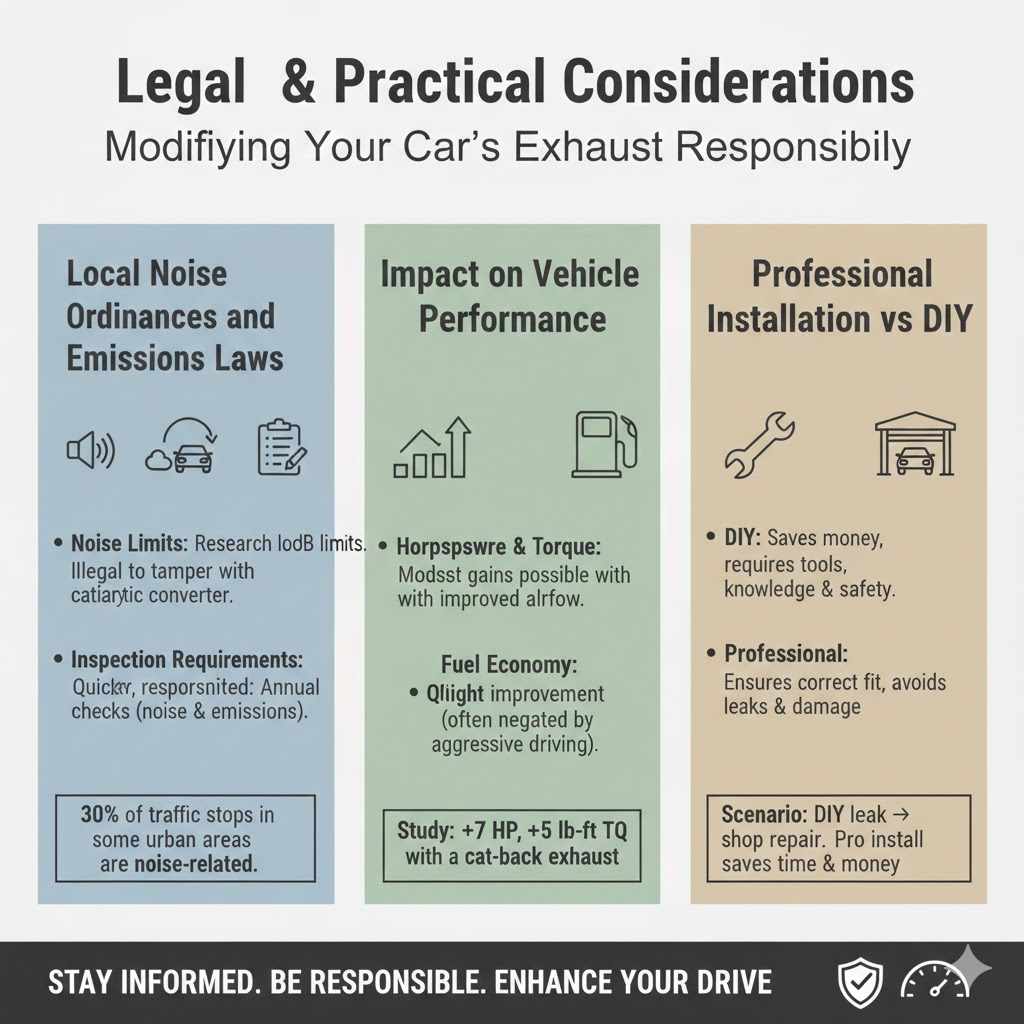
Most cities and states have laws about vehicle noise levels. Exceeding these limits can result in fines or tickets. Similarly, emissions laws dictate what modifications are permissible regarding the catalytic converter and other emissions control devices.
It’s essential to check your local regulations before making any exhaust modifications. Ignorance of the law is not a valid defense. Many areas have specific decibel limits for vehicle exhausts, often measured at a certain distance from the vehicle.
These laws are in place to maintain public peace and protect air quality. For example, a common noise ordinance might state that a vehicle’s exhaust cannot exceed a certain decibel level when measured at 50 feet. Emissions laws often make it illegal to remove or tamper with the catalytic converter, as this significantly increases the release of harmful pollutants into the atmosphere.
A recent survey indicated that nearly 30% of traffic stops in some urban areas are related to vehicle noise violations. Regarding emissions, the EPA (Environmental Protection Agency) in the United States has strict regulations against tampering with emissions control systems. Similar agencies exist globally, enforcing comparable rules.
Key legal points to consider:
- Noise Limits
Research your local noise ordinances. Many areas have specific decibel (dB) limits for vehicle exhausts. - Catalytic Converter Laws
It is generally illegal to remove, disable, or - Inspection Requirements
Some regions require annual or biennial vehicle inspections that include checks on exhaust noise and emissions equipment.
Impact on Vehicle Performance
While the primary goal is often sound, exhaust modifications can also affect your car’s performance. A less restrictive exhaust system can improve exhaust flow, which can lead to a slight increase in horsepower and torque. However, this is not always the case, and the gains can be minimal without other supporting modifications like engine tuning.
Conversely, poorly designed exhaust systems or those that are too restrictive can actually hurt performance. The balance between sound and performance is key for many enthusiasts.
For instance, a well-designed performance exhaust system, particularly a cat-back system with larger diameter pipes and a high-flow muffler, can reduce the backpressure on the engine. Less backpressure means the engine doesn’t have to work as hard to expel exhaust gases. This improved efficiency can translate into noticeable gains in power and throttle response.
However, simply making the exhaust louder doesn’t automatically mean more power.
A study on a popular tuner car showed that installing a full cat-back exhaust system resulted in a 7 horsepower increase and a 5 lb-ft torque increase. This was attributed to improved exhaust gas scavenging. However, in some cases, an exhaust that is too large in diameter for the engine size can lead to a loss of low-end torque, as the exhaust gases may not flow fast enough to create the necessary scavenging effect.
Performance considerations include:
- Horsepower and Torque Gains
While sound is the main goal, many aftermarket exhausts offer modest performance improvements by improving airflow. - Throttle Response
A freer-flowing exhaust can sometimes lead to a quicker and more responsive throttle feel. - Fuel Economy
In some cases, improved exhaust efficiency can lead to slightly better fuel economy, though this is often a secondary benefit and may be negated by more aggressive driving to enjoy the sound.
Professional Installation vs. DIY
Deciding whether to install your exhaust yourself or have it professionally done is an important practical step. DIY installation can save money, but it requires the right tools, mechanical knowledge, and safety precautions. Exhaust systems can be heavy and difficult to work with, and rusted bolts are common.
Professional installation ensures the system is fitted correctly, leaks are avoided, and it’s done safely and efficiently. For complex custom fabrication, professional help is almost always necessary.
If you’re comfortable working on cars, have a lift or good jack stands, and the necessary tools, installing an aftermarket cat-back or axle-back system can be a rewarding DIY project. However, tasks like removing rusted bolts, aligning pipes perfectly, and ensuring a leak-free seal can be challenging. Professional installers have specialized tools and experience that can make the process quicker and ensure a better result.
Consider this scenario: A car owner buys a new cat-back exhaust system. They decide to install it themselves. After several hours of struggling with rusted bolts and getting the pipes to align, they discover a small exhaust leak at the connection point.
They then have to take it to a shop to have the leak fixed. In this case, paying for professional installation upfront would have saved time, frustration, and potentially extra costs for repairs.
Frequently Asked Questions
Question: Will changing my muffler make my car sound aggressive
Answer: Yes, changing your muffler to a performance muffler is one of the most common ways to get a more aggressive car exhaust sound. Performance mufflers are designed to be less restrictive, letting more of the engine’s natural sound come through, making it louder and sportier.
Question: How do I make my car exhaust pop and crackle
Answer: To get popping and crackling sounds, you usually need a less restrictive exhaust system, often with a performance muffler and no resonators. Some drivers also use engine tuning to allow more unburnt fuel into the exhaust, which ignites to create those sounds.
Question: Is it legal to remove my catalytic converter
Answer: In most places, it is illegal to remove or tamper with your catalytic converter. This is because catalytic converters are vital for reducing harmful emissions. Always check your local laws before making any changes to your exhaust system.
Question: Can a loud exhaust hurt my car’s performance
Answer: A well-designed, less restrictive exhaust can actually improve performance by allowing exhaust gases to flow more freely. However, a poorly designed system, or one that’s too large for the engine, could potentially decrease performance, especially at lower speeds.
Question: What is exhaust drone
Answer: Exhaust drone is an annoying, low-frequency humming sound that can occur inside the car at certain speeds. It happens when exhaust sound waves resonate. Many performance exhaust systems are designed with features to minimize or eliminate this drone.
Wrap Up
Making your car’s exhaust sound aggressive involves understanding system components and choosing the right modifications. Whether you opt for an aftermarket system, custom fabrication, or focus on specific sound elements like burble, the key is to balance your desired tone with legal and practical considerations. You can achieve that exciting, powerful sound.