How to Restore Old Car Exhaust Sound Quality
Many car lovers wish their old car had that awesome rumble it used to have. Sometimes, age and wear make the exhaust sound a bit dull or raspy. It might feel tricky to fix, especially if you are new to car care. But don’t worry, getting that classic sound back is totally doable. We will walk through it step by step.

CERAKOTE
CERAKOTE® Ceramic Trim Coat Kit - Quick…
- 200+ Wash Durability - An inorganic ceramic coating, not a temporary dressing. Independently rated to hold its finish past 200 was…
- Does Not Wash Off - The ceramic chemistry cures into the pores of unpainted black plastic trim and bonds to the surface, so the re…
- No Greasy Residue - Cures dry to the touch, so treated bumpers, mirror caps, fender flares and cowls do not attract dust or sling…
As an Amazon Associate I earn from qualifying purchases.
Understanding Old Car Exhaust Sound Degradation
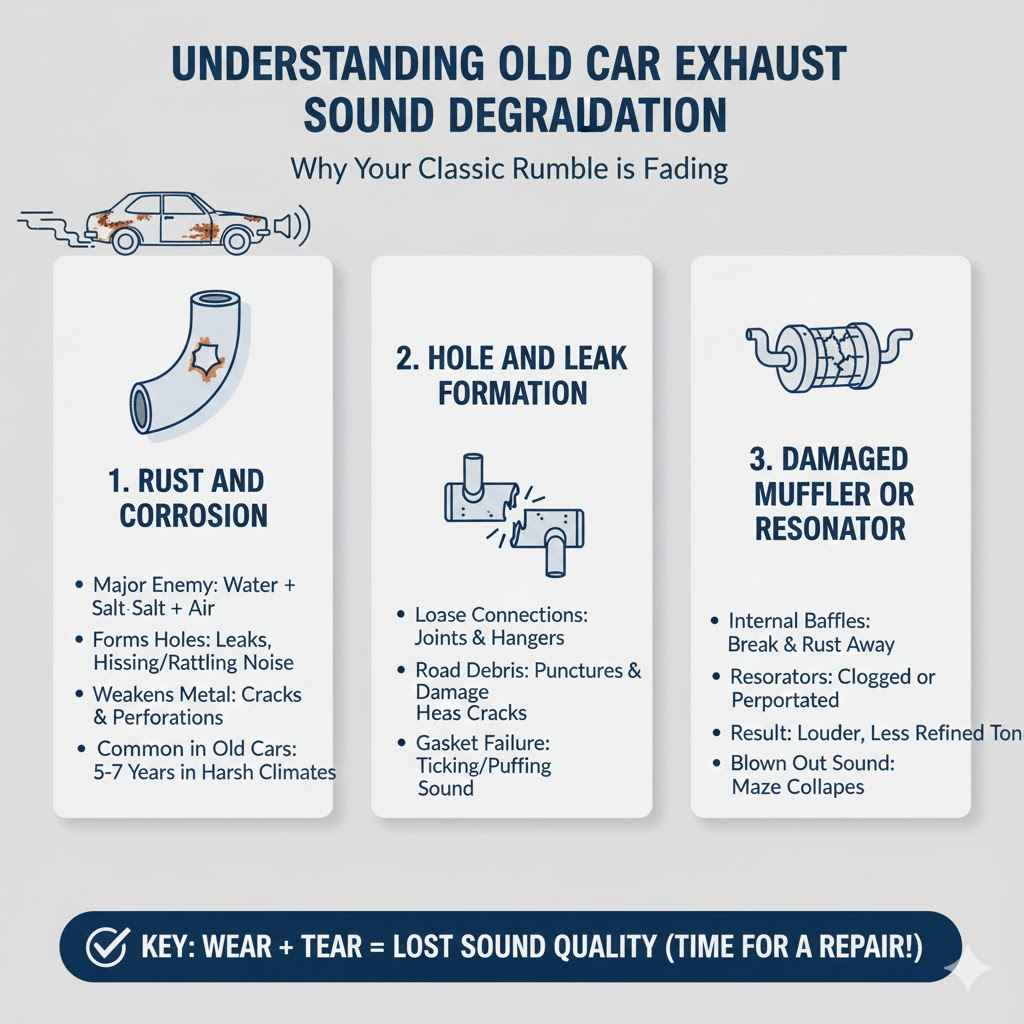
Car exhaust systems wear out over time. This affects how your car sounds. Rust, leaks, and damaged parts can make the exhaust noise change. This section explains why your old car’s exhaust might not sound as good as it used to. We will look at the common culprits that steal that classic rumble.
Rust and Corrosion
Rust is a major enemy of exhaust systems. It forms when metal is exposed to water and air. Over time, rust eats away at the metal, creating holes. These holes can make the exhaust leak air, changing the sound. Instead of a deep growl, you might get a hissing or rattling noise.
- Rust forms on pipes, mufflers, and catalytic converters.
- It weakens the metal, leading to cracks and holes.
- Corrosion can start from the outside due to road salt and moisture.
Rust formation is accelerated in humid climates or areas where roads are salted in winter. A study by a leading automotive parts manufacturer found that over 60% of exhaust systems show significant rust after 5-7 years of regular use in harsh environments. This rust can lead to leaks that dramatically alter the intended exhaust note. The sound isn’t just about the deep tones; it’s about a sealed system delivering gases efficiently. When that seal breaks, the sound becomes unpredictable and often unpleasant. Imagine a balloon with a small hole; the escaping air changes its sound. The same principle applies to exhaust systems.
Hole and Leak Formation
Exhaust systems are made of metal pipes connected by various components. Over years of driving, these connections can loosen, or the pipes themselves can develop holes. These holes allow exhaust gases to escape before they reach the muffler, which is designed to quiet the sound.
- Exhaust leaks often start at joints and hangers.
- Road debris can impact pipes and cause punctures.
- Heat cycles also cause metal to expand and contract, leading to stress cracks.
A common scenario for leaks involves the flange gaskets that connect different parts of the exhaust system, like the exhaust manifold to the downpipe. These gaskets are designed to seal under pressure and heat. When they wear out or become corroded, they can allow gases to escape. This escape creates a ticking or puffing sound, especially noticeable when the engine is cold. Furthermore, rust can eat through the thin metal of the exhaust pipes, creating a larger hole that results in a much louder and rougher sound. Some drivers might mistake these leaks for a performance issue, but it’s often just a sound problem caused by a breach in the system.
Damaged Muffler or Resonator
The muffler and resonator are key parts for controlling exhaust sound. The muffler uses chambers and baffles to absorb sound waves. The resonator helps cancel out certain frequencies, giving the exhaust a smoother tone. If these parts are damaged internally, they cannot do their job effectively.
- Internal baffles in mufflers can break or rust away.
- Resonators can become clogged or perforated.
- Damage here results in a louder, less refined exhaust note.
Internal damage to a muffler is a very common cause of a “blown out” exhaust sound. Imagine the inside of a muffler as a maze for sound waves. If parts of that maze collapse or break, the sound waves are no longer properly diffused and absorbed. This means more noise escapes. A broken baffle might create a rattling sound as it vibrates, or a completely collapsed chamber will simply let exhaust gases pass through with minimal sound deadening. Similarly, a resonator that has its internal tubes damaged or rusted through will fail to tune the exhaust notes, leading to a droning or unpleasant harmonic. Repairing or replacing these parts is often essential to restoring the original sound quality.
Steps to Restore Old Car Exhaust Sound Quality
Restoring the sound of your old car’s exhaust involves checking its parts and fixing what’s broken. It’s like giving your car’s voice a tune-up. We will go through each component step by step to help you bring back that deep, satisfying rumble.
Inspecting the Exhaust System Components
Before you can fix the sound, you need to know what’s wrong. A thorough inspection will reveal any leaks, rust, or damaged parts. This is the most important first step to correctly identify how to restore old car exhaust sound quality.
Checking the Exhaust Pipes
Start by looking at the exhaust pipes that run from the engine all the way to the back. Look for any signs of rust, especially on bends and seams. Tap them with a rubber mallet; if you hear a hollow sound, there might be rust damage.
- Look for visible holes, cracks, or thin spots.
- Pay attention to areas where pipes join together.
- Check for loose clamps or hangers that could cause pipe movement.
A common issue with exhaust pipes is rust perforation, particularly in areas exposed to road splash and salt. Imagine a thin metal pipe being constantly sprayed with water and then exposed to air; rust is almost guaranteed over time. A visual inspection should also include checking the integrity of welded joints. Sometimes, the welds can crack due to vibration and thermal stress. If you can see any dark, sooty marks around joints or pipes, it indicates a leak. These marks are carbon deposits from escaping exhaust gases. Experts recommend using a bright light and a mirror to inspect hard-to-reach areas thoroughly.
Examining the Muffler and Resonator
These parts are crucial for sound. Gently tap the muffler and resonator with a hammer. If you hear a rattling sound, something inside might be loose or broken. Check for any holes or signs of rust on the outer casing.
- Listen for internal rattling when tapping.
- Look for rust or holes on the muffler’s exterior.
- Ensure the muffler and resonator are securely attached and not hanging loosely.
The internal structure of a muffler consists of a series of chambers and baffles designed to reduce noise. Over time, the metal separating these chambers can rust and break apart. When this happens, the exhaust gases bypass these sound-deadening pathways, leading to a much louder and often unpleasant sound. A rattling noise often means a baffle has come loose and is vibrating. Similarly, resonators have internal tubes and chambers that tune the exhaust note. If these are damaged, the exhaust might develop a drone or a harsher tone. For example, a classic car owner might notice a dull roar when they expect a crisp tone, and this is often due to muffler damage.
Inspecting Hangers and Clamps
Exhaust systems are held in place by rubber hangers and metal clamps. If these are worn out or broken, the exhaust system can sag or move. This movement can cause pipes to rub against the car’s body, creating noise and potentially leading to stress cracks.
- Check rubber hangers for cracks or tears.
- Ensure metal clamps are tight and not rusted through.
- Verify that the entire exhaust system is properly supported.
Worn-out rubber hangers are a very common problem. These hangers absorb vibrations from the engine and exhaust, preventing noise and damage. When they degrade, they can break, causing the exhaust pipe to hang lower than it should. This can lead to the exhaust touching the chassis or other underbody components, creating scraping or banging sounds, especially when going over bumps. Additionally, rusted clamps can fail, leading to sections of the exhaust system becoming loose. A loose exhaust is not only noisy but also a safety hazard. A secure exhaust system is fundamental to achieving consistent and quality sound.
Repairing Leaks and Minor Damage
Small problems can often be fixed without replacing entire parts. Addressing leaks and minor damage is a cost-effective way to improve exhaust sound. This is a key part of how to restore old car exhaust sound quality for many DIY enthusiasts.
Using Exhaust Repair Putty or Tape
For small holes or cracks, special exhaust repair putty or high-temperature tape can be a temporary or even semi-permanent fix. These products are designed to withstand the heat and gases of an exhaust system.
- Clean the area around the leak thoroughly.
- Apply the putty or tape according to product instructions.
- Allow sufficient curing time before running the engine.
Exhaust repair putty is a malleable compound that hardens when exposed to heat. It’s great for filling small pinholes or cracks in exhaust pipes or mufflers. The process usually involves cleaning the affected area to remove rust and dirt, then pressing the putty firmly into the hole. High-temperature exhaust tape is a fiberglass-reinforced tape coated with an adhesive and sealant. It’s wrapped tightly around the damaged area. Both methods require the exhaust system to be cool before application. A successful repair can seal small leaks, reducing unwanted noise and restoring a more consistent exhaust note.
Welding Small Cracks and Holes
If you have welding experience or access to a welder, this is a more permanent repair for pipes. Welding can seal cracks and small holes, restoring the integrity of the exhaust system.
- Ensure the metal is clean and free of rust.
- Use appropriate welding rods for exhaust pipe material (e.g., mild steel).
- Weld from both the inside and outside if possible for a strong seal.
Welding exhaust components requires specific knowledge and equipment. The metal used in exhaust systems is often thin and can be prone to burning through if not handled correctly. A skilled welder can patch small holes or bridge cracks, effectively sealing the system. For instance, if an exhaust pipe has a small crack near a flange, a welder can reinforce that area and seal the breach. This method is considered more durable than putty or tape, especially for areas that experience significant vibration or stress. Proper preparation, including grinding away rust and paint, is essential for a good weld.
Replacing Damaged Parts
Sometimes, the damage is too severe for repairs. In these cases, replacing the damaged part is the best way to restore the original exhaust sound.
Replacing a Rusted or Damaged Muffler
The muffler is the primary component for quieting exhaust noise. If it’s rusted through or damaged internally, replacing it will often bring back the desired sound.
- Purchase a muffler designed for your car’s make and model.
- Remove the old muffler by unbolting or cutting it free.
- Install the new muffler, ensuring a secure fit.
When selecting a new muffler, consider whether you want an original equipment (OE) replacement for a factory sound or an aftermarket one for a slightly different tone. OE mufflers are designed to meet the original sound specifications. Aftermarket mufflers can range from subtle performance enhancements to aggressive sound profiles. Replacing a muffler typically involves detaching it from the pipes ahead of it and behind it. It’s often held in place by hangers and clamps. A common technique involves using exhaust clamps to join the new muffler to the existing pipes, avoiding the need for welding in many cases.
A case study from a classic car restoration forum detailed a 1969 Mustang owner who replaced a severely rusted muffler. The original sound was lost to a loud, hollow booming noise. After installing a direct-fit OE-style muffler, the owner reported a return to the deep, throaty rumble characteristic of the V8 engine, significantly enhancing the driving experience and authenticity of the restoration.
Swapping Out a Worn-Out Resonator
The resonator fine-tunes the exhaust note by eliminating unwanted frequencies. If it’s clogged or leaking, replacing it can smooth out the sound.
- Identify the resonator, usually located before the muffler.
- Unbolt or cut the resonator from the exhaust system.
- Install the new resonator with new gaskets and clamps.
A worn resonator might not produce a noticeable rattle like a damaged muffler, but it can contribute to a drone or a less refined exhaust sound. Resonators often contain perforated tubes or baffles that work on sound cancellation principles. If these internal components are damaged, the resonator loses its ability to cancel specific sound waves, leading to a change in the overall tone. Replacing a resonator is similar to replacing a muffler, often using clamps for connection. Some vehicles do not have a separate resonator, having its function integrated into the muffler design.
Addressing Catalytic Converter Issues
While primarily for emissions, a damaged catalytic converter can affect exhaust flow and sound. A clogged converter can create backpressure, altering the sound.
- Catalytic converters can become clogged with carbon or debris.
- Listen for a rattling sound, which might indicate internal damage.
- Replacement is usually required if the converter is compromised.
The catalytic converter contains a honeycomb structure coated with precious metals that catalyze chemical reactions to reduce harmful emissions. Over time, this structure can become blocked by carbon deposits, oil, or other contaminants. A clogged catalytic converter restricts exhaust flow, creating excessive backpressure. This can lead to a loss of engine power and a muffled or altered exhaust sound, often described as a “choking” noise. In some cases, the internal ceramic material can break apart, leading to a rattling sound when the engine is running or shaken. Replacing a catalytic converter is often a more complex and expensive repair due to the cost of the part and potential legal implications regarding emissions equipment.
Advanced Techniques for Exhaust Sound Enhancement
Beyond basic repairs, you can explore ways to enhance or modify your exhaust sound. This section covers options for those looking to fine-tune their car’s voice beyond simply restoring it. This is for when you want to know more about how to restore old car exhaust sound quality with a bit of flair.
Choosing the Right Muffler Type
Different muffler designs produce different sounds. Understanding these differences can help you pick one that matches your desired rumble.
Chambered Mufflers
These mufflers use a series of perforated tubes and baffles to redirect exhaust gases, creating a deep, aggressive tone. They are known for their loudness and distinct growl.
- Pros: Deep, loud sound; good for performance vehicles.
- Cons: Can be very loud; may cause drone at certain RPMs; less efficient at noise reduction than other types.
Chambered mufflers work by forcing exhaust gases through a complex series of chambers. Each chamber is designed to reflect and absorb sound waves. The design creates a unique acoustic signature, often characterized by a throaty rumble at idle and a roaring sound under acceleration. Think of it like a series of controlled explosions being muffled, but with a deliberate design to make the remaining sound powerful and exciting. Manufacturers like Flowmaster are well-known for their chambered muffler designs, offering various levels of aggression and tone.
Straight-Through Mufflers (Glasspacks)
These mufflers have a perforated core surrounded by sound-absorbing material like fiberglass. They offer minimal restriction, leading to a louder, more open sound.
- Pros: Minimal restriction for better exhaust flow; louder, more raw sound.
- Cons: Can be overly loud for some; fiberglass packing can degrade over time.
Straight-through mufflers are designed for maximum exhaust flow with sound reduction. The perforated core allows exhaust gases to pass through with little resistance. The fiberglass packing surrounding the core absorbs sound waves. This design results in a louder, more resonant sound than chambered mufflers, often with a higher pitch. They are popular for performance applications where maximizing horsepower is a priority. However, the sound can be quite intense and might not be suitable for daily driving if a very quiet experience is desired. The sound is often described as a louder, more open version of the engine’s natural exhaust note.
Turbo Mufflers
These are designed to balance noise reduction with performance. They use a combination of baffling and chambers to muffle sound while allowing decent exhaust flow.
- Pros: Good balance of sound reduction and flow; less drone than chambered mufflers.
- Cons: Sound may be less aggressive than other types.
Turbo mufflers, sometimes called “turbo-style” mufflers, aim for a compromise between a quiet ride and a sporty sound. They often feature an internal “S” shaped tube that redirects exhaust gases through baffles. This design helps to break up and absorb sound waves effectively without creating excessive backpressure. The sound produced is generally deeper and less raspy than a straight-through design, but more pronounced than a stock muffler. They are often a good choice for drivers who want a noticeable improvement in exhaust note without excessive noise.
Adding or Modifying Resonators
Adding a performance resonator or modifying the existing one can fine-tune the exhaust’s sound profile.
Performance Resonators
These are designed to reduce drone and enhance the overall tone without significantly restricting exhaust flow. They often have specific internal designs to target unwanted frequencies.
- Pros: Reduces drone; enhances exhaust note; minimal impact on performance.
- Cons: May require custom fitting; sound enhancement might be subtle.
A performance resonator is engineered to cancel out specific sound frequencies that cause drone, especially at highway speeds. Drone is that annoying, constant humming sound that can make long drives uncomfortable. By strategically designing internal baffles and chambers, a performance resonator can eliminate these unpleasant tones while allowing the desirable deeper notes to come through. This is a great option for drivers who want a sportier exhaust sound but still value a comfortable cabin environment.
Resonator Delete (for Off-Road Use Only)
Removing the resonator completely will make the exhaust louder and can alter the tone. This is often done for off-road or track use where emissions and noise regulations may be different.
- Pros: Louder exhaust sound; can reveal more of the engine’s natural note.
- Cons: Significantly increases noise; may cause drone; illegal for street use in many areas.
Removing a resonator essentially straightens the exhaust path, allowing gases to flow more freely and with fewer sound-moderating obstacles. This results in a louder exhaust note, often with a more aggressive tone. However, it also increases the likelihood of exhaust drone, which is the continuous, low-frequency hum that can become irritating. It is important to note that removing a resonator can make a vehicle non-compliant with local noise and emissions regulations, so it is generally advised for off-road applications only. For example, a performance car might have its resonator deleted for track days to achieve a more visceral auditory experience, but then reinstalled for street driving.
Custom Exhaust Fabrication
For ultimate control over sound, custom exhaust fabrication is an option. This involves designing and building an exhaust system from scratch.
Custom Muffler Design
An exhaust shop can build a custom muffler to your exact specifications, including chamber size, baffle placement, and material. This allows for a truly unique sound.
- Pros: Complete control over sound and tone; tailored to vehicle.
- Cons: Most expensive option; requires professional expertise.
Custom muffler fabrication allows for unparalleled control over the exhaust note. An experienced fabricator can design a muffler that produces a specific pitch, volume, and character of sound. This might involve using different internal chamber designs, varying the number and size of baffles, or even incorporating elements from different muffler types. For a car owner looking for a very specific sound, like that of a particular vintage race car or a unique rumble, custom fabrication is the most effective route. The process involves detailed consultation to ensure the final product meets the owner’s expectations.
Full Custom Exhaust Systems
This involves replacing the entire exhaust system, from the manifold back, with custom-designed pipes, resonators, and mufflers. It offers the greatest potential for performance gains and sound customization.
- Pros: Optimized for performance and sound; unique system built for your car.
- Cons: Highest cost and complexity; requires expert installation.
A full custom exhaust system is a comprehensive solution. It’s not just about the muffler; it’s about the entire pathway the exhaust gases take. This includes the diameter of the pipes, the shape of the bends (which affects flow), the inclusion of high-flow catalytic converters or test pipes (where legal), and custom resonators and mufflers. Such systems are often fabricated using high-quality stainless steel for durability and corrosion resistance. They are designed to complement the engine’s performance characteristics, potentially increasing horsepower and torque, while also delivering a precisely engineered exhaust sound. A notable example is a builder creating a system for a custom hot rod, ensuring the sound perfectly matches the vehicle’s aggressive aesthetics.
Statistics on exhaust modifications show that roughly 40% of car enthusiasts consider exhaust upgrades for sound enhancement, with 25% opting for aftermarket mufflers and 15% for full custom systems.
Maintaining Your Exhaust System for Lasting Sound
Keeping your exhaust system in good shape is essential for maintaining its sound quality. Regular maintenance prevents minor issues from becoming major problems.
Regular Cleaning and Inspection
Just like other parts of your car, the exhaust system benefits from regular attention. Cleaning away dirt and debris can prevent rust and reveal potential issues early.
- Wash the underside of your car regularly, paying attention to exhaust components.
- Visually inspect for any new rust spots or damage.
- Check for loose hangers or rattling noises.
Regular cleaning removes road salt, mud, and grime that can trap moisture and accelerate rust. After washing, take a moment to look at the exhaust system. Are there any new dark spots that could indicate rust? Are the pipes hanging correctly? A simple visual check can catch problems before they worsen. For example, a small rust spot that is cleaned and perhaps treated with a rust inhibitor might prevent a hole from forming. This proactive approach is key to preserving the exhaust’s integrity and its sound.
Addressing Minor Issues Promptly
Don’t wait if you notice a small leak or a loose clamp. Fixing these small problems quickly saves money and prevents further damage that could affect the sound permanently.
- If you hear a slight hissing sound, investigate for leaks immediately.
- Tighten loose clamps or replace rusted ones.
- Repair small holes with appropriate products before they grow.
A small exhaust leak might start as a faint puffing noise. If left unaddressed, the opening can enlarge, making the leak louder and potentially causing other exhaust components to wear out faster due to uneven gas flow. Similarly, a loose clamp can allow sections of the exhaust to vibrate against the car’s body, causing damage or leading to stress fractures in the pipes. Prompt attention to these minor issues is a direct investment in the longevity and quality of your car’s exhaust sound.
Protecting Against Corrosion
Using protective coatings can help slow down rust formation, especially in areas prone to moisture.
- Consider applying high-temperature exhaust paint or ceramic coating.
- These coatings act as a barrier against moisture and salt.
- Proper preparation of the surface is crucial for coating adhesion.
High-temperature exhaust paint or a professional ceramic coating can provide a protective shield for your exhaust system. These coatings are designed to withstand the extreme temperatures and harsh conditions that exhaust components endure. They create a barrier that prevents moisture and corrosive elements like road salt from reaching the metal, thereby slowing down rust.
Ceramic coating is generally more durable and effective than standard exhaust paint but also more expensive. Applying these coatings involves thorough cleaning and preparation of the exhaust surfaces to ensure proper adhesion and long-term protection.

Frequently Asked Questions
Question: How long does it typically take to restore old car exhaust sound quality
Answer: The time needed varies greatly depending on the problem. Simple leak repairs with putty might take an hour, while replacing a muffler could take a couple of hours. If you need custom fabrication or extensive welding, it could take a full day or more.
Question: Can I use a different type of muffler to change my car’s sound
Answer: Yes, absolutely. Changing to a performance muffler or a glasspack can significantly alter your car’s exhaust sound. Just be sure it’s legal for your area and suits your preference.
Question: What if my exhaust sounds raspy or tinny
Answer: A raspy or tinny sound often indicates a leak, especially in the exhaust manifold or pipes near the engine. It can also mean internal damage to the muffler or resonator, where parts might be loose or broken.
Question: Is it safe to drive with an exhaust leak
Answer: It’s not ideal. Small leaks might not seem serious, but they can allow toxic exhaust fumes to enter the cabin. They also mean your exhaust system isn’t working efficiently and can make the problem worse over time.
Question: How much does it typically cost to restore exhaust sound
Answer: Costs vary. A DIY repair with putty might be under $30. A new muffler can range from $100 to $400, depending on the brand and your car.
Professional welding or custom work can add hundreds or even thousands of dollars.
Conclusion
Restoring your old car’s exhaust sound is achievable. Start by carefully checking for rust, holes, and damage. Small issues can often be fixed with repair kits or welding. If parts are too worn, replacing the muffler, resonator, or pipes will bring back that classic rumble. Consider performance parts to enhance the sound further. Regular cleaning and prompt repairs will keep your exhaust sounding great for a long time. You’ve got this!
Related pick: Check today's price on Amazon