Can You Make Your Exhaust Sound Like an F1 Car?
Many car lovers dream of that roaring, high-pitched sound that Formula 1 cars make. It’s a sound that gets your heart racing! If you’ve ever wondered, “Can You Make Your Exhaust Sound Like an F1 Car?” you’re not alone. It can seem like a really big, technical challenge, especially if you’re new to car modifications. But don’t worry, it’s more achievable than you might think. We’re going to walk through it step-by-step, making it easy to follow. Get ready to explore how you can get closer to that dream sound.

MOL
MOL Bicycle Sound Maker Exhaust System,Makes Your…
- Install this product to make your bicycle sound like a motorcycle, capable of producing realistic motorcycle exhaust sounds.
- Installing this product is very simple. No tools are needed! Just snap it into place with your hands, and you can ride immediately…
- This product is made of durable plastic and can be used for hundreds of miles. There's no need to waste time replacing playing car…
As an Amazon Associate I earn from qualifying purchases.
Understanding F1 Car Exhaust Sounds
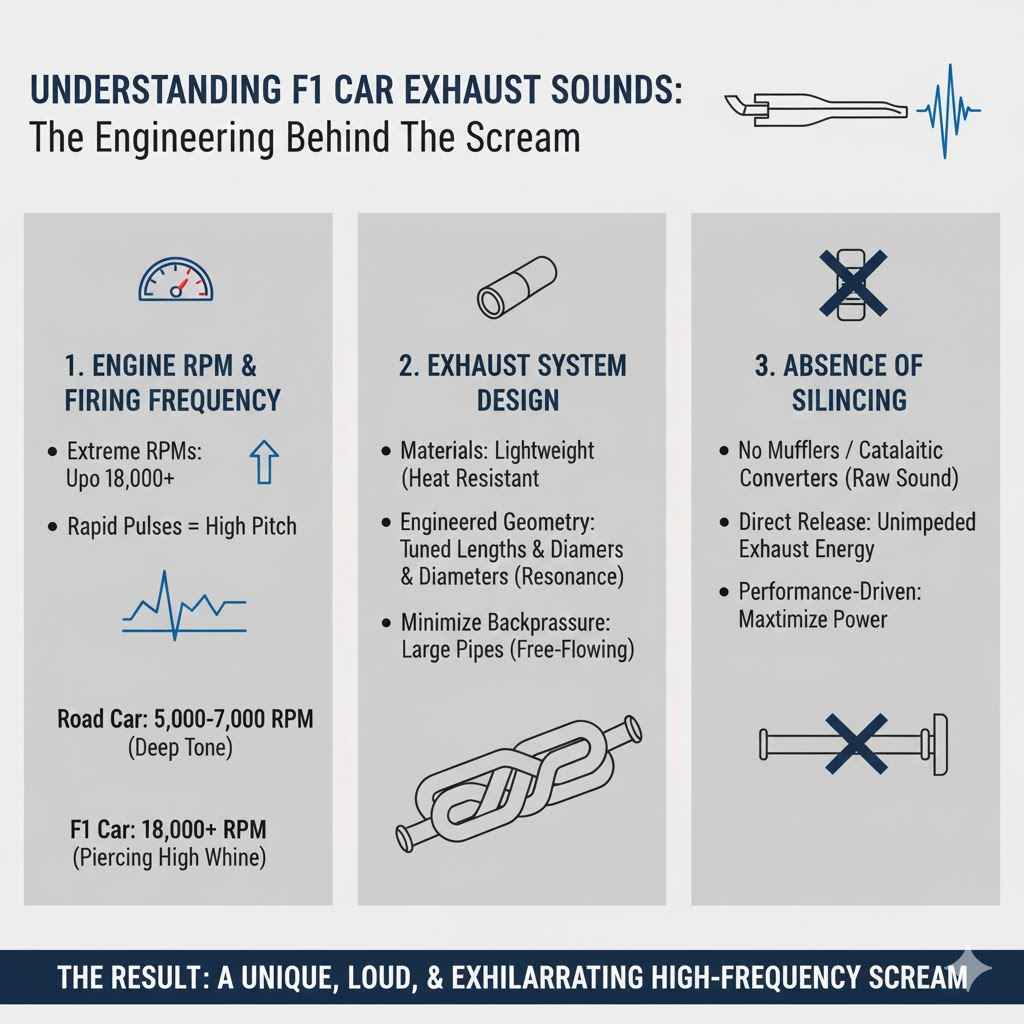
The distinctive sound of a Formula 1 car is not just about being loud. It’s a complex blend of engineering, engine design, and exhaust system tuning that creates a high-frequency, sharp, and powerful note. F1 engines operate at extremely high RPMs, often exceeding 18,000 revolutions per minute, which is far beyond what most road cars achieve. This rapid firing of cylinders at such high speeds is the primary source of the signature scream.
Beyond the engine’s RPM, the exhaust system itself plays a critical role. F1 cars use highly specialized exhaust manifolds and pipes designed to manage exhaust gases efficiently and to contribute to the overall sound profile. These systems are crafted from lightweight, high-temperature-resistant materials and are shaped to enhance specific acoustic frequencies.
The absence of mufflers or catalytic converters in their purest form also allows the engine’s raw sound to be heard, unhindered by noise reduction systems common in street vehicles. The combination of these factors – extreme RPMs, specialized exhaust geometry, and minimal silencing – results in the unique and exhilarating F1 sound. It’s a sound that has been honed over decades of racing technology.
Engine RPM and Firing Frequency
An engine’s revolutions per minute (RPM) is a measure of how many times the crankshaft completes a full rotation in one minute. For standard road cars, typical maximum RPMs might range from 5,000 to 7,000 RPM. In contrast, Formula 1 engines are designed to rev much higher, often reaching beyond 18,000 RPM during a race.
This incredibly high RPM directly impacts the sound produced. Each time a cylinder fires, it releases a pulse of exhaust gas. The faster the engine spins, the more frequently these pulses occur. This rapid succession of exhaust pulses creates a continuous and very high-pitched sound wave. Imagine a drumbeat; a slow beat is deep and resonant, while a very fast beat becomes a continuous hum or whine. The F1 engine’s rapid firing creates this high-pitched whine.
The frequency of these pulses is directly proportional to engine RPM and the number of cylinders. For example, a V8 engine firing 8 times per revolution (on a 4-stroke cycle, each cylinder fires every two crankshaft revolutions) at 18,000 RPM produces exhaust pulses at an astonishing rate, contributing significantly to that piercing F1 sound. This is why achieving a similar sound often involves modifications that allow an engine to rev higher or replicate the effect of such high RPMs.
Exhaust System Design and Materials
The materials used in F1 exhaust systems are chosen for their ability to withstand extreme heat and pressure while being as lightweight as possible. Typically, these systems are constructed from high-grade titanium or specialized stainless steel alloys. Titanium is exceptionally strong and lightweight, and it can handle the intense temperatures generated by F1 engines without deforming or degrading.
The design of the exhaust pipes, manifolds, and tailpipes is crucial. Instead of simple straight pipes, F1 exhausts often feature carefully engineered lengths and diameters. These dimensions are calculated to resonate at specific frequencies, harmonizing with the engine’s firing order and RPM to produce the desired sound. The shape of the exhaust manifold, which collects exhaust gases from each cylinder, can influence how these gases merge, affecting the final sound.
Furthermore, F1 exhaust systems are designed to minimize backpressure. Backpressure is the resistance the exhaust gases face as they exit the engine. While some backpressure can be beneficial for low-end torque in road cars, F1 teams aim for minimal backpressure to allow the engine to breathe freely at high RPMs, contributing to both power and sound. This often means using larger diameter pipes and fewer bends.
The Absence of Silencing Components
A key factor in the raw, unadulterated sound of F1 cars is the deliberate omission of traditional silencing components found in road vehicles. Standard mufflers are designed to absorb sound energy, using chambers and baffles to reduce noise levels. Catalytic converters, while primarily for emissions control, also have some muffling effect.
Formula 1 regulations, while stringent on emissions, permit exhaust systems that are essentially straight pipes or feature minimal baffling solely for performance tuning, not noise reduction. This means that the sound produced by the high-speed combustion within the engine and the rapid expulsion of exhaust gases travels almost unimpeded to the outside world.
This direct release of exhaust energy is what gives F1 cars their incredibly loud and piercing sound. It’s a sound that is a byproduct of maximizing engine performance, rather than a deliberately engineered feature solely for audio appeal. For enthusiasts aiming for an F1-like sound, this implies a significant departure from standard road car exhaust setups, which are designed with noise limits in mind.
Modifying Your Car For An F1 Sound
Achieving an F1-like exhaust note on a road car is a popular goal for many automotive enthusiasts. While replicating the exact sound is virtually impossible due to the specialized nature of F1 engines and regulations, significant steps can be taken to get remarkably close. This involves understanding the core components that contribute to the sound and making strategic modifications.
The primary areas of focus are the exhaust system, and to a lesser extent, engine characteristics. This means looking at the exhaust manifold, the exhaust pipes, and the muffler (or lack thereof). Different types of exhaust systems offer varying degrees of sound alteration, from subtle enhancements to dramatic changes. For a truly F1-esque tone, the goal is often to create a less restrictive path for exhaust gases, allowing the engine to breathe and sound more freely.
It’s important to approach these modifications with a clear understanding of local laws regarding noise emissions and vehicle modifications. Safety and legality should always be the top priorities. By carefully selecting parts and considering the overall impact on your vehicle, you can embark on this exciting project.
Choosing The Right Exhaust System Components
The exhaust system is the most direct route to altering your car’s sound. It’s a series of pipes that carry exhaust gases from the engine to the rear of the vehicle. Each part of this system, from the manifold to the tailpipe, plays a role in the final sound. For an F1-like roar, you’ll want to consider upgrades that reduce restriction and enhance higher frequencies.
Aftermarket Exhaust Systems
Aftermarket exhaust systems are designed to
These systems often use larger diameter piping and smoother bends than stock exhausts. This allows exhaust gases to flow more freely, which can increase horsepower and produce a louder, more aggressive sound. The material of the exhaust system also matters; stainless steel is durable and common, while titanium is lighter and can offer a different tonal quality but is more expensive.