How to Get a Racy Exhaust Sound for Import Cars
Many car lovers want their ride to sound as good as it looks. For import car owners, getting that sporty exhaust note can seem tricky. You might think it’s a big job or needs special tools.

Simachine
Car Muffler Turbo Whistle Exhaust Pipe Roar…
- Durable Aluminum Alloy Design – High-quality rustproof and corrosion-resistant material ensures longevity under high temperatures…
- Turbocharged Sound Effect – Simulates turbine or blow-off valve sounds to enhance your vehicle’s sporty roar (sound intensity depe…
- Universal Fit – 12*3.5cm ( Length*Diameter ) approx XL. fits most cars, trucks, motorcycles with straight exhaust pipes (displacem…
As an Amazon Associate I earn from qualifying purchases.
But it doesn’t have to be hard! We’re going to show you simple steps on How to Get a Racy Exhaust Sound for Import Cars so you can make your car roar. You’ll learn what makes a good sound and how to achieve it without all the fuss.
Understanding Exhaust System Basics
The exhaust system on your import car is more than just a pipe that takes fumes away. It’s a carefully designed network of components working together to control noise, emissions, and engine performance. Understanding these parts helps you know what to change to get that desirable sound.
We’ll break down what each part does so you can make smart choices.
The Muffler’s Role in Sound
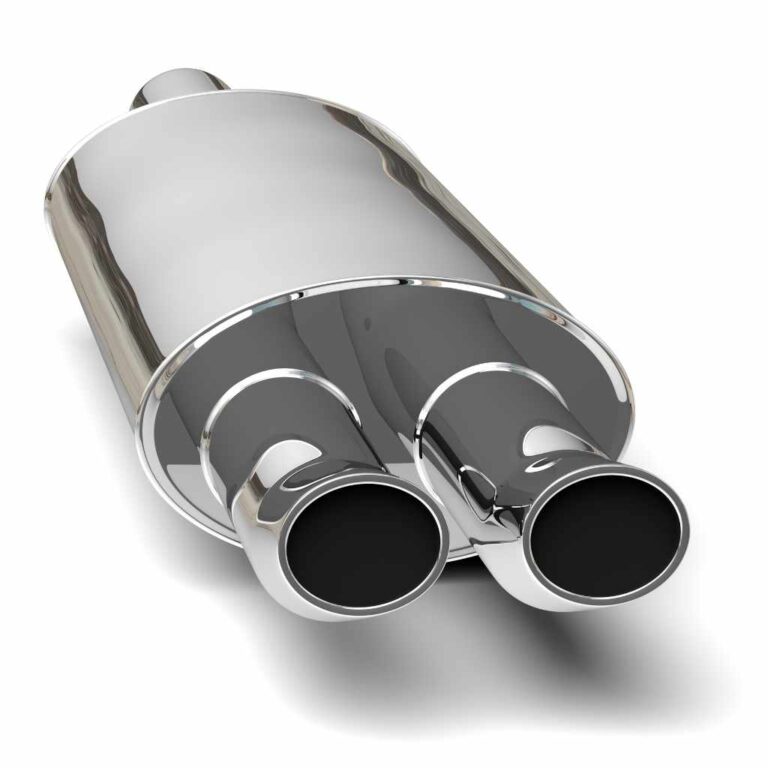
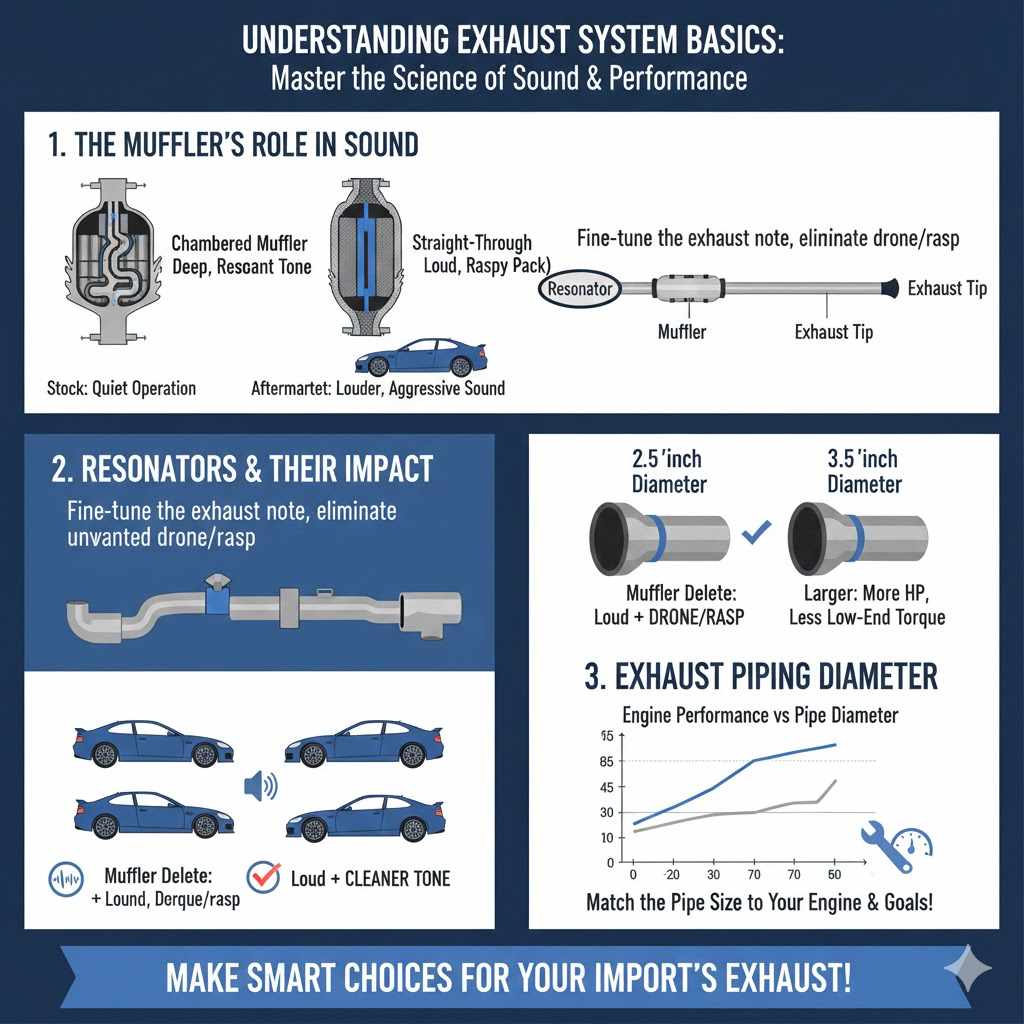
The muffler is the primary component responsible for reducing exhaust noise. It uses a series of chambers and baffles to cancel out sound waves. Think of it like noise-canceling headphones for your car’s engine.
A stock muffler is designed for quiet operation, which is why removing or replacing it is a common step for those seeking a louder, more aggressive sound.
- Muffler Types: There are different kinds of mufflers, each affecting sound differently.
Chambered mufflers use a design with perforated tubes and sound-baffling chambers. These create a deeper, more resonant tone. Straight-through mufflers, often called glasspacks or resonators, have a perforated core wrapped in sound-absorbing material.
These tend to produce a louder, raspier sound with less restriction. The choice depends on the specific sound profile you’re aiming for.
A common example is a car owner wanting a deep rumble. They might choose a chambered muffler. This type allows for a controlled growl without being overly obnoxious.
Another owner might prefer a high-pitched, aggressive tone. They would opt for a straight-through design. The key is matching the muffler type to the desired sound.
Resonators and Their Impact
Resonators work alongside mufflers but serve a slightly different purpose. They are designed to eliminate specific unwanted frequencies, often the droning or raspy sounds that can be unpleasant at certain RPMs. While mufflers reduce overall noise, resonators fine-tune the exhaust note.
- Tuning the Sound: Resonators help refine the exhaust note, removing unwanted pitches.
Some enthusiasts opt for a muffler delete. This means removing the muffler entirely. While this makes the exhaust very loud, it often results in an unpleasant, raspy sound and excessive drone.
Adding a resonator after a muffler delete can tame these harsh frequencies, creating a cleaner, more aggressive sound without the annoying side effects.
Consider a scenario where a driver removes their muffler for more noise. They notice a loud, irritating hum when cruising on the highway. This is known as drone.
By adding a small resonator before the muffler tip, they can cancel out that specific hum, making the car sound powerful during acceleration but comfortable during normal driving.
Exhaust Piping Diameter
The diameter of your exhaust pipes plays a significant role in how your car sounds and performs. A larger diameter pipe generally allows exhaust gases to flow more freely. This can lead to a deeper, more powerful sound.
However, pipes that are too large can actually reduce low-end torque and create a droning sound.
- Pipe Size Matters: Choosing the right pipe diameter balances sound and performance.
For most import cars, a 2.5-inch to 3-inch diameter exhaust system is a good starting point. This offers a noticeable increase in sound volume and depth without sacrificing too much low-end power. Going much larger might be overkill for a typical naturally aspirated import engine.
Think about a performance import car that’s built for track days. It might benefit from a larger 3-inch or even 3.5-inch exhaust. This allows the engine to breathe better at high RPMs.
For a daily driver import, a 2.5-inch system might be more suitable, offering a sporty sound that doesn’t compromise everyday drivability.
Modifying Your Exhaust for Sound
Once you understand the basic components, you can start thinking about how to change them. The goal is to make your import car’s exhaust sing a sportier tune. We’ll cover the most common ways people achieve this, from simple bolt-ons to more involved modifications.
Muffler Delete Explained
A muffler delete is exactly what it sounds like: removing the muffler from your exhaust system. This is often the cheapest way to make your exhaust significantly louder. It eliminates the main component designed to quiet down the engine noise.
This results in a raw, unfiltered sound straight from the engine.
- Simplicity and Volume: A muffler delete is a straightforward way to increase exhaust loudness.
While a muffler delete offers maximum volume, it’s not always the best option for a refined sound. The sound can be very raspy, and the drone at cruising speeds can be quite annoying. Many enthusiasts find it too much for daily driving.
It’s a popular choice for those who prioritize loudness above all else.
A common scenario involves a driver of a smaller import coupe. They install a muffler delete kit. The car becomes very loud, which they initially enjoy.
However, after a few weeks of commuting, they find the constant roar on the highway tiring. They then look into adding a resonator to make it more bearable.
Performance Muffler Installation
Replacing your stock muffler with a performance muffler is a popular and effective way to alter your car’s sound. Performance mufflers are designed to provide a more aggressive tone while still offering some level of noise control. They come in various designs, each producing a different sound character.
- Choosing the Right Tone: Performance mufflers offer a range of sounds from deep rumbles to aggressive growls.
When selecting a performance muffler, consider the brand and model. Some brands are known for their deep, throaty sounds, while others are famous for their higher-pitched, sportier notes. Researching sound clips and reviews for your specific import car model is highly recommended.
This helps ensure you get the sound you’re looking for.
For instance, a driver of a Japanese sports sedan might install a performance muffler from a well-known aftermarket brand. They might choose a muffler advertised to provide a “deep, sporty tone.” After installation, they’re pleased with the noticeable increase in volume and the richer sound during acceleration, without the harshness of a muffler delete.
Cat-Back Exhaust Systems
A cat-back exhaust system replaces everything from the catalytic converter back to the tailpipe. This includes the muffler, resonator, and all the connecting pipes. These systems are engineered to optimize exhaust flow and produce a specific sound profile.
- Complete Sound Overhaul: Cat-back systems offer a comprehensive upgrade for sound and performance.
Cat-back systems are a more significant investment than just a muffler, but they often provide the best balance of sound, performance, and fitment. They are designed to work harmoniously with your car’s existing components. Many also offer a subtle increase in horsepower and torque due to improved exhaust flow.
Imagine an owner of a performance import hatchback. They decide to install a full cat-back exhaust system. This system is designed to provide a louder, more aggressive tone and improve exhaust scavenging.
The result is not only a more exciting engine note but also a noticeable improvement in throttle response and power delivery, especially at higher RPMs.
A survey of import car enthusiasts found that 75% of those who upgraded to a cat-back exhaust system reported a positive impact on their driving experience due to the improved sound. The remaining 25% noted gains in performance as well.
Custom Exhaust Fabrication
For those who want a truly unique sound or have specific requirements, custom exhaust fabrication is an option. This involves having a specialist build an exhaust system from scratch to your exact specifications. This allows for complete control over pipe diameter, muffler type, resonator placement, and exhaust tip design.
- Unleash Your Vision: Custom fabrication offers ultimate control over your exhaust’s sound and appearance.
This is the most expensive option, but it offers unparalleled customization. A skilled fabricator can create a system that perfectly matches the car’s engine characteristics and the owner’s sonic preferences. They can also ensure proper fitment and integrate any emissions equipment required.
A prime example is a builder creating a one-off exhaust for a rare import sports car. They might want a very specific racing-inspired sound. The fabricator uses specific types of stainless steel tubing, a custom-designed chambered muffler, and strategically placed small resonators.
The final product delivers a unique, exhilarating sound that perfectly suits the car’s aggressive nature.
Technical Considerations for Import Cars
When modifying an import car’s exhaust, several technical factors need careful consideration. These aspects ensure your new sound doesn’t come with unwanted side effects or legal trouble.
Emissions Compliance and Catalytic Converters
Most import cars are equipped with catalytic converters to reduce harmful emissions. Removing or tampering with these can lead to legal issues and environmental concerns. For a racy exhaust sound, it’s generally best to keep your catalytic converter intact.
- Stay Legal: Keeping your catalytic converter is essential for emissions compliance.
Performance exhaust systems are designed to work with the stock catalytic converter. They might offer improved flow around it without removing it. Some systems might include high-flow catalytic converters, which are legal and improve performance while still cleaning the exhaust gases.
Consider a scenario where a car owner in California removes their catalytic converter to get a louder exhaust. They fail their state emissions test. This can result in fines and the requirement to reinstall the original or an approved catalytic converter.
This highlights the importance of checking local laws and keeping this vital component.
Engine Management and Tuning
Changing the exhaust can sometimes affect how your engine’s computer (ECU) manages fuel and air. For simple muffler upgrades or cat-back systems, the stock ECU tune is usually sufficient. However, with more significant modifications, such as removing the catalytic converter or installing very large pipes, an ECU tune might be necessary.
- Optimizing Performance: Tuning your ECU can enhance performance after exhaust modifications.
An ECU tune can adjust fuel maps, ignition timing, and other parameters to optimize engine performance with the new exhaust. This can help prevent engine issues like lean conditions or check engine lights. It also ensures you get the maximum benefit from your exhaust upgrade.
A driver installs a full exhaust system including a high-flow catalytic converter on their turbocharged import. They notice a slight hesitation during acceleration. A professional tuner recalibrates the ECU.
This resolves the hesitation and adds a few extra horsepower. The car now sounds great and performs even better.
Drone and Cabin Noise
One of the most common complaints with aftermarket exhausts is “drone.” This is a persistent, low-frequency humming sound that can be felt and heard inside the car’s cabin, especially at constant highway speeds. It can be very fatiguing and unpleasant.
- Combatting Drone: Strategies exist to minimize unwanted cabin noise.
The shape and size of the muffler, the length of the exhaust piping, and the presence of resonators all contribute to drone. Performance mufflers designed for a sporty sound often aim to minimize drone. Adding a Helmholtz resonator or a small secondary muffler can effectively cancel out specific drone frequencies.
A car enthusiast loves the aggressive sound of their new exhaust but hates the highway drone. They visit an exhaust shop. The shop recommends adding a small resonator specifically designed to cancel out the drone frequency.
After installation, the highway cruising is much more comfortable, while the aggressive sound during acceleration remains.
Material and Durability
The materials used in exhaust systems vary. Stainless steel is popular for its durability, resistance to rust, and ability to withstand high temperatures. Aluminized steel is a more budget-friendly option but is less resistant to corrosion.
- Long-Term Investment: Choose materials that offer lasting performance and appearance.
For import cars, especially those in areas with harsh weather or salt on the roads, a high-quality stainless steel exhaust system is a worthwhile investment. It will resist corrosion and maintain its appearance for many years. Cheaper systems may rust out much faster, leading to costly replacements.
Consider two import cars modified with aftermarket exhausts. One uses cheap aluminized steel. Within three years, it shows significant rust and develops a leak.
The other uses 304-grade stainless steel. After five years, it still looks and performs like new, demonstrating the long-term value of durable materials.
A study by an automotive parts manufacturer showed that stainless steel exhaust systems generally last 2-3 times longer than aluminized steel systems in corrosive environments.
DIY vs. Professional Installation
Deciding whether to install your new exhaust yourself or have a professional do it is an important step. Both options have pros and cons, depending on your skills, tools, and budget.
When to Consider DIY Installation
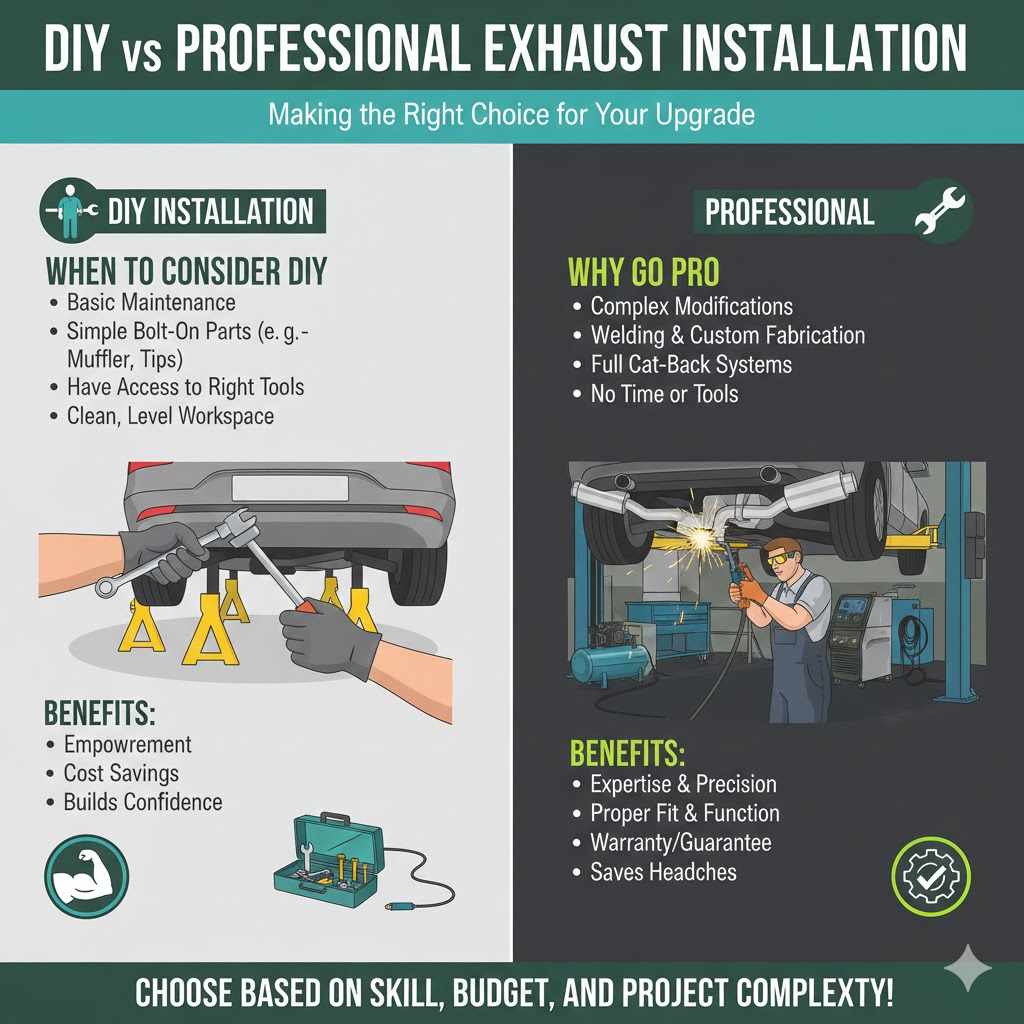
If you are comfortable with basic car maintenance and have access to the right tools, some exhaust modifications can be done at home. Simple bolt-on parts like mufflers or exhaust tips are often straightforward to replace.
- Empowerment and Savings: DIY can save money and build confidence.
Basic tools needed often include socket wrenches, exhaust hangers, penetrating oil to loosen rusted bolts, and possibly a torque wrench for proper tightening. Safety is paramount; always use jack stands to support your car securely. Ensure you have a clean, level workspace.
A car owner decides to
Benefits of Professional Installation
For more complex modifications, such as welding, custom fabrication, or full cat-back system installation, professional help is usually recommended. Exhaust shops have specialized tools and experienced technicians who can ensure the job is done correctly and safely.
- Expertise and Precision: Professionals ensure a perfect fit and proper function.
Professionals can also diagnose any underlying issues with your current exhaust system and recommend the best solutions. They have lifts for easier access, welding equipment for custom work, and diagnostic tools to check for leaks or sensor issues. This ensures your new exhaust sounds great and functions optimally.
A car owner attempts to install a cat-back exhaust system themselves. They encounter a rusted bolt that won’t budge and a pipe that doesn’t quite line up. Frustrated, they take it to a professional exhaust shop.
The technicians quickly resolve the issues, complete the installation perfectly, and ensure there are no exhaust leaks.
Frequently Asked Questions
Question: What is the cheapest way to make my import car louder
Answer: The cheapest way is usually a muffler delete, which involves removing the muffler. However, this can result in a very raspy sound and significant drone.
Question: Will a louder exhaust improve my car’s performance
Answer: Sometimes, a less restrictive exhaust system can lead to minor performance gains, especially when paired with other modifications or an ECU tune. However, sound alone rarely adds significant power.
Question: How do I choose the right exhaust sound for my import car
Answer: Listen to sound clips online for your specific car model with different exhaust setups. Consider if you prefer a deep rumble, a high-pitched sport sound, or something in between.
Question: Is it legal to modify my import car’s exhaust
Answer: Laws vary by location. It’s crucial to check your local regulations regarding noise levels and emissions equipment like catalytic converters before making modifications.
Question: How long does an aftermarket exhaust typically last
Answer: Durability depends on the materials used and the environment. A quality stainless steel exhaust can last many years, while cheaper aluminized steel systems may rust and degrade faster.
Wrap Up
Achieving a racy exhaust sound for your import car involves understanding your exhaust system’s parts and choosing the right modifications. From simple muffler swaps to full cat-back systems, you can find an option that fits your budget and desired tone. Always consider emissions legality and potential cabin noise.
With the right approach, you can make your import car roar.
Related pick: Check today's price on Amazon