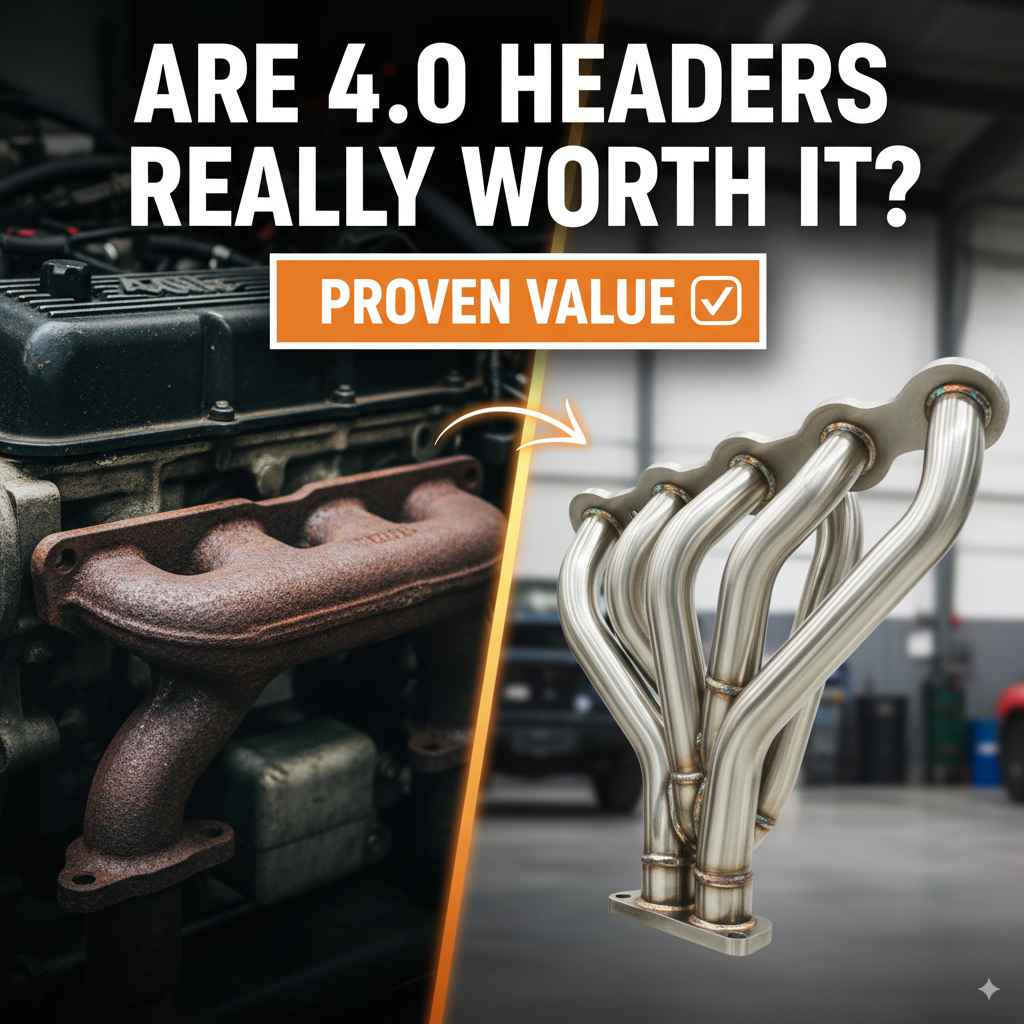
Are 4.0 Headers Really Worth It? Proven Value
4.0 headers can offer a noticeable boost in performance and sound for your Jeep Wrangler, making them worth considering for many owners. While not a magic bullet, when paired with other upgrades and properly installed, they deliver tangible improvements in power and exhaust note without breaking the bank.
So, you’ve been looking at upgrading your Jeep’s exhaust, and the term “4.0 headers” keeps popping up. You might be wondering, “Are these things really worth the money and effort?” It’s a common question, and it’s smart to ask! Many Jeep owners want their rides to feel a little more powerful, sound a bit throatier, or just perform better on the trails or the daily commute. Choosing the right exhaust upgrade can feel confusing with all the options out there. Don’t worry, I’m here to break it down for you in a way that makes sense. We’ll explore what 4.0 headers are, how they work, what benefits you can expect, and whether they’re the right choice for your beloved Jeep Wrangler. Stick around, and by the end, you’ll have a clear picture of their true value.
What Exactly Are 4.0 Headers?
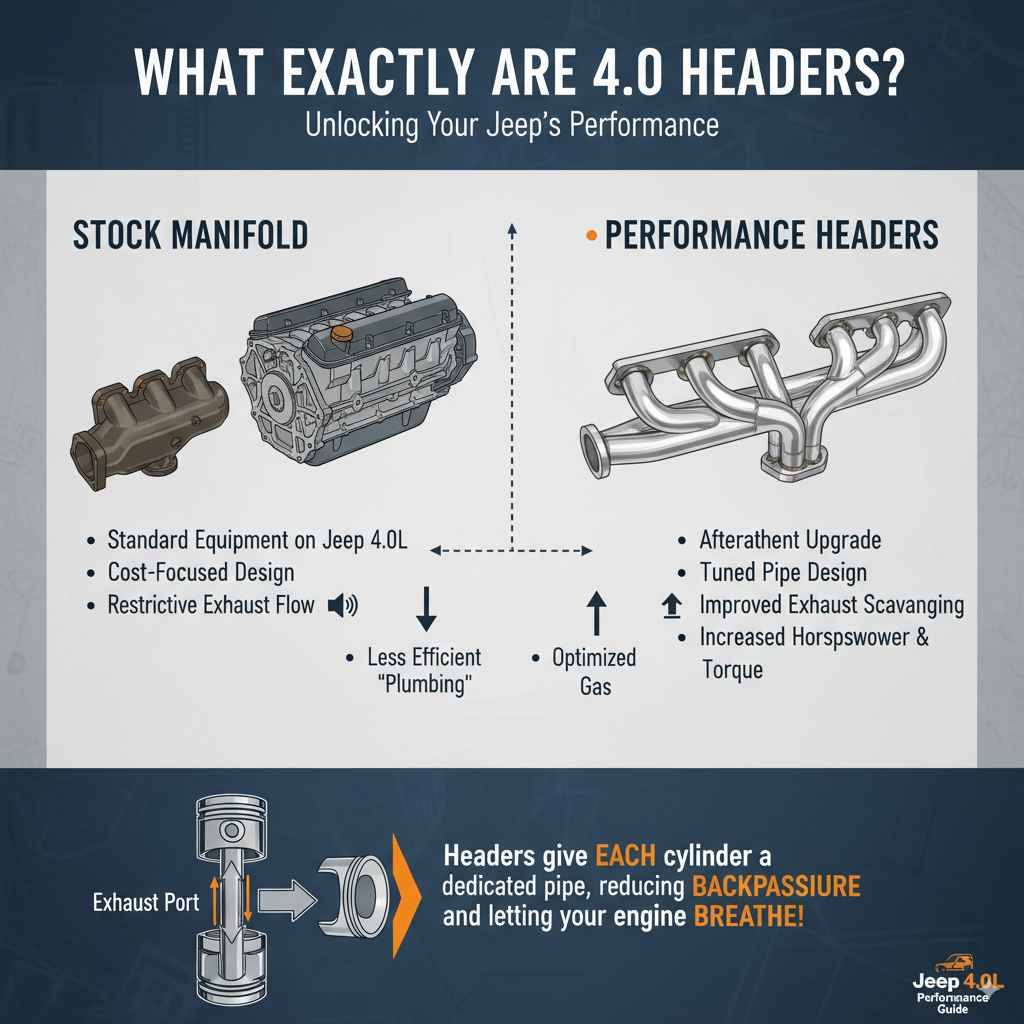
Let’s start with the basics. When we talk about “4.0 headers,” we’re usually referring to exhaust headers designed specifically for Jeep Wranglers equipped with the popular 4.0-liter inline-six engine. Your Jeep’s engine has exhaust “manifolds” as standard equipment. These manifolds collect the hot exhaust gases from each cylinder and funnel them into a single pipe.
Think of them like a plumbing system for your engine’s exhaust. The stock manifolds are often designed with a focus on cost and quiet operation rather than maximum performance. They can be a bit restrictive, meaning they don’t let those exhaust gases escape as freely as they could.
Exhaust headers, on the other hand, are a performance-oriented replacement for the stock manifolds. They are designed as a set of tuned pipes, where each pipe (or “tube”) connects to a specific exhaust port on the engine’s cylinder head. These individual tubes then merge into a collector, which then connects to the rest of your exhaust system.
The primary goal of headers is to improve the flow of exhaust gases out of the engine. By giving each cylinder its own dedicated pipe for a short distance, headers help reduce backpressure. This reduction in backpressure allows the engine to “breathe” more easily, which can translate into several performance benefits.
How Do Headers Improve Performance?
The magic behind headers lies in how they manage exhaust gas flow. Here’s a simplified look at why better flow matters:
Reduced Backpressure: Imagine trying to exhale while pinching your nose and mouth. It’s harder, right? Your engine feels a similar struggle when exhaust gases are forced through restrictive manifolds and pipes. Headers, with their smoother, larger diameter tubes, create less resistance. This lessens the “push” the engine has to fight against.
Scavenging Effect: This is a fancy term for a clever part of how headers work. As an exhaust pulse exits a cylinder through a header tube, it creates a low-pressure wave. This wave can actually help “pull” the exhaust gases from the next cylinder to fire when its exhaust valve opens. This pulling action, or scavenging, helps clear the cylinder more effectively, allowing for a fresher air-fuel mixture on the next intake stroke.
Optimized Engine Breathing: When an engine can exhale more easily, it can also inhale more efficiently. Better exhaust flow contributes to improved volumetric efficiency – essentially, how well the engine fills its cylinders with the air-fuel mixture. This improved breathing is what leads to the tangible performance gains.
The design of the header tubes – their length, diameter, and how they merge into the collector – is crucial. Reputable header manufacturers spend a lot of time designing these to maximize the benefits for specific engine displacements and intended uses. For the Jeep 4.0L engine, there are many header designs available, each aiming to optimize this flow for everyday driving, off-roading, or even more aggressive performance applications.
Are 4.0 Headers Really Worth It? The Proven Value
This is the big question! For many Jeep Wrangler owners with the 4.0L engine, the answer is a resounding “yes.” Let’s break down the proven value:
Performance Gains
This is usually the primary driver for upgrading to headers. While you won’t suddenly have a super-fast race truck, you can expect noticeable improvements:
Horsepower and Torque: Headers can add anywhere from 5 to 15 horsepower and a similar amount of torque, depending on the header design and other modifications. This might not sound huge, but it translates to a vehicle that feels more responsive, especially at lower RPMs and during acceleration. You’ll feel it when you hit the gas pedal.
Improved Throttle Response: With less restriction, your engine can react to your throttle inputs more quickly. This makes the Jeep feel more agile and less sluggish.
Potential for Better Fuel Economy: While not guaranteed and often dependent on your driving style, a more efficient engine can sometimes lead to improved fuel economy. By making it easier for the engine to move air, you might not need as much fuel to achieve the same level of performance. However, a heavier foot to enjoy the new sound and power can easily negate any gains here!
Better Towing and Hauling Performance: The extra torque can be a real help when towing a trailer or carrying heavy loads. Your Jeep will feel more capable and less strained.
Exhaust Sound
This is often a very welcome secondary benefit. Stock exhaust systems are generally designed for quiet operation. Headers, by their nature and often being paired with a less restrictive muffler, can give your Jeep a more aggressive, throaty, and desirable exhaust note.
Deeper Tone: The sound often becomes deeper and more robust, particularly when you accelerate.
More Audible: You’ll be able to hear your engine more, which many enthusiasts enjoy, especially in off-road or performance applications.
Customizable Sound: When combined with aftermarket cat-back exhaust systems, headers offer more control over the final sound profile of your Jeep.
Durability and Longevity
While stock manifold failures can happen, many aftermarket headers are built with durability in mind.
Material Quality: Many performance headers are constructed from high-quality stainless steel or other corrosion-resistant alloys, which can outlast the stock cast iron manifolds, especially in harsh climates or off-road environments where rust and corrosion are significant factors.
Better Heat Management: Some header designs can help reroute heat away from the engine bay more effectively than stock manifolds might, though this is a less common primary benefit.
Considerations for Jeep Wranglers
The Jeep 4.0L engine is well-known for its robustness, and it responds very well to exhaust modifications. Many aftermarket headers are designed to be direct bolt-on replacements for the stock exhaust manifolds, simplifying the installation process. Reputable manufacturers also design their headers to work seamlessly with the factory catalytic converter on your Jeep Wrangler, ensuring you remain emissions-compliant. Resources like the SEMA Sanctuary offer extensive information on vehicle modifications and their impact.
Pros and Cons of 4.0 Headers
Like any modification, headers come with their own set of advantages and disadvantages. Understanding these will help you make an informed decision.
Pros:
- Noticeable increase in horsepower and torque, especially in the low to mid-RPM range.
- Improved throttle response and overall engine performance.
- More aggressive and desirable exhaust note.
- Can potentially improve fuel efficiency under certain driving conditions.
- Better for towing and hauling due to increased torque.
- Often made from more durable materials than stock manifolds, leading to longer life.
- Many are designed as direct replacements, simplifying installation.
Cons:
- Cost: Headers are an investment, and good quality ones are not cheap.
- Installation: While often straightforward, it can be a time-consuming DIY project or add to labor costs if done professionally.
- Emissions Compliance: Some header designs might not be emissions legal in all states without additional modifications or specific certifications. Always check local regulations.
- Potential for drone: Some header/exhaust combinations can produce an annoying “drone” sound inside the cabin at certain RPMs.
- May require other modifications for maximum benefit: While headers offer gains on their own, they work best when paired with other upgrades like a high-flow catalytic converter and performance muffler/cat-back system.
Are 4.0 Headers Worth It for Different Jeep Models?
The value proposition for 4.0 headers will vary slightly depending on your specific Jeep Wrangler model and your intended use.
Jeep TJ (1997-2006)
This generation of Wrangler, particularly with the 4.0L engine, is a very popular candidate for header upgrades. Owners often report a significant improvement in the Jeep’s liveliness, making it feel more capable both on and off-road. The stock exhaust manifold on TJs is known to be a bottleneck, so headers offer substantial relative gains.
Jeep XJ (1984-2001)
The Cherokee XJ also features the legendary 4.0L engine. While older, these vehicles can benefit greatly from headers, especially if they haven’t had exhaust work done in a while. Owners often find that headers help combat the power loss that can occur with age and miles.
Jeep ZJ (1993-1998)
The Grand Cherokee ZJ with the 4.0L also sees improvements. For those using their ZJ for moderate towing or daily driving, the added low-end torque provided by headers can be particularly appreciated.
Jeep JK (2007-2018)
While the JK generation introduced the 3.8L and later the 3.6L Pentastar engines, many early JKs still came with engines that could benefit from exhaust upgrades. However, the 4.0L is widely considered to be more restrictive and thus more responsive to header upgrades than some later engines. If you have a later model with a different engine, ensure you’re researching headers specifically designed for that engine.
Installation: DIY vs. Professional
Deciding whether to tackle header installation yourself or have a professional do it is a key consideration.
DIY Installation
Tools: You’ll typically need a good set of wrenches and sockets, a breaker bar, penetrating oil (essential for stubborn manifold bolts), a torque wrench, and possibly some exhaust sealant. A quality socket set is a must.
Process: The old manifold is unbolted from the engine and the exhaust pipe. The new headers are then bolted to the engine cylinders and connected to the rest of the exhaust system. It often involves working in tight spaces under the Jeep.
Challenges: The biggest challenge is usually corroded bolts. Old manifold bolts can be very difficult to remove without breaking. Patience and the right tools are crucial. You’ll also need to ensure all connections are properly sealed to prevent exhaust leaks.
Cost Savings: Doing it yourself saves a significant amount on labor costs.
Professional Installation
Convenience: Your mechanic handles all the labor and troubleshooting.
Expertise: They have the experience and tools to handle difficult bolts and ensure a perfect installation.
Cost: This adds to the overall expense of the upgrade. Expect to pay anywhere from $150 to $400+ for professional installation, depending on your location and shop rates.
A good rule of thumb: if you’re comfortable working on your Jeep and have the right tools, DIY is achievable and rewarding. If you’re unsure or the bolts look like a rusted nightmare, paying a professional is a wise investment to avoid frustration and potential damage.
What to Look for in Quality 4.0 Headers
Not all headers are created equal. When shopping for 4.0 headers, keep these factors in mind:
Material: As mentioned, high-quality stainless steel (like 304 or 409 grade) is preferred for its durability and corrosion resistance. Avoid cheap coated steel that can rust quickly.
Design & Tube Length: Look for headers with proper tube length and diameter designed for the 4.0L engine. Equal-length primary tubes often contribute to better performance.
Collector Design: The way the tubes merge into the collector affects flow. A well-designed collector helps maintain scavenging.
Flange Thickness: A thicker flange ensures a better seal and less chance of warping.
Welds: Look for clean, strong welds. Poorly welded headers can fail prematurely.
Fitment Guarantee: Ensure the headers are designed for your specific Jeep model and year. Reputable brands offer fitment guarantees.
Emissions Compliance: Check if the headers are CARB-compliant (California Air Resources Board) or otherwise legal for sale and use in your state. This is crucial for passing emissions tests. You can find more information on emissions regulations from the U.S. Environmental Protection Agency.
Brand Reputation: Stick with well-known brands that have a history of producing quality Jeep performance parts.

Headers vs. Exhaust Manifolds: A Comparison Table
To further illustrate the differences, here’s a table comparing stock exhaust manifolds with aftermarket headers:
| Feature | Stock Exhaust Manifold | Aftermarket Performance Headers |
|---|---|---|
| Primary Function | Collect exhaust gases from cylinders into one pipe; designed for cost & noise reduction. | Optimize exhaust gas flow from each cylinder for improved performance. |
| Material | Cast iron (can be heavy and prone to cracking/rust). | Typically stainless steel (lighter, more durable, corrosion-resistant). |
| Flow Characteristics | Restrictive, can cause high backpressure. | Smoother, larger diameter tubes reduce backpressure and enhance scavenging. |
| Performance Impact | Minimal, optimized for efficiency and quietness. | Can add horsepower, torque, and improve throttle response. |
| Sound Profile | Very quiet. | Louder and more aggressive sound. |
| Cost | Included with the vehicle. Replacement manifold is relatively inexpensive. | Significant investment, generally ranging from $200 to $600+. |
| Installation | Simpler replacement. | Can be challenging due to rust and tight spaces; may require professional help. |
Frequently Asked Questions (FAQ)
Q1: Will headers void my Jeep’s warranty?
A1: Generally, aftermarket parts can* affect your warranty if they directly cause a failure. However, many reputable headers designed for the 4.0L are considered minor modifications. If your warranty is a major concern, consult your dealership or the manufacturer’s warranty documentation. In many cases, the performance benefits outweigh the minimal warranty risk for older Jeeps.