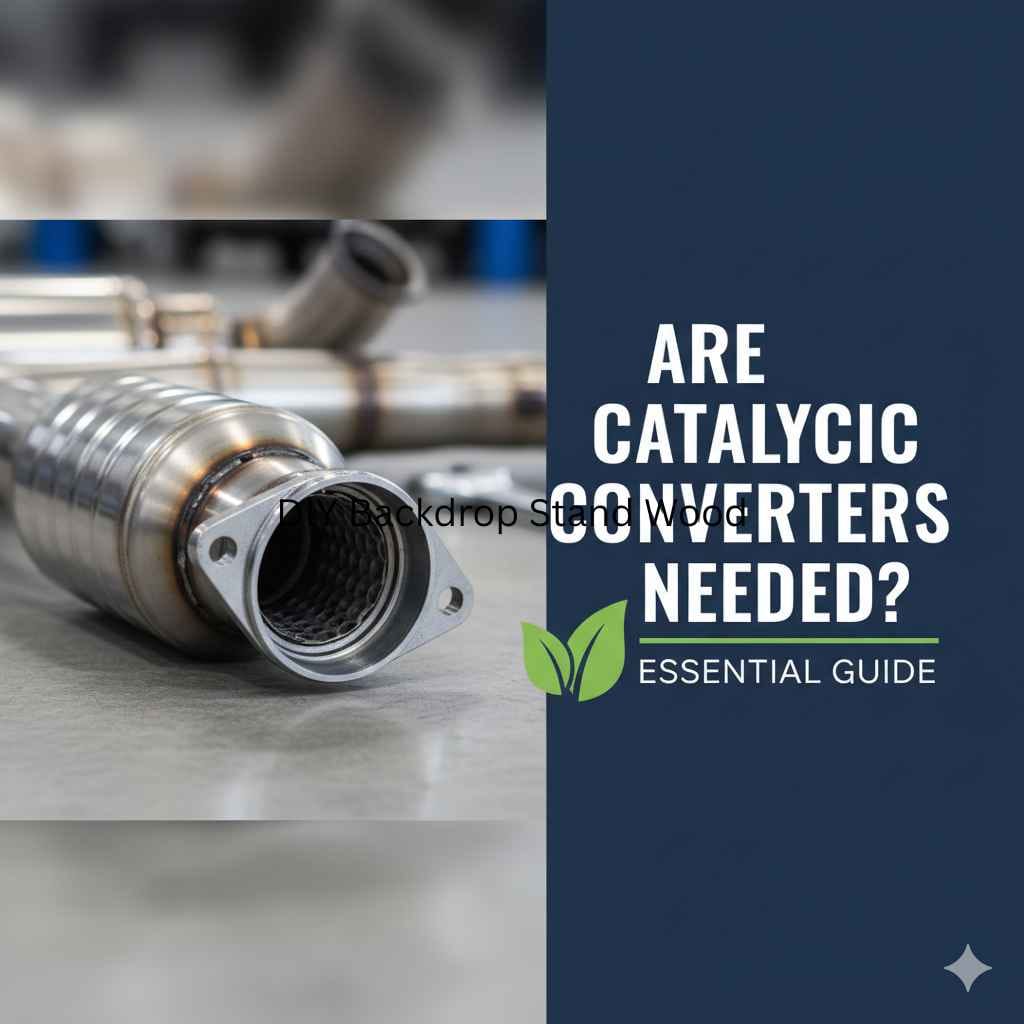
Are Catalytic Converters Needed? Essential Guide
Are Catalytic Converters Needed to Operate a Vehicle? Yes, absolutely. They are a vital part of your car’s exhaust system, legally required in most places, and crucial for reducing harmful pollution. Driving without one can lead to serious problems and legal trouble. This guide will explain why they’re essential.
Ever heard a loud rumble from your exhaust and wondered what’s going on? Or maybe a friend mentioned their catalytic converter was stolen? It’s easy to feel confused about this mystery part tucked away under your car. But don’t worry! I’m Monowar Shohag, and I’m here to break down exactly what a catalytic converter does and why it’s so incredibly important for your vehicle and the air we all breathe.
Think of it as the unsung hero of your car’s exhaust system. By the end of this guide, you’ll understand its role, what happens without one, and how to keep yours in tip-top shape. Let’s make your car’s exhaust system simple and clear!
What Exactly is a Catalytic Converter and Why is it So Important?
A catalytic converter is a crucial component of your car’s exhaust system because it removes harmful pollutants from exhaust before it leaves the muffler. It’s essentially a metal box, usually found between the engine and the muffler, that looks a bit like a honeycomb inside. It uses a chemical reaction, helped by special metals like platinum, palladium, and rhodium, to turn harmful gases into much less harmful gases before they are released into the atmosphere.
Without a catalytic converter, your car would release toxic pollutants like carbon monoxide, nitrogen oxides, and unburned hydrocarbons directly into the air. These are really bad for our health and the environment. They contribute to smog, acid rain, and can cause serious respiratory problems. So, from an environmental standpoint, catalytic converters are a massive win for cleaner air.
Beyond the environmental aspect, they also play a role in how your car runs. A healthy catalytic converter can help your engine perform efficiently. If it’s clogged or damaged, it can restrict exhaust flow, making your car sluggish and less fuel-efficient. Many places even have laws requiring vehicles to have functioning catalytic converters to pass emissions tests and be legally driven on public roads, especially in the United States, where the Environmental Protection Agency (EPA) sets strict standards. Some vehicles do not need a referee because they are “Pre-OBD II.” You can learn more about the EPA’s emissions standards here: EPA Emissions Control Systems.
How Does a Catalytic Converter Work? The Science Explained Simply
A catalytic converter works by using catalysis to turn harmful exhaust gases into less harmful ones. There are usually two main stages, or “beds,” inside the converter, each with a different job:
- Reduction Catalyst: This first stage targets nitrogen oxides (NOx). NOx are gases that contribute to smog and acid rain. The reduction catalyst removes oxygen from NOx molecules, turning them into harmless nitrogen gas (N2), which makes up about 78% of the air we breathe, and oxygen (O2).
- Oxidation Catalyst: This second stage tackles carbon monoxide (CO) and unburned hydrocarbons (HC). Carbon monoxide is a poisonous gas. Hydrocarbons are essentially unburned fuel. The oxidation catalyst uses oxygen to convert CO into carbon dioxide (CO2) – the same gas we exhale. It also converts hydrocarbons into carbon dioxide and water (H2O).
These reactions are made possible by the precious metals coated onto a ceramic honeycomb structure. This honeycomb design creates a huge surface area, allowing the exhaust gases to come into close contact with the catalytic materials. The heat from the exhaust gases also helps speed up these chemical reactions.
Are Catalytic Converters Required by Law?
Yes, in most parts of the world, and certainly in many countries like the United States, Canada, and European Union member states, catalytic converters are legally required to be installed on gasoline-powered vehicles manufactured after a certain date. These laws are in place to protect air quality and public health.
For example, in the United States, the Clean Air Act mandates that vehicles must be equipped with and properly maintain their emissions control systems, which include the catalytic converter. Failure to have a functioning catalytic converter can result in your vehicle failing an emissions inspection, which is often required for registration or inspection renewal. If your car is new enough to have originally come with a catalytic converter, you are generally legally obligated to keep it.
The specific laws can vary by state or region. Some areas, especially those with higher air pollution levels, tend to have stricter regulations. It’s always a good idea to check your local vehicle emissions testing requirements to understand exactly what’s expected for your car. If you’re in the US, your state’s Department of Motor Vehicles (DMV) or a similar agency will have this information.


Why Would Someone Remove or Tamper with a Catalytic Converter?
People remove or tamper with a catalytic converter mainly because thieves want the precious metals inside, some owners wrongly chase performance gains, or the converter is damaged and needs replacement. This is primarily due to the valuable precious metals (platinum, palladium, rhodium) contained within them. These metals are worth a significant amount of money on the scrap metal market, making catalytic converters a prime target for theft.
Here are the main reasons catalytic converters are messed with:
- Theft for Precious Metals: This is the most common reason you’d hear about catalytic converters being removed. Thieves can cut them out of a car’s exhaust system relatively quickly, often causing damage to the surrounding exhaust pipes.
- Performance Modification (Unwise and Illegal): In some rare cases, people might consider removing a catalytic converter to try and gain more horsepower. However, this is generally a bad idea. Modern engine management systems are designed to work with the catalytic converter. Removing it can actually disrupt engine performance, cause drivability issues, and, most importantly, make the car illegal to drive on public roads due to emissions violations.
- Clogging or Failure: Sometimes, a catalytic converter fails due to internal damage or clogging. While not deliberate removal, a mechanic might need to replace it. If it’s severely damaged, it might be cut out during the replacement process, but it would then be immediately replaced with a new one.
It’s important to distinguish between legitimate replacement of a faulty converter and illegal removal or theft. If your catalytic converter is missing, it’s almost certainly due to theft.
What Happens If You Drive Without a Catalytic Converter?
Driving without a catalytic converter can lead to a host of problems, ranging from minor issues to significant ones. It’s definitely not recommended, and in many places, it’s illegal.
| Problem | Explanation |
|---|---|
| Illegal Operation | In most regions, it’s illegal to drive a vehicle that is not equipped with a functioning catalytic converter. You will likely fail emissions tests and could face fines or other penalties. |
| Environmental Harm | The primary purpose of the converter is to reduce pollution. Without it, your car will emit much higher levels of harmful pollutants, contributing to air pollution and health risks. |
| Check Engine Light (CEL) | Modern cars have oxygen sensors before and after the catalytic converter. If the converter isn’t working correctly or is missing, the car’s computer will detect an issue and turn on the “Check Engine” light. This can trigger diagnostic trouble codes (DTCs) that point to a converter problem. (en.wikipedia.org) |
| Reduced Performance | While sometimes people think removing it boosts power, a missing or damaged converter can actually disrupt exhaust flow in a way that harms performance. It can lead to sluggish acceleration and a general lack of responsiveness. |
| Poor Fuel Economy | When the engine control module (ECM) detects an issue with the catalytic converter or its related sensors, it might enter a “limp mode” or adjust engine parameters to compensate. This often results in worse gas mileage. |
| Loud Exhaust Noise | The catalytic converter is part of your exhaust system’s sound dampening. Without it, your car will likely sound much louder, like a sports car or a race car, which can be annoying and draw unwanted attention. |
| Failed Emissions Tests | If your area requires emissions testing, your car will certainly fail without a catalytic converter. This is a major hurdle for registration and legal road use. |
| Damage to Other Components | In some extreme cases, raw exhaust gases that are too rich or too lean can potentially affect other exhaust system components or even engine sensors over time. |
Signs Your Catalytic Converter Needs Attention
Signs your catalytic converter needs attention include the “Check Engine” light, Reduced Engine Performance, a sulfur or Rotten Egg Smell, Decreased Fuel Efficiency, rattling noises, and a Failed Emissions Test. Your catalytic converter is designed to last the lifetime of your vehicle, but sometimes things go wrong. If you notice any of these signs, it’s a good idea to have your exhaust system checked by a mechanic:
- The “Check Engine” Light is On: This is the most common indicator. Modern cars are equipped with sensors that monitor the catalytic converter’s performance. If it’s not working efficiently or is damaged, the engine’s computer will trigger the CEL.
- Reduced Engine Performance: If your car feels sluggish, has a hard time accelerating, or just doesn’t have its usual pep, a clogged catalytic converter could be the culprit. It’s restricting the flow of exhaust gases.
- Sulfur or Rotten Egg Smell: The converter deals with unburned fuel and other gases. If it’s malfunctioning, you might detect a strong smell of sulfur or rotten eggs, especially when the engine is hot. This is due to a buildup of hydrogen sulfide.
- Decreased Fuel Efficiency: If you’re finding yourself stopping at the gas station more often than usual, and your driving habits haven’t changed, a failing catalytic converter might be reducing your MPG.
- Rattling Noises: The ceramic honeycomb inside the converter can break apart over time due to heat or physical shock. If this happens, you might hear rattling noises coming from under your car, especially when the engine is running or when you turn it off.
- Failed Emissions Test: This is a definitive sign. If your car fails its emissions test, the catalytic converter is often the primary suspect.
If you suspect a catalytic converter issue, don’t ignore it. Getting it checked out promptly can prevent further damage to your vehicle and ensure you’re not polluting unnecessarily.
Catalytic Converter Replacement: What to Expect
Expect catalytic converter replacement to be a significant expense. The cost varies depending on the make and model of your vehicle, the brand of the replacement part, and your location.
Here’s a general breakdown of what’s involved:
Cost Factors
- Vehicle Make and Model: Luxury, performance, or specialized vehicles often have more complex and expensive catalytic converters.
- Type of Converter: Direct-fit converters, designed specifically for your car, are usually more expensive than universal converters, which may require welding and modification.
- Brand: OEM (Original Equipment Manufacturer) parts are typically the most expensive, while aftermarket brands can offer significant savings.
- Labor Costs: The complexity of the job and the hourly rates of the mechanic in your area will affect the total price. Some vehicles have converters that are easier to access than others.
| Component Type | Typical Cost Range (Parts & Labor) |
|---|---|
| Universal Catalytic Converter | $200 – $700 |
| Direct-Fit Catalytic Converter | $500 – $2,500+ |
The Replacement Process (Simplified)
Here’s a simplified look at what a mechanic does:
- Diagnosis: The mechanic will first confirm that the catalytic converter is the issue. This often involves checking for DTCs with a scan tool, inspecting the converter for physical damage, and potentially testing oxygen sensor readings.
- Vehicle Preparation: The car is lifted safely on a lift or jack stands.
- Removal of Old Converter: The old converter is disconnected from the exhaust manifold (or front pipe) and the rest of the exhaust system. It might be held in place by bolts or require cutting.
- Installation of New Converter: The new converter is fitted into place. If it’s a direct-fit, it will bolt on directly. If it’s a universal converter, it will need to be welded into position.
- Reassembly: All connections are secured, new gaskets are often used, and any removed exhaust components are reattached.
- Testing: The engine is started, and the mechanic checks for exhaust leaks and ensures the “Check Engine” light is off or will clear itself after a driving cycle.
Always ask your mechanic for a detailed quote upfront and inquire about the warranty on the replacement part and labor. Automotive Service Excellence provides consumer advice on repair questions.
Protecting Your Catalytic Converter and Avoiding Theft
Protect your catalytic converter by parking in secure areas, using anti-theft devices, marking the converter, staying aware of suspicious activity, and keeping the exhaust system in good shape.
- Park in Secure Areas: When possible, park your car in well-lit areas, a locked garage, or a secure parking lot. Thieves prefer to work unseen.
- Install Anti-Theft Devices: Several aftermarket devices can help protect your catalytic converter. These include:
- Cat Shields/Protectors: These are metal plates, often made of steel or aluminum, that are bolted to the underside of your vehicle to make it much harder to access and cut out the converter.
- Alarm Systems: Some vehicle alarms can be fitted with sensors that detect vibrations or sounds associated with cutting, triggering the alarm.
- Mark Your Converter: Some repair shops or even law enforcement agencies offer etching services where they mark your catalytic converter with a serial number. This can deter thieves, as marked converters are harder to sell to scrap dealers.
- Be Aware of Your Surroundings: If you notice suspicious activity around your vehicle, report it to authorities.
- Maintain Your Vehicle: A well-maintained exhaust system might make tampering easier to spot.
Being proactive can significantly reduce the risk of becoming a victim of catalytic converter theft.
Frequently Asked Questions (FAQ)
Q1: Can I legally remove my catalytic converter?
A: In most places, particularly in countries with emissions regulations like the USA, it is illegal to remove a catalytic converter from a vehicle that was originally equipped with one. Doing so can result in fines, failure to pass inspections, and environmental penalties.
Q2: My car is older, does it even have a catalytic converter?
A: Most gasoline-powered vehicles manufactured in the USA after 1975 are equipped with catalytic converters. If your car is from the mid-70s or newer, it almost certainly has one. Some older or specialized vehicles might not, but this is uncommon for everyday passenger cars.
Q3: How often do catalytic converters need to be replaced?
A: Catalytic converters are designed to last a long time, often for over 100,000 miles, and ideally, the life of the vehicle. They typically only need replacement if they fail due to age, damage, clogging from engine issues, or if they are stolen.
Q4: Is it okay to drive my car if the “Check Engine” light is on and I suspect the catalytic converter?
A: It’s best not to drive extensively if the Check Engine Light is on. If it’s related to the catalytic converter, it indicates an emissions problem and potentially reduced performance or fuel economy. Continuing to drive can sometimes cause further damage to the engine or exhaust system.