Are MagnaFlow Exhausts Loud? Essential Guide
MagnaFlow exhausts offer a range of sound levels, from mild to aggressive. While many are known for a deep, throaty tone, they aren’t always excessively loud. The specific loudness depends on the MagnaFlow system chosen, your vehicle, and other exhaust modifications. We’ll guide you through understanding MagnaFlow’s acoustics so you can choose the right sound for you.
Considering a MagnaFlow exhaust for your ride? You’ve likely heard their name associated with a powerful sound, and that’s often true. But the big question on many car owners’ minds is simple: “Are MagnaFlow exhausts loud?” It’s a common query because nobody wants an exhaust that’s so loud it draws unwanted attention, especially from law enforcement, or one that makes long drives uncomfortable. The good news is that MagnaFlow designs exhaust systems with different sound profiles. You don’t have to guess; you can actually choose the level of rumble you’re looking for. We’re here to break down exactly what makes a MagnaFlow loud, what factors influence its sound, and how you can pick the perfect one for your needs. Let’s dive in and demystify MagnaFlow’s sound!
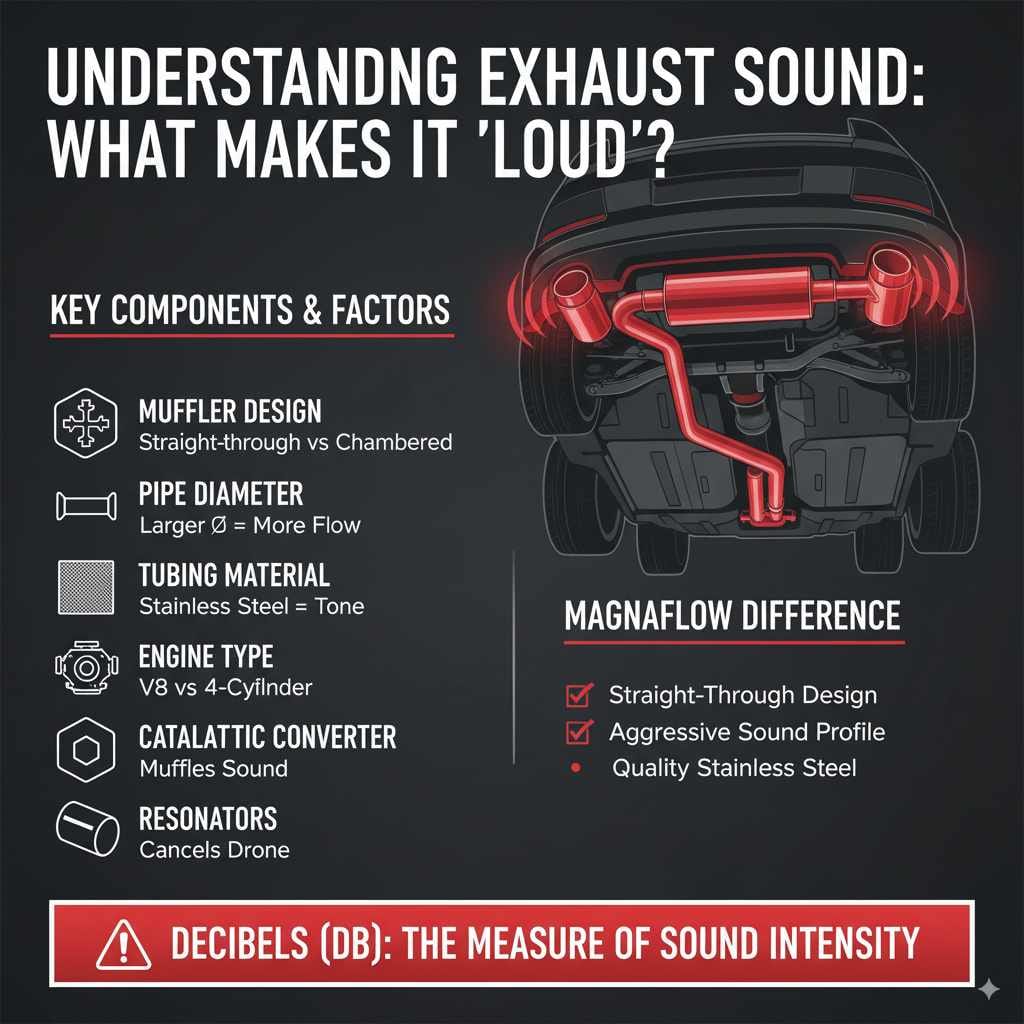
Understanding Exhaust Sound: What Makes it “Loud”?
When we talk about how loud an exhaust is, we’re really talking about decibels (dB) – a measure of sound intensity. Several factors contribute to the overall sound level and character of any exhaust system, including MagnaFlow’s.
Muffler Design: This is the heart of sound control. Mufflers use internal baffling, chambers, or packing materials (like fiberglass or steel wool) to absorb and redirect sound waves. MagnaFlow is well-known for its straight-through muffler design, which often produces a less restrictive flow but can also lead to a more aggressive sound compared to traditional chambered mufflers.
Pipe Diameter: Larger diameter pipes generally allow for more exhaust flow, which can contribute to a louder sound. However, it’s not a direct correlation; a larger pipe with a well-designed muffler can still be managed for sound.
Exhaust Tubing Material: While less impactful on loudness itself, the material can affect the resonance and tone. Stainless steel, common in MagnaFlow systems, is durable and can contribute to a cleaner, crisper sound.
Engine Type and Displacement: A big V8 engine will inherently produce more exhaust volume than a small 4-cylinder. The way the exhaust gases combust and exit matters.
Catalytic Converter: This emissions control device also muffles sound. Removing or modifying it will significantly increase your exhaust’s overall volume.
Resonators: These are smaller, often straight-through mufflers designed to cancel out specific sound frequencies (like drone). Adding a resonator can make an exhaust system quieter and smoother.
Tips: While mostly for looks, exhaust tips can influence the sound slightly by directing the exhaust flow.
MagnaFlow’s Sound Philosophy: From Mild to Wild
MagnaFlow aims to cater to a wide range of drivers, offering various exhaust series, each with a distinct sound character. They categorize their systems, which is incredibly helpful when trying to choose the right one.
MagnaFlow Exhaust Series and Their Sound Levels
MagnaFlow typically categorizes their street mufflers and systems into a few sound levels. While terms like “mild” or “aggressive” are subjective, they give a good indication.
Street Series (Mild to Moderate): These are designed for those who want a noticeable upgrade in sound over stock but prefer a more subtle, refined tone. They often feature a moderate increase in volume, a pleasant rumble at idle, and a sporty sound when accelerating, without being overwhelming. They are a great choice for daily drivers.
Performance Series (Moderate to Aggressive): This is where you start to hear more of the classic MagnaFlow growl. These systems offer a more pronounced sound, deeper tone, and a more aggressive note under load. They are popular among enthusiasts who want their car to sound as powerful as it looks and performs.
MF Series (Aggressive/Race): These are designed for maximum flow and sound. They often feature minimal baffling and are intended for those who want a very loud, raw, and aggressive exhaust note. These might be too much for daily street use or for areas with strict noise ordinances.
It’s important to note that MagnaFlow also offers “muffler-only” kits, which means you’re just replacing the stock muffler. This will generally be less aggressive than a full cat-back system because the rest of your factory exhaust components (like resonators) are still in place, helping to temper the sound.
Factors Influencing MagnaFlow Sound on Your Vehicle
The MagnaFlow system is only one piece of the puzzle. The exact sound you get will also depend on your specific vehicle and how the exhaust system is installed.
Vehicle Make, Model, and Engine: A MagnaFlow system will sound different on a V6 Mustang than it will on a 4-cylinder Honda Civic. The engine’s natural exhaust note, displacement, and firing order play a huge role.
Factory Resonators: Many vehicles come with factory resonators. If you’re installing a MagnaFlow muffler-only, these resonators will still be present and will help to “quiet down” the MagnaFlow muffler slightly. A cat-back system replaces everything after the catalytic converter, so it removes factory resonators.
Catalytic Converter Status: As mentioned, the catalytic converter is a major sound reducer. If your factory cat is intact, it will dampen the sound. If it’s been removed or replaced with a high-flow unit, your MagnaFlow system will likely be louder.
Exhaust Leaks: Even small leaks in your exhaust system can dramatically alter the sound, often making it raspier or more unpredictable than intended. A proper installation is key.
Driving Style: Simply put, if you drive aggressively and rev your engine high, your MagnaFlow will sound louder than if you drive gently.
Are MagnaFlow Exhausts Loud? A Detailed Look
So, to answer the core question, “Are MagnaFlow exhausts loud?” the answer is: it depends, but generally, they produce a noticeable, often desirable, sportier sound that ranges from a mild growl to an aggressive roar, depending on the specific MagnaFlow product and your vehicle.
Let’s break this down by looking at some specific popular MagnaFlow options and their typical sound profiles.
Popular MagnaFlow Systems and Their Sound Characteristics
MagnaFlow offers a vast array of exhaust kits. Here’s a look at some common types and what kind of sound you can expect:
| MagnaFlow Series | Typical Sound Level | Key Characteristics | Ideal For |
|---|---|---|---|
| Street Series | Mild to Moderate | Deeper than stock, noticeable rumble at idle, sporty growl on acceleration. No excessive highway drone. Good for daily drivers and those who want a refined, premium sound. | Daily drivers, weekend cruisers, those seeking a tasteful upgrade. |
| Performance Series | Moderate to Aggressive | Louder than Street, a more pronounced, aggressive tone and growl. Distinctive MagnaFlow “hollow” sound. Might have a slight drone on some vehicles at specific RPMs. | Enthusiasts, those who want their car to sound potent, performance-oriented drivers. |
| MF Series / Competition | Aggressive to Very Aggressive | Deep, loud, raw, and often booming. Prioritizes flow and sound above quietness. Likely to have noticeable drone. Often used for track vehicles or show cars. | Serious performance enthusiasts, those who love a loud, unapologetic sound. |
Important Note: MagnaFlow provides sound clips on their website, which are invaluable resources. While they are simulations, they offer a good representation of the sound.
Muffler Only vs. Cat-Back Systems
The choice between a muffler-only replacement and a full cat-back system significantly impacts sound.
Muffler Only: This is often the less expensive option and targets just the rear mufflers. Because the factory piping, catalytic converter, and any resonators remain, the overall sound is usually more restrained than a full system. It will be louder and deeper than stock but less aggressive than a cat-back.
Cat-Back System: This replaces everything from the catalytic converter back to the exhaust tips. This gives MagnaFlow engineers more control over the entire exhaust note. These systems are typically designed to produce a more aggressive and consistent sound throughout the RPM range. They are usually what people refer to when they talk about MagnaFlow’s signature sound.
Internal Muffler Technology: The Straight-Through Design
MagnaFlow’s signature component is its straight-through muffler design. Unlike traditional mufflers that use baffles and chambers to create restrictive sound paths, MagnaFlow mufflers feature a perforated core. Exhaust gases flow directly through this perforated tube, with sound-absorbing material surrounding it.
This design offers two main advantages:
- Increased Flow: Less restriction means better exhaust gas evacuation, which can potentially improve performance.
- Distinct Sound: The straight-through design produces a smoother, deeper, and more resonant tone compared to the breathier or raspier sound of some chambered mufflers. It’s this design that contributes to MagnaFlow’s signature growl.
However, a less restrictive path also means more sound waves can escape. This is why MagnaFlows are often perceived as louder than stock mufflers. The amount of sound-absorbing material used within this straight-through design is what differentiates their Street, Performance, and Competition series.
Enhancing and Modifying MagnaFlow Sound
Once you have a MagnaFlow system, you have some flexibility to fine-tune its sound.
Adding a Resonator
If your MagnaFlow system is a bit louder than you’d like, especially if it has an annoying highway drone, you can often add an aftermarket resonator. Many performance exhaust manufacturers, including MagnaFlow themselves, offer universal resonators.
A resonator works by canceling out specific sound frequencies. When installed in conjunction with a MagnaFlow muffler, it can:
- Smooth out the exhaust note.
- Reduce or eliminate highway drone.
- Make the overall system quieter, usually without sacrificing too much of the deep tone.
Installing a resonator usually requires cutting into the existing exhaust pipe and welding in the new resonator. This is a job best suited for a professional exhaust shop if you’re not comfortable with welding or metal fabrication. You can learn more about exhaust system components by checking out resources like FuelEconomy.gov, which discusses various vehicle systems affecting efficiency and performance.
Removing Resonators or Catalytic Converters
On the flip side, if you find your MagnaFlow system isn’t loud enough, you might consider removing factory resonators or, in some regions and for off-road use only, the catalytic converter.
WARNING: Removing catalytic converters is illegal in many places and will result in your vehicle failing emissions tests. It can also lead to unintended consequences for engine performance and can make the exhaust extremely loud and raspy. Always check your local laws and regulations regarding emissions equipment before making any changes.
Removing factory resonators will make almost any exhaust louder and can introduce more drone. This is generally a simpler modification than removing a catalytic converter but still carries legal and sound implications.
Installing Your MagnaFlow Exhaust: A Step-by-Step Overview
While this guide focuses on sound, proper installation is crucial for both performance and achieving the intended sound without leaks or rattles. Here’s a simplified overview of what installing a MagnaFlow cat-back system typically involves.
Tools and Materials You Might Need:
Replacement MagnaFlow exhaust system (cat-back kit)
Safety glasses and gloves
Jack stands and a car jack
Socket set and wrenches
Penetrating oil (for loosening rusty bolts)
Exhaust hangers and rubber isolators
Band clamps or V-band clamps
New exhaust gaskets (if applicable)
Wire brush (for cleaning pipe ends)
Impact wrench (optional, but helpful)
General Installation Steps:
1. Safety First: Park your vehicle on a level surface. Engage the parking brake and block the wheels. Safely lift the rear of the vehicle using a jack and secure it with jack stands. Never work under a vehicle supported only by a jack.
2. Locate Stock Exhaust: Identify the existing exhaust system from the catalytic converter back.
3. Loosen and Remove Old System: Carefully spray penetrating oil on any bolt or clamp connections. Loosen and remove the bolts or clamps holding the old exhaust sections together. You may need to support the exhaust system as you remove it.
4. Prepare for New System: Clean any rust or debris from the pipe ends where the new system will connect to the catalytic converter.
5. Install New MagnaFlow System:
Begin by loosely attaching the first section of your MagnaFlow system (usually the mid-pipe or front section of the cat-back).
Connect it to the catalytic converter using the provided hardware or new gaskets and clamps. Do not tighten fully yet.
Continue working your way back, connecting each section (muffler, tailpipe, tip) loosely.
Ensure exhaust hangers are correctly positioned and the system is hanging straight and clear of any chassis components.
6. Align and Tighten: Once all sections are in place and properly aligned, begin tightening all clamps and bolts, working from front to back. Ensure a snug fit but avoid overtightening, which can strip threads or damage pipes.
7. Final Check: Double-check all connections and ensure the exhaust system is securely mounted and has adequate clearance.
8. Lower Vehicle: Carefully lower the vehicle off the jack stands.
9. Start Engine and Test: Start your vehicle and listen for any leaks or unusual noises. Check the sound under acceleration and at idle. A properly installed MagnaFlow system should produce its characteristic sound without leaks.
For detailed instructions specific to your vehicle, always refer to the installation manual provided with your MagnaFlow exhaust system. Information on proper installation techniques can also be found through automotive repair resources, such as those provided by reputable automotive organizations.
Troubleshooting Exhaust Noise and Issues
Even with a top-quality brand like MagnaFlow, occasional noise issues can arise.
Common MagnaFlow Noise Issues and Solutions
Raspiness or Metallic Noise: This is often a sign of a loose connection, a small leak, or sometimes it’s the inherent sound of a particular MagnaFlow product (especially their more aggressive ones on certain engines).
Solution: Inspect all clamps and connections for tightness. Check for any pinhole leaks in the pipework. Sometimes, adding a resonator can smooth out a raspy tone.
Excessive Drone: This is the resonant frequency that can be heard inside the cabin, particularly at cruising speeds on the highway. It’s often more noticeable with aggressive or straight-through muffler designs on certain vehicles.
Solution: The most effective solution is to add a performance resonator or a dedicated drone-canceling kit. MagnaFlow offers some such solutions, and many aftermarket companies do as well. Sometimes, adjusting exhaust hanger placement can slightly alter the resonance, but this is usually a minor fix.
Baffling or Rattling Sounds: This typically indicates something is loose – either a component of the exhaust itself, or something inside the muffler has come loose (though uncommon with MagnaFlow’s quality).
* Solution: Inspect the entire exhaust system for loose hangers, clamps, or heat shields. If the sound appears to be internal to the muffler, it may require replacement.
When to Call a Professional
While many basic exhaust tasks can be handled by a mechanically inclined DIYer, complex issues or installations often benefit from professional expertise.
Consider seeking help from a qualified exhaust shop if:
- You lack the necessary tools or a safe space to work.
- The exhaust system is heavily rusted or corroded, making removal difficult.
- You need to cut and weld pipes to install resonators or custom sections.
- You’re unsure about diagnosing exhaust leaks or noises.
- You want to ensure the system is perfectly aligned to prevent future issues.
A professional can quickly diagnose problems, perform quality welds, and ensure your new system is installed correctly for optimal sound and longevity. Their expertise is invaluable in ensuring your exhaust upgrade meets your expectations safely.
Frequently Asked Questions About MagnaFlow Exhaust Loudness
Here are some common questions beginners have about MagnaFlow exhaust noise:
Q1: Are MagnaFlow exhausts generally louder than stock?
A1: Yes, almost always. MagnaFlow systems are designed to provide a sportier, more pronounced sound than factory exhausts. The degree of loudness varies significantly by the specific MagnaFlow series you choose.
Q2: Will a MagnaFlow exhaust drone on the highway?
A2: Some MagnaFlow systems, particularly the more aggressive ones or if installed without factory resonators, can produce highway drone on certain vehicles. MagnaFlow’s Street Series and systems with added resonators are designed to minimize this.
Q3: How can I tell which MagnaFlow system is the quietest?
A3: Look for MagnaFlow’s “Street Series” or systems explicitly advertised as “mild” or “moderate” sound. Always check their product descriptions and listen to sound clips on their website or YouTube for specific models.
Q4: If I buy a MagnaFlow muffler, will it sound the same as a full MagnaFlow exhaust system?
A4: Not usually. A muffler-only replacement will be louder and deeper than stock, but the presence of remaining factory components (piping, resonators) will often keep the overall sound more subdued than a full cat-back system where MagnaFlow controls the entire exhaust path.