

Do Downpipes Have Cats: Essential Facts
Do downpipes have catalytic converters? Yes, downpipes typically do have catalytic converters integrated into them as part of your vehicle’s exhaust system, playing a crucial role in reducing harmful emissions. Understanding this is key to proper exhaust maintenance and understanding your car.
Ever heard someone talk about “cats” and wondered if it’s about your car? You’re not alone! The exhaust system on your car can seem like a mystery, full of strange parts with even stranger names. One of the most common questions beginners have is about the downpipe. Does it have a “cat” on it?
The short answer is almost always yes. The “cat” is short for catalytic converter, and it’s a vital piece of your car’s pollution control system. It’s usually found in or very near the downpipe, which is the first pipe that comes after your engine’s exhaust manifold.
Don’t worry if this sounds complicated. We’re here to break it down in simple terms. By the end of this guide, you’ll know exactly what a downpipe is, why it has a catalytic converter, and why keeping it in good shape matters.
What is a Downpipe?
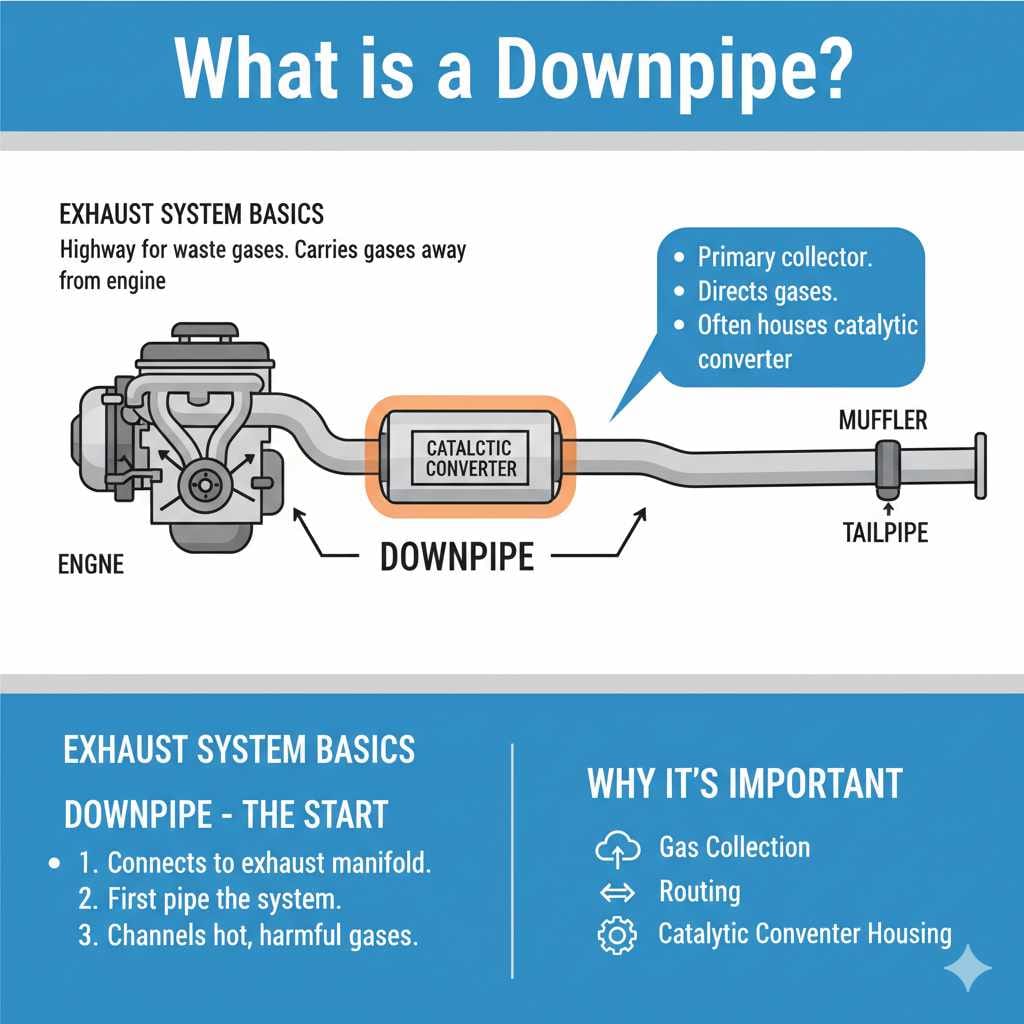
Think of your car’s exhaust system as a highway for waste gases. After your engine burns fuel, it creates exhaust gases. These gases need a way to get out of the engine and away from you and the environment. The exhaust system handles this job.
The downpipe is one of the very first parts of this system. It’s a pipe that connects directly to the exhaust manifold, which is where the exhaust gases exit the engine cylinders. Its main job is to carry those hot, potentially harmful gases away from the engine and channel them towards the rest of the exhaust system, which includes the muffler and tailpipe.
You can usually spot the downpipe easily. It’s the large pipe that immediately follows the bolts where the exhaust headers or manifold attach. In many modern cars, the catalytic converter is built right into this section of the pipe. This placement is strategic because the catalytic converter works best when it’s hot, and being so close to the engine ensures it reaches its optimal operating temperature quickly.
Why is the Downpipe Important?
- Gas Collection: It’s the primary collector of exhaust gases right as they leave the engine.
- Routing: It directs these gases smoothly into the rest of the exhaust system.
- Catalytic Converter Housing: In most cases, it houses or is directly attached to the catalytic converter.
Do Downpipes Have Catalytic Converters? The Essential Link
Now, let’s get to the main question: Do downpipes have cats? For the vast majority of gasoline-powered vehicles manufactured in the last few decades, the answer is a resounding yes.
A catalytic converter (often shortened to “cat”) is a crucial component designed to clean up the exhaust gases produced by your engine. It uses chemical reactions to convert harmful pollutants into less harmful substances before they are released into the atmosphere.
Here’s what it converts:
- Carbon Monoxide (CO): A poisonous gas. The cat turns it into Carbon Dioxide (CO2).
- Unburned Hydrocarbons (HC): These are essentially raw fuel particles that didn’t burn completely. The cat burns them, turning them into CO2 and water (H2O).
- Nitrogen Oxides (NOx): These can contribute to smog and acid rain. The cat breaks them down into Nitrogen (N2) and Oxygen (O2).
These chemical reactions happen inside the catalytic converter thanks to precious metals like platinum, palladium, and rhodium, which act as catalysts. These metals are coated onto a honeycomb-like ceramic structure. As the exhaust gases flow through this structure, the metals facilitate the conversion process.
In most cars, this entire unit—the downpipe and the catalytic converter—is either one integrated piece or the converter is bolted directly to the end of the downpipe. This close physical connection is why people often refer to the “downpipe cat” or ask if downpipes have cats. They are, in essence, working together as a team right at the start of the exhaust journey.
For more information on how catalytic converters work and their importance, you can refer to resources from organizations like the U.S. Environmental Protection Agency (EPA), which provides excellent insights into vehicle emissions control.
Types of Catalytic Converters
While the core function is the same, there are a few variations:
- Two-Way Catalytic Converters: These were used in older vehicles and primarily dealt with carbon monoxide and hydrocarbons.
- Three-Way Catalytic Converters: These are standard on modern gasoline engines and handle carbon monoxide, hydrocarbons, and nitrogen oxides, making them much more effective at reducing pollution.
Why are Catalytic Converters Found in Downpipes?
The placement of the catalytic converter within or connected to the downpipe isn’t accidental. It’s a deliberate engineering choice for several key reasons:
- Optimal Operating Temperature: Catalytic converters need to reach a high temperature (typically around 400-800°C or 750-1500°F) to effectively convert pollutants. Being located right after the engine, where exhaust gases are hottest, ensures the converter heats up quickly and maintains its working temperature.
- Efficiency of Conversion: The closer the converter is to the engine, the faster it begins its work. This means pollutants are reduced more quickly after the engine starts, which is especially important during the initial moments of driving when emissions can be higher.
- Space and Packaging: In many vehicle designs, this location is the most practical place to integrate the converter. It’s a relatively straightforward run from the exhaust manifold, and it minimizes the need for longer, more complex exhaust piping before the conversion process begins.
- Emissions Regulations: Government regulations worldwide mandate the use of catalytic converters to control air pollution. Their placement in the downpipe is a standard and effective way to meet these stringent requirements.
This integration is why when a catalytic converter fails, the repair often involves replacing a section of the exhaust system that includes the downpipe itself, or at least a part of it where the converter housed.
Understanding Downpipe Catalytic Converter Issues
Like any car part, catalytic converters can experience problems. Because they are so integral to the downpipe assembly, issues with one often affect the other.
Common Problems with Catalytic Converters
- Clogging: This is perhaps the most common issue. If your engine is burning too much oil or coolant, these substances can build up internally, restricting exhaust flow. A clogged cat will cause a significant loss of power, poor fuel economy, and can even stall the engine.
- Physical Damage: Catalytic converters are located underneath the car, making them vulnerable to damage from road debris, speed bumps, or accidents. A cracked or broken converter can lead to exhaust leaks and a very loud vehicle.
- Deterioration: Over time, the precious metals inside a catalytic converter can become “poisoned” by engine contaminants or simply wear out. This reduces their effectiveness in converting pollutants, leading to failed emissions tests.
- Theft: Sadly, catalytic converter theft is on the rise. Because they contain valuable precious metals, thieves target them. This will leave a gaping hole in your exhaust system, usually requiring replacement of the downpipe section.
Warning Signs of a Failing Catalytic Converter
Recognizing the signs can save you from more serious damage and costly repairs:
- Reduced Engine Performance: You might notice a significant loss of acceleration and power.
- Poor Fuel Economy: Your car will start drinking more gas than usual.
- Rattling Noise: If the internal honeycomb structure breaks apart, you might hear a rattling sound, especially when starting the engine or accelerating.
- Sulphur or Rotten Egg Smell: This is a classic sign. It indicates that the converter isn’t processing hydrogen sulfide effectively.
- Check Engine Light: Modern cars have sensors that monitor the catalytic converter’s performance. If it’s not working correctly, the Check Engine light will illuminate on your dashboard.
- Failed Emissions Test: If your region requires emissions testing, a failing cat will almost guarantee you won’t pass.
What to Do if Your Downpipe Cat Needs Attention
If you suspect an issue with your downpipe or its catalytic converter, it’s essential to get it checked by a qualified mechanic. Attempting to diagnose or repair exhaust system components yourself can be dangerous due to heat, toxic fumes, and the potential for injury.
Inspection Process
A mechanic will typically:
- Visually Inspect: Look for obvious signs of damage, rust, or leaks.
- Check for Codes: Use a diagnostic tool to read any trouble codes related to the emissions system (e.g., P0420 code, which often indicates a faulty catalytic converter).
- Test Backpressure: This helps determine if the converter is clogged.
- Inspect Oxygen Sensors: These sensors work with the catalytic converter and can also fail.
Repair and Replacement Options
Depending on the problem, solutions can include:
- Cleaning: In some very specific, minor cases of clogging, a specialized cleaning might be attempted, but this is rare and often temporary.
- Repairing Damage: If there’s a leak or minor damage to the pipe, welding might be an option.
- Replacing the Catalytic Converter: This is the most common solution for a failing cat. Often, it will involve replacing a section of the downpipe as well, especially if the converter is integrated.
- Replacing the Entire Downpipe Assembly: If the damage is extensive or the converter is severely integrated, the entire downpipe section might be replaced.
It’s vital to use direct-fit replacement parts or high-quality universal parts designed for your vehicle’s make and model. This ensures proper fitment, optimal performance, and compliance with emissions standards.
When replacing a catalytic converter, always ensure you are using parts that meet the emissions standards for your region. For example, in California and other states following its standards, you need a “California-certified” converter, which is stricter than federal standards. You can learn more about these standards from the California Air Resources Board (CARB).
Aftermarket vs. OEM Parts
When it comes time to replace your downpipe or catalytic converter, you’ll often have a choice between Original Equipment Manufacturer (OEM) parts and aftermarket parts.
OEM Parts
- Pros: Designed specifically for your vehicle, ensuring a perfect fit and adherence to factory specifications. Often come with a good warranty.
- Cons: Generally more expensive.
Aftermarket Parts
- Pros: Can be significantly cheaper. A wider variety of options might be available, including performance-oriented parts.
- Cons: Quality can vary greatly. Fitment might not be as precise. You need to be diligent about checking for emissions compliance (e.g., CARB certification if required). Performance parts may not always be legal for road use.
Always consult with your mechanic to determine the best option for your vehicle and budget, ensuring you comply with local regulations regarding emissions equipment.
Can You Drive Without a Catalytic Converter?
While your car might technically run without a catalytic converter, it’s strongly discouraged and, in most places, illegal.
Legal Implications
- Most jurisdictions have laws against tampering with or removing emissions control devices.
- You will likely fail emissions testing, making it impossible to register your vehicle.
- Fines and penalties can be substantial.
Environmental Impact
- Catalytic converters are designed to protect the environment by reducing harmful pollutants. Operating without one directly contributes to air pollution.
Performance and Other Issues
- Noise: Your exhaust will be significantly louder, potentially to illegal levels.
- Smell: You’ll likely notice unpleasant exhaust fumes inside and outside the car.
- Engine Performance: While some “delete” pipes are sold for performance gains, they often rely on engine tuning to work effectively and can cause the engine to run poorly or trigger error codes without proper adjustment.
In short, the risks and negative consequences far outweigh any perceived benefit of removing your catalytic converter.

Frequently Asked Questions (FAQ)
Q1: How do I know if my catalytic converter is bad?
A: Common signs include a major loss of engine power, poor acceleration, sulfur or rotten egg smell from the exhaust, rattling sounds from underneath the car, and the illumination of your Check Engine light. A failed emissions test is also a strong indicator.
Q2: What does the “cat” in my downpipe do?
A: The “cat” is short for catalytic converter. It’s a device that chemically converts harmful exhaust pollutants like carbon monoxide, unburned hydrocarbons, and nitrogen oxides into less harmful substances such as carbon dioxide, water vapor, and nitrogen gas before they are released into the atmosphere.
Q3: Is the catalytic converter part of the downpipe?
A: In most modern vehicles, yes. The downpipe is the first pipe section after the exhaust manifold, and the catalytic converter is typically integrated directly into this pipe or bolted immediately behind it. They function as a unit and are often replaced together.
Q4: Can I replace my downpipe and cat myself?
A: While basic exhaust work can be a DIY project for some, replacing exhaust components, especially the downpipe and catalytic converter, can be challenging. It often involves working with rusty bolts, dealing with tight spaces, and potentially cutting or welding. Due to the heat, toxic fumes, and the need for proper sealing, it’s generally recommended to have this done by a professional mechanic.
Q5: Are aftermarket catalytic converters legal?
A: In most places, yes, as long as they are designed to meet the emissions standards of your vehicle and region. However, in areas with stricter emissions regulations (like California), you must ensure the aftermarket converter is specifically certified for those standards. Performance “cat-delete” pipes, on the other hand, are generally not legal for road use.
Q6: How much does a downpipe with a catalytic converter replacement cost?
A: The cost can vary widely depending on your vehicle’s make and model, the type of catalytic converter (OEM vs. aftermarket), and labor rates in your area. A catalytic converter itself can range from a few hundred to over a thousand dollars, and installation can add several hundred more. The downpipe section, if it’s a separate part or integrated, will also add to the cost.
Q7: Why do catalytic converters get stolen?
A: Catalytic converters contain valuable precious metals like platinum, palladium, and rhodium. These metals are highly sought after by recyclers, making the converters a target for thieves who can quickly cut them out of a vehicle.
Conclusion
So, to recap, when you ask “Do downpipes have cats?” the answer for most cars is a definite yes. Your downpipe is the critical first pipe after your engine’s exhaust manifold, and it almost always houses or is directly connected to your vehicle’s catalytic converter. This converter is the unsung hero of your exhaust system, working tirelessly to clean up harmful emissions and protect our air.
Understanding the role of the downpipe and its catalytic converter is vital for maintaining your car’s health, ensuring it runs efficiently, and complying with environmental regulations. By recognizing the warning signs of a failing converter and seeking professional help when needed, you can keep your exhaust system in top shape.
Remember, a healthy exhaust system not only benefits the environment but also contributes to your car’s performance and your peace of mind. Don’t let confusing terms like “downpipe” and “cat” intimidate you. With a little knowledge, you can confidently understand how your car works and take better care of it.


