Exhaust Manifold vs Intake Manifold
The exhaust manifold carries hot combustion gases out of the engine, while the intake manifold feeds air, or air-fuel mix, into it. Match the fault to the symptoms, not the part’s location. Mixing them up can send you toward the wrong repair, wasted parts, and persistent drivability problems. This guide compares flow, common failures, and the fault codes, noises, and leaks that point to each one.
| Factor | exhaust manifold | intake manifold | Winner |
|---|---|---|---|
| Flow direction | Collects exhaust gas from each cylinder and sends it toward the exhaust system | Distributes incoming air, or air-fuel mixture on some engines, to the cylinders | tie |
| Normal temperature exposure | Lives in high heat and sees the harshest thermal load on the front of the engine | Runs cooler, though some versions are water-heated or heat-soaked by nearby exhaust parts | intake manifold |
| Common leak signs | Ticking, excessive exhaust noise, odor, white burn marks at the flange, and heat damage | Idle instability, lean codes, vacuum-type hiss, and drivability complaints at low load | tie |
| Gasket behavior | Exhaust manifold gasket is more likely to need renewing because heat damages it more often | Intake manifold gasket must match ports and passages and may need sealant on some water-heated engines | intake manifold |
| Fastener risk | Studs, nuts, and bolts can seize, break, and need penetrating oil before removal | Fasteners still matter, but they are usually less heat-stressed than exhaust hardware | intake manifold |
| Inspection difficulty | Heat shield, tight access, flange warping, and burned hardware make diagnosis and repair harder | Usually easier to inspect once intake plumbing is removed, but port and passage alignment matters | intake manifold |
What does each manifold move?
The exhaust manifold moves hot combustion gas out of the cylinders. The intake manifold moves fresh air, or an air-fuel mix on some engines, into the cylinders. That direction changes almost everything else: heat load, gasket design, hardware wear, and the symptoms you notice first.
Exhaust manifold
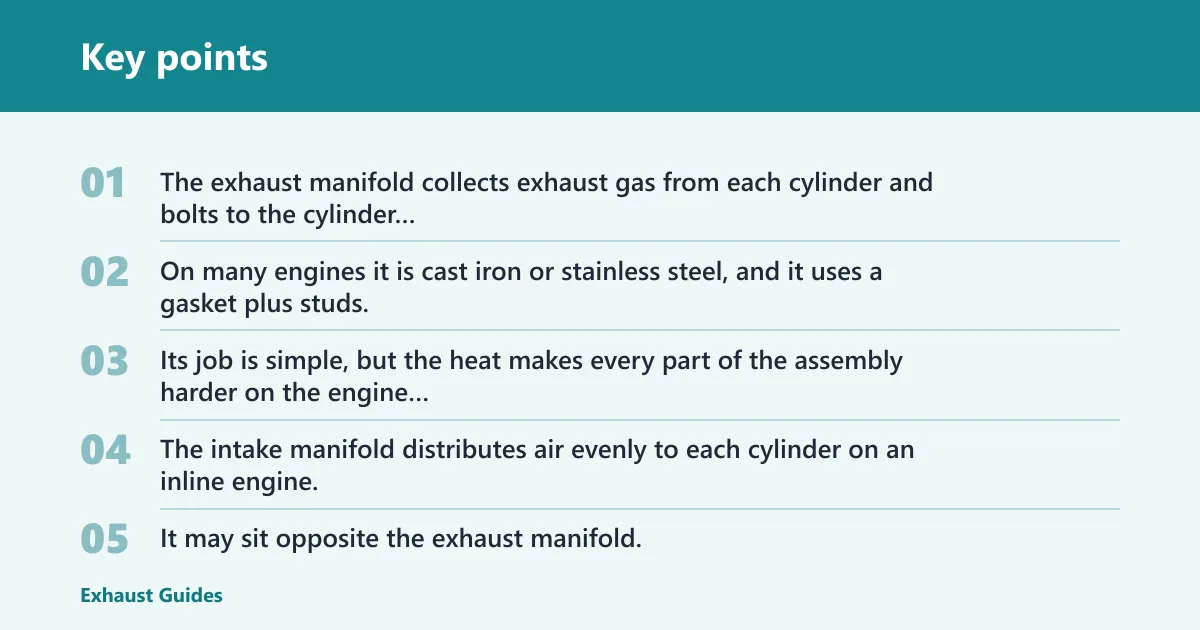
The exhaust manifold collects exhaust gas from each cylinder and bolts to the cylinder head or block area. On many engines it is cast iron or stainless steel, and it uses a gasket plus studs, nuts, or bolts to seal the hot joint. Its job is simple, but the heat makes every part of the assembly harder on the engine and on your tools.
Intake manifold
The intake manifold distributes air evenly to each cylinder on an inline engine, and some versions carry air-fuel mixture or even port fuel injectors on contemporary engines. It may sit opposite the exhaust manifold, and some designs use a plenum and runners to direct flow. Aluminum, cast iron, and plastic/composite are all used, often to balance strength, weight, and heat transfer.
Why flow direction changes the rest of the design
Hot exhaust gas demands heat resistance, so the exhaust side gets stronger materials, heavier fasteners, and more attention to warping. The intake side is more about smooth flow and clean sealing around ports and passages. That is why the two manifolds can look similar at a glance, yet fail in very different ways.
Exhaust manifold vs intake manifold: what to inspect, what fails, and what symptom points to which side
This matrix gives you a quick way to sort symptoms before you remove anything. It is most useful when the noise, code, or leak clue points to one side but the engine layout makes both look crowded.
| Check | exhaust manifold | intake manifold | What to inspect first |
|---|---|---|---|
| Flow direction | Exhaust leaves the cylinders here | Air, or air-fuel mix, enters here | Use the port path to confirm the side before unbolting |
| Normal temperature exposure | High heat; thermal cycling can crack the casting or bake the gasket | Much cooler; some are water-heated, so coolant passages may be involved | Look for heat shielding, discoloration, and nearby burn marks |
| Common leak signs | Excessive exhaust noise, ticking, odor, and white burn marks around the flange | Idle problems, lean codes, and hiss from a vacuum-type leak | Listen at cold start and watch where the symptom shows up first |
| Typical gasket behavior | More likely to need renewing because heat damage is greater | May need sealant on some water-heated engines and must align with ports | Check if the gasket face matches every passage and coolant port |
| Fastener risks | Studs and nuts can seize; bolts can snap in the head | Fasteners can still strip or corrode, but heat stress is usually lower | Apply penetrating oil before removal and judge hardware condition first |
| Fitment checks | Flange warping, heat shield clearance, and gasket crush pattern | Runner and plenum alignment, plus ports and passages | Use a straight edge on the flange and inspect the cylinder head face |
Where are they on the engine?
The intake and exhaust manifolds may be on opposite sides of the cylinder head, but that is not true on every engine. Some engines place them close together or combine them. V-engines add another wrinkle: exhaust manifolds sit on the outer side of each cylinder bank.
Cylinder head mounting surfaces and port layout
The cylinder head is the mounting surface for both manifolds. It contains the exhaust and intake ports, so the gasket face must be clean and flat before reassembly. Many heads also carry manifold studs or bolts, which means the condition of the hardware matters as much as the casting itself.
Opposite-side layouts on many engines
On many inline engines, the intake manifold sits on one side of the head and the exhaust manifold on the other. That layout helps separate cool incoming air from hot exhaust gas. It also makes side-specific diagnosis easier once you know which side feeds which symptom.
V-engine and integrated-manifold exceptions
Some engines combine the manifolds or place them close together, so the visual check is not always obvious. On V-engines, the exhaust side sits on the outer side of each bank, which changes access and heat exposure. If the casting looks integrated or unusually compact, follow the port path rather than assuming the part’s position tells the whole story.
How do failures point to the right side?
Exhaust leaks usually announce themselves with noise, odor, and visible heat damage. Intake leaks more often show up as idle complaints, lean codes, or vacuum-related symptoms. If you match the symptom to the gas path, you can usually choose the right side before any teardown.
Exhaust leaks: ticking, burn marks, odor, and heat damage
A blown exhaust gasket can show excessive exhaust noise and white burn marks around the manifold flange. You may also hear a tick that changes with engine speed, especially on cold start. Because the exhaust side runs hot, cracks and gasket failure are more common there than on the intake side.
Intake leaks: idle issues, lean codes, and vacuum-type symptoms
An intake manifold leak can show up as rough idle, a hiss, or a lean condition under light load. Because the intake side controls incoming air, even a small leak can upset fuel trim and make the engine stumble. If the symptom is strongest at idle and fades with rpm, start there.
What a warped flange or bad gasket usually looks like
Both sides depend on a flat flange and a clean gasket surface, but the evidence differs. A warped exhaust flange may leave soot, burn marks, or a crushed gasket that never sealed evenly. A bad intake seal may leave no heat marking at all, so port alignment and vacuum behavior matter more than discoloration.
Say your 4-cylinder engine starts ticking near the firewall after a cold start, and the noise gets louder when you blip the throttle. That points first to the exhaust manifold side, especially if you also see white marks at the flange. If the same engine instead idles low and sets a lean code, the intake side moves to the top of the list.
What parts differ during repair?
The repair parts are not interchangeable. The exhaust side uses hardware and sealing choices built for heat, while the intake side has to seal ports, passages, and sometimes coolant. That difference changes what you remove, what you replace, and what you inspect before bolting anything back on.
Gasket types and sealing surfaces
The exhaust manifold gasket seals a hot exhaust-side joint and is more likely to need renewing than the intake-manifold gasket because heat damages it more often. The intake manifold gasket seals the intake-side joint, and some water-heated intake manifolds need gasket sealant on each side of the gasket. On either side, the gasket must match the port shape and the flange layout exactly.
Studs, bolts, nuts, and seized hardware
Manifold studs and bolts may seize, and damaged hardware affects installation quality. Before removing manifold nuts or bolts, apply penetrating oil for at least an hour, preferably overnight. If a stud is rounded, bent, or broken, replace it rather than trying to reuse questionable hardware. (Howacarworks)
Heat shields and access issues on the exhaust side
A heat shield may be fitted over the exhaust manifold to manage heat exposure and protect nearby parts. It often comes off during repair, and it can change how much space you have for tools. That extra step is usually not part of a simple intake-side job.
What to inspect before reassembly
Reassembly is where many manifold jobs are won or lost. Clean surfaces, correct fitment, and the right torque pattern matter more than force. If the gasket face or flange is wrong, the leak usually returns.
Cylinder head gasket face and flatness
Clean the cylinder head gasket face and check it for flatness before installing the new gasket. Any old gasket material, soot, or sealant left behind can prevent full contact. The head surface should be checked around each port, not just in the easy-to-reach spots.
Flange straight-edge check and alignment
Check the manifold flange with a straight edge for warping. That matters on both sides, but it is especially important on the exhaust manifold because heat can pull the flange out of shape. Make sure the gasket fits the port layout and sits squarely before any fastener is tightened.
Torque wrench use and tightening sequence
Use a torque wrench and follow the service-manual specification. The tightening sequence is usually from the centre of the manifold outwards to the ends, which helps reduce leaks and warping. If the hardware pulls unevenly, stop and check the flange and gasket again instead of forcing final torque.
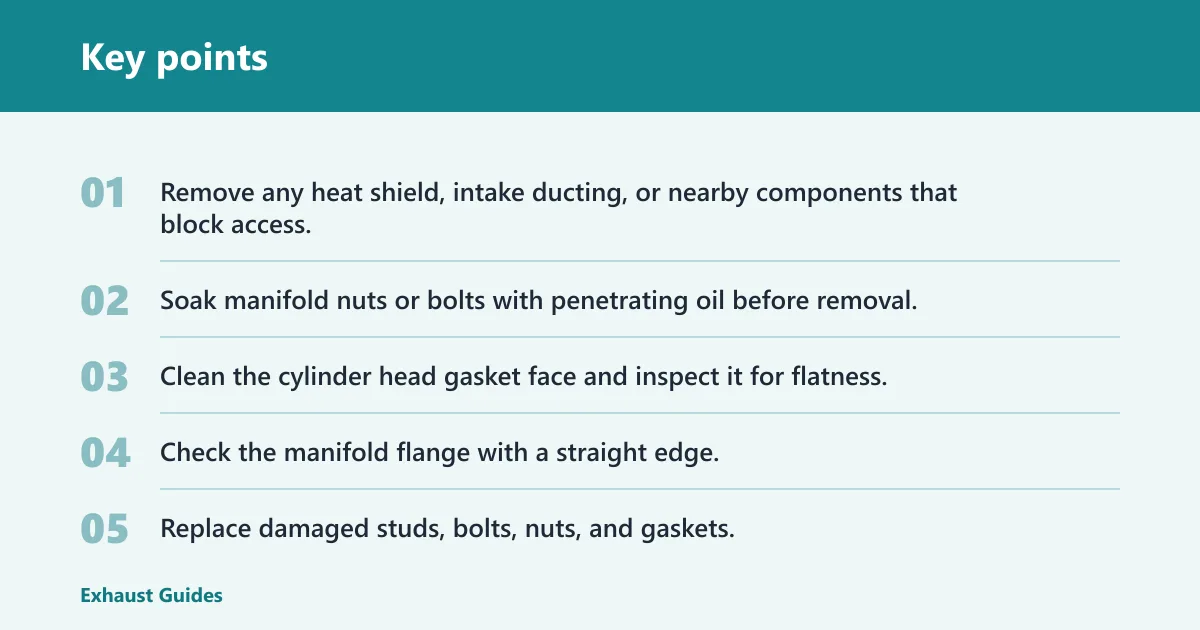
- Remove any heat shield, intake ducting, or nearby components that block access.
- Soak manifold nuts or bolts with penetrating oil before removal.
- Clean the cylinder head gasket face and inspect it for flatness.
- Check the manifold flange with a straight edge.
- Replace damaged studs, bolts, nuts, and gaskets.
- Install the new gasket with correct port and passage alignment.
- Tighten fasteners with a torque wrench in the centre-outward sequence.
Suppose an aluminum intake manifold comes off a water-heated engine and the old gasket has a thin sealant film on both sides. Reusing the gasket without matching that sealing method can leave a coolant seep or an air leak, even if the bolts feel tight. The correct seal depends on the manifold design, not on habit.
Verdict: exhaust manifold or intake manifold?
Choose exhaust manifold if your 4-cylinder engine starts ticking near the firewall after a cold start, the noise gets louder when you blip the throttle, or you see white burn marks at the flange and an exhaust odor.
Choose intake manifold if the engine idles low, sets a lean code, or shows a hiss and rough-idle symptoms from an intake-side vacuum leak under light load.


Frequently asked questions
What is the difference between an exhaust manifold and an intake manifold?
The exhaust manifold collects hot combustion gas from each cylinder and routes it out of the engine. The intake manifold sends air, or air-fuel mix, into each cylinder. That difference changes heat exposure, gasket type, fastener wear, and the symptoms you use to diagnose a fault.
Is an exhaust manifold on the same side of the engine as the intake manifold?
Sometimes, but not always. The intake and exhaust manifolds may be on opposite sides of the cylinder head, and some engines combine them or place them close together. On V-engines, the exhaust manifold sits on the outer side of each cylinder bank, so layout depends on engine family.
Does a leaking exhaust manifold affect performance?
Yes. A leaking exhaust manifold can create excessive exhaust noise, disturb oxygen sensor readings, and cause drivability complaints if the leak is large enough. It may also leave white burn marks around the flange, which is a strong sign that the exhaust side is the problem.
What is the difference between an exhaust manifold gasket and an intake manifold gasket?
An exhaust manifold gasket seals a hotter joint and is more likely to need renewing because heat damage is greater on that side. An intake manifold gasket seals the intake-side joint and may need sealant on some water-heated engines. Both must match the ports and flange pattern exactly.
Can an exhaust manifold crack from heat?
Yes. The exhaust side sees high heat and repeated thermal cycling, so cracks are a real failure mode. Cast iron and stainless steel both tolerate heat well, but neither is immune if the flange warps, hardware loosens, or the engine runs through repeated heat soak.
What tools do I need to remove an exhaust manifold safely?
At minimum, use the correct socket set, penetrating oil, a torque wrench for reassembly, and a straight edge for flange checks. Heat shield removal tools may also be needed. Apply penetrating oil for at least an hour, preferably overnight, before you try to remove manifold nuts or bolts.