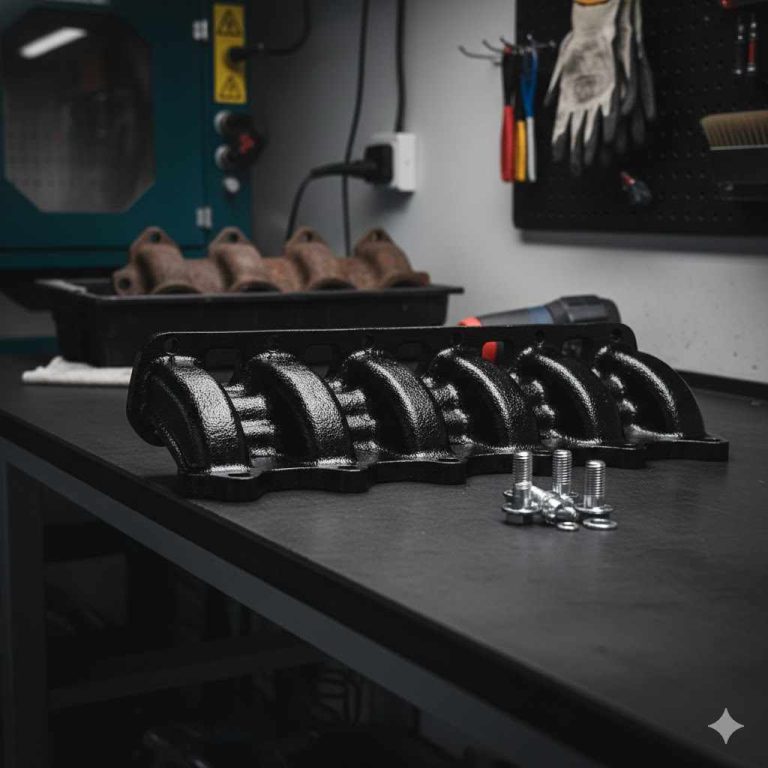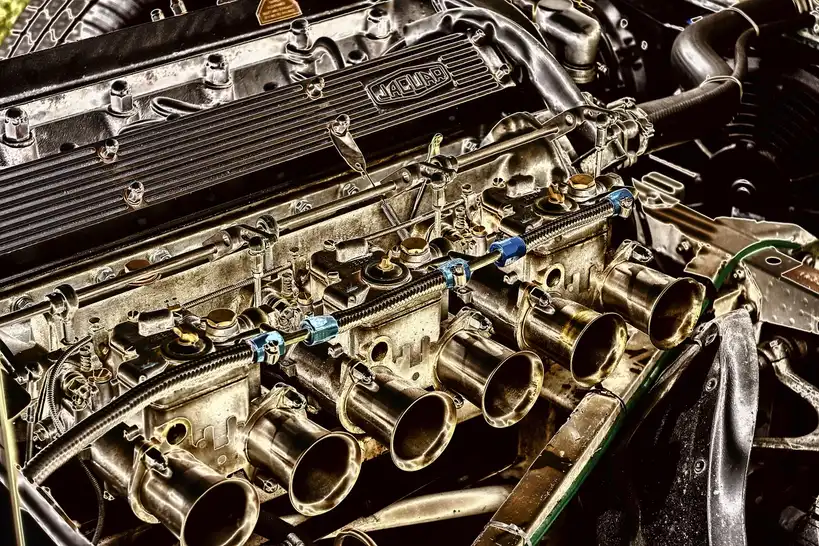
Driver Side vs Passenger Side Exhaust Manifold Differences
Driver side and passenger side exhaust manifolds are often different by design, but they still need to fit the intended head, chassis, and steering layout without force. Wrong-handed parts can crack, hit the frame, or create exhaust leaks that are expensive to fix after final assembly. The right choice depends on where the interference shows up.
| Decision factor | Driver side | Passenger side | Winner |
|---|---|---|---|
| Steering shaft and frame rail clearance | Often the tighter side on many front-engine layouts | Usually farther from the steering shaft | Passenger side |
| Footwell and firewall clearance | Usually less exposed to footwell contact | More likely to crowd the passenger footwell | Driver side |
| Fitment sensitivity to chassis offset | Can be affected when the engine sits off-center | Can bind first if the shell is shifted toward the driver side | Tie |
| Risk of confusing a wrong-handed part with a clearance issue | Common when tube routing is mirrored incorrectly | Common when a correct part sits too close to the body | Tie |
Why manifolds are not interchangeable
Driver-side and passenger-side manifolds are often built differently because the engine bay is not symmetrical. The cylinder head exhaust ports, flange orientation, tube routing, and nearby structure all change the space on each side. That means the part can be correct for the engine family and still feel tighter on one side.
Why the two sides are often built differently
The driver side exhaust manifold usually has to work around the steering shaft, frame rail, and steering box or rack hardware. The passenger side exhaust manifold more often has to clear the footwell, firewall, and any bodywork close to the rear of the engine bay. Those packaging limits shape the casting or tube routing.
What parts are rarely interchangeable
Do not assume one manifold will swap side to side just because the bolt count looks similar. The flange bolt-hole pattern, port alignment, and tube sweep can be side-specific, and a reversed part may bolt partway on while sending the runners into the wrong area. That is how a fitment problem turns into a cracked flange or leak.
Is one side harder to fit?
It changes with the chassis, engine, and steering layout. On some vehicles the driver side is the difficult side because of the steering shaft; on others the passenger side is tighter because the footwell or firewall sits closer to the manifold path. The tight side is the side with the least packaging margin, not a fixed rule.
Typical clearance pinch points by side
Driver side manifolds commonly run into steering shaft clearance first, then frame rail clearance. Passenger side manifolds more often show contact at the footwell, firewall, or inner body panel. A part can fit the head correctly and still be wrong for the chassis if it hangs into one of those zones.
How steering layout changes the answer
Rack-and-pinion layouts, steering boxes, and shaft routing change the space on the driver side. A raised column angle or a bulky intermediate shaft can turn an otherwise normal manifold into a forced fit. If the part touches the shaft, stop and measure before tightening anything down.
Why the tight side depends on chassis packaging
Body shells, engine mounts, and transmission placement all shift the space around the manifold. A kit car or swapped engine often changes the clearance picture more than the manifold itself does. That is why a part that fits one shell cleanly may need adjustment in another shell with the same engine.
Cylinder head and flange match
Check the cylinder head exhaust ports before blaming the side of the manifold. Port spacing, port shape, and the bolt pattern must match the engine family and head casting. If the flange does not sit flat or the holes do not line up without stress, the part is wrong or the head is not the expected casting.
Check port spacing and bolt pattern first
The exhaust manifold flange should match the head’s port spacing and bolt-hole pattern. A near-fit is not good enough because the bolts will pull the flange into a twist. That can mimic a handed fitment problem when the real fault is the wrong manifold for that head.
Inspect flange thickness and flatness
Flange thickness changes how much the part can flex under bolt load. A warped flange can tilt the runners and make one side look like it is hitting the body when the true issue is a sealing face that is not flat. Check flatness before trimming anything.
How a flange mismatch shows up during mock-up
During test fitting, the manifold may hang on two bolts while the remaining holes sit visibly off-center. You may also see one end of the flange pull in while the other end stands off the head. That is a warning sign to stop and verify the part number, head casting, and handed orientation.
Why passenger side clearance fails
Passenger side clearance failures often come from the footwell or firewall, not from the manifold itself. When the passenger side exhaust manifold sits too close to the body, the issue may be normal packaging, a shell offset, or a misrouted tube that the builder needs to identify before any trimming begins. The wrong fix can remove structure that should stay intact.
Footwell and firewall contact points
Contact usually shows up where the runner sweeps rearward toward the floor or where the collector turns down near the body. The passenger footwell can be the first hard stop, especially if the engine sits slightly high or rearward. If the part is pushed against the footwell, do not force the bolts tighter.
Body and frame offset checks
A chassis offset can shift the body or frame side to side and move the manifold closer to one footwell than expected. A body set about 15 mm toward the driver side can make the passenger side exhaust manifold sit hard against the passenger footwell, even when the manifold appears to be correct. That is a chassis-fit problem, not a handed-part problem.
When the manifold is correct but the shell is not
In a modified shell, the engine may sit where the mounts demand, while the body sits where the chassis allows. That mismatch changes the clearance picture on the passenger side first because the bodywork is the nearest fixed surface. In that case, minor modification may be needed after the rest of the fit is verified.
Fitment diagnosis table
Use this table during test fitting to separate a correct part with poor clearance from an incorrect handed manifold, a chassis offset, or a footwell interference problem. Take each measurement with the manifold mocked up, the fasteners loose, and the engine in its final position.
| Symptom | Likely cause | Side affected | Measurement to take | Recommended fix |
|---|---|---|---|---|
| Runner touches the steering shaft before the flange seats fully | Correct manifold for the head, but poor steering clearance | Driver side | Gap between runner and shaft at the closest point | Verify mount position and shaft routing; only then consider a different manifold design |
| Collector or rear runner hits the footwell | Body clearance problem or shell offset | Passenger side | Gap from runner to footwell and firewall edge | Check body position, mount height, and offset before trimming |
| Bolt holes line up only when the flange is pulled sideways | Incorrect handed manifold or wrong flange orientation | Either side | Offset between flange holes and head holes | Stop and confirm left/right part number, head casting, and flange orientation |
| One side looks fine, but the opposite side binds first | Chassis or body offset | Either side | Body-to-chassis centerline difference and manifold-to-body gap | Measure body position relative to the frame and engine centerline before modifying the manifold |
| Flange rocks on the head and leaks appear after tightening | Warped flange or mismatch at the cylinder head ports | Either side | Straightedge check across the flange face | Resurface or replace the manifold; do not pull a warped flange into place |
| Clearance is acceptable until the engine is lowered fully on its mounts | Test fit was done before final engine position | Either side | Gap with the drivetrain fully seated on mounts | Repeat the mock-up in the final installed position and recheck all contact points |
Test fitting and measurements
Test fitting is the fastest way to separate a wrong part from a tight but correct one. Mock up the manifold before final tightening or welding, and check contact points with the engine loaded in its final position. The useful measurements are the smallest gaps at the footwell, firewall, steering shaft, and frame rail.
Where to measure clearance near the footwell
Measure from the nearest runner or collector edge to the footwell surface at the closest point, not at a convenient open spot. If the gap disappears when the engine rocks on its mounts, the part is too close for a rigid install. A practical inspection target is at least a visible air gap everywhere the engine can move under load.
What to check before welding or final tightening
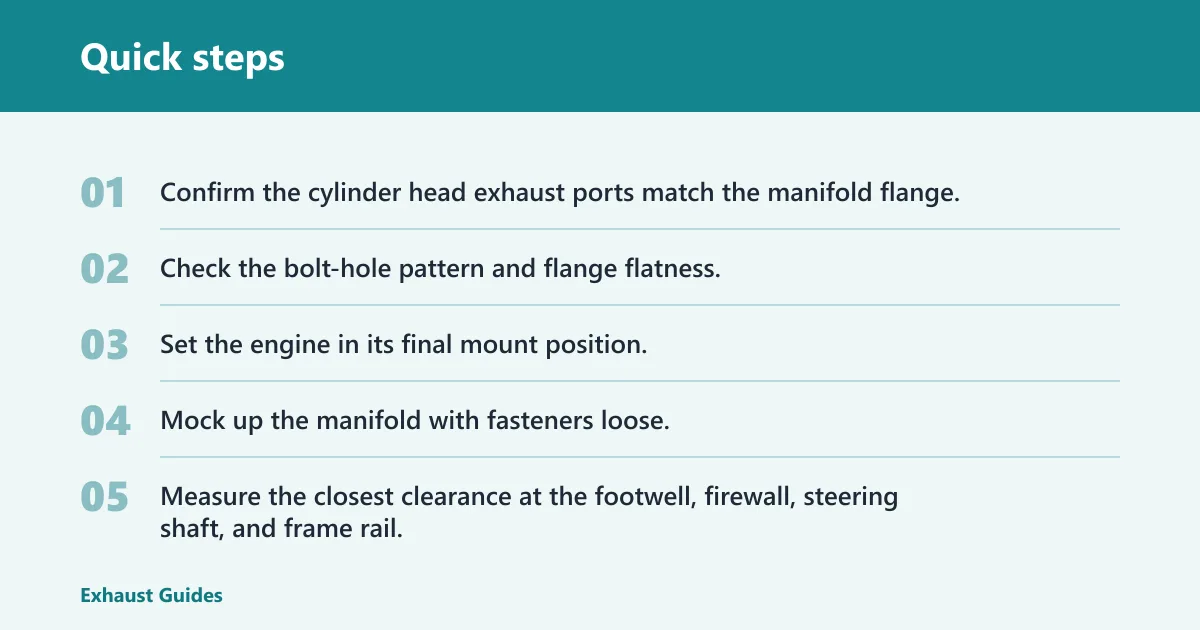
- Confirm the cylinder head exhaust ports match the manifold flange.
- Check the bolt-hole pattern and flange flatness.
- Set the engine in its final mount position.
- Mock up the manifold with fasteners loose.
- Measure the closest clearance at the footwell, firewall, steering shaft, and frame rail.
- Look for witness marks, shiny rub spots, or points where the part is being forced into place.
Signs that a part is in the wrong position
If the manifold must be pried sideways to start the bolts, the fit is suspect. If one runner clears while another is hard against the body, the shell may be offset or the part may be the wrong handed version. If a multi-tool is needed only after the correct part number has been confirmed, that is a minor modification issue, not a first-step solution.
Can you swap left and right?
Usually no. Left and right manifolds are shaped for their own side, so swapping them often creates new interference instead of solving the original one. Before ordering a replacement, confirm the engine family, the head casting, the flange pattern, and the side-specific routing that the chassis actually needs.
When swapping is impossible by design
Some manifolds are mirrored just enough to bolt to the head, but not enough to clear the opposite-side packaging. Others have flange thickness, port angle, or collector direction that only works on one side. In those cases, a swap can land the runners directly into the steering shaft or footwell.
When a swap only creates new interference
A wrong-handed manifold may seem close during the first mock-up, then hit the frame rail or firewall as soon as the bolts are snugged. That false near-fit is common on modified shells because the body may already sit off-center. Do not force the swap if the interference point changes from one surface to another as the part is tightened.
What to verify before ordering a replacement manifold
Check the manifold’s left/right designation, the head casting code, the bolt-hole pattern, and the intended chassis. Then compare the clearance problem against the actual contact point. If the problem is passenger footwell interference on a body that sits about 15mm toward the driver side, you need to solve the offset before changing parts.
Choose Driver side or passenger side if…
Choose Driver side if your main concern is steering shaft or frame rail clearance and the manifold is shaped to avoid those parts cleanly. Choose passenger side if the steering side is not the issue and the tighter fit is at the footwell or firewall, where the body packaging controls the final clearance.
Driver side
Pick the driver side path when the contact point is on the steering shaft, steering box, or frame rail. That is the side where tube routing and flange orientation have to work around the steering hardware first, so the normal design difference is often about lateral packaging rather than vertical space.
Passenger side
Pick the passenger side path when the manifold is being pushed into the passenger footwell or firewall area. That side is more likely to need minor adjustment on some builds, especially when the shell is offset or the engine sits slightly higher than planned. Do not trim until the head match and chassis position are confirmed.

- Matches OE-style fit for specified Dodge models
- Includes required gaskets and hardware
- Built to help resist warping, cracking, and leaking
Frequently asked questions
Is the driver side exhaust manifold different from the passenger side?
Yes, often it is. The driver side exhaust manifold and passenger side exhaust manifold are usually shaped for different packaging constraints, so the tube routing, flange orientation, and clearance targets are not mirror-identical. Both should still match the cylinder head exhaust ports and bolt pattern for the engine family.
Why does one exhaust manifold fit tighter than the other?
One side usually has less room around the steering shaft, frame rail, footwell, or firewall. That can make the fit feel tighter even when the part is correct. The key is to identify which surface is causing the bind before assuming the manifold is wrong.
Which side is usually harder to install, driver side or passenger side?
There is no universal answer. On some chassis the driver side is harder because of steering shaft clearance, while on others the passenger side is harder because the footwell or firewall sits too close. The side that loses clearance first on your chassis is the harder side.
Can I swap driver side and passenger side exhaust manifolds?
Usually not. A swap can line up part of the flange and still drive the runners into the wrong space, which creates new interference at the steering shaft, frame rail, or footwell. Confirm the handed part number, head casting, and flange orientation before trying to cross-install them.
What should I check before ordering an exhaust manifold for my car?
Check the cylinder head exhaust ports, flange bolt pattern, side designation, and the chassis layout around the steering shaft and footwell. If the car or shell has been modified, also check for chassis offset. Ordering by engine alone is not enough on many builds.
How much clearance should an exhaust manifold have near the footwell?
There is no single universal dimension that fits every chassis, but you should aim for visible clearance at the closest point with the engine fully seated on its mounts. Leave enough space that normal engine movement will not make the manifold touch the footwell, firewall, or nearby bodywork during driving.