Cast iron vs tubular exhaust manifold specs guide
Cast iron manifolds are usually heavier and smaller on the outside but hold heat better; tubular manifolds usually flow more, fit tighter bays more easily, and fail sooner if thin tubing or welds are poor. Choose cast iron for durability and heat retention, tubular for access and flow when you can verify flange flatness, tube gauge, and collector fit. Pick the wrong one and you can fight cracked welds, broken studs, heat soak, and a manifold that misses the head or frame by millimeters. This guide compares the specs that matter for fitment, serviceability, heat control, and long-term reliability.
| Decision factor | Cast iron | tubular exhaust manifold specs | Winner |
|---|---|---|---|
| Material and build | Cast iron; often OEM style, with thick one-piece casting. Some premium versions use high silicon-moly ductile iron. | Welded tubular steel, usually mild steel or stainless steel, with multiple bends and joints. | Cast iron for longevity; tubular for packaging and flow potential |
| Heat retention | Holds heat well and the cast mass keeps exhaust energy near the outlet. | Transfers heat faster into the bay; stainless resists corrosion but still sheds heat more readily than cast. | Cast iron |
| Weight | Heavier than tubular counterparts. | Usually lighter than cast iron. | Tubular exhaust manifold specs |
| Crack risk | Lower in many OEM-style uses, especially with stable mounting and correct heat cycling. | Higher at welds, tube junctions, and warped flanges if the design or material is thin. | Cast iron |
| Plug access and serviceability | Often better plug access; easier wire routing in many stock-style bays. | Can require custom wires and can burn plug wires if clearance is tight. | Cast iron |
| Flange and install complexity | Typically bolts up like OEM hardware with standard gasket sealing and stud service. | May use welded flanges, collector joints, or a 3.0-inch V-band flange; more alignment-sensitive. | Cast iron for simple installs; tubular for custom systems |
| Best-use scenario | Street, towing, daily use, many turbo OEM-style setups, and owners who value fitment and longevity. | Road race, turbo performance, and swap builds where tube routing and outlet style matter more. | Depends on build |
What is the difference between cast iron and tubular exhaust manifold specs?


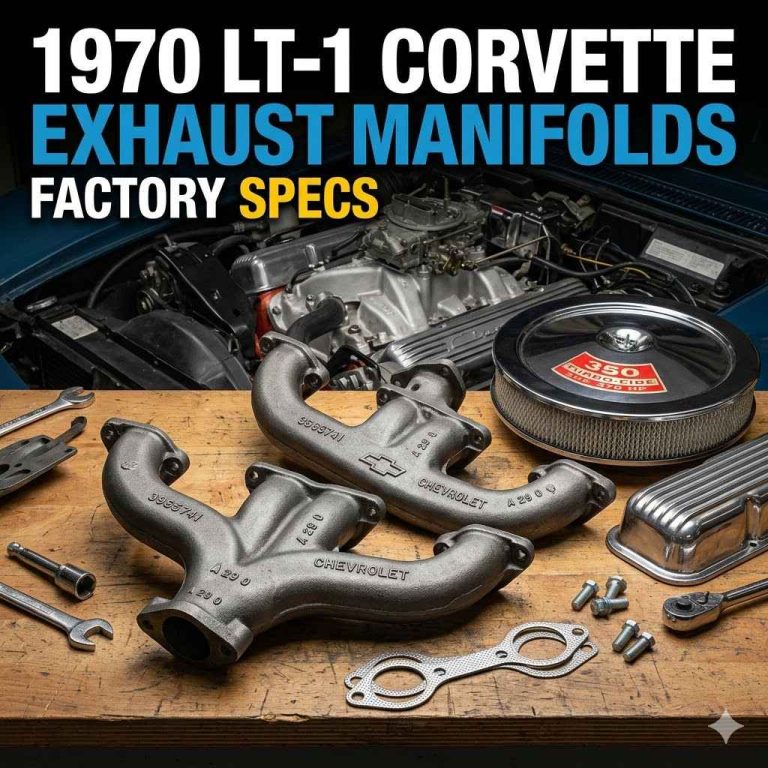
Cast iron and tubular manifolds differ first in how they are built. Cast iron is a one-piece casting, often used in OEM applications for fitment, heat control, and long service life; tubular manifolds are welded assemblies made from mild steel or stainless steel, usually aimed at performance packaging and flow.
Cast iron exhaust manifold basics
Cast manifolds are inexpensive to make and common in factory systems because they fit well, seal predictably with an exhaust manifold gasket, and handle heat cycles without frequent service. The trade-off is mass. They are also often praised for great plug access, which matters when the manifold sits close to the cylinder head and the engine bay is crowded.
Tubular exhaust manifold basics
Tubular manifolds use bent tubes welded to flanges and collectors, so designers can route exhaust around steering shafts, frame rails, turbo centers, and accessory drives. That routing can improve flow, but it also adds welds, joints, and more chances for flange distortion or thermal fatigue. Tubular headers can also require custom wires, and burned plug wires are a known clearance problem.
Where ductile iron fits between them
Ductile iron is the middle ground for cast construction. The Hooker manifolds are built from high silicon-moly ductile iron, which points to a cast part with higher strength and better longevity than basic cast iron in some applications. That makes it useful where OEM-style fitment matters, but the part still needs extra toughness.
📊 The passenger-side manifold features a 3.0-inch V-band flange. Source: Cast Manifolds Vs. Tubular Race Headers.
Which one weighs more, cast iron or tubular exhaust manifold?
Cast iron weighs more. That extra mass can make handling and installation more awkward, but it also gives the part stiffness and thermal storage that help with heat retention and longevity. Tubular designs are usually lighter, which can help when every pound matters near the front of the chassis.
Weight differences that affect handling and mounting
Weight matters most during installation, during manifold support, and when vibration loads the exhaust studs. A heavier cast part can be harder to position, but it often sits more calmly once tightened down. A lighter tubular part may be easier to hold in place, yet the lighter structure can be less forgiving if the flange is not flat or the engine moves more than expected.
Heat retention, underhood temperature, and warm-up behavior
Cast manifolds are said to maximize heat transfer to the turbo, which is why cast pieces often appeal in turbo setups that want energy kept near the turbine inlet. That same heat retention can also keep underhood heat concentrated around the head and plug area. Tubular pieces tend to pass heat outward more quickly, which can help some packaging layouts but may raise local bay temperature near nearby wiring.
What heat means for adjacent parts and service access
Heat is not abstract here. It changes wire life, gasket life, and how often you touch the hardware again. A common first-timer mistake is choosing a tubular layout that clears the bay on paper, then discovering the plug boots sit close enough to cook after a few long drives.
Do cast iron manifolds crack less than tubular ones?
In many OEM-style uses, yes, cast iron manifolds crack less than tubular ones because the casting is thick, stiff, and has fewer welds. Tubular manifolds can be durable too, but their failure points are usually more obvious: weld toes, collector joints, flange edges, and spots that see repeated heat cycling.
Why cast iron often lasts well in OEM use
Factory manifolds prioritize fitment and longevity over horsepower. Cast iron’s thicker wall section, one-piece structure, and simple flange layout usually reduce fatigue points, especially when the exhaust system is supported correctly downstream. Exhaust manifold studs also tend to be easier to service on many cast layouts because the surrounding shape leaves more room.
Where tubular designs fail: tube welds, flange warp, and heat cycling
Tubular manifolds live or die by weld quality, tube gauge, and flange flatness. Thin tubes can develop cracks near the head flange or at merge points, while heat cycles can warp a flange enough to create leaks even when the tubes themselves look fine. Broken studs often follow repeated leak-and-tighten cycles, not just age.
How material choice changes repair and replacement odds
Cast iron is harder to repair cleanly once cracked, but it often lasts long enough that replacement is the only service event you face. Tubular pieces are more likely to invite weld repair, re-clocking, or full replacement sooner. Over time, that changes ownership cost as much as purchase price does.
How fitment, plug access, and sealing change the choice
Fitment usually decides the job before peak flow does. You need the exhaust port to match the head, the flange angle to land correctly, the gasket to sit flat, and the downstream connection to meet the rest of the exhaust without stress. If any of those are wrong, both materials become trouble.
Exhaust port alignment and bank-by-bank fitment
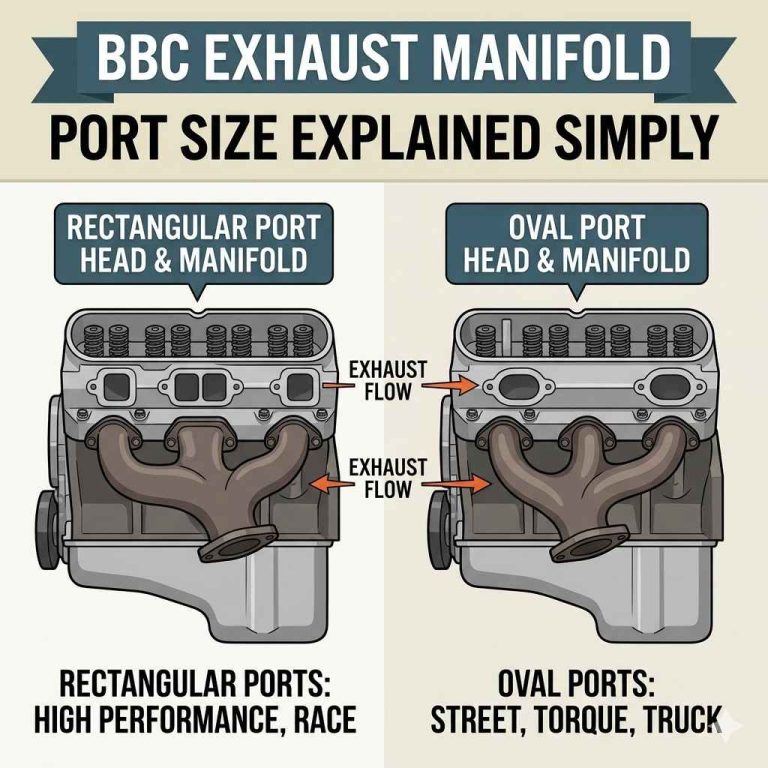
The exhaust port is the head interface, and port alignment matters bank by bank. A cast manifold often mirrors OEM port placement well, which reduces the chance of a misaligned gasket or an outlet that pulls against the head. Tubular designs can fit tighter bays, but that packaging freedom raises the need to check bolt pattern, port shape, and flange angle carefully.
Exhaust manifold gasket fit and leak prevention
The exhaust manifold gasket is the seal between the head and manifold. It prevents leaks that can create noise, soot, smell, and in some cases check-engine faults from oxygen sensor behavior. Flat flange faces and correct stud torque matter more than material alone when leaks show up.
Exhaust manifold studs, burned wires, and service clearance
Exhaust manifold studs are the mounting hardware that take the clamping load. They fail by stretching, breaking, or rusting into the head, and cramped tubular layouts can make extraction far more difficult. Cast manifolds often give better plug access and less wire heat exposure; tubular pieces may require custom wires and still leave burned plug wires if the routing is too tight.
V-band flange notes, including 3.0-inch examples
Flange style changes install quality. The passenger-side manifold example with a 3.0-inch V-band flange shows why many custom setups like this connection: it clamps quickly and can seal well when the faces are square and the ring is sized correctly. That said, a V-band does not fix a bad tube angle, a warped flange, or a mismatch at the downstream pipe.
Suppose a turbo swap leaves only 8 mm between the manifold outlet and the firewall. A tubular piece with a 3.0-inch V-band flange may fit where a cast outlet cannot, but only if the collector angle, gasket surface, and pipe drop all line up. If the outlet points half a degree wrong, the V-band becomes a correction tool for the wrong problem.
What specs matter most when choosing a cast iron vs tubular exhaust manifold?
The specs that matter most are the ones that decide whether the part bolts up, seals, and survives heat cycles. Material, wall construction, flange style, port alignment, and downstream connection type matter more than a peak-flow claim if the engine must start, idle, and stay serviceable for years.
Check these items first
- Exhaust port shape and bolt pattern match the cylinder head.
- Flange angle sits square to the head and to the pipe path.
- Gasket surface is flat enough to seal without constant retorque.
- Stud length clears the manifold thickness and lock hardware.
- Plug boot and wire clearance is sufficient on each bank.
- Downstream connection type matches the rest of the exhaust, whether that is a slip joint, flange, or 3.0-inch V-band flange.
Why flange quality can outweigh flow claims
A manifold with slightly better flow means little if it leaks at the flange or forces the pipe into a bind. Tubular manifolds are often described as having better flow, but that advantage can disappear if tube layout is poor or if the collector and flange are not square. In real use, sealing and fitment decide whether the system stays functional.
Choose cast iron if… / Choose tubular exhaust manifold specs if…
Choose cast iron if you want OEM-style fitment, better plug access, strong heat retention, and a lower-risk path for daily driving or towing. Choose tubular exhaust manifold specs if you need tighter packaging, custom outlet placement, or performance routing and you can verify flange flatness, tube gauge, and plug clearance before buying.
Choose cast iron if…
- You are building a street car, daily driver, or tow vehicle.
- You want easier gasket sealing and better stud serviceability.
- You need good plug access and less wire heat exposure.
- You value fewer welds and a lower crack risk in normal service.
Choose tubular if…
- You are fitting a turbo setup, road race build, or engine swap with tight space.
- You need a specific collector angle or a V-band outlet, such as a 3.0-inch connection.
- You can confirm tube material, weld quality, flange flatness, and wire clearance.
- You accept more inspection over time for cracks, leaks, or warped faces.
Lifecycle and ownership cost
Cast iron often wins on total ownership cost because it usually needs less attention after installation, and replacement intervals are often longer in normal service. Tubular pieces can be repairable, but they may ask for more hardware checks, more gasket attention, and more labor if a weld cracks or a flange warps. The cheaper part up front is not always the cheaper part over time.
A common first-timer mistake is buying the lightest tubular manifold available and assuming the rest of the system will tolerate it. If the exhaust port is off, the gasket is forced, or the studs sit under tension, the first symptom may be a ticking leak or a broken stud rather than any flow gain.
Frequently asked questions
What is the difference between cast iron and tubular exhaust manifold specs?
Cast iron is a one-piece casting with thick walls, high heat retention, and strong OEM fitment. Tubular manifolds are welded tube assemblies in mild steel or stainless steel, built for routing flexibility and usually better flow. The key spec differences are mass, weld count, flange style, and clearance.
Which one weighs more, cast iron or tubular exhaust manifold?
Cast iron weighs more. That extra mass can help with stiffness and heat retention, but it makes handling and installation harder. Tubular parts are usually lighter, which can help in swap builds or tight engine bays, though the lighter structure depends more on weld quality and flange flatness.
Which exhaust manifold material handles heat better?
Cast iron handles heat better in the sense that it retains heat and keeps exhaust energy concentrated near the outlet. That is why cast manifolds are praised for great plug access and for maximizing heat transfer to the turbo. Stainless tubular manifolds resist corrosion, but they still lose heat faster.
Do cast iron exhaust manifolds crack less than tubular ones?
Often yes, especially in OEM-style applications. Cast iron has fewer welds and usually thicker sections, so there are fewer fatigue points. Tubular manifolds can be durable, but cracks commonly start at welds, collectors, or warped flanges after repeated heat cycling.
Is a tubular exhaust manifold always better for flow?
No. Tubular designs usually have better flow potential, but that advantage depends on tube size, bend radius, merge quality, and flange alignment. A poor tubular layout can leak, crack, or fit worse than a cast part, which cancels out the flow advantage in real use.
What should I check before swapping a cast manifold for a tubular one?
Check port shape, bolt pattern, flange angle, gasket surface flatness, stud length, plug wire clearance, and the downstream connection type. If the part uses a V-band flange, confirm the size and mating pipe angle. Also verify whether the new layout needs custom wires or extra heat protection.
How do cast iron and tubular manifolds affect plug access and fitment?
Cast manifolds often give better plug access and simpler wire routing because they follow OEM packaging. Tubular manifolds can improve bay clearance in some swaps, but they can also crowd plug boots and burn wires if the tubes sit too close to the head or accessory drive.