Best Exhaust Manifold for Towing and Low-End Torque
For towing, the best exhaust manifold is usually a high-quality cast-iron unit or a thick-wall stainless shorty with factory-style fitment, heat retention, and strong flange flatness; if you tow heavy, choose durability over top-end horsepower. A poor manifold choice can crack welds, blow gaskets, warp flanges, and reduce low-end pull when the engine is under sustained load. This guide compares towing-focused manifold types, what to check for fitment and heat control, and how to choose the right setup for your truck or SUV.
Best exhaust manifold for towing: top pick and why


For many towing rigs, a common first choice is a heavy-wall cast iron or ductile iron manifold with OEM-style fitment. It keeps heat where the engine can use it, resists cracking during repeated load cycles, and usually seals better than thin tubular parts during long stretches at high exhaust temperature.
That tradeoff matters. A freer-flowing exhaust manifold or tubular header can sharpen throttle response, cut backpressure, and improve low-end torque, but towing use punishes parts that trade durability for peak flow. If you tow regularly, the right answer is usually the part that survives long grades without warping or loosening, even if it leaves a little peak power on the table.
Quick picks by towing need
- Best overall for the Ford 3.5 EcoBoost application described here: Banks Power TorqueTubes. The guide positions them as the best for daily towing on that kind of application, with low-end power delivery and heavy-wall construction for thermal expansion during long climbs.
- Best for mountain towing: High-silicon ductile iron manifold, or a factory-style cast iron manifold on a vehicle that sees repeated steep grades. Heat stability and flange flatness matter more here than a large scavenging claim.
- Best for occasional tow-use: aFe Power Twisted Steel if you want a more performance-biased feel and still tow now and then. It is described as maximizing exhaust scavenging and improving highway passing and merging response.
- Best budget option: Gibson Performance Exhaust header. It is presented as a budget pick, uses mandrel-bent tubing to keep diameter consistent through bends, and is said to provide enough low-end grunt for long-distance trips.
Top pick details
Banks Power TorqueTubes are the closest fit for towing-first buyers who want a torque-biased exhaust manifold without chasing peak horsepower. Their heavy-wall construction is intended to handle thermal expansion during long climbs, which is exactly where many towing failures start.
Pros: low-end power delivery, towing-focused tuning, heavy-wall build, better fit for sustained load. Cons: not the most aggressive top-end performer, and it may cost more than a basic header.
aFe Power Twisted Steel suits drivers who split time between towing and empty driving. The series is described as maximizing exhaust scavenging, and the guide says it improves highway passing and merging response. That helps when you need stronger roll-on response with a trailer behind you.
Pros: stronger response, balanced behavior, useful for mixed use. Cons: less conservative than OEM-style iron for long, repeated heat cycles.
Gibson Performance Exhaust header is the value choice. Mandrel-bent tubing keeps diameter consistent through bends, which helps flow consistency. The tradeoff is that budget tubing is usually a compromise versus heavy-wall iron when you are pulling hard up grades for long periods.
Pros: lower entry cost, decent low-end grunt, predictable tubing geometry. Cons: more likely than cast iron to be a fitment or durability compromise in severe towing service.
What makes a manifold good for towing?
A towing exhaust manifold should support low-end torque, seal well under heat, and fit the engine family exactly. Better flow can improve throttle response and cut backpressure, but towing gains come from stronger low-end torque and reliable heat control, not from a high-RPM peak power number.
Flow path geometry and low-end torque
Flow path geometry matters because it shapes how exhaust pulses leave the cylinders. On a towing truck, you want the exhaust to move cleanly enough to help response off idle and at midrange, but not at the expense of sealing or flange stability.
Short, large-volume runners can favor higher-rpm flow. Longer runners can help exhaust scavenging and may support low-end torque better when sized correctly. The key is balance: too small can restrict flow, while too large can soften response at the lower speeds where towing lives.
Runner length, tube diameter, and scavenging
Runner length affects pulse timing. Long runners can improve scavenging and help pull spent gas out of the cylinder as the next cycle begins, which can sharpen towing response. Tube diameter matters too; oversized tubes often favor top-end power, while a more restrained diameter can keep velocity up at lower engine speeds.
That is why tubular exhaust manifolds are not automatically better for towing. A well-matched tubular design can help, but a poor one can shift the torque curve the wrong way for a heavy trailer.
Why heat cycling matters more than peak flow on long grades
Long grades create repeated heat soak and cooldown cycles. That is where cast iron, ductile iron, and thick-wall stainless matter most. A part that looks good on paper but warps after repeated climbs is the wrong part for towing duty.
For example, a half-ton SUV may tow a camper over a mountain pass every other weekend. A thin performance header may feel sharper empty, but if it starts leaking after repeated heat cycles, the small gain is not worth the repair time or the drivability loss.
Towing manifold comparison table
| Option | Low-end torque bias | Heat-crack resistance | Warp resistance | Towing duty cycle suitability | Fitment risk | Buy for daily towing? | Buy for mountain towing? | Buy for occasional tow-use? |
|---|---|---|---|---|---|---|---|---|
| Cast iron exhaust manifold | High | High | High | High | Low if OEM-matched | Buy | Buy | Buy |
| High-silicon ductile iron manifold | High | High | High | High | Low to medium | Buy | Buy | Buy |
| Banks Power TorqueTubes | High | High | High | High | Medium | Buy | Buy | Buy |
| aFe Power Twisted Steel | Medium to high | Medium | Medium | Medium to high | Medium | Buy | Conditional buy | Buy |
| Gibson Performance Exhaust header | Medium | Medium | Medium | Medium | Medium to high | Conditional buy | Not buy | Buy |
| Thin tubular performance manifold | Medium to high | Low to medium | Low to medium | Low to medium | High | Not buy | Not buy | Conditional buy |
Cast iron and ductile iron options
Cast iron and high-silicon ductile iron are the towing-first materials to beat. They hold heat well, resist crack formation better than many thin tubular layouts, and usually create less drama when a truck or SUV sees repeated long-load operation.
Cast iron exhaust manifold
Cast iron remains the default answer for heavy towing because it combines heat tolerance, crack resistance, and OEM-style durability. Heavy-wall construction helps it survive expansion and contraction without the same flex and stress concentration you can see in thinner tubing.
Pros: strong heat tolerance, good sealing, low fitment risk when matched to the vehicle, strong durability. Cons: heavier, less performance-oriented, and usually less aggressive in scavenging than a tuned tubular manifold.
High-silicon ductile iron manifold
High-silicon ductile iron is the material to watch if you want thick-wall construction with better warping resistance. The 1043001 kit is described with an 11-stud design to reduce warping and gasket failure, plus thick-wall high-silicon ductile iron and 304 stainless steel. That is the kind of construction detail towing buyers should look for in a specific application.
Pros: strong thermal stability, less warp risk, better gasket retention, good fit for sustained towing. Cons: not the lightest option, and fitment still has to match the engine platform exactly.
Why OEM-style heavy-wall construction matters under load
Heavy-wall parts tolerate repeated heat cycling better because they do not move as much when temperatures rise and fall. That reduces the chance of flange distortion, gasket failure, and fastener loosening. For towing, that is often more valuable than a small flow gain.
Are tubular manifolds better for low-end torque?
Sometimes, but not by default. A tubular exhaust manifold can help low-end torque if the runner length, diameter, and collector design match the engine’s operating range. If the tubing is too large or the design is tuned for higher rpm, towing response can suffer even if peak flow improves.
Tubular exhaust manifold basics
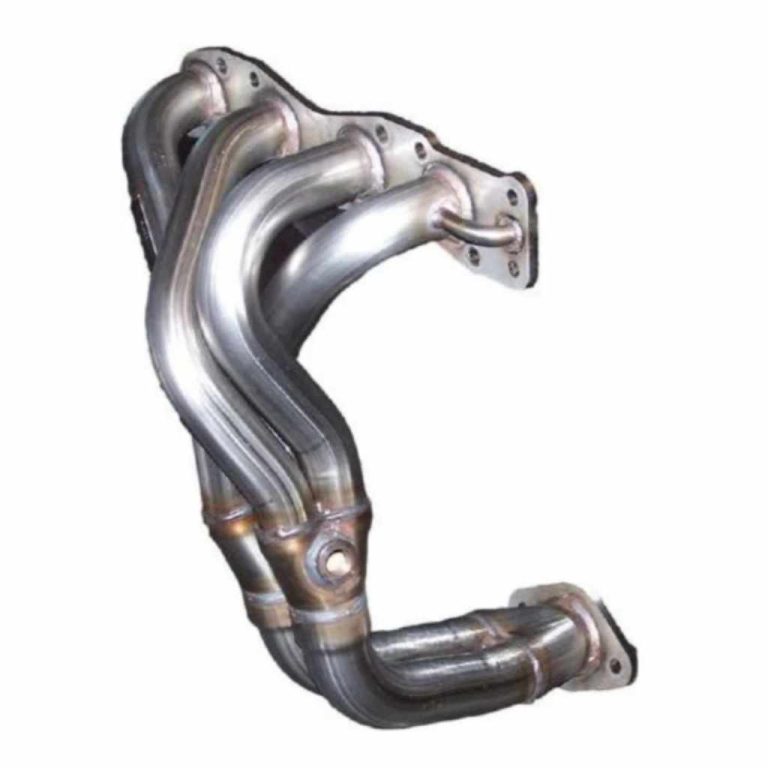
Tubular manifolds use separate runners instead of a heavy cast body. That gives more freedom in runner length and diameter, which can improve exhaust scavenging and throttle response. The downside is less thermal mass and, often, less tolerance for repeated heat soaking under towing load.
Stainless steel resists corrosion better than traditional mild steel, and it also holds up better in harsh environments. That helps long-term durability, but material alone does not solve poor fitment or a runner design that is wrong for a tow rig.
Banks power TorqueTubes
Banks Power TorqueTubes are positioned as best for daily towing, and the guide says they prioritize low-end power delivery over high-RPM horsepower. Their heavy-wall construction is intended to handle thermal expansion during long climbs, which is the sort of use where towing exhaust manifolds fail first.
Use case: daily tow rigs that spend a lot of time loaded. Why they fit: torque bias, heat control, and stronger durability than a thin street-performance header.
aFe Power Twisted Steel
aFe Power Twisted Steel is described as maximizing exhaust scavenging, and the article says it improves highway passing and merging response. That makes it a better match for mixed-use trucks and SUVs than for buyers who want the most conservative heat management possible.
Use case: towing plus daily driving, especially when the vehicle is not pulling maximum load on every trip. Why it fits: better response, balanced street manners, and solid performance focus.
Gibson Performance Exhaust header
Gibson Performance headers are presented as a budget pick. Gibson uses mandrel-bent tubing to keep diameter consistent through bends, and the guide says it offers enough low-end grunt for long-distance trips. That makes it a practical option when you want a less expensive upgrade without chasing a race-style layout.
Use case: light to moderate tow duty. Why it fits: better-than-stock flow consistency, useful grunt, lower cost. Watch-outs: budget tubular parts can bring more noise, more fitment sensitivity, and more risk under repeated heat cycling than iron.
Start with the vehicle, not the catalog photo. Fitment has to match the specific engine family and chassis, and that matters as much as material or runner shape. A good towing manifold on the wrong platform is still the wrong part.
- Match the engine family and vehicle segment. Half-ton tow rigs, SUVs, and light-duty gas trucks do not all want the same runner length or flange layout.
- Choose material by duty cycle. Cast iron and high-silicon ductile iron suit repeated heavy towing. Stainless steel suits corrosion resistance and temperature stability when fitment is correct.
- Check the flange and fastener design. Fastener design matters because heat cycling can loosen marginal hardware and trigger leaks.
- Review emissions compatibility. Some manifolds are not legal for all applications, even if they bolt on.
- Weigh installation difficulty. Manifold swaps can require mechanical skill or professional help, especially when fasteners are seized or access is tight.
For example, a 3.5-liter Ford truck owner may want more passing response while towing a small equipment trailer. A part that fits multiple Ford platforms, like the Ford 3.5 EcoBoost manifold kit described with the 1043001 11-stud design, may be attractive because it aims at warp and gasket control as well as fitment breadth.
Another common mistake is picking a loud tubular header because it sounds stronger. If the vehicle tows in hot weather or on grades, noise is not a torque strategy. An exhaust manifold that keeps the gasket sealed and the flange flat will usually be the better choice.
Can exhaust manifolds crack or warp under towing loads?
Yes. Cracking, warping, gasket failure, and fastener issues are common failure modes when exhaust parts see long heat cycles and repeated load. Heavy towing can make those problems more likely, especially on thin tubing, poor flange machining, or hardware that relaxes after repeated expansion and contraction.
Common failure modes: cracking, warping, gasket failure, and clamp issues
Cracking often starts near welds, sharp bends, or thin sections. Warping shows up as leaks at the flange or repeated gasket failure. Fastener issues can follow when the manifold moves more than the hardware can hold, which is why towing parts need strong flange flatness and stable material behavior.
How stainless steel compares with cast iron and ductile iron
Stainless steel resists corrosion better than traditional mild steel and can hold up well in harsh environments. Cast iron and ductile iron are commonly preferred for heat retention, crack resistance, and warp resistance in towing use. For a heavy trailer, the most durable setup is often the one that stays stable under repeated thermal loading, not the one with the thinnest, most aggressive tubing.
Warning signs to watch after installation
- Ticking at cold start that grows under load.
- Exhaust smell in the engine bay or cab area.
- Black soot near the flange or collector.
- Loose fasteners after a few heat cycles.
- Reduced low-end pull on hills, which can point to a leak or poor fitment.
Frequently asked questions
What exhaust manifold is best for towing and low-end torque?
A high-quality cast iron or high-silicon ductile iron manifold is usually best for towing and low-end torque because it combines heat stability, crack resistance, and better flange sealing. If you want a performance-leaning option, choose a heavy-wall design that still prioritizes factory-style fitment and long-grade durability.
Will a performance exhaust manifold improve low-end torque when towing?
It can, but only if the runner length, tube diameter, and scavenging are suited to the engine’s load range. A performance manifold that is tuned for higher rpm may improve throttle response yet feel weaker under trailer load if it sacrifices low-speed exhaust velocity or seals poorly when hot.
What manifold design is better for towing: cast iron or tubular?
Cast iron is usually better for towing because it is more tolerant of sustained heat and repeated thermal cycling. Tubular exhaust manifolds can help response and scavenging, but they are more sensitive to fitment, flange movement, and heat-related wear, especially on trucks that tow often or climb long grades.
Which exhaust manifold material is most durable for heavy towing?
High-silicon ductile iron is a strong choice for heavy towing because its thick-wall construction helps resist warping and gasket failure. Cast iron is also highly durable. Stainless steel resists corrosion well, but durability under towing depends more on wall thickness, flange quality, and overall design than on material alone.
How does runner length affect towing torque?
Runner length changes exhaust pulse timing. Longer runners can help scavenging and strengthen low-end response if the rest of the design matches the engine. Shorter, larger runners often favor higher rpm flow, which may not help a tow rig as much when it is pulling hard at lower engine speeds.
Can an exhaust manifold cause cracking or warping under towing loads?
Yes. Repeated heat cycling, poor flange machining, thin material, and stressed welds can lead to cracking or warping. That is why towing buyers should prioritize heavy-wall construction, proper stud and fastener design, and vehicle-specific fitment over peak-flow claims that only matter at the top of the rev range.