What Exhaust Manifolds Fit a 1978 Chevy 305
Finding the right parts for your classic car can sometimes feel like a puzzle, especially when you’re not sure where to start. If you’re working on a 1978 Chevy with a 305 engine, you might be wondering, What Exhaust Manifolds Fit a 1978 Chevy 305? It’s a common question for folks getting their hands dirty on these trucks and cars.
Don’t worry, though. This guide makes it super simple. We’ll walk through exactly what you need to know, step by step, so you can get your project back on the road with the right parts.
Choosing the Right Exhaust Manifolds for a 1978 Chevy 305
Selecting the correct exhaust manifolds for your 1978 Chevrolet 305 engine is a key step in ensuring your vehicle runs smoothly and efficiently. These components are vital for directing exhaust gases away from the engine cylinders and out through the exhaust system. Getting this right means your engine can breathe freely, leading to better performance and fewer issues down the line.
Many people find this part of car maintenance a bit tricky because there are different types and fitments to consider. We’ll break down exactly what works best.
Understanding Your 1978 Chevy 305 Engine
The 1978 Chevrolet 305 cubic inch V8 engine is a well-known powerplant found in many GM vehicles from that era. It’s part of the Small-Block Chevrolet engine family, which has been around for a long time and is known for its durability and versatility. For a 1978 model year, this engine often came with specific factory-equipped exhaust manifolds designed to meet emissions standards and performance needs of the time.
Knowing your engine’s specifics is the first step to picking the right exhaust manifolds.
When we talk about the 305 engine in a 1978 Chevrolet, we are referring to a specific displacement and configuration. This engine was popular for its balance of power and fuel economy for everyday driving. It’s important to distinguish it from other Chevrolet small-block engines like the 350 or 400, as exhaust manifold bolt patterns and port shapes can vary slightly, even within the same engine family across different years or applications.
For example, a 1978 305 might be found in a Chevrolet C10 pickup truck, a Caprice sedan, or an El Camino. While the core engine is the same, the chassis and body style can sometimes influence the exact shape or routing of exhaust components due to space constraints. However, for the manifolds themselves, the engine block’s bolt pattern is usually the primary determinant of fitment.
Engine Block Bolt Pattern
The bolt pattern refers to the arrangement of holes on the engine block where the exhaust manifold attaches. For most Chevrolet small-block V8 engines, including the 305, this pattern is quite consistent. There are typically seven bolts that secure each manifold to the cylinder head.
Two bolts are usually at the front of the port, two in the middle, and three at the rear. This standard pattern makes many aftermarket and factory manifolds interchangeable across various small-block Chevy applications.
The shape and size of the exhaust ports on the cylinder head also play a role. While the bolt pattern is the same, the actual opening for exhaust gases might differ slightly between different heads used on 305 engines. However, for most stock or mild performance applications, manifolds designed for the general SBC pattern will align well with the ports.
It’s also worth noting that some high-performance cylinder heads might have slightly altered port designs. In such cases, you might need to port-match the manifold to the head for optimal flow, or opt for manifolds specifically designed for those aftermarket heads. But for a standard 1978 305, the factory bolt pattern is your best guide.
Cylinder Head Variation
While the 305 engine shares the Small-Block Chevy architecture, there can be subtle differences in the cylinder heads used over the years and across different vehicle models. These variations primarily affect the exhaust port shape and size, and sometimes the angle at which the manifold mounts. For a 1978 model, you’re likely to find heads that are well-suited to standard SBC exhaust manifolds.
For instance, earlier small-block heads might have rounder exhaust ports, while later ones could have a slightly more rectangular or D-shaped port. The key is that the bolt pattern for the manifold typically remains the same, allowing for a physical fit. However, a mismatch in port shape could lead to a slight restriction or require some minor port matching for maximum efficiency.
When purchasing aftermarket manifolds, manufacturers usually specify “for all Small-Block Chevy V8 engines” or list specific years and engine displacements they are designed to fit. Always check these specifications. If you have non-standard or heavily modified cylinder heads, it’s best to consult the head manufacturer or the manifold supplier for compatibility advice.

Factory vs. Aftermarket Exhaust Manifolds
When it’s time to replace or upgrade your exhaust manifolds, you’ll encounter two main categories: factory (OEM) and aftermarket. Each has its own pros and cons, and the best choice often depends on your budget, performance goals, and the desired aesthetic. Understanding these differences will help you make an informed decision for your 1978 Chevy 305.
Original Equipment (OEM) Manifolds
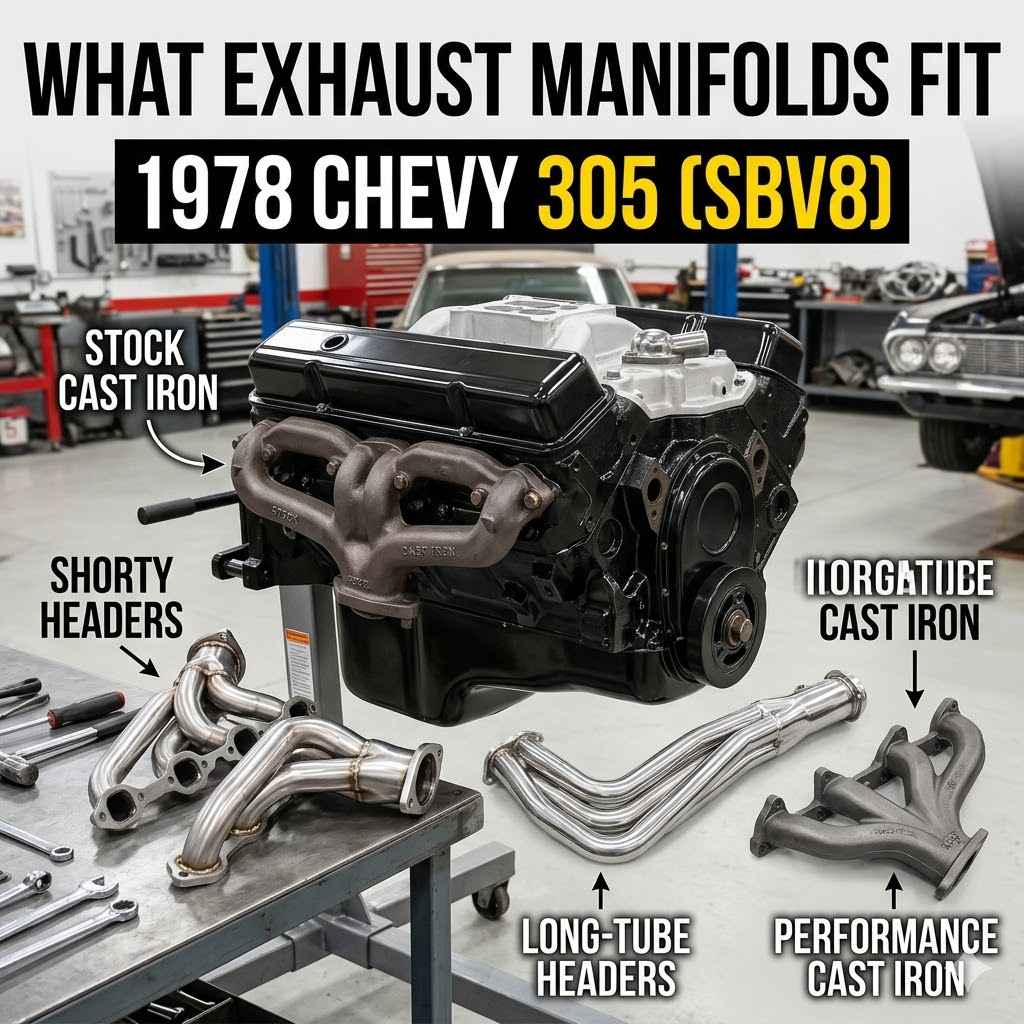
Original Equipment Manufacturer (OEM) exhaust manifolds are the parts that came with your 1978 Chevy 305 when it was new. These are typically made of cast iron and are designed for durability and quiet operation. They meet the original factory specifications for fit and performance, making them a straightforward replacement if you want to maintain the vehicle’s original configuration.
OEM manifolds are often readily available through salvage yards or specialized classic car parts suppliers. While they are reliable, they are not designed for significant performance gains. Their primary focus is on meeting the original emissions and noise standards of the era.
If your current manifolds are cracked, warped, or leaking, replacing them with OEM parts is a solid, no-fuss option for restoring functionality.
One advantage of OEM manifolds is their perfect fit, as they were designed specifically for your vehicle. This can save time and frustration during installation. However, they can sometimes be harder to find in good condition for older vehicles, and their performance is limited.
If you plan on making other engine modifications, you might find OEM manifolds to be a bottleneck.
Pros of OEM Manifolds
- Guaranteed fitment for your 1978 Chevy 305.
- Designed for quiet operation and emissions compliance of the original era.
- Durable cast iron construction.
- Maintains original vehicle appearance.
Using original parts ensures your 1978 Chevy 305 remains true to its factory specifications. This is important for collectors or those who value authenticity. The cast iron material is known for its longevity when properly maintained, and the quiet operation is a bonus for a comfortable driving experience.
These manifolds are built to last and are a safe bet if you’re not looking for major performance upgrades.
Cons of OEM Manifolds
- Limited performance potential compared to aftermarket options.
- Can be difficult to find in good used condition.
- May be prone to cracking over time due to heat cycles.
- Weight can be higher than some aftermarket alternatives.
While durable, cast iron is also brittle and can crack under extreme temperature fluctuations or physical stress. Finding a used set that is free from cracks or warping can be challenging. If you are planning to upgrade your engine’s breathing capacity with a new camshaft or cylinder heads, the OEM manifolds might restrict airflow, preventing you from achieving your desired performance gains.
Aftermarket Exhaust Manifolds
Aftermarket exhaust manifolds offer a wider range of options, often focusing on improved performance, lighter weight, or a specific aesthetic. These can include cast iron performance manifolds or tubular headers. For a 1978 Chevy 305, aftermarket options can significantly boost horsepower and torque by improving exhaust flow.
Performance cast iron manifolds are often designed with larger ports and smoother internal casting to reduce backpressure. Tubular headers, made from steel or stainless steel tubing, offer the most significant performance gains by providing the smoothest and most direct path for exhaust gases to exit the engine. They are also often lighter than cast iron.
When choosing aftermarket parts, it’s essential to consider the intended use of your vehicle. If it’s a daily driver, a performance cast iron manifold might be a good balance. If you’re building a performance or race vehicle, headers are usually the preferred choice.
The choice also impacts sound, with headers typically producing a louder, more aggressive exhaust note.
Performance Cast Iron Manifolds
These are often a direct
They are generally more affordable than tubular headers and maintain a more classic appearance under the hood. Many performance cast iron manifolds are designed to bolt directly onto your existing exhaust system, simplifying installation. They are a good option if you want a bit more power without the extreme noise or radical look of headers.
One of the benefits of this type of manifold is their durability. They are still made from cast iron, so they offer good longevity. However, they are still heavier than headers and may not offer the same level of performance gain.
They are a solid upgrade for someone looking for a mild improvement without a complete exhaust system overhaul.
Tubular Headers
Tubular headers, often referred to simply as headers, are constructed from bent steel or stainless steel tubing. They are designed to provide the most direct and unrestricted path for exhaust gases from each cylinder to the collector. This significantly reduces exhaust backpressure, allowing the engine to “breathe” more easily.
The primary advantage of headers is the substantial increase in horsepower and torque they can provide. They are a popular choice for performance enthusiasts and racers. Headers come in various configurations, such as shorty headers (which are similar in length to stock manifolds and easier to fit) and long-tube headers (which offer the best performance but require more space and often custom exhaust modifications).
The material also matters. Mild steel headers are less expensive but can rust over time. Stainless steel headers are more corrosion-resistant and durable, making them a better long-term investment, though they are more costly upfront.
The sound produced by headers is typically louder and more aggressive than stock manifolds or cast iron replacements.
Compatibility and Fitment Considerations
When looking for aftermarket manifolds for your 1978 Chevy 305, compatibility is key. Manufacturers design their parts to fit specific engine families and chassis types. It’s crucial to confirm that the manifold you choose is listed for a Small-Block Chevrolet engine and, ideally, for your specific vehicle application or year range.
Factors like steering linkage, firewall clearance, and the type of chassis (e.g., truck vs. car) can influence which manifold design will fit without modification. Shorty headers are often designed to clear most stock steering and chassis components, making them a popular choice for ease of installation.
Long-tube headers may require modifications to the exhaust system and can sometimes interfere with crossmembers or steering components.
Always double-check the manufacturer’s fitment guide or consult with the retailer before purchasing. This can prevent headaches and ensure you get a part that bolts up correctly. Some aftermarket manifolds may also require specific gaskets or hardware, which should be noted.
Types of Exhaust Manifolds That Fit
For your 1978 Chevy 305, you have several types of exhaust manifolds that will physically bolt up and function correctly. The primary consideration is the Small-Block Chevrolet engine family that your 305 belongs to. Most manifolds designed for SBC V8s will fit the bolt pattern on the cylinder heads.
The main differences between these types lie in their material, design, and the performance they offer. Understanding these variations will help you choose the best option for your needs, whether you prioritize originality, cost, or maximum performance. We’ll cover the common types that are compatible with your engine.
Standard Cast Iron Manifolds
These are the most basic and common type, similar to what your 1978 Chevy 305 likely came with from the factory. They are made from cast iron and are designed for durability and quiet operation. They bolt directly to the engine block and are typically connected to standard exhaust pipes via a flange and gasket.
If your current manifolds are damaged or you simply need a replacement to get your vehicle back to stock, standard cast iron manifolds are the way to go. They are readily available from many auto parts suppliers and are usually the most affordable option. Their design is functional and meets the basic requirements of directing exhaust gases away from the engine.
While not designed for performance, they are reliable for everyday driving. The weight of cast iron can be a downside for some enthusiasts, but it also contributes to their robustness. They are a safe and practical choice for maintaining your classic Chevy.
Performance Cast Iron Manifolds
These are an upgraded version of the standard cast iron manifolds. They feature larger internal passages and smoother casting compared to stock manifolds. This improved design allows exhaust gases to flow more efficiently, leading to a slight increase in horsepower and torque.
They offer a good balance between performance improvement and ease of installation, as they generally maintain a similar form factor to stock manifolds and bolt directly onto your existing exhaust system. They are a great option if you want a noticeable performance boost without going to full headers, and they can often retain a more stock appearance under the hood.
Many performance cast iron manifolds are designed to work with stock or mildly modified engines. They are a step up from OEM without requiring extensive modifications to your exhaust system or chassis. Their cast iron construction still offers good durability and heat resistance.
Tubular Headers (Shorty and Long-Tube)
Tubular headers are constructed from bent metal tubes, usually steel or stainless steel, that connect directly to each exhaust port and merge into a collector. They provide the least restrictive path for exhaust gases, offering the most significant performance gains.
Shorty Headers are designed to be a more direct replacement for stock manifolds, often clearing most factory components. They offer a good performance increase over stock and are easier to install than long-tube headers. They are a popular choice for street-driven vehicles where space and clearance are concerns.
Long-Tube Headers are longer and have larger diameter tubing that swoops down and merges into a collector. They offer the best performance gains, especially at higher RPMs, but typically require more space, may necessitate modifications to the exhaust system, and can sometimes interfere with steering or crossmember clearance. They are often preferred for dedicated performance or racing applications.
Material Considerations for Headers
When choosing tubular headers, the material is an important factor to consider. The two most common materials are mild steel and stainless steel.
Mild Steel Headers are generally less expensive. However, they are more prone to rust and corrosion over time, especially in humid climates or if exposed to road salt. They typically have a black or silver ceramic coating to offer some protection, but this coating can eventually wear or burn off.
Stainless Steel Headers are more expensive upfront but offer superior corrosion resistance and longevity. They are less likely to rust and can maintain their appearance for a longer period. For a vehicle that might see year-round use or be driven in challenging conditions, stainless steel is often the preferred choice for its durability.
The quality of the welds and the thickness of the tubing also contribute to the overall durability and performance of headers. High-quality headers are a worthwhile investment for the performance they provide and their ability to withstand the rigors of engine operation.
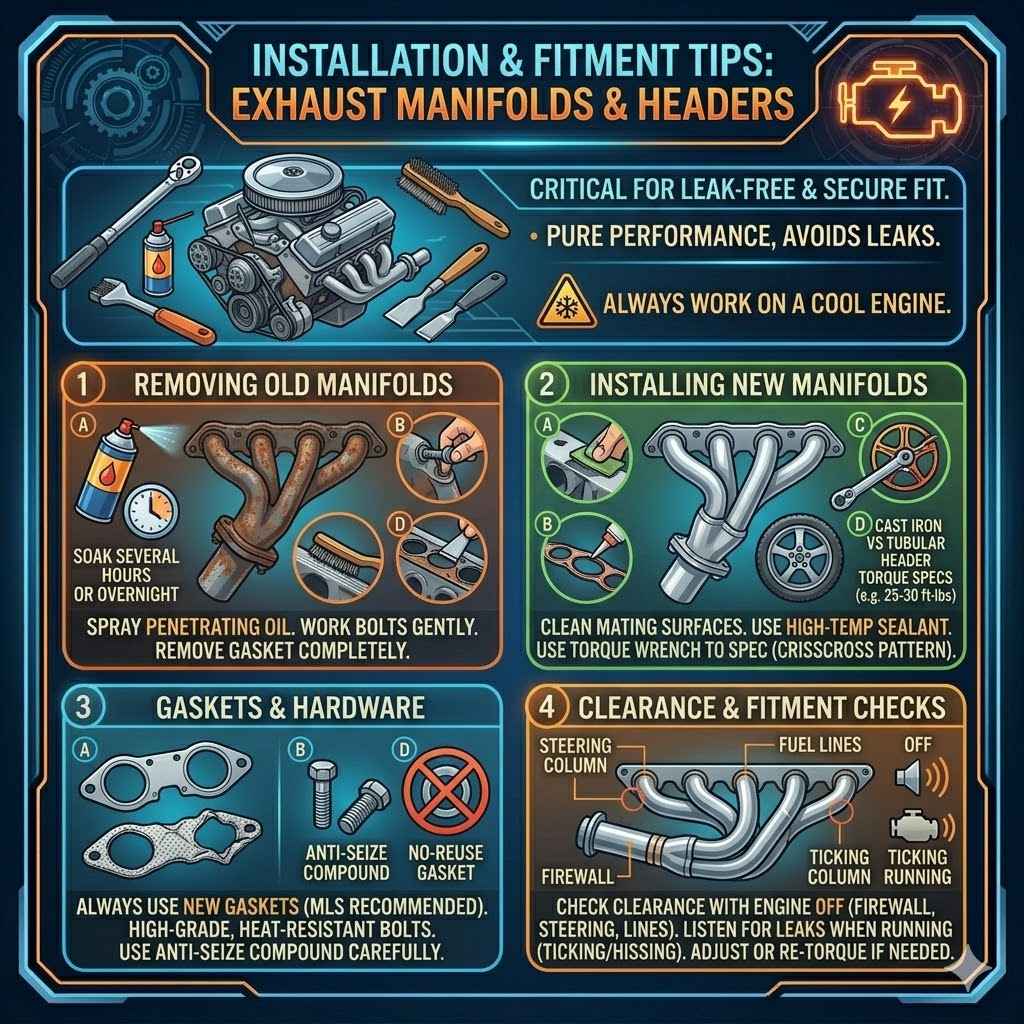
Installation and Fitment Tips
Installing exhaust manifolds, whether cast iron replacements or tubular headers, requires careful attention to detail to ensure a leak-free and secure fit. This is a critical step for proper engine performance and to avoid annoying exhaust leaks that can affect emissions and driveability.
Before you start, gather the necessary tools and parts. This includes new manifold gaskets, appropriate nuts and bolts (often specific grades for high heat), penetrating oil for stubborn bolts, and possibly a torque wrench. If you are installing headers, you might also need new exhaust adapters or custom pipes.
Always work on a cool engine. Trying to remove old manifolds from a hot engine can lead to burns and can make bolts seize up even more. Patience is key, especially when dealing with rusted fasteners on a vehicle from the 1970s.
Removing Old Manifolds
Start by spraying all the manifold bolts with a good penetrating oil. Let it soak for several hours or even overnight for best results. This helps to loosen any rust or corrosion that has built up over the years.
When you begin to remove the bolts, work them back and forth gently. If a bolt feels like it’s going to break, stop and apply more penetrating oil. Sometimes, using a wire brush to clean the threads of exposed bolts can also help.
If a bolt does break, you may need to use a bolt extractor or drill it out, which adds complexity.
Once all the bolts are removed, carefully pry the manifold away from the cylinder head. Be gentle, as old cast iron can be brittle. If it’s stuck, a few taps with a rubber mallet might help.
Remove any old gasket material from the cylinder head surface to ensure a clean mating surface for the new manifold.
Installing New Manifolds
When installing new manifolds, begin by cleaning the mating surfaces on the cylinder heads thoroughly. Any old gasket material, rust, or debris can prevent a proper seal and lead to exhaust leaks.
Apply a thin, even layer of high-temperature exhaust sealant or gasket dressing to the new manifold gasket. Place the gasket onto the cylinder head or the manifold, depending on the gasket design. Then, carefully position the new manifold onto the head.
Finger-tighten all the bolts initially.
Use a crisscross pattern when tightening the bolts, just like tightening lug nuts on a wheel. This ensures even pressure across the gasket, creating a better seal. It’s highly recommended to use a torque wrench and tighten the bolts to the manufacturer’s specifications.
For cast iron manifolds, this is typically around 25-30 foot-pounds, but always check your specific manifold’s recommendations.
If you are installing tubular headers, follow the manufacturer’s specific installation instructions, as they may have different torque values or require special hardware. Ensure that the header tubes have adequate clearance around steering components, the firewall, and the exhaust system to prevent vibration or contact.
Gaskets and Hardware
Using the correct gaskets and hardware is essential for a good seal. Most exhaust manifolds use multi-layer steel (MLS) or composite gaskets for their ability to handle high temperatures and vibrations. Always use new gaskets when installing new manifolds.
Reusing old gaskets is a recipe for exhaust leaks.
The bolts that attach the manifold to the head are subjected to extreme heat cycles. It’s a good practice to use high-grade, heat-resistant hardware. Many aftermarket header kits come with appropriate hardware.
If you are using stock manifolds, ensure the bolts are in good condition; consider replacing them if they show signs of rust or wear.
Some enthusiasts recommend using anti-seize compound on the threads of manifold bolts. This can make future removal easier. However, be careful not to get too much on the threads, as it can affect torque readings.
Always torque to spec to avoid overtightening, which can warp the manifold or damage the cylinder head.
Clearance and Fitment Checks
After installation, it’s crucial to perform a thorough clearance check. With the engine off, visually inspect the manifolds or headers to ensure they are not contacting any other engine components, the firewall, or suspension parts. Pay close attention to steering columns, brake lines, and fuel lines.
For tubular headers, especially long-tube designs, clearance can be a common issue. You might need to adjust or modify parts of your exhaust system, or even the vehicle’s crossmember, to ensure proper fit. Shorty headers generally offer better clearance and are less likely to cause issues.
Once the engine is running, listen for any ticking or hissing sounds, which indicate exhaust leaks. Small leaks can sometimes seal themselves over time, especially with cast iron manifolds, but persistent leaks should be addressed by re-torquing the bolts or checking the gasket for damage or improper seating.
FAQ
Question: What kind of exhaust manifolds came stock on a 1978 Chevy 305?
Answer: Your 1978 Chevy 305 most likely came with cast iron exhaust manifolds. These were designed for durability and to meet the emissions and noise standards of the time.
Question: Can I use exhaust manifolds from a 1978 Chevy 350 on my 305?
Answer: Yes, in most cases, exhaust manifolds designed for a Small-Block Chevrolet 350 engine will fit a 1978 305 engine because they share the same basic bolt pattern and cylinder head design for that era.
Question: Do headers make a big difference on a 1978 Chevy 305?
Answer: Yes, tubular headers can make a significant difference in performance, offering more horsepower and torque by improving exhaust flow. They can also change the exhaust note to be louder and more aggressive.
Question: What is the difference between shorty and long-tube headers?
Answer: Shorty headers are shorter and designed for easier installation and better clearance, while long-tube headers are longer and provide more performance gains, especially at higher RPMs, but may require more modification for fitment.
Question: How tight should I torque my exhaust manifold bolts on my 1978 Chevy 305?
Answer: For cast iron manifolds, torque is typically around 25-30 foot-pounds, applied in a crisscross pattern. Always consult the specific manifold manufacturer’s recommendations for the exact torque specification.
Conclusion
Finding the right exhaust manifolds for your 1978 Chevy 305 is straightforward once you understand your engine and the available options. Standard cast iron, performance cast iron, and tubular headers all fit the basic bolt pattern. Choose based on your goals for performance, budget, and installation ease.
Related pick: Check today's price on Amazon