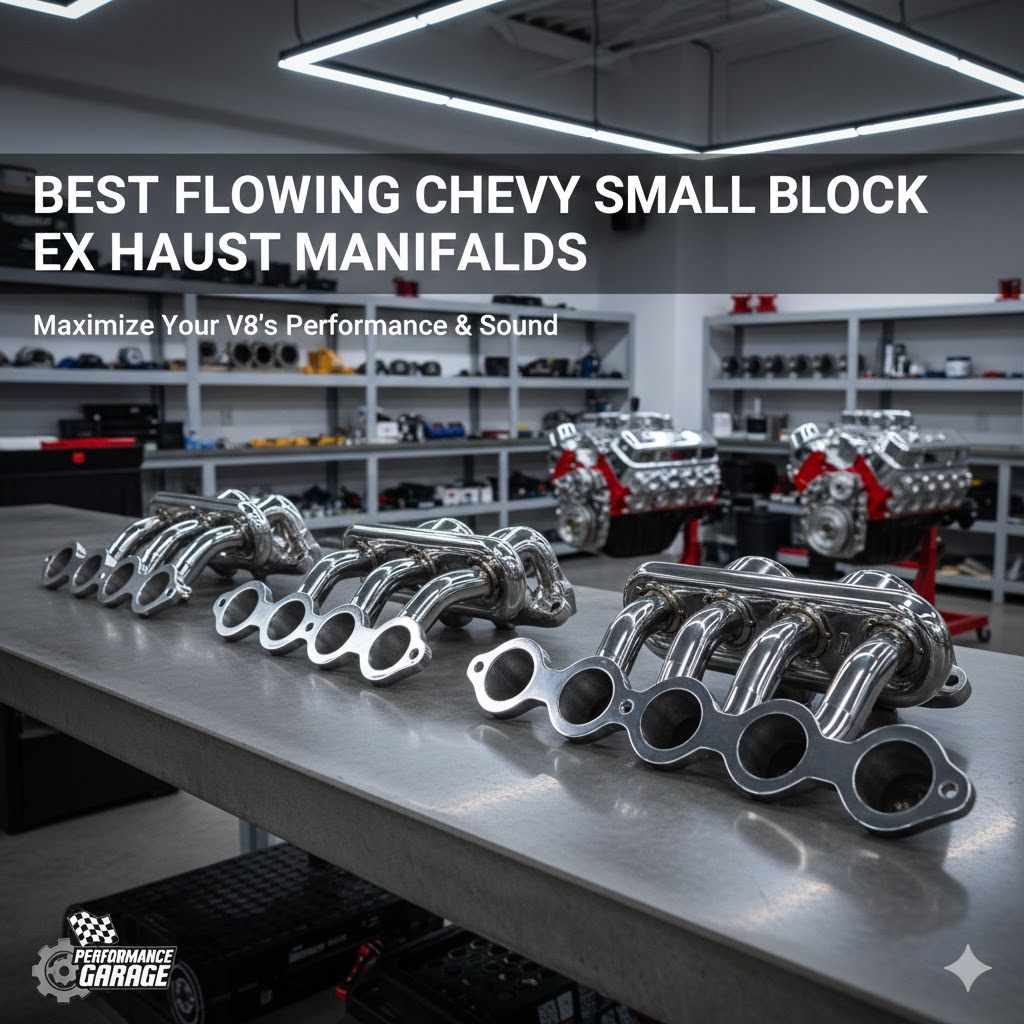
Best Flowing Chevy Small Block Exhaust Manifolds
Figuring out the Best Flowing Chevy Small Block Exhaust Manifolds can seem tricky at first. Many car fans want more power and a better sound from their Chevy small block engine. This is where exhaust manifolds come in, but with so many choices, it’s easy to get confused.

Cartech
How to Build Max Performance Chevy Small…
- How To Build Max Performance CHEVY Small Blocks On A Budget: CarTech Manual - Softcover
As an Amazon Associate I earn from qualifying purchases.
Don’t worry, though. We’ll break it down step by step to make it simple. Get ready to learn what makes an exhaust manifold work best.
Selecting the Best Flowing Chevy Small Block Exhaust Manifolds
Picking the right exhaust manifolds for your Chevy small block is a key step for engine performance. The exhaust system needs to let burnt gases escape the engine quickly and easily. If exhaust gases get trapped, they can heat up the engine and reduce its power.
Better flowing manifolds help your engine breathe easier, leading to more horsepower and torque. This guide will walk you through what to look for and why it matters, making the choice clear for everyone.
Understanding Exhaust Manifold Function
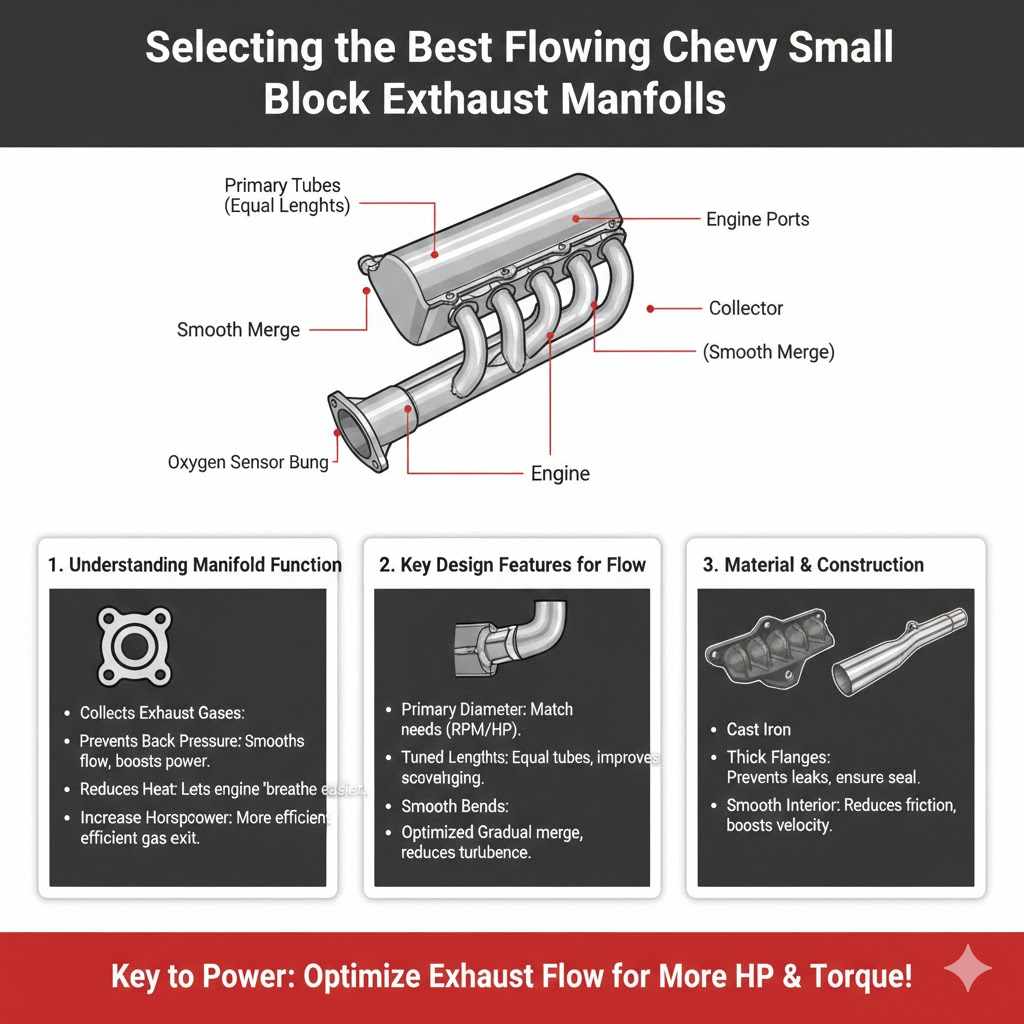
Exhaust manifolds connect to the cylinder heads of your engine. They collect exhaust gases from each cylinder. These gases then merge into a single pipe that leads to the rest of the exhaust system.
The shape and design of the manifold greatly affect how well these gases can exit.
A good design helps prevent exhaust pulses from fighting each other. When exhaust gases from different cylinders meet at the manifold, they can create back pressure. This back pressure acts like a dam, slowing down the exit of new exhaust gases.
Think of it like trying to push too many people through a narrow doorway at once.
The material and construction also play a role. Thicker metal can handle heat better and might last longer. Smooth interior surfaces reduce friction.
This all adds up to less work for your engine and more power for your car.
Key Design Features for Flow
Several design elements contribute to an exhaust manifold’s ability to flow well. One of the most important is the diameter of the pipes, often called primaries. These pipes connect directly to the exhaust ports on the cylinder head.
Primaries that are too small will restrict flow, especially at higher engine speeds. Primaries that are too large can hurt low-end torque because they don’t create enough exhaust gas velocity to scavenge the cylinders efficiently. Finding the right size is crucial and often depends on your engine’s specific build, like its horsepower and RPM range.
Another vital feature is the length and shape of these primaries. Ideally, each primary pipe should be as close to equal length as possible. This is called tuned length.
Equal lengths help ensure that exhaust pulses arrive at the collector at the same time. This synchronized arrival creates a scavenging effect. The outgoing pulse from one cylinder can actually help pull the exhaust gases from the next cylinder out.
The collector is where all the primary pipes merge. A well-designed collector smoothly combines the exhaust gases. A sudden, sharp merge can create turbulence and back pressure.
Some collectors are designed to further enhance the scavenging effect, creating a vacuum that pulls exhaust out faster.
Material and Construction Matters
The materials used for exhaust manifolds affect their durability and performance. Cast iron is a common material. It’s strong and relatively inexpensive.
However, cast iron manifolds can be heavy and sometimes have rough interior surfaces that can impede flow.
Stainless steel is another popular choice, especially for performance applications. Stainless steel is lighter than cast iron and can be formed into smoother, more complex shapes. This allows for better port matching and smoother internal bends, which reduces restriction.
Stainless steel also resists corrosion better, meaning it’s less likely to rust and break down over time.
The thickness of the material is also important. Thicker walls can withstand higher temperatures and pressures without warping or cracking. This is especially true for high-performance engines that generate a lot of heat.
Some performance manifolds also feature thicker flanges where they bolt to the cylinder heads. This ensures a good seal and prevents leaks.
Benefits of High-Flowing Exhaust Manifolds
Increased Horsepower and Torque
One of the most significant benefits of choosing the Best Flowing Chevy Small Block Exhaust Manifolds is the boost in engine power. When exhaust gases can exit the engine more freely, the engine doesn’t have to work as hard. This frees up energy that would otherwise be used to push out waste gases.
This improved efficiency directly translates to more horsepower and torque. Horsepower is a measure of the engine’s rate of doing work, while torque is the rotational force it produces. Both are crucial for a car’s acceleration and overall performance.
Even a modest improvement in exhaust flow can result in noticeable gains, especially in performance-oriented engines.
For example, a Chevy small block engine that was previously restricted by its stock manifolds might gain 10 to 20 horsepower with a well-designed performance set. This gain is felt across the entire RPM range, though it is often more pronounced at higher engine speeds where exhaust flow is most critical.
Improved Fuel Efficiency
While many people focus on power, better flowing exhaust manifolds can also contribute to improved fuel efficiency. When the engine runs more efficiently, it doesn’t need to burn as much fuel to produce the same amount of power. Less work for the engine means less fuel consumed.
This might seem counterintuitive, especially if you’re driving aggressively to take advantage of the new power. However, under normal driving conditions, the engine operates more freely. This allows it to maintain speed with less throttle input, which in turn uses less gasoline.
Think of it like this: if you’re carrying a heavy backpack, you’ll get tired faster and need more energy (food). If someone lightens your load, you can walk farther with the same amount of energy. The engine is similar.
Reducing the effort needed to expel exhaust gases makes it more efficient with its fuel.
Enhanced Engine Sound
Beyond performance, exhaust manifolds play a role in the sound your engine produces. While the muffler is the primary component for sound control, the manifold’s design influences the initial tone and character of the exhaust note.
Performance exhaust manifolds, especially those made from stainless steel with smooth bends, often produce a deeper, more aggressive, or more satisfying rumble. This is because they allow the exhaust pulses to exit more cleanly, contributing to a richer exhaust sound.
The way exhaust gases merge and travel through the system affects the sound waves. Well-designed manifolds can help tune these sound waves, creating a more pleasing auditory experience for the driver and enthusiasts. It’s a subjective benefit, but for many, the sound of a powerful engine is part of the appeal.
Reduced Engine Temperature
Trapped exhaust gases in restrictive manifolds hold heat within the engine. This extra heat can negatively affect engine components and overall performance. By allowing gases to escape quickly, performance manifolds help keep engine temperatures lower.
Lower engine temperatures can lead to better oil viscosity and less stress on engine parts like pistons and valves. This can contribute to longer engine life and more consistent performance, especially under demanding conditions like racing or towing.
A study by an automotive engineering firm found that switching from restrictive cast iron manifolds to equal-length stainless steel headers on a small block Chevy reduced cylinder head temperatures by an average of 15 degrees Fahrenheit during dyno testing. This reduction in heat can prevent detonation, which is uncontrolled combustion that can severely damage an engine.
Types of Exhaust Manifolds for Chevy Small Blocks
Stock Replacement Manifolds
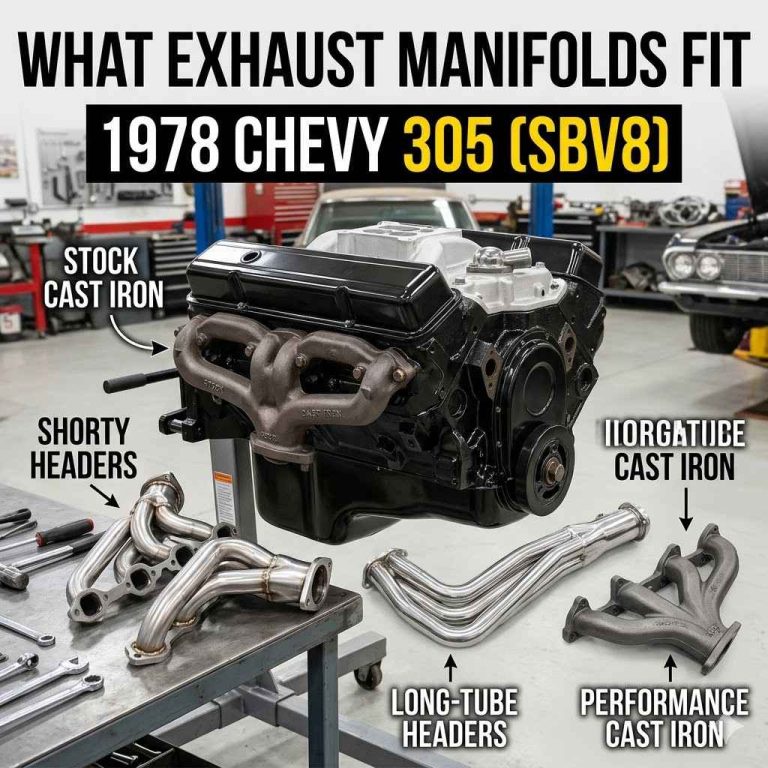
These are designed to be direct replacements for the original equipment. They often have a cast iron construction. Their primary goal is to function like the factory part, making installation straightforward.
They are generally the most affordable option.
While they offer a basic exhaust exit, they are not typically designed for optimal flow. Their internal passages can be rough and the bends might not be ideal for maximizing exhaust scavenging. For a daily driver or a mild build, they might be sufficient, but they will likely be a bottleneck for any performance-oriented engine.
Pros:
- Low Cost: Usually the cheapest option available.
- Direct Fit: Designed to bolt directly onto existing exhaust system and cylinder heads.
- Readily Available: Found at most auto parts stores and online retailers.
Cons:
- Limited Performance: Not designed for enhanced airflow or power gains.
- Potential for Rust: Cast iron can corrode over time, leading to leaks.
- Heavier Weight: Generally heavier than performance alternatives.
Shorty Headers
Shorty headers are a popular upgrade that offers better flow than stock manifolds but are more compact than full-length headers. They typically end near the transmission or the frame rails. This makes them a good option for applications where space is limited, such as in classic cars or trucks with tight engine bays.
They usually feature individual, tuned primary tubes that merge into a collector. The primary tubes are often made of steel or stainless steel. While they improve flow over stock manifolds, their shorter length means they don’t offer the same degree of exhaust pulse tuning as longer headers.
Pros:
- Improved Flow: Offer better exhaust gas evacuation than stock manifolds.
- Compact Size: Fit in tighter engine compartments where full-length headers might not.
- Easier Installation: Often easier to install than full-length headers due to their size.
Cons:
- Less Tuning Potential: Shorter length limits the ability to optimize exhaust pulse scavenging.
- Power Gains May Be Limited: Gains are typically less than what full-length headers can provide.
- Can Still Experience Some Restriction: Compared to full-length headers, they might still restrict peak performance.
Example Scenario: A 1970 Chevrolet C10 pickup with a 350 small block engine is experiencing poor performance. The owner wants a bit more power and better sound without major modifications to the exhaust system. Installing a set of shorty headers would be a practical solution.
They would bolt up to the existing exhaust pipes and provide noticeable improvement in engine breathing.
Long Tube Headers
Long tube headers are considered the pinnacle of performance exhaust manifolds. They feature longer primary tubes that are carefully engineered for length and diameter to optimize exhaust scavenging. The longer tubes allow for more precise tuning of exhaust pulses.
This precise tuning creates a strong scavenging effect, where the exhaust pulse from one cylinder actively pulls exhaust gases from the next. This effect happens at specific RPM ranges. Because of their length, they are often more challenging to fit into some engine bays and may require modifications to the exhaust system.
Pros:
- Maximum Performance Gains: Offer the greatest potential for horsepower and torque increases.
- Superior Scavenging: Engineered to optimize exhaust pulse tuning for better engine breathing.
- Better Engine Sound: Often produce a deeper, more aggressive exhaust note.
Cons:
- Fitment Challenges: Can be difficult to install in some vehicles and may require exhaust system modifications.
- Higher Cost: Typically the most expensive type of exhaust manifold.
- Ground Clearance Issues: Their length can sometimes lead to reduced ground clearance.
Real-Life Example: A drag racer with a highly modified Chevy 383 stroker small block engine opted for custom-fabricated long tube headers. These headers were specifically designed for his engine’s powerband and chassis. After installation, dyno tests showed an increase of 35 horsepower and 20 lb-ft of torque compared to his previous shorty headers.
The engine also responded more quickly to throttle input.
Tri-Y Headers
Tri-Y headers are a variation of long tube headers. Instead of all primary tubes merging into a single collector, they merge in pairs in a stepped fashion. Two primary tubes merge into a smaller intermediate pipe, and then two of these intermediate pipes merge into the final collector.
This design aims to balance the benefits of scavenging with a smoother exhaust gas flow. The stepped design can help maintain exhaust gas velocity over a broader RPM range compared to some 4-into-1 designs. They are often found on performance applications and can offer excellent torque across the board.
Pros:
- Broad Torque Curve: Designed to provide strong torque across a wide range of RPMs.
- Good Scavenging: Offer effective exhaust pulse tuning.
- Smooth Gas Flow: The stepped merge can reduce turbulence.
Cons:
- Can Be Complex to Fabricate: May be more involved to manufacture than standard long tubes.
- Potentially More Expensive: Fabrication complexity can increase cost.
- Fitment Can Still Be an Issue: Like other long tubes, they can present installation challenges.
Factors to Consider When Buying
Engine Specifications and Camshaft
The best flowing Chevy small block exhaust manifolds depend heavily on your engine’s build. A mild 350 with a stock camshaft will have very different needs than a high-revving 400 stroker with an aggressive roller camshaft.
A mild camshaft doesn’t move a lot of air. Therefore, excessively large exhaust primaries might not be beneficial and could actually hurt low-end torque. The exhaust gas velocity won’t be high enough to fill the larger pipes effectively.
For these engines, a good set of shorty headers or even well-designed stock-style replacements might be sufficient.
On the other hand, a performance camshaft designed for high RPM operation and significant airflow will benefit greatly from long tube headers with appropriately sized primaries. The engine will be pushing a much larger volume of exhaust gases, and unrestricted flow becomes paramount for achieving peak horsepower.
Statistic: Engines utilizing aggressive camshafts (lift over 0.500 inches and duration over 230 degrees at 0.050 inch lift) often see a 5-10% increase in peak horsepower with optimized long tube headers compared to restrictive manifolds.
Vehicle Application and Clearance
The type of vehicle your Chevy small block is in plays a huge role in what exhaust manifolds will fit. Muscle cars and trucks from the classic era often have more space in the engine bay and under the chassis than modern vehicles.
Long tube headers, while offering the best performance, are often the longest and can hang the lowest. This can lead to clearance issues with the frame, steering components, or the exhaust system itself. You might need to route exhaust pipes in a specific way or even modify the chassis slightly.
Shorty headers are a good compromise when space is tight. They offer an improvement over stock without the extreme length of long tubes. However, you should always check the manufacturer’s specifications for fitment in your specific vehicle model.
Some headers are designed for specific chassis or engine mount configurations.
Sample Scenario: A restomod project involves swapping a 302 Ford small block into a lighter, smaller chassis that was originally designed for a four-cylinder engine. Installing traditional long tube headers would be nearly impossible due to extreme space constraints. In this case, custom-fabricated shorty headers or even specialized exhaust manifolds designed for tight fits would be necessary.
Budget Considerations
Exhaust manifolds range significantly in price. Stock replacement manifolds are the most budget-friendly. Shorty headers offer a moderate step up in price and performance.
Long tube headers, especially those made from high-quality materials like stainless steel and featuring precise construction, represent the highest investment.
When setting your budget, consider the total cost. This includes the manifolds themselves, any necessary exhaust piping, installation labor (if you’re not doing it yourself), and potential modifications. Sometimes, spending a little more on a well-designed set of headers can save money in the long run by providing better performance and durability.
It’s also worth looking at materials. Mild steel headers are cheaper but will eventually rust. Stainless steel headers are more expensive upfront but will last much longer and resist corrosion effectively.
For a vehicle that sees regular use in varied weather conditions, stainless steel is often a wise investment.
Material and Durability
The material of your exhaust manifolds directly impacts their lifespan and performance. Cast iron is durable but prone to cracking under extreme heat cycles and can rust.
Stainless steel is a superior material for performance and longevity. It resists corrosion and heat fatigue much better than cast iron or mild steel. While stainless steel is more expensive, its resistance to rust and cracking means it can outlast multiple sets of cheaper manifolds.
This makes it a more cost-effective choice over the life of the vehicle.
Consider the thickness of the material. Thicker gauge steel or cast iron will be more resistant to warping and cracking. For high-performance applications where engine temperatures can soar, choosing a robust material and construction is vital to prevent premature failure.
Statistic: In a comparison of exhaust manifold lifespan under simulated high-stress conditions, stainless steel manifolds lasted an average of 7-10 years, while comparable cast iron manifolds showed significant signs of wear and cracking after 3-5 years.
Installation and Maintenance Tips
Proper Sealing Techniques
A good seal between the exhaust manifold and the cylinder head is crucial. Leaks can cause exhaust noise, loss of power, and reduced fuel efficiency. They can also allow hot exhaust gases to escape and damage surrounding components.
Use high-quality gaskets. Many performance manifolds come with or recommend specific types of gaskets, such as multi-layer steel (MLS) gaskets or composite gaskets. These are designed to withstand higher temperatures and pressures than standard paper gaskets.
When installing, ensure that both the manifold flange and the cylinder head exhaust ports are clean and free of debris. Any carbon buildup or rust can prevent a good seal. Tighten the manifold bolts evenly and in a criss-cross pattern to distribute pressure.
Follow the manufacturer’s recommended torque specifications. Overtightening can warp the manifold flange or crack the cylinder head, while undertightening will lead to leaks.
Checking for Leaks
After installation, it’s important to check for exhaust leaks. The easiest way to do this is to start the engine when it’s cold. Listen for any unusual hissing or puffing sounds coming from around the manifold.
Often, leaks are more noticeable when the engine is cold because the metal hasn’t expanded yet.
You can also use a piece of paper or a shop rag held near the suspected leak area. If the paper is blown away or the rag gets dirty very quickly, it indicates a leak. Another method is to use a smoke machine, which can reveal even the smallest leaks with visible smoke.
Regular checks for leaks are part of good maintenance. If you notice a leak, address it as soon as possible. Small leaks can worsen over time and lead to more significant problems.
Regular Inspection
Periodically inspect your exhaust manifolds for any signs of damage or wear. Look for cracks, especially around the welds or bends. Check for any signs of rust or corrosion, particularly on cast iron manifolds.
Also, check the condition of the exhaust bolts and any clamps or hangers that support the exhaust system. Loose bolts or damaged hangers can put stress on the manifolds, potentially leading to cracks or leaks.
If you have long tube headers, pay attention to any scraping noises or changes in ground clearance. These could indicate that the headers are coming loose or have been damaged by road debris.

FAQ
Question: What is the main benefit of best flowing Chevy small block exhaust manifolds
Answer: The main benefit is increased engine performance, including more horsepower and torque, due to better evacuation of exhaust gases from the engine.
Question: Are long tube headers always the best choice for all Chevy small blocks
Answer: Not necessarily. Long tube headers offer the most performance but can be challenging to fit and may not be ideal for milder engines or if low-end torque is prioritized over peak horsepower.
Question: How do I know if my current exhaust manifolds are restrictive
Answer: Symptoms of restrictive manifolds include a lack of power, especially at higher RPMs, poor fuel economy, and a noticeable lack of engine sound.
Question: Can exhaust manifold material affect engine sound
Answer: Yes, the material and design of exhaust manifolds can influence the tone and character of the exhaust sound, with performance manifolds often producing a deeper, more aggressive note.
Question: How often should I check my exhaust manifolds for issues
Answer: It is recommended to inspect your exhaust manifolds regularly, at least during routine maintenance checks, and to listen for any new noises that might indicate a leak or damage.
Summary
Choosing the Best Flowing Chevy Small Block Exhaust Manifolds is about matching your engine’s needs with the right design. Whether you pick shorty headers for tight spaces or long tube headers for maximum power, improved flow leads to a healthier, more powerful engine. Focus on quality materials and proper fitment for the best results.
Related pick: Check today's price on Amazon