

Is ATP Cast Iron Exhaust Manifolds Made in the USA?
Many car owners wonder, “Is ATP Cast Iron Exhaust Manifolds Made in the USA?” This question can be tricky for folks new to auto parts. Sometimes finding out where parts are made isn’t straightforward. This post makes it simple for you.
We will walk through this step-by-step. Get ready to find the answers you need easily.
ATP Cast Iron Exhaust Manifolds Origin Details
Understanding the origin of automotive parts like ATP cast iron exhaust manifolds is important for many consumers. People want to know if they are supporting domestic manufacturing or if parts come from overseas. This information often influences purchasing decisions based on factors like quality perception, economic support, and supply chain considerations.
The ATP brand is known for a wide range of vehicle parts, and pinpointing the exact manufacturing location for specific components can sometimes be a challenge for consumers seeking transparency.
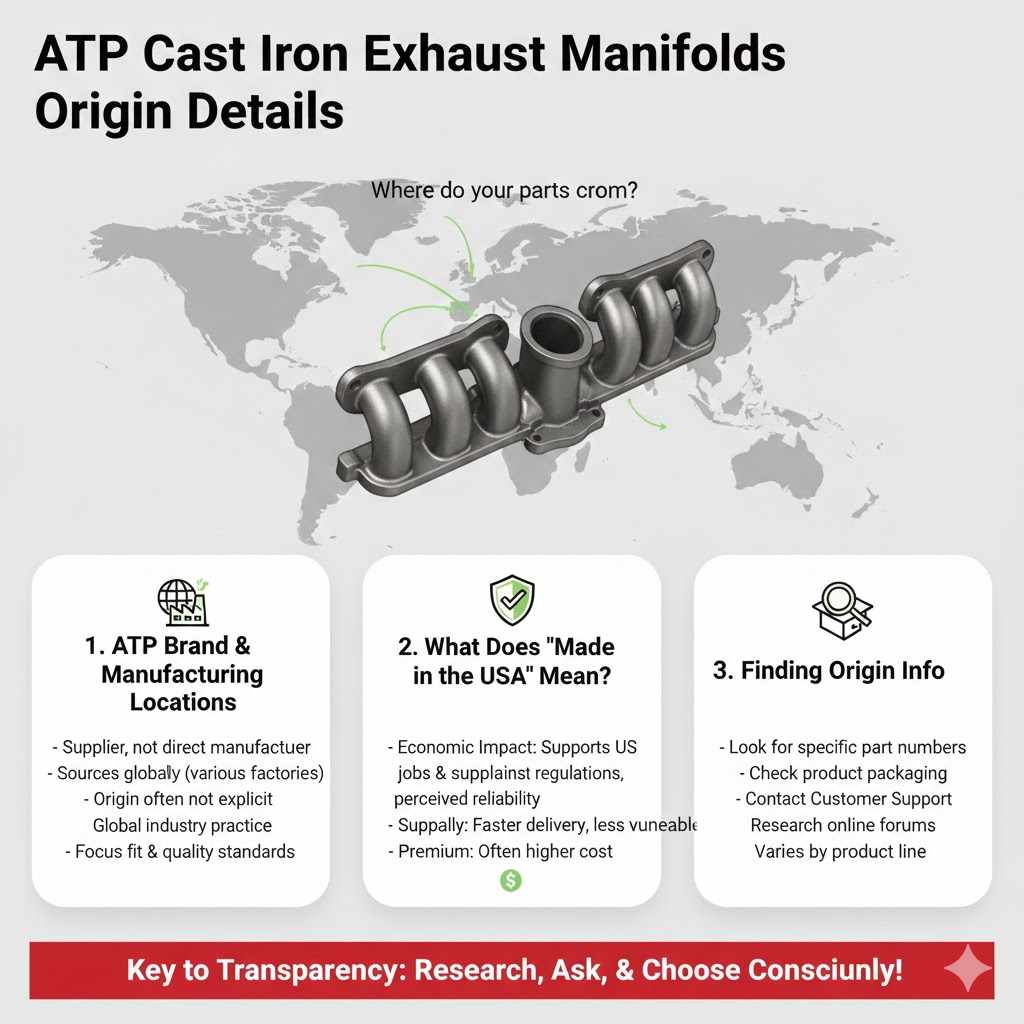
ATP Brand and Manufacturing Locations
ATP Automotive, as a brand, offers a diverse catalog of replacement parts for a wide variety of vehicles. They are a supplier rather than a direct manufacturer for many items. This means they source parts from different factories and assemblers.
The locations of these factories can vary significantly. For a specific part like an ATP cast iron exhaust manifold, the manufacturing origin might not always be explicitly stated on the product packaging or in their general marketing materials. This can lead to confusion and the need for deeper investigation by consumers.
The automotive aftermarket industry is global. Many companies, including those selling parts under well-known brand names, rely on international manufacturing to manage costs and production capacity. This is a common practice across many industries, not just automotive.
For consumers, this means that a part sold by an American company might be manufactured in another country. The focus for many brands is on meeting quality standards and ensuring parts fit and perform as expected, regardless of where they are produced.
When investigating the origin of ATP cast iron exhaust manifolds, it is essential to look at the specific product line or part number. Sometimes, a brand might have multiple manufacturing partners or even multiple factories producing the same type of component. This can lead to variations in where a particular manifold was made, even if it’s the same part number.
Checking individual product listings or contacting customer support can sometimes provide more granular details.
What Does ‘Made in the USA’ Mean for Parts
The label “Made in the USA” carries significant weight for many consumers. It often implies support for domestic jobs, adherence to certain quality and environmental standards, and potentially shorter shipping distances. For automotive parts, this can translate to perceived reliability and durability.
However, the exact criteria for this label can sometimes be complex, with different regulations and interpretations.
- Economic Impact: When automotive parts are manufactured domestically, it directly contributes to the U.S. economy by creating jobs in manufacturing, engineering, and support sectors. This also helps build a strong domestic supply chain, which can be more resilient to global disruptions. Consumers who prioritize supporting local economies often seek out parts labeled “Made in the USA” as a way to channel their spending toward American businesses and workers. This choice reflects a desire to bolster national industrial capabilities and reduce reliance on foreign manufacturing.
- Quality Assurance and Standards: Manufacturers operating in the United States are typically subject to stringent quality control measures and regulatory oversight. This can include labor laws, environmental regulations, and consumer protection standards. While manufacturers globally aim for high quality, the perception among some consumers is that products made in the U.S. are inherently held to a higher standard due to these established frameworks. This perception can influence buying choices, with some customers willing to pay a premium for parts they believe are made under stricter, more verifiable conditions.
- Supply Chain and Logistics: Parts manufactured in the USA generally have shorter shipping routes to reach American consumers and repair shops. This can lead to faster delivery times and reduced transportation-related environmental impact. A shorter supply chain also means less vulnerability to international shipping delays, port congestion, or geopolitical issues that can affect goods coming from overseas. This logistical advantage can be a significant factor for mechanics and DIY enthusiasts who need parts quickly to complete repairs and minimize vehicle downtime.
Challenges in Identifying Manufacturing Origin
In today’s globalized market, identifying the exact country of origin for automotive components can be challenging. Brands often work with a network of suppliers, and these suppliers may have manufacturing facilities in various countries. The packaging and product information might not always clearly state the manufacturing location.
This lack of transparency can leave consumers searching for reliable information.
For example, a company might be headquartered in the United States and design its products there. However, the actual manufacturing process might be outsourced to a facility in another country where production costs are lower. This is a common business model across many industries.
When a part is labeled with a brand name that is based in a particular country, consumers often assume the product is also made there. This assumption, while understandable, is not always accurate in the complex world of international manufacturing.
The information available on product listings from online retailers can also be inconsistent. Some sellers might provide detailed manufacturing information, while others may only list the brand name or general product category. This variability makes it difficult for consumers to compare products based on origin.
Additionally, the term “assembled in” versus “made in” can create further confusion, as these phrases have different meanings and implications regarding the extent of domestic manufacturing involvement.
The Role of Aftermarket Suppliers
Aftermarket suppliers, like those offering ATP cast iron exhaust manifolds, play a crucial role in the automotive parts ecosystem. They aggregate products from various manufacturers and distribute them to consumers and professional mechanics. Their business model often involves sourcing parts that meet specific performance and quality criteria, but the primary driver is often a balance between cost, availability, and compatibility with a wide range of vehicles.
- Product Sourcing Strategies: Aftermarket suppliers typically engage in extensive sourcing to find manufacturers that can produce parts meeting their specifications at a competitive price. This often involves exploring global markets to identify factories with the necessary expertise, technology, and production capacity. The decision of where to source a part is usually based on a combination of factors including raw material costs, labor expenses, economies of scale, and the supplier’s ability to meet strict quality control standards and delivery timelines.
- Quality Control and Testing: While many aftermarket parts are manufactured overseas, reputable suppliers implement rigorous quality control procedures. This often involves working closely with their manufacturing partners, conducting regular factory audits, and performing independent testing of parts before they are approved for sale. The goal is to ensure that parts meet or exceed original equipment manufacturer (OEM) standards for fit, form, and function, even if they are not made in the country where the brand is based.
- Customer Service and Information Dissemination: A key function of aftermarket suppliers is to provide customer support and relevant product information. This includes assisting customers with part selection, installation queries, and, when possible, details about manufacturing origins. However, the depth of information available can vary. Some suppliers may be more forthcoming about manufacturing locations than others, depending on their business strategy and the level of detail they can reliably obtain from their own supply chain.
Researching Specific ATP Part Numbers
To determine where a specific ATP cast iron exhaust manifold is made, it often requires looking beyond general brand information. Focusing on the particular part number is key. Each part number corresponds to a unique product, and its manufacturing origin might differ from other parts within the same brand’s catalog.
This detailed approach is necessary because ATP Automotive, like many parts distributors, sources its products from various manufacturers worldwide.
When you find an ATP cast iron exhaust manifold you are interested in, try to locate the exact part number. This number is usually found on the product’s packaging, on the part itself, or in the product description on an online retailer’s website. Once you have this number, you can then use it to perform more targeted searches.
Some manufacturers provide detailed product specifications or FAQs on their official websites that might list manufacturing details.
Online automotive parts retailers can be a valuable resource. Often, detailed product descriptions include information about the country of origin. If this information is not readily available, contacting the retailer’s customer service department directly is a good next step.
They may be able to look up the manufacturing details for you. Similarly, reaching out to ATP Automotive’s customer support can provide direct insight into the sourcing and manufacturing of their specific products.
Leveraging Online Retailer Information
Online retailers are often the primary point of purchase for ATP cast iron exhaust manifolds. These platforms provide extensive product catalogs and descriptions. When searching for a specific part, pay close attention to the product details section.
Many retailers include a “Country of Origin” or “Manufacturer” field. This is often the most direct way to find out where a part was made.
- Product Descriptions: E-commerce websites for auto parts usually list key specifications for each item. For an exhaust manifold, this might include material (cast iron), vehicle fitment, and sometimes the country of manufacture. Look for phrases like “Made in USA,” “Manufactured in China,” “Product of Mexico,” or similar indicators. These descriptions are compiled by the retailer based on information provided by the brand or distributor.
- Customer Reviews and Q&A: Sometimes, other customers have asked about the origin of a part in the Q&A section of a product page. Reading through these questions and answers can provide insights. If no one has asked, you can also post your own question. Other shoppers or even representatives from the seller might see it and provide an answer. Customer reviews may also occasionally mention the perceived quality or origin of a part, although this is usually anecdotal.
- Retailer Contact Information: If the product description is unclear or missing information about the country of origin, most online retailers provide contact details for their customer service department. Reaching out via email or phone can yield direct answers. Be prepared to provide the specific part number of the ATP cast iron exhaust manifold you are interested in. The retailer can then consult their internal databases or contact the brand directly to get the information you need.
Contacting ATP Directly for Information
For the most definitive answers regarding the manufacturing location of ATP cast iron exhaust manifolds, contacting ATP Automotive directly is often the best course of action. While online retailers and product packaging can provide clues, direct communication with the brand ensures you are getting information straight from the source. This can prevent misinformation and provide peace of mind about your purchase.
ATP Automotive typically has a customer service department that handles inquiries from consumers and professional installers. You can usually find their contact information on their official website. This might include a phone number, an email address, or a contact form.
When you reach out, be ready to provide the specific part number for the exhaust manifold you are interested in. This helps them quickly identify the product and access relevant manufacturing data.
Questions about “Is ATP Cast Iron Exhaust Manifolds Made in the USA?” can be directly addressed by their support team. They can often clarify whether a particular product line is manufactured domestically, imported, or sourced from multiple international locations. This direct inquiry is more reliable than relying solely on third-party information, which can sometimes be outdated or incomplete.
Their transparency can help you make an informed decision about your purchase.
ATP’s Official Statement on Sourcing
Major automotive parts brands like ATP Automotive operate within a global supply chain. Their approach to sourcing is often dictated by factors such as production efficiency, cost-effectiveness, and the availability of specialized manufacturing capabilities. While specific details for every single part may not be publicly advertised, the company’s overall sourcing strategy aims to deliver reliable parts to the market.
Companies in the aftermarket sector often work with a variety of manufacturing partners located across different continents. This diversification allows them to manage production volumes effectively and to offer competitive pricing. For ATP, this means that while some components might be sourced from domestic suppliers, others are likely manufactured in regions known for automotive parts production, such as Asia or Mexico.
The key commitment from such brands is typically to ensure that all sourced parts meet stringent quality and performance standards.
It is important for consumers to understand that brand reputation is built on the overall quality and reliability of their products, regardless of the specific manufacturing origin. ATP’s commitment to its customers generally lies in providing parts that fit correctly, perform as expected, and offer good value. When inquiring about specific products, such as the ATP cast iron exhaust manifold, the company’s customer service is equipped to provide the most accurate available information regarding its sourcing.
Understanding Exhaust Manifold Manufacturing
Exhaust manifolds are critical engine components. They collect exhaust gases from multiple cylinders and direct them into a single pipe leading to the exhaust system. The manufacturing process for cast iron exhaust manifolds involves casting molten iron into a mold shaped like the manifold.
This process requires specific foundries equipped for high-temperature metal casting. The material properties of cast iron, such as its heat resistance and durability, make it a suitable choice for this application.
The complexity of an exhaust manifold design, with its intricate internal passages and precise bolt hole locations, demands accurate molding and casting techniques. Foundries that specialize in automotive parts typically use advanced machinery and processes to ensure consistency and quality. This includes controlling the cooling rate of the molten iron to prevent defects and machining the mating surfaces to ensure a proper seal with the cylinder head and exhaust pipe.
When considering where an ATP cast iron exhaust manifold is made, it’s helpful to think about the global landscape of foundries that produce such parts. Certain regions are well-known for their expertise and capacity in high-volume metal casting for the automotive industry. These facilities often have long-standing relationships with automotive parts brands, providing a consistent supply of components that meet the required specifications.
The Global Foundry Market
The global market for metal casting, particularly for automotive components, is vast and highly specialized. Many countries have developed significant expertise in foundry operations, contributing to the worldwide supply of engine parts like exhaust manifolds. The selection of a particular foundry by a brand like ATP Automotive is usually based on a comprehensive evaluation of several key factors.
- Specialization and Technology: Certain countries and regions are renowned for their advanced casting technologies and specialized foundries. These facilities often invest heavily in state-of-the-art equipment, including automated molding lines, advanced melting furnaces, and sophisticated quality control systems. They possess the technical know-how to produce complex shapes with tight tolerances, which is essential for automotive exhaust manifolds. Brands often seek out these specialized producers to ensure the highest quality and performance.
- Cost and Efficiency: Manufacturing costs can vary significantly across different countries due to labor rates, energy prices, and raw material availability. Aftermarket suppliers like ATP need to balance quality with affordability to remain competitive. Therefore, they may choose to partner with foundries in regions where production costs are lower, provided that quality standards can still be met. This strategic sourcing allows them to offer parts at more accessible price points for consumers.
- Production Capacity and Scalability: The automotive industry requires a consistent and high volume of parts. Foundries that can offer large-scale production capabilities are crucial for aftermarket suppliers. Countries with established automotive manufacturing ecosystems often have foundries that are equipped to handle the demands of major brands, ensuring that parts are readily available to meet market needs without significant delays or shortages.
Case Studies: Sourcing and Quality
Examining how automotive parts are sourced and the quality control involved can shed light on the origin of components like ATP cast iron exhaust manifolds. Many companies in the aftermarket space have developed sophisticated sourcing strategies to ensure a reliable supply of quality parts.
One common scenario involves a U.S.-based automotive parts distributor that contracts with a large foundry in China. This foundry has been manufacturing cast iron engine components for decades and supplies parts to many well-known brands. The distributor provides the specific design and material specifications for the exhaust manifold.
The Chinese foundry then uses its advanced casting processes to produce the part. Before shipment, the parts undergo a rigorous quality inspection by the foundry’s internal team, and then a sample batch is sent to the U.S. distributor for independent testing and verification.
This dual quality check helps ensure that the parts meet the required standards.
Another example could be a European auto parts brand that sources its cast iron exhaust manifolds from a specialized manufacturer in Eastern Europe. This manufacturer is known for its precision casting and has strong environmental compliance certifications. The brand works closely with this partner, conducting regular site visits and performance testing.
This allows them to maintain consistent product quality while benefiting from the manufacturer’s expertise in cast iron components. The parts are then distributed globally under the brand’s name.
These examples illustrate that the origin of a part is often a result of a strategic decision by the brand to leverage global manufacturing capabilities. The focus remains on delivering a product that performs reliably and meets consumer expectations.
Example 1 Sourcing from Asia
Consider a hypothetical scenario where an aftermarket company, let’s call them “AutoPerformance Parts,” decides to source their cast iron exhaust manifolds from a manufacturer in South Korea. This Korean company is a Tier 1 supplier to several major original equipment manufacturers (OEMs) and has a strong reputation for high-quality metal casting. AutoPerformance Parts provides the specific engineering drawings and material requirements for their manifold design.
The Korean foundry then produces these manifolds using their advanced lost-foam casting process, known for its ability to create complex shapes with excellent surface finish and dimensional accuracy. Each batch of manifolds undergoes ultrasonic testing to detect internal flaws and dimensional checks to ensure precise fitment. A selection of the finished products is then shipped to AutoPerformance Parts in the United States.
Upon arrival, AutoPerformance Parts conducts its own incoming quality inspection, verifying dimensions, material composition, and overall finish. If the parts pass all checks, they are then packaged and sold under the AutoPerformance Parts brand.
- Quality Control Measures: The Korean manufacturer employs multiple stages of quality control. This includes checking the molten iron composition before casting, monitoring the casting temperature and cooling rates, and performing visual inspections for surface defects. After casting, each manifold is subjected to pressure testing to check for leaks and dimensional accuracy checks using coordinate measuring machines (CMMs). This systematic approach ensures that the final product is robust and free from common casting defects.
- Logistical Considerations: Shipping from South Korea to the United States involves sea freight, which typically takes several weeks. AutoPerformance Parts must carefully manage inventory levels to ensure continuous availability of the product. They work with freight forwarders to optimize shipping routes and minimize transit times. Customs clearance is also a critical step, requiring proper documentation and compliance with import regulations.
- Customer Value Proposition: By sourcing from a high-quality manufacturer in South Korea, AutoPerformance Parts can offer a product that meets OEM specifications at a more competitive price than if it were manufactured solely within the U.S. This allows them to provide enhanced value to their customers, offering a durable and reliable exhaust manifold without a premium price tag associated with solely domestic production.
Example 2 Domestic Manufacturing Partnership
In another instance, a U.S.-based company specializing in high-performance exhaust systems, “USA Performance Exhaust,” chooses to partner with a foundry located in Ohio. This foundry has been a long-standing player in the American automotive manufacturing sector, known for its expertise in high-nickel cast iron, which offers superior heat resistance and durability for demanding applications. USA Performance Exhaust works closely with this foundry to develop a proprietary exhaust manifold design.
The Ohio foundry utilizes a shell molding process, which provides excellent surface finish and dimensional stability for complex castings. They maintain tight control over the melt composition, often using virgin materials and scrap iron from certified domestic sources. Each manifold is machined on CNC centers to ensure precise flange surfaces for gasket sealing and accurate fitment to the exhaust pipes.
Throughout the production cycle, quality assurance personnel conduct in-process checks, including spectral analysis of the iron and visual inspections of the castings.
- Material Integrity: The emphasis on high-nickel cast iron is critical for performance exhaust systems. This alloy exhibits excellent resistance to thermal shock and corrosion, which are common issues for exhaust manifolds operating under high temperatures and harsh environmental conditions. The foundry ensures strict adherence to the specified alloy composition through detailed material testing and batch traceability.
- Local Supply Chain Benefits: Partnering with a domestic foundry offers several advantages, including reduced lead times, easier communication, and greater oversight of the manufacturing process. This can lead to quicker product development cycles and more agile responses to market demand. Furthermore, it aligns with the company’s branding as a purely American-made product.
- Brand Reputation and Marketing: USA Performance Exhaust actively markets its “Made in the USA” status as a key differentiator. This appeals to a segment of consumers who prioritize domestic manufacturing for reasons of quality, patriotism, or support for the local economy. The company often features the Ohio foundry in its marketing materials to highlight its commitment to American craftsmanship and manufacturing.
ATP Cast Iron Exhaust Manifolds Is It Made in the USA?
To answer the question “Is ATP Cast Iron Exhaust Manifolds Made in the USA?” directly, the general consensus and available information suggest that ATP Automotive sources its exhaust manifolds from various international locations, rather than exclusively from domestic U.S. manufacturers. While ATP is a U.S.-based company, the practice of outsourcing manufacturing to countries with lower production costs is common in the automotive aftermarket industry.
This does not necessarily reflect on the quality of the parts. Reputable aftermarket brands invest in quality control processes to ensure that imported parts meet the necessary standards for fit, durability, and performance. Many consumers choose aftermarket parts based on value and performance, and ATP aims to deliver on these aspects.
For specific product lines, the manufacturing origin might vary, and it is always best to check individual product details or contact ATP customer service for the most precise information on a particular exhaust manifold.
The market for automotive parts is highly competitive and globalized. Companies like ATP Automotive strive to offer a wide range of parts that are accessible to a broad customer base. This often involves sourcing from manufacturers worldwide who can meet stringent quality specifications at competitive price points.
Therefore, while the ATP brand is American, the manufacturing location for their cast iron exhaust manifolds is often not within the United States.
Why Manufacturing Location Matters to Consumers
For many vehicle owners, the manufacturing location of an automotive part is an important consideration. This concern is often rooted in several factors that influence purchasing decisions. Consumers may associate certain countries with higher or lower quality standards, labor practices, or environmental regulations.
Understanding these perceptions helps explain why the question “Is ATP Cast Iron Exhaust Manifolds Made in the USA?” is frequently asked.
- Perceived Quality and Durability: There is a common perception among some consumers that products manufactured in countries like Germany, Japan, or the United States inherently possess higher quality and durability. This perception is often built on historical manufacturing reputations, brand recognition, and the association of those countries with advanced engineering and stringent quality control. Conversely, parts manufactured in other regions might face scrutiny regarding their longevity and reliability, although this is not always justified.
- Ethical and Labor Considerations: Consumers are increasingly conscious of the ethical implications of their purchases. This includes concerns about labor practices, working conditions, and fair wages in manufacturing facilities. For some, supporting products made in countries with robust labor laws and worker protections is a priority. They may choose to avoid parts manufactured in regions where such standards are perceived to be lacking, even if the price is lower.
- Support for Local Economy: A significant motivation for inquiring about “Made in the USA” parts is the desire to support domestic industries and economies. Purchasing American-made products can be seen as a way to create jobs, boost local businesses, and strengthen national manufacturing capabilities. This patriotic or community-minded approach to purchasing influences many consumers when they are selecting auto parts for their vehicles.
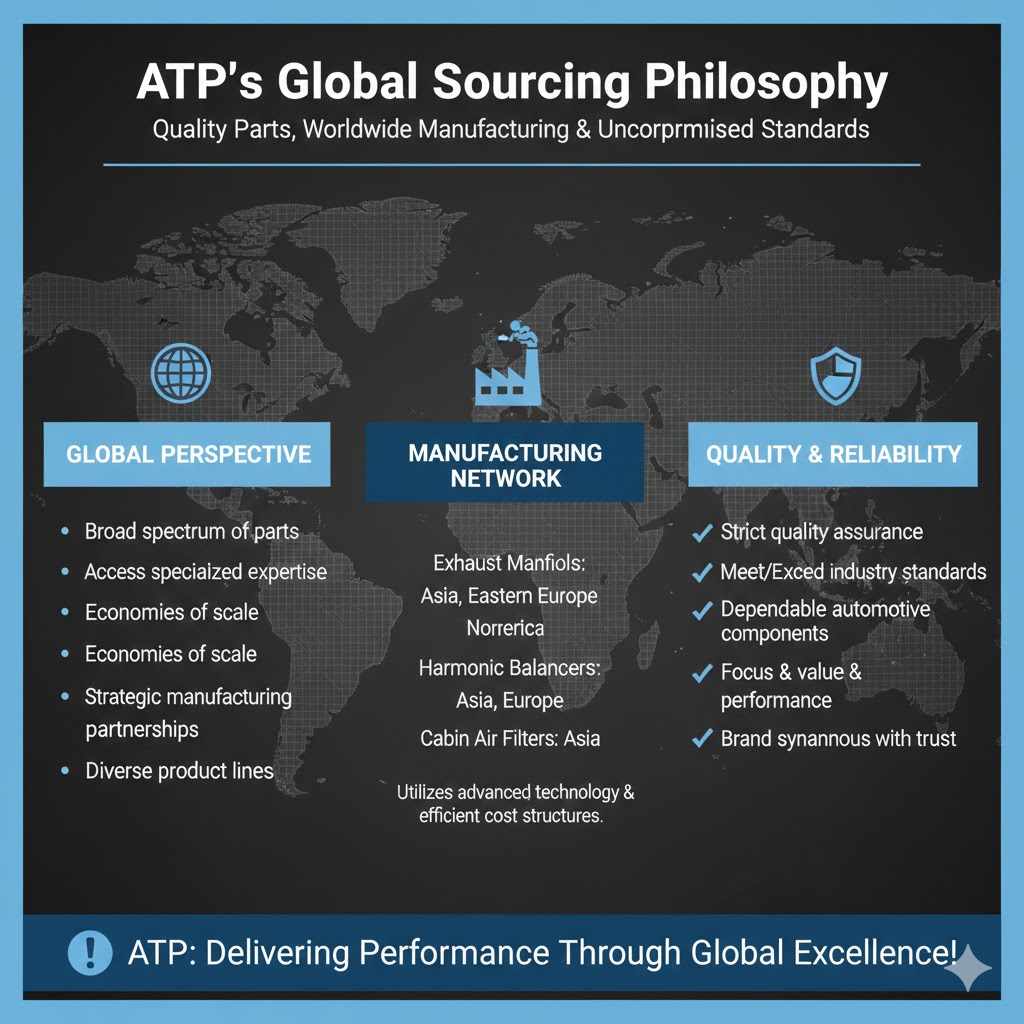
ATP’s Global Sourcing Philosophy
ATP Automotive, as a provider of a broad spectrum of
This global perspective allows ATP to access specialized manufacturing expertise and economies of scale that might not be available domestically for all product lines. For instance, certain casting facilities in Asia or Eastern Europe might possess advanced technology or cost structures that make them ideal partners for producing components like exhaust manifolds. ATP’s commitment lies in ensuring that these partnerships result in parts that perform reliably and meet or exceed industry standards.
The brand’s focus is on delivering value and performance to the end-user. When customers ask, “Is ATP Cast Iron Exhaust Manifolds Made in the USA?”, the underlying concern is usually about the quality and reliability of the part. ATP addresses this by implementing strict quality assurance protocols with its manufacturing partners, regardless of their geographic location.
This ensures that the ATP brand name remains synonymous with dependable automotive components.
Conclusion on ATP Exhaust Manifold Origins
After examining the sourcing practices common in the automotive aftermarket industry and considering ATP Automotive’s position as a U.S.-based distributor, it is generally understood that ATP cast iron exhaust manifolds are not exclusively made in the USA. They are typically sourced from international manufacturers. This approach allows ATP to offer a diverse range of parts competitively.
The brand’s focus is on quality assurance throughout its global supply chain to ensure customer satisfaction with its products.
Frequently Asked Questions
Question: Are all ATP exhaust manifolds made overseas?
Answer: While many ATP exhaust manifolds are sourced from international manufacturers, it is possible that some specific product lines or components might be manufactured domestically. ATP Automotive works with various suppliers globally, and their sourcing strategy can vary by product. For the most accurate information on a specific part, it is recommended to check the product details or contact ATP directly.
Question: If ATP exhaust manifolds are not made in the USA, does that mean they are low quality?
Answer: Not necessarily. Many reputable automotive aftermarket brands source parts globally to offer competitive pricing and a wide selection. ATP Automotive typically implements quality control measures with its manufacturing partners to ensure their parts meet industry standards for performance and durability.
The key is the brand’s commitment to quality assurance throughout its supply chain.
Question: Where can I find the country of origin for an ATP exhaust manifold?
Answer: You can usually find the country of origin listed in the product description on the online retailer’s website where you are purchasing the part. If this information is not available, you can try contacting the retailer’s customer service or ATP Automotive directly. Providing the specific part number will help them locate this detail.
Question: Does ATP Automotive manufacture their own parts?
Answer: ATP Automotive is primarily known as an aftermarket parts distributor and supplier, rather than a direct manufacturer. They source their wide range of automotive parts from various manufacturing partners around the world, including for their cast iron exhaust manifolds.
Question: Should I be concerned about buying an exhaust manifold not made in the USA?
Answer: It depends on your priorities. If supporting domestic manufacturing is a primary concern, you may seek out parts explicitly labeled “Made in the USA.” However, many high-quality automotive parts are manufactured internationally and offer excellent performance and durability. Focusing on the brand’s reputation for quality control and customer reviews can be a good indicator of a part’s reliability, regardless of its country of origin.
Final Thoughts
ATP cast iron exhaust manifolds are generally sourced from international manufacturers. This global approach allows ATP to provide a broad selection of parts at competitive prices. The brand focuses on ensuring quality through its supply chain partnerships.
When choosing ATP parts, you can rely on their commitment to delivering dependable components for your vehicle.


