What Metal Are Exhaust Manifolds Made From
It’s really common to wonder about the materials that make up car parts, and for good reason! When you’re starting out with car maintenance or just curious about how things work, questions like What Metal Are Exhaust Manifolds Made From can seem a bit tricky. Don’t worry, though.
We’re going to break it down super simply. We’ll walk you through it step by step so you can understand it easily. Next, we’ll explore the common metals and why they are used.
Common Metals For Exhaust Manifolds
Exhaust manifolds are vital components in your vehicle’s engine, and their construction materials play a huge role in their performance and lifespan. The primary function of an exhaust manifold is to collect exhaust gases from multiple cylinders into a single pipe. This process exposes the manifold to extremely high temperatures and corrosive exhaust gases, requiring materials that can withstand these harsh conditions.
Understanding these materials helps explain why certain metals are chosen over others for this demanding job.
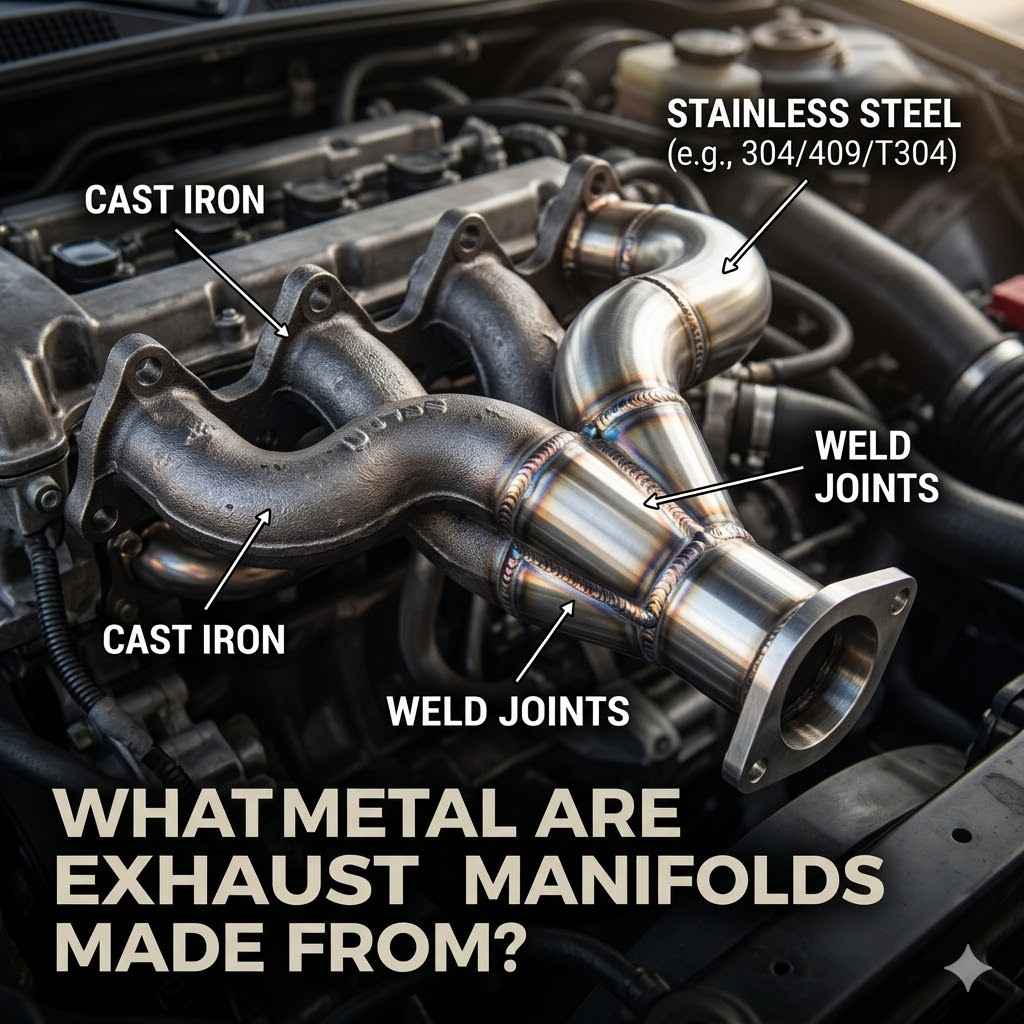
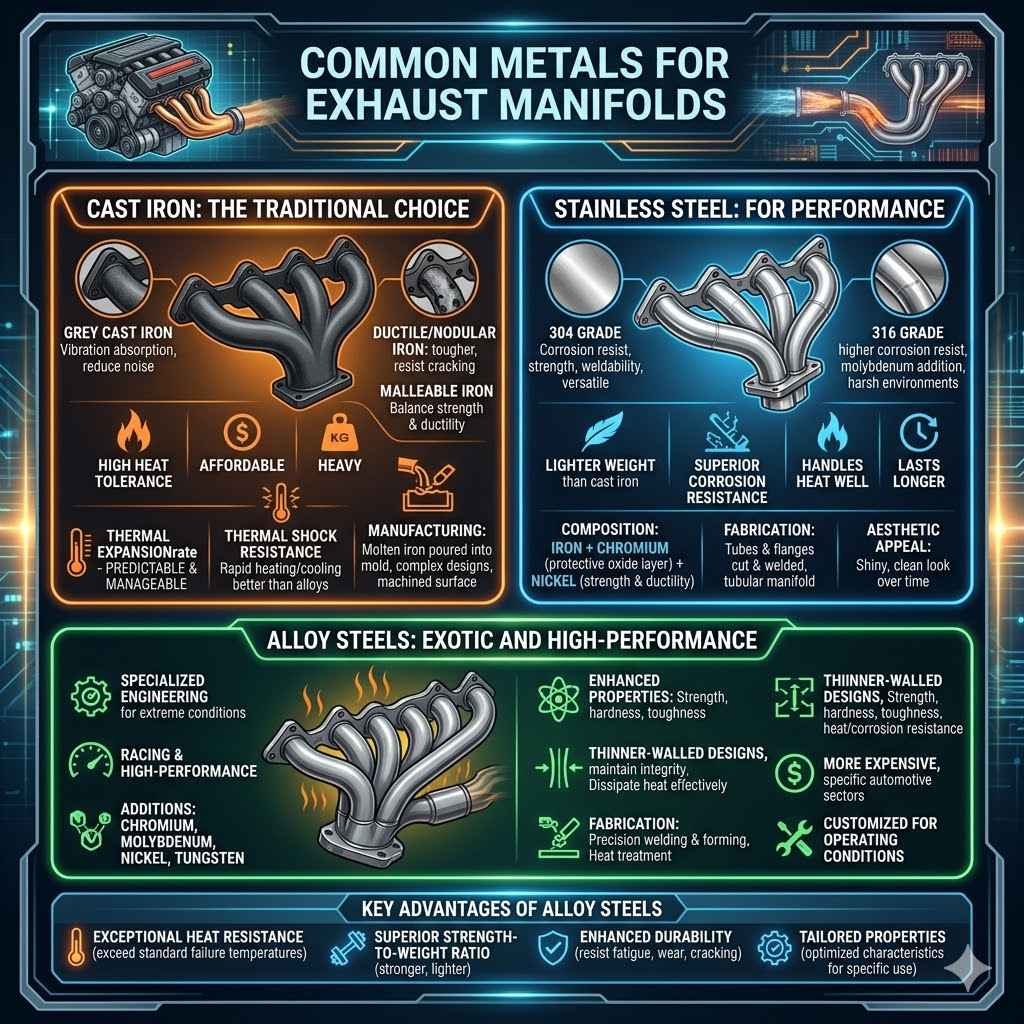
Cast Iron The Traditional Choice
Cast iron has been a go-to material for exhaust manifolds for a very long time. It’s strong and can handle high heat well. It’s also pretty affordable, which is why many car manufacturers use it.
However, it can be a bit heavy.
There are a few types of cast iron used. Grey cast iron is common because it’s easy to cast into complex shapes. It’s also good at absorbing vibrations, which can help reduce engine noise.
Ductile iron, also known as nodular iron, is another type. It’s tougher and more resistant to cracking than grey cast iron, making it a good choice for applications where durability is key. Malleable iron is less common but offers a good balance of strength and ductility.
One key advantage of cast iron is its thermal expansion. While it does expand when heated, its expansion rate is relatively predictable and manageable. This is important because it affects how the manifold seals against the cylinder head.
If the expansion is too extreme or uneven, it can lead to leaks.
Cast iron’s resistance to thermal shock is also a significant benefit. Thermal shock happens when a material is rapidly heated and cooled, which can cause it to crack. Cast iron generally handles these temperature swings better than some other metals, especially compared to lighter alloys that might warp or fatigue more quickly under repeated heating and cooling cycles.
The manufacturing process for cast iron manifolds involves pouring molten iron into a mold shaped like the manifold. This allows for intricate designs that can optimize exhaust flow. After casting, the manifold is typically machined to ensure a flat mating surface for sealing against the engine block and exhaust system.
Stainless Steel For Performance
Stainless steel is a more premium material for exhaust manifolds. It’s lighter than cast iron and much more resistant to rust and corrosion. This makes it a popular choice for performance vehicles or custom builds where durability and appearance are important.
Stainless steel also handles heat very well and can often last longer than cast iron.
The most common types of stainless steel used for exhaust systems are 304 and 316 grades. 304 stainless steel offers a good balance of corrosion resistance and strength, along with excellent weldability. It’s a very versatile material.
316 stainless steel is even more resistant to corrosion, especially in harsh environments, due to the addition of molybdenum. This makes it ideal for applications where extreme conditions are encountered.
Stainless steel is made by alloying iron with chromium and nickel. The chromium forms a protective oxide layer on the surface, which prevents rust and corrosion. The nickel improves its strength and ductility, making it easier to form into complex shapes.
The fabrication of stainless steel exhaust manifolds usually involves cutting and welding together various tubes and flanges. This method allows for highly engineered designs that can improve exhaust gas flow, which in turn can boost engine performance and efficiency. This is often referred to as a “tubular exhaust manifold.”
One of the biggest advantages of stainless steel is its aesthetic appeal. It maintains a shiny, clean look over time, unlike cast iron which can rust and become unsightly. For enthusiasts who care about the appearance of their engine bay, stainless steel is a clear winner.
Benefits Of Stainless Steel
- Superior corrosion resistance: Stainless steel will not rust like cast iron, which means it will look better for longer and is less likely to fail due to rust. This is especially important in areas with a lot of salt on the roads or in coastal regions.
- Lighter weight: Stainless steel is significantly lighter than cast iron. This can contribute to a slight improvement in vehicle performance by reducing overall weight, and it can make installation easier.
- Improved exhaust flow: Tubular stainless steel manifolds can be designed with smoother bends and optimized diameters to reduce back pressure and improve the efficiency of exhaust gas scavenging from the cylinders. This can lead to increased horsepower and torque.
- Higher heat tolerance: While cast iron handles heat well, high-quality stainless steel can often withstand even higher temperatures without deforming or becoming brittle. This is beneficial for high-performance engines that produce a lot of heat.
Alloy Steels Exotic And High-Performance
Beyond standard cast iron and stainless steel, some exhaust manifolds use specialized alloy steels. These are engineered to offer even better performance in extreme conditions. They might be used in racing or high-performance applications where every bit of efficiency and durability counts.
Alloy steels contain elements like chromium, molybdenum, nickel, and tungsten added to iron and carbon. These additions can significantly enhance properties like strength, hardness, toughness, and resistance to high temperatures and corrosion. For example, a chromium-molybdenum alloy might offer increased tensile strength and heat resistance compared to plain carbon steel.
These materials often allow for thinner-walled designs while maintaining structural integrity. This reduction in wall thickness further contributes to weight savings and can also help dissipate heat more effectively. The precise blend of elements is carefully chosen to meet specific performance requirements of the engine.
The manufacturing process for alloy steel manifolds can be more complex than for standard cast iron. It often involves precision welding and forming techniques to achieve the desired shapes and tolerances. Heat treatment processes may also be employed after fabrication to optimize the material’s properties for its intended application.
While more expensive, these high-performance alloys can provide a significant advantage in terms of longevity and performance under extreme stress. They are typically found in specialized automotive sectors rather than mass-produced vehicles.
Key Advantages Of Alloy Steels
- Exceptional heat resistance: Certain alloys can withstand temperatures far exceeding those that would cause standard metals to fail, making them ideal for extreme racing or industrial engines.
- Superior strength-to-weight ratio: Advanced alloys can be stronger than conventional materials while being lighter, offering a performance edge.
- Enhanced durability: The specialized composition provides increased resistance to fatigue, wear, and cracking under repeated thermal cycles and mechanical stress.
- Tailored properties: By adjusting the alloying elements, manufacturers can create materials with very specific characteristics optimized for particular operating conditions.
Factors Influencing Material Choice
The decision of what metal to use for an exhaust manifold isn’t arbitrary. It depends on a variety of factors, all aimed at balancing performance, durability, cost, and the intended use of the vehicle. Manufacturers consider everything from how much the car will be driven to the performance expectations placed upon the engine.
Cost And Manufacturing Simplicity
One of the biggest drivers in material selection, especially for mass-produced vehicles, is cost. Cast iron is generally much cheaper to produce than stainless steel or exotic alloys. The casting process for iron is well-established and relatively straightforward, making it efficient for large-scale manufacturing.
This cost-effectiveness allows manufacturers to keep vehicle prices down. While stainless steel might offer better long-term benefits, the initial material and fabrication costs are higher. For a standard commuter car, the added expense of stainless steel for the exhaust manifold might not be justifiable to the average consumer.
Furthermore, the tooling and equipment needed for casting iron are readily available and less expensive than those required for fabricating complex stainless steel or alloy manifolds. This contributes to the overall simplicity and lower cost of using cast iron.
The ease of casting iron into complex shapes also plays a role. Intricate designs can help optimize exhaust gas flow and packaging within the engine bay. While stainless steel can be manipulated, achieving highly complex geometries with welding can be more time-consuming and costly.
Even the repair and replacement market considers cost. Cast iron manifolds are typically more affordable for replacement parts, making them a more accessible option for vehicle owners during routine maintenance or after a failure.
Performance And Engine Type
The type of engine and its intended performance level significantly influence material choice. For high-performance engines, such as those found in sports cars or race cars, the benefits of stainless steel or alloy steels often outweigh their higher cost. These materials can handle the extreme temperatures and pressures generated by powerful engines more effectively.
High-performance engines produce more heat and exhaust gas volume. Stainless steel’s ability to resist warping and maintain structural integrity under these conditions is crucial. Tubular stainless steel manifolds can also be designed for optimal exhaust scavenging, which is key to maximizing horsepower and engine responsiveness.
For engines focused on fuel efficiency and lower emissions, materials that promote optimal exhaust flow are preferred. Stainless steel often allows for smoother, less restrictive exhaust paths compared to cast iron, which can contribute to better fuel economy.
In contrast, for standard engines designed for everyday driving, cast iron provides a reliable and cost-effective solution. It offers sufficient durability and heat resistance for typical operating conditions. The trade-offs in weight and ultimate performance are acceptable for these applications.
Consider a naturally aspirated 4-cylinder engine in a compact car versus a turbocharged V8 in a performance sedan. The former will likely use cast iron for cost and sufficient function, while the latter might opt for stainless steel or alloys to handle the increased heat and performance demands.
Performance Considerations
- Weight reduction: Lighter manifolds contribute to overall vehicle weight reduction, improving fuel economy and handling.
- Heat dissipation: Some materials are better at radiating heat away from the engine, which can help keep engine bay temperatures lower and improve component longevity.
- Exhaust flow optimization: The ability to design smoother, less restrictive paths for exhaust gases can increase engine power and efficiency.
- Durability under stress: High-performance applications push materials to their limits; superior alloys withstand extreme temperatures and pressures better, reducing the risk of failure.
Durability And Longevity
How long an exhaust manifold is expected to last is a critical factor. Cast iron is durable but can eventually succumb to rust, thermal fatigue, and cracking, especially in corrosive environments or if subjected to frequent, extreme temperature changes. Stainless steel, with its inherent corrosion resistance and strength, typically offers a longer service life.
Alloy steels are engineered for maximum durability in the most demanding applications. They are designed to resist wear, extreme temperatures, and corrosive elements for extended periods. This longevity is particularly important in commercial vehicles, heavy machinery, or racing applications where downtime is costly.
The operating environment of the vehicle also plays a significant role. Vehicles driven in areas with high humidity, frequent rain, or road salt will experience more corrosion. In such conditions, stainless steel manifolds have a clear advantage over cast iron, which can rust and deteriorate quickly.
Consider a vehicle driven year-round in a cold climate with heavy road salt usage versus one driven only in a dry, temperate climate. The former is far more likely to benefit from the corrosion resistance of stainless steel, potentially lasting many years longer without issues compared to a cast iron counterpart.
While stainless steel is generally more durable, the quality of the material and the manufacturing process are still important. A poorly fabricated stainless steel manifold might still fail prematurely, just as a high-quality cast iron manifold can last a very long time with proper care.
Durability Features
- Corrosion resistance: The ability of the material to withstand rust and degradation from environmental factors, especially moisture and salt.
- Thermal fatigue resistance: How well the material holds up to repeated cycles of heating and cooling without cracking or deforming.
- Mechanical strength: The material’s ability to resist bending, breaking, or warping under stress, including vibrations and engine torque.
- Wear resistance: The capability to withstand abrasion and erosion from exhaust gases and particulate matter over time.
Understanding The Different Metals In Detail
Let’s take a closer look at the properties of the metals commonly used for exhaust manifolds. Each has a unique set of characteristics that makes it suitable for specific applications. This section explains what makes each metal tick, so to speak, and why it’s a good or bad choice in certain situations.
Cast Iron Deep Dive
Cast iron is an iron-carbon alloy with a carbon content typically above 2%. It’s known for its excellent castability, meaning it can be melted and poured into intricate molds to create complex shapes like exhaust manifolds. This makes it an economical choice for manufacturing.
Key types include grey cast iron, which has graphite flakes that provide good vibration damping and thermal conductivity but make it brittle. Ductile iron, also called nodular iron, has graphite in spherical nodules, giving it much higher tensile strength and ductility, making it less prone to fracture. Malleable iron, produced by heat-treating white cast iron, offers a good combination of strength and toughness.
The primary advantage of cast iron for exhaust manifolds is its high melting point and ability to withstand significant heat without melting or severely degrading. It also offers good damping of engine vibrations, which can contribute to a quieter cabin.
However, cast iron is heavy and susceptible to rust and thermal shock if subjected to rapid temperature changes. Over time, especially in humid or salty environments, cast iron manifolds can corrode and develop cracks, leading to exhaust leaks.
For example, a common failure mode for cast iron manifolds is cracking near the exhaust ports or at the flange where it bolts to the cylinder head. This often occurs due to repeated expansion and contraction from engine heat cycles, especially if the manifold is stressed unevenly.
Properties Of Cast Iron
- High compressive strength: Cast iron is very strong when squeezed, which is useful for its structural integrity.
- Good thermal conductivity: It can transfer heat efficiently, which can help in dissipating some of the engine’s heat.
- Vibration damping: The material naturally absorbs vibrations, reducing engine noise and improving ride comfort.
- Brittleness (in some forms): Grey cast iron, while easy to cast, can be brittle and prone to fracture under impact or sudden stress.
Stainless Steel Properties
Stainless steel is an alloy of iron, chromium, and often nickel. The chromium content, typically at least 10.5%, forms a passive oxide layer on the surface that protects against corrosion. This is what gives stainless steel its “stainless” quality.
Common grades like 304 and 316 are austenitic stainless steels. They are non-magnetic, highly formable, and offer excellent resistance to a wide range of corrosive environments. Grade 304 is often called 18/8 stainless steel because it contains approximately 18% chromium and 8% nickel.
Grade 316 has molybdenum added, which enhances its resistance to pitting and crevice corrosion, particularly in chloride-rich environments.
The main benefits of stainless steel for exhaust manifolds are its exceptional corrosion resistance and significantly lighter weight compared to cast iron. It also maintains its structural integrity at high temperatures better than plain steel.
Stainless steel is often fabricated into exhaust manifolds using tube bending and welding. This allows for highly optimized designs that can improve exhaust flow, reduce backpressure, and potentially increase engine performance. The smooth internal surfaces also minimize the buildup of carbon deposits.
A real-world example is the widespread use of stainless steel exhaust systems on premium vehicles and in the aftermarket performance sector. Owners often choose stainless steel for its durability, appearance, and the performance gains it can offer.
Benefits Of Stainless Steel
- Excellent rust and corrosion resistance: It won’t rust, even in harsh weather conditions or when exposed to road salt.
- High-temperature strength: It retains its strength and shape at the high temperatures of exhaust gases.
- Lighter weight: Contributes to overall vehicle weight reduction, improving efficiency.
- Aesthetic appeal: It has a polished, clean look that lasts longer than cast iron.
Alloy Steel Compositions
Alloy steels are steels where specific elements are added to improve their properties beyond those of plain carbon steel. For exhaust manifolds, alloys are chosen to enhance heat resistance, strength, and corrosion resistance.
Common alloying elements include chromium (for hardness and heat resistance), molybdenum (for strength and heat resistance), nickel (for toughness and corrosion resistance), and vanadium (for strength and wear resistance). For instance, a high-chromium alloy steel might be used in extreme heat applications.
These materials are often chosen for applications where extreme temperatures, high pressures, or particularly corrosive exhaust compounds are present. They allow for designs that are both strong and relatively lightweight, often thinner-walled than cast iron.
The cost of alloy steels is generally higher than standard cast iron or even common stainless steels due to the added elements and potentially more complex manufacturing processes. Their use is typically reserved for specialized, high-performance, or industrial engines.
A scenario where an alloy steel manifold might be chosen is for a turbo-charged diesel engine in heavy-duty trucking. These engines operate under immense thermal and pressure loads, requiring materials that can withstand these conditions for hundreds of thousands of miles.
Advantages Of Alloy Steels
- Superior mechanical properties: Enhanced strength, hardness, and toughness for extreme conditions.
- Exceptional high-temperature performance: Maintains integrity at temperatures that would degrade other metals.
- Tailored resistance: Can be designed to resist specific forms of corrosion or wear.
- Reduced weight for strength: Allows for thinner designs without compromising durability.
Maintenance And Care For Exhaust Manifolds
While exhaust manifolds are built to be robust, proper maintenance and care can help them last longer. This involves regular checks for any signs of wear or damage and addressing issues promptly. Even the best materials can be affected by neglect.
Inspecting For Leaks And Cracks
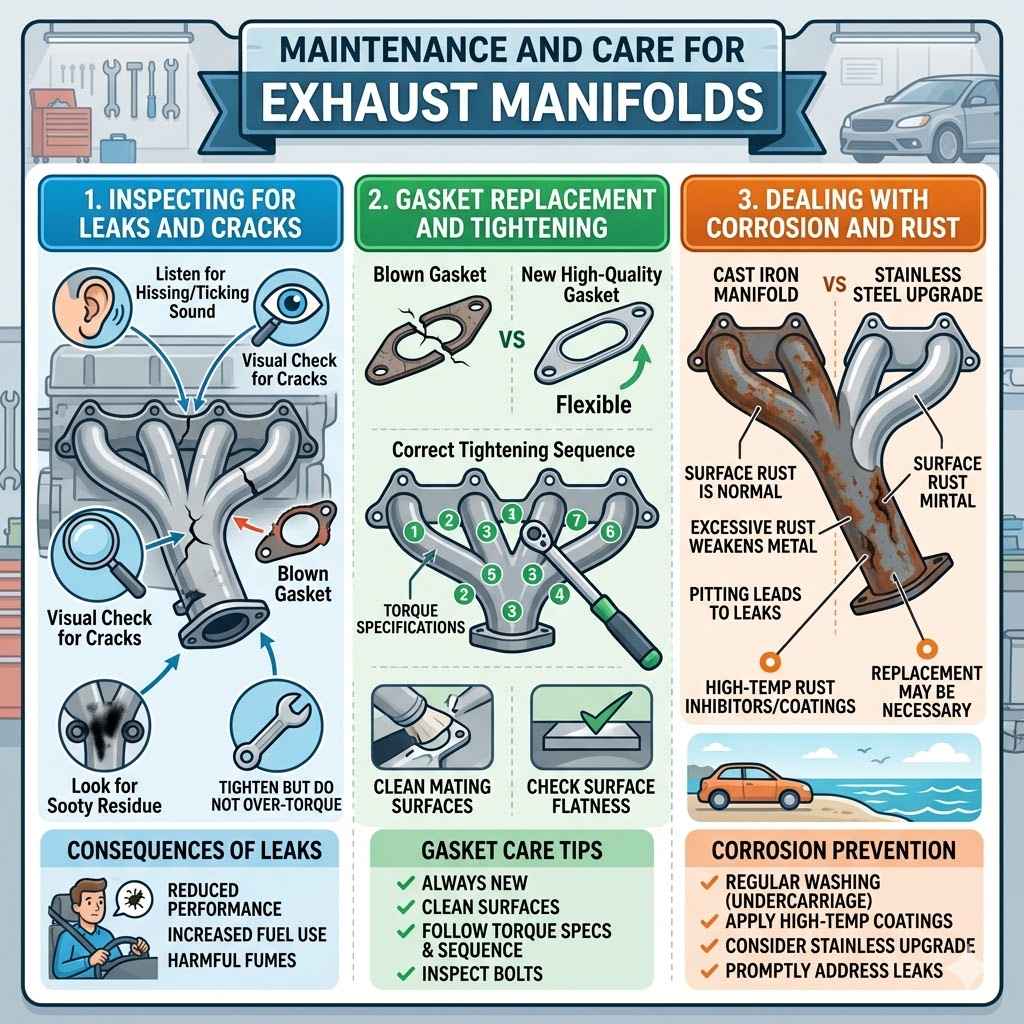
The most common issue with exhaust manifolds is leaks. These typically occur due to cracks in the material, warped mating surfaces, or blown gaskets. You can often detect a leak by a hissing or puffing sound from the engine bay, especially when the engine is cold.
Sooty residue around the manifold or bolts can also indicate a leak.
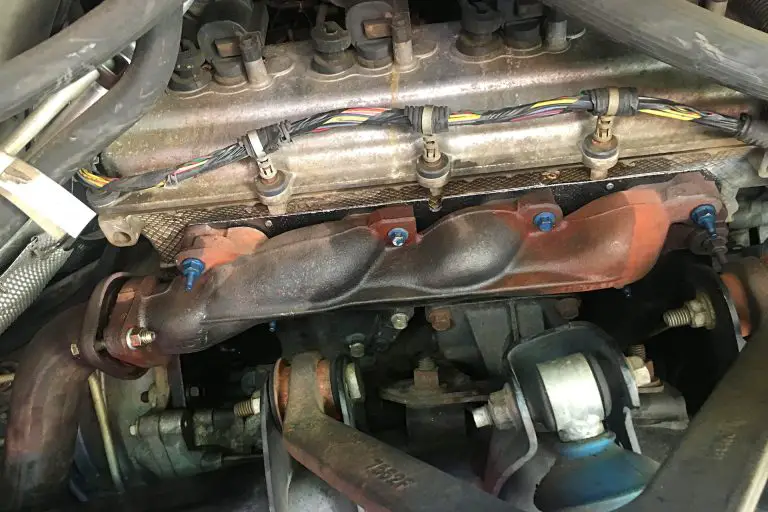
Regular visual inspections are key. Look for any visible cracks, especially around the exhaust ports or where the manifold bolts to the cylinder head. Check the condition of the exhaust manifold bolts; they can sometimes break or become loose due to heat cycles.
A cracked manifold can lead to several problems, including reduced engine performance, increased fuel consumption, and the emission of harmful exhaust fumes into the cabin. It also puts extra strain on other parts of the exhaust system.
Consider this scenario: A driver notices a persistent ticking noise from their car’s engine. Upon inspection, a small crack is found in the cast iron exhaust manifold. If left unaddressed, this crack could widen, leading to a more significant exhaust leak and potentially causing the manifold to fail completely.
Inspection Checklist
- Listen for unusual sounds like hissing or ticking coming from the engine.
- Visually inspect the manifold for any signs of cracks, rust, or discoloration.
- Check for black, sooty marks around the manifold, gaskets, or bolts, which indicate exhaust leaks.
- Ensure all manifold bolts are present and appear tight, though excessive force should be avoided.
Gasket Replacement And Tightening
The gasket between the exhaust manifold and the cylinder head is crucial for a proper seal. Over time, these gaskets can degrade, dry out, and crack, leading to leaks. Replacing a blown gasket is a common maintenance task.
When replacing a gasket or re-installing a manifold, it’s important to use the correct tightening sequence and torque specifications. This ensures even pressure is applied across the gasket, preventing leaks and minimizing stress on the manifold. Over-tightening can warp the manifold or strip bolt threads, while under-tightening will lead to leaks.
It’s also a good practice to inspect the mating surfaces of both the manifold and the cylinder head for flatness. If either surface is warped or damaged, it may need to be machined or replaced to ensure a proper seal.
Imagine a situation where a mechanic replaces an exhaust manifold but doesn’t follow the correct tightening pattern. This could lead to uneven pressure on the new gasket, causing it to fail prematurely and resulting in an exhaust leak shortly after the repair.
Gasket Care Tips
- Always use new, high-quality gaskets when re-installing an exhaust manifold.
- Clean both mating surfaces thoroughly before installing the new gasket.
- Follow the manufacturer’s recommended torque specifications and tightening sequence for bolts.
- Inspect bolts and studs for signs of damage or corrosion and replace if necessary.
Dealing With Corrosion And Rust
For cast iron manifolds, rust and corrosion are ongoing battles, especially in humid or salty environments. While some surface rust is normal, excessive rust can weaken the metal and lead to leaks. Stainless steel is far less susceptible to this issue.
If rust is a concern for a cast iron manifold, it can sometimes be treated with high-temperature rust inhibitors or coatings. However, these are often temporary solutions. In cases of severe rust or pitting, replacement might be the most effective long-term solution.
When replacing a rusted cast iron manifold, especially in a salty environment, considering an upgrade to stainless steel can be a worthwhile investment for improved longevity. The initial cost difference may be offset by fewer replacement needs over the life of the vehicle.
A car owner living in a coastal area might notice their cast iron exhaust manifold developing significant rust spots. If they choose to
Corrosion Prevention
- Regular washing of the vehicle, especially the undercarriage, can remove salt and corrosive contaminants.
- Applying high-temperature exhaust coatings to cast iron manifolds can offer some protection against rust and heat.
- For vehicles in highly corrosive environments, consider upgrading to stainless steel exhaust components.
- Promptly addressing any exhaust leaks can prevent moisture from getting trapped and accelerating corrosion.
Frequently Asked Questions
Question: Are exhaust manifolds made of aluminum
Answer: While aluminum is a common automotive metal, it is generally not used for exhaust manifolds because it cannot withstand the extremely high temperatures generated by engine exhaust gases. Aluminum tends to melt or significantly deform at temperatures far below what exhaust manifolds experience.
Question: Can you repair a cracked exhaust manifold
Answer: In some cases, minor cracks in cast iron manifolds can be repaired by welding. However, these repairs are often temporary due to the extreme heat and vibration. For stainless steel manifolds, welding is more common and effective.
Often, replacement is the more reliable solution.
Question: Why do exhaust manifolds get so hot
Answer: Exhaust manifolds handle the hot gases directly from the engine’s combustion process. These gases can be hundreds or even thousands of degrees Fahrenheit. The manifold’s job is to channel these gases away safely, meaning it must be made of materials that can tolerate extreme heat.
Question: Is stainless steel better than cast iron for exhaust manifolds
Answer: Stainless steel generally offers better corrosion resistance, lighter weight, and a longer lifespan than cast iron. However, cast iron is typically much cheaper to manufacture and can be sufficient for many standard applications. The choice depends on performance needs, budget, and expected durability.
Question: How often should I check my exhaust manifold
Answer: It’s a good idea to visually inspect your exhaust manifold during regular vehicle maintenance, such as oil changes. Listen for any unusual noises from the engine bay, as these could indicate an exhaust leak. Addressing issues early can prevent more serious problems.
Summary
Exhaust manifolds are primarily made from cast iron for cost-effectiveness and good heat resistance, or stainless steel for superior durability and performance. Alloy steels are used for high-performance applications. The choice of metal balances cost, manufacturing ease, engine type, and desired longevity.
Regular checks for leaks and corrosion ensure they perform their vital function.