1970 Plymouth Duster Exhaust Manifold Guide
Finding the right information for a 1970 Plymouth Duster Stock Exhaust Manifolds Guide can feel a bit tricky for newcomers. Lots of guides talk about fancy upgrades, but what if you just need to know about the original parts? It’s easy to get lost in technical talk.
This guide is here to make it simple. We will walk through everything you need to know, step by step. Get ready to feel confident about your Duster’s exhaust system.
1970 Plymouth Duster Stock Exhaust Manifolds Explained
This section breaks down what stock exhaust manifolds are for a 1970 Plymouth Duster. We will look at their job, how they are made, and why keeping them original is sometimes the best choice. This information helps you know what to look for and understand why they matter for your classic car.
We will cover the basics so anyone can grasp the concept, no matter their car knowledge.
What Are Stock Exhaust Manifolds
Exhaust manifolds are like a car’s initial exhaust pipes. They connect to the engine’s cylinders. Their main job is to collect exhaust gases from each cylinder.
Then, they merge these gases into one single pipe, sending them down the rest of the exhaust system. For a 1970 Plymouth Duster, these are designed specifically for that engine and car model. They were built for a balance of performance and quiet operation at the time.
Stock manifolds are made from cast iron. This material is durable and can handle the high heat from engine combustion. Cast iron is also relatively inexpensive to produce.
This made it a practical choice for manufacturers. The design of stock manifolds is often a bit restrictive. This is because they were made to reduce noise and emissions, not to maximize power.
Why Stick With Stock
Many people choose to keep their 1970 Plymouth Duster stock exhaust manifolds for several good reasons. Original parts often maintain the car’s classic look and feel. This is important for collectors and those restoring their vehicle to its factory condition.
Stock manifolds also tend to be quieter than aftermarket performance parts. This can improve the driving experience for some owners.
Furthermore, original equipment is designed to fit perfectly. This means less hassle with installation and fewer modifications needed. For a 1970 Plymouth Duster, finding correct reproduction parts or original used parts can sometimes be a challenge, but it is often worth the effort for a true restoration.
The sound a stock exhaust makes is also part of the car’s historical character.
Common Issues with Stock Manifolds
Even though stock manifolds are durable, they can develop problems over time. The most common issue is cracking. The constant heating and cooling cycle puts stress on the cast iron.
This can lead to hairline cracks. These cracks can cause exhaust leaks, which result in a loud ticking or puffing sound from the engine.
Another problem is rust. Older cars are exposed to moisture, and cast iron can rust, especially in certain climates. Rust can weaken the manifold or create holes.
Broken or seized manifold bolts are also a frequent headache. When it’s time to remove a manifold, these bolts can snap off, making the job much harder.

Identifying Your 1970 Plymouth Duster Exhaust Manifold Parts
Knowing exactly what you have is the first step in any repair or restoration. This part of our 1970 Plymouth Duster Stock Exhaust Manifolds Guide helps you identify the specific components. We will look at how to tell left from right, what different engine sizes mean for manifold design, and how to inspect them for wear and tear.
This knowledge is key to making informed decisions about replacements or repairs.
Left vs. Right Side Manifolds
Your 1970 Plymouth Duster has two exhaust manifolds, one for each side of the engine. They are not interchangeable. The left-side manifold typically serves cylinders 1, 3, 5, and 7 on a V8 engine.
The right-side manifold serves cylinders 2, 4, 6, and 8.
Visually, the shape is the main difference. The left manifold is often longer and has a different curvature than the right. This is to accommodate the engine’s layout and connect to the exhaust pipes that lead to the rear of the vehicle.
Always ensure you are purchasing the correct side when sourcing parts.
For example, if you are standing in front of the car looking at the engine, the left side is on your left, and the right side is on your right. The cylinders are numbered from front to back. The firing order also dictates which cylinders feed into each manifold.
Engine Size Considerations
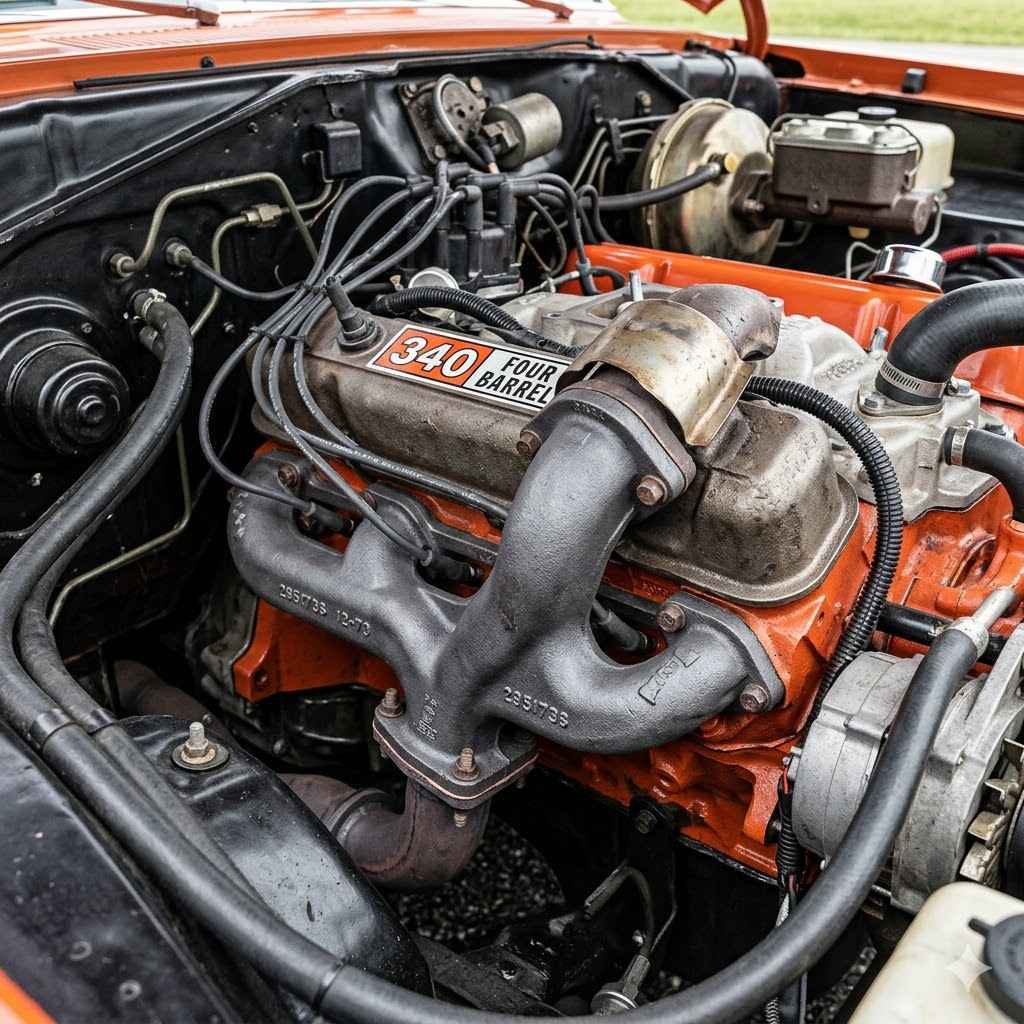
The 1970 Plymouth Duster came with a few different engine options. The most common were the 225 Slant Six and the 318 V8. Larger V8 engines like the 340 and 360 were also available.
Each engine has different exhaust manifold designs.
The Slant Six has a different exhaust setup than the V8s. It uses a single manifold that collects gases from its six cylinders. V8 engines use the two-manifold system described earlier.
The size and shape of the V8 manifolds also vary slightly between the 318, 340, and 360 cubic inch engines.
For instance, performance-oriented engines like the 340 might have slightly different manifold designs than the standard 318 to help with airflow. However, for stock restorations, it is important to match the manifold to the exact engine model your Duster came with. This ensures proper fit and function.
Inspection Techniques
When you inspect your stock exhaust manifolds, look for obvious signs of damage. Start by looking for cracks. These often appear as thin, dark lines on the cast iron surface, especially around the exhaust ports or where the manifold bolts to the cylinder head.
Next, check for signs of rust or corrosion. Heavy rust can eat through the metal, creating holes or thinning the material. Pay attention to the mating surface where the manifold bolts to the cylinder head.
Warping here can cause leaks. Also, inspect the exhaust pipe flange for damage.
A simple test for leaks is to start the engine when it is cold. If you hear a ticking or puffing sound that gets quieter as the engine warms up, you likely have an exhaust leak. You can also use a piece of hose to listen for hissing sounds around the manifold area while the engine is running.
Repairing and Replacing 1970 Plymouth Duster Stock Exhaust Manifolds
This part of the 1970 Plymouth Duster Stock Exhaust Manifolds Guide covers what to do when your manifolds need attention. We will discuss repair options for minor issues and the process for replacing them entirely. Knowing these steps will help you decide if you can fix it yourself or if you need professional help.
We aim to make this process as clear as possible.
Common Repair Options
For small cracks in stock exhaust manifolds, welding is often a viable repair. A skilled welder experienced with cast iron can repair hairline cracks. This involves carefully cleaning the area, often preheating the manifold, and then using a specific filler material to fuse the crack.
Another common repair involves dealing with broken bolts. If a bolt snaps off in the cylinder head, specialized tools like bolt extractors can be used. Sometimes, drilling out the broken bolt and retapping the hole is necessary.
Gaskets are also a common replacement item. The exhaust manifold gasket seals the manifold to the cylinder head. Replacing a blown gasket can stop exhaust leaks.
Sometimes, the manifold may have minor warpage. A machine shop can often resurface the mating surface to make it flat again. This is a more involved repair but can save a manifold that is otherwise in good condition.
When Replacement is Necessary
If your exhaust manifold has multiple large cracks, is severely rusted, or is warped beyond repair, replacement is the best option. For a 1970 Plymouth Duster, finding original used manifolds in good condition can be difficult. However, reproduction manifolds are available from various classic car parts suppliers.
When choosing
Consider the material. Most reproduction manifolds are also made of cast iron, similar to the originals. Some might offer slight design improvements for better flow, but for a strict stock restoration, look for parts that closely mimic the factory appearance and specifications.
The Replacement Process
Replacing exhaust manifolds involves several steps. First, ensure the engine is cool. Disconnect the battery.
You will need to unbolt the manifold from the cylinder head. This is often the trickiest part due to seized bolts.
You’ll also need to detach the exhaust pipe from the manifold flange. This often involves dealing with rusted nuts and bolts. Once the old manifold is removed, clean the cylinder head surface thoroughly.
Remove any old gasket material and debris.
Install the new gasket onto the cylinder head. Position the new manifold and start threading the bolts by hand. Tighten them gradually in a crisscross pattern to ensure even pressure.
Over-tightening can warp the new manifold or strip the threads in the head. Finally, reattach the exhaust pipe.
Tools and Supplies Needed
For this job, you will need a good set of sockets and wrenches, including extensions and possibly a universal joint for reaching difficult bolts. Penetrating oil is essential for loosening rusted bolts. A wire brush and scraper will be needed to clean the cylinder head surface.
You might also need a torque wrench to tighten the manifold bolts to the manufacturer’s specifications. If dealing with broken bolts, a bolt extractor set will be necessary. New exhaust manifold gaskets and possibly new exhaust pipe flange gaskets are also a must.
Safety glasses and gloves are also highly recommended.
A pry bar can be helpful for gently separating the manifold from the head, but use caution not to damage the head surface. A penetrating lubricant applied overnight can make a big difference in easing the removal of stubborn bolts.
Maintenance and Care for Stock Manifolds
Keeping your 1970 Plymouth Duster stock exhaust manifolds in good shape can extend their life. This section of our 1970 Plymouth Duster Stock Exhaust Manifolds Guide offers simple tips for maintenance. Little things can prevent big problems down the road.
We will cover how to keep them clean and what to watch out for.
Regular Cleaning
While you cannot easily clean the inside of an exhaust manifold, the exterior can be cleaned. Over time, dirt, oil, and road grime can build up. This can trap moisture and accelerate rust.
Use a degreaser and a stiff brush to clean the outside of the manifolds.
After cleaning, you can apply a high-temperature exhaust system cleaner or coating. These products can help protect the cast iron from rust and give it a fresh, dark appearance. This is especially useful for cars that are driven in wet conditions.
Make sure the engine is cool before attempting any cleaning. Some products are designed to be applied and then heated by driving the car to cure. Always follow the product instructions carefully.
Rust Prevention
Rust is the enemy of cast iron exhaust manifolds. To help prevent rust, keep the undercarriage of your Duster as dry as possible. If you live in an area with salt on the roads in winter, washing the car frequently, especially the undercarriage, is important.
Applying a rust inhibitor spray to the exterior of the manifolds can also offer some protection. These sprays create a barrier that repels moisture. Some people opt to have their manifolds ceramic coated.
This high-temperature coating provides excellent protection against heat and corrosion.
Regular visual inspections can catch rust early. If you see the beginnings of rust spots, address them quickly. A little sanding and a coat of high-temperature paint can stop it from spreading.
Monitoring for Leaks
The most critical maintenance is to listen for exhaust leaks. As mentioned before, a ticking sound is a common sign. Do not ignore these sounds, as exhaust leaks can be harmful and can lead to further damage.
If you suspect a leak, inspect the manifolds closely. Look for soot marks around the mating surfaces or cracks. Even small leaks can worsen over time.
Fixing a small leak early is much easier and cheaper than dealing with a major failure.
Sometimes, a leak might just be a loose bolt. Gently try to tighten any suspicious bolts, but be careful not to over-tighten. If a bolt spins freely, it may be stripped.
The Role of Exhaust Manifolds in Performance
While this is a 1970 Plymouth Duster Stock Exhaust Manifolds Guide, it is useful to know how these parts affect performance. Even stock parts have an impact. Understanding this helps appreciate why their condition matters beyond just preventing leaks.
We will touch on airflow and how it influences your Duster’s engine.
Airflow Dynamics
The shape and size of exhaust manifolds directly influence how easily exhaust gases can exit the engine. Stock manifolds are designed with emissions and noise reduction in mind. This often means they have smaller passages and tighter bends compared to performance headers.
When exhaust gases cannot exit the cylinders quickly, they can create backpressure. This backpressure can reduce the engine’s ability to inhale fresh air and fuel for the next combustion cycle. In simpler terms, a choked-off exhaust makes the engine work harder and less efficiently.
Even stock manifolds have a specific design to optimize this process for the engine they are paired with. A damaged or leaking stock manifold will disrupt this designed airflow, leading to a noticeable drop in power and fuel economy.
Impact on Engine Breathing
An engine “breathes” by taking in air and fuel and expelling exhaust. The exhaust system, starting with the manifolds, plays a vital role in this process. If the exhaust system is too restrictive, the engine will feel sluggish.
Stock manifolds for a 1970 Plymouth Duster were engineered for the specific engines of that era. While not built for maximum power, they were designed to function adequately for daily driving and moderate use.
A well-maintained stock manifold allows the engine to expel gases efficiently enough for its intended purpose. However, any damage or wear will hinder this efficiency. This can lead to poor acceleration, rough idling, and reduced overall engine performance.
When Upgrades Might Be Considered
While this guide focuses on stock manifolds, it is worth noting that aftermarket headers are available. Headers are designed with larger, smoother pipes to improve exhaust flow and increase engine power.
However, headers often come with trade-offs. They can be louder, may require modifications to fit, and can change the car’s exhaust note significantly. For owners aiming for a factory-correct restoration, sticking with stock manifolds is usually the preferred choice.
If your goal is maximum performance and you are not concerned with a factory look, headers can be a good option. But for maintaining the classic character and sound of your 1970 Plymouth Duster, the stock exhaust manifolds are key.

Frequently Asked Questions
Question: How do I know if my 1970 Plymouth Duster needs new exhaust manifolds
Answer: Listen for ticking or puffing sounds from the engine bay, especially when it is cold. Also, look for visible cracks or rust holes on the manifolds.
Question: Can I use exhaust manifolds from a different year Plymouth Duster
Answer: It depends on the specific year and engine. While some parts might be interchangeable, it is best to use manifolds designed for the 1970 model and your specific engine size to ensure a proper fit and function.
Question: Are stock exhaust manifolds hard to find for a 1970 Plymouth Duster
Answer: Finding original used manifolds can be challenging. However, reproduction manifolds are often available from classic car parts suppliers. You might also find them at swap meets or online forums dedicated to Mopar vehicles.
Question: What is the typical cost to replace exhaust manifolds on a 1970 Plymouth Duster
Answer: Costs vary widely. The price of reproduction manifolds can range from $100 to $300 per side. Labor costs for installation can add another $200 to $600, depending on your mechanic’s rates and the condition of the old bolts.
Question: Will replacing exhaust manifolds improve my Duster’s gas mileage
Answer: If your old manifolds had significant leaks or cracks, replacing them with good ones can help improve engine efficiency. This might lead to a slight improvement in gas mileage, but it is not typically the primary benefit.
Summary
Maintaining your 1970 Plymouth Duster stock exhaust manifolds is key for its original performance and character. This guide covered their function, how to spot issues like cracks and rust, and the steps for repair or replacement. You now have the knowledge to inspect, maintain, and address problems with your Duster’s exhaust manifolds, ensuring it runs and sounds as it should.