What Vehicles Use 984221 & 984222 Exhaust Manifolds
Finding the right car parts can sometimes feel like a puzzle, especially for folks new to auto repair. You might be wondering, What Vehicles Use 984221 & 984222 Exhaust Manifolds. It’s a common question because part numbers don’t always tell the whole story.
This guide will break it down simply. We’ll go step-by-step to help you figure out exactly which cars need these specific exhaust manifolds. Get ready for clear answers and easy steps!
Identifying Vehicles Using 984221 & 984222 Exhaust Manifolds
This section is all about pinpointing which vehicles rely on the 984221 and 984222 exhaust manifold part numbers. We will explore how to use these numbers effectively, what information they reveal, and how they connect to specific car models. Understanding this connection is key for any vehicle owner or mechanic looking for the correct replacement parts to ensure their vehicle runs smoothly and efficiently.
Understanding Exhaust Manifold Part Numbers
Exhaust manifold part numbers, like 984221 and 984222, are unique identifiers. They act like a car part’s fingerprint. These numbers are assigned by the manufacturer to distinguish one part from another.
This is important because even small changes in a part can make it incompatible with a vehicle. They help ensure that when you order a
When a car manufacturer designs a vehicle, they also design the parts that go into it. The exhaust manifold is one such part. It collects exhaust gases from multiple cylinders and directs them into a single pipe.
Because different engines have different cylinder arrangements and exhaust routing needs, manifolds vary. The part number is how they keep track of all these different designs. For example, a V6 engine will have a different manifold than a 4-cylinder engine, and they will have different part numbers.
These numbers are crucial for ordering. Mechanics and parts suppliers use them to look up exact fits. If you have the part number from your old manifold, it’s the most direct way to find a new one.
However, sometimes the number might be worn off or hard to read. In those cases, you’ll need other ways to find the right fit. This is where knowing the vehicle’s make, model, and year becomes important.
The Role of Make Model and Year
The make, model, and year of a vehicle are fundamental to identifying the correct exhaust manifold. Car manufacturers produce many different models, and within each model, there can be different engine options. Each combination of engine and model year may require a unique exhaust manifold.
Even within the same model year, different trim levels or optional packages could lead to variations in engine size or configuration, thus requiring different manifolds.
For instance, a 2020 Toyota Camry might come with a 2.5-liter 4-cylinder engine or a 3.5-liter V6 engine. These engines have different exhaust systems, and therefore, different exhaust manifolds. The part number 984221 might be for one engine type, while 984222 could be for another, or for a different make of car altogether.
This is why simply knowing you have a Camry isn’t enough; you need to know the exact engine it has.
When searching for parts, always have your vehicle’s full details ready. This includes the year it was manufactured, the specific model name, and if possible, the engine size or type. Many online auto parts stores allow you to enter this information into a search tool.
This tool then filters available parts to show only those compatible with your vehicle. It’s a much safer approach than guessing and hoping for the best.
This detailed information helps avoid costly mistakes. Installing the wrong exhaust manifold can lead to exhaust leaks, reduced engine performance, increased fuel consumption, and even engine damage. Therefore, accuracy in identifying your vehicle’s specifications is paramount when sourcing replacement parts like the 984221 or 984222 exhaust manifolds.
Cross-Referencing Part Numbers and Vehicle Specifications
Cross-referencing is the process of checking if a specific part number, like 984221 or 984222, truly matches the requirements for a particular vehicle. This involves using multiple sources to confirm compatibility. It’s not enough to find a part number; you must verify it against your car’s details.
One common method is to use online parts catalogs. Many websites dedicated to auto parts allow you to input a part number. They will then tell you which vehicles this part is listed for.
You can then compare this list with your vehicle’s make, model, and year. If your car appears on the list, it’s a strong indication of compatibility.
Another effective technique is to consult with a professional mechanic or an auto parts store specialist. They have access to extensive databases and years of experience. They can take the part number you have and look it up in their system to confirm its application.
They can also help if you don’t have a part number but know your vehicle’s specifications.
Looking at the physical part itself can also offer clues. Sometimes, original exhaust manifolds have the part number stamped directly onto them. If you can safely access and read this number on your old manifold, it’s the most reliable piece of information.
You can then use this number to search for direct replacements.
It’s important to note that sometimes part numbers are superseded. This means the manufacturer has updated the part number for a newer version or an improved design. A good parts supplier will be aware of these supersessions and can provide you with the correct, current part even if you only have an older number.
Common Vehicle Makes and Models That May Use These Manifolds
While it is impossible to give a definitive list without manufacturer-specific data for every single vehicle application, we can discuss general trends and common manufacturers that might utilize part numbers in this range. Often, exhaust manifold part numbers can be specific to a particular manufacturer or even a specific engine family within a manufacturer. This means that vehicles from the same brand are more likely to share part numbers than vehicles from different brands.
For example, if 984221 is an exhaust manifold for a particular engine used in North American-produced vehicles, it might appear in models from a General Motors brand like Chevrolet or GMC. These manufacturers often use similar engine platforms across their various trucks and cars. Similarly, if the part number relates to an engine commonly found in Japanese-market vehicles, it might be seen in Nissan or Toyota models.
European manufacturers like Volkswagen or BMW also have their own specific part numbering systems. However, sometimes aftermarket parts manufacturers will use their own numbering systems, or use numbers that are cross-referenced to original equipment manufacturer (OEM) numbers. It is crucial to always verify the application, as part numbers can be reused or similar across different manufacturers for different components.
The best approach is to always use your vehicle’s identification number (VIN) or its exact make, model, and year, along with engine details, when searching for parts. This ensures accuracy, especially when dealing with part numbers that aren’t universally recognized without a specific catalog lookup.
The Challenge of Generic Part Numbers
Part numbers like 984221 and 984222 can sometimes be challenging to research without access to a manufacturer’s specific catalog. This is because automotive part numbering systems are not standardized across all manufacturers. Each car company, and even some aftermarket parts suppliers, uses its own unique system for assigning numbers to its components.
This can make it difficult for someone without direct access to these proprietary databases to determine a part’s exact application.
For instance, a part number that seems straightforward might be specific to a particular region where the vehicle was sold, or it could be an internal production code rather than a direct retail part number. Additionally, aftermarket manufacturers might use their own numbering schemes that cross-reference OEM numbers, adding another layer of complexity. Without a dedicated cross-reference guide or specialized software, identifying the precise vehicles that use a given part number can be a guessing game.
This is why relying solely on a part number found on an old component, without additional verification, can be risky. You might end up with a part that looks similar but has subtle differences in fitment or material, leading to installation problems or premature failure. Therefore, always supplementing your search with vehicle-specific information is highly recommended for accurate part identification.
Manufacturer Specificity and Aftermarket Equivalents
The specificity of automotive part numbers means that 984221 and 984222 are likely linked to a particular manufacturer’s product line. Original Equipment Manufacturer (OEM) part numbers are designed by the car maker for their vehicles. They are guaranteed to fit and function as intended, as they were designed in conjunction with the vehicle’s engineering.
However, the automotive aftermarket is vast. Many companies specialize in producing equivalent parts. These aftermarket exhaust manifolds aim to match the performance and fit of the OEM part but often come at a lower price.
When you search for 984221 or 984222, you might find listings from various aftermarket brands.
These aftermarket brands will typically list the OEM part numbers their product is designed to replace. They will also provide a list of compatible vehicle makes, models, and years. It’s important to check if the aftermarket part explicitly states it replaces either 984221 or 984222.
Additionally, reputable aftermarket suppliers will offer detailed specifications that you can compare to your original manifold or your vehicle’s requirements.
Sometimes, a single OEM part number can be
How to Find the Correct Exhaust Manifold for Your Vehicle
This section will guide you through the practical steps of identifying and acquiring the correct exhaust manifold for your specific car. We’ll cover methods from examining your current part to using digital tools and seeking expert advice, ensuring you make an informed purchase and avoid common pitfalls. This process is designed to be straightforward and efficient for anyone needing to replace their exhaust manifold.
Methods for Identifying Your Required Exhaust Manifold
There are several reliable methods to ensure you get the correct exhaust manifold for your vehicle. The most direct way is to inspect the original part on your car. Many exhaust manifolds have the part number stamped or cast directly onto their surface.
If you can safely access and read this number, it provides a definitive starting point for your search.
If the number is unreadable or the part is already removed, using your vehicle’s identification information is the next best approach. Gather your car’s make, model, year, and engine size. With this information, you can utilize online auto parts retailers.
These websites typically have search filters where you input your vehicle details, and they will display a list of compatible parts, including exhaust manifolds.
Visiting a local auto parts store is another excellent option. Their staff are knowledgeable and have access to extensive catalogs. They can look up the correct part for you based on your vehicle’s specifications.
They can also often identify compatible aftermarket options or original manufacturer parts.
Finally, consulting your vehicle’s owner’s manual or a service manual for your car can sometimes provide part numbers or diagrams that help identify the correct exhaust manifold. These manuals are designed to be comprehensive resources for vehicle maintenance and repair.
Checking the Original Part Number
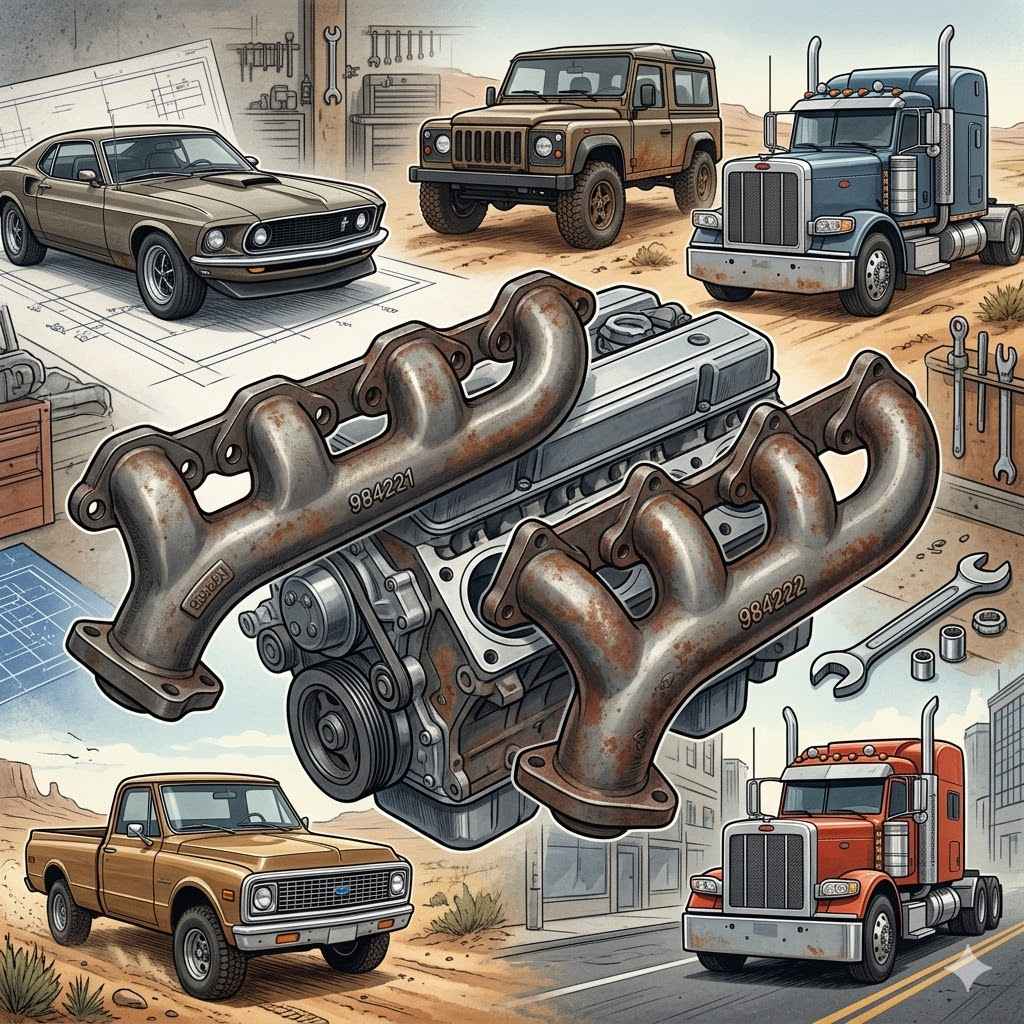
The most straightforward method to identify the exhaust manifold needed for your vehicle is to find the part number on the existing one. Many manufacturers stamp or cast their part numbers directly onto the metal surface of the exhaust manifold. This number is usually a combination of letters and numbers, such as 984221 or 984222.
To check, you will need to locate the exhaust manifold on your vehicle. It is usually attached to the cylinder head of the engine and connects to the exhaust pipe. Depending on your vehicle’s engine layout, it might be accessible from above or below.
Safety is paramount; ensure the engine is cool before attempting to inspect the manifold, as it gets very hot during operation.
Once you can see the manifold, look carefully for any etched or raised numbers. Sometimes, these numbers can be partially obscured by grime, rust, or heat shielding. Using a flashlight and a rag to clean the area might help reveal the number.
If you find a number, such as 984221, you can then use this as your primary search term when looking for a replacement part.
Having this original part number significantly increases the chances of ordering the correct component, reducing the risk of errors. If you cannot find a number, or if it is illegible, you will need to rely on other identification methods.
Using Online Parts Databases
Online auto parts databases have become incredibly valuable tools for vehicle owners. These platforms allow you to search for parts using your vehicle’s specific details, making it much easier to find compatible components like exhaust manifolds. The process is usually very user-friendly.
Most reputable online auto parts stores will have a section where you can enter your vehicle’s year, make, and model. Some may even allow you to specify the engine size or transmission type, which is critical for exhaust system components. After entering this information, the website filters its inventory to show only parts that are guaranteed to fit your car.
When searching for exhaust manifolds, you will typically see a list of options. Each option will usually display the OEM part number it
These databases often provide detailed product descriptions, including materials, design features, and sometimes even customer reviews. This additional information can help you make a more informed decision about which manifold to purchase. It’s a good idea to compare a few options to ensure you are getting a quality part at a fair price.
Many also offer diagrams to help you visually confirm the part’s shape and connection points.
Consulting a Professional Mechanic or Parts Specialist
If you’re unsure about identifying the correct exhaust manifold or have exhausted other options, consulting a professional mechanic or a knowledgeable auto parts specialist is a highly recommended step. These individuals possess specialized knowledge and access to resources that can quickly resolve any uncertainties.
Mechanics have extensive experience working with a wide range of vehicles and understand the nuances of different engine configurations and exhaust systems. They can perform a physical inspection of your vehicle, identify the exact manifold needed, and even source the part for you. Their expertise ensures that you get the correct part the first time, avoiding potential installation issues or performance problems.
Similarly, employees at reputable auto parts stores are trained to assist customers in finding the right components. They have access to detailed electronic catalogs and databases that can cross-reference part numbers and vehicle specifications. You can provide them with your vehicle’s make, model, year, and any known part numbers, and they can quickly narrow down the options to find a suitable exhaust manifold.
Don’t hesitate to ask them specific questions about the part, such as its warranty, material, or intended application. Many parts specialists can also advise on whether an OEM part or a quality aftermarket equivalent would be more suitable for your needs and budget. Their guidance can save you time, money, and the frustration of purchasing the wrong part.
OEM vs. Aftermarket Exhaust Manifolds
When it comes to replacing parts like exhaust manifolds, you often face a choice between Original Equipment Manufacturer (OEM) parts and aftermarket parts. Both have their pros and cons, and understanding them can help you make the best decision for your vehicle and budget.
OEM parts are made by the same company that manufactured your car. They are designed to meet the exact specifications and quality standards of the original part installed on your vehicle. This means they are guaranteed to fit perfectly and perform as the factory intended.
If you want to maintain your car exactly as it was built, OEM is the way to go. However, OEM parts are typically more expensive.
Aftermarket parts are produced by companies other than your car manufacturer. They are often made to be compatible with one or more vehicle makes and models. The quality of aftermarket parts can vary significantly.
Some are made to very high standards, rivaling or even exceeding OEM quality, while others may be of lower quality. The price is often lower than OEM, making them an attractive option for budget-conscious owners.
When considering aftermarket exhaust manifolds, especially if you are looking for equivalents to 984221 or 984222, it’s crucial to research the brand. Look for reputable manufacturers with good reviews and warranties. A good aftermarket manifold should provide a proper fit, be made of durable material that can withstand high temperatures, and have the correct design for optimal exhaust flow.
Always verify that the aftermarket part explicitly states it replaces the specific OEM part number you need.
The Benefits of Choosing OEM Parts
Choosing Original Equipment Manufacturer (OEM) parts, such as an OEM exhaust manifold corresponding to part numbers like 984221 or 984222, offers several distinct advantages. The primary benefit is the assurance of perfect fit and compatibility. OEM parts are manufactured to the exact specifications set by the vehicle’s original designer.
This means they are engineered to integrate seamlessly with your car’s existing components without any modifications required.
Furthermore, OEM parts are made with high-quality materials and manufacturing processes, ensuring durability and longevity. They are designed to perform optimally within your vehicle’s specific system, contributing to overall engine performance, fuel efficiency, and emissions control. When you buy an OEM part, you are essentially getting a part identical to the one that came with your car from the factory.
OEM parts also often come with a manufacturer’s warranty, providing an additional layer of security and peace of mind. If the part fails prematurely due to a manufacturing defect, the warranty can cover
Evaluating Aftermarket Alternatives
When you are looking to replace an exhaust manifold and find yourself searching for alternatives to part numbers like 984221 or 984222, the aftermarket offers a wide range of options. Evaluating these alternatives requires a careful approach to ensure you are not compromising on quality or performance.
The main appeal of aftermarket exhaust manifolds is often their cost-effectiveness. They can be significantly less expensive than OEM parts, making them a popular choice for many car owners. However, it is vital to look beyond just the price tag.
The quality of materials and manufacturing can vary greatly between aftermarket brands.
Start by researching the reputation of the aftermarket manufacturer. Look for brands that have a long history of producing reliable automotive parts. Read online reviews from other customers who have purchased and installed the same exhaust manifold.
Pay attention to comments regarding fitment, durability, and any issues they encountered.
Check the specifications of the aftermarket manifold. Ensure it is made from a suitable material, such as cast iron or stainless steel, that can withstand the high temperatures and corrosive environment of the exhaust system. Verify that the design matches the original manifold in terms of port configuration and mounting points.
Many aftermarket suppliers will list the OEM part numbers their product is designed to replace, which is a good indicator of compatibility. Lastly, check for a warranty. A decent warranty can offer protection against manufacturing defects.
Common Issues with Incorrect Exhaust Manifolds
Installing an exhaust manifold that is not the correct fit for your vehicle, or one that is of poor quality, can lead to a host of problems. These issues can range from minor annoyances to serious mechanical failures that could damage your engine.
One of the most immediate problems is an exhaust leak. If the manifold doesn’t seal properly against the engine’s cylinder head or the exhaust pipe, exhaust gases can escape. This can create a loud, hissing, or puffing sound.
Exhaust leaks can also allow dangerous carbon monoxide gas into the vehicle’s cabin, posing a health risk. Furthermore, leaks can affect the oxygen sensors in your exhaust system, leading to inaccurate readings and triggering the check engine light.
Another significant issue is reduced engine performance and fuel economy. An incorrectly designed manifold might not channel exhaust gases efficiently. This can create backpressure or restrict flow, making the engine work harder.
You might notice a loss of power, slower acceleration, and an increase in fuel consumption. The engine’s computer might also adjust fuel and air mixtures incorrectly in response to the altered exhaust flow, further impacting performance.
In severe cases, an improperly fitted or failing exhaust manifold can cause overheating of engine components or the catalytic converter. The heat generated by exhaust gases needs to be managed effectively, and a faulty manifold can disrupt this process. This can lead to premature wear of engine parts or even costly damage to the catalytic converter.
Exhaust Leaks and Their Consequences
Exhaust leaks are a common and problematic consequence of using an incorrect or faulty exhaust manifold. When an exhaust manifold doesn’t seal properly against the engine’s cylinder head, or when its gaskets fail, exhaust gases can escape before they reach the rest of the exhaust system. This escape of gases can create a distinctive, often loud, ticking or puffing sound that becomes more noticeable when the engine is under load or at higher RPMs.
The consequences of exhaust leaks extend beyond just noise. One of the most critical dangers is the potential for carbon monoxide poisoning. Carbon monoxide is a colorless, odorless, and toxic gas produced during combustion.
If your exhaust system has a leak, particularly one near the passenger cabin, these dangerous fumes can enter the vehicle’s interior, posing a serious health risk to occupants. Always address exhaust leaks promptly for safety reasons.
Furthermore, exhaust leaks can interfere with the functioning of critical emissions control systems. Oxygen sensors, which monitor the amount of oxygen in the exhaust gas to help the engine computer adjust the fuel mixture, can provide inaccurate readings if they detect fresh air leaking into the system. This can lead to the check engine light illuminating, poor fuel efficiency, and increased pollution.
The heat from escaping exhaust gases can also damage nearby components, such as wiring, hoses, or the engine block itself, over time. This makes addressing exhaust leaks not just about comfort or performance, but also about preventing more significant and expensive damage to your vehicle.
Impact on Engine Performance and Fuel Efficiency
An exhaust manifold’s primary job is to collect exhaust gases from the engine cylinders and direct them into the exhaust pipe. The design of the manifold influences how efficiently this process occurs. If the wrong manifold is installed, or if an existing manifold is damaged or leaking, it can significantly impact your vehicle’s engine performance and fuel efficiency.
When an exhaust manifold is not designed correctly for a specific engine, it can create unwanted backpressure or restrict the flow of exhaust gases. This makes it harder for the engine to expel spent gases, forcing it to work harder. This increased effort translates directly into a noticeable loss of power, sluggish acceleration, and a general feeling that the engine is not running smoothly or powerfully.
The effect on fuel efficiency is also considerable. With the engine struggling to breathe properly due to poor exhaust flow, it requires more fuel to produce the same amount of power. This means you’ll find yourself visiting the gas station more frequently, leading to higher operating costs.
The engine control unit (ECU) might also try to compensate for the abnormal exhaust conditions by altering the air-fuel ratio, which can further exacerbate fuel consumption issues.
For instance, if a V6 engine is fitted with a manifold designed for a 4-cylinder engine (a highly unlikely scenario but illustrative), the port sizes would be mismatched. This mismatch would lead to inefficient scavenging of exhaust gases, reduced volumetric efficiency, and a significant drop in both power and mileage. Therefore, ensuring the correct manifold is installed is vital for maintaining your vehicle’s intended performance and economy.
Finding the Best Source for 984221 & 984222 Exhaust Manifolds
This final part of our guide focuses on where you can find reliable sources for the 984221 and 984222 exhaust manifolds. We will discuss different types of sellers and what to look for to ensure you are getting a quality product and good service. The goal is to make your purchasing experience as smooth as possible, ensuring you find exactly what your vehicle needs.
Reputable Online Auto Parts Retailers
When searching for specific part numbers like 984221 and 984222, reputable online auto parts retailers are often your best bet. These platforms typically offer a vast inventory and sophisticated search tools that can help you pinpoint the exact component you need.
Some of the largest online retailers have extensive databases that allow you to search by part number, vehicle make/model/year, or even VIN. When you enter a part number, they will show you all the products that match. If you enter your vehicle’s details, they will filter their catalog to display only compatible parts.
This is a crucial step in verifying that a part number like 984221 or 984222 is indeed listed for your specific car.
Look for retailers that provide detailed product descriptions, including information about the manufacturer, material, and warranty. Reputable online stores will also clearly state which OEM part numbers their product replaces. This is especially important if you are considering an aftermarket alternative.
Many of these retailers also offer customer reviews and ratings, which can provide valuable insights into the quality and performance of the parts. Furthermore, they often have customer support services available to help you with any questions or concerns you might have about fitment or ordering. Always check for clear return policies, as this provides an extra layer of security for your purchase.
Key Factors When Choosing an Online Retailer
Selecting the right online auto parts retailer is as important as choosing the right part. Several factors contribute to a reliable and satisfactory online shopping experience. Prioritizing these aspects can save you time, money, and potential headaches.
Firstly, product availability and accuracy are paramount. The retailer should have a comprehensive inventory and accurate listings that clearly state part numbers, vehicle compatibility, and specifications. If you’re looking for 984221 or 984222, the retailer’s search function should allow you to input these numbers and confirm their application for your vehicle.
Secondly, customer reviews and reputation offer invaluable insights. Look for retailers with overwhelmingly positive reviews regarding product quality, shipping speed, and customer service. A strong track record indicates a trustworthy business.
Thirdly, pricing and shipping costs should be competitive. While the cheapest option isn’t always the best, comparing prices from several reputable retailers is wise. Factor in shipping fees and estimated delivery times to ensure they meet your needs.
Fourthly, a clear and fair return policy is essential. Auto parts can sometimes be incorrect, even with careful selection. A retailer that offers easy returns and exchanges without excessive restocking fees or complicated procedures provides peace of mind.
Finally, customer support availability is a key consideration. Having access to knowledgeable support via phone, email, or chat can be crucial if you encounter issues or have questions about compatibility or installation. A responsive support team demonstrates a commitment to customer satisfaction.
Local Auto Parts Stores and Dealerships
While online shopping is convenient, local auto parts stores and dealerships remain valuable resources for acquiring exhaust manifolds and other vehicle components. These brick-and-mortar establishments offer distinct advantages, particularly for those who prefer direct interaction or need parts immediately.
Local auto parts stores often employ knowledgeable staff who can assist you in identifying the correct part number, such as 984221 or 984222, based on your vehicle’s specifications. They have access to catalogs that may not be as readily available or as user-friendly online. The ability to speak directly with an expert can be particularly helpful if you are unsure about the specific requirements for your vehicle or the nuances of different part options.
Furthermore, if you need a part quickly, a local store might have it in stock, saving you the waiting time associated with online shipping. This can be critical if your vehicle is inoperable and needs to be repaired promptly.
Dealerships are the source for OEM parts. If you are seeking the highest assurance of quality and perfect fit, purchasing an exhaust manifold directly from your car’s manufacturer dealership is an option. While typically the most expensive choice, it guarantees that you are getting a part made to the original factory standards.
Dealership parts departments are also highly specialized and can identify the precise part for your vehicle using its VIN.
The Dealership Advantage for OEM Parts
Purchasing an exhaust manifold, or any part for that matter, directly from an authorized dealership offers a significant advantage when it comes to ensuring you receive an Original Equipment Manufacturer (OEM) part. Dealerships are the primary channels through which car manufacturers distribute their genuine parts.
When you go to a dealership, you are guaranteed to get a part that was designed and manufactured by or for your specific car brand. This means the exhaust manifold will meet the exact specifications, quality standards, and performance requirements that the car manufacturer intended. If you provide them with your vehicle’s VIN (Vehicle Identification Number), they can look up the precise OEM part number, such as 984221 or 984222 if that is indeed the OEM number for your application, and ensure it is correct for your exact model and year.
This eliminates any guesswork regarding compatibility or quality. OEM parts are typically made with higher-grade materials and undergo rigorous testing to ensure durability and optimal performance. While they are generally more expensive than aftermarket alternatives, the peace of mind that comes with knowing you have a perfect-fit, high-quality part can be well worth the investment, especially for critical components like an exhaust manifold.
When to Choose Local vs. Online
The decision between purchasing exhaust manifolds from a local auto parts store or an online retailer often comes down to a few key considerations: urgency, price, and the level of personal assistance needed.
If your vehicle is currently undrivable and you need to get it back on the road as quickly as possible, a local auto parts store is likely your best option. They may have the part in stock, allowing for immediate pickup. This can save you days of waiting for an online order to arrive.
In terms of price, online retailers often have a slight edge due to lower overhead costs. They can offer competitive pricing, and with careful shopping, you might find better deals, especially on aftermarket parts. However, you must factor in shipping costs and delivery times, which can sometimes offset the initial savings.
If you are unsure about the exact part you need or have encountered difficulties identifying the correct exhaust manifold (e.g., deciphering part numbers like 984221 or 984222), a local store’s knowledgeable staff can provide invaluable hands-on assistance. They can physically look up parts, compare them, and offer advice based on your specific situation. Online retailers typically rely on digital catalogs and customer service chats, which may not be as effective for complex identification challenges.
Ultimately, the choice depends on your priorities. For immediate needs and personalized help, local is often better. For potential cost savings and a wider selection, online may be preferred, provided you have the time and confidence in your part identification.
Frequently Asked Questions
Question: What is an exhaust manifold and why is it important?
Answer: An exhaust manifold is a crucial part of your car’s exhaust system. It collects exhaust gases from all the engine’s cylinders and funnels them into a single pipe that leads to the muffler and tailpipe. It’s important because it helps control engine emissions, reduces noise, and directs hot gases away from the engine, preventing overheating.
Question: How can I be sure that part number 984221 is the correct one for my car?
Answer: To be sure, you should always cross-reference the part number 984221 with your vehicle’s make, model, and year using a reliable auto parts catalog, either online or through a store. If possible, check the original manifold on your car for this number. Consulting a mechanic or parts specialist is also a great way to confirm.
Question: Are aftermarket exhaust manifolds as good as OEM parts?
Answer: The quality of aftermarket exhaust manifolds can vary widely. Some are made to very high standards and perform just as well as, or even better than, OEM parts. However, others may be of lower quality, which can lead to issues like poor fitment or premature failure.
It’s important to research the brand and check reviews for aftermarket options.
Question: Can I drive my car if my exhaust manifold is cracked or leaking?
Answer: While your car may still run, it is generally not recommended to drive with a cracked or leaking exhaust manifold for extended periods. Leaks can allow dangerous exhaust fumes, like carbon monoxide, into the cabin, which is a health hazard. They can also negatively impact engine performance and fuel efficiency, and potentially damage other exhaust system components.
Question: What are the signs that I need a new exhaust manifold?
Answer: Common signs include a loud ticking or puffing noise from the engine, especially when it’s cold, a noticeable exhaust smell in or around the vehicle, reduced engine power or acceleration, and the check engine light illuminating on your dashboard. If you notice any of these symptoms, it’s wise to have your exhaust manifold inspected.
Summary
Finding the right exhaust manifold for your vehicle, like one with part numbers 984221 or 984222, involves careful research. Always confirm compatibility using your car’s specific details, whether checking the original part, using online databases, or consulting experts. Both OEM and quality aftermarket parts can work well, but verify their specifications and reputation.
Addressing issues like leaks promptly ensures your car runs safely and efficiently.