How Many Exhaust Manifolds Does A Car Have: Essential Guide
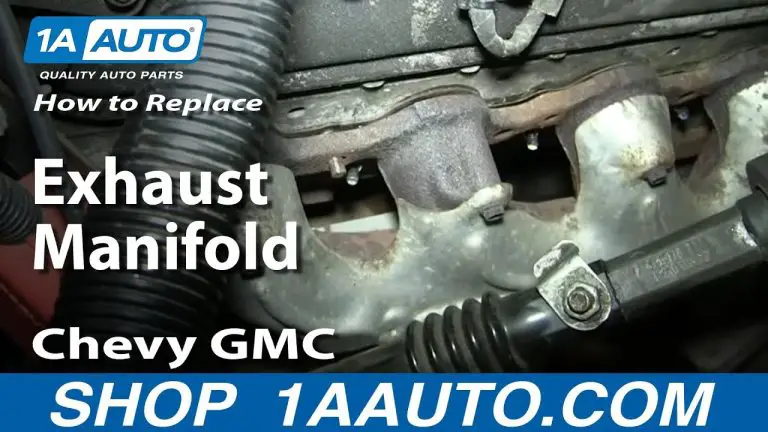
The number of exhaust manifolds a car has is directly tied to the number of cylinder banks its engine has. Most modern cars have either one manifold (for inline engines) or two manifolds (one for each bank in a V-type or Boxer engine). Understanding this is key to basic car maintenance and repair.

Dorman
Dorman 674-732 Passenger Side Exhaust Manifold Kit…
- Upgraded materials - this replacement exhaust manifold is constructed of ductile iron to prevent future warping and cracking
- Complete kit - includes new manifold, manifold gasket, 2 flange gaskets, 3 studs, 3 nuts
- Direct fit - reverse engineered from original equipment for seamless installation
As an Amazon Associate I earn from qualifying purchases.
How Many Exhaust Manifolds Does A Car Have: Essential Guide for Beginners
If you’ve ever looked under the hood of your car and wondered about those chunky, cast-iron parts bolted right onto the engine that funnel smoke away, you’re looking at the exhaust manifolds. It’s a common question: how many of these parts should my car actually have? This simple question often pops up when you hear a new rattling sound or when a mechanic mentions a repair. Don’t worry if you feel confused; exhaust systems can seem complicated. But understanding the number of manifolds is easier than you think! This guide will break down exactly what these parts do and how many you should expect, based on your specific engine type. We’ll walk through this step-by-step so you can feel confident discussing repairs with your trusted mechanic.
We will explore what an exhaust manifold is, why its location matters, and how different engine layouts dictate the count—whether it’s one or two. By the end of this article, you will know precisely how many manifolds your car needs and what to look out for if one fails.
What Exactly Is an Exhaust Manifold? The Basics Explained
Before diving into the count, let’s quickly cover the job of this crucial part. Think of the exhaust manifold as the engine’s first collector. When your engine burns fuel, it creates hot, toxic exhaust gases (like carbon monoxide and unburned fuel). These gases need a fast, safe exit route.
The exhaust manifold is bolted directly to the cylinder head of the engine. Each cylinder has its own small pipe opening. The manifold takes these individual pipes and merges them into one or two larger pipes that then lead down the rest of the exhaust system (catalytic converter, muffler, tailpipe).
Why the Manifold is So Important
It handles extreme heat and pressure while ensuring minimal back pressure on the engine. Low back pressure means your engine can “breathe out” easily, which is vital for horsepower and fuel efficiency. A broken or leaky manifold causes loud noises, smells, and poor performance.
Here are the primary functions:
- Gas Collection: Gathers hot gases from every cylinder.
- Heat Management: It is designed to handle very high temperatures.
- Initial Flow Direction: Directs the gases into the rest of the exhaust system components.
The Direct Answer: How Many Exhaust Manifolds Does My Car Have?
The answer to “how many exhaust manifolds does a car have” is almost always one or two. This number is entirely determined by how your engine cylinders are arranged.
To figure out your count, you first need to know your engine type. Modern passenger vehicles generally use one of three main configurations: Inline, V-Type, or Boxer (Flat).
Understanding Engine Configurations and Manifold Count
Automotive engines are built with cylinders grouped together. These groups are called “banks.”
1. Inline Engines (I4, I6) = One Manifold
In an inline engine, all the cylinders are lined up in a single, straight row—like pearls on a string. Common examples are Inline 4-cylinder (I4) or Inline 6-cylinder (I6) engines.
Since all cylinders are on one side of the engine block, they all feed into a single, large exhaust manifold mounted on that side.
- Configuration: Single row of cylinders.
- Manifold Count: 1.
- Examples: Most 4-cylinder economy cars and many older 6-cylinder sedans.
2. V-Type Engines (V6, V8) = Two Manifolds
V-type engines have their cylinders arranged in two separate banks that meet at an angle, forming a ‘V’ shape when viewed from the front. Common examples are V6 or V8 engines.
Because you have two distinct banks of cylinders, you need two separate manifolds:
- One manifold collects the gases from the cylinders on the left bank.
- The second manifold collects the gases from the cylinders on the right bank.
These two manifolds usually meet a short distance away from the engine to form a single exhaust pipe that continues toward the back of the car.
- Configuration: Two banks of cylinders forming a V-shape.
- Manifold Count: 2.
- Examples: Most SUVs, trucks, and performance cars use V6 or V8 engines.
3. Boxer/Flat Engines (Subaru, Porsche) = Two Manifolds
Boxer engines are similar to V-engines in that they have two banks, but the cylinders are opposed to each other, lying flat (180 degrees apart). Subaru is the most famous user of this design in everyday cars.
Like the V-engine, the Boxer configuration requires two separate manifolds—one for each side of the engine block.
- Configuration: Two banks of cylinders lying flat.
- Manifold Count: 2.
- Examples: Most Subaru models (Impreza, Forester) and many Porsche models.
Quick Reference Table for Manifold Count
Use this table to quickly identify how many manifolds your engine configuration should have:
| Engine Type (Cylinder Count) | Cylinder Arrangement | Expected Manifold Count |
|---|---|---|
| Inline 4 (I4) | Single Row | 1 |
| Inline 6 (I6) | Single Row | 1 |
| V6 or V8 | Two Banks (V-Shape) | 2 |
| Boxer/Flat Engine | Two Banks (Opposed) | 2 |
What If My Car Has More Than Two? (The Exception)
For the vast majority of consumer cars, the answer is one or two. However, there are rare exceptions, especially in performance or heavy-duty applications, though these are usually just specialized versions of the V-engine layout.
Some specialized, high-output V engines, particularly those with complex head designs or those used in racing applications, might use four separate headers (performance-focused manifolds) to maximize exhaust scavenging on each bank. However, for standard street vehicles, this is highly unusual.
Key Takeaway: If you own a normal sedan, truck, or SUV, count your cylinder banks. One bank equals one manifold; two banks equal two manifolds. If a mechanic tells you your 4-cylinder car needs four manifolds replaced, ask for clarification, as this is not standard.
Manifold vs. Header: Understanding the Terminology
As you start researching exhaust parts, you will hear two terms used almost interchangeably: “Exhaust Manifold” and “Exhaust Header.” While they perform the same job, they are built differently, and this difference is important for performance enthusiasts.
Exhaust Manifold (Stock/OEM)
This is the part your car came with from the factory (Original Equipment Manufacturer or OEM). They are usually:
- Made of heavy, durable cast iron.
- Designed for longevity and noise reduction.
- Less efficient at maximizing exhaust flow, which keeps costs down.
Exhaust Header (Aftermarket/Performance)
Headers are the aftermarket upgrade. They replace the stock manifold and are designed purely for performance:
- Made from thinner, lighter steel tubing.
- Each runner (pipe leading from the cylinder) is typically equal in length to optimize gas pulse timing (scavenging).
- They often result in slightly more engine noise and require more precise installation.
When talking about the physical count on the engine, whether you have a stock manifold or an aftermarket header, the number attached to the engine block remains the same (one or two, based on cylinder banks).
Why Do Exhaust Manifolds Fail? Safety and Performance Implications
Exhaust manifolds live in the harshest environment under your car—right next to parts operating at over 1,000°F. Over time, extreme heat cycling (hot when running, cold when sitting) causes the metal to expand and contract, leading to failure.
The most common failure is developing a crack or leak.
Signs You Might Have a Bad Manifold (or Gasket)
A leak in the manifold or the gasket sealing it to the cylinder head can cause several noticeable issues. Since the gases are escaping before they reach the muffler, the symptoms are usually loud and smell noticeable.
- Loud Exhaust Noise: A sharp “ticking,” “puffing,” or “tappet” sound, especially when the engine is cold. This sound often quiets down as the engine heats up and the metal expands, temporarily sealing the crack.
- Exhaust Fumes Inside the Cabin: This is a safety concern. If you smell exhaust odors (carbon monoxide) inside the car, especially when idling, stop driving and have it inspected immediately.
- Reduced Performance and Fuel Economy: Leaks disrupt the exhaust flow sensor readings, confusing the engine computer (ECU) and causing it to run inefficiently.
- Check Engine Light: A leak before the oxygen sensor will throw off readings, usually triggering codes related to the fuel trim or O2 sensor efficiency.
For more in-depth information on exhaust gases and environmental standards, you can review resources from the U.S. Environmental Protection Agency (EPA) regarding vehicle emissions control systems.
Step-by-Step: Identifying Your Engine and Manifold Count
If you are unsure whether you have an inline or a V-type engine, here is a simple, safe way to figure it out without dismantling anything.
Step 1: Locate Your Vehicle Identification Number (VIN)
The VIN holds the key to your engine specifics. You can usually find this on the driver’s side dashboard (visible through the windshield) or on the sticker inside the driver’s side door jamb.
Step 2: Decode the Engine Type Using the VIN
The 8th character of the VIN typically indicates the engine type or displacement. You can use a free online VIN decoder (many reputable sites offer this service) to look up this character. This will tell you if you have a V6, V8, or an Inline configuration.
Alternatively, you can use a reputable resource like the NHTSA VIN Decoder Guide for official reference.
Step 3: Visual Inspection (If Comfortable)
If you are comfortable popping the hood (engine off and cool!), you can often confirm the layout visually.
- Inline Engine: You will see one long, single bank of spark plug wires or coil packs running across the top of the engine. The exhaust manifold will be bolted onto one side of this long block.
- V-Engine: You will see two distinct, separate groups of spark plug wires/coils angled away from each other, forming a distinct “V.” You will see two manifolds, one tucked down on the left and one on the right.
If you have a V-engine, tracing the exhaust pipes away from the cylinder head will clearly show two distinct manifolds merging downstream.
Choosing the Right Replacement: Manifold vs. Header Installation Considerations
When a manifold finally gives out, you must choose whether to replace it with a stock manifold or upgrade to headers. Your choice depends on your budget and your driving goals.
Factors to Consider When Buying Replacement Parts
| Factor | Stock Manifold (OEM Replacement) | Aftermarket Headers |
|---|---|---|
| Cost | Generally lower initial cost. | Higher initial cost, often requires other supporting mods. |
| Installation Difficulty | Straight swap, fits existing components well. | May require new gaskets, bolts, and sometimes minor exhaust pipe modification. |
| Noise Level | Quiet, maintains factory sound profile. | Louder, deeper exhaust tone. |
| Performance Gain | None (restores lost performance). | Noticeable horsepower and torque gains, especially at higher RPMs. |
| Durability | Very durable cast iron, long lifespan. | Durability depends heavily on material quality; can crack if cheap steel is used. |
Tips for Replacement Projects
Replacing an exhaust manifold is a challenging job, even for experienced DIYers, due to severe heat exposure causing bolts to seize up (rust welding them into place). If you are a beginner, I highly recommend letting a trusted professional handle this specific repair. If you choose the DIY route, here are critical tips:
- Use Penetrating Oil: Soak all manifold bolts with a high-quality penetrating oil (like Kroil or PB Blaster) for at least 24 hours before attempting removal.
- Use Heat (Carefully): Sometimes, briefly heating the rusted bolt with a torch can help break the rust bond, allowing it to turn without snapping. (Use caution and only do this if you are familiar with engine bay heat management.)
- Buy New Hardware: Always replace the old manifold bolts with brand-new, high-temperature rated hardware.
- Replace the Gasket: Never reuse an old exhaust gasket. Purchase a high-quality, multi-layer steel (MLS) gasket designed for your specific engine.
Troubleshooting Dual Manifold Systems (V6/V8)
If your car has two manifolds, you might sometimes run into issues where only one side is failing, or the failure impacts the flow differently.
What if only one manifold is leaking?
It is common for one manifold to fail before the other, often due to heat soaking more intensely on one side, or if one side is closer to a major exhaust leak downstream that caused excessive heat buildup.
My Advice: While you can technically replace only the failed manifold, exhaust systems experience stress evenly. If one has failed due to age, the other is likely not far behind. For the best long-term performance and to avoid doing the difficult labor twice, consider replacing both manifolds at the same time.
The Role of the Oxygen Sensors
Modern engines rely heavily on Oxygen (O2) sensors to measure exhaust gas composition. In a dual-manifold system (like a V8), you will have:
- Two Pre-Catalytic Converter Sensors (one on each manifold collector pipe).
- Two Post-Catalytic Converter Sensors (one after each converter).
If the leak is right near the front O2 sensor on one bank, the sensor will read “lean” (too much fresh air getting in), telling the computer to dump more fuel. This messes up the fuel-air ratio across the entire engine, impacting performance even if the other side is fine.
Common Misconceptions About Exhaust Manifolds
As your friendly automotive guide, I want to clear up a few things that often trip up beginners:
Misconception 1: More Manifolds Mean More Power
This is false. A 4-cylinder car only needs one manifold because it only has one bank of four cylinders exhausting gases. Trying to install two manifolds on an inline engine would be impossible without major custom fabrication, and it wouldn’t offer any performance benefit.
Misconception 2: Manifolds are the Same as Mufflers
Not at all! The manifold is the very first piece bolted to the engine. The muffler is the last component (before the tailpipe) responsible for quieting the sound. They are vastly different parts.
Misconception 3: Headers Never Fail
While high-quality headers are robust, they are made of thinner steel than cast iron manifolds. They are more susceptible to rust-through or cracking from extreme, sudden temperature changes (like driving through deep puddles after a hard run). They can and do fail.
Frequently Asked Questions (FAQ)
Q1: Can I drive my car if the exhaust manifold is cracked?
A: You can drive short distances, but it is not safe or recommended for long. A leak will allow toxic carbon monoxide into the air, which can enter your cabin. It also makes your engine run inefficiently, which costs you gas money and hurts performance.
Q2: How much does it cost to replace an exhaust manifold?
A: Costs vary widely by vehicle, but generally, replacing one manifold can range from $300 to $700 for parts and labor if you have an accessible inline engine. For V-engines requiring two manifolds, the labor cost doubles, potentially putting the total replacement cost between $600 and $1,200+.
Q3: How long should an exhaust manifold last?
A: Factory cast-iron manifolds are extremely durable and often last the lifetime of the vehicle—150,000 to 250,000 miles or more. Failures usually occur when bolts rust out or if the engine experiences extreme overheating.
Q4: Does replacing the manifold gasket fix a loud ticking noise?
A: Often, yes! If the manifold itself isn’t cracked, the gasket between the manifold and the cylinder head can blow out. Replacing just the gasket is cheaper and easier than replacing the entire heavy manifold unit.
Q5: If I upgrade to headers, will I need to tune my car?
A: If you install basic, direct-replacement headers on most modern cars, you might not need an immediate tune. However, if you install high-flow headers, especially on a V-engine where both sides are upgraded, your engine computer may struggle with the increased airflow, potentially requiring a custom ECU tune for optimal performance and to prevent a Check Engine Light.
Q6: What is an exhaust manifold made of?
A: Stock manifolds are usually made of heavy cast iron, which handles heat well. Aftermarket performance headers are typically made from tubular stainless steel or mild steel.
Conclusion: Knowing Your Engine Equals Knowing Your Parts
You now have a clear understanding of why the question “how many exhaust manifolds does a car have” doesn’t have one single number answer. It’s all about geometry! If your car has cylinders arranged in one straight line (Inline), you have one manifold. If your car’s cylinders are split into two angled or opposing banks (V or Boxer), you will have two manifolds.
Remember that these parts are critical for safety, efficiency, and performance. Recognizing the sounds or smells associated with a failing manifold allows you to address the issue before it leads to more expensive problems down the road, like damaging your catalytic converters. By knowing your engine configuration, you are now empowered to inspect your vehicle confidently and have informed discussions with your mechanic. Keep listening to your car, and you’ll keep it running smoothly for years to come!
Related pick: Check today's price on Amazon