Are Aftermarket Headers Legal in California: Essential Facts
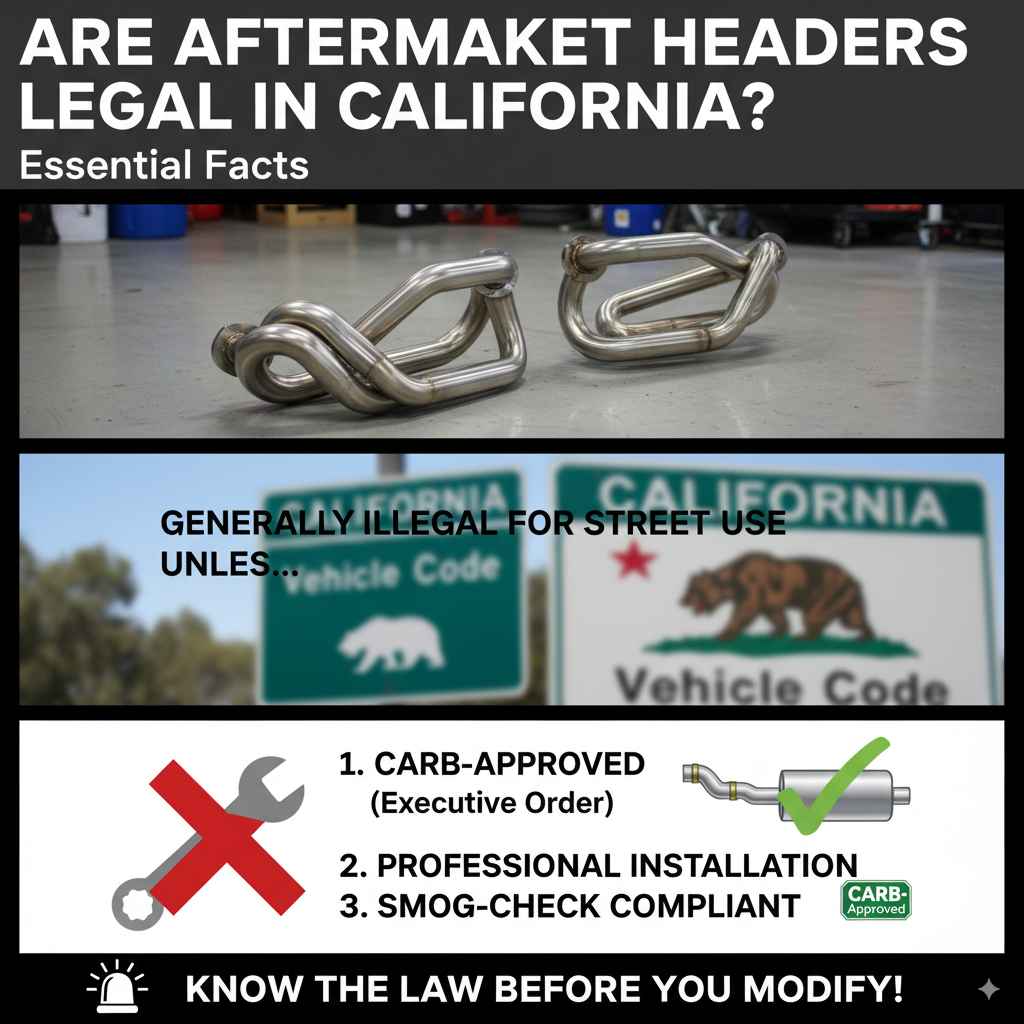
Are aftermarket headers legal in California? Generally, no, unless they have a CARB EO number. California has strict emissions laws. Stock headers on a vehicle when it was manufactured are typically the only legal option for street use. Always verify with CARB or a qualified mechanic before installation.
Thinking about upgrading your car’s exhaust headers in California? It’s a common question many car owners have. You’ve heard about how headers can potentially boost performance and give your ride a better sound. But then you also hear whispers about strict rules, especially when it comes to emissions. It can get confusing, leaving you wondering if that slick set of aftermarket headers is legal for your daily driver or weekend cruiser. Don’t worry, understanding California’s regulations for exhaust headers doesn’t have to be a headache. We’re here to break it down in simple terms, so you know exactly what you can and can’t do. Stick around, and we’ll guide you through the essential facts you need to know before making any changes to your exhaust system.
Understanding Exhaust Headers: The Basics
Before we dive into California’s specific rules, let’s quickly cover what exhaust headers are and why people want them. Your engine produces exhaust gases as it burns fuel. These gases travel from the cylinders through the exhaust manifold and then down the rest of the exhaust system. The exhaust manifold is the part that collects these gases from each cylinder and directs them into a single pipe.
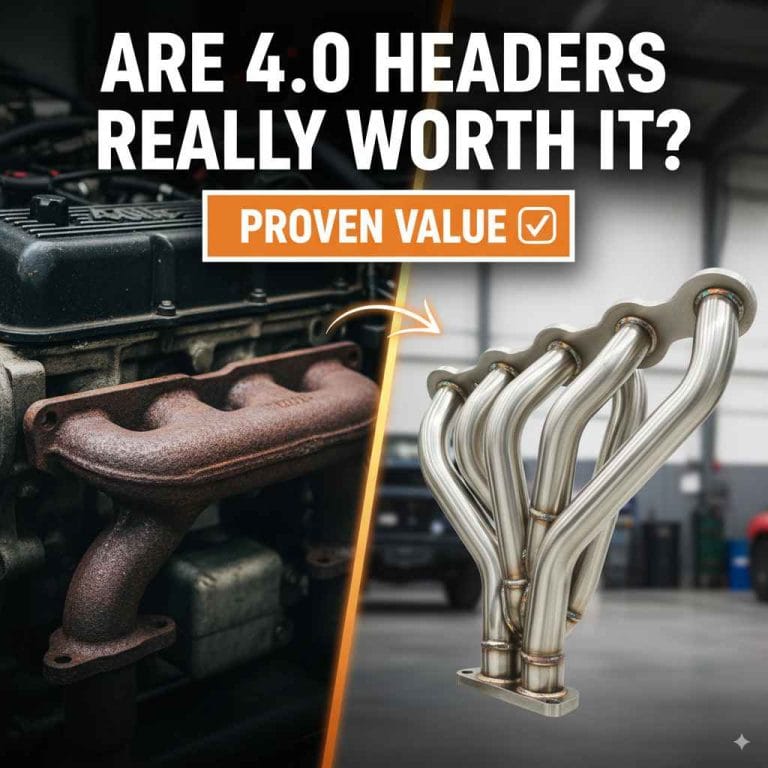
Aftermarket headers replace your car’s stock exhaust manifold. They are designed differently, often with smoother bends and larger diameters. The main goals of installing aftermarket headers are often:
- Performance Improvement: By improving the flow of exhaust gases out of the engine, headers can help the engine breathe more efficiently. This can lead to a small increase in horsepower and torque.
- Sound Enhancement: Headers can change the exhaust note of your vehicle, giving it a deeper, more aggressive sound.
- Weight Reduction: Some aftermarket headers are made from lighter materials than stock manifolds.
- Aesthetics: They can sometimes look more appealing under the hood.
California’s Strict Emissions Laws: Why Rules Exist
California has some of the strictest emissions standards in the United States, aimed at reducing air pollution and improving air quality for its residents. These regulations are primarily overseen by the California Air Resources Board (CARB). The goal is to ensure that vehicles on the road, both new and existing, meet specific pollution limits.
Why are these rules so important? Because vehicle exhaust contains pollutants like:
- Carbon Monoxide (CO)
- Hydrocarbons (HC)
- Nitrogen Oxides (NOx)
- Particulate Matter (PM)
These can contribute to smog, respiratory problems, and environmental damage. To combat this, California mandates that any emissions control equipment on a vehicle must be either the original equipment (OE) or an approved aftermarket replacement. When it comes to the exhaust system, this has significant implications for parts like headers.

Aftermarket Headers and CARB Approval: The Key to Legality
This is where the main point of contention for aftermarket headers in California comes in. For an aftermarket part to be considered legal for use on a vehicle in California, it must be able to demonstrate that it does not adversely affect the vehicle’s emissions control system. For performance parts like headers, this usually means they need a specific exemption or approval from CARB.
The approval process involves manufacturers submitting their parts to CARB for testing. If the part passes rigorous tests showing it meets or exceeds the emissions standards of the original equipment, CARB will issue an Executive Order (EO) number. This EO number is a unique identifier for that specific part on a specific vehicle (or range of vehicles).
Key takeaway: If an aftermarket part, including headers, does not have a CARB EO number, it is generally not considered legal for installation on a vehicle that is driven on public roads in California.
What is a CARB EO Number?
A CARB Executive Order (EO) is a document issued by the California Air Resources Board that exempts an aftermarket part from the state’s prohibition on tampering with or disabling emissions control devices. Essentially, it’s the stamp of approval that says a specific aftermarket part is legal to install and use on certain vehicles in California without negatively impacting emissions.
You can usually find the EO number printed on the part itself, on a sticker attached to the part, or within the manufacturer’s documentation. It will look something like “D-XXX-YY” where XXX is a manufacturer code and YY is a part series number. If you’re considering buying aftermarket headers, ask the manufacturer specifically if they have a CARB EO number for your vehicle’s make and model.
Why Don’t Most Aftermarket Headers Have CARB EO Numbers?
The process of obtaining a CARB EO is rigorous and expensive. Manufacturers must:
- Design for Emissions Compliance: The part must be designed to work with the vehicle’s existing emissions systems (like oxygen sensors, catalytic converters, etc.) without making them less effective.
- Undergo Testing: The part must be tested in a laboratory setting to prove it doesn’t increase harmful emissions. This testing simulates real-world driving conditions.
- Pay Fees: There are application and testing fees associated with the EO process.
For many aftermarket companies, especially smaller ones, the cost and complexity of obtaining a CARB EO for every single product might not be economically feasible. Performance parts, in particular, are often designed with the primary goal of increasing airflow and power, which can sometimes run counter to stringent emissions mandates. Therefore, a large number of performance-oriented aftermarket headers simply do not go through the CARB approval process.
The “Not for Sale or Use in California” Warning
You’ve probably seen this warning on many performance parts online, including headers: “Not for sale or use in California.” This is a direct result of CARB regulations. Manufacturers are legally prohibited from selling or knowingly causing to be sold or installed, any aftermarket part that alters the performance of emissions control systems of a motor vehicle, unless that part has a CARB EO number.
This warning is there to protect consumers and manufacturers from legal and environmental repercussions within California.
What About Headers Designed to Keep Catalytic Converters?
Some aftermarket headers are designed to retain the stock catalytic converter(s) or include high-flow catalytic converters. The idea here is to improve exhaust flow from the manifold while still processing the exhaust gases with a catalytic converter to reduce emissions. While this sounds like a promising compromise, it doesn’t automatically make them legal in California.
Even headers that retain or include catalytic converters must still have a CARB EO number to be legal for street use in California. CARB’s testing evaluates the entire emissions system’s performance. Simply keeping a cat isn’t enough; the header’s design and materials also play a role, and the overall effect on emissions must be proven to CARB through their certification process.
Table: Common Exhaust System Modifications and California Legality
| Modification | Description | California Legality (Street Use) | Notes |
|---|---|---|---|
| Stock Headers | Original equipment (OE) manifold from the factory. | Legal | These are the baseline for emissions compliance. |
| Aftermarket Headers (No CARB EO) | Replacement manifold not certified by CARB. | Illegal | Cannot be legally installed or used on public roads. |
| Aftermarket Headers (With CARB EO) | Replacement manifold with a CARB Executive Order number for your specific vehicle. | Legal | Must have the correct EO number for your application. |
| “Cat-Back” Exhaust Systems | Modifies exhaust from the catalytic converter back. | Generally Legal | Does not typically alter emissions control devices. However, some highly modified “cat-back” systems could potentially be scrutinized if they significantly impact backpressure or exhaust tuning. Always check for compliance if unsure. |
| High-Flow Catalytic Converters (Aftermarket) | Replacement catalytic converter designed for better flow. | Legal (if CARB Approved) | Must have a CARB EO number. The OE catalytic converter is typically only legally replaceable with an OE part or a CARB-approved aftermarket one. |
| Header or Catalytic Converter Delete | Removal of headers or catalytic converter. | Highly Illegal | Significant emissions tampering and environmental violation. |
Consequences of Running Illegal Headers in California
Driving a vehicle in California with aftermarket headers that are not CARB-legal can lead to several problems. The most immediate and common issue is failing a smog check.
Failing a Smog Check
California requires most vehicles to undergo regular smog inspections to ensure they meet emission standards. When a technician inspects your vehicle, they will check for:
- Tampering: Visual inspection for any unauthorized modifications to the emissions control system, including the exhaust manifold.
- OBD-II Scan: Modern vehicles have an On-Board Diagnostics (OBD-II) system that monitors emissions. They will check for fault codes and ensure all emissions monitors have run and passed. If illegal headers cause a component to read out of spec or prevent a monitor from running, you’ll fail.
- Visual Cues: Aftermarket headers often look different from stock ones.
If your vehicle is found to have non-compliant headers, it will not pass the smog check, and you won’t be able to renew your registration until the issue is resolved. This means you’ll likely have to remove the illegal headers and reinstall the original equipment or a CARB-approved alternative.
Fines and Fix-It Tickets
Beyond smog checks, law enforcement officers in California can issue “fix-it tickets” or citations for vehicles that are found to be in violation of emissions and equipment regulations. While sometimes these might be warnings, persistent issues or obvious tampering can result in actual fines. These fines can add up, making the cost of illegal modifications far greater than the initial purchase price.
Potential for Revoked Registration
In severe cases, or if a vehicle is repeatedly found in violation, there’s even a possibility of having your vehicle registration suspended or revoked until compliance is achieved. This is a drastic measure but underscores how seriously California takes its air quality regulations.
Alternatives and Legal Options for California Drivers
Don’t despair if you’re a Californian looking to improve your car’s performance or sound! There are legal avenues:
Look for Headers with a CARB EO Number
This is the golden ticket. Search diligently for aftermarket headers that explicitly state they have a CARB EO number for your specific year, make, and model. This might limit your options, but it ensures you’re compliant.
Reputable Websites for CARB-Approved Parts:
- CARB’s Smog Check Website: You can often search their database for approved aftermarket parts. While not always the most user-friendly for browsing, it’s authoritative. A good starting point is their Aftermarket Parts Exemptions page.
- Manufacturer Websites: Major header manufacturers often have a section on their website detailing their CARB-legal products.
- Specialty Performance Shops: Shops that specialize in exhaust systems in California are often knowledgeable about legal options.
Focus on Other Legal Modifications
If CARB-approved headers are too difficult to find or too expensive, consider other modifications that are generally legal in California and can still offer improvements:
- Cat-Back Exhaust Systems: As mentioned, systems that modify the exhaust from the catalytic converter backward are usually legal as they don’t alter emissions devices. They can offer a better sound and slight performance gains.
- Cold Air Intakes: Many cold air intake systems are CARB-approved and can help with engine breathing and performance.
- Tuning (with caution): ECU tuning can optimize engine performance, but it’s crucial that the tune does not disable emissions controls or cause the vehicle to run outside of its designed emissions parameters.
- Suspension and Brake Upgrades: For performance feel, consider handling and braking improvements.
Maintain Your Stock System Properly
Sometimes, simply ensuring your original exhaust system is in top condition can make a difference. A clean, well-functioning stock system might be all you need. Regular maintenance, checking for leaks, and replacing worn parts can keep your current setup performing optimally.
How to Verify Legality (The Do’s and Don’ts)
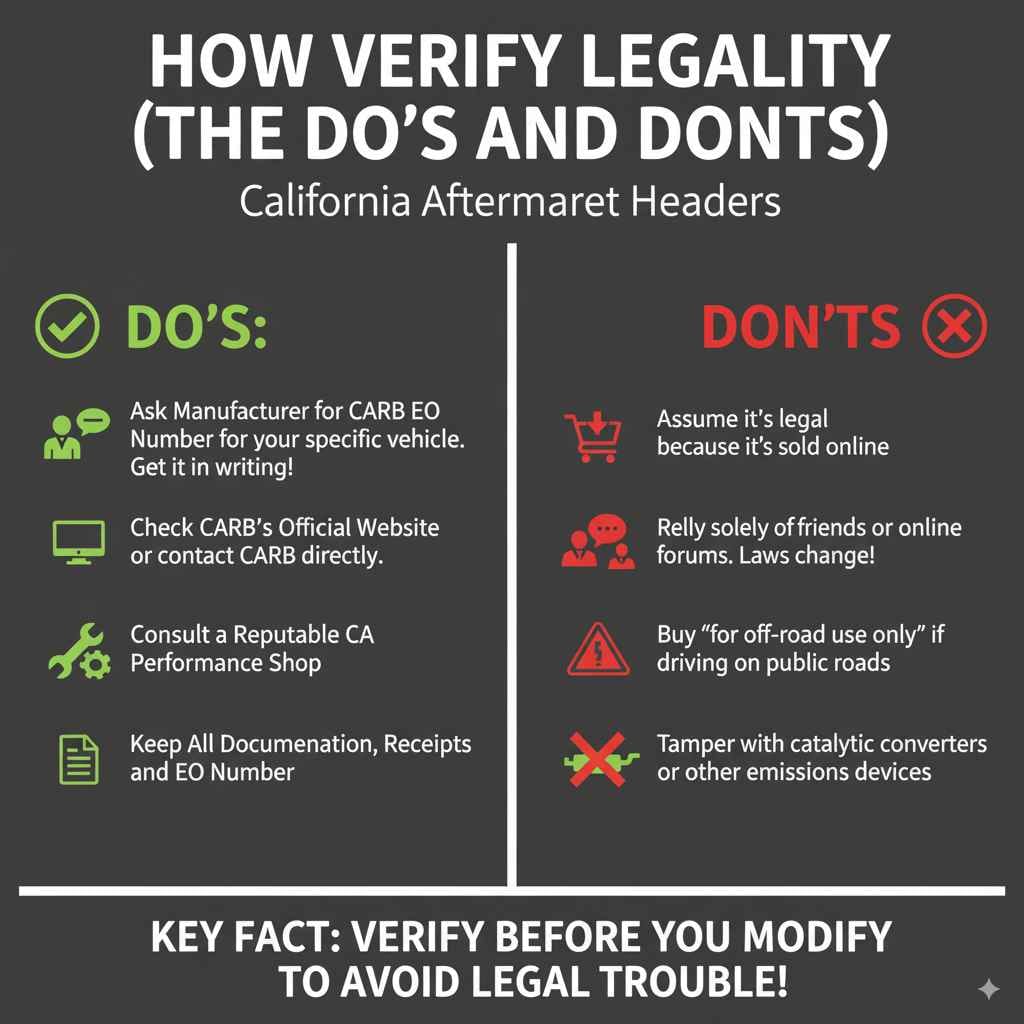
When in doubt, always verify. Here’s a simple guide:
Do’s:
Do ask the manufacturer directly if their headers have a CARB EO number for your specific vehicle application. Get the EO number in writing if possible.
Do check CARB’s official website or contact CARB directly if you want to be absolutely sure about a specific part.
Do consult with a reputable performance shop in California that has a good understanding of state emissions laws.
Do keep all documentation, receipts, and the EO number (if applicable) with your vehicle’s paperwork.
Don’ts:
Don’t assume that just because a part is sold online, it’s legal in California.
Don’t rely solely on what friends or online forums say. Laws can change, and individual experiences vary.
Don’t buy headers that say “for off-road use only” or “not for sale in California” if you plan to drive the vehicle on public roads.
Don’t attempt to remove catalytic converters or tamper with other emissions control devices.
A Note on “Off-Road” or “Race” Headers
You’ll often see headers marketed as “off-road” or “race” versions. These are almost universally illegal for street use in California. They typically do not include provisions for catalytic converters and are designed purely for maximum performance without regard for emissions on public roads. Installing these on a vehicle that is driven on public streets will result in failure during emission testing and potential legal penalties.
California’s Bureau of Automotive Repair (BAR) website provides extensive information on smog checks and equipment requirements. Understanding their guidelines is crucial for any vehicle owner in the state.
FAQ: Your Burning Questions About California Headers
Q1: Can I install any aftermarket headers on my car in California?
A: No, generally you cannot. Aftermarket headers must have a specific Executive Order (EO) number from the California Air Resources Board (CARB) to be legal for installation and use on vehicles driven on public roads in California. Without a CARB EO number, they are considered illegal modifications.
Q2: What happens if I install non-CARB-legal headers and get caught?
A: You will likely fail your smog check, which is required for vehicle registration renewal. You could also receive a “fix-it ticket” or a fine from law enforcement for emissions equipment violations. You’ll need to remove the illegal headers and reinstall compliant parts to pass inspection and avoid penalties.
Q3: How do I know if a header has a CARB EO number?
A: The manufacturer should clearly state that the header has a CARB EO number and provide the specific EO number. This information is usually found on the product packaging, the manufacturer’s website, or sometimes printed directly on the part itself. Always ask for the EO number before purchasing.
Q4: What if my car is a project car or a weekend toy that I don’t drive much?
A: California law applies to vehicles operated on public roads, regardless of how often they are driven. Even for a car that sees limited use, if it is driven on public streets, it must comply with emissions laws. If the vehicle will never be driven on public roads and remains strictly off-road or for closed-course competition, different rules might apply, but this requires specific certifications and is not the norm for typical car ownership.
Q5: Are “cat-back” exhaust systems legal in California?
A: Most cat-back exhaust systems are legal in California because they do not alter or replace emissions control devices like the catalytic converter. They modify the exhaust system downstream of the emissions control equipment. However, it’s always wise to ensure the system doesn’t cause issues with emissions sensors or alter the vehicle’s overall emissions profile significantly.