Ceramic Coated Exhaust Manifolds: Worth It or Not
Ceramic-coated exhaust manifolds pay off when heat control matters: tight engine bays, turbo or supercharged setups, and cars that dump heat into nearby parts; if you only want a cleaner look on a roomy naturally aspirated bay, skip them. Leave the heat alone and you can cook plug wires, raise intake temperatures, and shorten gasket, sensor, and hose life. This guide maps engine type, bay tightness, and heat goal to the cheapest option that actually fixes the problem.
Verdict

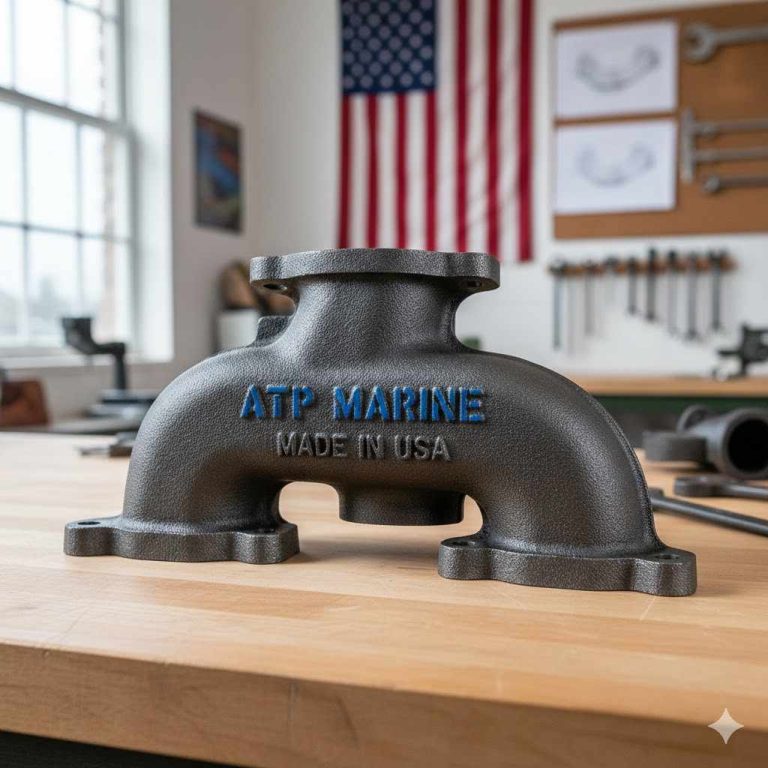
- Ceramic coating included
- Comes with hardware and gaskets
- Direct replacement for damaged manifolds
The answer is usually yes for forced-induction heat management, often no for a basic street car with plenty of clearance. Exhaust temperatures can exceed 980°C (1,800°F), so the coating has a real job to do, but the value depends on where that heat ends up and whether you are paying for the coating itself or for prep, removal, cure, and downtime too.
Specs at a glance
| Coating type | Application method | Typical fit | Durability note | Heat-control note |
|---|---|---|---|---|
| Plasma-sprayed ceramic coating | Industrial spray process | Best for high-heat parts and long service life | Best adhesion and lifespan; may last 8–10 years under ideal conditions | Strong option when you want the longest-life barrier |
| Liquid-applied ceramic coating | Spray or brush application | Mid-price builds and shop work | More affordable, but less durable | Useful when budget matters more than lifespan |
| Air-cure ceramic coating | Ambient cure, no oven required | DIY-friendly jobs | Lower heat tolerance of about 1,200°F | Convenient, but not the top choice for harsh service |
Ceramic exhaust coating is a high-temperature protective layer for manifolds, headers, and pipes. It can coat the outside, or the inside and outside depending on the product. The inside option matters because it can keep more heat in the exhaust stream, while the outside surface focuses on cutting radiant heat into the bay.
Cost is not just the quote for the coating. Add removal, blasting or polishing prep, masking, curing, reassembly, new gaskets, and the chance that the car sits while parts are away. Funk Motorsport gives a coating price range of £750 to £2000 per exhaust system, which is a useful reminder that the real bill can be much higher than the finish itself.
Who it
Ceramic coating is for owners who need less radiant heat around the manifold, not just a cleaner-looking part. The best fit is a tight bay, a hotter engine, or a setup that already shows signs of heat soak near sensors, hoses, plug wires, or intake plumbing. Alibaba’s guide says most street-driven vehicles only see marginal benefits, and it recommends skipping coating unless the setup runs hot enough to justify it.
Naturally aspirated street cars
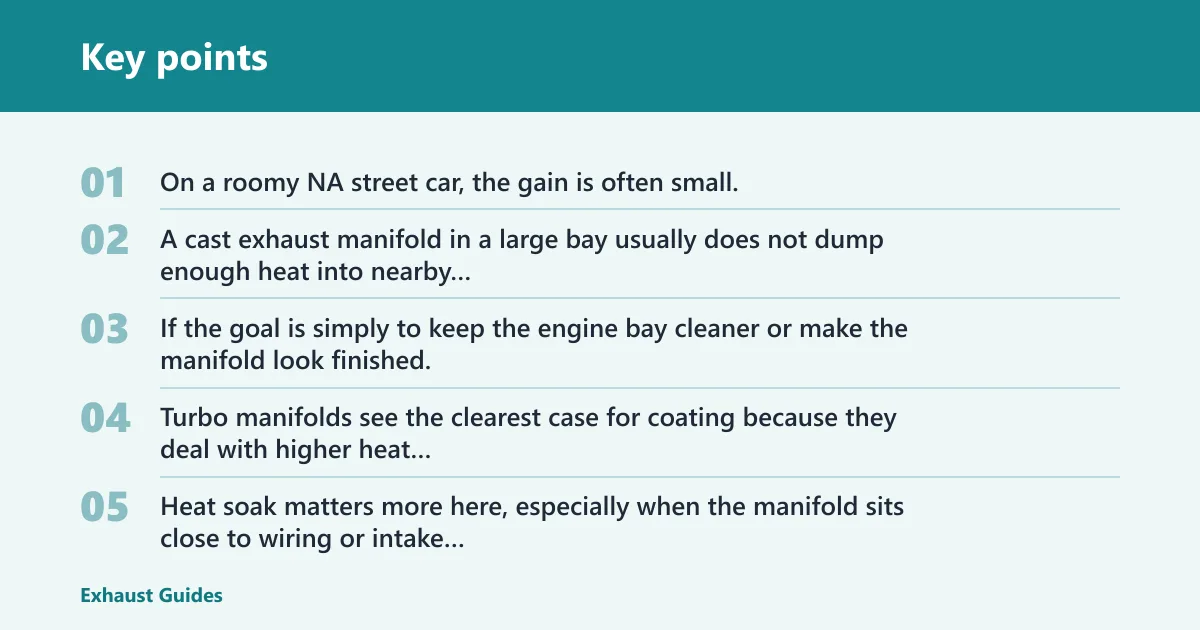
On a roomy NA street car, the gain is often small. A cast exhaust manifold in a large bay usually does not dump enough heat into nearby parts to make coating a clear value. If the goal is simply to keep the engine bay cleaner or make the manifold look finished, that is a cosmetic decision rather than a heat-management one.
Turbo street cars
Turbo manifolds see the clearest case for coating because they deal with higher heat load and tighter packaging around turbine housings, lines, and sensors. Heat soak matters more here, especially when the manifold sits close to wiring or intake parts. If the turbo setup already runs hot, coating can be one of the better heat-control upgrades per dollar spent.
Track cars and off-road trucks
Track use raises sustained heat, while off-road and 4×4 use adds long load periods, slow speeds, and dirty conditions. Those are the cases where a thermal barrier can help protect nearby components. Still, the value depends on whether the bay is cramped enough for the heat to matter, or whether a simpler shield would solve the same issue for less money.
What works
The main benefit is cutting radiant heat transfer. That matters when the manifold sits close to the intake, hoses, wiring, or sensors. Cerakote says coatings reduce heat soak in engine bays, and that matches the practical use case: keep the heat where it belongs, inside the exhaust path, and away from sensitive parts.
Say your turbo street car has about a 2-inch gap between the manifold and the charge pipe. After a hard pull, the pipe heat-soaks and the intake air temp climbs faster than expected. A coating on the manifold may help, but a turbo blanket or shield around the hottest source can do more work because it blocks radiant heat right at the source.
Inside coating can matter too. The exterior is what most buyers see, but an internal coating is the part that can better support exhaust-gas heat retention. That is relevant when you want more energy to stay in the exhaust stream, especially on turbo manifolds where hotter exhaust energy can be useful for spool and nearby-component protection at the same time.
For a turbo manifold, coating usually has the strongest case because the heat load is higher than on many naturally aspirated setups. For a cast manifold on a mild street car, the gain can be modest unless bay clearance is poor. That distinction is why a single “yes” or “no” answer does not work here.
What does not?
Ceramic coating is not a rust cure. It can help protect the metal surface, but salt exposure, stone chips, damaged prep, and poor application still matter. If the manifold lives in winter road salt or sees repeated abrasion, the coating is only one layer of protection. It does not replace drainage, cleaning, or a part that was properly prepared.
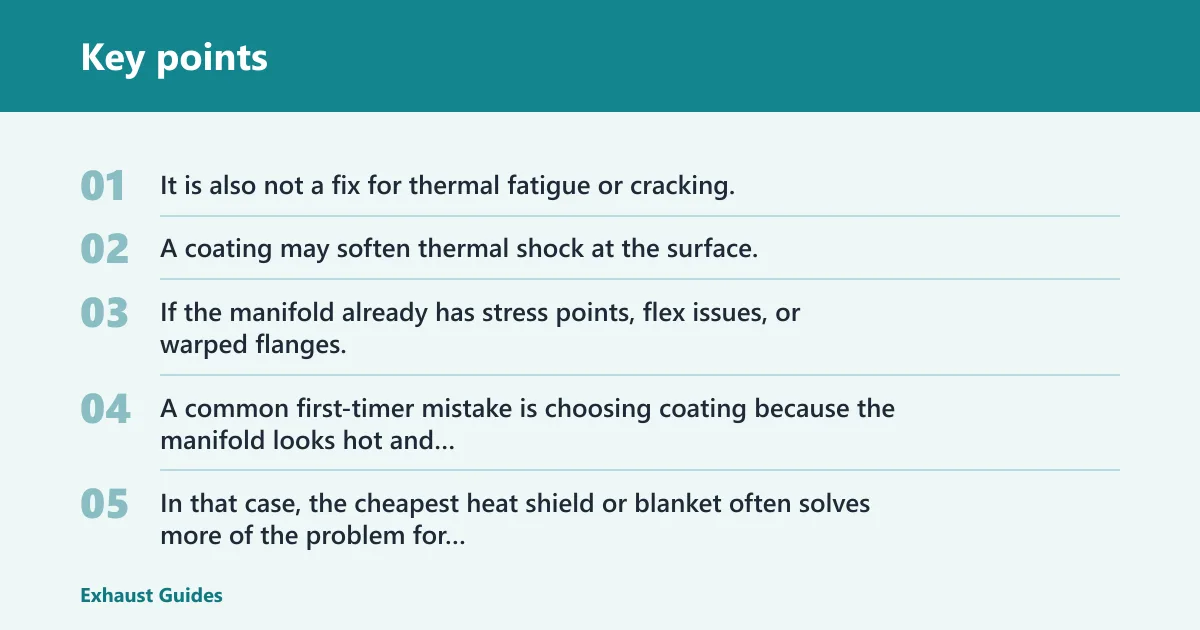
It is also not a fix for thermal fatigue or cracking. A coating may soften thermal shock at the surface, but it cannot stop a manifold with bad design, thin sections, or poor support from cracking over time. If the manifold already has stress points, flex issues, or warped flanges, coating is the wrong first fix.
A common first-timer mistake is choosing coating because the manifold looks hot and expensive, then ignoring the real problem: the bay is tight, the sensor sits too close, and the heat source is the turbo or downpipe rather than the manifold alone. In that case, the cheapest heat shield or blanket often solves more of the problem for less money.
Exhaust manifold decision matrix
This table shows the cheapest option that usually solves the actual problem. The right choice depends on bay tightness, engine type, and whether the goal is lower surface temperature, less heat soak, or longer part life.
| Use case | Expected benefit | Best coating type | Better alternative | When to skip coating |
|---|---|---|---|---|
| NA street car | Small to moderate heat reduction only if the bay is tight | Air-cure ceramic coating for budget work; liquid-applied if the shop offers it | Simple heat shield or better routing of nearby wires and hoses | Skip if the bay is roomy and heat soak is not a problem |
| Turbo street car | Clearer reduction in radiant heat and nearby-component heat soak | Plasma-sprayed ceramic coating for best adhesion and lifespan | Turbo blanket or exhaust blanket for the hottest section | Skip only if a blanket or shield already solves the issue |
| Track car | Useful where sustained heat loads nearby parts for long periods | Plasma-sprayed ceramic coating | Blanket plus shield combination when rules and access allow | Skip if the manifold is a consumable part and downtime matters more than life span |
| Off-road or 4×4 | Moderate benefit for heat soak and sensor protection in slow, loaded use | Liquid-applied ceramic coating if budget is tighter; plasma-sprayed for longevity | Heat shield or blanket where mud, water, and access make coating less practical | Skip if corrosion exposure and abrasion are the main problems |
Alternatives

- Ceramic coated for LS swap use
- Built for exhaust manifold replacement
- Brand-specific Hooker Blackheart fitment
Bilstein Hooker Blackheart BHS594 LS Swap Exhaust Manifolds are a better fit when you need a coated manifold that is already built for LS swap packaging. Based on specs and buyer feedback, the main advantage is that the ceramic coating is part of the finished manifold solution. The drawback is price: at $549.95, it can cost more than coating an existing part if your current manifold is still serviceable.
APDTY 157804 Cast Iron Ceramic Coated Exhaust Manifold Kit is a direct replacement choice for a damaged factory-style manifold. It includes coating, hardware, and gaskets, which can reduce the number of separate purchases. The drawback is that a replacement kit is not the same as a custom heat-management upgrade, so it makes the most sense when the old manifold already needs to come out.
Should you buy it?
Buy ceramic coating when heat soak is the problem and the manifold sits near components that hate heat. Skip it when you only want a cosmetic finish, when the bay is roomy, or when a blanket, shield, or wrap fixes the same issue at lower cost. The best value comes from matching the fix to the heat source, not from coating every exhaust part by default.
Value rule by budget
If the budget is tight, start with the lowest-cost option that addresses the problem directly. For a mild street setup, that is often a shield or wrap, not a coating job. If you are paying for plasma-sprayed service, the extra cost only makes sense when you need the longest life and the best adhesion.
Value rule by packaging
If the engine bay is cramped, coating moves up the list. A tight bay makes every degree of radiant heat matter more because hoses, sensors, and intake parts sit closer to the source. If the bay is open and the manifold is a cast piece with plenty of clearance, the payoff is usually weak.
Value rule by durability goal
If your priority is long life, plasma-sprayed ceramic coating is the strongest choice in competitor coverage. If you want a lower-cost DIY route, air-cure coatings are convenient, but the lower heat tolerance of about 1,200°F makes them the less durable choice for severe duty. Liquid-applied sits between those two, with lower cost and lower life.
Frequently asked questions
Is ceramic coating an exhaust manifold worth it for a street car?
For most roomy naturally aspirated street cars, usually not. Alibaba’s guide says most street-driven vehicles see only marginal benefits, and that is the right benchmark here. It becomes worth it when the bay is tight, the manifold runs hot, or nearby components are already showing heat soak symptoms.
How much heat reduction does ceramic coating actually provide?
The effect depends on the coating type, the part, and the heat source. The same source reports a coated manifold external temperature of 475°C and a 112°C reduction on its test. That is meaningful, but it is not a guarantee for every manifold, finish, or engine bay layout.
Is ceramic coating better than exhaust wrap for manifolds?
Not always. Exhaust wrap is usually cheaper and often outperforms coating for surface-temperature reduction, but it can trap moisture and promote rust. Coating is cleaner and more durable when applied well, while wrap can be the better pick if the goal is the lowest possible surface temperature on a budget.
What coating type lasts longest on an exhaust manifold?
Plasma-sprayed ceramic coating is the longest-life option mentioned in competitor coverage. Alibaba’s guide calls it best for adhesion and lifespan, and says it may last 8–10 years under ideal conditions. Liquid-applied coatings are cheaper but less durable, while air-cure products are easier for DIY work.
Does ceramic coating help turbo manifolds more than naturally aspirated ones?
Yes, usually. Turbo manifolds carry a higher heat load and sit in tighter packaging, so the heat-control benefit is easier to justify. On a naturally aspirated cast manifold with good clearance, the return is often smaller and may not beat a simple shield or other low-cost fix.
How much does ceramic coating an exhaust system cost?
The same source gives a price range of £750 to £2000 per exhaust system. That is only part of the real cost, because removal, prep, curing, reinstallation, and downtime can add more. If the manifold already needs new gaskets or hardware, those costs belong in the decision too.