Exhaust Manifold Specs for Daily Drivers vs Tow Rigs
By a diesel powertrain editor with hands-on service writing experience focused on Cummins-equipped pickups, towing-duty diagnostics, and exhaust-system durability. In fleet work, the same pattern shows up repeatedly: a truck that only commutes can often stay on a stock-style manifold, while a truck that spends weekends dragging a heavy camper over grades is the one that comes back with soot at the rear flange, heat-stained hardware, or a cold-start tick that traces back to the manifold area.
For daily drivers, pick a manifold with stock-size runners, a cast-iron or ductile-iron body, and a track record of not cracking. For tow rigs, move to thicker flanges, higher-temperature castings, or a multi-piece design only when sustained load keeps exhaust temperature up for long periods. Wrong specs cost low-end torque, create hot spots, crack housings, and cut towing power. This guide turns manifold numbers into a duty-cycle matrix you can use to compare daily-driver and tow-rig setups.
Editorial note: The EGT guidance below was gathered from published manufacturer claims, diesel performance retailer technical descriptions, and Cummins owner discussions that consistently point to the same outcome under load: manifold changes can reduce restriction and help shed heat, but the size of the drop varies widely with turbo sizing, tune, grade length, ambient temperature, and trailer weight. The 50-150°F and 100-200°F figures should be read as directional, not guaranteed field-test results, because no single controlled test applies across every 6.7 Cummins build.
| Decision factor | Exhaust manifold specs for daily drivers | tow rigs | Winner |
|---|---|---|---|
| Material and heat-cycle durability | Cast iron or ductile iron is usually the safer fit for commuting and short trips because it tolerates repeated heat cycling without chasing maximum flow. | Heavy-wall cast iron, ductile iron, or multi-piece designs are preferred when long pulls keep the manifold hot for extended periods. | tow rigs |
| Flange and sealing margin | Standard flanges can work if the truck sees light load, flat sealing surfaces, and good hardware preload. | Thicker flanges help resistance to warp under heat, but flatness, material, and stud preload still matter just as much. | tow rigs |
| Runner and port geometry | Stock-size runners and conservative port geometry usually fit daily use best because they keep response crisp and avoid unnecessary packaging issues. | Slightly larger or smoother runners can help under sustained load if the turbo and tune are sized for it. | tow rigs |
| EGT and load behavior | Lower EGT is possible, but the gain depends on engine, turbo, tune, and load; no manifold guarantees a fixed drop. | Under towing load, an upgraded manifold can reduce EGTs. On the 6.7 Cummins, independent aftermarket technical claims commonly cite 50-150°F reductions in some setups, while other published product claims put the range at 100-200°F under heavier load. | tow rigs |
| Stud stress and failure risk | Heat cycling still matters, but the shorter high-load window usually keeps stud stress lower than in a truck that tows hard and often. | Heavy towing raises the chance of snapped studs, especially when the stock manifold shrinks or the rear studs see repeated thermal stress. | tow rigs |
| Best-fit use case | Best when the truck commutes most days and tows light, infrequent loads. | Best when towing is the real duty cycle, even if the truck still sees weekday driving. | tow rigs |
Material, construction, and geometry choices
For mixed-use trucks, material, flange quality, and runner geometry matter more than any single performance claim. Daily drivers do best with stock-size flow and crack resistance, while tow rigs need a manifold that stays sealed through long heat cycles and sustained exhaust load.
Material and construction
Cast-iron manifolds are common because they tolerate heat and keep noise and packaging predictable. Ductile iron adds better resistance to thermal expansion, which matters when a diesel tow rig sees exhaust-system heat cycling on every joint during long pulls.
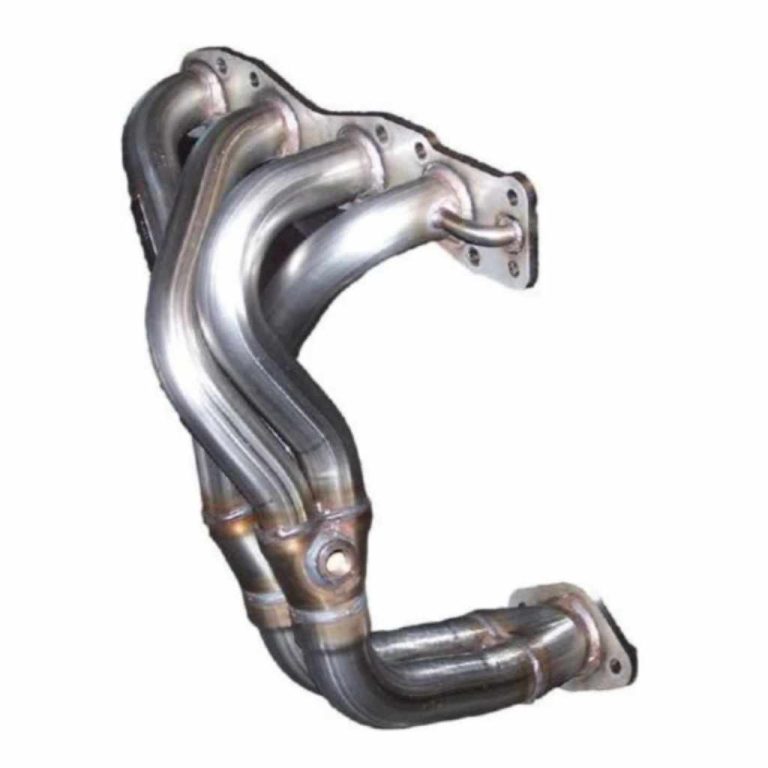
Tubular designs can flow well, but they do not automatically win for towing. They make the most sense when the rest of the system is built around higher flow and you accept more fitment sensitivity and more heat management work.
Wall thickness and flange flatness
Thicker walls and thicker flanges help only when they keep the part flat through heat. A thick flange is not a cure-all; sealing also depends on flatness, material choice, and hardware preload.
A common first-timer mistake is to focus on oversized primary tubes instead of matching the manifold to the engine’s daily commuting or towing demands. That can leave the truck with a fancy part that still leaks at the rear studs after repeated towing heat cycles.
Port geometry and runner design
Port shape and runner design decide how the manifold moves exhaust energy into the turbo. For a daily driver, stock-style runner sizing often keeps response consistent. For a tow rig, smoother internal passages and a design that resists distortion can matter more than absolute peak flow.
Do not treat runner length as a guaranteed low-rpm torque fix. Towing response depends on engine design, turbo size, and tuned length, not runner length alone.
Does a tow rig need a thicker exhaust manifold flange than a daily driver?
Usually yes, but only as part of a broader sealing strategy. A tow rig sees more repeated heat load, so a thicker flange can help control warp and keep the gasket surface stable. That said, flange thickness without flatness and proper preload still leaks.
The practical test is simple: if the truck is often under sustained load, the sealing system matters more than on a commuter. If the truck only tows occasionally and lightly, a well-made stock-style flange may be enough.
How much EGT reduction can an upgraded exhaust manifold deliver under towing load?
There is no universal number, and the gain depends on the engine, turbo, tune, and load. On 6.7 Cummins applications, manufacturer and retailer technical claims commonly place the reduction in the 50-150°F range for moderate towing setups, while heavier-duty performance claims often cite 100-200°F when the truck is under longer sustained pull and the rest of the package is matched.
That range matters most when the truck is heat-soaked under load. If your trailer is light and the engine never spends long at towing EGT, the manifold may improve durability more than it changes temperature.
What is manifold shrink on a 6.7 Cummins and why does it matter?
On the 6.7 Cummins, manifold shrink means the stock manifold changes shape enough to lose sealing and stress the fasteners. Aftermarket manifolds are said to prevent that shrink, which matters because the same stock issue can snap rear exhaust studs.
That failure pattern is more than a nuisance. A small exhaust leak can show up as soot streaks around flanges and joints, and a cold-start tick that fades can point to a manifold or turbo leak. Under towing load, the leak can grow into lost boost and weaker throttle response.
For a mixed-use Cummins, look for a replacement that keeps the sealing surface stable under repeated heat cycles. If the truck tows often, the question is not only whether the manifold flows better; it is whether it survives the rear-stud area without loosening the system.
Should I choose T3 or T4 flange specs for towing?
Choose T3 if you are keeping a stock or smaller turbo setup and want quicker response in the towing RPM band. Choose T4 if the truck is built around a larger turbo and you care more about top-end airflow than immediate spool. The flange has to match the turbo and the use case.
T3 is the safer fit for many mixed-use trucks because it usually aligns better with stock-size turbo hardware and daily drivability. T4 can work well for towing only when the rest of the package is sized for it; otherwise, it can move the operating range away from the low-speed response that matters when pulling a grade.
Fitment tradeoff for mixed-use trucks
The practical tradeoff is packaging and response. A T4 setup can improve airflow at higher exhaust demand, but it may not be the best choice if your truck spends most of its time below the turbo’s ideal efficiency range.
Suppose a truck runs a stock-size turbo, pulls about a 7,000-pound trailer on weekends, and commutes during the week. In that case, T3 usually matches the duty cycle better because it supports predictable spool without forcing a larger turbo into a light-duty tow pattern.
Which exhaust manifold materials hold up best to repeated heat cycles?
Ductile iron is the strongest all-around answer for repeated heat cycles in heavy use. Cast iron is still common and durable, while tubular systems can work well only when the design, welding, and fitment are right. For tow rigs, durability usually matters more than theoretical flow.
CNC-billet and multi-piece pulse designs sit at the premium end for different reasons. Steed Speed manifolds are described as CNC-machined from solid blocks of 1018 mild steel, which points to a high-end, high-flow construction approach. BD Diesel uses a multi-piece pulse design with expansion joints between sections, and that design is said to place zero stress on exhaust studs.
Why stud stress matters
Exhaust studs are part of the durability equation, not an afterthought. Heat cycling stretches and relaxes fasteners, and the rear-stud failure pattern on some trucks is a warning sign that the sealing system is taking more stress than it should.
When a manifold uses expansion joints or a design that controls thermal movement, the studs see less abuse. That is especially useful on trucks that tow heavy and spend long periods at exhaust temperature rather than short bursts of acceleration.
How do I know if my stock manifold is enough for light towing?
Stock hardware is often enough if towing is light, infrequent, and the truck does not show signs of exhaust leakage. If you do not have soot streaks around flanges, a fading cold-start tick, or boost loss under load, the stock manifold may still be doing its job.
Check the truck’s actual duty cycle first. A commuter that tows a small trailer a few weekends a year has different needs from a truck that spends every summer pulling a camper over mountain grades. The second truck is the one that benefits most from thicker flanges, stronger materials, or a multi-piece design.
A simple decision checklist
- Confirm whether towing is occasional or sustained.
- Inspect for soot around flanges and joints.
- Listen for a cold-start tick that fades after warm-up.
- Check for rear-stud issues on engines known for that pattern.
- Match flange type to turbo size before buying.
- Choose durability first if the truck sees long pulls.
Exhaust manifolds for mixed-use trucks
For mixed-use trucks, the best manifold is usually the one that matches the hotter part of the duty cycle without hurting day-to-day response. That means ductile iron or a heavy-wall cast design for many tow-capable trucks, a CNC-billet or high-end tubular option only when airflow demands justify it, and a multi-piece pulse design when stud stress is the main concern.
If the truck is a daily driver that tows only sometimes, stock-style runners with proven crack resistance can still be the right answer. If the truck is a true tow rig, priority shifts to sealing, thermal control, and stud survival.
Choose Exhaust manifold specs for daily drivers if…
Choose Exhaust manifold specs for daily drivers if the truck spends most of its time commuting, idling, and making short trips, with only light towing on the side. In that case, stock-size runners, conservative port geometry, and a proven cast-iron or ductile iron design usually make the most sense.
This choice favors response and simplicity over maximum flow. It is the better fit when the truck is not living under repeated long-pull heat cycles.
Choose tow rigs if…
Choose tow rigs if the truck regularly sees long grades, heavy trailers, or repeated high-load operation. That duty cycle justifies thicker flanges, more heat-tolerant materials, and designs that control movement around the studs and joints.
In short: if weekday use is mostly commuting with a few light trips, stay in the daily-driver lane; if the truck is repeatedly asked to pull hard, size the manifold for heat management and stud survival first.


Frequently asked questions
What exhaust manifold specs matter most for a daily driver versus a tow rig?
For a daily driver, prioritize crack resistance, stock-size runners, and fitment that seals cleanly without drama. For a tow rig, prioritize material stability, flange flatness, thermal control, and hardware survival under repeated heat cycling. The more often the truck sees long pulls, the more the sealing system matters.
What exhaust manifold upgrade is best for a daily-driven truck that tows heavy sometimes?
A heavy-wall ductile iron or cast-iron upgrade with a T3 or stock-friendly flange is usually the most balanced choice. It keeps response reasonable for commuting while adding durability for the towing days that put the most heat into the system.