Ceramic Heat Shields vs Metal Shields: Which to Use
Use ceramic for maximum insulation near the pipe. Use metal for tougher, cheaper shielding where an air gap can do the work. Pick the wrong material, and you can cook wiring, raise cabin heat, or crack a shield until it rattles and blocks service access. This guide compares reflection, insulation, durability, and failure modes so you can pick the right shield for routing and nearby parts.
| Decision factor | Ceramic heat shields | metal shields | Winner |
|---|---|---|---|
| Radiant heat reflection | Usually weaker as a reflector unless backed by a reflective face or foil layer | Strong when made from bright stainless or aluminum with an air gap | metal shields |
| Heat conduction into nearby parts | Low thermal conductivity; better insulation performance | Higher conductivity; needs spacing and airflow to do the job | Ceramic heat shields |
| Crack or break risk | Brittle; can chip, crack, or break from impact and vibration | Can dent or fatigue, but usually tolerates abuse better | metal shields |
| Corrosion resistance | Generally corrosion-resistant | Stainless resists corrosion well; aluminum can suffer in harsh exhaust-bay exposure | Ceramic heat shields |
| Weight | Often light in fiber form, but tiles and boards add mass | Aluminum is light; stainless is heavier | metal shields |
| Cost and fabrication | Material can cost more and is harder to cut or shape cleanly | Usually easier to form, drill, and repair | metal shields |
| Best-fit use case | Hot-side insulation, tight packaging, EV-adjacent wiring protection | General exhaust bay shielding, serviceable street and track installs | tie |
Ceramic heat shields vs metal shields: what changes in an exhaust bay


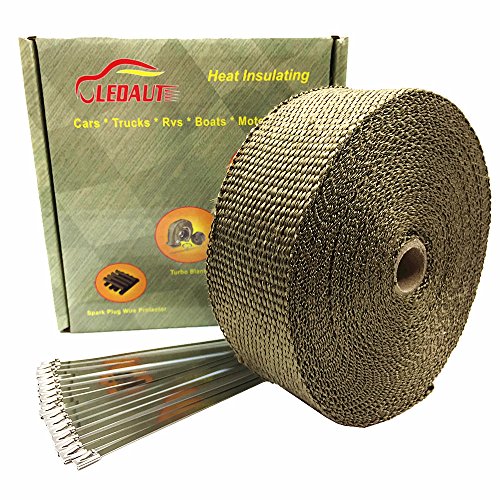
In an exhaust bay, the main difference is how each material handles radiant heat versus conducted heat. Metal can reflect more radiant energy when it has a reflective face and an air gap; ceramic usually wins when the job is to slow heat flow into nearby parts. That split matters around pipes, turbo housings, floorpans, and wiring.
Radiant heat reflection versus conducted heat
Radiant heat is the line-of-sight energy coming off a glowing pipe, turbo, or catalytic converter. Conducted heat is the heat that moves through the shield itself, then into brackets, fasteners, and panels. A shield that reflects well but conducts strongly can still leave nearby parts hot.
That is why thermal conductivity belongs in the comparison. Judge heat shield materials by thermal conductivity, not temperature alone, because a material that survives heat may still pass too much of it into the wrong place.
Why exhaust routing changes the material choice
Exhaust routing changes the answer because clearances, airflow, and service access vary from one layout to another. A shield near a turbo hot side sees intense radiant load and steep heat soak. A shield under a floor or beside a firewall may need more reflection than insulation, depending on the air gap available.
Picture a downpipe that passes very close to a wiring loom. A thin bright metal shield may stop radiant exposure if it has room to breathe. Put the same loom against a tight bracket with almost no space, and a ceramic layer becomes more attractive because it reduces conduction.
📊 Ceramic materials can withstand very high temperatures, ranging from 1,000 °C to 1,600 °C. Source: Ceramic.
What heat shields do and what they are made of
A heat shield protects nearby components from excessive heat. No single material fits every application. Selection comes down to thermal conductivity, maximum operating temperature, weight, electrical insulation, cost, service life, and how the part will be mounted.
Ceramic fiber, boards, paper, and tiles
Ceramic heat shield material comes in several forms. Ceramic fiber blankets, boards, and paper are common insulation formats; ceramic tiles are used where a harder surface is needed. Ceramics are described as hard, brittle, heat-resistant, and corrosion-resistant. They can withstand very high temperatures, ranging from 1,000 °C to 1,600 °C, and they are generally good thermal and electrical insulators.
The main limitation on the use of ceramics in engineering is brittleness. That matters in a vibrating exhaust bay, because the part may survive heat but fail from impact, clamp pressure, or edge loading.
Stainless steel and aluminum shields
Metal shields are typically stainless steel or aluminum. These shields often work by reflecting radiant heat and by creating an air gap that blocks direct transfer. Stainless is often the tougher corrosion-resistant choice; aluminum is lighter and easier to shape, but it generally has less margin in harsh exhaust-adjacent conditions.
Metal also tends to be easier to cut, bend, drill, and replace. That can matter in repair work, especially when the shield must fit around brackets, studs, and service covers.
How do ceramic and metal shields compare on heat control?
Ceramic usually insulates better, while metal usually reflects better. The right pick depends on whether the problem is heat getting through the shield itself or heat bouncing off the surface and staying away from nearby parts. Maximum operating temperature matters too, but treat it as continuous versus intermittent exposure.
Thermal conductivity and insulation performance
Thermal conductivity is the key metric here. Lower conductivity means slower heat flow through the material, which is why ceramic fiber and related ceramic forms are often used where insulation performance matters most. Metal conducts more readily, so it needs geometry and air space to compensate.
That difference becomes obvious in tight engine bays. If the shield can be spaced away from the hot part, metal may be enough. If the shield must sit close to the source, ceramic usually gives you more insulation per unit thickness.
Maximum operating temperature: continuous versus intermittent exposure
Maximum operating temperature is a useful selection factor, but the rating must match the exposure pattern. Continuous load from a hot exhaust tunnel is not the same as short spikes from a turbo housing after a hard pull. Axiom Mica frames maximum operating temperature as a key selection factor for a reason.
Ceramics have the higher heat ceiling in general. Metal shields can still be excellent in exhaust work, but their real limit often comes from deformation, mounting hardware, and the surrounding package rather than from raw melting point.
Radiant heat reflection in real exhaust packaging
Does a metal heat shield reflect more heat than ceramic? Usually yes, if the metal surface is reflective and the shield has an air gap. Ceramic is better at slowing heat flow through the material itself. That is why many exhaust packages use metal for the first line of defense and ceramic where insulation is the main goal.
Suppose a motorcycle exhaust runs close to a side panel and rider leg. A thin polished stainless shield can lower radiant load well if airflow is present. A ceramic barrier helps more when the panel is close enough that conduction would otherwise dominate.
How do they compare for durability, weight, and failure risk?
Metal usually wins on abuse tolerance and ease of mounting. Ceramic usually wins on insulation, but it is more likely to crack or break if the mounting is poor or vibration is high. Weight matters too, especially in motorsport, aerospace, and EV-adjacent packaging.
Brittleness, cracking, and impact damage
Will a ceramic heat shield crack or break? It can, and brittleness is the main reason. Chips from road debris, uneven clamp loads, or bracket movement can start damage that spreads under vibration. Once cracked, a ceramic shield may rattle, lose contact, or expose the part it was protecting.
Metal can dent and deform, but it often tolerates handling and service work better. For a shield that may need to come off several times, that is a practical advantage.
Corrosion resistance and fastener life
Ceramic is generally corrosion-resistant. Stainless steel also resists corrosion well, which is why it is common near exhausts. Aluminum is lighter, but it can be a weaker choice where road salt, splash water, and repeated heat cycles attack fasteners and edges.
Fasteners matter as much as the sheet. A shield can fail early if washers loosen, clips relax, or the mounting holes oval out from vibration and thermal cycling.
Weight and installation load
Weight is especially important in aerospace and EV applications, and it still matters in enthusiast exhaust work. Aluminum keeps weight down and is easy to form. Stainless adds mass but usually brings better durability. Ceramic fiber can be light as an insulator, while ceramic tiles and boards can be more cumbersome and fragile.
That weight also affects the bracket load. A heavy shield mounted to thin sheet metal can create noise, loosening, or cracks around the attachment points.
Where does electrical insulation matter?
Electrical insulation matters near wiring, sensors, battery hardware, and electronic assemblies. Ceramic materials are generally good thermal and electrical insulators, so they can add useful protection where the shield sits near harnesses, control units, or EV-adjacent packaging. Metal does not provide that insulation.
Wiring, sensors, and nearby electronics
Heat does not need to melt insulation to cause trouble. It can dry out loom covering, shorten sensor life, or make connector housings brittle. A ceramic barrier can help in places where a metal shield would still pass heat or create an unwanted conductive path.
This is especially relevant where the exhaust runs beside wiring channels or control modules. The shield is not there to stop every watt of heat. It is there to keep the surrounding parts inside their own safe range.
Why ceramic can matter in EV-adjacent and electronics-heavy layouts
Electrical insulation matters for EV battery systems, electrical equipment, and electronic assemblies. Ceramic’s insulation properties make it useful where a thermal barrier must also avoid conducting electricity. That does not make ceramic mandatory, but it does make it a stronger candidate near sensitive hardware.
Decision matrix: ceramic vs stainless steel vs aluminum
| Criterion | Ceramic heat shields | Stainless steel | Aluminum |
|---|---|---|---|
| Radiant heat reflection | Fair to poor unless paired with a reflective layer | Good | Very good when bright and properly spaced |
| Conduction control | Very good | Fair | Fair |
| Crack risk | High | Low | Low to moderate |
| Corrosion | Very good | Very good | Moderate |
| Weight | Varies by form; fiber is light, tiles are not | Heavier | Light |
| Cost | Often higher for equivalent fabrication complexity | Moderate | Moderate to low |
| Repairability | Poor | Good | Good |
| Best-fit use case | High-insulation, tight-clearance, electronics-sensitive areas | General exhaust shielding with good durability | Lightweight reflective shields where heat load is moderate |
Ceramic heat shields
Ceramic wins when insulation is the priority. It is a strong choice where the shield sits close to a hot source, where electrical isolation helps, or where the goal is to protect wiring and composite parts from heat soak. The tradeoff is fragility and harder service work.
Stainless steel
Stainless is the broadest all-around exhaust shield material. It reflects well enough for many jobs, resists corrosion, and tolerates installation and removal better than ceramic. It is often the safer choice when the shield needs to live under the car, take road abuse, and survive repeated service.
Aluminum
Aluminum is the lightest of the common metal choices and forms easily. It is attractive when weight and fabrication speed matter, but it needs thoughtful placement because it has less corrosion margin than stainless and less temperature tolerance in harsh exposure. In many builds, it is the best low-mass reflective shield, not the toughest one.
Choose ceramic heat shields if… / Choose metal shields if…
Choose ceramic heat shields if you need the strongest insulation in tight packaging, if nearby wiring or electronics need electrical isolation, or if the shield sits close to a turbo hot side where conducted heat is the bigger problem. They also fit EV-adjacent layouts where electrical insulation matters as much as temperature control.
Choose metal shields if you want a tougher part that reflects radiant heat well, if you expect frequent service access, or if the mounting area sees road abuse and vibration. Stainless suits most exhaust-bay repairs. Aluminum fits lighter builds where reflective shielding and weight control matter more than maximum insulation.
For street cars, start with stainless when you need a practical, durable answer. For track cars and turbo hot sides, ceramic becomes more attractive as temperatures rise and clearances shrink. For motorcycles, aluminum or stainless often wins unless the shield has to sit extremely close to the source. For EV-adjacent packaging, ceramic gets a closer look because insulation and electrical separation both matter.
- Measure the gap between the hot part and nearby components.
- Check whether the main problem is radiant exposure or heat soak through the mounting area.
- Decide whether the shield must also insulate electrically.
- Match the material to the exposure pattern: continuous heat or short spikes.
- Inspect bracket stiffness, fasteners, and service access before buying or fabricating.
How does a heat shield work?
A heat shield works by blocking, reflecting, or slowing heat transfer so nearby parts stay below their damage threshold. In exhaust use, the shield may reflect radiant energy, add an insulating layer, or create an air gap that cuts down on conduction. The right design usually combines at least two of those effects. (en.wikipedia.org)
Practical installation and inspection checks
Look for enough clearance that the shield will not touch the hot part under movement. Check that fasteners can handle vibration and heat cycling. Make sure the shield can be removed without destroying clips or reaching through awkward panels, because a shield that cannot be serviced is a maintenance problem waiting to happen.
What is a heat shield?

A heat shield is a component used to shield a substance or nearby part from absorbing excessive heat. In exhaust systems, that usually means protecting wires, hoses, underbody panels, paint, sensors, or interior structures from radiant heat and heat soak. The best material depends on the route and the risk.
What is ceramic shield?
A ceramic shield is a heat shield made from ceramic material such as ceramic fiber, boards, paper, or tiles. Ceramic materials can withstand very high temperatures, ranging from 1,000 °C to 1,600 °C, and they are generally good thermal and electrical insulators. Brittleness is the main drawback.
What are heat shields made of?
Heat shields are commonly made from ceramic materials, stainless steel, aluminum, and layered composite forms that combine insulation with reflection. Ceramic engineering covers the study and production of these compounds and their properties, including uses where metal and polymers are unsuitable. The right material depends on temperature, weight, cost, and installation method.
Metal vs ceramic heating elements
Metal versus ceramic heating elements is a different comparison from exhaust heat shielding, but the same basic trade-off applies: metal tends to be tougher and easier to form, while ceramic tends to insulate better and tolerate higher temperatures. For exhaust shields, that means ceramic usually wins on insulation, while metal often wins on durability and reflectivity.
When a heat shield is needed
A heat shield is needed when radiant heat or heat soak can damage nearby parts, raise cabin temperature, or shorten the life of wiring, hoses, sensors, paint, or trim. If the exhaust runs close to another component and you cannot add a large air gap, a shield becomes more than optional.
How to make a heat shield
To make a heat shield, first identify the hot source, then measure the clearance to nearby parts, and then choose a material that fits the exposure. Use a reflective metal shield when air space and durability matter most; use ceramic when insulation and electrical isolation matter more. Mount it so vibration cannot make the shield touch the exhaust.
Is ceramic better than metal for exhaust heat shielding?
Ceramic is better than metal when the main goal is insulation right next to a hot exhaust part. Metal is better when the goal is reflected radiant heat, lower cost, easier fabrication, and better impact tolerance. In many real builds, the best answer is a ceramic barrier close to the source and a metal shield farther out.
Will a ceramic heat shield crack or break?
Yes, it can. Ceramics are hard, brittle, and the main limitation on their use in engineering is brittleness. If the shield is clamped too tightly, struck by debris, or forced to follow vibration it was not designed for, cracking or breakage becomes a real risk. Better mounting reduces that risk.
Does a metal heat shield reflect more heat than ceramic?
Usually yes, especially if the metal surface is bright and the shield is mounted with an air gap. Ceramic is generally better at limiting heat conduction through the part, not at reflecting radiant heat. So a metal shield often wins on reflection, while a ceramic shield often wins on insulation close to the pipe.