
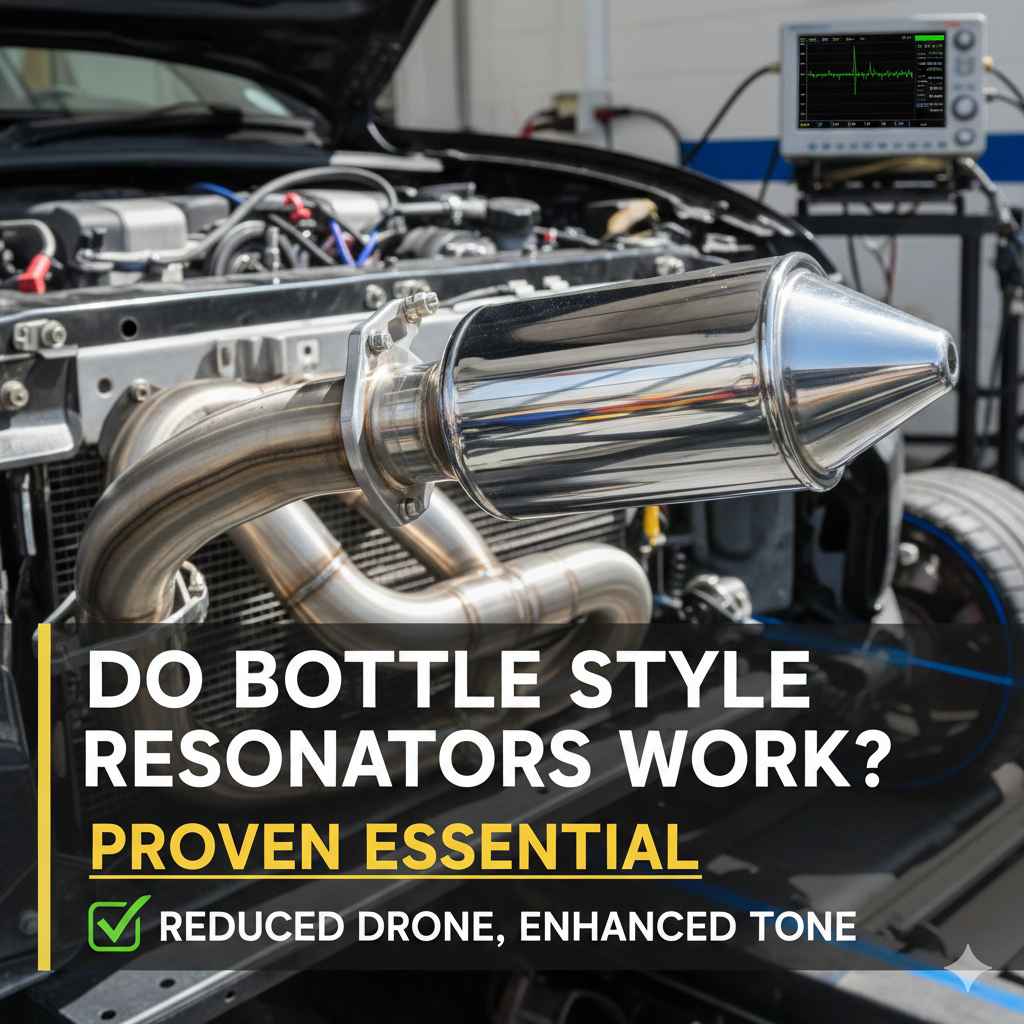
Do Bottle Style Resonators Work: Proven Essential
Yes, bottle-style resonators absolutely work. They are essential components designed to target and cancel specific, annoying exhaust drone frequencies, making your ride much quieter and more comfortable without heavily restricting performance, especially when compared to simple mufflers.
If you love the sound of your car but hate that high-pitched buzzing or low drone, you’ve likely run into resonator confusion. Exhaust systems are tricky, and many car owners wonder if adding a simple bottle-style resonator actually makes a noticeable difference. It can feel like a waste of time or money if you don’t understand its job.
Don’t worry! As your trusted guide to exhaust systems, I’m here to clear things up. We will break down exactly what these resonators do, how they work inside that metal bottle, and why they are often the missing piece for a perfect exhaust tone. Get ready to learn how to make your drive peaceful and enjoyable.
What Exactly is a Bottle Style Resonator?
Before we dive into whether they work, let’s define what we are talking about. A resonator is a small chamber connected to your exhaust pipe. Unlike a muffler, which reduces overall sound volume using baffles and packing, a resonator uses clever physics to target only specific, annoying sounds.
Muffler vs. Resonator: The Key Difference
Think of your car’s exhaust sound like a full orchestra. The muffler tries to turn down the volume of the entire orchestra. The resonator, however, acts like a specialized sound engineer, specifically targeting the annoying flutes (the drone) and letting the nice cellos (the desirable engine rumble) play on.
Here is a simple breakdown:
- Muffler: Reduces overall sound intensity (volume) using sound-absorbing materials or chambers (baffles).
- Resonator: Targets and cancels specific sound frequencies (pitch), primarily the annoying drone that happens at steady highway speeds.
Anatomy of a Bottle Resonator
The “bottle style” is popular because of its effectiveness and relatively compact size. It’s essentially a cylindrical chamber welded into the exhaust line. Inside this chamber, the magic happens:
- Inlet and Outlet: The exhaust gas enters one side and exits the other.
- The Chamber (The Bottle): This is the main body where sound waves interact with the internal structure.
- Perforated Tubes: Sound waves travel into the chamber through small holes connected to the main exhaust flow.
It sounds complicated, but the goal is simple: trap and cancel specific sound waves.

How Bottle Resonators Eliminate Drone: The Science Made Simple
The core concept behind any resonator, including the bottle style, is destructive interference. This is a fancy term for making sound cancel itself out. You don’t need a physics degree to understand this!
Understanding Sound Waves and Drone
All sound is made of waves. When sound travels down your exhaust pipe, it creates waves moving at certain speeds (frequencies). Drone—that irritating, constant hum at highway RPMs—is a specific, low-frequency sound wave.
The Destructive Interference Process
The bottle resonator is tuned during manufacturing to combat that specific drone frequency:
- The Wave Enters: The drone sound wave enters the resonator chamber through the main pipe.
- The Split: A portion of that sound wave travels into the small, internal side chamber (the bottle part) via tiny holes (perforations).
- The Delay: Because the sound wave has to travel a slightly longer, specific path inside this side chamber, it gets delayed compared to the wave traveling straight down the main pipe.
- The Collision: When the delayed wave finally exits the side chamber and meets up with the main wave in the exhaust flow, they are perfectly out of sync—one wave is at its peak (crest) while the other is at its lowest point (trough).
- Cancellation: When a peak meets a trough, they cancel each other out, resulting in silence for that specific frequency.
This tuning means that if your car drones at 2,500 RPM (around 65 mph), the resonator is built to make the sound wave associated with 2,500 RPM disappear!
Proven Essential: When and Why You Need a Bottle Resonator
So, do bottle style resonators work? Absolutely, when used correctly. They become essential in specific situations where the muffler alone isn’t enough.
Scenario 1: After Installing a Performance Muffler or Straight Pipes
If you upgrade your exhaust system for better flow (like installing a high-flow muffler or removing the factory muffler entirely for louder sound), you often introduce harsh drone. Performance mufflers prioritize flow over noise cancellation, leading to excessive highway noise.
Adding a quality bottle resonator after the headers/downpipe but before the rear axle often restores comfortable driving without choking performance.
Scenario 2: Factory “Quiet” Cars That Still Drone
Some modern cars, especially four-cylinder or V6 engines, are tuned from the factory to have a very quiet cruise, but they develop a nasty drone when the engine hits a specific, consistent RPM range. The factory system might use a small internal resonator, but an aftermarket bottle resonator can be tuned more precisely to eliminate this specific annoyance.
Scenario 3: Achieving the Perfect Tone
Many enthusiasts want a deep, aggressive sound during acceleration but demand near-silent operation during cruising. A resonator is the key balancing tool here. It tames the unpleasant high or mid-range frequencies, leaving you with a cleaner, deeper note when you step on the gas.
Table: Resonator Benefits vs. Simple Muffler Changes
| Feature | Bottle Resonator | Standard Muffler |
|---|---|---|
| Primary Function | Cancels specific frequencies (drone). | Reduces overall sound volume. |
| Performance Impact | Minimal flow restriction when tuned well. | Can significantly restrict flow (especially chambered ones). |
| Ideal Use Case | Eliminating specific highway drone. | Overall sound reduction for quiet operation. |
Installation Considerations: Where to Place Your Resonator
The placement of your bottle resonator is crucial for it to work correctly. Remember, it needs time for the sound waves to travel and collide. Installing it in the wrong spot means it won’t have the necessary distance to work its magic.
The Importance of Location
Generally, resonators are installed mid-pipe—before the rear axle and before the final muffler. This location gives the sound waves the longest possible path from the engine to the resonator, allowing more frequencies to develop and be canceled out before they reach the rear of the car.
If you place it too close to the engine or too close to the muffler, its effectiveness drops significantly.
Tools You Might Need (For Installation/Replacement)
If you are having a shop install this, you won’t need these tools. But if you are doing a simple swap or looking at an existing setup, knowing the tools involved builds confidence:
- Wrenches and sockets (to remove clamps/bolts).
- Welder (for custom fabrication, though bolt-on kits exist).
- Hacksaw or reciprocating saw (to cut the existing pipe).
- Measuring tape (for precise placement).
- Safety gear (gloves, eye protection). Exhaust work gets hot!
Always ensure any new installation meets local regulations regarding exhaust system modifications. For safe modifications, always refer to guides from established bodies like the SAE International for engineering standards.
Choosing the Right Resonator for Your Vehicle
Not all bottle resonators are created equal. Since they are tuned to specific frequencies, you need one designed for your engine and driving style.
Tuned vs. Universal Resonators
Most aftermarket bottle resonators are “universal.” They are tuned to cancel the most common drone frequencies found in popular 4, 6, and 8-cylinder engines, usually targeting the 2000–3000 RPM range. This means they generally work well for most people.
However, for highly specialized or custom setups, a performance shop can build a completely custom resonator (often called a Helmholtz resonator, which is a specific type of bottle resonator) tuned precisely to the frequency causing your specific car trouble. This is often overkill for a beginner, but it shows the level of tuning available.
Material Matters: Longevity
Since the resonator is exposed to heat, moisture, and road salt, the material it’s made from determines how long it works before rusting out.
| Material Type | Durability/Cost | Best For |
|---|---|---|
| Mild Steel | Lowest cost, lowest longevity (will rust). | Temporary fixes or dry climates. |
| Aluminized Steel | Mid-range cost and decent longevity. | Standard, everyday driving. |
| T-304 Stainless Steel | Highest cost, excellent longevity. | Cars driven year-round in salted, wet areas. |
Troubleshooting: What If My Resonator Isn’t Working?
If you’ve installed a new bottle resonator and you still hear that annoying drone, don’t panic. There are a few common reasons why the “fix” didn’t stick. This is where your guide steps in to troubleshoot!
1. Incorrect Placement
As discussed, placement is key. If the resonator is too close to the muffler, the sound waves don’t have enough distance to develop the phase difference needed for cancellation. If it’s too close to the header, it might be canceling the wrong frequencies.
Fix: If possible, have the shop relocate the resonator to the mid-pipe section, generally between the catalytic converter and the rear axle.
2. Wrong Frequency Targeted
Every car is slightly different. A resonator tuned for a V6 Mustang might not perfectly cancel the drone on a 4-cylinder Honda. The drone frequency might be slightly higher or lower than what the universal resonator was designed to kill.
Fix: Identify the exact RPM where the drone occurs. If it’s very specific, you might need a professional to custom-tune or install a second, smaller resonator elsewhere in the system to hit that secondary frequency.
3. Internal Damage or Rust
If you purchased a used exhaust component or have an older mild steel resonator, the internal perforated tubes might have rusted, collapsed, or become clogged with soot. If the internal pathways are blocked, the destructive interference simply cannot happen.
Fix: Visually inspect the exterior for holes or obvious damage. If it’s old, replacing it with a new, high-quality stainless steel unit is usually the best route.
4. Confusing Resonator Drone with Muffler Noise
Sometimes, what sounds like drone is actually just the general sound level being too high. If you went from completely stock to straight pipes, the overall loudness might simply be too much for comfort, even if the specific drone frequency is gone. This isn’t a failure of the resonator; it’s a sign you need a proper muffler alongside it.
Fix: If the drone is gone but it’s still too loud, consider adding a high-flow, chambered muffler after the resonator.
Safety First: Exhaust System Maintenance and Checks
Remember, working on or modifying an exhaust system always involves safety risks, mainly high heat and potentially toxic exhaust fumes. Never work under a vehicle supported only by a jack. Use sturdy jack stands rated for your vehicle’s weight.
When checking your exhaust system components, including resonators, always be aware of:
- Leaks: Leaks before the resonator or muffler can introduce exhaust fumes into the cabin. This is incredibly dangerous. Always check seals and welds.
- Heat Shields: Ensure all heat shields are securely fastened. A rattling shield is annoying, but a shield that touches a hot pipe can cause a fire risk.
- Component Integrity: Check the metal for rust, especially around the welds where the resonator attaches to the pipe.
If you notice excessive black soot around a joint or weld, that indicates a leak that needs immediate professional attention to ensure safety and optimal performance. For guidelines on safe vehicle lifting and working underneath, consult resources provided by organizations like the National Highway Traffic Safety Administration (NHTSA) on general vehicle maintenance safety.
The Performance Trade-Off: Flow vs. Quiet
The biggest concern for any performance-minded owner is: Will adding this extra component hurt my horsepower?
When engineered correctly, the bottle resonator offers an excellent compromise. Because it only cancels a very specific, narrow band of sound frequencies, the overall restriction to the primary exhaust gas flow is very low compared to a traditional muffler, which forces gas through complex baffles or tight packing.
A well-designed resonator adds minimal back pressure. In contrast, overly restrictive mufflers can choke an engine by forcing it to work harder to push spent gases out, slightly reducing power, especially at high RPMs.
The takeaway: A high-quality bottle resonator, especially one with smooth internal paths, lets your engine breathe almost as freely as straight piping while removing the noise that drives you crazy.

Frequently Asked Questions (FAQ) About Bottle Resonators
Q1: Can I just use two resonators instead of a muffler?
A: You can, but it depends on how quiet you want the car to be. Two resonators will significantly reduce the specific drone frequencies, but the overall volume will still be much louder than a car with a dedicated muffler. They work best together: Resonator for drone control, Muffler for volume reduction.
Q2: Will adding a bottle resonator void my warranty?
A: Modifying the exhaust system can void the warranty on related components, such as the catalytic converter or sensors, if the manufacturer can prove the modification caused the failure. However, a simple resonator modification is less likely to cause issues than full header replacement, but always check your specific vehicle warranty terms.
Q3: How long does a bottle resonator typically last?
A: This depends heavily on the material. Mild steel resonators might only last 3–5 years, especially in snowy areas. High-quality T-304 stainless steel resonators are often designed to last the lifetime of the vehicle, matching or exceeding the lifespan of the OEM exhaust.
Q4: Can I install a resonator in the engine bay exhaust manifold area?
A: While technically possible, it is highly discouraged. The exhaust gases are extremely hot and dense right out of the engine. Resonators are tuned for cooler, lower-pressure gas, and placing them too close to the engine will often cause them to fail prematurely or not tune correctly.
Q5: Is there a visual difference between a resonator and a small muffler?
A: Often, they look very similar—both are usually cylindrical. The key difference is inside. A resonator has specific internal baffling or chambers tuned for sound wave cancellation, while a muffler uses broader baffles or fiberglass packing to absorb or reflect sound generally.
Q6: Does adding a resonator always require welding?
A: Not always. Many universal aftermarket resonators come with slip-on clamps, but for a secure, leak-free, and long-lasting installation that resists vibration, welding is strongly recommended by most professional installers.
Conclusion: The Essential Tool for Exhaust Harmony
We’ve covered the science, the placement, and the troubleshooting. To bring it back to our main question: Do bottle style resonators work?** The answer is a resounding yes. They are not just random metal cans welded into your exhaust; they are precisely tuned acoustic instruments designed to target and eliminate the most annoying aspect of aftermarket or modified exhaust systems—the drone.
If you are striving for an exhaust note that sounds powerful when you want it to, yet remains civilized and comfortable during your daily commute, the bottle-style resonator is an essential, proven component. By understanding its role in creating destructive interference, you can confidently select the right size and material for your needs. Don’t settle for loud and annoying; aim for deep, throaty, and quiet when cruising. Your ears (and your passengers) will thank you for making this intelligent, targeted upgrade.


