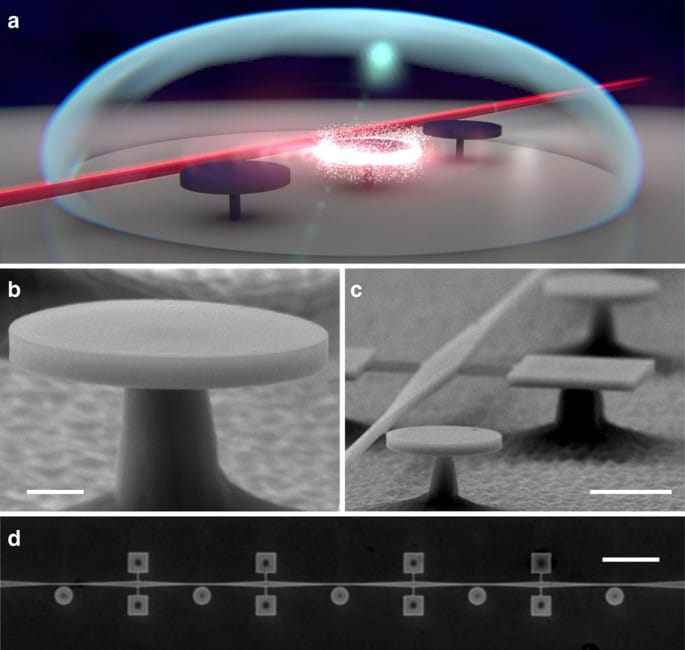
What are Photonic Resonators: Unlocking Light’s Secrets
Imagine a world where the speed of light isn’t just a constant, but a tool you can harness for advanced technologies. Sounds intriguing, right?
This is the potential that photonic resonators hold—a fascinating frontier in the realm of optics and photonics. If you’ve ever wondered how light can be manipulated to enhance everything from telecommunications to medical imaging, you’re in the right place. By understanding what photonic resonators are, you can unlock insights into how they are revolutionizing various industries and how they might just shape the future.
Curious to learn more? Let’s dive into the intriguing world of photonic resonators and discover how they can impact your life and the technology you use every day.

Credit: www.researchgate.net
Basics Of Photonic Resonators
Photonic resonators are tiny devices that trap and control light. They enhance the interaction between light and matter. These resonators are vital in optical communication and sensing technologies.
When you hear “photonic resonators,” you might think of complex scientific jargon. Yet, they play a pivotal role in our everyday lives, from the internet to futuristic tech. Understanding the basics can shed light on their fascinating nature and importance. Imagine how much more exciting your next tech conversation could be with a grasp of these essentials.
Definition And Functionality
Photonic resonators are devices that trap light within a certain space, allowing it to bounce back and forth. They are designed to control and manipulate light waves, much like how musical instruments control sound waves. These resonators can enhance the interaction between light and matter, making them crucial in fields like telecommunications and quantum computing. Think of them as tiny echo chambers for light, where the magic happens.
Historical Background
The concept of controlling light began centuries ago with the development of optical lenses. Remember those magnifying glasses you played with as a kid? Those were the early steps towards manipulating light. In the late 20th century, scientists began experimenting with advanced materials to refine light control. Innovations in photonic resonators have since accelerated, especially with the rise of fiber optics. Today, they are integral to technologies you use daily, like faster internet speeds and secure data transmission. Consider how different your life would be without these advances—no streaming, no quick downloads. Would you miss it? Isn’t it intriguing to think how a simple concept like controlling light can lead to such vast technological progress? What other everyday wonders have origins in basic scientific principles?
Credit: www.nature.com
Types Of Photonic Resonators
Photonic resonators trap light to create strong optical effects. Common types include micro-ring, whispering-gallery, and Fabry-Pérot resonators. They are vital in enhancing light-matter interactions for various applications.
Understanding the different types of photonic resonators can open new avenues in optical technology. They play a critical role in applications ranging from telecommunications to quantum computing. Let’s explore three major types of photonic resonators and how they function.
Whispering Gallery Mode Resonators
Whispering Gallery Mode (WGM) resonators are named after the famous acoustic effect observed in St. Paul’s Cathedral in London. These resonators trap light by continuously reflecting it along the curved surface of a circular or spherical structure. Their ability to maintain light for extended periods makes them perfect for sensors and filters. You might think of them like a racetrack where light keeps circling, losing minimal energy. This high-quality factor is why they are highly sought after in laser technology. Have you ever wondered how your smartphone’s sensors detect even the slightest changes? WGM resonators might just be a part of that answer.
Fabry-pérot Interferometers
Fabry-Pérot Interferometers are an essential type of photonic resonator used in spectroscopy. They consist of two parallel mirrors, creating a cavity where light bounces back and forth. This setup allows for precise control over the wavelengths of light that can pass through. Imagine trying to tune a radio to your favorite station; Fabry-Pérot Interferometers work similarly by tuning to specific light frequencies. Their simplicity and effectiveness make them a favorite in optical communication systems. So next time you enjoy seamless internet streaming, remember these resonators play a part in that smooth experience.
Photonic Crystal Cavities
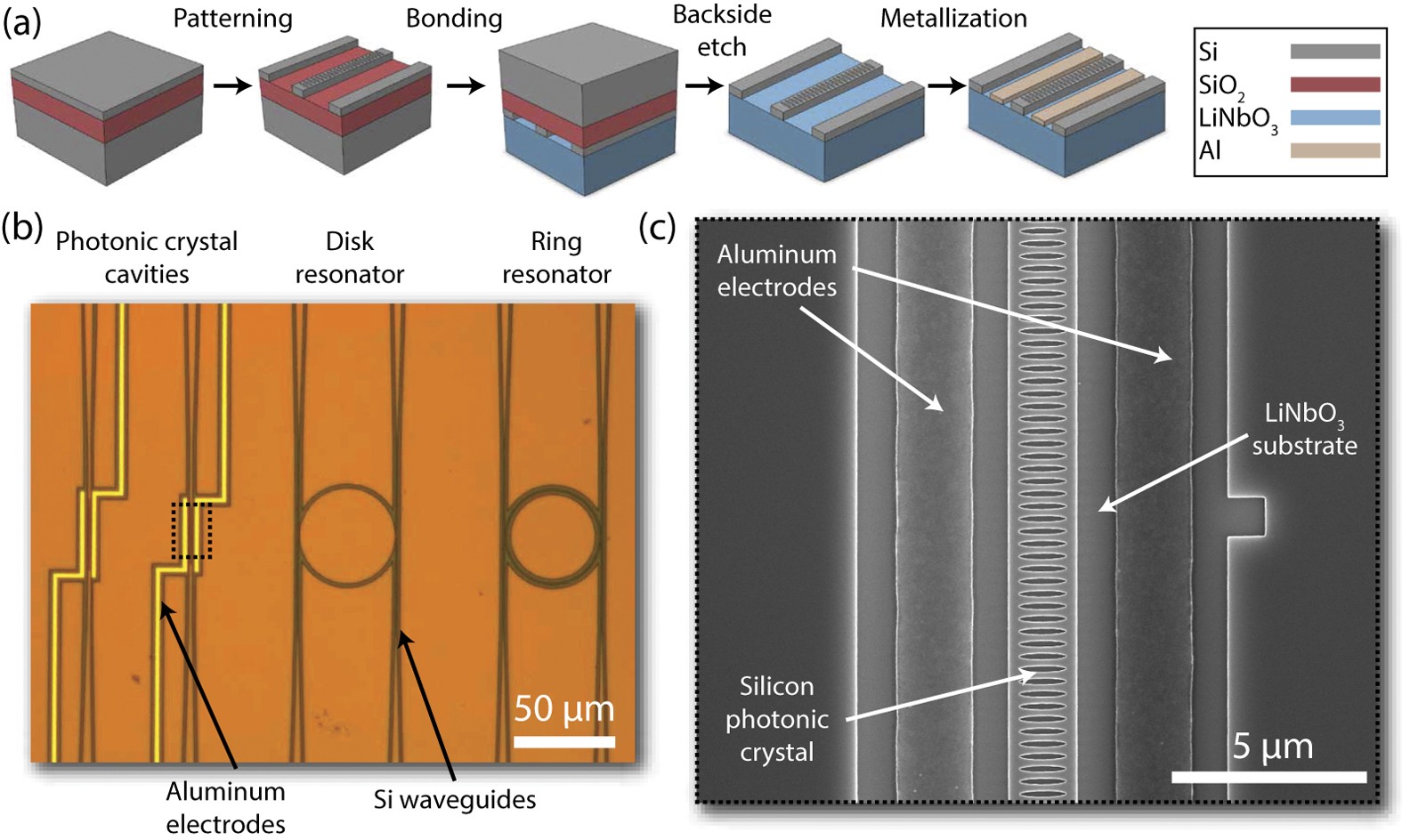
Photonic Crystal Cavities are like the Swiss Army knife of photonic resonators. They use periodic structures to control the flow of light, much like how a crystal controls electrons. This ability to manipulate light at a microscopic level offers incredible precision. These cavities are particularly useful in creating tiny, efficient lasers. They can also enhance light-matter interactions, crucial for developing advanced quantum technologies. If you’re fascinated by the future of computing, photonic crystal cavities might just hold the key to the next big leap. Each type of photonic resonator offers unique benefits and challenges. Which one intrigues you the most, and how do you see it impacting your daily life?
Mechanisms Of Resonance
Photonic resonators are fascinating structures that trap light. This process is known as resonance. Resonance allows light to oscillate within a confined space. This enhances the interaction between light and matter. Understanding resonance mechanisms is crucial in photonics.
Light Confinement Techniques
Light confinement is key in photonic resonators. One technique is using mirrors to reflect light. Mirrors create a loop that traps light inside. Another method is using small cavities. These cavities hold light tightly. Both techniques focus on keeping light in place. This confinement boosts light’s intensity.
Enhancing Light-matter Interaction
Resonance is vital for enhancing light-matter interaction. Trapped light interacts with materials in the resonator. This interaction can change the material’s properties. Resonators can amplify signals in optical devices. They also improve sensors’ sensitivity. Better interaction leads to more efficient devices.
Applications In Modern Technology
Photonic resonators are transforming the landscape of modern technology. These devices trap light at specific frequencies, enhancing various technological applications. From telecommunications to quantum computing, they are paving the way for advanced solutions.
Telecommunications
Photonic resonators are vital in telecommunications. They enable efficient data transmission over long distances. This technology supports high-speed internet and improved signal quality. Resonators reduce losses in optical fibers, ensuring clear communication. They are essential for modern network infrastructures.
Quantum Computing
Quantum computing benefits greatly from photonic resonators. They help manipulate quantum bits with precision. Resonators maintain coherence in quantum systems, crucial for calculations. This technology is pushing boundaries in computational power. It holds promise for solving complex problems quickly.
Optical Sensors
Optical sensors rely on photonic resonators for enhanced sensitivity. Resonators detect minute changes in light properties. This ability is useful for environmental monitoring and medical diagnostics. They improve sensor accuracy, vital for detecting small signals. Photonic technology aids in developing advanced sensing devices.
Advancements In Research
Photonic resonators are at the forefront of modern technology. They control light in various applications, from telecommunications to computing. Research in this field is rapidly evolving. Scientists make strides in understanding and utilizing these resonators.
Recent Innovations
Recent innovations have expanded the potential of photonic resonators. New materials, like silicon photonics, offer improved performance. They allow faster data processing and lower energy consumption. Researchers develop smaller and more efficient resonators. This makes them suitable for portable devices.
Another breakthrough is in quantum computing. Photonic resonators enhance the capabilities of quantum systems. They provide precise control over light particles, or photons. This control is crucial for quantum information processing.
Future Prospects
The future of photonic resonators looks promising. They may transform industries by offering faster communication. With ongoing research, their applications in medical imaging could improve. This could lead to earlier disease detection.
Researchers also explore their role in renewable energy. Photonic resonators could improve solar cell efficiency. This would boost the sustainability of energy resources. As research continues, these resonators hold great potential.
Challenges And Limitations
Photonic resonators hold great promise in the world of technology. Yet, they face several challenges and limitations. These challenges hinder their widespread adoption and efficiency. Understanding these obstacles is crucial for future advancements.
Technical Barriers
One major challenge is the precise fabrication of resonators. Tiny errors during manufacturing can affect performance. Ensuring uniformity in production remains a hurdle. This requires advanced machinery and expertise. Another barrier is the integration with existing systems. Photonic resonators need to work seamlessly with electronic components. This integration is not always straightforward.
Material Constraints
Material choice impacts the efficiency of photonic resonators. Not all materials can confine light effectively. The search for suitable materials is ongoing. These materials must also be cost-effective. Rare materials can increase production costs. Durability is another concern. Some materials degrade over time, affecting longevity.

Credit: www.intechopen.com
Frequently Asked Questions
What Are Photonic Resonators Used For?
Photonic resonators are used to manipulate light within a confined space. They enhance light-matter interactions, improve sensor sensitivity, and boost optical communications. These devices are crucial in applications like lasers, filters, and quantum computing, where precise control of light is essential.
How Do Photonic Resonators Work?
Photonic resonators work by trapping light within a small volume. They use structures that reflect and interfere with light waves. This confinement enhances interactions with materials, making resonators ideal for sensors, lasers, and optical circuits. Their design focuses on maximizing light retention and minimizing loss.
Are Photonic Resonators Important In Technology?
Yes, photonic resonators are vital in modern technology. They are key in improving optical devices’ efficiency and precision. From enhancing sensors to aiding in quantum computing, their ability to control light is essential. Their role in advancing telecommunication and medical imaging is significant.
What Materials Are Used In Photonic Resonators?
Photonic resonators use materials like silicon, gallium arsenide, and glass. These materials are chosen for their optical properties and ability to confine light. Silicon, in particular, is popular due to its compatibility with existing semiconductor technologies, making it ideal for integrated photonics.
Conclusion
Photonic resonators hold great promise in technology and science. They manage light with precision, making them vital in communications. Researchers keep discovering new uses for these devices. Their ability to control light efficiently is crucial. Industries can benefit from their wide applications.
From sensors to lasers, their potential is vast. Understanding photonic resonators can open doors to innovation. They are essential in modern optical systems. As technology advances, their importance will grow. Exploring their capabilities can lead to exciting developments. Keep an eye on this field for future breakthroughs.