
How Hard Is It to Cut Resonators Out of a Car?
Lots of people wonder, “How Hard Is It to Cut Resonators Out of a Car?”. It might sound a bit tricky at first, especially if you’re new to working on cars. But don’t worry, it’s usually not as hard as it seems. This guide will break it down into simple steps. You’ll see that with a little patience and the right tools, you can get this done. We’ll cover everything you need to know to tackle this job safely and effectively.
Understanding Resonators and Why Remove Them
This section talks about what car resonators are and why someone might want to take them out. We’ll explain their job in making your car quieter. You’ll also learn about the common reasons people decide to remove them, like changing the exhaust sound.
This helps you know if removing them is right for your car.
What Is a Car Resonator?
A car resonator is a part of your exhaust system. Think of it like a muffler, but it’s designed to handle different sound frequencies. It’s usually a smaller chamber located before or after the main muffler.
Its main job is to cancel out specific sound waves. These are often the annoying humming or droning sounds that can happen at certain engine speeds.
By canceling out these specific sounds, resonators help make your car’s exhaust quieter and smoother. They don’t reduce the overall volume as much as a muffler does. Instead, they target and eliminate particular noises.
This makes the sound coming from your tailpipe more pleasant to listen to, especially on longer drives.
Reasons for Resonator Removal
One of the biggest reasons people remove resonators is to change their car’s exhaust sound. Many car owners want a deeper, sportier exhaust note. Removing the resonators can help achieve this.
It often makes the exhaust sound louder and more aggressive.
Another reason is for performance. While the effect is usually small, removing restrictions in the exhaust system can sometimes free up a little horsepower. This is because exhaust gases can flow more easily.
For some car enthusiasts, even a tiny performance gain is worth it.
Some people also remove them as part of a larger exhaust system upgrade. They might be replacing the entire exhaust or just a section. Resonator removal is a common step in creating a custom exhaust setup that fits their specific needs and preferences.

Tools and Safety Gear Needed for Resonator Removal
Before you start cutting, it’s super important to have the right tools and safety gear. This isn’t a job you can do with just anything. Having the correct equipment makes the job easier and, more importantly, keeps you safe.
We’ll go through a list of things you’ll need to have on hand.
Essential Tools for the Job
You’ll definitely need a cutting tool. The most common and effective tool for this job is an angle grinder. It’s powerful and can cut through exhaust pipes quickly.
Make sure you have a metal cutting disc for it. Another option is a reciprocating saw with a metal-cutting blade. Some people also use a muffler delete pipe kit, which might come with its own cutting instructions or pre-made pieces.
You will also need tools to loosen and remove any clamps or bolts holding the resonator in place. This usually includes wrenches and sockets. It’s good to have a variety of sizes.
Penetrating oil is also very helpful. It can be sprayed on rusty bolts to make them easier to remove.
A jack and jack stands are critical for safely lifting your car. You need enough space to work underneath it. Never work under a car supported only by a jack.
Always use sturdy jack stands.
Safety First Always
Safety is the most important thing. When you’re cutting metal, sparks fly everywhere. You must wear safety glasses or goggles.
These will protect your eyes from sparks and debris. A full face shield is even better if you have one.
You also need to wear thick gloves. This protects your hands from sharp edges and heat. Exhaust pipes can get very hot, even after the car has been off for a while.
So, heat-resistant gloves are a good idea.
Wear old, durable clothing that covers your arms and legs. Long sleeves and pants can protect you from sparks and hot metal. Also, make sure you’re working in a well-ventilated area.
The fumes from cutting metal and any rust or coatings can be harmful to breathe.
How Hard Is It to Cut Resonators Out of a Car Step By Step
Now, let’s get to the main question: How Hard Is It to Cut Resonators Out of a Car?. We’ll walk through the steps so you know exactly what to expect. This isn’t a super complicated job, but it does require care and the right approach.
Preparing the Car
First, make sure your car is parked on a level surface. Engage the parking brake firmly. Then, you need to lift the car.
Use a jack to raise the rear of the car high enough so you can comfortably get underneath. Once it’s lifted, place jack stands securely under the frame or designated support points.
Lower the car onto the jack stands. Give it a gentle shake to make sure it’s stable. You need plenty of room to work under the exhaust system.
This step is vital for safety. Never skip using jack stands.
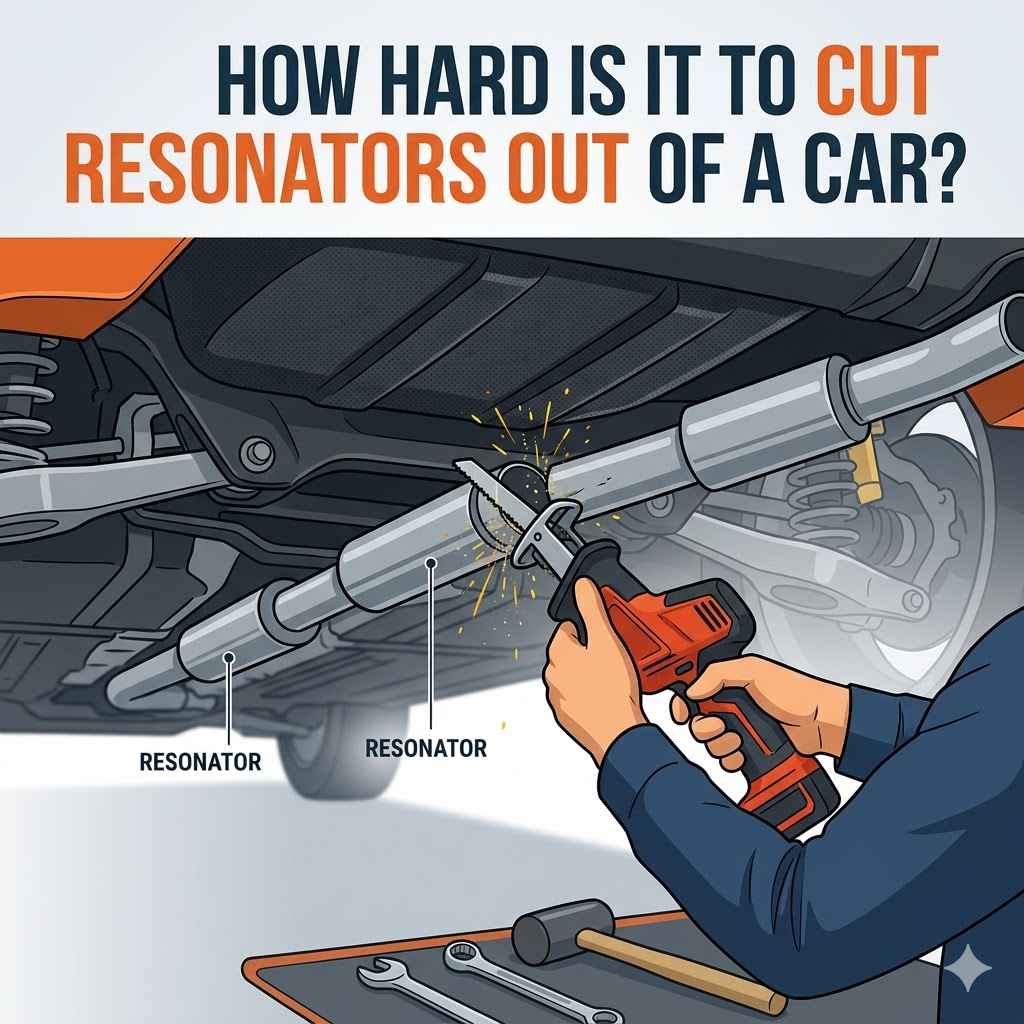
Locate the resonator. It’s usually a cylindrical or oval-shaped metal box in the exhaust pipe, often between the catalytic converter and the muffler. Inspect how it’s attached.
It might be welded directly to the pipes, or it might be clamped on. This will determine how you’ll cut or remove it.
Cutting the Resonator
If the resonator is clamped on, this is the easier scenario. You’ll likely just need to loosen or remove the clamps. Then, the resonator section can often be slid off or
If the resonator is welded, you’ll need to cut it out. Use your angle grinder or reciprocating saw. Position the cutting disc or blade on the exhaust pipe, usually a few inches away from each end of the resonator.
Make clean, straight cuts.
Go slowly and carefully. The metal can get hot. Wear your safety gear!
You might need to make two cuts, one on each side of the resonator, to remove it completely. Once cut, the old resonator section can be removed.
After the Cut
After cutting the resonator out, you’ll have two open ends of the exhaust pipe. You have a few options here. Some people use a muffler delete pipe, which is a straight piece of pipe designed to connect the two ends.
You can buy these pre-made or have one custom fabricated.
Another option is to simply connect the two ends with a piece of pipe and secure it with exhaust clamps. Make sure the pipe you use is the same diameter as your exhaust. You’ll want to ensure a snug fit to prevent leaks.
If the resonator was welded, you might need to have a new section of pipe welded in place to join the two cut ends smoothly. This provides a more permanent and secure connection.
Potential Problems and Solutions When Removing Resonators
While removing a resonator is usually straightforward, things can sometimes get tricky. It’s good to know what problems might pop up and how to fix them. This will help you avoid frustration and ensure a successful job.
Exhaust Leaks
One of the most common issues after removing a resonator is exhaust leaks. These can happen if the new pipes or clamps aren’t fitted correctly. A leak means that exhaust gases are escaping before they reach the tailpipe.
This can make your exhaust sound worse and reduce performance.
To fix leaks, double-check all your connections. Make sure clamps are tightened evenly and securely. If you welded in a new pipe, ensure the weld is solid and there are no pinholes.
Sometimes, using exhaust putty or sealant can help seal small gaps. You can also test for leaks by running the car and listening for any hissing sounds.
Drone and Unwanted Noise
While many people remove resonators for a louder sound, they might not expect the type of noise they get. Sometimes, removing them can lead to an annoying “drone” at certain speeds. This is a deep, low-frequency hum that can be very irritating inside the car.
This drone happens because the resonator was specifically designed to cancel out certain frequencies. Without it, those frequencies can become more prominent. If the drone is too much, you might consider adding a smaller, aftermarket resonator.
There are also different types of mufflers that can help control drone.
Legal and Emissions Concerns
It’s important to know that in some areas, removing factory exhaust components like resonators might be against local laws or emissions regulations. Exhaust systems are designed to meet certain standards for noise and pollution control.
Before you start, check your local vehicle regulations. Some places have strict rules about modifying exhaust systems. Make sure your car still meets emission standards after the modification.
Not doing so could lead to failing inspections or fines.

Frequently Asked Questions
Question: Can I remove my resonators myself?
Answer: Yes, many car owners can remove their resonators themselves. It requires basic tools like an angle grinder or reciprocating saw and safety gear. If the resonator is clamped, it’s even easier.
If it’s welded, it requires cutting.
Question: Will removing resonators make my car louder?
Answer: Yes, removing resonators will generally make your car’s exhaust sound louder and often deeper. This is because the resonator’s job is to cancel out certain sound frequencies.
Question: Will removing resonators hurt my car’s engine?
Answer: In most cases, removing resonators will not hurt your car’s engine. There might be a small performance improvement due to better exhaust flow, but it’s usually not significant enough to cause damage.
Question: What kind of sound can I expect after removing resonators?
Answer: You can expect a more aggressive and louder exhaust note. However, some cars might experience an annoying drone at certain RPMs due to the removal of sound-canceling components.
Question: Do I need to
Answer: You don’t always need to replace it, but it’s often recommended. Many people install a straight pipe or a muffler delete pipe to connect the exhaust system after removal. This ensures a continuous exhaust flow.
Summary
So, how hard is it to cut resonators out of a car? It’s a job most DIY car owners can handle with the right tools and precautions. It involves safely lifting your car, cutting the resonator section, and then connecting the exhaust pipes.
While there are potential issues like leaks or unwanted noise, these can usually be managed with careful work and the right solutions. You’ll get a sportier sound and potentially a small performance boost.


