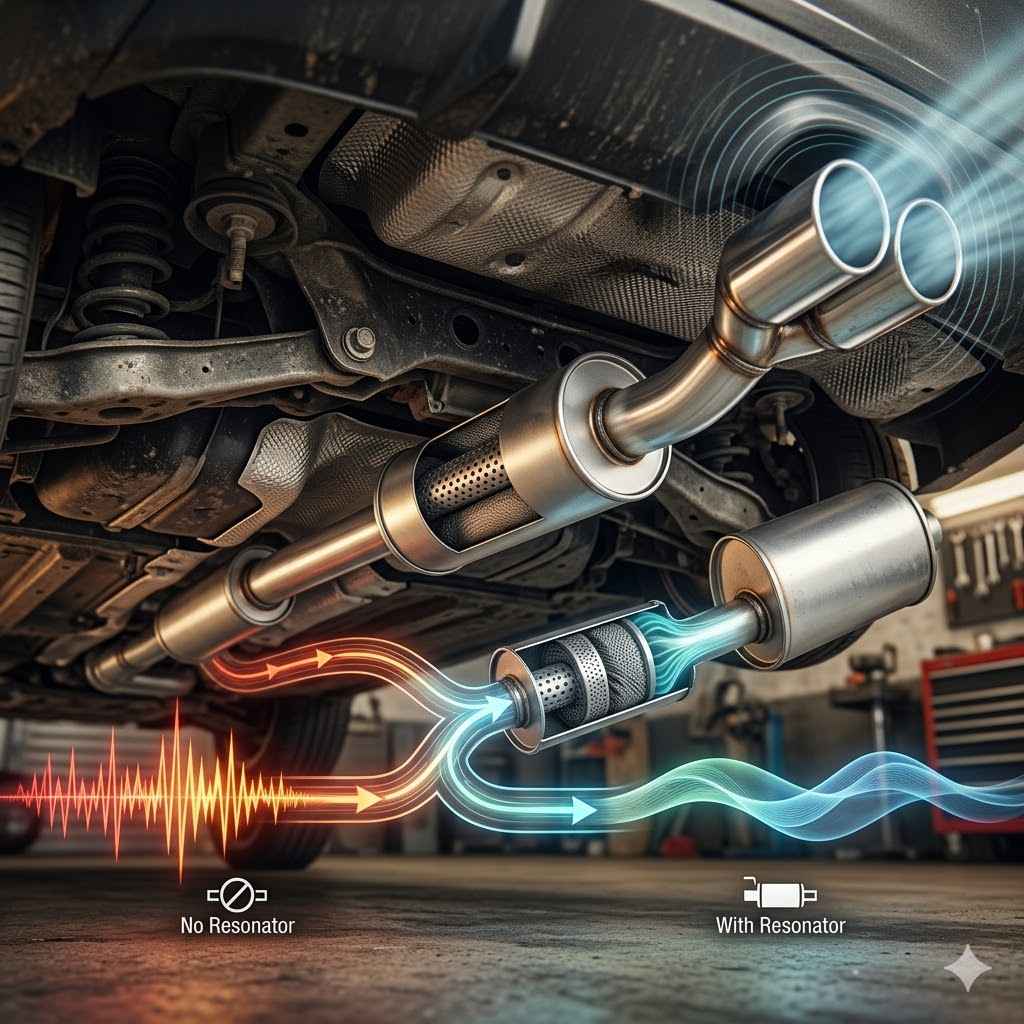
Do You Need Resonators on an Exhaust System
Many car owners wonder if they really need a resonator on their exhaust. It’s a common question, especially for those new to car parts. The exhaust system has many pieces, and it can be confusing to know what each one does.

ZHRUIHAN
Exhaust Resonator Muffler Pipe System Replacement kit…
- STAINLESS STEEL 409 GRADE: Our Exhaust Part/Exhaust System Kit/Assembly is meticulously engineered from durable stainless steel, e…
- EASY TO INSTALL: Can be easily installed by a professional without the need for any welding. Additionally, you will receive free e…
- COMPATIBLE WITH: 2007 Camry Muffler Resonator Pipe Exhaust System Kit 2.4L L4, 2008 Camry Muffler Resonator Pipe Exhaust System Ki…
As an Amazon Associate I earn from qualifying purchases.
This article makes it simple. We will break down everything about resonators so you can easily figure out if yours is important. Let’s explore this topic step by step.
Understanding Exhaust Resonators
Exhaust resonators are a key part of your car’s exhaust system, working alongside the muffler to control noise. Their main job is to cancel out specific sound frequencies, particularly those annoying, droning sounds that can come from your engine. Think of them as a special kind of sound filter.
Without them, your car might sound much louder and less refined. They help achieve a smoother, quieter ride by addressing certain types of noise that a muffler alone might not fully eliminate.
What Is a Resonator?
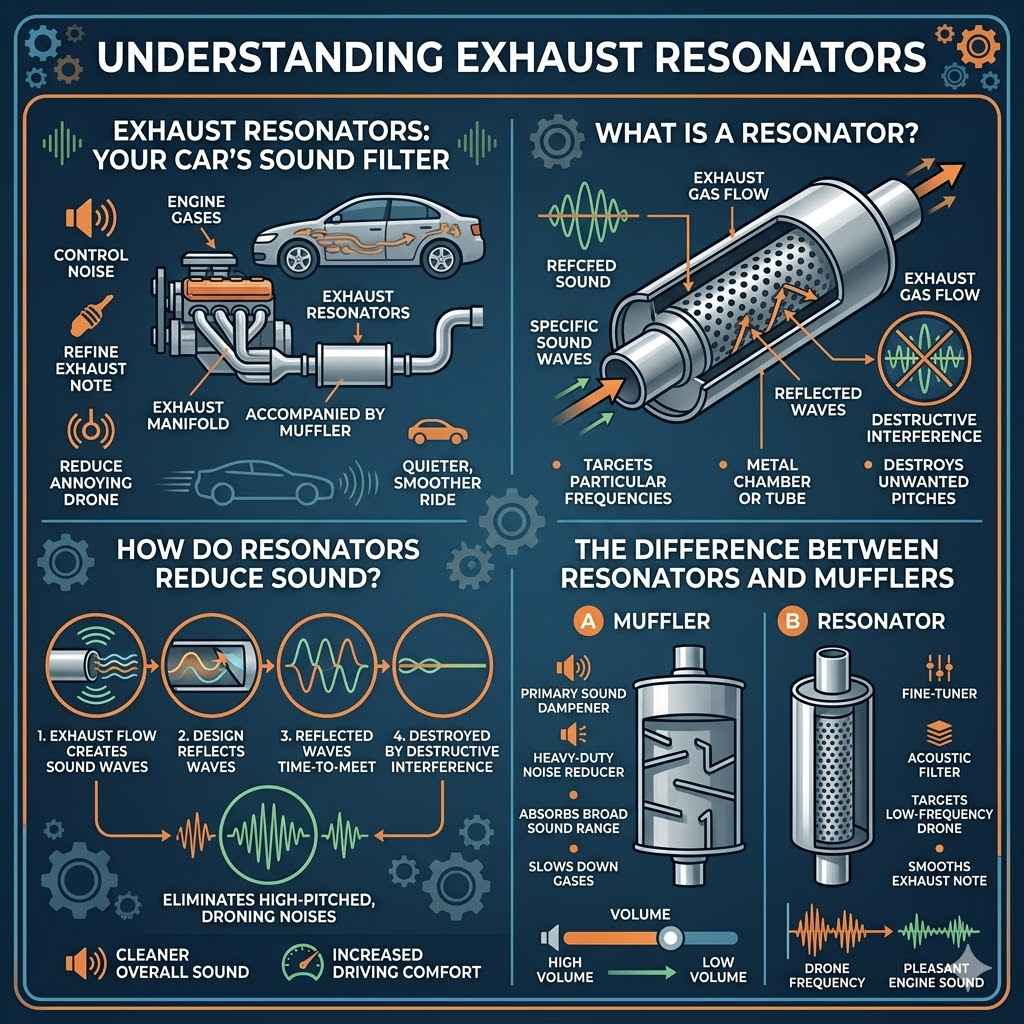
A resonator in an exhaust system is a metal chamber or tube designed to reduce specific sound waves. Unlike a muffler, which is built to silence a broad range of noises, a resonator targets particular frequencies. It works by reflecting sound waves within its chamber in a way that cancels out unwanted pitches.
This is done through a process called destructive interference, where sound waves collide and cancel each other out.
This targeting of specific sounds is what gives a resonator its unique role. It’s not just about making things quieter overall, but about refining the exhaust note to a more pleasant tone. It can help eliminate or reduce the common “drone” that many drivers find irritating, especially during steady cruising at highway speeds.
The design of the resonator, including its size and internal baffling, determines which sound frequencies it targets most effectively.
How Do Resonators Reduce Sound?
Resonators work through a clever acoustic principle. When exhaust gases flow through the resonator, they create sound waves. The resonator has a specific internal design, often a hollow chamber or a series of tubes, that reflects these sound waves.
These reflected waves are timed to meet the original sound waves in a way that cancels them out. This is known as destructive interference. It’s like when two ripples on water meet and flatten out.
This process is very effective at eliminating specific, often high-pitched or droning, noises. By carefully designing the resonator’s volume and port sizes, engineers can target and neutralize the most bothersome sound frequencies. This leaves the remaining exhaust notes to be handled by the muffler, resulting in a cleaner and quieter overall sound.
It’s a precise method of sound control that adds to the comfort of your driving experience.
The Difference Between Resonators and Mufflers
While both resonators and mufflers aim to quiet the exhaust, they do it differently and target different sounds. A muffler is the primary sound dampener. It uses baffles and chambers to slow down exhaust gases and absorb a wide range of sound waves, reducing the overall volume significantly.
Think of it as a heavy-duty noise reducer.
A resonator, on the other hand, is more like a fine-tuner. It targets specific sound frequencies that the muffler might not fully eliminate, such as the low-frequency drone that can be very noticeable at certain engine speeds. It acts as an acoustic filter to smooth out the exhaust note.
Many vehicles have both to achieve the desired balance of quietness and a pleasant engine sound.
For example, some sporty cars might remove resonators to achieve a more aggressive sound, relying solely on a modified muffler. Others, especially luxury vehicles, will have both to ensure a near-silent ride. The choice often comes down to the desired sound profile and the overall engineering goals for the vehicle.
Do You Need Resonators on an Exhaust System?
The question of whether you Do You Need Resonators on an Exhaust System? depends heavily on what you want from your car. For most daily drivers, the original resonators are there for a reason: comfort and refinement. They help keep the cabin quiet and eliminate annoying road noise.