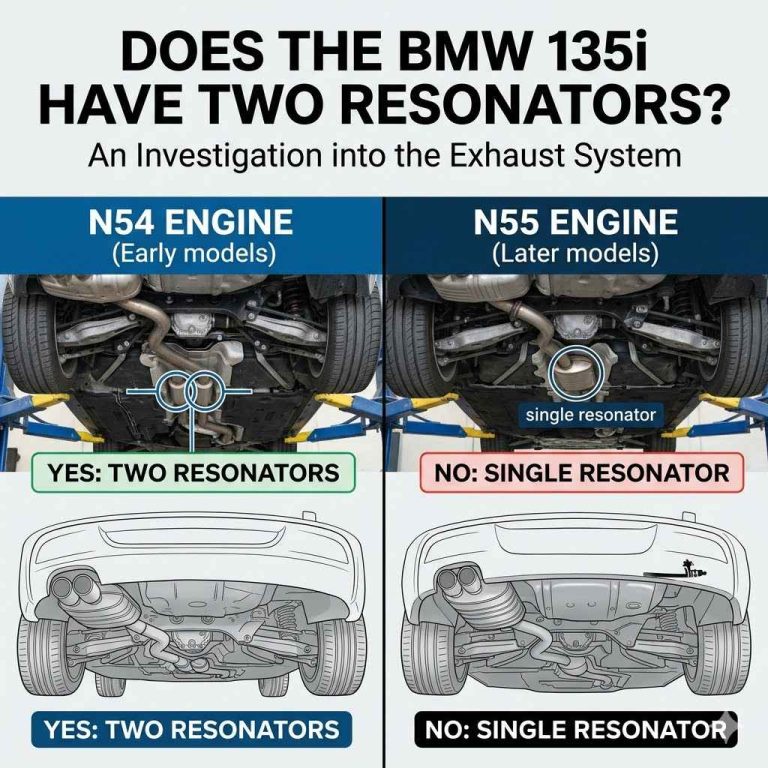
Does Cutting Resonators Reduce Back Pressure?
Many folks wonder about their car’s exhaust system and how it works. A common question popping up, especially for those new to car maintenance or looking for better performance, is Does Cutting Resonators Reduce Back Pressure? It can seem a bit confusing with all the parts involved. This guide will break it down simply.
We’ll look at what resonators do and if removing them helps your car run better. Get ready for a clear, step-by-step explanation.
Understanding Exhaust Back Pressure And Resonators
Exhaust back pressure is a key factor in how your engine performs. It’s the resistance the exhaust gases face as they move out of your engine and through the exhaust system. When exhaust gases flow freely, your engine works more efficiently.
Too much resistance, or back pressure, can make your engine struggle and lose power. It’s like trying to breathe through a narrow straw. The harder you have to pull, the less air you get easily.
Think of your car’s exhaust system like a path for smoke. It starts at the engine, where the smoke is made. This path has several stops along the way, like mufflers and resonators.
These parts help quiet down the noise and sometimes manage the flow. Resonators, in particular, are designed to cancel out specific sound frequencies. They are like tuned chambers that work with the exhaust gases to create a smoother sound.
They are not just for noise; they can also play a role in how easily the gases move.
What Are Resonators And Their Function
Resonators are a part of your vehicle’s exhaust system. They are often found between the exhaust manifold and the muffler. Their main job is to reduce or eliminate certain sound frequencies.
They work by using the principles of acoustic resonance. When sound waves from the engine travel through the exhaust pipe, they enter the resonator. Inside the resonator, there are chambers or passages designed to reflect these sound waves.
These reflected waves are carefully timed and shaped to cancel out specific unwanted noises, often the annoying drone or hum that can occur at certain engine speeds. This is different from a muffler, which uses baffles and packing material to absorb sound energy across a broader range of frequencies. Resonators are more like a finely tuned instrument, targeting specific notes to make the exhaust sound cleaner and more refined, rather than just quieter overall.
While their primary role is acoustic, their design can also have an effect on exhaust gas flow. Because they are hollow chambers, they create a space where gases can expand. This expansion can slightly reduce the resistance gases encounter compared to a completely straight pipe.
However, this effect is usually minor and not their main engineering purpose. Their presence is more about the sound quality than direct back pressure reduction.
How Resonators Affect Exhaust Flow
Resonators are essentially tuned chambers within the exhaust system. They are designed to interact with exhaust pulses. When a pulse of hot gas exits the engine, it travels down the exhaust pipe.
Upon reaching the resonator, the gas enters a chamber where its pressure wave can reflect off the walls. These reflections are carefully calculated to interfere with and cancel out certain sound waves.
The physical space a resonator occupies and its internal design can influence how easily the exhaust gases move through it. A resonator typically has a larger volume than the exhaust pipe itself. This increase in volume allows the gases to expand slightly.
This expansion can lead to a small decrease in the velocity of the gas flow. While this might seem like it could increase back pressure, the effect is usually complex.
The reflective nature of the resonator’s internal walls also creates pressure waves that can push against the incoming exhaust gas. This push can help to scavenge the exhaust gases out of the cylinder more effectively. Scavenging is the process of clearing out the burnt gases to make room for the fresh air-fuel mixture in the next cycle.
A well-designed resonator can actually aid in this process, potentially improving engine performance without significantly increasing back pressure.
The Science Behind Back Pressure
Exhaust back pressure occurs when the exhaust gases leaving the engine encounter resistance in the exhaust system. This resistance is caused by several components, including the exhaust manifold, catalytic converter, muffler, and resonators. Each of these parts creates a degree of friction and turbulence that the gases must overcome.
When the engine operates, it expels exhaust gases at high pressure and temperature. Ideally, these gases should exit the system with minimal obstruction. If the exhaust system is too restrictive, the outgoing gases will build up pressure behind the exhaust valves.
This build-up of pressure makes it harder for the engine to push out the exhaust gases, and it can also push unburnt fuel and exhaust gases back into the combustion chamber.
High back pressure can lead to several negative effects on engine performance. It can reduce horsepower and torque, decrease fuel efficiency, and increase engine temperatures. In some cases, it can even lead to premature engine wear.
The goal of an exhaust system is to balance the need to quiet the engine’s noise with the need to allow gases to escape freely for optimal performance.

Does Cutting Resonators Reduce Back Pressure?
The question of Does Cutting Resonators Reduce Back Pressure? is a common one among car enthusiasts. The short answer is generally yes, but it’s not as straightforward as simply removing a part. Removing a resonator does remove a component that adds some resistance to the exhaust flow.
By eliminating the chambers and internal structures of the resonator, you are creating a more direct path for the exhaust gases.
This direct path means there are fewer obstacles for the gases to flow around, which inherently reduces the overall back pressure in the exhaust system. Think of it like removing a speed bump from a road; the traffic can flow a little more freely. The degree to which back pressure is reduced depends on the size and design of the original resonator, as well as the rest of the exhaust system.
However, it’s important to understand that resonators are not the primary source of back pressure. Components like the catalytic converter and muffler are designed to be much more restrictive. Therefore, removing a resonator might cause a noticeable but often small reduction in back pressure.
The change in sound is usually more significant than the change in performance due to back pressure alone.
The Impact Of Resonator Removal On Back Pressure
When you remove a resonator, you are essentially replacing a section of your exhaust pipe with a straight pipe. This eliminates the internal baffles, chambers, and reflective surfaces that are characteristic of a resonator. These elements, while primarily designed for sound control, do create some resistance to the flow of exhaust gases.
By removing these obstructions, the exhaust gases have a smoother, more direct path to travel. This reduction in obstruction means that the gases encounter less friction and turbulence as they move through the exhaust system. Less friction and turbulence translate directly to lower back pressure.
The exhaust gases can exit the engine more quickly and with less effort required from the engine’s exhaust stroke.
The extent of this reduction in back pressure is influenced by several factors. The original size and design of the resonator play a significant role. A larger, more complex resonator will likely contribute more to back pressure than a smaller, simpler one.
Additionally, the overall design of the exhaust system matters. If other components like the muffler or catalytic converter are already very restrictive, the impact of removing a resonator might be less pronounced.
Sound Changes And Performance Gains
Removing resonators almost always leads to a significant change in the exhaust sound. Without the resonator’s sound-canceling properties, the exhaust note will typically become louder and deeper. You might notice more of the engine’s natural tone, which can be desirable for some drivers.
However, this can also introduce undesirable drone at certain RPMs, which the resonator was designed to prevent.
Regarding performance gains, the impact of simply cutting resonators is usually subtle. While reduced back pressure can theoretically improve engine efficiency and power, the gains from resonator removal alone are often minimal. This is because other components, like the catalytic converter and muffler, contribute much more to overall exhaust restriction.
A small reduction in back pressure might offer a few extra horsepower, but it’s not typically a dramatic increase.
For more significant performance improvements related to exhaust flow, modifications often involve replacing the entire exhaust system with a less restrictive, performance-oriented one. This might include high-flow catalytic converters and performance mufflers, along with larger diameter pipes. The removal of resonators is often a first step or part of a larger exhaust upgrade rather than a standalone performance mod.
When Resonator Removal Might Not Help
In some vehicles, the resonators are integral to the overall exhaust system design and may not contribute significantly to back pressure. For instance, if the factory exhaust system is already designed for optimal flow and quiet operation, removing a resonator might have a negligible effect on back pressure and performance. The engineers who designed the system likely considered the balance between noise and flow.
Furthermore, some resonators are not just simple chambers; they can incorporate specific baffling or tuning elements that, while primarily for sound, can also have a minor role in scavenging exhaust gases. In such cases, removing them might disrupt this delicate balance, potentially leading to a slight increase in back pressure or a less desirable exhaust note without any performance benefit.
Another important consideration is the vehicle’s computer system. Modern cars have sophisticated engine management systems that monitor various parameters, including exhaust gas flow. While unlikely to cause a check engine light solely from resonator removal, significant changes in exhaust dynamics could theoretically affect sensor readings.
However, this is rare for just resonator deletion.
Alternatives To Cutting Resonators For Better Exhaust Flow
If your goal is to improve exhaust flow and potentially gain some performance, there are several alternatives to simply cutting out resonators. These methods often offer more significant benefits and can be tailored to your specific needs and desired outcome. Exploring these options can help you achieve better results without potentially compromising sound quality or engine performance in unintended ways.
One of the most effective ways to reduce exhaust back pressure is to upgrade the entire exhaust system. This involves replacing restrictive factory components with performance-oriented parts. This can include a high-flow catalytic converter, a performance muffler, and larger diameter exhaust piping.
These components are engineered to minimize restriction while still managing sound and emissions.
Another approach is to optimize the existing system. Sometimes, exhaust pipes can become partially clogged with carbon buildup over time, especially in older vehicles. A thorough cleaning or inspection of the exhaust system can identify and address such issues.
Ensuring that all connections are sealed properly also prevents leaks that can affect flow dynamics.
High-Flow Catalytic Converters
The catalytic converter is a crucial component of the exhaust system, responsible for reducing harmful emissions. However, factory catalytic converters are often designed with efficiency and durability in mind, which can lead to them being somewhat restrictive to exhaust flow. This restriction contributes significantly to back pressure.
High-flow catalytic converters are designed with a more open internal structure, typically using a thinner substrate or a different cell density. This allows exhaust gases to pass through more easily, resulting in a noticeable reduction in back pressure. They are engineered to maintain their emissions-reducing capabilities while minimizing the impact on exhaust flow.
When choosing a high-flow catalytic converter, it’s important to consider local emissions regulations. Some high-flow converters may not meet stringent emission standards in all areas. It’s also advisable to pair a high-flow catalytic converter with other exhaust upgrades for the most significant performance benefits.
The reduction in back pressure can allow the engine to breathe more freely, potentially leading to modest increases in horsepower and torque.
Performance Mufflers
Mufflers are designed to reduce the noise produced by the engine. They do this through a variety of internal designs, including chambers, baffles, and sound-absorbing materials. While effective at silencing the exhaust, these internal structures can also create a significant amount of back pressure.
Performance mufflers, also known as aftermarket or ‘straight-through’ mufflers, are engineered to reduce noise with less restriction. They often use a perforated core surrounded by packing material or a simple straight pipe design that offers minimal resistance to exhaust flow. The sound they produce is often deeper and more aggressive than stock mufflers.
The primary advantage of a performance muffler is its ability to reduce back pressure compared to a stock muffler. This improved flow can lead to better engine performance, particularly at higher RPMs. However, it’s important to note that even performance mufflers introduce some level of restriction, as their primary function is still noise reduction.
The key is finding a balance that provides adequate sound control without hindering exhaust flow too much.
Custom Exhaust Systems
A custom exhaust system is designed and built specifically for your vehicle, taking into account its engine, intended use, and your performance goals. This approach offers the greatest control over exhaust flow and back pressure. Exhaust specialists can select piping diameters, bend radii, and component types that are optimized for your specific application.
With a custom system, you can choose to retain resonators for sound tuning if desired, or opt for a resonator-delete pipe if maximum flow is the priority. High-flow catalytic converters and performance mufflers can be integrated seamlessly. The entire system is designed to work harmoniously, ensuring that each component complements the others to achieve the lowest possible back pressure for the desired sound profile.
The process of designing a custom exhaust system often involves performance tuning of the engine’s computer. This allows the engine’s parameters to be adjusted to take full advantage of the improved exhaust flow, maximizing power gains and efficiency. While more expensive than simple bolt-on modifications, a custom exhaust system provides a comprehensive solution for optimizing exhaust performance.
Analyzing The Results Of Resonator Deletion
When drivers choose to remove resonators, they often do so with specific expectations. The most immediate and noticeable effect is usually on the sound of the exhaust. For many, this is the primary reason for the modification.
The exhaust note becomes louder, more aggressive, and often carries a deeper tone. This change can make a car sound more powerful and sporty.
In terms of performance, the impact of resonator deletion can be varied. Some drivers report feeling a slight improvement in throttle response or a small increase in power, especially when the exhaust system is already somewhat restrictive. This is attributed to the reduction in back pressure, allowing the engine to expel exhaust gases more efficiently.
However, these gains are often subtle and may not be noticeable in all driving conditions.
It’s important to manage expectations. Simply removing resonators is unlikely to transform a standard car into a high-performance machine. The gains are typically modest, and the most significant changes are usually auditory rather than quantifiable performance increases.
For substantial improvements, resonator removal often needs to be part of a broader exhaust system upgrade.
Case Study: Small Sedan With Resonator Removal
A common scenario involves a compact sedan that’s a few years old. The owner wants a sportier sound without spending a lot of money on a full exhaust system. They decide to have the two factory resonators removed and
Before the modification, the car’s exhaust was quiet, with a mild hum at highway speeds. After removing the resonators, the exhaust note became noticeably louder, especially when accelerating. The idle had a slightly more aggressive rumble, and at full throttle, the sound was much more pronounced.
The driver reported that the car felt a bit more responsive when pressing the accelerator, though they couldn’t quantify any specific horsepower increase.
The primary outcome was the sound enhancement, which the owner was very pleased with. The perceived responsiveness improvement was a bonus. There were no negative effects like engine lights or noticeable drone at cruising speeds.
This case illustrates a typical outcome where sound is the main benefit, with minor improvements in perceived performance.
Measuring Back Pressure Changes
Quantifying the reduction in back pressure from resonator removal requires specialized tools. A back pressure gauge is used to measure the pressure inside the exhaust system at a specific point, usually before the muffler or catalytic converter. This measurement is taken while the engine is running under load.
In a typical naturally aspirated gasoline engine, a stock exhaust system might produce around 2-5 psi of back pressure at wide-open throttle. After removing the resonators and replacing them with straight pipes, this measurement might drop to 1-3 psi. The exact figures depend heavily on the vehicle’s engine, exhaust system design, and the specific resonators that were removed.
For forced induction engines (turbocharged or supercharged), back pressure management is even more critical. Excessive back pressure can hinder the turbocharger’s ability to spool up efficiently and can lead to higher intake air temperatures. In these applications, reducing back pressure through exhaust modifications, including resonator removal or upgrades, can have a more pronounced positive impact on performance.
Engine Performance Data Before and After
To accurately assess the impact of resonator removal on engine performance, data logging is essential. This involves using diagnostic tools to monitor various engine parameters while the car is driven on a dynamometer. Key metrics include horsepower, torque, air-fuel ratio, and exhaust gas temperature.
For a typical mid-size sedan with a naturally aspirated engine, dyno tests might show a modest increase in peak horsepower, perhaps in the range of 2-5 hp, after resonator deletion. Torque figures might also see a similar slight improvement, particularly in the mid-to-upper RPM range. The air-fuel ratio might lean out slightly, indicating that the engine is breathing more freely and potentially able to use more air.
It’s important to consider that these gains are often small and can be overshadowed by other factors like air temperature, humidity, and the car’s overall condition. For significant performance gains, resonator removal is usually just one piece of a more comprehensive exhaust and engine tuning strategy.
Legal And Practical Considerations
When considering any modification to your vehicle’s exhaust system, it’s crucial to be aware of the legal and practical implications. Laws regarding exhaust systems vary significantly by region and country, particularly concerning noise levels and emissions. Modifying your exhaust without proper consideration can lead to fines, failed inspections, or even legal penalties.
Noise regulations are often the most immediate concern. Many areas have limits on how loud a vehicle’s exhaust can be, especially at certain engine speeds or distances from the vehicle. Removing resonators typically increases the exhaust volume, and in some cases, this can exceed legal limits.
Similarly, emissions standards are critical. While resonator removal itself doesn’t directly impact emissions control systems, if it’s part of a larger modification that includes removing or tampering with the catalytic converter, this can have serious legal consequences.
Practical considerations also include the long-term effects on your vehicle. While resonator deletion is generally considered a minor modification, it’s always wise to ensure the work is done professionally to avoid leaks or other issues that could affect performance or cause damage. Understanding these factors before proceeding with any modification will help ensure a smooth and legal experience.
Emissions Regulations And Resonators
Resonators themselves are not emissions control devices. Their primary function is acoustic, to fine-tune the sound of the exhaust. Therefore, removing a resonator typically does not directly affect the vehicle’s emissions output or the functionality of the catalytic converter.
The catalytic converter is the component responsible for converting harmful pollutants into less harmful substances.
However, it’s important to understand that some regions have regulations that address the overall exhaust system. These regulations might specify that all original emissions control equipment must be present and functional. While a resonator is not an emissions device, its removal could be interpreted as a modification to the exhaust system that might be subject to scrutiny during inspections, especially if it leads to increased noise levels.
If you live in an area with strict emissions testing, it’s advisable to check local regulations. While removing just a resonator is unlikely to cause a failed emissions test if the catalytic converter is intact, it’s always better to be informed. Some aftermarket ‘resonator delete’ pipes are designed to be direct replacements and might be less likely to raise eyebrows than simply cutting the original component out and leaving an open pipe.
Noise Ordinances And Inspections
Noise ordinances are local laws designed to control the amount of noise pollution in a community. Many cities and towns have specific regulations regarding vehicle exhaust noise. These ordinances often set maximum decibel levels for exhausts, particularly in residential areas or during specific times of the day.
When you remove resonators, the exhaust system generally becomes louder. If this increase in volume exceeds the legal limit set by local noise ordinances, you could be subject to fines. Law enforcement officers can issue tickets for excessive exhaust noise, even if the vehicle passes emissions tests.
This is a common reason why people have to revert exhaust modifications.
Vehicle inspections, whether annual safety inspections or more stringent emissions tests, are another area to consider. While a resonator delete itself doesn’t typically fail an emissions test, a significantly louder exhaust might fail a noise component of a safety inspection or simply draw unwanted attention from inspectors who might look more closely at other aspects of the exhaust system. Always ensure your modifications comply with local inspection requirements.
Warranty Considerations
Modifying your vehicle’s exhaust system, including removing resonators, can potentially impact your vehicle’s manufacturer warranty. While manufacturers generally cannot void your entire warranty for a minor modification, they can deny warranty claims for any problems that are directly caused by that modification.
For example, if you remove your resonators and then experience an issue with the engine’s performance that can be directly linked to the altered exhaust flow dynamics, the manufacturer might deny a warranty claim for that specific repair. This is because the modification could be argued to have contributed to the failure. Issues unrelated to the exhaust, such as a transmission problem, would typically still be covered under warranty.
To mitigate potential warranty issues, it’s often recommended to keep original parts if possible. If you ever need to bring your car in for service, reinstalling the original resonators can help avoid potential warranty disputes. If a custom exhaust system is installed, ensuring it’s from a reputable brand and installed by qualified technicians can also help.

Frequently Asked Questions
Question: Will removing resonators make my car faster?
Answer: Removing resonators can slightly reduce exhaust back pressure, which may lead to a small increase in horsepower and torque. However, the performance gains are usually minimal and might not be noticeable without other modifications to the exhaust system and engine tuning.
Question: Does removing resonators affect my car’s fuel economy?
Answer: In theory, reducing exhaust back pressure can improve engine efficiency, potentially leading to a slight improvement in fuel economy. However, the gains are often very small, and the increased exhaust volume might encourage more aggressive driving, which can offset any fuel savings.
Question: Can I remove resonators myself?
Answer: Removing resonators requires cutting into the exhaust pipe and welding in straight pipes or new sections. While it’s possible for someone with welding experience and the right tools, it’s often best left to professional exhaust shops to ensure a clean, leak-free installation.
Question: Will removing resonators cause a check engine light?
Answer: Typically, removing only the resonators will not cause a check engine light. The sensors that trigger this light are usually located before or after the catalytic converter and monitor emissions, not directly affected by resonator deletion. Issues arise if the catalytic converter is removed or damaged.
Question: Is it legal to remove resonators?
Answer: The legality of removing resonators varies by location. In many places, it is legal as long as the vehicle still meets emissions standards and noise ordinances. However, some regions have strict laws about exhaust modifications, so it’s important to check your local regulations.
Summary
So, Does Cutting Resonators Reduce Back Pressure? Yes, it generally does. This happens because you’re removing a component that adds some resistance to exhaust flow. The change in sound is usually more significant than any power gains.
Consider other exhaust upgrades for bigger improvements. Always check local laws and your warranty before modifying your car.