Ram 1500 Exhaust Manifold Repair Cost
A Ram 1500 exhaust manifold repair often runs about $500 to $1,500, but quotes above that can be fair if the truck needs broken studs, warped flanges, or extra labor; the manifold itself is usually only part of the bill. Ignoring a leak can trigger ticking noise, power loss, failed emissions tests, and a much higher repair if studs snap or the head gets damaged. This guide breaks down manifold, gasket, hardware, and labor line items so you can judge which charges are necessary and which are optional.
Typical cost range


For a Ram 1500, a single exhaust manifold job commonly lands in the mid-hundreds, while both sides can move the total much higher. One page places replacement at $200 to $1,000, another lists $550 to $734 with labor at $189 to $238 and parts at $361 to $495, and a separate guide says $557 to $714 total.
That spread is normal because a quote can reflect a gasket-only repair, a one-bank manifold swap, or a job that turns into fastener extraction. Dealer labor rates and OEM part pricing often push totals above an independent shop quote, and two estimates can differ when one shop includes aftermarket parts while another prices factory hardware.
Single-manifold price range
A single-manifold replacement is the more common quote on one-bank failures. One source puts a single Ram 1500 manifold at about $400 to $900, and another lists a single replacement at $550 to $734 total. That range is often enough when the leak is isolated, the flange is usable, and the bolts come out cleanly.
Both-sides price range
Both-side pricing rises fast because the shop is buying more parts and repeating the labor. Both manifolds can cost $800 to $2,000, and that lines up with what happens when both banks show seepage, both sets of fasteners are rusted, or the owner wants to avoid paying labor twice. A full dual-bank job is also more likely to include extra hardware.
Parts and labor split
The parts and labor split matters because it tells you whether the quote is inflated by labor, by parts, or by add-ons. On one listed example, labor was $189 to $238 and parts were $361 to $495. Another guide breaks the parts into manifold $368 to $476 and gasket $43, which is useful when you compare itemized estimates.
Dealer versus independent shop pricing
Dealers often charge more because of labor rate, diagnostic time, and OEM part sourcing. Independent shops may come in lower, especially if they use aftermarket manifolds or source hardware from a local supplier. A lower quote is not automatically better, though; a cheap estimate that omits bolts, studs, or gasket work can be incomplete.
What a quote should include
A fair quote should name the manifold, gasket, labor, and any fasteners that are likely to be replaced. It should also say whether the shop expects sensor removal, heat shield removal, or broken fastener work. If those items are not listed, ask whether they are included or treated as extra labor later.

Manifold and gasket line items
The manifold is the main part, but the gasket is often replaced at the same time because it seals the flange and helps prevent another leak. A gasket-only price can be much lower than a full manifold job, but only if the manifold surface is flat and the leak is actually at the gasket. If the quote shows a gasket but no manifold, that may be reasonable for a seal failure.
Bolts, studs, nuts, and washers
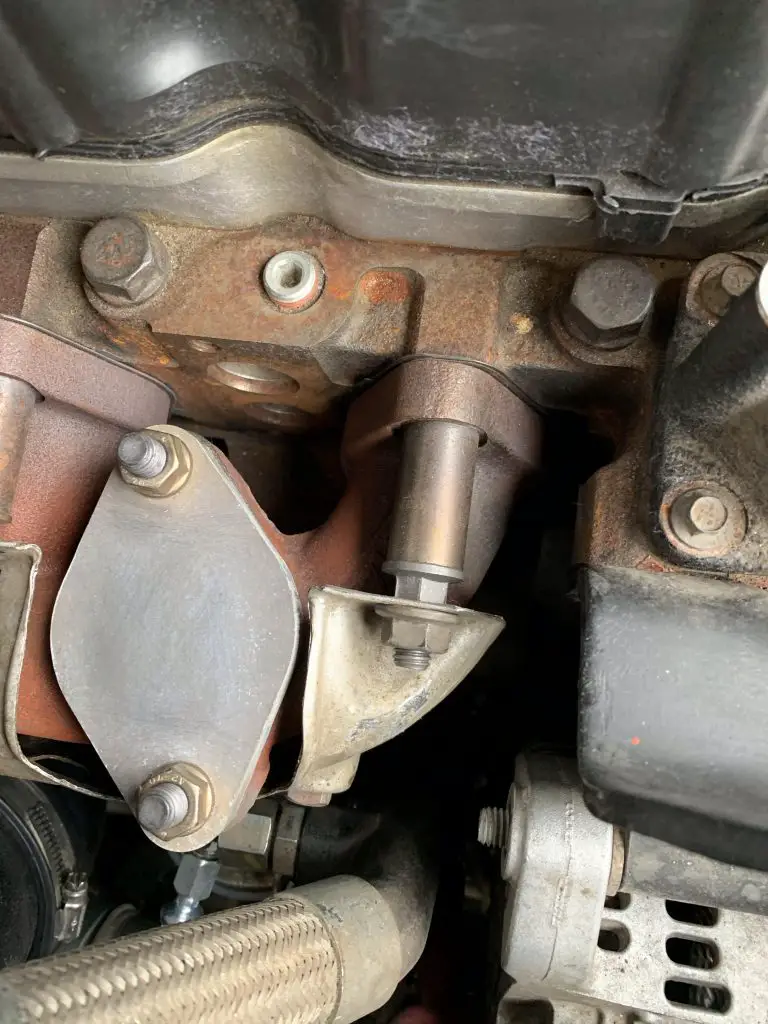
Broken or seized exhaust hardware often drives the estimate up because heat cycles and rust lock the fasteners in place. Exhaust manifold bolts and studs live near heat and rust, so removal can take time and may require replacement hardware. A quote that includes studs, nuts, and washers is often sensible on older trucks or trucks from rust-prone areas. A quote that adds them without explanation deserves a question.
Sensor removal and heat shields
Some jobs need oxygen sensor removal, and some need heat shield removal to reach the manifold. Those steps are legitimate when access is tight, especially on the 5.7L Hemi. They should be listed if the shop expects extra time. Heat shield work is normal; vague “miscellaneous labor” charges are less helpful and should be explained.
Does engine type change the bill?
Yes. Engine layout changes access, labor time, and the chance that a fastener will snap during removal. The 5.7L Hemi is often the more involved job because access is tighter, and exhaust leaks are sometimes tied to broken manifold bolts. The 3.6L V6 Pentastar can still be expensive, but one-bank work is often simpler.
5.7L Hemi pricing and access
The 5.7L Hemi generally pushes the bill higher than a V6 because the job can be slower and fastener failure is more common. That means more labor hours, a greater chance of stud extraction, and a higher chance the quote will include added hardware. A leak on this engine is also more likely to be tied to manifold or bolt issues than to a simple reseal.
3.6L V6 Pentastar pricing and access
The 3.6L V6 Pentastar often allows a more straightforward one-bank replacement. Expect the V6 to be cheaper when the fasteners cooperate.
One-bank versus both-bank replacement
Replacing one side is usually enough when only one bank shows a leak, one gasket is damaged, or one manifold is cracked. Both sides make sense when both banks tick cold, both flanges show soot, or the truck already needs major fastener work. Replacing both sides preemptively can save repeat labor, but only when the second side shows clear wear or matching age-related failure.
How do shops find the leak?
Good diagnosis keeps you from paying for the wrong part. A shop should listen for a cold-start tick, check for exhaust odor, inspect for soot at the flange, and probe the suspect area with a mechanic’s stethoscope or a rubber hose. Those clues help separate a gasket leak from a cracked manifold or a warped flange.
Cold-start tick and exhaust odor
A sharp ticking noise on startup is one of the classic signs of an exhaust leak. Exhaust odor near the hood or at the wheel well can point to a leak upstream of the catalytic converter. If the noise fades as the engine warms, that can still mean a manifold or gasket issue; heat expansion sometimes closes the gap temporarily.
Soot trail and flange inspection
Soot around the manifold edge, flange, or nearby shield often marks the leak location. A clean soot pattern at one corner can point to a gasket failure, while a warped flange may leave uneven staining or a gap that is visible once the part is off. If the manifold is cracked, the damage is usually more obvious after removal.
Using a mechanic’s stethoscope or rubber hose
A mechanic’s stethoscope or a length of rubber hose can help isolate the tick. The tool lets a technician move point by point along the manifold and listen for the loudest pulse of escaping exhaust. That method is useful when the leak is small and visual evidence is weak.
When can you repair versus replace?
The right decision depends on where the leak is and what the metal looks like once exposed. A gasket leak can sometimes be fixed with a gasket and fresh hardware. A cracked manifold, warped flange, or badly corroded fastener set usually points to replacement. If the leak is at the head surface, the quote should explain why replacement is needed.
Gasket leak only
If the manifold is straight and the leak is only at the gasket, a gasket replacement may be enough. That is the cleanest and cheapest path when the sealing surface is sound and the bolts are reusable. The repair still needs careful torque and the right hardware, because a weak clamp load can recreate the leak.
Broken fasteners or warped flange
Broken studs or a warped flange usually move the job out of simple repair territory. Once fasteners snap, labor rises because extraction takes time and may require drilling or heat. A warped flange can also prevent proper sealing even with a new gasket, which is why the quote may jump after inspection.
Cracked manifold
A cracked manifold generally means replacement, not resealing. Welding is often short-lived on a hot exhaust part, especially if the crack comes from heat cycling or thin cast material. If the crack is visible or confirmed after removal, a new manifold is the normal fix.
When both sides make sense
Both sides can make sense when the second bank is close behind the first, the truck has high mileage, or both banks show similar rust and tick patterns. Say your 5.7L Hemi has a cold-start tick on both banks and one broken stud already visible. Replacing one side only can leave you paying labor again soon after.
Ram manifold quote checklist
Use this checklist to sort a quote into normal costs, likely costs, and charges that need proof. The goal is not the cheapest total. It is a quote that matches the actual leak and the actual work.
| Repair scenario | Expected parts | Expected labor hours | Red-flag add-ons | When to replace one side versus both |
|---|---|---|---|---|
| Gasket leak only | Gasket, basic fasteners if needed | 3 to 4 hours | Full manifold charge without proof of cracking | One side if the other bank is dry and quiet |
| Single-manifold replacement | Manifold, gasket, bolts or studs, nuts, washers | 3 to 4 hours | “Miscellaneous hardware” with no itemization | One side when only one bank has soot, tick, or a visible crack |
| Broken studs or seized bolts | Manifold, gasket, replacement studs, nuts, washers, possible extraction supplies | 4 to 6 hours | Large extraction fee without showing snapped hardware | One side if the opposite bank has no leak and good hardware |
| Dual-bank replacement | Two manifolds, two gaskets, full hardware set | 6 to 8 hours | Double sensor removal charges that are not explained | Both sides when both banks leak or both are heavily corroded |
Is it safe to drive with a leak?
Driving with an exhaust manifold leak is not a good idea for long. Exhaust can enter the cabin, and carbon monoxide exposure is the serious risk. A leak can also get louder, hurt performance, and turn a one-bank repair into a bigger one if heat and vibration keep working on the fasteners or the head.
Carbon monoxide exposure risk
If exhaust gas reaches the cabin, carbon monoxide can build up without much warning. That risk is higher if the leak is near the firewall or if the HVAC system draws in outside air. If you smell exhaust inside the truck, stop driving and get it checked before you keep using it.
Noise and performance effects
An active leak often creates a ticking sound, poorer low-speed response, and a hot exhaust smell around the engine bay. Those symptoms can make the truck unpleasant to drive, but they also matter because they help confirm the fault. A leak that grows over time can also raise the repair bill.
When to stop driving
Stop driving if the exhaust smell enters the cabin, the noise gets much louder, or the truck starts to run poorly enough to feel unsafe. A minor outside-only tick still deserves prompt repair, but a cabin odor or misfire-like behavior is a stronger warning. The cost of waiting can be much higher than the cost of the job.
Frequently asked questions
How expensive is an exhaust manifold repair
On a Ram 1500, a repair can sit in the mid-hundreds for a straightforward one-bank job and climb well past that if fasteners break or both sides need work. The broad page range of $200 to $1,000 shows why itemized quotes matter more than a single headline number.
What does a Ram 1500 exhaust manifold replacement usually cost?
The exact number depends on engine access, hardware condition, labor rate, and whether the shop uses OEM or aftermarket parts.
Is it cheaper to replace one manifold or both on a Ram 1500?
One manifold is cheaper up front, and that is usually the right choice when only one bank leaks. Both sides can be smarter if the other side is close to failing, because you may avoid paying labor twice. The second side should show real wear before you approve it.
What labor time should I expect for a Ram 1500 exhaust manifold job?
A common labor window is 3 to 4 hours for a typical job. That can rise if the bolts are seized, the studs snap, or the shop has to remove more hardware for access. The 5.7L Hemi often takes more time than a 3.6L V6 Pentastar.
Does a 5.7 Hemi exhaust manifold leak cost more to repair?
Usually yes. The 5.7L Hemi tends to be more expensive because access is tighter and fastener failure is more common, which can raise labor and hardware costs. A 3.6L V6 Pentastar often comes in lower when the leak is isolated and the fasteners come out cleanly.
What parts are usually included in an exhaust manifold repair quote?
A complete quote should usually include the manifold, gasket, and any needed bolts, studs, nuts, or washers. It may also include sensor removal, heat shield removal, and extra labor for broken fasteners. If those items are not listed, ask the shop to separate required parts from optional ones.
Can broken bolts or studs increase the repair cost?
Yes. Broken bolts or studs are one of the biggest reasons a quote rises, because extraction adds labor and can require replacement hardware. In a worst-case repair, broken fasteners can push a quote toward the kind of high total seen in reports around $3,200 when manifolds and broken bolts were involved.
Should I replace the gasket and hardware at the same time?
Usually yes, if the manifold is coming off. The gasket is the sealing surface, and old bolts, studs, nuts, and washers may not clamp as well after heat cycling and rust. Reusing questionable hardware can lead to another leak and a second labor charge.