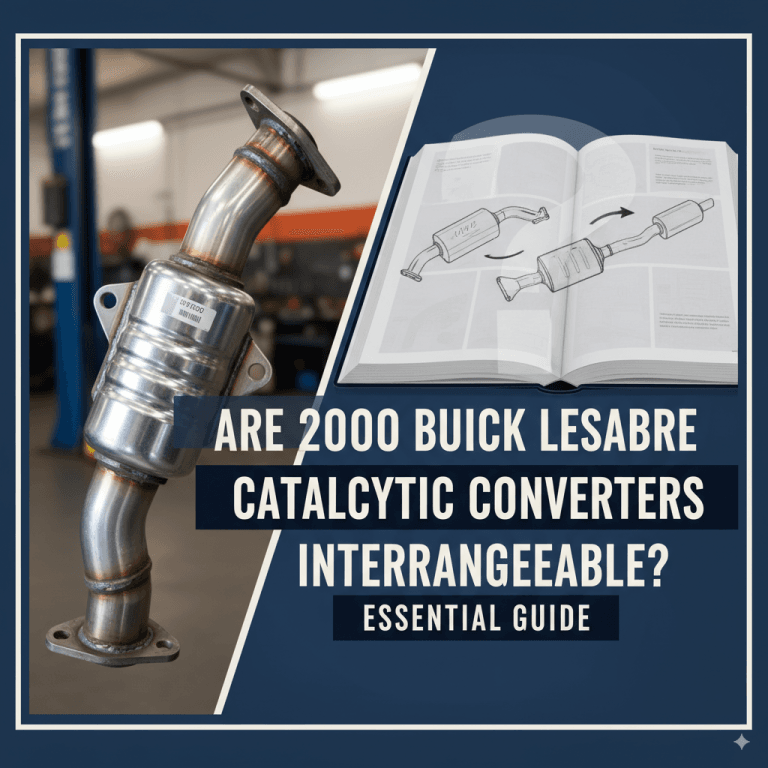
Are DPF And Catalytic Converter The Same? Essential Guide
No, the Diesel Particulate Filter (DPF) and the Catalytic Converter (Cat) are fundamentally different components in your exhaust system. The Catalytic Converter handles gaseous emissions using precious metals, while the DPF physically traps soot from diesel engines. Both are essential for clean driving but perform separate, vital jobs.
Do you ever look under your car and see two metal boxes near the exhaust pipe and wonder what they do? You are not alone! Many car owners struggle to tell the difference between the Diesel Particulate Filter (DPF) and the Catalytic Converter. It is easy to get them mixed up because they look similar and both help keep your car clean.
If your check engine light is on, understanding these parts is the first step toward fixing the problem safely. Don’t worry about confusing technical terms. We will break down what each part is, how they work, and exactly why they are not interchangeable.
By the end of this guide, you will confidently know the difference between the DPF and the Catalytic Converter, saving you time and money at the mechanic. Let’s start by looking closely at these two important exhaust cleanup crew members.
The Exhaust Lineup: Why Your Car Needs Cleaners
Modern vehicles, especially those built since the mid-1970s, are required by law to have systems that clean up the harmful stuff coming out of the tailpipe. These rules, often enforced by agencies like the U.S. Environmental Protection Agency (EPA), ensure our air stays healthier. The DPF and the Catalytic Converter are the main players in this cleaning process.
Think of your exhaust system like a multi-stage factory. The first stage handles the bulk of the toxic gases, and the second stage might focus on removing tiny particles. Although they work together, their jobs are specialized.
Understanding their separation is key to proper maintenance. If you treat a DPF like a simple catalytic converter, you might cause serious damage or fail an emissions test quickly.
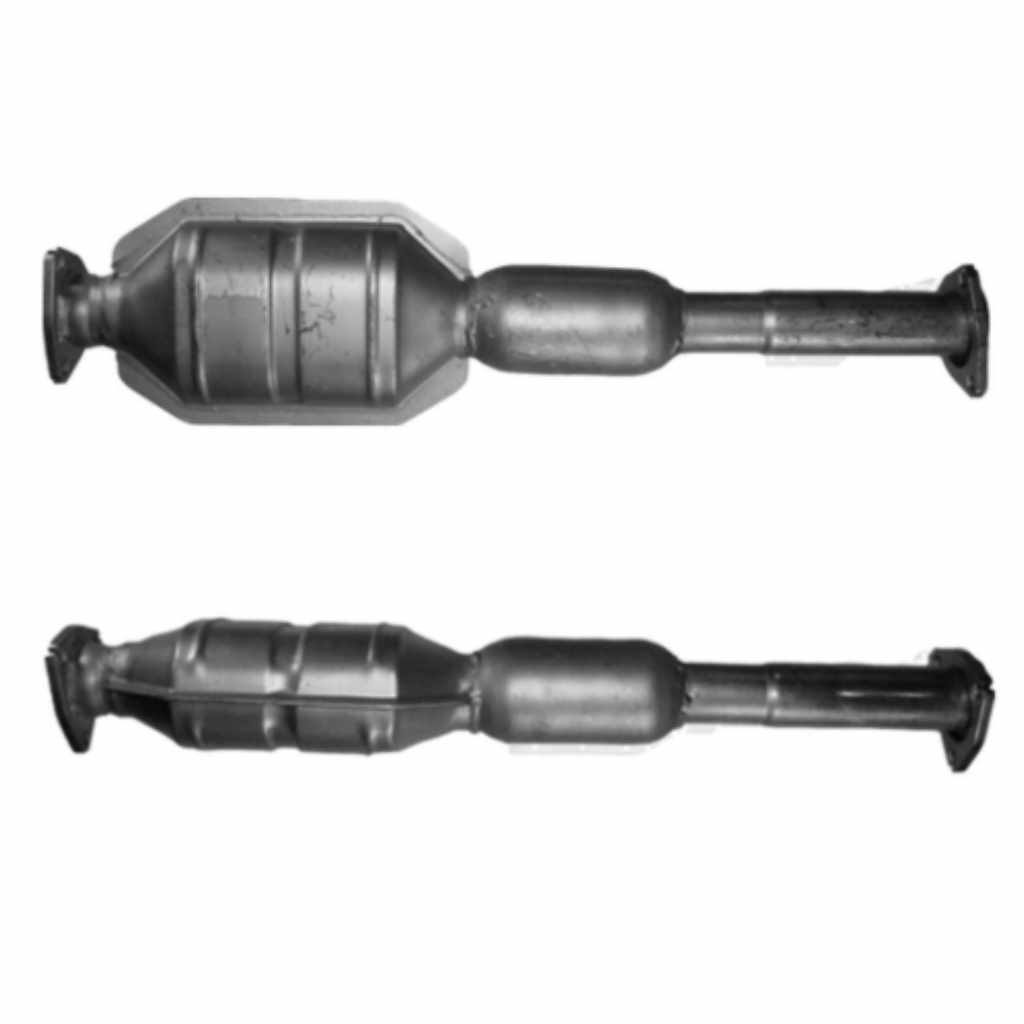
What is a Catalytic Converter? The Gas Cleaner
The Catalytic Converter, often just called the “Cat,” is usually found early in the exhaust system, close to the engine. It has been standard equipment on gasoline cars for decades, though diesel vehicles use a specialized version too (often called the DOC, or Diesel Oxidation Catalyst).
How the Catalytic Converter Works
The magic inside the Cat happens through a process called catalysis. This means that certain materials speed up a chemical reaction without being used up themselves. Inside the converter, you’ll find a honeycomb structure coated with precious metals, usually platinum, palladium, and rhodium.
As hot exhaust gases pass over these coated surfaces, chemical reactions occur:
- Reduction: Harmful nitrogen oxides (NOx) are converted into harmless nitrogen and oxygen gas.
- Oxidation: Harmful carbon monoxide (CO) and unburnt hydrocarbons (HC) are converted into less harmful carbon dioxide (CO2) and water (H2O).
It is a straightforward concept applied in a complicated chemical process. Its main job is dealing with gases—the invisible pollutants.
Key Facts About the Catalytic Converter
- Target Pollutants: Gases (CO, NOx, HC).
- Location: Early in the exhaust stream.
- Required By: Almost all gasoline cars and some diesel vehicles.
- Failure Sign: Rotten egg smell (sulfur) or engine performance loss.
What is a Diesel Particulate Filter (DPF)? The Soot Catcher
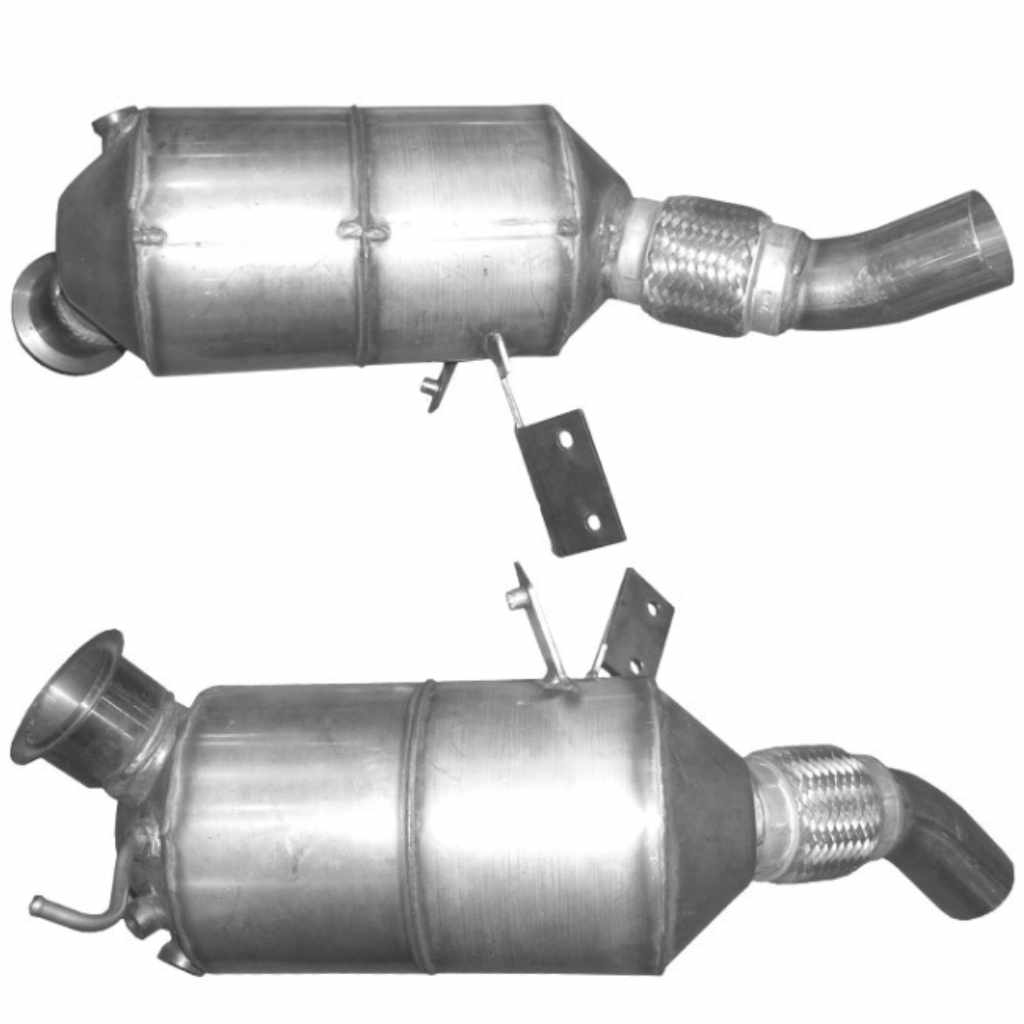
The DPF is a much more recent addition, primarily found on modern diesel vehicles (and some hybrid systems). Diesel engines naturally produce fine black soot, consisting of unburnt carbon particles.
If this soot were released into the air, it would coat everything nearby, leading to severe air quality problems and health concerns. The DPF exists specifically to catch this soot.
How the DPF Works: Filtration and Regeneration
The DPF is essentially a physical filter made of ceramic material (like cordierite or silicon carbide) structured to capture solid particles.
Phase 1: Trapping the Soot
Exhaust passes through the porous walls of the DPF. The soot gets stuck on the inside walls and pathways, much like air passing through a high-end furnace filter.
Phase 2: Regeneration (Cleaning Itself)
If the DPF just kept trapping soot, it would clog up completely, choking the engine. To prevent this, diesel vehicles use a process called regeneration to burn off the trapped soot and turn it into harmless ash.
There are two main types of regeneration:
- Passive Regeneration: This happens naturally during long drives at highway speeds where the exhaust gas temperature gets hot enough (usually over 600°F or 315°C) to slowly burn off the soot.
- Active Regeneration: If passive regeneration isn’t occurring, the car’s computer (ECU) automatically forces regeneration by injecting extra fuel into the engine to raise the exhaust temperature deliberately. This often happens when you are idling or driving short distances often.
Key Facts About the DPF
- Target Pollutants: Solid particles (Soot/PM – Particulate Matter).
- Location: Usually after the Diesel Oxidation Catalyst (DOC) but before the muffler.
- Required By: Nearly all post-2007 (in many regions) diesel cars, trucks, and vans.
- Failure Sign: Excessive soot buildup, frequent regeneration attempts, or a clogged filter causing poor acceleration.
The Core Difference: DPF vs. Catalytic Converter
The most crucial takeaway for any beginner is this: they are not the same because they deal with entirely different types of pollutants using entirely different methods.
To make this crystal clear, let’s compare them side-by-side in a simple table format.
| Feature | Catalytic Converter (Cat/DOC) | Diesel Particulate Filter (DPF) |
|---|---|---|
| Primary Function | Chemical reaction to convert harmful gases. | Physical trapping of solid soot particles. |
| Pollutant Target | Gaseous pollutants ($text{CO}$, $text{NOx}$, $text{HC}$). | Solid particulate matter (Soot). |
| Mechanism | Catalysis (using precious metals). | Filtration (using ceramic filters). |
| Cleaning Process | Continuous as long as the engine is running hot. | Requires periodic or active regeneration (burning off soot). |
| Typical Vehicle | Gasoline and Diesel vehicles. | Primarily modern Diesel vehicles. |
If you own a gasoline car, you have a Catalytic Converter, but you generally do not have a DPF. If you own a modern diesel car, you usually have both components working in sequence.
The Diesel Exhaust System Sequence (Where They Sit)
In a modern diesel vehicle, the exhaustion cleaning process is sequential. The engine pushes out the dirtiest stream, and each component cleans it up before it exits the tailpipe. It’s like having two security checkpoints for pollution control.
- Exhaust Manifold: Gases leave the engine.
- Diesel Oxidation Catalyst (DOC): This functions as the diesel’s catalytic converter. It handles gases like $text{CO}$ and $text{HC}$.
- Diesel Particulate Filter (DPF): The exhaust next enters the DPF, where all the visible soot is physically captured.
- Selective Catalytic Reduction (SCR): (Often present, using Diesel Exhaust Fluid or DEF) This further reduces $text{NOx}$ gases.
- Tailpipe: Cleaned exhaust exits here.
Because the DOC (Catalytic Converter) comes before the DPF, the Cat helps raise the temperature of the exhaust stream, which in turn helps the DPF perform its regeneration cycles more effectively. They rely on each other, but they do completely different jobs.
Why Confusing Them Leads to Maintenance Headaches
Mistaking these two parts for each other often leads to costly or incorrect repairs. A mechanic needs to know exactly which component is failing to recommend the right fix.
Scenario 1: Treating a Clogged DPF Like a Bad Cat
If your diesel starts running poorly and you have soot buildup (a DPF issue), but you swap it for a new universal Catalytic Converter meant only for gases, you have just wasted hundreds of dollars. The new part cannot trap soot effectively, and your DPF problem remains unsolved, likely leading to a clogged engine soon after.
Scenario 2: Ignoring a Failing Cat on a Diesel
Some modern diesels do have a formal Catalytic Converter section before the DPF. If this section fails (the precious metals wear out), it might stop converting harmful gases, but the soot trapping might still work for a while. Replacing only the DPF would miss the underlying gas contamination issue.
The Importance of Proper Replacement
When you replace one of these components, you must use the part specifically designed for that function. Catalytic Converters must have the correct coating of precious metals, and DPFs must have the correct filtration rating specified by the manufacturer. Using the wrong part can severely impact performance and could even lead to legal issues regarding emissions standards, as monitored by local or state environmental guidelines.
Signs of Trouble: How to Tell Which Part is Failing
Since both are under your car and dealing with exhaust, diagnosing failure can feel tricky. Here are simple ways to recognize the symptom associated with each system.
Signs Your Catalytic Converter is Failing (Gas Issues Dominant)
- Rotten Sulfur Smell: If the catalyst metals are no longer working, hydrogen sulfide (which smells like rotten eggs) is not being converted. This is a classic sign.
- Reduced Engine Power (High Backpressure): If the internal honeycomb structure melts or breaks apart, it can physically block the exhaust flow, causing the engine to choke, especially under acceleration.
- Failing Emissions Test: If your vehicle is tested for $text{CO}$ or $text{HC}$ levels and fails significantly, the Cat is usually the culprit.
Signs Your DPF is Clogging (Soot Issues Dominant)
- Excessive Regeneration Cycles: Your car attempts to clean itself too frequently (you notice the fans running high or the RPMs creeping up while stopped).
- “DPF Full” Light: Many modern diesels have a specific warning light indicating the filter is reaching capacity.
- Engine Power Loss Without Smell: The engine may enter “limp mode” (limited power) because it cannot push exhaust gases out, even though the gas conversion might still be working fine.
- Increased Fuel Consumption: Frequent, short regeneration cycles burn a lot of extra fuel.
Maintenance Tips to Keep Both Components Healthy
Both the DPF and the Catalytic Converter hate shortcuts and dirty driving habits. Luckily, keeping them healthy usually involves doing what your car’s computer is already trying to do.
For the Catalytic Converter (Gas Side)
The Cat thrives on clean, consistent heat. The most damaging thing for a Cat is raw, unburnt fuel getting into the exhaust, which ruins the delicate catalyst coating through overheating.
- Fix Engine Misfires Immediately: Misfiring plugs dump gasoline directly into the exhaust system, which can melt the Cat very quickly.
- Use Quality Fuel and Oil: Certain additives or contaminants, especially silicone or sulfur compounds, can poison the catalyst coating.
- Don’t Idle Excessively: The Cat needs high operating temperatures to work efficiently.
For the Diesel Particulate Filter (Soot Side)
The DPF needs exposure to high temperatures to burn off the trapped soot.
- Take Regular Highway Trips: At least once a week, drive the car at consistent highway speeds ($50 text{ mph}$ or more) for 20–30 minutes. This allows passive regeneration to occur naturally.
- Monitor Regeneration Status: If your car’s warning lights indicate a blocked filter, do not ignore them. Find a safe place to drive at speed until the process completes.
- Address Oil Consumption: While soot is carbon, oil burned by the engine turns into ash that the DPF captures but cannot burn off. Excessive oil burning will permanently fill the DPF with non-combustible ash, requiring professional cleaning or replacement.
External vs. Internal Components: A Physical Look
If you get a chance to look at these components, their physical appearance often gives a clue to their function. Remember, in a diesel, the DOC (Cat) comes first, and the DPF comes second.
| Component | Typical Material & Shape | Weight/Feel |
|---|---|---|
| Catalytic Converter (DOC) | Metal canister containing a ceramic or metallic substrate (honeycomb). | Relatively lightweight for its size; internal structure is fragile. |
| Diesel Particulate Filter ($text{DPF}$) | Thick ceramic block (often silicon carbide) with intricate internal channels designed to force exhaust through walls. | Can feel denser or heavier than a standard Cat due to the thick ceramic structure. |
What About Gasoline Particulate Filters ($text{GPF}$)?
As emission standards tighten globally, some newer, direct-injection gasoline engines are now also being equipped with Gasoline Particulate Filters ($text{GPF}$). This might add to the confusion!
The $text{GPF}$ works almost identically to a $text{DPF}$—it physically filters fine soot particles produced by modern direct-injection gasoline engines. In these vehicles, you might have a Catalytic Converter AND a $text{GPF}$, showing that the concept of physical filtration is spreading beyond just diesel engines.
Even with a $text{GPF}$, the core rule remains: the Catalytic Converter deals with invisible gases chemically, while the $text{DPF}$ ($text{GPF}$) deals with visible (or nearly invisible) solid particles physically.
Frequently Asked Questions (FAQ)
Q1: Can I remove or delete my DPF or Catalytic Converter?
A: It is strongly advised against. Removing these parts is illegal in most regions for on-road vehicles because it increases harmful exhaust pollution. Furthermore, modern engine computers are programmed to look for the signal from these devices; removing them often causes warning lights (Check Engine Light) and can put the engine into a safe, low-power mode.
Q2: Do gasoline cars have DPFs?
A: Traditionally, no. Standard port fuel injection gasoline engines do not produce enough soot to require a DPF. However, newer, high-efficiency gasoline direct injection ($text{GDI}$) engines are starting to use Gasoline Particulate Filters ($text{GPF}$), which function very similarly to a DPF.
Q3: How much does it cost to replace a DPF versus a Catalytic Converter?
A: DPFs are typically more expensive to replace than standard Catalytic Converters. This is because the DPF material handling soot is complex, and they are often integral parts of the exhaust system, requiring precise fitment. Both parts are costly due to the precious or specialized ceramic materials involved.
Q4: If my Cat fails, can I just clean it?
A: Generally, no. A Cat failure usually means the catalyst coating has degraded or melted. Cleaning products sold online are mostly ineffective for restoring the chemical reaction needed. If the structure is damaged, replacement is usually the only permanent fix.
Q5: Why does my diesel regeneration cycle run so often?
A: Frequent regenerations mean the DPF is filling up too fast. This often happens if the vehicle is used exclusively for short trips, never reaching the high temperatures needed for passive cleaning. It indicates the regeneration process is being interrupted or is not efficient.
Q6: Can a clogged DPF damage my Catalytic Converter?
A: Yes, indirectly. A severely restricted DPF causes massive exhaust backpressure. This excessive pressure and the heat buildup required to try to regenerate a totally clogged filter can damage upstream components, including the Diesel Oxidation Catalyst ($text{DOC}$), by forcing heat and pressure backward.