Are Exhaust Bar Side Steps Safe?
When you first start thinking about adding new parts to your vehicle, some questions can seem a little tricky. For instance, many folks wonder, Are Exhaust Bar Side Steps Safe? It sounds like a simple question, but getting the right answer can feel like a puzzle. Don’t worry, though!
We’re going to break it down nice and easy, step by step. By the end of this, you’ll know exactly what you need to. We’ll look at how they work and what makes them a good or bad choice.
Understanding Exhaust Bar Side Steps
This section will explore what exhaust bar side steps are and why people consider them. We’ll cover their basic design and the reasons behind their installation, giving you a clear picture of their purpose and function on a vehicle. You’ll learn about the main ideas behind these accessories and how they are meant to be used.
What Are Exhaust Bar Side Steps
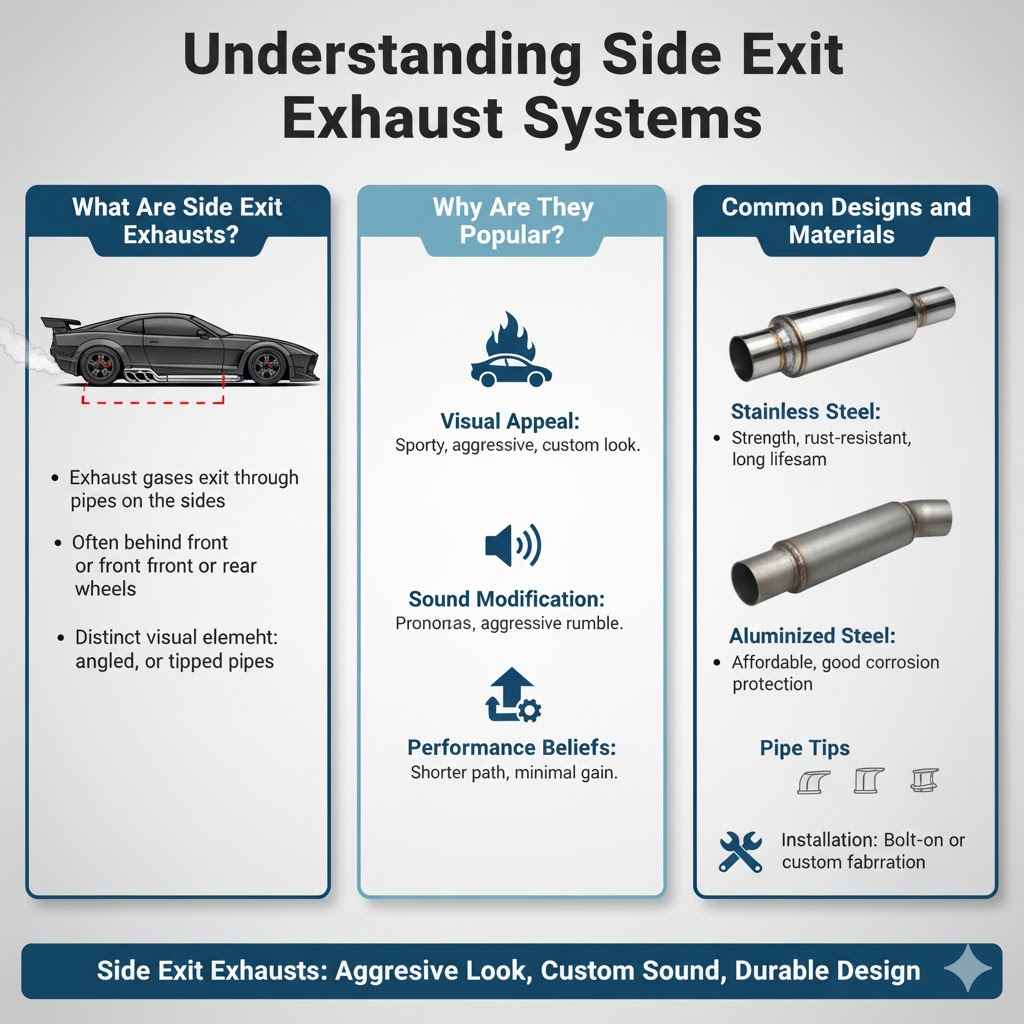
Exhaust bar side steps, often called side exhaust or side exit exhaust systems, are modifications made to a vehicle’s exhaust components. Instead of the exhaust gases exiting from the rear of the vehicle, they are rerouted to exit through pipes located on the sides, typically just behind the front wheels or in front of the rear wheels. These side pipes can be straight, angled, or tipped, adding a distinct visual element to the car.
The “bar” in the name usually refers to the visible, often polished or coated, exhaust pipes themselves that run along the side of the vehicle.
The primary motivation for installing these systems is often aesthetic. Many car enthusiasts find the look of side exhaust pipes to be sporty and aggressive, enhancing the vehicle’s overall appearance. It’s a way to customize a car and make it stand out from the crowd.
Some drivers also believe that the shorter exhaust path might offer a slight increase in performance, though this is generally minimal and often negligible in practical terms for everyday driving.
The decision to install side exhaust systems can also stem from a desire for a different exhaust sound. Rerouting the exhaust can sometimes alter the tone and volume, producing a more pronounced or aggressive rumble. However, it’s important to understand that the legal aspects and safety considerations are just as vital as the look and sound when making such a modification.
- Visual Appeal: Side exhaust pipes are chosen mainly for how they make a car look. They give a vehicle a more athletic and custom style.
- Sound Modification: Some drivers want their car to sound different, and side exhausts can change the exhaust note.
- Performance Beliefs: While not always significant, some owners hope for a small boost in engine power with a shorter exhaust path.
Common Designs and Materials
Exhaust bar side steps come in a variety of designs and are made from different materials to suit different vehicle types and owner preferences. The most common materials used are stainless steel and aluminized steel. Stainless steel is highly favored due to its excellent resistance to corrosion and rust, especially in harsh weather conditions.
This makes it a durable choice that can last for many years. Aluminized steel is a more budget-friendly option, offering good corrosion resistance for its price point, but it might not withstand extreme conditions as well as stainless steel over the long term.
The designs vary from simple, straight pipes with a polished finish to more elaborate setups featuring sculpted tips or even integrated heat shields. Some systems are designed to be a direct bolt-on replacement for the factory exhaust, making installation easier. Others might require more custom fabrication to fit properly.
The diameter of the exhaust pipes is also a consideration, as it can influence both the sound and the potential (though often minor) performance gains.
The “bar” aspect often refers to how prominently the pipes are displayed. Some systems feature pipes that are tucked away, while others have pipes that are more exposed, running prominently along the rocker panels of the vehicle. The finish of the pipes is also a design choice, ranging from a bright, polished chrome look to a matte black or titanium finish, allowing owners to match their exhaust to their vehicle’s overall aesthetic.
- Stainless Steel: A popular choice for its strength and resistance to rust, leading to a longer lifespan for the exhaust system.
- Aluminized Steel: A more affordable material that provides good protection against corrosion, suitable for many drivers.
- Pipe Tips: These can be straight, rolled, angle-cut, or specially shaped to enhance the look of the side exhaust.
Safety Considerations For Side Exhausts
This part of our discussion focuses on whether side exhaust systems pose any safety risks. We will look into potential hazards related to heat, ground clearance, and accidental contact. Understanding these risks is key to making sure your vehicle remains safe for you and others.
Heat And Fire Risks
One of the most significant safety concerns with exhaust bar side steps revolves around the extreme heat they generate. Exhaust gases can reach temperatures of several hundred degrees Fahrenheit, and the metal pipes themselves become very hot to the touch. This intense heat poses a fire risk if the exhaust comes into contact with flammable materials.
This includes things like dry leaves, grass, plastic components on the vehicle, or even spilled oil or fuel.
Proper installation is critical to mitigate these risks. Manufacturers often include heat shields or suggest specific routing for the exhaust pipes to keep them away from sensitive areas of the vehicle. However, in aftermarket installations, these protective measures might not be perfectly implemented, or they could degrade over time.
When parking on dry grass or natural surfaces, drivers must be particularly cautious, as the hot exhaust could easily ignite dry vegetation.
Furthermore, if the exhaust system is damaged, for instance, by hitting an object on the road, it could rupture or develop leaks. This could expose nearby components to direct heat or even allow hot exhaust gases to escape near the vehicle’s body, increasing the risk of overheating or fire. Regular inspection of the exhaust system for any signs of damage or wear is therefore essential for maintaining safety.
- High Temperatures: Exhaust pipes get extremely hot, capable of igniting nearby flammable materials.
- Contact with Flammables: Parking on dry grass or near other flammable items increases the risk of a fire starting.
- Material Integrity: Damaged or leaking exhaust systems can pose a greater fire hazard.
Ground Clearance And Obstacles
Side exhaust systems often involve rerouting exhaust pipes closer to the ground or along the sides of the vehicle, which can affect ground clearance. This is particularly a concern for vehicles that are lowered or driven in areas with uneven terrain, speed bumps, or rough roads. If the exhaust pipes hang too low, they can easily scrape or strike obstacles.
Such impacts can damage the exhaust system, potentially leading to leaks or complete failure.
When an exhaust pipe is damaged by hitting something, it’s not just about the repair cost. A damaged exhaust can become noisy, inefficient, and, most importantly, unsafe. It might start leaking harmful fumes into the cabin, or the structural integrity of the exhaust system could be compromised, leading to further issues.
For vehicles used in off-road situations or on poorly maintained roads, this reduction in clearance is a major safety and practical consideration.
Some drivers may try to compensate by raising their vehicle, but this can change the vehicle’s handling characteristics and appearance, which may not be desirable. For daily driving in urban or suburban environments, reduced ground clearance is less of an issue, but drivers should still be aware of their surroundings and drive cautiously over speed bumps or steep driveways. The design of the side exhaust, including the angle and placement of the pipes, plays a crucial role in determining how much ground clearance is affected.
- Reduced Clearance: Side exhausts can hang lower, making them prone to hitting the ground or obstacles.
- Damage Potential: Hitting obstacles can break the exhaust system, causing noise and leaks.
- Driving Conditions: Uneven roads or speed bumps require careful navigation to avoid damaging side exhaust pipes.
Passenger And Pedestrian Safety
While the primary focus is often on the vehicle and its occupants, the safety of passengers and pedestrians also needs consideration with exhaust bar side steps. The hot exhaust pipes, especially if they are located close to the vehicle’s exterior, can pose a burn risk. For passengers exiting or entering the vehicle, particularly children, accidentally touching a hot exhaust pipe could lead to burns.
For pedestrians, especially those walking near parked vehicles, there’s also a potential hazard. If a vehicle with side exhaust is running, the pipes will be hot. Someone leaning against the car or walking very close to it could inadvertently touch the hot exhaust.
This is more of a concern in crowded areas or parking lots where people are moving around vehicles.
Additionally, the increased noise from some modified exhaust systems can be a nuisance and potentially startling for pedestrians or cyclists. While not a direct physical danger in the same way as heat, excessive noise pollution is a community safety and well-being issue. It’s important for drivers to be mindful of their surroundings and the potential impact their vehicle modifications have on others.
- Burn Hazard: Hot side exhaust pipes can cause burns if touched by people, including children.
- Proximity Concerns: Pedestrians near a running vehicle with side exhaust might be at risk of burns.
- Noise Disturbance: Louder exhaust sounds can be a nuisance and startling to people nearby.
Legal And Regulatory Aspects
This section addresses the rules and laws that might apply to exhaust bar side steps. We’ll talk about why it’s important to know these regulations and how they can affect whether you can legally install and use such modifications on your vehicle.
Noise Ordinances
Many cities and towns have specific noise ordinances in place to control the level of sound vehicles can produce. Modified exhaust systems, including those with side exits, often result in a louder exhaust note than factory systems. This increased noise can violate local noise ordinances, leading to fines or other penalties.
The specific decibel limits and regulations vary significantly by location.
Enforcement of these ordinances can be strict. Police officers can issue tickets based on subjective judgment of excessive noise or by using sound meters. Drivers with significantly modified exhaust systems that are noticeably louder than stock are more likely to attract attention from law enforcement.
It is crucial for vehicle owners to be aware of the noise regulations in their area before installing or operating a vehicle with a loud exhaust system.
Some aftermarket exhaust systems are designed to meet or exceed specific sound standards, but this is not always the case, especially with very aggressive or custom setups. Many performance-oriented exhaust systems are primarily designed for off-road use or track days, where noise restrictions are often less stringent or non-existent. For daily driving on public roads, adhering to noise limits is a legal necessity.
- Local Rules: Different places have different laws about how loud your car’s exhaust can be.
- Fines Possible: Breaking noise rules can lead to tickets and penalties for drivers.
- System Design: Some exhausts are louder than others, and not all are legal for street use.
Emissions Standards
While exhaust bar side steps primarily affect noise and appearance, any modification to the exhaust system can potentially impact a vehicle’s emissions. In many regions, vehicles are required to pass emissions tests to be registered and legally driven on public roads. Altering the exhaust path or removing components like catalytic converters (though not typically part of a side exhaust bar installation, it’s a related modification to consider) can cause a vehicle to fail these tests.
Most exhaust bar side steps, when installed as a complete system that retains the catalytic converter and other emissions control devices, will likely still meet emissions standards. However, it’s essential to ensure that the installation does not inadvertently disrupt or damage these critical components. A properly functioning catalytic converter is vital for reducing harmful pollutants like carbon monoxide, hydrocarbons, and nitrogen oxides.
If a side exhaust modification involves removing or bypassing emissions control equipment, the vehicle will almost certainly fail emissions tests and is illegal for street use. This is a significant safety and environmental concern. Always confirm that any aftermarket exhaust system complies with the emissions regulations in your specific jurisdiction.
- Pollution Control: Exhaust systems help reduce harmful gases, and side exhausts must maintain this function.
- Inspection Failure: Modifying the exhaust can cause a vehicle to fail emissions tests.
- Component Integrity: It is important that catalytic converters and other pollution-reducing parts are not damaged.
Vehicle Modifications Laws
Beyond noise and emissions, there are often broader laws governing vehicle modifications. These laws aim to ensure that vehicles are safe for operation and do not pose undue risks to the public. Exhaust bar side steps could fall under these regulations if they are deemed to be unsafe due to their design, placement, or potential for causing hazards.
For example, if the side exhaust pipes extend beyond the body of the vehicle in a way that could injure pedestrians or cyclists, or if they are positioned so low that they scrape the ground regularly, they might be considered non-compliant. Some jurisdictions have specific rules about how exhaust systems should be routed and what materials can be used. These laws can differ greatly from state to state or country to country.
It’s always a good idea to check with your local Department of Motor Vehicles (DMV) or equivalent transportation authority for specific regulations regarding exhaust system modifications. Some modifications might require an inspection or certification to ensure they meet safety standards. Ignorance of these laws is not a valid defense if you are cited for a violation.
- General Safety Rules: Laws exist to ensure vehicle modifications don’t create new dangers.
- Protrusion Limits: Exhaust pipes shouldn’t stick out too far or be positioned unsafely.
- Local Checks: Always find out your area’s specific rules for modifying car exhausts.
Performance And Practicality
Here, we will examine if exhaust bar side steps offer any real benefits in terms of how the car drives or how practical they are for everyday use. We’ll discuss potential impacts on power and fuel use, and how they fit into normal driving situations.
Impact On Engine Performance
The idea that exhaust bar side steps significantly improve engine performance is often overstated. In most cases, the performance gains from simply changing the exit point of the exhaust are minimal to non-existent, especially for naturally aspirated engines in standard vehicles. The primary factors that affect engine performance from an exhaust system are its diameter, the quality of its construction, the presence and efficiency of the catalytic converter, and the backpressure it creates.
While a less restrictive exhaust system can theoretically allow an engine to breathe more freely, leading to minor improvements in horsepower and torque, simply rerouting the exhaust to the sides doesn’t inherently make it less restrictive. For a true performance boost, modifications often involve changing the exhaust manifold, increasing pipe diameter throughout the system, or using less restrictive mufflers and catalytic converters. A side exhaust system might be part of a larger performance upgrade, but it’s rarely the sole contributor to significant power gains.
Some people might experience a perceived improvement in performance due to the louder sound of the exhaust, which can create a more engaging driving experience. However, this is a subjective feeling rather than an objective increase in power. For engines that are heavily modified, such as high-performance or forced-induction engines, optimizing exhaust flow becomes more critical, and a well-designed side exit exhaust could be part of a comprehensive tuning package.
- Minor Gains Likely: Expect only small improvements in power from just changing the exhaust exit.
- Sound vs. Power: A louder exhaust often makes a car feel faster, but it doesn’t always mean more actual horsepower.
- System Matters: True performance comes from the entire exhaust system’s design, not just where it exits.
Fuel Efficiency Considerations
The effect of exhaust bar side steps on fuel efficiency is generally negligible. While an engine that breathes more freely might be slightly more efficient, the actual impact from changing the exhaust exit point is usually too small to be noticeable in real-world driving conditions. The factors that have the biggest influence on fuel economy are driving habits, tire pressure, vehicle weight, aerodynamics, and engine tuning.
In some instances, if a side exhaust system is designed to be significantly less restrictive and leads to a slight increase in horsepower, some drivers might be tempted to use that extra power more often. This could, counter-intuitively, lead to a decrease in fuel efficiency because of more aggressive acceleration and higher speeds. The fuel consumption of a vehicle is highly dependent on how it is driven.
If the side exhaust system leads to increased exhaust backpressure (which is unlikely with a well-designed system but possible with a poorly executed one), it could negatively impact fuel economy. However, most aftermarket exhaust systems, regardless of their exit location, are designed to reduce backpressure to improve performance. Therefore, a negative impact on fuel efficiency is not a common outcome of installing side exhaust pipes.
- Little To No Change: You probably won’t see a difference in how much gas your car uses.
- Driving Habits Matter Most: How you drive has a much bigger effect on gas mileage than your exhaust exit.
- System Design Again: A well-made side exhaust should not hurt your car’s fuel economy.
Practicality In Daily Driving
The practicality of exhaust bar side steps in daily driving depends heavily on the specific design and the owner’s lifestyle. For individuals who live in areas with smooth roads, no speed bumps, and no need for frequent off-roading, a side exhaust might pose no practical issues. However, for many drivers, the potential for scraping or damaging the exhaust pipes is a significant drawback.
Consider driving in a city with numerous speed bumps, steep driveways, or areas prone to debris on the road. In such environments, low-hanging side exhaust pipes can be a constant source of worry. Every incline or dip in the road requires careful consideration, which can detract from the driving experience.
Parking can also be an issue, especially in tight spots or garages where the car’s underside might be at risk.
Another practicality issue is maintenance. The side exhaust pipes are more exposed and can become dirty or grimy more easily than rear-exit exhausts. They might also be more susceptible to damage from road salt in winter climates, potentially leading to rust and premature wear if not properly maintained.
For those who value a hassle-free ownership experience and minimal upkeep, the added maintenance and risk associated with side exhaust pipes might make them less practical.
- Road Hazards: Speed bumps and rough roads can easily damage low-hanging side exhaust pipes.
- Parking Worries: Tight parking spaces can be a risk for vehicles with protruding side exhausts.
- Cleaning Needs: Exposed side pipes may require more frequent cleaning to keep them looking good.
Installation And Maintenance
This section will guide you through the process of installing exhaust bar side steps and what you need to do to keep them in good condition. We will explain how they are attached and the regular care they need to function well and stay safe.
Professional Installation Recommended
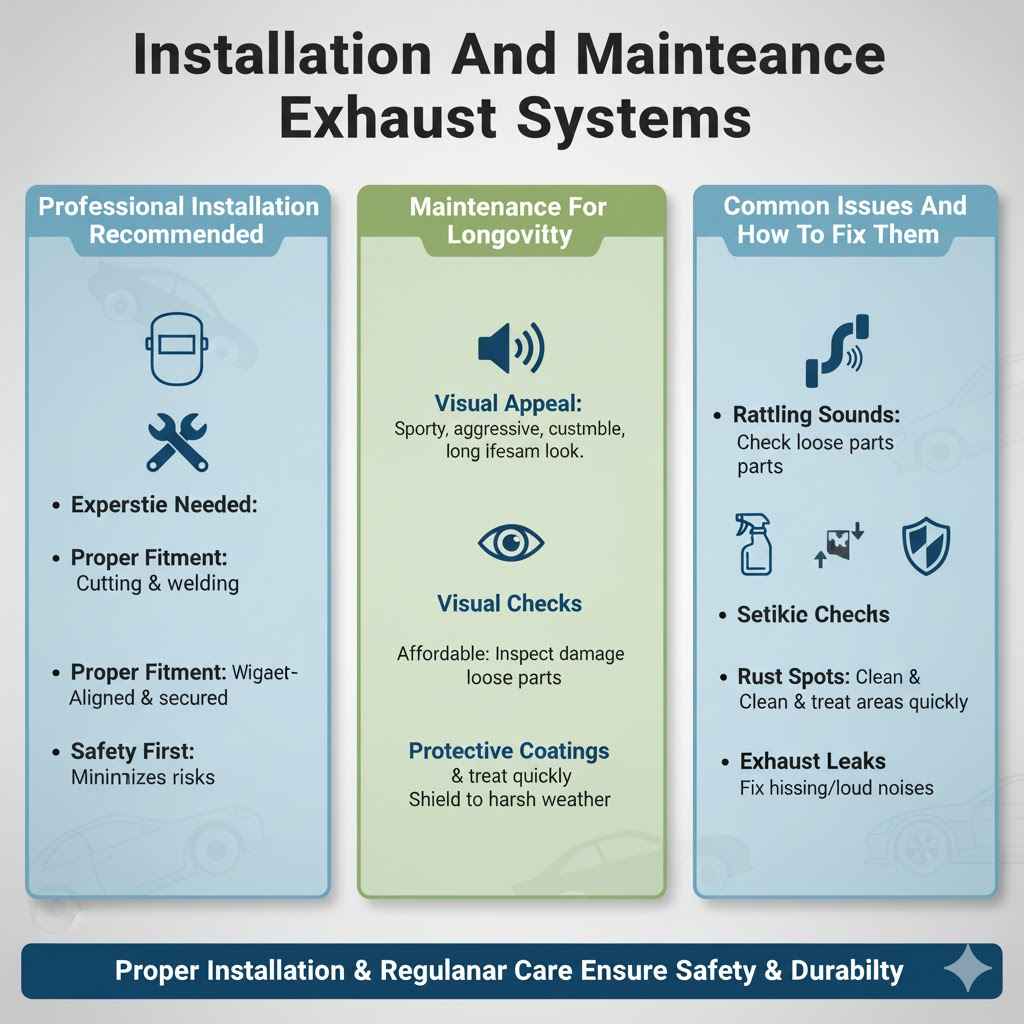
Installing exhaust bar side steps is often a more involved process than a simple bolt-on job. While some kits are designed for easier installation, many require cutting, welding, and precise alignment to ensure the pipes fit correctly and do not interfere with other vehicle components. For these reasons, professional installation is strongly recommended, especially for those who do not have extensive experience with automotive exhaust systems.
A professional mechanic or exhaust specialist has the proper tools, equipment, and expertise to perform the installation safely and effectively. They can ensure that the exhaust hangers are correctly positioned, that the pipes have adequate clearance from the vehicle’s body and drivetrain, and that all connections are secure and leak-free. Improper installation can lead to a variety of problems, including exhaust leaks, rattling noises, reduced performance, and safety hazards.
Furthermore, a professional installer can advise on the best system for your vehicle make and model, considering factors like material quality, design, and compliance with local regulations. They can also ensure that any heat shielding required is properly fitted. While professional installation adds to the overall cost, it is an investment in the longevity, safety, and proper functioning of your modified exhaust system.
- Expertise Needed: Cutting and welding are often required, best done by professionals.
- Proper Fitment: Mechanics ensure the exhaust is correctly aligned and secured.
- Safety First: Professional installation minimizes risks of leaks, damage, and fire hazards.
Maintenance For Longevity
To ensure your exhaust bar side steps last as long as possible and continue to function safely, regular maintenance is essential. The materials used, such as stainless steel or aluminized steel, can still be affected by road salt, moisture, and debris. Periodic cleaning can prevent rust and corrosion from taking hold, especially on welds and exposed pipe surfaces.
Visually inspecting the exhaust system is also a key part of maintenance. Look for any signs of damage, such as dents, cracks, or loose connections. Check the hangers and mounting brackets to ensure they are still secure.
Any rust spots should be addressed promptly, potentially with a rust inhibitor or touch-up paint, to prevent them from spreading.
If you live in an area with harsh winters or drive on unpaved roads frequently, consider applying a protective coating designed for exhaust systems. These coatings can offer an extra layer of defense against the elements. For vehicles driven in salty environments, a thorough washing of the undercarriage after winter can help remove corrosive salts that can damage the exhaust.
- Regular Cleaning: Wash the pipes often to remove dirt and salt that can cause rust.
- Visual Checks: Inspect for any damage, rust, or loose parts regularly.
- Protective Coatings: Consider special treatments to shield the exhaust from harsh weather.
Common Issues And How To Fix Them
Despite best efforts, exhaust bar side steps can sometimes develop issues. The most common problem is rattling or buzzing noises. This can occur if the exhaust pipes are slightly loose, touching other parts of the vehicle, or if internal baffles within the muffler have come loose.
Tightening connections and ensuring proper clearance can often resolve this. If a baffle is loose, the muffler might need to be replaced.
Another frequent issue is corrosion, particularly with aluminized steel or if the protective coating on stainless steel has worn off. Small rust spots can appear. If caught early, these can often be cleaned and treated with a rust converter and high-temperature paint.
However, severe corrosion can weaken the pipes and necessitate replacement.
Leaks are another concern, typically happening at connection points or if a pipe has been damaged. Leaks are usually indicated by a louder exhaust sound or a hissing noise. Minor leaks might be temporarily fixed with exhaust repair putty, but for significant leaks or damage, professional repair or replacement of the affected section is usually required.
Prompt attention to any developing issues is key to preventing them from becoming larger, more expensive problems.
- Rattling Sounds: Check for loose parts or pipes touching other components.
- Rust Spots: Clean and treat small rust areas quickly to stop them from growing.
- Exhaust Leaks: Fix any hissing or extra loud noises right away to maintain safety.
Frequently Asked Questions
Question: Are exhaust bar side steps legal everywhere?
Answer: No, legality varies by location. Many places have noise and emissions laws that modified exhausts must meet, and some may have specific rules against certain side exhaust designs.
Question: Do side exhaust pipes improve horsepower?
Answer: Typically, the horsepower gains are minimal to none. Significant performance increases usually require more extensive exhaust system upgrades beyond just changing the exit point.
Question: Can exhaust bar side steps cause a fire?
Answer: Yes, there is a risk of fire if the hot exhaust pipes come into contact with flammable materials like dry grass or debris.
Question: Are they safe for passengers?
Answer: Passengers should be cautious of hot pipes, especially children, to avoid accidental burns. Proper installation with heat shielding helps.
Question: Is it hard to install exhaust bar side steps?
Answer: Installation can be complex, often requiring cutting and welding. Professional installation is generally recommended for safety and proper fit.
Final Thoughts
So, are exhaust bar side steps safe? They can be, but it really depends on how they are installed and used. Proper professional installation is key to avoiding heat, fire, and ground clearance hazards.
Always follow local noise and emissions laws. While they offer a unique look and sound, prioritize safety and practicality for your daily driving.