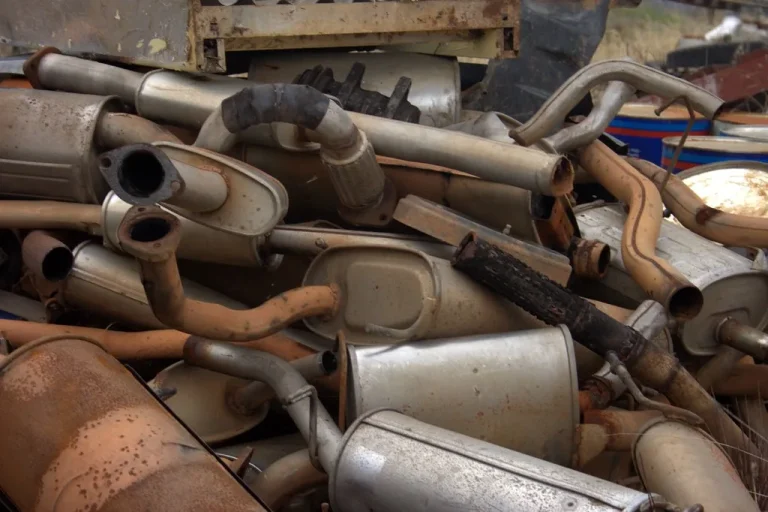
Best Exhaust Components for Track Use (2026): Research Shows
For track use, start with mandrel bent tubing, a straight-through resonator, a high-flow muffler, and serviceable flanges. Those parts give the best mix of flow, heat tolerance, repair access, and noise control. Bad parts cost lap time, crack from heat, or fail sound limits. This guide ranks the key exhaust components for NA, turbo, and motorcycle track builds.
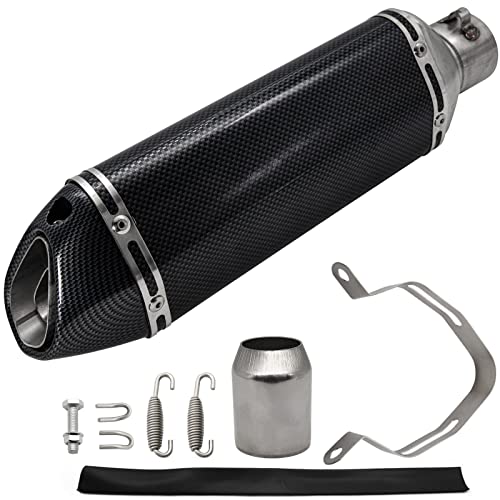
- Lightweight aluminum and stainless steel construction
- Removable dB killer allows sound customization
- Universal fit for various bike styles

- High-temperature resistant graphite material
- Prevents leaks and reduces exhaust noise
- Easy installation without flange modifications
Quick comparison
| Product | Badge | Best for | Price | ||
|---|---|---|---|---|---|
| Motorcycle Slip On Muffler,1.5-2" Carbon Fiber UnversalLEIMO KPARTS | Our pick | Carbon fiber · Universal · Slip-on | $34.97 Price as of 20 Oct 2026 | View |
| MGSTORM 2.25" Exhaust Donut Gasket – Graphite HeaderMGSTORM | Pair with it | 2.25 inch · Graphite · Donut gasket | $16.99 Price as of 20 Oct 2026 | View |
Use the comparison below to sort parts by what they do on track, not by catalog labels. The right choice depends on routing room, heat load, and the noise limit at your event.
How we chose
The ranking favors parts that do four jobs well: move exhaust gas with less restriction, survive heat cycling, stay serviceable between events, and fit within track-day sound limits. That means tubing and bends matter first, then resonators and mufflers, then flanges and tips.
The decision also changes by engine type. NA cars usually need smaller diameter and less restriction. Turbo cars need better flow and stronger heat control. Motorcycle builds care more about compact packaging, exit angle, and sound control than about long routing runs.
For the comparison, the article uses the published sizes and materials below: 2.5-inch and 3-inch tubing, 45°, 90°, J-bend, and U-bend options, 1 foot straight sections, oval resonators in 2.5-inch and 3.0-inch examples, and flange patterns in 2-bolt and 3-bolt versions.
Track exhaust decision table
| Component | Performance gain | Sound effect | Heat/durability risk | Recommended sizes | When to choose it for NA, turbo, or motorcycle builds |
|---|---|---|---|---|---|
| Mandrel bent exhaust tubing | Keeps a consistent internal diameter and smooths routing around chassis and suspension | Little direct change by itself | Lower crush risk than squeezed bends; welds still need clean fitment | 2.5-inch, 3-inch; 45°, 90°, J-bend, U-bend | NA: best when packaging is tight and power is moderate. Turbo: strong choice when you need low restriction and clean routing. Motorcycle: useful for custom routing where clearance is tight |
| Straight exhaust tubing | Forms the backbone of custom exhaust routing and keeps the system predictable | No direct change unless paired with resonators or mufflers | Poor fitment can add hang-down points and scrape risk | 2.5-inch, 3-inch; sold in 1 foot increments; up to 6 foot sections | NA: good for simple cat-back work. Turbo: useful for downpipe and mid-pipe sections. Motorcycle: useful when a custom section must match an existing can or exit |
| Resonator | Reduces drone and harshness with less restriction than a large muffler | Softens rasp and cabin boom | Short or cheap units can still ring or add heat-soak issues if mounted poorly | Oval and round; 2.5-inch and 3.0-inch inlet/outlet examples | NA: ideal when you want a cleaner note without heavy restriction. Turbo: very useful for drone control. Motorcycle: less common, but helpful on custom street/track dual-use builds |
| Muffler | Controls sound more aggressively, with a larger restriction tradeoff than a resonator | Biggest drop in volume and harshness | Overly packed designs can hold heat and add backpressure | Straight-through track styles, larger body sizes, matched to tubing diameter | NA: choose when sound limits are strict. Turbo: use if the event has a hard dB cap. Motorcycle: often needed for compliance |
| Exhaust flange | Improves serviceability and repair access | No direct change if sealed well | Weak sealing surfaces can leak under heat cycling | 2-bolt and 3-bolt; mild steel and stainless steel | NA: good at joints that may need quick removal. Turbo: useful where a downpipe or test section must come apart. Motorcycle: helpful where service space is limited |
| Exhaust tip | Mostly exit packaging and outlet styling, with minor effect on tone at the tail end | Can sharpen or soften perceived tone slightly | Poor clearance can cause bumper melt, scrape damage, or vibration | Weld-on or clamp-on; stainless steel; multiple diameters and finishes | NA: last in priority after flow and sound pieces. Turbo: mainly packaging and exit aim. Motorcycle: often part of the final silencer package |
| T304 stainless steel | Supports durability and weldability across the whole system | No direct sound effect | Better resistance to heat and weld fatigue than basic mild steel | Used across tubing, bends, flanges, resonators, and tips | NA: strong default for repeat track use. Turbo: especially useful where heat is high. Motorcycle: good when repeated heat cycles are part of the schedule |
Mandrel bent tubing: best for routing and flow
Mandrel bent tubing is the first part to prioritize when you want the exhaust to flow cleanly around suspension, subframes, and floorpan braces. ShopMRT describes mandrel bending as the gold standard in exhaust fabrication, and their tubing options include 2.5-inch and 3-inch sizes with 45°, 90°, J-bend, and U-bend choices.
For track use, the main gain is consistency. A mandrel bend keeps a more even internal diameter through the turn, so the pipe does not choke at the bend the way a crushed bend can. That matters most where the pipe must turn hard without dragging under the car.
When 2.5-inch fits
A common starting point is about 2.5-inch tubing when the engine is modest in output, the car is naturally aspirated, or the chassis has very little room to spare. It is also the easier choice for a quieter street-track setup, because smaller tubing can help keep velocity up and cabin boom down when the rest of the system is tuned correctly.
A common first-timer mistake is sizing up too early. Suppose a naturally aspirated track car gets 3-inch tubing before the rest of the system is ready for it; the result can be softer low-speed response, more cabin noise, and a harder time meeting sound limits without extra parts.
When 3-inch fits
A common choice is about 3-inch tubing when the engine is turbocharged, higher output, or likely to move more exhaust volume at sustained load. It is the better fit when the system must stay low in restriction and the layout can support the larger diameter without scraping or hanging too low.
3-inch also makes more sense when you know the car will get a freer-flowing mid-pipe, high-flow catalyst section, or race use where sound control will be handled by resonator and muffler choices rather than by pipe size alone.
Which bends to buy first?
For custom fabrication, the practical starting set is usually a 90-degree bend, a 45-degree bend, and one long sweep section such as a J-bend or U-bend. That mix gives you enough geometry to route around a rear subframe, tank, axle path, or bike frame without stacking too many short cuts and welds.
If you can only stock one bend family first, buy the bends that solve your tightest packaging problem. Then use straight sections to connect the rest. That approach keeps the build simpler and usually improves clearance and repair access.
Resonator vs muffler: which should you buy?
Use a resonator when you want to reduce drone and rasp with less restriction. Use a muffler when the event has stricter sound limits or the car is too loud even after the resonator. For most track builds, a resonator is the first sound-control part to add, and a muffler is the next step if the limit is still a problem.
Resonator-only setups
A resonator-only setup fits a track car that needs tone cleanup more than major volume reduction. That is common on NA builds with otherwise sensible pipe sizing, and on turbo cars where the turbine already cuts some harshness.
The useful detail is shape. The same source lists oval performance exhaust resonators in 2.5-inch and 3.0-inch examples, and oval cans are often easier to package under a low car. Round units can work too, especially where center tunnel space is available.
Resonator plus muffler setups
Use both when the track has a strict dB cap or when the car drones hard at the cruise range used on the way to and from the event. The resonator handles the sharp edge and the muffler handles the bigger volume cut. That pairing is usually the safest choice for mixed-use builds.
The tradeoff is restriction. A track-friendly straight-through muffler is better than a packed, highly restrictive design, but any added muffler usually carries more flow penalty than a resonator alone. If the car already struggles for top-end flow, choose the least restrictive muffler that still passes the sound limit.
Noise-limit tradeoffs
Noise-control choices should follow the rule set at the circuit, not a guess. If the track is strict and the car is close to the limit, pick the more controlled option first. If the car has room under the limit, leave the system freer and use a resonator to clean up the note.
Picture a turbo car that passes with a resonator only, but fails once a straight-pipe test section is added. The fix is usually not more diameter. It is a better balance between resonator volume, muffler choice, and exit location.
Flanges, tips, and T304 stainless: what matters most?
Serviceability and durability matter more on track than on a street-only build. Flanges make the system easier to remove after a leak or crack, tips help with packaging and exit clearance, and T304 stainless steel is the preferred material across the system when heat cycling is a concern.
Flange type and joint serviceability
Flanges matter because track exhausts are repaired more often than commuter exhausts. A joint that comes apart cleanly saves time when you need to replace a section, change a resonator, or correct a clearance problem.
The same source lists a 3-inch mild steel exhaust flange as a 2-bolt part, and a 2.5-inch stainless steel flange with 2-bolt or 3-bolt patterns. A 2-bolt pattern is simple and common. A 3-bolt pattern can help on older-style joints where that pattern matches existing hardware. The main risk is leakage if the faces are poor or the fasteners relax under heat.
Tip style and exit packaging
Exhaust tips are mostly about exit style and packaging. Weld-on tips are better when you want a fixed, durable exit. Clamp-on tips are useful when the rest of the system may be changed later or when the final outlet position still needs adjustment.
Stainless steel is the safer material choice for a track car because the tip sees repeated heat and vibration. Diameter and finish are secondary to clearance. A tip that sits too close to the bumper or diffuser can discolor nearby parts or rattle loose.
Why T304 is the default choice for track durability
T304 stainless steel is the cleanest default for a track build because it is used across tubing, bends, flanges, resonators, and tips, and it holds up better to heat and weld fatigue than basic mild steel. That matters when the exhaust is seeing repeated heat cycles and frequent removal.
Mild steel still has a place in some flange choices and budget repairs, but if the system will see regular events, repeated heat, and occasional disassembly, T304 is the safer long-term material.
Which one should you buy?
Buy the part that solves the biggest constraint first. If the system is restricted by routing, start with mandrel bent tubing. If the main problem is drone, start with a resonator. If sound limits are the issue, add a muffler. If the system needs regular teardown, use better flanges before you spend on cosmetic pieces.
Budget-first builds
For a budget build, prioritize straight tubing, one or two key mandrel bends, and a serviceable flange at the main split point. That gives you the backbone of a custom exhaust without buying more parts than the layout needs. Avoid spending early on tips or oversized tubing.
Noise-limited track days
If the track is strict on sound, choose the resonator plus muffler route and keep the exit location sensible. A straight-through muffler with a resonator usually offers the best middle ground between volume control and flow. If the car still fails sound checks, the issue is usually the final tuning of the system, not the badge on the muffler.
Turbo and higher-output builds
Turbo cars and higher-output builds should lean toward 3-inch tubing when packaging allows it, then add sound control with a resonator and a track-friendly muffler. Heat management and crack resistance matter more here, so T304 stainless steel and strong joint design are worth the extra cost.
Motorcycle track builds
Motorcycle exhausts usually need compact packaging, lighter hardware, and careful exit placement. A slip-on muffler can make sense when the rest of the system already works, but the real priorities are clearance, secure joints, and a sound level that fits the event. The LEIMO KPARTS slip-on muffler is a low-cost example with a removable dB killer, though its universal fit also means you must verify diameter and mounting before buying.
For a tiny leak at a joint, a gasket can be the right repair instead of replacing a whole section. The MGSTORM 2.25-inch exhaust donut gasket is a graphite option for universal repair, but the 2.25-inch size means it only fits where the joint already matches that diameter.
- Measure the existing tubing diameter, then confirm the flange or slip joint size before buying.
- Check ground clearance at full suspension travel, not only at ride height.
- Match the bend angle to the route you actually need, not the one that seems easiest on the bench.
- Choose T304 stainless steel for parts that will see repeated heat cycles.
- Add a resonator before adding a more restrictive muffler if the problem is drone rather than peak volume.
- Use flanges where you expect service, and keep fasteners accessible with the car on stands.
How to design an exhaust system for track use starts with routing, then sound, then serviceability. Lay out the path from the header or downpipe rearward, confirm where a straight section is needed, then decide where a resonator, muffler, and removable joint will fit without scraping or heat damage.
How to check exhaust system condition is just as important. Look for soot at joints, cracked welds, crushed bends, loose hangers, and signs that the pipe has been contacting the body or suspension. Those issues usually show up first after repeated heat cycling.
Frequently asked questions
What are the best exhaust components for track use?
The best track-use exhaust parts are mandrel bent tubing, straight tubing, a resonator, a straight-through muffler when needed, and serviceable flanges. Those parts handle flow, noise, and repair access better than cosmetic pieces. T304 stainless steel is the strongest all-around material choice for repeated heat cycles.
Which exhaust parts help the most with track performance?
Mandrel bends and proper tubing size help the most because they affect flow and routing first. After that, a resonator and a less restrictive muffler help you pass noise limits without adding as much penalty as a heavily packed muffler. Flanges help more with service than outright performance.
Should I use a resonator or muffler for a track car?
Use a resonator first if the problem is drone or rasp. Use a muffler if the car is too loud for the event. Many track cars do best with both, but a resonator-only setup often keeps more flow than a muffler-heavy system.
What exhaust tubing size is best for a track build?
There is no single size for every build. 2.5-inch tubing is common for NA cars and tighter packaging. 3-inch tubing fits turbo cars and higher-output setups better when the chassis has room. Engine output, sound limits, and clearance should decide, not diameter alone.
Do mandrel bends really matter on a track exhaust?
Yes. Mandrel bends keep a more consistent internal diameter through the turn, which helps flow and avoids the pinch created by crushed bends. They matter most where the system must turn hard around suspension, underbody braces, or a bike frame without losing too much clearance.
Which exhaust materials hold up best to heat and abuse on track?
T304 stainless steel is the preferred choice for track durability because it resists heat and weld fatigue better than basic mild steel. Mild steel still appears in some flange parts and budget repairs, but repeated track heat cycles make stainless the safer default for tubing and bends.
How do flanges and clamps affect a track exhaust setup?
They control how easy the system is to remove and reseal. Good flanges help you repair leaks, swap sections, or change a muffler after an event. Poor joints can leak under heat and vibration. Clamps are useful too, but only when the fitment and sealing surface are correct.
What parts do I need to build a custom track exhaust?
You need straight tubing, the right bends, at least one serviceable joint, and whatever sound-control parts the event requires. Add a resonator first for drone, then a muffler if the system is still too loud. Finish with T304 stainless steel where durability matters most.
Awe track vs touring exhaust
A track exhaust usually prioritizes flow, heat durability, and serviceability, while a touring exhaust usually prioritizes lower cabin noise and comfort. If the car must pass stricter sound limits, the touring-style balance may fit better. If the goal is sustained high-load use, the track-oriented setup is the better match.
What is the best exhaust?
The best exhaust is the one that matches your engine output, noise limit, and packaging room. For many track builds, that means mandrel bent tubing, a resonator, a straight-through muffler if needed, and stainless steel parts that can handle repeated heat cycling without cracking.
How to check exhaust system
Check for soot at joints, cracked welds, loose hangers, crushed tubing, and contact marks under the car. Then confirm the diameter still matches the intended layout and that the flanges seal cleanly. A system that is quiet but leaking is still a failed track part.