Exhaust System Installation Cost
Exhaust system installation cost is often reported at about $200–$600 for a bolt-on replacement and roughly $800–$2,500 for custom work, with labor sometimes matching or exceeding parts on rusted or welded systems. Bad quotes leave out labor, clamps, sensors, and cutting time, so the final bill rises fast. This guide breaks down parts versus labor and gives you a checklist for comparing bolt-on and custom exhaust quotes. For scope comparisons, see the cat-back vs. axle-back guide and the exhaust material guide for durability differences by material.
Exhaust system installation Cost: 2025 estimate & quote


What exhaust system installation cost includes
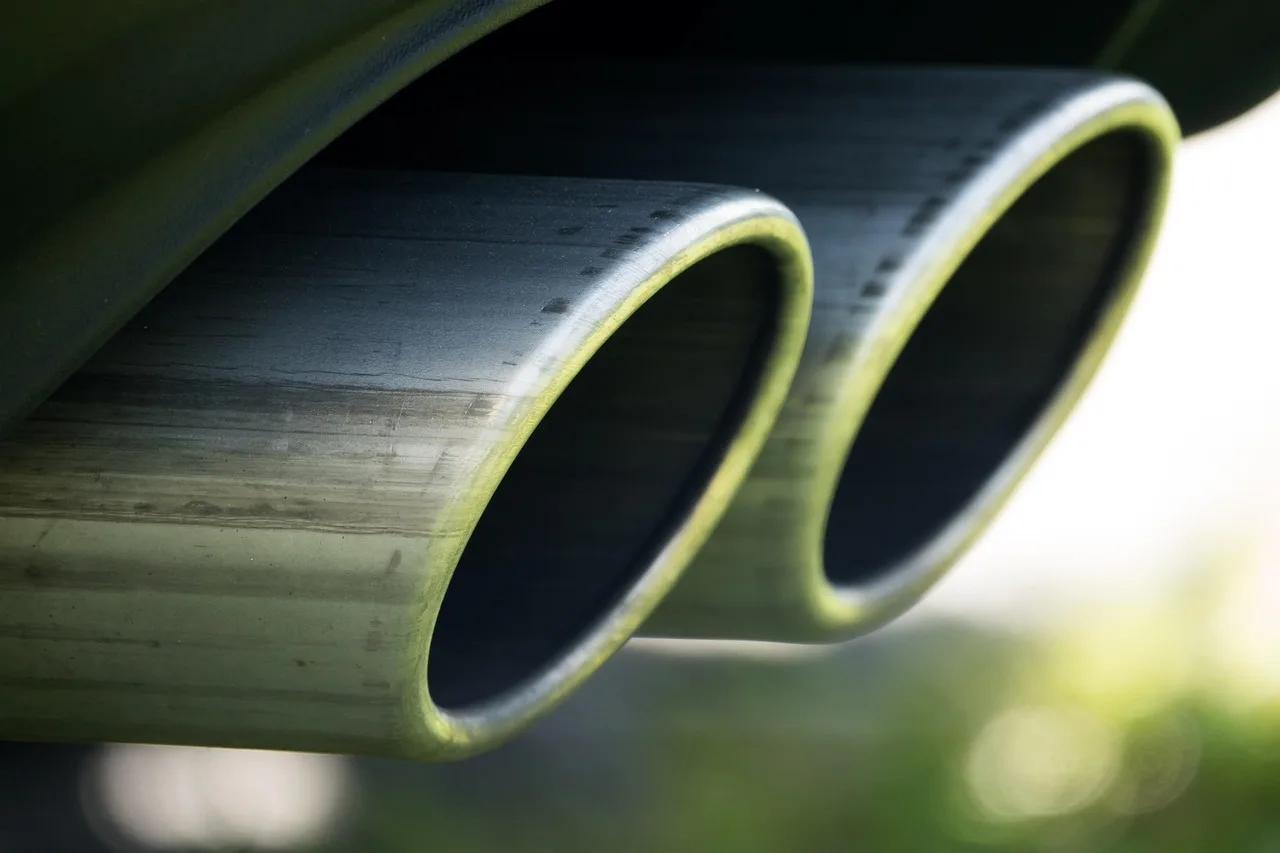
Exhaust system installation cost includes parts, labor, consumables, and sometimes diagnostics or inspection work. A quoted total can look simple, but it often combines the exhaust kit, shop time, gaskets, clamps, hangers, sealants, and any cutting or welding needed to make the system fit correctly.
A typical exhaust kit ranges from $120 to $900, while consumables and tools can add $20 to $150 to the project. Labor commonly ranges from $180 to $1,200, and typical total project cost is shown as $320 to $2,150. Those numbers are broad because one quote may cover a clean bolt-on job and another may include seized fasteners or sensor work. Manufacturer catalog pricing and service labor references can help anchor those ranges; for example, the MagnaFlow catalogs show how parts pricing varies by vehicle coverage, and the IBB labor market data is commonly used to compare shop labor rates.
When diagnostics or inspection fees appear
Diagnostic or inspection charges usually show up when the shop has to confirm a fault before replacement, clear a check-engine issue tied to sensors, or complete emissions-related work. Catalytic converter work can also trigger compliance steps that are separate from ordinary muffler or pipe replacement. EPA emissions guidance is useful background when a repair touches converter or sensor compliance, especially for air pollution and transportation requirements.
That matters because an exhaust quote may include the visible hardware but leave out the time needed to diagnose a leak, verify an O2 sensor signal, or address an emissions fault after the repair. If the estimate does not mention diagnostics, ask whether they are included or billed separately.
Why quoted totals differ from the final bill
Quoted totals differ because exhaust work often changes once the system is opened up. Rusted bolts, damaged flanges, broken hangers, heat-shield interference, and misaligned bungs can turn a short bolt-on install into a longer repair with extra parts and labor.
Suppose a pickup with rusted exhaust hangers also needs new clamps and sensors before the installation can be completed. If the flange bolts shear during removal, the shop may need cutting, new hardware, and an extra hour or two. In one failure case, a seized cat-back flange required 2 extra hours and $140 in cutting hardware. The quote was not wrong; it was incomplete.
How much does exhaust installation cost?
For a broad budget, exhaust installation cost usually falls between $320 and $2,150 once parts, labor, and consumables are combined. Exhaust installation labor commonly ranges from $180 to $1,200, and a standard exhaust system total can range from $400 to $2,100 depending on whether the job is a rear-section swap, a cat-back upgrade, or a full system replacement.
The lower end usually reflects a straightforward bolt-on replacement. The higher end comes from custom work, harder access, welded joints, corrosion, or vehicle-specific packaging that adds labor time and parts cost.
Parts price versus labor price
Parts and labor should be separated in any estimate. A typical exhaust kit ranges from $120 to $900, while labor rates typically range from $75 to $125 per hour. That means a modest parts bill can still become a larger total once the shop adds two to four hours of work.
Labor for a typical exhaust project is listed at $150 to $900, and basic exhaust replacement labor is estimated at 2 to 4 hours. If the quote does not show both the kit price and the labor line, the total is harder to compare. The shop labor rates page can help you benchmark whether the hourly rate itself looks normal.
Why full replacements cost more than rear-section work
A full exhaust system is more vehicle-dependent than a rear muffler swap. It may run from the exhaust manifold or catalytic converter back to the tailpipe, which means more hangers, more joints, more clearance issues, and sometimes emissions-related hardware.
Rear-section work is simpler because it usually stays behind the axle and avoids front-end sensors and converters. Full systems can add labor quickly when rusted fasteners, shielding, or routing differences force more disassembly.
Axle-back vs cat-back vs full exhaust system
Axle-back systems are the smallest scope, cat-back systems sit in the middle, and full exhaust systems are the most vehicle-dependent. The farther forward the work reaches, the more likely the quote will involve extra hardware, tighter access, and emissions-related complications.
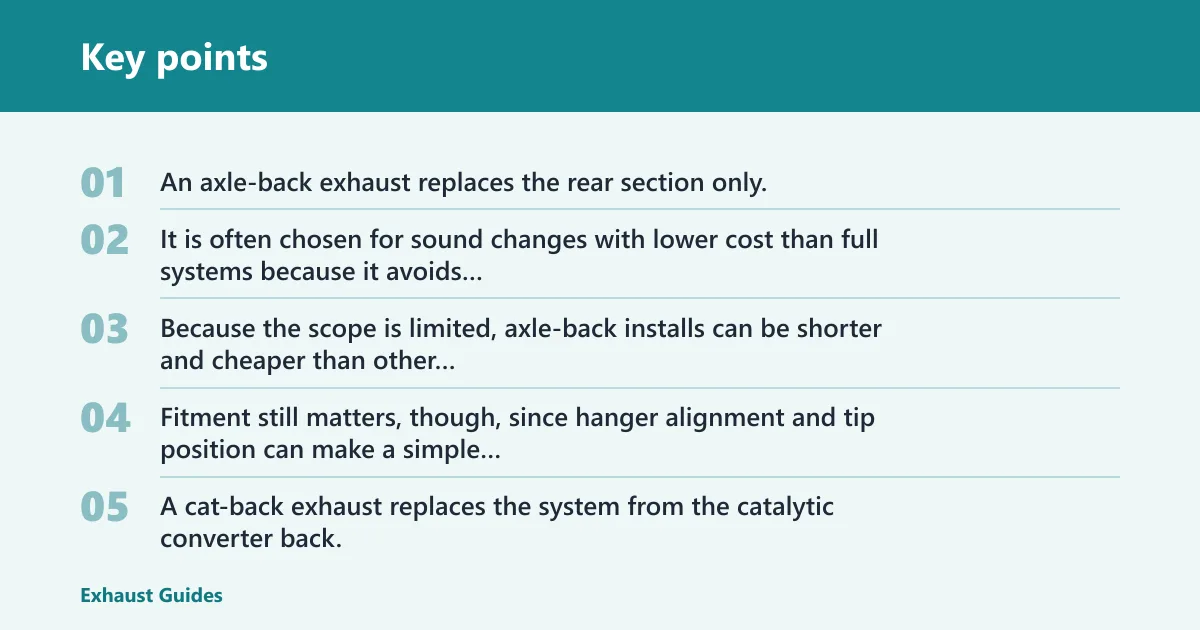
Axle-back exhaust: rear-section-only scope and sound focus
An axle-back exhaust replaces the rear section only, usually from the axle area to the tips. It is often chosen for sound changes with lower cost than full systems because it avoids most of the mid-pipe and front-pipe work.
Because the scope is limited, axle-back installs can be shorter and cheaper than other upgrades. Fitment still matters, though, since hanger alignment and tip position can make a simple swap take longer if the parts do not match the chassis well.
Cat-back exhaust: typical install scope, fitment, and hanger checks
A cat-back exhaust replaces the system from the catalytic converter back. It is a common upgrade for drivers who want more sound or a different tone without changing the emissions equipment ahead of the converter.
Typical install scope includes the mid-pipe, muffler, rear piping, and tips, plus checks for fitment and hanger position. Cat-back exhaust labor time commonly lands around 2 to 4 hours, and the example cat-back labor time was 2.5 hours. A cat-back install scenario can total about $690 in the example.
Full exhaust system: more vehicle-dependent complexity and possible catalytic converter work
A full exhaust system can include work forward of the converter, so the quote may expand into oxygen sensors, catalytic converter-related parts, and more labor. That is where the job stops being a simple parts swap and starts depending heavily on vehicle layout.
Picture a pickup with a rusted front flange and a heat shield that blocks socket access. A full-system quote can jump because the shop has to remove more underbody hardware before the pipe even comes out. That is why full system pricing should always be itemized.
What drives labor cost
Labor cost depends on the shop’s hourly rate, the number of labor hours, and how much correction the job needs. Labor rates typically range from $75 to $125 per hour, and regional variation plus shop type variation can move the total a lot even when the parts are identical.
Labor rate variation by region and shop type
Urban shops usually charge more than suburban or rural shops because rent, wages, and overhead are higher. Rural shops may quote lower rates, but the final bill can still rise if parts must be sourced separately or if the job takes longer than expected.
Dealer labor often sits above an independent muffler shop, while performance exhaust shops may price higher when welding and custom fitment are part of the normal workflow. Regional price differences commonly run about 10% to 30% between lower-overhead and higher-overhead markets, though vehicle complexity can widen that gap further.
Typical labor hours by job complexity
Basic exhaust replacement labor is estimated at 2 to 4 hours. That fits a bolt-on job with intact hangers, reachable fasteners, and a direct replacement path.
Custom fabrication takes longer because the technician may have to cut, mock up, weld, and recheck alignment before final installation. Once the work stops being a direct replacement, labor can move from a short service appointment to most of a day.
Rust, seized hardware, heat shields, and misaligned bungs
Rust is the biggest labor multiplier on older vehicles. Seized flange bolts may need heat, cutting, or replacement hardware, and damaged threads can add cleanup time before the new exhaust even goes on.
Heat-shield interference can force partial disassembly, while misaligned O2 bungs can require rework so sensors sit at the correct angle. Those corrections are easy to miss in a simple quote, yet they are common reasons a low estimate grows.
Materials and parts that change the price
Material choice affects both part price and long-term durability. Stainless steel usually costs more than aluminized steel, but the right choice still depends on budget, climate, and how long the vehicle is expected to stay in service.
Aluminized steel versus stainless steel
Aluminized steel is usually the cheaper option and can be a sensible fit for a lower-cost replacement. Stainless steel generally costs more up front but resists corrosion better, which can matter in wet or salted-road regions.
That does not mean stainless is always the better install. Fitment, hanger placement, and joint quality still matter, and a poorly aligned stainless system can cost more to correct than a simpler aluminized replacement.
Gaskets, clamps, hangers, and sealants
Gaskets, clamps, hangers, and sealants are consumables, but they are not optional details. They affect leak resistance, vibration control, and how well the exhaust stays positioned under load.
If a quote lists only the pipe or muffler and omits hardware, expect a later add-on charge. Consumables and tools can add $20 to $150 to the project, and that range can grow when hangers or flange hardware are badly corroded.
Sensors, O2 bungs, and sensor extensions
Sensors and sensor extensions become important when the replacement changes the location of an oxygen sensor or places it farther from the original harness. Exhaust systems with bung relocation or custom routing often need those details spelled out in advance.
Missing O2 bung work is a common quote problem on custom jobs. If the exhaust needs new bung placement or a sensor extension, the shop should list that line item rather than folding it into a vague labor total.
Exhaust quote audit table
Use this table to compare quote structure, not just the final number. A cheap estimate is only cheap if it includes the hardware and labor needed to finish the job cleanly.
| Job tier | Expected labor hours | Likely inclusions | Likely hidden charges | Red-flag omissions |
|---|---|---|---|---|
| Bolt-on replacement | 2 to 4 | Direct-fit muffler or pipe, standard clamps, basic hangers, routine removal and install | Rusted hardware, gaskets, disposal, small shop supplies, tax | No mention of hangers, no hardware allowance, no labor hours, no note on corroded bolts |
| Cat-back upgrade | 2.5 to 5 | Mid-pipe, muffler, rear piping, tips, fitment checks, hanger alignment | Sensor extensions, extra clamps, welding, adjustment time, emissions-related inspection | No mention of welding versus clamp-on work, no hanger check, no note on tip alignment or O2 clearance |
| Custom fabrication | 5 to 10+ | Cutting, mock-up, welding, custom routing, O2 bung work, final fitment | Extra tubing, fabrication materials, diagnostic time, rework for heat shields or clearance | No hourly range, no fabrication note, no bung or sensor line, no welding allowance |
Why quotes vary by vehicle and location
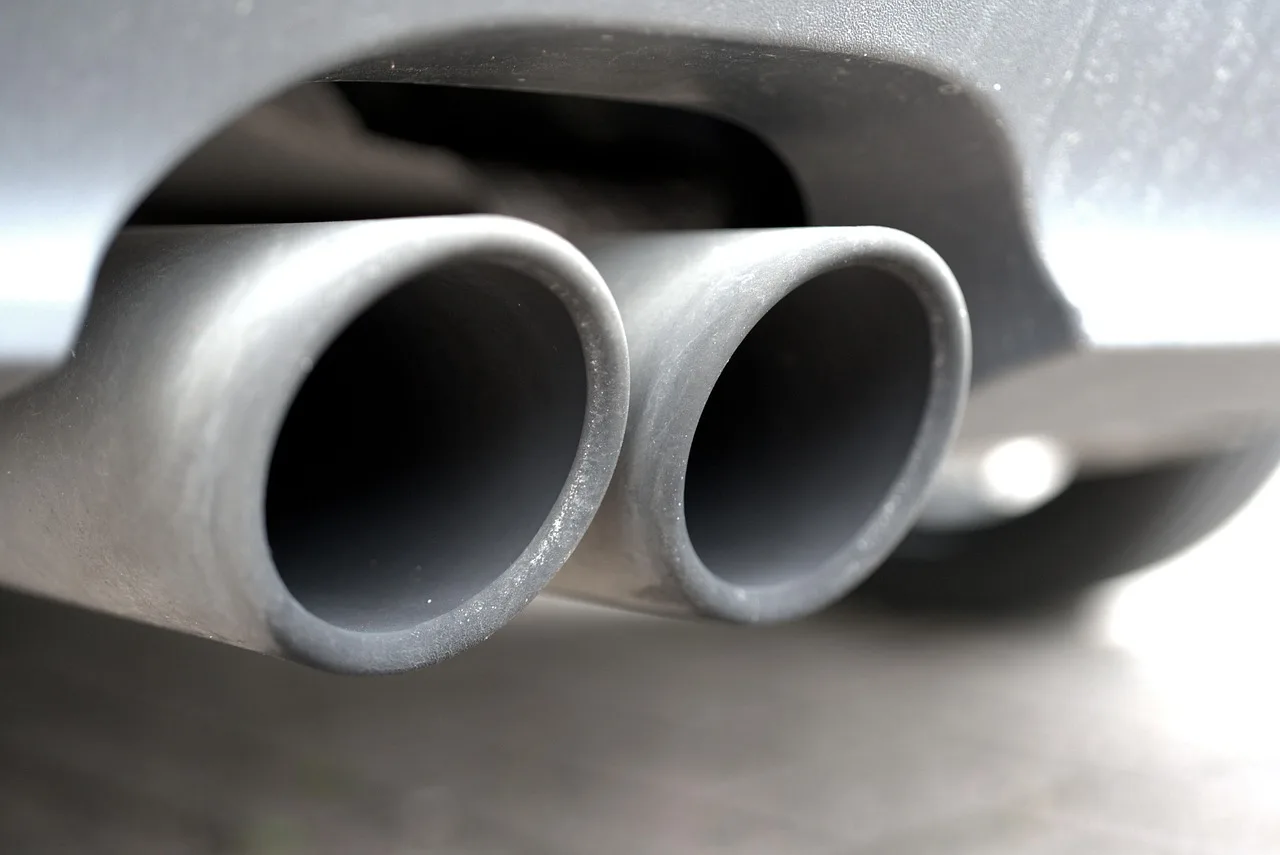
Exhaust installation quotes vary so much because vehicle layout, rust exposure, and local labor overhead all change the job scope. A car in a dry climate with clean fasteners is not the same repair as a truck from a salt-heavy region with broken flange bolts.
Vehicle age, rust-belt exposure, and packaging constraints
Older vehicles often need more labor because hardware has had years to seize. Rust-belt exposure increases the risk of cut bolts, damaged studs, and extra cleanup.
Packaging constraints matter too. Some vehicles route exhaust sections tightly around suspension parts, fuel lines, or heat shields, which makes the install slower even when the system itself is not expensive.
Urban, suburban, and rural pricing differences
Urban pricing tends to be highest because overhead is higher. Suburban prices often sit in the middle, while rural areas may be lower on labor but less flexible on turnaround or specialty fabrication.
Those differences show up in labor rate, shop minimums, and whether the quote includes a diagnostic fee. A lower hourly rate can still produce a higher bill if the job needs extra rework.
Tax, overhead, and emissions-compliance effects
Sales tax, disposal fees, and inspection-related charges can move the final total upward even when the labor hours stay the same. Emissions-compliance work is especially important on catalytic converter-related repairs because the shop may need to confirm legal fitment and diagnostic readiness.
If the estimate includes converter work, ask whether the quote covers compliance checks, sensor verification, and any required reinspection. Those costs are easy to miss when the quote is focused only on pipe replacement.
How to compare exhaust install quotes
The best way to compare quotes is to confirm that each estimate covers the same scope. One shop may quote only the pipe swap, while another includes hangers, clamps, diagnostics, and sensor work. That is not the same job, even if the totals look close.
- Confirm the exact exhaust section: axle-back, cat-back, full system, or custom fabrication.
- Separate parts, labor, and consumables into distinct lines.
- Ask whether welding is included or billed separately.
- Check for gaskets, clamps, hangers, sealants, and any sensor extensions.
- Ask how rusted hardware, cut-off bolts, and broken flanges are billed.
- Confirm whether diagnostics, emissions checks, or disposal fees are included.
Red-flag omissions that often mean add-on charges
Watch for quotes that mention only “install exhaust” without naming the parts. Another red flag is a low labor price with no note about welding, hardware, or fitment corrections.
Missing O2 bung work, no allowance for sensor extensions, or no mention of hangers usually means the quote is incomplete. If the shop cannot explain where the system starts and ends, the final bill is likely to grow.
Questions to ask about welding, clamps, and warranty terms
Ask whether the system will be clamp-on or welded, since that decision affects both price and long-term serviceability. Welding often costs more, but it can be the correct choice on custom sections or when clamp access is limited.
Also ask what the warranty covers: parts only, labor only, or both. A quote that excludes labor warranty can look cheaper upfront and still cost more if a leak or alignment issue has to be corrected later.
Frequently asked questions
How much does it cost to get a new exhaust system installed?
See the main pricing table above for the full breakdown. A simple bolt-on replacement tends to sit near the low end, while custom or rusted jobs move higher because labor, consumables, and correction time add up fast.
What is the average labor cost to install an exhaust system?
A basic replacement often takes 2 to 4 hours, so the labor total depends heavily on rust, access, and whether the job is clamp-on or welded.
Why do exhaust installation quotes vary so much by vehicle?
Quotes vary because some vehicles use direct-fit parts with easy access, while others require cutting, welding, sensor work, or heat-shield removal. Vehicle age, rust-belt exposure, and exhaust routing all change the labor hours, and those differences matter as much as the parts themselves.
What extra parts or fees should be included in an exhaust install quote?
Look for gaskets, clamps, hangers, sealants, sensor extensions, shop supplies, and any disposal or diagnostic fee. Consumables and tools can add $20 to $150 to the project, and missing those lines often means the first quote is not the full price.
How much does a cat-back exhaust system installation cost?
A cat-back install can total about $690 in the example, and the labor time in that example was 2.5 hours. The final price still depends on fitment, hanger alignment, and whether the shop needs welding, because cat-back systems are more involved than rear-section-only swaps.
Do regional labor rates change exhaust installation cost?
Yes. Urban shops usually charge more than suburban or rural shops because overhead is higher, and labor rates typically range from $75 to $125 per hour. Tax, inspection rules, and emissions-compliance requirements can also change the final bill from one area to another.