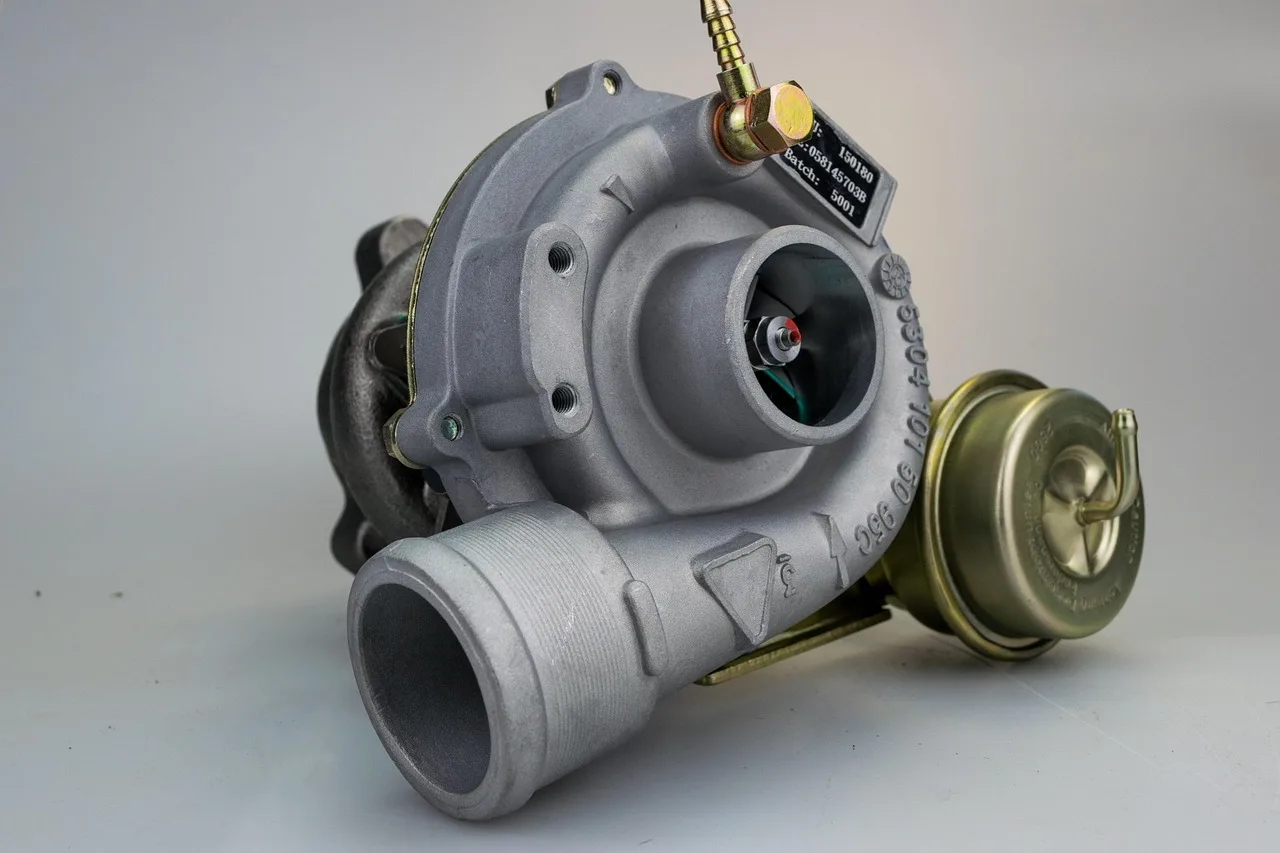
Downpipe vs Exhaust Pipe: How They Differ in a Turbo System
A downpipe is the first exhaust section after the turbo, ending where the system reaches the cat-back or center pipe. “Exhaust pipe” is a broader term that can refer to any pipe in the exhaust path. Mix them up, and you may buy the wrong flange, catalyst setup, or diameter. This guide maps the exact boundary, then compares the parts and the labels you’ll see when shopping.
This guide is part of our Exhaust system components guide series.
| Decision factor | Downpipe | Exhaust pipe | Winner |
|---|---|---|---|
| System boundary | Turbo-specific first section after the turbine housing | Any pipe in the exhaust path, including mid-pipe, muffler section, and tailpipe | Downpipe, for precision |
| Fitment sensitivity | Must match turbocharger outlet flange, chassis routing, O2 sensor locations, and often catalyst choice | Usually easier to define, because the term covers a broader set of pipes | Exhaust pipe, for simplicity |
| Performance relevance on turbo cars | Directly affects turbo outlet flow, spool behavior, and catalyst placement | May matter later in the system, but not at the turbo outlet boundary | Downpipe |
| Buying clarity | Can vary by platform: front pipe, J-pipe, or downpipe depending on the car | Generic term that can hide the exact section you need | Downpipe, if you know the platform name |
What is a downpipe on a turbo car?
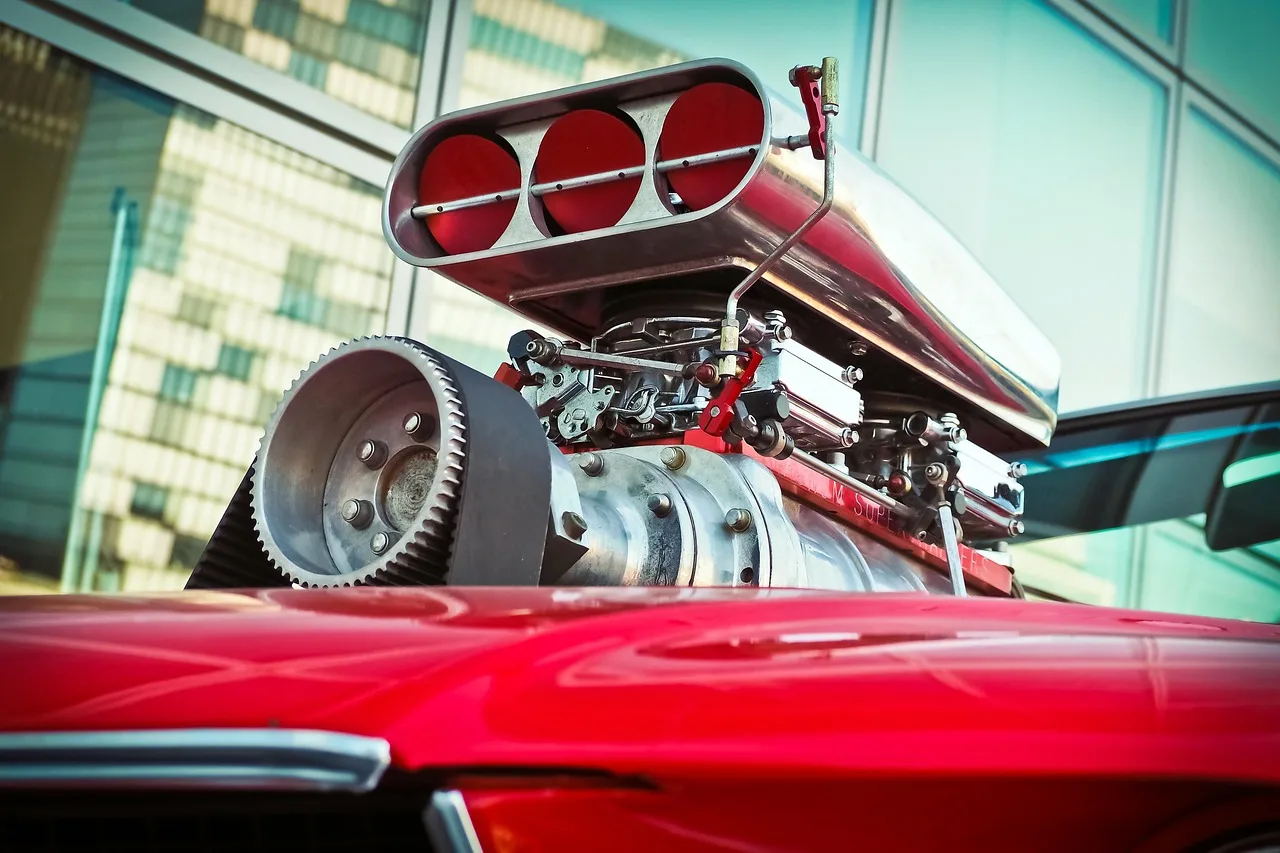


A downpipe is the section that bolts to the turbocharger outlet flange and carries exhaust into the rest of the system. On turbocharged vehicles, it is usually the first hard-pipe section after the turbine housing, and it may include O2 sensor bungs, a catalytic converter, and a flex section.
Where the downpipe starts
The start point is the turbocharger outlet flange, which must match the turbo and the vehicle fitment. That flange is not universal. A correct part needs the right bolt pattern, sealing surface, and routing for the engine bay and chassis.
Where the downpipe ends
The end point depends on the platform and part design. On some cars, the downpipe ends at the catalytic converter or flex section; on others, it hands off to a front pipe or mid-pipe that continues toward the muffler and tailpipe.
Why the name changes by platform
Manufacturers and aftermarket brands do not always use the same naming map. A Subaru “up pipe” sits before the turbo, while a BMW or Audi listing may call the turbo outlet section a front pipe or downpipe. The hardware boundary matters more than the label.
📊 A performance downpipe can improve horsepower by 10-15 according to SuncentAuto. Source: Downpipe Exhaust Systems for BMW, Audi, Nissan, Chevrolet & Others.
How does a downpipe work?
A downpipe gives exhaust gas a clear path away from the turbocharger outlet and into the next section with less restriction than the factory pipe. On many turbo cars, that means lower backpressure at the turbine outlet, a quicker rise in boost response, and a layout that supports a larger pipe diameter.
What changes inside the pipe
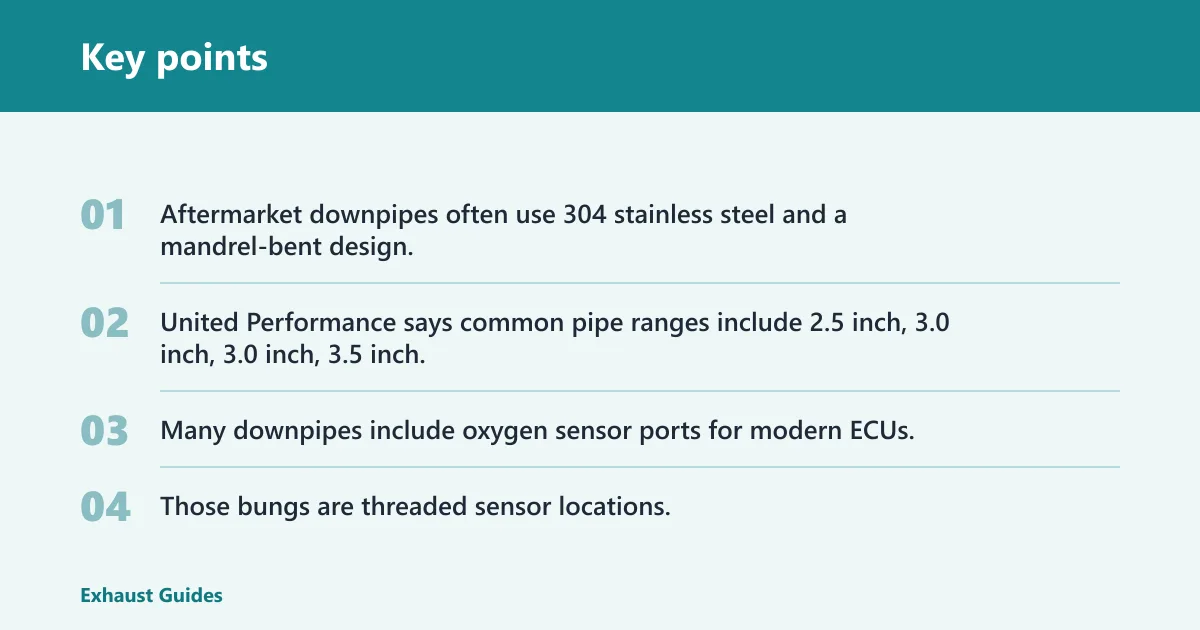
Aftermarket downpipes often use 304 stainless steel and a mandrel-bent design, which helps keep cross-sectional area more consistent through bends. United Performance says common pipe ranges include 2.5 inch, 3.0 inch, 3.5 inch, and 4.0 inch+, and it notes 3.0 inch is typical for most modern German turbo engines.
Why sensors matter
Many downpipes include oxygen sensor ports for modern ECUs. Those bungs are threaded sensor locations, and they matter because the ECU expects sensors in specific positions for fuel trim, catalyst monitoring, and fault detection.
What is the difference between a downpipe and an exhaust pipe?
A downpipe is a turbo-specific exhaust section, while exhaust pipe is a broader umbrella term for any pipe in the exhaust path. If you are comparing parts for a turbo car, that difference matters because a generic exhaust pipe may refer to the mid-pipe, resonator section, muffler inlet, or tailpipe instead of the turbo outlet section.
Why non-enthusiasts mix them up
Outside car forums, people often use “exhaust pipe” to mean any visible tail section. That creates confusion when shopping for turbo parts, because the first pipe after the turbo is not the same thing as the rear section that ends under the bumper.
What that means at the parts counter
If a listing says exhaust pipe without more detail, check the exact boundary. Ask whether it attaches to the turbocharger outlet flange, whether it includes a catalyst, and whether it is intended to mate with a cat-back or center pipe.
Boundary map: from turbo outlet to tailpipe
The typical turbo exhaust layout is engine, turbocharger, downpipe, mid-section exhaust, then tailpipe. That sequence is the cleanest way to stop using the names interchangeably, because it shows where the turbo-specific part ends and the rest of the exhaust begins.
Label the boundary before you buy
Start at the turbine outlet. Then identify the catalyst, the flex section, the mid-pipe or cat-back transition, the muffler, and the tailpipe. A part is easier to classify once you know which boundary it crosses.
| Part boundary | What it does | What changes if you replace this section |
|---|---|---|
| Turbo outlet / turbocharger outlet flange | Bolts directly to the turbine housing and starts the downpipe | Changes turbo fitment, flange pattern, sealing, and routing |
| Catalytic converter | Cleans exhaust gases before they move farther down the system | Changes emissions behavior, smell, legality, and often flow |
| O2 sensor bungs | Provide threaded ports for oxygen sensors | Changes ECU sensor placement and whether the car reads correctly |
| Flex section | Absorbs engine vibrations, drivetrain movement, and heat expansion | Changes crack resistance and how much stress reaches the rest of the exhaust |
| Mid-pipe / cat-back transition | Connects the forward exhaust section to the rear system | Changes how the aftermarket system is named and which rear parts fit |
| Muffler and tailpipe | Shapes final sound and exits the exhaust at the rear of the car | Changes volume, tone, and rear fitment more than turbo response |
Front pipe vs downpipe: what is the difference?
Front pipe is a platform-specific name for the section near the front of the exhaust, but it does not always mean the same thing as downpipe. On some cars, front pipe is the piece after the catalyst or after the turbo section; on others, the seller uses it for the turbo outlet pipe itself.
How to read listings without guessing
Do not trust the name alone. Check whether the part bolts to the turbo, whether it includes the catalyst, and where it ends relative to the mid-pipe. That boundary tells you more than the label.
Up pipe vs downpipe: what is the difference?
An up pipe is typically before the turbocharger, while a downpipe is typically after the turbo. The terms are not interchangeable, and Subaru is one of the best-known platforms where this naming split matters.
Why platform names can mislead
Some brands use local naming habits that sound similar but point to different locations. If you see up pipe on one platform and downpipe on another, the safest move is to trace flow direction from the engine to the turbo and then from the turbo to the next exhaust section.
Downpipe vs straight pipe: which is better?
A downpipe is better if you are working on the turbo outlet section, because it is the correct part for that boundary. A straight pipe is a different idea: it usually means a simplified exhaust section with minimal restriction, and it may remove the catalyst or resonator depending on the build.
Flow is not the only issue
Lower restriction can help the turbo spool sooner and sharpen throttle response. But a catless straight-through setup may be loud and unrestricted, and it can also create emissions, smell, and legality problems that a catted downpipe avoids.
Common first-timer mistake
A common first-timer mistake is ordering a “straight pipe” thinking it is the same as a turbo downpipe. If the part does not match the turbo flange and sensor layout, it will not solve the fitment problem.
Cat-back exhaust vs downpipe: what changes?
A cat-back exhaust replaces the section after the catalytic converter, usually from the catalyst outlet to the rear of the car. A downpipe changes the section immediately after the turbocharger, so it sits much closer to the source of exhaust flow and often affects fitment, catalyst placement, and sensor location.
Which one changes the system boundary
The downpipe changes the turbo outlet boundary. The cat-back changes the rear boundary. That is why a cat-back is usually easier to classify, while a downpipe demands closer attention to turbo flange, catalyst choice, and ECU logic.
Which one changes sound more
Both can change sound, but the downpipe changes the tone upstream, where turbine discharge and catalyst type shape the result. A cat-back mainly changes the later part of the system, so it usually influences rear sound character more than turbo outlet behavior.
What is the difference between a catted and catless downpipe?
A catted downpipe uses a high-flow catalytic converter, while a catless downpipe removes the catalytic converter entirely. The catted version aims to balance flow, smell, and legality; the catless version usually offers the least restriction and a louder, rawer exhaust note, but it may not be legal for street use in many areas.
High-flow catted downpipe
High-flow catted downpipes include a performance catalytic converter. They are usually the safer choice for a daily driver because they keep some emissions control in place and reduce the strong fuel smell that often comes with a deleted catalyst.
Catless downpipe
Catless downpipes remove the catalytic converter entirely. That can reduce restriction, but it also increases smell, emissions output, and legal risk. On many public roads, that tradeoff is the reason to avoid it.
Choose by use case
If the car is a daily driver or street-driven weekend car, catted is usually the more practical path. If the car is a dedicated track build where local rules allow it, catless may fit the goal better. The right choice depends on emissions sensitivity, not just sound.
How do I fit a downpipe?
Fitting a downpipe starts with boundary checks: turbo flange match, sensor port count, catalyst position, and mating diameter to the next pipe section. Flashark says its downpipe exhaust is vehicle-specific and designed as a bolt-on fit with no cutting or welding, though fitment can still depend on the turbo, chassis, and downstream layout.
Fitment checklist
- Confirm the turbocharger outlet flange matches the part.
- Match the oxygen sensor bung count and sensor placement.
- Verify whether the part is catted or catless.
- Check whether a flex section is included.
- Confirm the downstream connection: front pipe, mid-pipe, or cat-back.
- Check gasket, clamp, and flange style before installation.
Why the flex section matters
A flex section absorbs engine vibrations, drivetrain movement, and heat expansion. Without it, the exhaust sees more stress, which can lead to cracking or leaks near the turbo outlet and the first pipe junction.
Do I need a tune after installing a downpipe?
A tune is often needed after a downpipe change, especially when catalyst efficiency, boost control, or fueling logic depends on the original exhaust setup. The need varies by vehicle and ECU strategy, but a downpipe that changes flow or removes the catalyst can trigger faults without calibration support.
Why tuning comes up so often
SuncentAuto says a performance downpipe can improve horsepower by 10-15, and with proper ECU tuning, gains of 20-35 or more are common. The point is not the number by itself. The ECU may need revised logic to work correctly with the new flow path.
When to be cautious
If the car has rear O2 monitoring or strict emissions logic, do not assume the install is complete once the bolts are tight. Check readiness behavior, catalyst fault codes, and any platform-specific tuning requirement before driving normally.
What is the difference between a catted and catless downpipe?
A catted downpipe keeps a high-flow catalytic converter in the pipe, while a catless downpipe deletes it. The practical difference is not just flow. It also affects smell, emissions compliance, noise character, and whether the car is a realistic street candidate in your area.
Daily driver
For a daily driver, a catted downpipe is usually the better choice because it keeps more of the factory emissions architecture intact. It is still necessary to check local rules, but the tradeoff is easier to live with than a deleted catalyst.
Track car
For a track car, catless may make sense if the rules allow it and the build goal is maximum flow. The gain comes with obvious downsides, so it should be treated as a motorsport choice, not a general upgrade.
Emissions-sensitive build
If the build must pass inspections or avoid strong exhaust odor, catted is the clear winner. The catalyst is the boundary that separates a street-friendly downpipe from a much harder-to-live-with setup.
What is an exhaust downpipe
An exhaust downpipe is the turbo outlet pipe that connects the turbocharger to the rest of the exhaust system. The term matters because it identifies the boundary after the turbine housing, not the rear exhaust tubing under the car.
Why the wording matters in listings
Some sellers shorten the term to “downpipe exhaust,” while others use “turbo downpipe,” “front pipe,” or “J-pipe.” Each label can point to the same general area, but the exact part still has to match the turbo flange, catalyst choice, and downstream section.
Verdict
Choose a downpipe when you need the turbo outlet section itself, and choose a generic exhaust pipe only when the part listing clearly matches the section you are replacing. If you are shopping for a turbo car, the boundary is the whole point: turbo flange, catalyst, flex section, and the handoff to the mid-pipe or cat-back.
Choose downpipe if…
You are replacing the first pipe after the turbo, want the correct O2 sensor and catalyst layout, or need to compare catted versus catless options for a turbo build. It is also the right term when fitment, ECU logic, and platform-specific naming all matter.
Choose exhaust pipe if…
You are talking about the broader system, the rear tubing, or a generic replacement part that is not tied to the turbo outlet flange. Use the broader term only when the part description clearly identifies where it sits in the exhaust path.
Frequently asked questions
What is a downpipe on a car?
A downpipe is the first exhaust section after a turbocharger. It bolts to the turbo outlet flange and carries exhaust toward the rest of the system, often with a catalyst, O2 sensor bungs, and sometimes a flex section depending on the vehicle.
How does a downpipe work?
It channels exhaust gas away from the turbo and into the next exhaust section. On turbo cars, that path affects flow, sound, sensor placement, and sometimes spool behavior, especially when the factory catalyst or pipe diameter is changed.
Front pipe vs downpipe: what is the difference?
Front pipe is a platform-specific name for the front section of the exhaust, but it does not always mean the same thing as downpipe. Check whether the part bolts to the turbo, whether it contains the catalyst, and where it connects downstream.
Up pipe vs downpipe: what is the difference?
An up pipe sits before the turbo and feeds exhaust into the turbine, while a downpipe sits after the turbo and routes exhaust away from it. Subaru and some other platforms use these names in a way that makes the direction of flow the safest guide.
Cat-back exhaust vs downpipe: what changes?
A cat-back changes the section after the catalytic converter, usually from the mid-pipe rearward. A downpipe changes the turbo outlet section, so it has a more direct effect on fitment, catalyst placement, and ECU-related sensor behavior.
Do I need a tune after installing a downpipe?
Often, yes. The need depends on the vehicle’s ECU strategy, catalyst monitoring, and whether the new pipe changes flow enough to affect boost or fueling logic. Check the platform before driving hard or assuming the swap is complete.