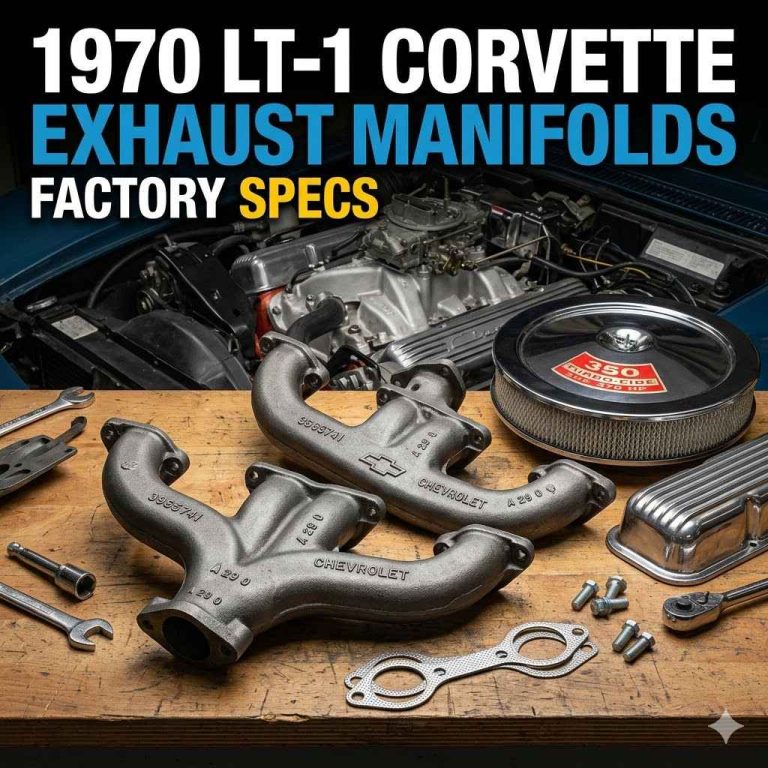
Were 1969 Camaro Exhaust Manifolds Date Coded
Lots of folks new to classic cars wonder about the little details, like whether parts on their 1969 Camaro have special dates stamped on them. It’s a common question because getting those details right is part of owning a true classic. For beginners, figuring out what to look for can seem tricky, but don’t worry!

Hugger Performance
Camaro Dual Exhaust System with Transverse Muffler…
- MADE IN USA
- 1970-1974 Camaro Z-28
- Complete Reproduction Exhaust System
As an Amazon Associate I earn from qualifying purchases.
We’re going to break down exactly what you need to know. By the end, you’ll have a clear idea about date codes on these specific parts. Let’s get started.
Understanding 1969 Camaro Exhaust Manifold Date Codes
This section will cover the basics of date codes on 1969 Camaro exhaust manifolds. We’ll explain what these codes are, why they are important for collectors and restorers, and how they can help verify authenticity. Understanding these markings is a key step in appreciating the history and originality of a classic car.
What Are Exhaust Manifold Date Codes?
Exhaust manifold date codes are stamped or cast directly onto the metal of the exhaust manifold. These codes typically consist of a numerical system that indicates the month, day, and year of manufacture. For classic cars like the 1969 Camaro, these date codes are crucial for enthusiasts who aim to restore their vehicles to their original specifications or authenticate their rarity.
These markings provide a verifiable link to the manufacturing process, helping to distinguish original components from reproductions or parts from different model years. The presence and accuracy of these codes can significantly impact a car’s value and its standing in car shows and collector circles.
The specific format of these date codes can vary slightly between manufacturers and even production runs. However, for most American automakers in the 1960s, a common format involved a two-digit month, followed by a two-digit day, and then a two-digit year. Sometimes, the year might be represented by a single digit, especially if the production year was clearly established.
For example, a code like ‘12/15/68’ would indicate that the manifold was manufactured on December 15, 1968. Understanding this basic structure is fundamental to deciphering the markings you find on your own vehicle’s components.
These codes served a practical purpose for the manufacturers as well. They allowed for quality control and inventory management. If a particular batch of parts showed defects, manufacturers could easily trace them back to the specific production date and facility.
This traceability was vital for ensuring consistent quality across a high-volume production line. For collectors, this historical manufacturing information adds layers of authenticity and value.
The ability to read and interpret these date codes is a skill that develops with experience. Many resources exist to help decode them, including enthusiast forums, restoration guides, and expert advice. Becoming familiar with the common stamping locations and typical code formats will greatly aid in your quest to authenticate your 1969 Camaro’s exhaust manifolds.
Why Date Codes Matter for Collectors
For collectors and restorers of classic cars, especially models as iconic as the 1969 Camaro, date codes are more than just manufacturing stamps; they are vital pieces of historical evidence. The primary reason these codes hold so much significance is their role in determining the originality and authenticity of a vehicle’s components. A car restored with parts manufactured during the same era it was built is considered more valuable and desirable than one fitted with generic or reproduction parts.
When a collector is evaluating a 1969 Camaro, they will often look for date-coded exhaust manifolds that predate the car’s assembly date. This indicates that the manifolds are likely the original equipment fitted at the factory. This level of originality is highly prized, particularly in high-level restorations or for concours d’elegance events, where strict adherence to factory specifications is paramount.
Finding original, date-coded manifolds can be a challenging but rewarding aspect of the restoration process.
Furthermore, date codes can help identify specific production periods and even hint at certain manufacturing changes or updates that might have occurred during the 1969 model year. By correlating the dates on the manifolds with the car’s build date, enthusiasts can build a more complete picture of the vehicle’s history. This information is invaluable for enthusiasts who are passionate about preserving automotive history accurately.
It’s about telling the story of the car through its original parts.
The presence of correct date codes can also influence the market value of a 1969 Camaro. Vehicles that retain a high percentage of their original, date-coded components often command higher prices than those with extensively replaced or non-original parts. This makes the search for and verification of these codes a significant investment for many collectors, not just in terms of time but also in potential financial return.
It’s a testament to the enduring appeal of originality in the classic car world.
Were 1969 Camaro Exhaust Manifolds Date Coded?
The direct answer to the question, “Were 1969 Camaro exhaust manifolds date coded?” is yes. General Motors, including Chevrolet for the Camaro line, implemented date coding on many of its major components during this era, and exhaust manifolds were among them. This practice was standard for a variety of reasons, including quality control, inventory tracking, and ensuring parts were used within their intended production timeframe.
For a 1969 Camaro, finding exhaust manifolds with legible and appropriate date codes is a key indicator of originality.
These date codes typically followed a consistent format. They usually included a month, day, and year, often represented by numbers. For example, a manifold might have a code that translates to a specific date before the car’s assembly date.
A common format was the Julian calendar for the day, which is a sequential day number within a year, but numerical month and day are also seen. The year would typically be the model year or the year prior to it, corresponding to the vehicle’s production period. For a 1969 model year car, you would expect to see dates from late 1968 through early 1969.
The placement of these codes could vary. They were often cast into the metal on a somewhat flat or accessible surface of the manifold. Enthusiasts often look for these markings in areas that are less prone to extreme heat and corrosion, though many do get obscured over time due to the harsh operating environment of an exhaust system.
Identifying these locations requires familiarity with the component and sometimes careful cleaning of decades of grime and rust. It’s a detective task for the dedicated restorer.
It is important to note that not every single manifold might have a perfectly clear or present date code, even if it is original. Manufacturing processes weren’t always perfect, and wear and tear over many years can obscure these markings. However, the general expectation and standard for authenticating 1969 Camaro exhaust manifolds is that they should bear date codes that align with the vehicle’s production timeline.
Their presence is a strong positive sign of originality.

Decoding the Markings on 1969 Camaro Exhaust Manifolds
This section focuses on the practical aspects of finding and interpreting the date codes stamped on 1969 Camaro exhaust manifolds. We will guide you through where to look, what common formats to expect, and how to decipher them to confirm authenticity.
Locating Date Codes on Exhaust Manifolds
Finding the date codes on a 1969 Camaro’s exhaust manifolds is often the first challenge enthusiasts face. These components are positioned in a harsh environment, exposed to high temperatures, dirt, and corrosion. This means the codes might not be immediately visible and may require careful cleaning to reveal them.
Common locations include the underside or sides of the manifold castings, often on a flange or a relatively flat surface. Some manifolds might have codes cast near the collector flange, while others might be on the main body of the casting.
It’s helpful to know that Chevrolet often placed these codes in areas that were somewhat accessible during the assembly process but still durable. You might need to get under the car with a good flashlight to spot them. Sometimes, a wire brush or even a gentle chemical cleaner designed for metal can help remove buildup.
Be cautious when cleaning; you want to reveal the code, not damage the casting or the markings themselves. Always test any cleaning agent on an inconspicuous area first.
The exact placement can vary slightly depending on whether you have the left-hand (driver’s side) or right-hand (passenger’s side) manifold, and also on the specific engine option your 1969 Camaro is equipped with. For instance, V8 engines often had different manifold designs. Researching specific manifold part numbers for your Camaro’s engine configuration can also provide clues about typical code locations.
Resources like factory service manuals or well-established Camaro enthusiast forums are excellent places to find diagrams or photos illustrating these areas.
Don’t be discouraged if you can’t find a code on every single manifold, or if a code is partially worn away. The goal is to find evidence that supports originality. If you find one clear, correctly dated manifold, it significantly strengthens the case for authenticity, even if the other is less clear.
It’s about piecing together the evidence available to you.
Interpreting Common Date Code Formats
Interpreting the date codes found on 1969 Camaro exhaust manifolds usually involves understanding a numerical system that represents the month, day, and year. The most common format you’ll encounter is a numerical representation of the date, often presented as Month/Day/Year. For a 1969 Camaro, you are looking for dates that fall within the manufacturing window of that model year, which generally means from late 1968 through early 1969.
A typical date code might look something like ‘11/20/68’ or ‘02/05/69’. The first two digits usually represent the month (01 for January, 12 for December), the next two digits indicate the day of the month, and the last two digits signify the year. For a 1969 model, the year code would be ‘68’ or ‘69’.
It is essential that the date stamped on the manifold precedes the build date of your specific Camaro. A car built in October 1968 might have manifolds dated September 1968, but a car built in March 1969 should not have manifolds dated May 1969.
Another format sometimes seen, though less common for this specific component, is a Julian date system. In this system, the date is represented by the day number of the year (1 through 365 or 366) followed by the last digit of the year. For example, ‘3058’ could mean the 305th day of 1968.
However, for 1969 Camaro exhaust manifolds, the month/day/year format is far more prevalent. You might also find other small cast marks or symbols, which could be foundry codes or shift indicators, but the date code is the primary concern for authenticity verification.
When deciphering these codes, especially if they are partially obscured, you may need to use a magnifying glass and good lighting. Sometimes, a subtle indent in the metal is all that remains of a number. It’s also wise to compare any found codes with known examples for 1969 Camaros.
Reliable automotive forums and restoration guides often have databases or discussions where enthusiasts share their findings and help each other decode markings.
Identifying Potential Issues and Reproductions
When examining 1969 Camaro exhaust manifolds for date codes, it’s crucial to be aware of potential issues and the existence of reproduction parts. Reproductions are common in the classic car market, and while they can be useful for completing a restoration, they can also be misrepresented as original. Manufacturers of reproduction manifolds often try to replicate original markings, including date codes, but these can sometimes be inaccurate in their format, placement, or style of stamping.
One common issue with original manifolds is that the date codes can be worn, damaged, or even intentionally ground off. This can happen due to rust, heat cycles, or modifications made to the exhaust system over the years. In some cases, parts might have been
Reproduction manifolds can be identified by several factors. The casting quality might differ from originals – details can be softer, or the texture might feel different. The weight of the reproduction part might also vary.
The date codes themselves are a key indicator. Reproductions might have codes that are too perfectly stamped, use a font style that doesn’t match original GM fonts, or show codes that are outside the plausible production window for a 1969 Camaro. For example, a date code that is too late for the model year is a clear sign of a reproduction.
Another telltale sign can be the presence of modern casting marks or manufacturing methods that weren’t available in the 1960s. Some reproduction parts are made using older tooling, but subtle differences in the metal and its finish can sometimes be detected by experienced restorers. Always cross-reference your findings with known authentic examples and consult with experts if you are unsure about a part’s originality.
The goal is to ensure the parts contributing to your 1969 Camaro’s value and authenticity are correct.
A comparison of authentic vs. reproduction casting details:
| Feature | Original 1969 Camaro Exhaust Manifold | Reproduction 1969 Camaro Exhaust Manifold |
|---|---|---|
| Date Code Format | Typically M/D/YY (e.g., 11/20/68), correctly predates car build date. | May mimic format but can have incorrect digits, fonts, or be too late. |
| Casting Quality | Often shows signs of age, minor imperfections, specific textures. | Can be overly smooth, lack characteristic casting marks, or have sharp, modern edges. |
| Material/Weight | Cast iron with specific density and feel from that era. | May feel lighter or heavier, different metallic sound when tapped. |
| Stamping Style | Hand-stamped or machine-stamped with characteristic variations. | Often overly uniform, perfectly aligned, or using incorrect stamp fonts. |
Engine Variations and Exhaust Manifold Specifics
The 1969 Camaro came with a variety of engine options, and each engine could have specific exhaust manifolds. Understanding these differences is crucial for correctly identifying and verifying the date codes on your car’s components. This section explores how engine choice impacts the exhaust manifolds and what to look for regarding their specific markings.
Exhaust Manifolds for Different 1969 Camaro Engines
The 1969 Camaro was available with several engine choices, primarily ranging from the inline-six to various V8s. Each engine configuration typically used distinct exhaust manifolds designed to optimize exhaust flow for that particular engine’s performance characteristics. For example, a base inline-six engine would have different manifolds than a high-performance V8 like the SS 396 or COPO Camaro engines.
This variation means that when searching for correct date codes, you first need to know what engine your Camaro originally came with or is currently equipped with.
For the inline-six engines, such as the 250 cubic inch motor, the exhaust manifold was generally a single-piece, cast-iron design that served both banks of cylinders. It was less performance-oriented and more focused on cost-effectiveness and basic functionality. These manifolds are typically simpler in design and may have fewer intricate casting features compared to V8 manifolds.
The V8 engines, however, presented more diversity. The 302 Z/28, 327, 350, and 396 cubic inch engines each had specific exhaust manifold designs. Some of these V8s featured different manifolds for the left and right sides, often cast iron.
Performance-oriented engines, especially those designed for higher horsepower, might have had manifolds with larger ports or specific collector designs to improve exhaust scavenging and reduce backpressure. These performance manifolds could also be more prone to cracking over time due to increased stress.
Identifying the correct manifold for your specific engine is the first step. You can consult parts catalogs, restoration guides, or online databases that list original GM part numbers for each engine. Once you’ve identified the correct type of manifold, you can then begin looking for the date codes that should be present on it.
The challenge is that not all engines had manifolds with equally prominent or easily accessible date codes, and some may have had different stamping practices.
It’s also important to consider that some high-performance variants or special editions of the 1969 Camaro might have had different manifold options, including potential factory headers in very rare cases or for specific racing homologation. However, for the vast majority of 1969 Camaros, cast-iron exhaust manifolds with date codes are the norm.
Specific Markings and Part Numbers
Beyond the date codes, exhaust manifolds for the 1969 Camaro often carried other markings that are important for identification and authenticity. These can include GM part numbers, foundry codes, and sometimes assembly line identification marks. Understanding these additional markings can provide further confirmation that a manifold is original to the car or at least correct for the application.
The GM part number is a critical piece of information. It’s a unique identifier assigned by General Motors to specific components. On exhaust manifolds, this number is typically cast directly into the metal.
For a 1969 Camaro, the correct part number will correspond to the specific engine and side (left or right) of the vehicle. Finding this number and verifying it against factory documentation or reliable restoration resources is a crucial step in confirming originality.
Foundry codes are also commonly found. These marks indicate which manufacturing plant or foundry produced the casting. They are less about authenticity for a specific car and more about tracing the manufacturing process.
However, consistency in foundry codes can sometimes help identify if multiple components came from the same production batch. These codes are usually a series of letters and numbers, often quite small.
The date code, as discussed, is usually a numerical representation of the month, day, and year. For example, you might see a format like ‘11/20/68’ or ‘02/05/69’. It is vital that this date predates the build date of your 1969 Camaro.
If your car was built in, say, April 1969, you would expect to see manifold dates from late 1968 or early 1969. Dates significantly earlier or later than this window raise questions about originality.
Some manifolds might also have a letter or symbol that indicates the shift or specific line on which they were produced. These are minor details but can add to the overall picture of authenticity. When assembling or verifying a restoration, paying attention to all these markings – date codes, part numbers, and foundry marks – provides a comprehensive approach to ensuring the correct, original components are in place.
Example Scenario: Checking a 350 Engine Manifold
Let’s imagine you’re working on a 1969 Camaro with a 350 cubic inch engine. You’ve removed the exhaust manifolds and want to check their authenticity. First, you need to identify the correct type of manifold for a 350 V8 in that year.
General Motors typically used cast-iron manifolds for the 350, with specific designs for left and right sides.
You would then carefully clean the manifolds, focusing on areas where codes are usually found. On the right-side manifold, for example, you might look along the top edge or near the exhaust port flange. You discover a casting that reads ‘3926354’.
This is a GM part number that is known to be correct for some 1969 Camaro 350 engines. This is a good sign.
Next, you look for the date code. On the same manifold, perhaps on the underside, you find a stamping that reads ‘12/18/68’. This date is in the Month/Day/Year format.
Since your car’s build date is in March 1969, this date code of December 18, 1968, is perfectly acceptable. It falls within the expected production window and precedes your car’s assembly date.
You repeat this process for the left-side manifold. You find a different GM part number, also correct for a 350 left-side application, and a date code like ‘01/05/69’. January 5, 1969, is also before your car’s build date.
The presence of correct GM part numbers and appropriate, pre-dating date codes on both manifolds strongly suggests they are original to the car or at least correct for the period. This kind of verification is crucial for collectors aiming for factory-correct restorations.
The Importance of Authenticity in Classic Car Restorations
This final section emphasizes why ensuring the authenticity of parts like exhaust manifolds is paramount for classic car owners. We’ll touch upon the value, historical integrity, and the satisfaction that comes from a truly original restoration.
Impact on Vehicle Value and Desirability
The authenticity of components on a classic car like a 1969 Camaro has a direct and significant impact on its overall value and desirability among collectors. Vehicles that retain a high percentage of their original, factory-installed parts, especially major ones like the engine, transmission, and body panels, are generally considered more valuable. This is because these original parts carry the history and manufacturing integrity of the car as it left the assembly line.
When a 1969 Camaro has exhaust manifolds with correct date codes that predate the car’s build date, it signals to potential buyers and judges that the vehicle has been maintained or restored with a strong commitment to originality. This level of authenticity is highly prized in the collector car market. It suggests that the car has not been altered with modern, aftermarket, or incorrect parts, which can detract from its historical significance and perceived quality.
For high-end restorations or concours-level vehicles, the presence of original, date-coded exhaust manifolds can add tens of thousands of dollars to the car’s market value. Conversely, a car fitted with reproduction manifolds, even if they look identical, will typically be valued lower. This is because collectors are often buying a piece of automotive history, and originality is a key component of that history.
They want to know they are acquiring a car that is as close as possible to its original factory condition.
The desire for originality also drives the demand for rare and correct original parts. Enthusiasts will often spend considerable time and money searching for the right date-coded components to complete their restorations. This pursuit highlights how critical authenticity is not just for the aesthetic appeal but for the financial and historical integrity of the classic vehicle.
It’s about preserving the car’s legacy as accurately as possible.
Preserving Automotive History
Restoring a classic car is more than just making it look good; it’s also about preserving a piece of automotive history. Each car tells a story of its era, its design, and its engineering. By ensuring that components like the 1969 Camaro exhaust manifolds are date-coded and correct, enthusiasts are actively contributing to the accurate preservation of that history.
This commitment goes beyond personal satisfaction; it benefits future generations of car lovers.
When parts are
The meticulous effort involved in finding and verifying correct date codes demonstrates a deep respect for the original design and manufacturing intent. It’s about celebrating the craftsmanship of the era. This dedication ensures that the vehicles we preserve are not just old cars, but accurate representations of automotive heritage.
This historical accuracy is what differentiates a restored classic from simply a vintage car that has been updated.
Moreover, the information gleaned from date codes can sometimes reveal manufacturing quirks or changes that were made during the production run. These details, uncovered through careful study of original components, contribute to a broader knowledge base about the vehicles. This collective knowledge helps museums, historians, and enthusiasts better understand and appreciate the evolution of the automobile.
It’s a way of keeping the past alive and accessible.
The Satisfaction of an Original Restoration
For many classic car enthusiasts, the ultimate reward in a restoration project is the profound satisfaction derived from achieving a high level of originality. This satisfaction comes from knowing that the vehicle has been brought back to its factory-specification condition, not just in appearance but in its fundamental components. The presence of correct, date-coded exhaust manifolds is a significant contributor to this feeling of accomplishment.
When you can confidently say that your 1969 Camaro’s exhaust manifolds are original and correctly dated, it signifies a job well done. It represents countless hours of research, searching for parts, and careful execution. This attention to detail sets a truly exceptional restoration apart and provides a deep sense of pride for the owner.
It’s a testament to their dedication to preserving automotive authenticity.
Driving or displaying a car that you know is authentically restored is a unique experience. It’s about connecting with the past in a tangible way. The sound, the feel, and even the subtle visual cues of original parts all contribute to a more authentic driving experience.
This immersion in the car’s original character is something that cannot be replicated with modern reproductions, no matter how good they look.
The pursuit of originality, including the verification of date codes on parts like exhaust manifolds, transforms a restoration into a scholarly endeavor. It’s about becoming an expert on your specific vehicle, understanding its history, and ensuring that your contribution to its ongoing story is one of integrity and authenticity. This dedication brings a level of fulfillment that transcends the mechanical aspects of the project, creating a lasting legacy for the car and its owner.

Frequently Asked Questions
Question: Can I use manifolds from a different year Camaro on my 1969 model?
Answer: While some manifolds might physically fit, it is generally not recommended for an authentic restoration. Different years and engine options had specific manifold designs, casting numbers, and importantly, date codes that should align with your 1969 Camaro’s production period. Using incorrect year manifolds can affect originality and value.
Question: What should I do if I find a date code that is later than my car’s build date?
Answer: If you find a date code on your exhaust manifold that is later than your car’s assembly date, it is highly likely that the manifold is a replacement part and not original to your vehicle. This indicates it was installed at some point after the car left the factory.
Question: Are all exhaust manifolds for a 1969 Camaro the same?
Answer: No, exhaust manifolds varied based on the engine option. For example, inline-six engines used different manifolds than the various V8 engines available in the 1969 Camaro. Performance engines might have also had specific manifold designs.
Question: How can I clean exhaust manifolds to see the date codes better?
Answer: You can use a stiff wire brush to remove loose rust and dirt. For more stubborn grime, a metal-safe degreaser or a rust remover solution can be used cautiously. Always test cleaning agents on an inconspicuous area first and wear protective gear.
Gentle scraping might also reveal faded markings.
Question: What if a date code is partially worn off but the part number is correct?
Answer: A correct part number is a strong indicator of originality. If the date code is partially worn but other evidence points to originality (like correct casting style and the part number), it still suggests the manifold could be original, though absolute certainty might be difficult without a clear date.
Summary
Yes, 1969 Camaro exhaust manifolds were indeed date coded. These codes, typically month/day/year, are crucial for verifying originality and authenticity, significantly impacting a car’s value and desirability. Finding and correctly interpreting these markings, along with part numbers, helps enthusiasts ensure their restorations are period-correct.
Different engine options had unique manifolds, so matching the part to the engine is key.
Related pick: Check today's price on Amazon