
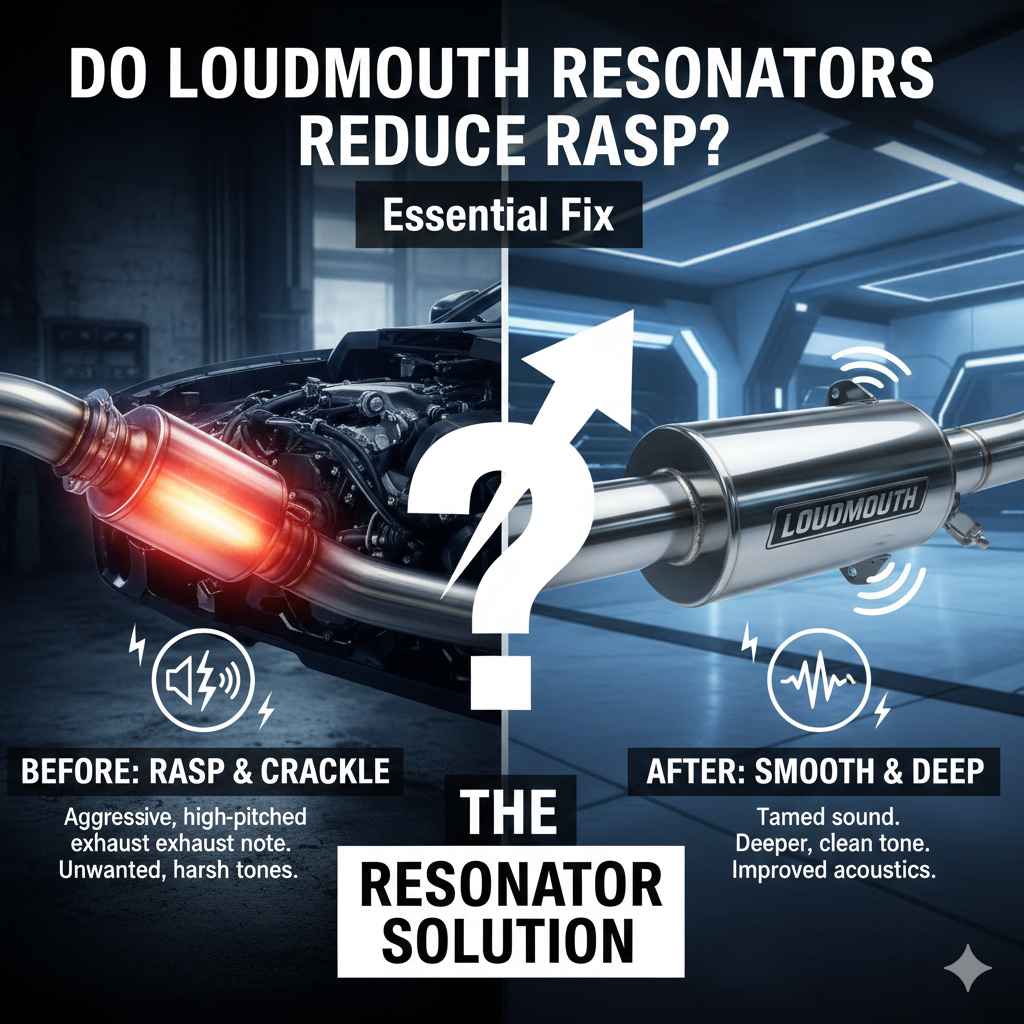
Do Loudmouth Resonators Reduce Rasp? Essential Fix
Yes, Loudmouth resonators are specifically designed to reduce unpleasant exhaust rasp, especially in high-flow or straight-pipe systems. They work by cancelling out specific high-frequency sound waves, resulting in a deeper, smoother tone while keeping much of the performance gains you want.
Does your newly upgraded exhaust sound great under acceleration but turn into an annoying, buzzy roar when you cruise? That harsh sound is called exhaust rasp, and it’s one of the biggest complaints car owners have after modifying their systems. It can make even a fun drive quickly become irritating. The good news is that there is an effective, straightforward solution right at your fingertips: the resonator.
If you’ve heard about Loudmouth or similar high-flow resonators, you are likely wondering if they truly tame that sharp noise without hurting your performance. As your trusted automotive guide, I want to assure you: they absolutely can! This guide will break down exactly what a resonator does, how Loudmouth units tackle rasp, and what you need to know before installing one. Let’s turn that buzz into a deep rumble.
Understanding Exhaust Noise: What is Rasp Anyway?
Before we dive into the fix, let’s clearly define the problem. If you have an aftermarket exhaust system—especially one that has removed the factory muffler or catalytic converter—you often end up with something called “rasp.”
The Difference Between Tone, Drone, and Rasp
Exhaust noise isn’t just one sound; it’s a mix of frequencies. Understanding the three main types of unwanted noise helps you choose the right fix:
- Tone: This is the sound you want—the deep, satisfying growl that suggests power.
- Drone: This is a low-frequency hum that happens consistently at a specific RPM range (like highway cruising). It vibrates through the car cabin.
- Rasp: This is the high-pitched, sometimes crackling or buzzing sound that occurs during rapid acceleration or deceleration. It’s often described as tinny or obnoxious.
Loudmouth resonators are primarily aimed at eliminating or significantly softening the rasp component, which usually stems from un-muffled, high-velocity exhaust gases hitting the piping bends.

The Role of Resonators in Your Exhaust System
Think of a resonator as the noise-canceling headphones of your exhaust system. Unlike a muffler, which handles the bulk of the overall volume reduction, a resonator targets specific, annoying frequencies.
How Resonators Work: Simple Science for Smooth Sound
Resonators use a principle called destructive interference. This sounds technical, but the concept is easy to grasp:
- Sound Waves Travel: When exhaust gas rushes through the pipe, it creates sound waves (pressure pulses).
- Entering the Resonator: The exhaust gas enters the resonator chamber.
- Reflection and Cancellation: Inside the resonator, there are internal baffles, chambers, or perforated tubes. These design elements split the sound waves, causing some waves to bounce back on themselves or collide with newly generated waves.
- The Result: When the crest of one sound wave meets the trough of another, they effectively cancel each other out. This is most effective on higher-frequency sounds (like rasp).
This process allows you to keep the straight-through flow of a performance exhaust (which maximizes horsepower) while eliminating the distracting buzzing sound.
Loudmouth Resonators: Design and Effectiveness Against Rasp
When people talk about “Loudmouth” style resonators, they are often referring to performance brands that use a straight-through, perforated core design, similar to a high-flow muffler but optimized for frequency cancellation rather than overall decibel reduction.
Key Features of a Good Resonator
A high-quality resonator, like those commonly referred to as Loudmouth style, needs specific characteristics to effectively attack rasp:
- Straight-Through Design: This ensures minimal flow restriction, which keeps your engine breathing well and maintains performance gains.
- Absorption Material: Many use sound-dampening packing (like fiberglass or stainless steel wool) around the perforated core to absorb the high frequencies that cause rasp.
- Correct Placement: Where you put it matters more than almost anything else.
Do Loudmouth Resonators Reduce Rasp? The Verdict
Yes, they are highly effective at reducing rasp. They are the go-to solution when you want a loud, aggressive sound profile without the sharp, tinny edge that ruins the experience on the street. They specifically target the higher frequencies associated with that irritating buzz.
Step-by-Step Guide: Choosing and Installing Your Resonator
If you’ve decided a resonator is the right fix for your rasp issue, follow these steps to ensure a successful upgrade. Remember, we are aiming for a deeper tone, not complete silence.
Step 1: Assess Your Current Exhaust Setup
First, identify exactly where the rasp is coming from and what other components you have installed. This determines the best path forward.
| Component Status | Primary Sound Issue | Recommended Fix |
|---|---|---|
| Aftermarket Muffler (Performance Style) | Rasp during quick throttle changes | Resonator placement before the muffler |
| Straight Pipe (No Muffler) | Loud volume and heavy rasp | Resonator + possibly a quality muffler |
| Factory Muffler/Cat Delete | Loud volume and drone/rasp | Resonator or high-flow chambered muffler |
Step 2: Selecting the Right Resonator Size and Material
Resonators are usually measured by the diameter of your exhaust piping (e.g., 2.25 inches, 2.5 inches). Always match the resonator inlet/outlet size exactly to your existing pipe diameter to avoid flow restriction or complex welding.
- Material: For longevity, look for 304 stainless steel. It resists rust much better than cheaper aluminized steel, especially if you live in areas that use road salt.
- Length: Longer resonators generally have more internal baffling and can cancel more frequencies, sometimes reducing volume slightly more than shorter, more compact designs.
Step 3: Determining Optimal Resonator Placement
Placement is crucial. If you place the resonator too far back, it might not have enough time or pipe length to effectively cancel the sound waves before they exit the tailpipe. If it’s too close to the engine, it might not have the full sound profile to work on.
For most passenger cars and trucks experiencing rasp:
- Measure the distance from your exhaust manifold (or turbo outlet) to the rear axle.
- The ideal spot is usually around the mid-pipe area**, just before the axle-back section begins. This allows the resonator to work on the combined engine pulses before they reach the rear of the car.
Pro Tip: Sometimes, adding a second resonator or even swapping out a performance muffler for a chambered one (if you removed the factory unit) can help tame any remaining drone, which often accompanies rasp.
Step 4: Installation Considerations (Welding vs. Clamping)
This step often requires a professional, but understanding the options helps you talk to your mechanic.
- Welding (Recommended): Welding ensures a perfect, leak-free seal. Leaks introduce unwanted noise and reduce efficiency. This is the safest and most reliable method for long-term performance.
- Clamping/Bolt-On: Some kits offer universal resonators with slip-fit ends and clamps. This is easier for DIYers but requires careful tightening and may leak over time, especially on older, flexing exhaust systems.
If you are cutting into existing piping, ensure the cuts are clean and straight. Uneven cuts prevent clamps from sealing properly.
Resonator vs. Muffler: Which One Should I Use?
Many beginners confuse these two parts. They are related but serve distinct purposes. Understanding this helps you achieve your ideal sound profile.
The Role Comparison Table
| Feature | Resonator (Loudmouth Style) | Muffler (Chambered or Absorption) |
|---|---|---|
| Primary Goal | Cancel specific harsh frequencies (Rasp) | Reduce overall volume (Decibels) |
| Internal Design | Perforated core, internal reflection | Baffles, chambers, or packing material |
| Flow Restriction | Very Low (Maintains high flow) | Moderate to High (Depends on type) |
| Best For | Cleaning up high-pitched rasp | Reducing overall loudness/Drone |
For example, if your car is too loud and raspy, you need both: a resonator to eliminate the buzz and a muffler (or a larger, higher-quality resonator acting as a mini-muffler) to bring the overall volume down to a street-friendly level. For maximizing sound while only removing the annoyance, the resonator is the perfect tool.
Safety and Performance Checks After Installation
Once your resonator is installed, you must verify that the job was done correctly. Improper installation can lead to exhaust leaks, which impact performance and safety.
1. Checking for Leaks
Exhaust leaks, especially near the front of the system, can introduce dangerous carbon monoxide fumes into the cabin. While resonators are usually further back, always check your work.
- Start the car when it is cold.
- Listen for any hissing or puffing sounds around the new welds or clamps.
- After running for a few minutes, carefully feel (without touching hot metal!) for any escaping gases around the new section.
- If you smell exhaust inside the cabin, immediately turn off the car and have the installation inspected by a professional. For reference on vehicle safety standards, you can often consult local Department of Transportation guidelines regarding exhaust system integrity.
2. Performance Impact
A quality, straight-through Loudmouth resonator should have almost no measurable negative impact on horsepower or torque. Since it is designed to allow gas flow while canceling sound waves, it is considered a “free-flowing” modification.
However, if you opt for a very long or heavily baffled resonator in an attempt to quiet the sound too much, you might slightly reduce the top-end flow, as you are adding extra resistance. Stick to purpose-built performance resonators for the best balance.
Troubleshooting Common Resonator Issues
Even with the best intentions, exhaust work can sometimes present new, unexpected sounds. Here are quick fixes for common problems after installing a resonator:
Issue A: Rasp is Reduced, But Drone Appeared
This happens when the resonator knocks out the high frequencies (rasp) but the resulting sound profile now emphasizes a low frequency (drone) that your ear wasn’t noticing before.
- The Fix: You need to add a dedicated muffler further back, or replace the resonator with a specialized “resonator/muffler hybrid” unit that has more internal packing material.
Issue B: The Rasp is Still There
This usually points to placement or quality issues.
- Placement: The resonator might be too close to the tip or too close to the manifold. Try moving it to the mid-pipe location if it was installed near the rear.
- Quality: If you used a very cheap, small unit, it may not have enough internal volume to cancel the specific frequency your car produces. Consider upgrading to a larger, higher-quality stainless steel unit.
Issue C: Exhaust Tip Rusts Quickly
This is often related to the material of the resonator body or piping used during installation, not the resonator itself. Ensure all piping and the resonator housing are made of 304 or 409 stainless steel if you live in wet or salty climates. Using cheaper aluminized pipes for the connection pieces will cause premature failure.

FAQ: Your Loudmouth Resonator Questions Answered
As an automotive guide, I know beginners have many specific questions about these parts. Here are the most common ones answered simply.
Q1: Can I install a resonator without welding?
A: Yes, but welding is strongly recommended. You can use heavy-duty exhaust clamps with slip-fit resonators, but be aware that clamps can loosen over time, leading to leaks, which negatively affects sound and performance.
Q2: Will adding a resonator hurt my horsepower?
A: A properly sized, performance-oriented resonator (like a Loudmouth style) should not noticeably hurt horsepower. It is designed to be low-restriction. If you notice a power loss, the resonator might be too small for your engine size or poorly welded internally.
Q3: How much louder will my car be with a resonator installed?
A: A resonator does not significantly increase overall volume; it changes the quality of the sound. Your car will sound deeper and throatier, but the overall decibel level should remain similar to what it was before, just without the sharp edge of rasp.
Q4: Where is the best place on the exhaust pipe to mount a resonator?
A: The best placement is generally in the mid-pipe section, usually between the catalytic converter (if present) and the rear axle. This spot allows the resonator to effectively tune the sound waves before they exit.
Q5: Do resonators eliminate exhaust drone?
A: Resonators are primarily for rasp (high pitch). While they can slightly reduce drone (low pitch), if drone is your main issue, you need a dedicated muffler or a specialized drone-canceling product, often placed further toward the rear of the car.
Q6: Do I need a resonator if I still have my factory catalytic converter?
A: If you have an aftermarket muffler but the factory catalytic converter (Cat), you might still get rasp. The Cat controls some sound, but not all. If the sound is harsh, a resonator can still clean it up without removing the Cat.
Conclusion: Enjoying the Perfect Exhaust Note
Dealing with unwanted exhaust rasp can feel like a frustrating trade-off: you want performance and a great sound, but you don’t want that annoying buzz that draws unwanted attention or makes highway driving tiring. Thankfully, the solution is clear, effective, and built specifically for this purpose.
Loudmouth style resonators offer the perfect middle ground. By utilizing clever sound wave cancellation, they successfully eliminate those high-frequency, tinny sounds that plague many modified exhaust systems, leaving you with a satisfying, deep, performance-oriented tone. Remember that placement is key—aim for the mid-pipe—and always prioritize quality stainless steel construction for a lasting upgrade.
With the right resonator installed correctly, you can confidently enjoy every mile you drive, knowing your exhaust sounds exactly the way it should: powerful, smooth, and perfectly tuned.


