
Do I Need To Buy Two Resonators Or One: Essential Guide
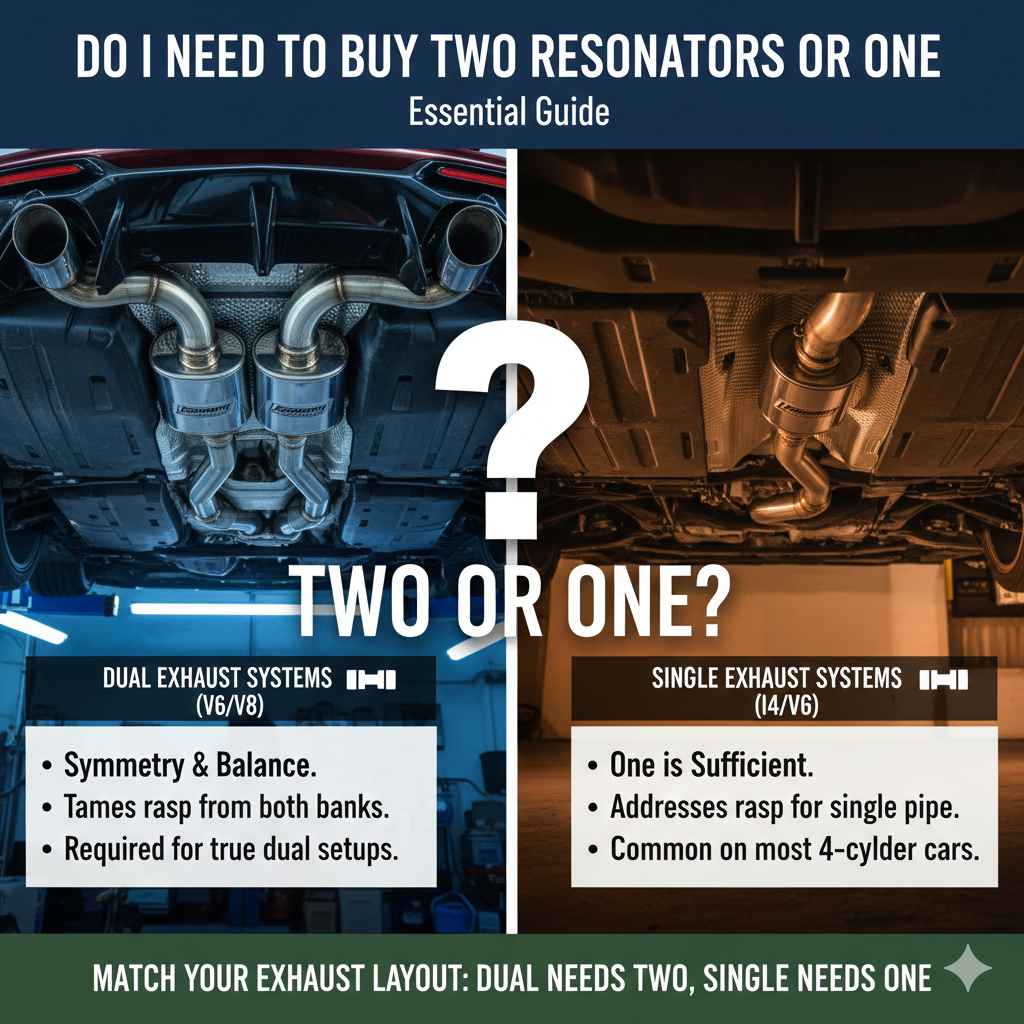
Generally, if your car has two separate exhaust pipes coming from the catalytic converter or engine (dual exhaust), you need two resonators, one for each pipe. If you have a single exhaust system, you only need one resonator. Always check your existing setup before buying any parts.
Welcome! If you are looking at replacing a part of your car’s exhaust system, you have probably run into the confusing question: “Do I need to buy two resonators or one?” This is a very common concern for new DIY mechanics and everyday drivers. The exhaust system is complex, and parts like resonators can seem mysterious.
Don’t worry! Deciding how many resonators you need is simpler than it looks. It all comes down to how your car was built from the factory. We are going to walk through exactly how to check your current setup, what resonators actually do, and the simple rule to follow so you buy the right number every time. Let’s get your ride sounding just right, safely and correctly!
Understanding the Resonator: What It Is and Why It Matters
Before we count them, let’s quickly confirm what a resonator is. Think of the resonator as the “tone controller” of your exhaust system. It works closely with the muffler, but they have different jobs.
The muffler’s main job is to silence the loud explosions coming from your engine. The resonator handles the high-pitched, annoying sounds—the “drone” or “rasp”—that the muffler might miss. It’s a specially designed chamber that uses sound waves to cancel out specific frequencies.
Resonator vs. Muffler: A Quick Comparison
It helps to know the difference so you don’t confuse them during a repair. Mufflers and resonators are both sound-dampening devices, but they target different noise levels.
- Muffler: Targets loud, low-frequency exhaust noise. It’s usually the largest component.
- Resonator: Targets high-pitched, annoying sounds (drone or rasp). It’s typically smaller and often located closer to the front of the car or between the catalytic converter and the muffler.
Why Exhaust System Choice Matters for Sound
The sound your car makes is directly related to how the exhaust gases exit the vehicle. An exhaust system is designed to balance three main things:
- Noise Level: Meeting local sound regulations (like those from the EPA in the US).
- Performance: Allowing gases to exit efficiently.
- Tone: The specific sound quality the manufacturer intended.
When you change one part, like adding an aftermarket resonator or removing one, you directly affect that balance. This is why correctly identifying the factory setup is key to knowing if you need one or two parts.

The Golden Rule: How to Determine If You Need One or Two Resonators
The decision to buy one resonator or two boils down entirely to your vehicle’s factory exhaust layout. You are matching what is currently on the car, especially if you are replacing a failed part or matching an OEM (Original Equipment Manufacturer) setup.
The most important thing to check is the number of exhaust pipes after the catalytic converter assembly but before the muffler(s).
Step 1: Inspect Your Exhaust System Layout
This is the most crucial step. You need to physically look under your car or check your vehicle’s repair manual. For safety, always ensure the car is cool and securely supported on jack stands before getting underneath.
Single Exhaust Systems (You Need ONE Resonator)
Most standard, economy, or smaller engine cars come with a single exhaust pipe running all the way from the front of the car to the rear tailpipe.
- What to Look For: There is only one main pipe feeding into the muffler system.
- The Count: If there is only one resonator installed from the factory, you only need to replace that single unit.
Dual Exhaust Systems (You Need TWO Resonators)
Dual exhaust systems are common on V6, V8, or performance-oriented vehicles. These systems split early, often right after the catalytic converter, creating two separate paths for the exhaust gases.
- What to Look For: After the initial exhaust manifold connects, the system splits into two distinct pipes, each potentially leading to its own muffler section.
- The Count: If the split happens before the muffler section, and each side has its own resonator chamber, you must replace both resonators to maintain the factory sound balance and flow characteristics.
Step 2: Check the Piping Near the Mid-Section
The resonator is usually found in the middle section of the exhaust. Get underneath the car and trace the pipe:
- Start near the front bumper (where the exhaust headers/manifolds are).
- Follow the pipe past the catalytic converter(s).
- Note how many separate pipes continue toward the rear of the vehicle.
If you see two pipes running parallel to each other, look for a resonator chamber on each pipe. If you see one pipe that then splits later, that’s a different setup, but generally, a true dual setup means two parallel paths requiring two resonators.
When In Doubt: Consult the Factory Diagram
If you can’t easily see underneath, or if your exhaust has been modified before, the safest bet is to check an authoritative source for your specific year, make, and model. Websites like NHTSA (National Highway Traffic Safety Administration) databases or official repair manuals provide diagrams that show the exact factory configuration. This ensures you buy parts that match the engineering specifications.
Visual Guide: Single vs. Dual Resonator Configurations
To make this crystal clear, here is a visual representation of when you need one versus two resonators.
Configuration A: Single Exhaust (One Resonator Needed)
Exhaust Gas Flow:
Manifold → Catalytic Converter → ONE Resonator → Muffler → Tailpipe
Configuration B: True Dual Exhaust (Two Resonators Needed)
Exhaust Gas Flow (Split Early):
Bank 1 (Driver Side) → Cat → Resonator 1 → Muffler → Tailpipe 1
Bank 2 (Passenger Side) → Cat → Resonator 2 → Muffler → Tailpipe 2
If your car is a V-engine (like a V6 or V8), it almost always has two exhaust manifolds, meaning it is designed for a dual system, and therefore likely requires two resonators.
Why Buying the Wrong Number Causes Problems
It might seem tempting to “save a little money” by only replacing one resonator on a dual system, or adding an extra one where one isn’t needed. However, doing this can lead to poor performance or unwanted noise.
Problems with Replacing Only One on a Dual System
If you have a dual exhaust system but only replace the resonator on one side, you create an imbalance in the exhaust gas flow (back pressure) between the two sides of the engine.
- Uneven Sound: One side will sound quieter, or have a different tone than the other side, which is very noticeable when accelerating.
- Performance Loss: Uneven back pressure can slightly hinder the engine’s ability to breathe effectively, potentially causing minor power dips.
- Resonance Issues: The new resonator will be tuned differently than the old one, causing an irritating drone noise that defeats the purpose of replacement.
Problems with Adding an Extra Resonator (Single System)
If your car is designed for a single resonator and you add a second one unnecessarily (e.g., welding in an extra chamber), you significantly increase the restriction in the exhaust flow.
- Increased Back Pressure: Too much restriction slows down exhaust gas exit.
- Reduced Horsepower: The engine has to work harder to push out spent gases, robbing you of usable power.
- Fuel Efficiency Drop: The engine management system might try to compensate for the restricted flow, sometimes leading to poorer fuel economy.
Resonator Replacement: A Simple Checklist for Beginners
Once you confirm you need one or two resonators, here is a quick, actionable checklist to prepare for the replacement job. Remember, always work safely!
Essential Tools You Might Need
Having the right gear makes the job much easier and safer. Always prioritize safety equipment.
| Tool Category | Purpose |
|---|---|
| Safety Gear | Safety glasses, gloves, sturdy jack stands. (Never rely only on a jack!) |
| Cutting/Removal | Reciprocating saw (Sawzall) or an exhaust pipe cutter. |
| Fastening | Wrenches/sockets for any bolts, clamps, or hangers. |
| Installation | New resonator(s), new exhaust clamps, high-temperature sealant (optional). |
Procedure Overview: Installing the New Part(s)
If you are replacing just the resonator(s) and keeping the rest of the exhaust pipe length intact, you will typically be cutting out the old one and clamping or welding in the new one.
- Safety First: Park on a level surface, engage the parking brake, let the exhaust cool completely, and use jack stands to support the car securely.
- Locate and Mark: Identify the exact location of the old resonator(s). If you need to cut, mark the pipe sections just before and after the chamber where the new resonator needs to fit.
- Remove the Old Part: Use your saw to cut the old resonator free from the existing pipe. If it is bolted, use your wrench to remove the bolts, taking note of any gaskets.
- Check Fitment: Slide the new resonator(s) into place. Ensure you have enough room to secure it with clamps or position it for welding. If your new part comes with different pipe diameters (slip-fit), use appropriate reducers or high-temp sealant if recommended.
- Secure Hangers: Make sure the new resonator is properly supported by the exhaust hangers to prevent rattling or premature failure.
- Final Connections: Clamp or weld the new piece firmly in place. If clamping, ensure the bolts are very tight.
- Test Drive: Start the car briefly while still under the car to check for major leaks. If all seems good, lower the car. Take a short, gentle drive and listen for the desired sound and check for any new rattles or leaks.
Resonator Shopping Guide: OEM vs. Aftermarket Choices
Once you know you need one or two, the next decision is which one to buy. This choice heavily influences the final sound of your vehicle.
OEM (Stock) Replacement
OEM parts are designed by the car manufacturer. They are built to match the exact size, material, and internal baffling to produce the sound the car originally had.
- Pros: Guaranteed fitment; maintains factory sound profile; generally reliable.
- Cons: Often more expensive; may use less durable materials over time compared to stainless steel aftermarket options.
Aftermarket Performance Resonators
Aftermarket resonators are popular upgrades. They are often made from high-quality, corrosion-resistant materials like T-304 stainless steel and are tuned differently.
- Pros: Better durability; often designed to reduce weight; can enhance or change the tone (usually to be slightly louder or deeper).
- Cons: Can dramatically change the sound (sometimes creating unwanted drone if you select a “straight-through” design instead of a chambered one); may void specific emissions warranties if applicable.
Table: Comparing Resonator Types for Your Purchase Decision
| Type | Best For | Expected Sound |
|---|---|---|
| OEM Replacement | Restoring factory sound and meeting compliance. | Quiet, factory-standard tone. |
| Chambered Aftermarket | Mild tone enhancement without too much noise. | Deeper tone, minimal drone. |
| Straight-Through (Resonator Delete Pipe) | Maximum flow, usually paired with a performance muffler. | Loudest option, high risk of drone/rasp. (Note: This removes the function entirely.) |
Common Exhaust Configurations Explained for Clarity
To help solidify the “one or two” rule, let’s look at how specific engine types typically dictate resonator needs.
Inline Four-Cylinder Engines (I4)
Most four-cylinder cars (like a Honda Civic or Toyota Corolla) use a single exhaust pipe for efficiency and cost control. If you have an I4, you almost certainly only need one resonator.
V6 Engines
V6 engines have two banks of cylinders. While some manufacturers keep a single exhaust pipe for cost reasons (merging the banks early), many modern V6s utilize a true dual system, especially those in trucks or mid-size performance sedans. Check your undercarriage—if you see two pipes splitting early, you need two resonators.
V8 Engines
V8 engines almost universally have two separate exhaust manifolds (one for each bank of four cylinders). Therefore, a V8 vehicle will almost always have a true dual exhaust system requiring two resonators** (one for each bank) to maintain balance and the correct V8 sound profile.

Frequently Asked Questions (FAQ) about Resonators
Q1: Can I just remove the resonator entirely and skip buying a replacement?
A: Yes, this is often called a “resonator delete.” It will make your car louder and slightly alter the exhaust note, often making it raspier. It usually won’t hurt performance significantly on modern cars, but it might cause an irritating drone noise inside the cabin.
Q2: How do I know if my car currently has a resonator?
A: Get underneath your cool car. A resonator looks like a small metal chamber or can welded into the exhaust pipe, usually located between the catalytic converter and the muffler. If you see two pipes, check if each pipe has its own small can.
Q3: If I buy a resonator for a dual system, do they have to be identical?
A: Yes, for the best results, they should be identical in type (both chambered or both straight-through) and size. Mixing and matching can create an unbalanced sound or uneven exhaust restriction between the two sides of the engine.
Q4: Does the resonator affect my fuel economy?
A: A properly functioning resonator, or a new one that matches factory specifications, should have a negligible effect on fuel economy. However, installing a resonator that is too restrictive (too small or poorly designed) can increase back pressure and slightly decrease MPG.
Q5: Do I need to weld the new resonator in, or can I just clamp it?
A: Clamping is easier for beginners and allows for easier future removal. Welding provides a stronger, more permanent, and leak-proof seal. If you clamp it, use high-quality, heavy-duty exhaust clamps designed for the pipe diameter.
Q6: Can a bad resonator cause my car to fail an emissions test?
A: A failed resonator itself usually won’t cause an emissions failure unless it has completely broken apart internally and is clogging the exhaust flow. Emissions tests primarily look at the catalytic converter’s effectiveness and overall exhaust gas composition.
Conclusion: Confidence in Your Purchase
Navigating exhaust parts can feel overwhelming, but the question of “Do I need to buy two resonators or one?” has a very clear answer based on your car’s design. Remember this simple guideline: Look under your car. One pipe means one resonator; two separate pipes mean two resonators.
By taking a few minutes to inspect your existing setup—or by consulting a repair manual for your specific vehicle—you eliminate guesswork and ensure you are buying the correct components. Whether you are restoring the quiet factory sound with OEM parts or aiming for a slightly deeper tone with aftermarket options, matching the factory configuration is the safest path to success. You now have the knowledge to inspect your system, purchase the right quantity, and confidently move forward with your exhaust repair or upgrade. Happy driving!


